

AAP Ousts Two Members on Corruption Concerns – India Real Time – WSJ
The political party created to combat corruption, the Aam Aadmi Party, moved quickly to protect its squeaky-clean image Friday, kicking out two party members amid allegations of bribery.

The two party workers have been accused of demanding bribes from wannabe politicians who were trying to get AAP tickets or nomination papers to run on behalf of the party for the Lok Sabha elections.
The Aam Aadmi, or common man, Party said it discovered demands had been made though no deal was done.
“The transactions did not take place but promises were made,” said Arvind Kejriwal, anti-corruption crusader and leader of the AAP, at a news conference on Friday.
One of the workers that was pushed out of the party, Aruna Singh, was an organizer for the party in the Awadh region of Uttar Pradesh and said she was not sure what she was being accused of. She had heard there was some recording of her allegedly involved in some kind of political transaction.
“This decision about me has been taken in haste,” Ms. Singh told The Wall Street Journal. “I didn’t get an opportunity to defend myself. If there is any recording of any transaction, they should have asked me if I was involved.”
Ashok Kumar, the other party member that was ousted, was a treasurer for the party in the Hardoi district of Uttar Pradesh. He could not be reached for comment Friday.
via AAP Ousts Two Members on Corruption Concerns – India Real Time – WSJ.

Children’s shelter closes doors[1]- Chinadaily.com.cn
The trial operation of the temporary shelter in Guangzhou, Guangdong province, for abandoned children was suspended on Sunday, after 262 babies and children were accepted since it opened on Jan 28.

Nanjing Children’s Welfare Institution in Jiangsu province may also suspend its temporary shelter due to a lack of capacity to care for the children. The institution has received 136 babies since it opened the shelter in December.
“Normally we just receive 160 abandoned babies and children a year,” said Zhu Hong, director of the Nanjing institution.
A man walks past a baby shelter outside the Guangzhou Social Welfare Home on Monday. The shelter was suspended on Sunday after receiving a total of 262 babies and children since it was put into use on Jan 28. Zou Zhongpin / China Daily
“I may refuse to be interviewed in the future to avoid more publicity for the shelter,” Zhu said. “Many people know about the shelter from the media and choose to abandon their children. Some people even drive from other cities to Nanjing to abandon their children.”
Xu Jiu, director of Guangzhou Social Welfare Home, said the increasing number of children being dropped off at the facility’s temporary shelter has put a strain on resources.
“Doctors and medical staff worry about the cross infection of diseases among the abandoned babies and children at the city’s welfare home, as many abandoned babies now have to share a bed and other facilities,” Xu said at news conference on Sunday afternoon.
The social welfare home, which has 1,000 beds, now houses 2,395 orphans and disabled young people.
“We have not decided when we will reopen the temporary shelter, and the Guangzhou Social Welfare Home will focus on curing the diseases of the abandoned babies and children who have been left at the shelter,” Xu said.
In addition to infants, children aged 5 to 6 were also abandoned at the facility, Xu said.
All of the 148 boys and 114 girls abandoned at the temporary shelter over the past two months have been diagnosed with ailments including congenital heart disease, Down syndrome, brain failure and cleft lip.
Ninety-eight percent of the babies abandoned at the Nanjing temporary shelter have serious diseases and physical or mental disabilities.
via Children’s shelter closes doors[1]- Chinadaily.com.cn.
Fighting corruption in India: A bad boom | The Economist
IN THE early hours of February 20th 2010 Uday Vir Singh, an Indian forestry officer, bluffed his way past a private militia guarding a dusty port called Belekeri. For months suspicious-looking convoys of trucks had been thundering across India to the port’s quays on the country’s west coast, just south of the Goan beach where the super-spy mayhem which opened “The Bourne Supremacy” was filmed.

Mr Singh is no more a Jason Bourne than the next entomologist—he has a doctorate on metamorphosis in insects—and the infiltration he mounted with a few colleagues led to no gunplay. But it did uncover a massive scam, with hundreds of officials and politicians in the state of Karnataka in the pockets of an illegal mining mafia that, over five years, had made profits of $2 billion or more shipping illegal iron ore to China.
Such scandals have rocked Asia’s third-largest economy in the past decade. A lot of transactions that put public resources into private hands—allocations of radio spectrum, for example, and of credit from state banks—have come under suspicion. Of the ten biggest family firms by sales, seven have faced controversies. The brash new tycoons who came of age during the boom years of 2003-10 are under a cloud, too. Before he became boss of the central bank last year, Raghuram Rajan worried publicly that India could start looking like an oligarchy along the lines seen in Russia: “too many people have got too rich based on their proximity to the government.”
via Fighting corruption in India: A bad boom | The Economist.
Why caste still matters in India | The Economist
INDIA’S general election will take place before May. The front-runner to be the next prime minister is Narendra Modi of the Bharatiya Janata Party, currently chief minister of Gujarat. A former tea-seller, he has previously attacked leaders of the ruling Congress party as elitist, corrupt and out of touch. Now he is emphasising his humble caste origins. In a speech in January he said “high caste” Congress leaders were scared of taking on a rival from “a backward caste”. If Mr Modi does win, he would be the first prime minister drawn from the “other backward classes”, or OBC, group. He is not the only politician to see electoral advantage in bringing up the subject: caste still matters enormously to most Indians.

The country’s great, liberal constitution was supposed to end the millennia-old obsession with the idea that your place in life, including your occupation, is set at birth. It abolished “untouchability”—the practice whereby others in society exclude so-called untouchables, or Dalits, as polluting—which has now mostly disappeared from Indian society. Various laws forbid discrimination by caste. At the same time (it is somewhat contradictory) official schemes push “positive” discrimination by caste, reserving quotas of places in higher education, plus jobs in government, to help groups deemed backward or deprived. In turn, some politicians have excelled at appealing to voters by caste, promising them ever more goodies. For example Mayawati, formerly chief minister of Uttar Pradesh state (population: over 200m) and just possibly a future prime minister, leads a Dalit party. In another northern state, Bihar, parties jostle to build coalitions of caste groups. Everywhere voters can be swayed by the caste of candidates.
But don’t blame politicians alone. Strong social actors—such as leaders of “khap panchayats” (all-male, unelected village councils) or doughty family elders—do much more to keep caste-identity going. Consider marriages. In rural areas it can be fatal to disregard social rules and marry someone of a different, especially if lower caste. Haryana, a socially conservative state in north India, is notorious for frequent murders of young men and women who transgress. Even in town, caste is an important criterion when marriages are arranged. Look at matrimonial ads in any newspaper, or try registering for a dating site, and intricate details on caste and sub-caste are explicitly listed and sought (“Brahmin seeks Brahmin”, “Mahar looking for Mahar”) along with those on religion, education, qualifications, earning power and looks. Studies of such sites suggest that only a quarter of participants state that “caste is no bar”. Such attitudes also reflect the anxieties of parents, who are keen for children to marry within the same group, because marriages bring extended families intimately together.
As long as marriages are mostly within the same caste, therefore, don’t expect any law or public effort to wipe away the persistent obsession with it. That seems set to continue for a long time: a survey in 2005 found that only 11% of women in India had married outside their caste, for example. What is changing for the better, if too slowly, is the importance of caste in determining what jobs, wealth, education and other opportunities are available to an average person. No caste exists for a call-centre worker, computer programmer or English teacher, for example. The more of those jobs that are created, and the more people escape India’s repressive villages, the quicker progress can come.
via The Economist explains: Why caste still matters in India | The Economist.
China’s restless West: The burden of empire | The Economist
After a brutal attack in China, the Communist Party needs to change its policies towards minorities

A GROUP of knife-wielding assailants, apparently Muslims from western China, caused mayhem and murder on March 1st in the south-western Chinese city of Kunming, stabbing 29 people to death at the railway station and injuring 140 others. The attack has shocked China. The crime against innocents is monstrous and unjustifiable, and has been rightly condemned by the Chinese government and by America. But as well as rounding up the culprits, the Communist Party must face up to an uncomfortable truth. Its policy for integrating the country’s restless western regions—a policy that mixes repression, development and Han-Chinese migration—is failing to persuade non-Han groups of the merits of Chinese rule.
The party says the attackers were “Xinjiang extremists”, by implication ethnic Uighurs, a Turkic people with ties to Central Asia who once formed the majority in the region of Xinjiang. The killers may have been radicalised abroad with notions of global jihad. Whatever the truth, there is no doubt that Uighurs are committing ever more desperate acts. Scarcely a week passes in Xinjiang without anti-government violence.
The party claims that Xinjiang has been part of China for 2,000 years. Yet for most of that time, the region has been on the fringe of China’s empire, or outside it altogether. An attempt to incorporate these lands began only with the Qing dynasty’s conquests in the mid-18th century. (The name Xinjiang, “new frontier”, was bestowed only in the 1880s.) During the chaos of the 1940s, Uighurs declared a short-lived independent state of East Turkestan. But from 1949 the Communists began integrating Xinjiang into China by force. Demobbed Chinese soldiers were sent to colonise arid lands, the state repression of Uighurs drawing heavily on the Soviet tactics for handling “nationalities”. Uighur resentment of the Han runs deep. The feeling is mutual. Many Chinese are openly racist towards Uighurs, and the government thinks them ungrateful. In 2009 hundreds of people were killed during street fighting between Uighurs and Han, who now make up two-fifths of Xinjiang’s population and control a disproportionate share of its wealth.
Identity crisis
The Kunming killers’ motives may never be known. But fears of militant Islamism arriving at the heart of China must not obscure the broader problem of Chinese oppression in Xinjiang. Recent crackdowns hit at the heart of Uighur identity: students are banned from fasting during Ramadan, religious teaching for children is restricted, and Uighur-language education is limited. Many Uighurs, like their neighbours in Tibet, fear that their culture will be extinguished. Xinjiang and Tibet (and Inner Mongolia) are still China’s colonies, their pacification under the Communist Party a continued imperial project. Were it not for the Dalai Lama’s restraining influence, violence in Tibet might be as bad as it is in Xinjiang. As it is, over 100 Tibetans have burned themselves to death in protest at Chinese rule.
There is a large military presence in China’s west. The government seems to believe that unless Uighurs and Tibetans are held in check by force, the western regions could break away. That is always a danger. But suppression, which leads to explosions of anger, may increase the risk, not mitigate it.
The only way forward is to show Uighurs (and Tibetans) how they can live peacefully and prosperously together within China. The first step is for the party to lift the bans on religious and cultural practices, give Uighurs and Tibetans more space to be themselves, and strive against prejudice in Chinese society. Economic development needs to be aimed at Uighur and Tibetan communities. Otherwise, there will be more violence and instability.
via China’s restless West: The burden of empire | The Economist.
20 Clever Inventions Given to Us by the Incredible Indians!

20 Clever Inventions You Probably Didn’t Know Were Made By Indians
FEBRUARY 20, 2014


1. Buttons

Buttons were first used in Mohenjo-daro for ornamental purpose rather than for fastening. They were first used in the Indus Valley Civilization by 2000 BCE.
2. Chess
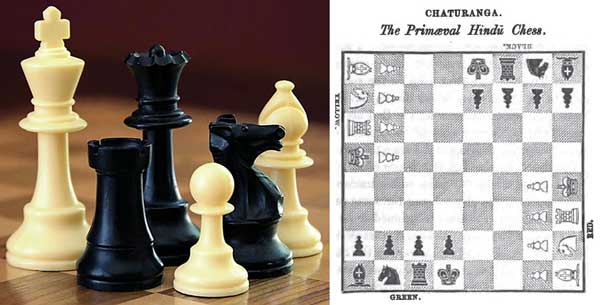
Chess developed out of Chaturanga, which is an ancient strategy board game developed during the Gupta Empire in India around the 6th century AD. Now you know why Vishwanathan Anand is…
View original post 825 more words
Opinion: China’s awkward banana slip – CNN.com
Editor’s note: Eric Liu is the founder of Citizen University and the author of several books, including “The Gardens of Democracy” and “The Accidental Asian.” He served as a White House speechwriter and policy adviser for President Bill Clinton. Follow him on Twitter @ericpliu The opinions expressed in this commentary are solely those of the author.

(CNN) — Have you heard about China’s banana slip?
A few days ago in Beijing, as Gary Locke wrapped up his tenure as United States ambassador to China, he was lambasted in a Chinese state media editorial. The piece called Locke a “guide dog.” It said he had stirred an “evil wind.” Worst of all, it called him a “banana.”
As in yellow on the outside and white on the inside. It’s a slur, akin to “Oreo” for African-Americans or “coconut” for Hispanics, used by people of a given ethnic group to judge another member of that group for being insufficiently, well, ethnic. The point of saying a person of color is “white inside” is to accuse him of being a race traitor, ashamed or in denial of his true heritage.
Eric Liu
In this case, the idea was that Locke, though of Chinese descent, wasn’t Chinese enough. Why? He couldn’t speak the language. Oh, and he apparently didn’t do the bidding of China’s leaders, choosing instead to go to Tibet, work with dissident human rights activists, point out smog levels in Beijing and generally represent the interests and values of the United States.
That’s what the editorialist meant when he called Locke a banana. Many Chinese citizens disavowed the slur, calling it an embarrassment. But what it revealed was that despite modernization and burgeoning wealth — or perhaps because of them — China still has a fragile identity. (And America still has some advantages.)
Let’s start with the fact that the editorial was published in an organ of state media. It got attention because in a country where the government controls the press, editorials are assumed to express the views of top national leaders. They may not, in fact. It’s quite possible this particular opinion writer was just an individual. But in the absence of a free press, who can really tell?
This is the price of propaganda: No one believes what you say, but they believe you meant to say it.
A second notable aspect of the banana rant was that it completely conflated ethnicity and nationality, and in a particularly Chinese way. The Han Chinese are the overwhelmingly dominant ethnic group of China, and their ethnocentrism frames Chinese political culture. (Just ask Tibetans.) It also fuels the nationalism behind China’s territorial disputes with Japan and other Asian nations.
So the premise of the banana comment was that someone of Chinese ethnicity, wherever he may live, should be considered Chinese to the core and therefore in the end loyal to the Chinese nation.
Of course, that’s a notion white Americans have often used to justify mistreatment of “indelibly alien” Chinese immigrants, whether during the era of Chinese exclusion in the late 19th century or the persecution of Wen Ho Lee at the turn of this one.
But it’s as wrong now as then and as wrong here as there. Even if Locke could speak perfect Mandarin, even if he could read the Chinese classics and write calligraphy, this Eagle Scout, child of public housing, prosecutor, state legislator, governor, Cabinet secretary and diplomat was made in America.
via Opinion: China’s awkward banana slip – CNN.com.
See also – https://chindia-alert.org/social-cultural-diff/uncanny-similarities/
Xi vows opposition against words, actions damaging ethnic unity – Xinhua | English.news.cn
Chinese President Xi Jinping (R), also general secretary of the Communist Party of China (CPC) Central Committee and chairman of the Central Military Commission, visits members of the 12th National Committee of the Chinese People’s Political Consultative Conference (CPPCC) from ethnic minority groups and joins their panel discussion in Beijing, capital of China, March 4, 2014. Yu Zhengsheng, chairman of the National Committee of the CPPCC and a member of the Standing Committee of the Political Bureau of the CPC Central Committee, also attended the event. (Xinhua/Ding Lin)

BEIJING, March 4 (Xinhua) — Chinese President Xi Jinping on Tuesday called for resolute opposition to any words and actions that damage the country’s ethnic unity.
“We will build a ‘wall of bronze and iron’ for ethnic unity, social stability and national unity,” he said while joining a panel discussion with members from the minority ethnic groups of the National Committee of the Chinese People’s Political Consultative Conference (CPPCC).
Xi said the tradition of all ethnic groups in the country “breathing the same air and sharing the same fate” should be handed down from generation to generation.
“Unity and stability are blessings, while secession and turmoil are disasters,” he said. “People of all ethnic groups of the country should cherish ethnic unity.”
via Xi vows opposition against words, actions damaging ethnic unity – Xinhua | English.news.cn.
* China punishes 829 judges, court staff for corruption in 2013 – Xinhua | English.news.cn
China investigated and punished 829 judges and other court staff for corruption in 2013, up 42.3 percent year on year, the Supreme People’s Court (SPC) said on Sunday.

The main entrance to the Supreme People’s Court of the People’s Republic of China. (Photo credit: Wikipedia)
Among the 829 court officials, 157 were transferred to judicial organs for prosecution, 294 punished for violation of Party disciplines, and 531 punished for breaching government disciplines, the SPC said in a statement.
The SPC said 683 judges and court staff turned over illegal gains including cash, securities and payment documents, to the value of 3.32 million yuan (540,000 U.S. dollars), in 2013.
The authority will continue the “high-handed posture” in the fight against judicial corruption, said the statement.
via China punishes 829 judges, court staff for corruption in 2013 – Xinhua | English.news.cn.


