Archive for ‘rural poor’

24/05/2020

Xi Focus: “What is people first?” Xi points to how China saves lives at all costs

Chinese President Xi Jinping, also general secretary of the Communist Party of China Central Committee and chairman of the Central Military Commission, takes part in a deliberation with his fellow deputies from the delegation of Inner Mongolia Autonomous Region at the third session of the 13th National People’s Congress (NPC) in Beijing, capital of China, May 22, 2020. (Xinhua/Ju Peng)

BEIJING, May 23 (Xinhua) — “What is people first?” Chinese President Xi Jinping asked, before offering his own answer when he was talking with lawmakers at the ongoing national legislative session.

“So many people worked together to save a single patient. This, in essence, embodies doing whatever it takes (to save lives),” he said.

Xi, also general secretary of the Communist Party of China Central Committee and chairman of the Central Military Commission, is a deputy to the 13th National People’s Congress.

During his deliberations with fellow deputies from Inner Mongolia Autonomous Region on Friday, “people” was a keyword.

Xi referred to a story told by another deputy that morning. Luo Jie, from the COVID-19 hard-hit province of Hubei, told reporters at the session how medical workers in his hospital spent 47 days saving an 87-year-old COVID-19 patient.

“About 10 medical workers meticulously took care of the patient for dozens of days, and finally saved the patient’s life,” Xi said. “I am really impressed.”

In the COVID-19 pandemic, health workers around the world got to know the elderly are the most difficult to treat and require the most sophisticated medical resources. China has given every patient equal treatment irrespective of their age or wealth.

Chinese President Xi Jinping, also general secretary of the Communist Party of China Central Committee and chairman of the Central Military Commission, takes part in a deliberation with his fellow deputies from the delegation of Inner Mongolia Autonomous Region at the third session of the 13th National People’s Congress (NPC) in Beijing, capital of China, May 22, 2020. (Xinhua/Huang Jingwen)

In Hubei alone, more than 3,600 COVID-19 patients over the age of 80 have been cured. In the provincial capital Wuhan, seven centenarian patients have been cured.

“We mobilized from around the nation the best doctors, the most advanced equipment and the most needed resources to Hubei and Wuhan, going all out to save lives,” Xi said during the deliberations, adding that the eldest patient cured is 108 years old.

“We are willing to save lives at all costs. No matter how old the patients are and how serious their conditions have become, we never give up,” Xi said.

Xi joined political advisors and lawmakers on Thursday and Friday in paying silent tribute to the lives lost to COVID-19 as the top political advisory body and the national legislature opened their annual sessions.

This year’s government work report said China’s economy posted negative growth in the first quarter of this year, but it was “a price worth paying” to contain COVID-19 as life is invaluable.

“As a developing country with 1.4 billion people, it is only by overcoming enormous difficulties that China has been able to contain COVID-19 in such a short time while also ensuring our people’s basic needs,” the report said.

Epidemic response is a reflection of China’s governing philosophy.

The fundamental goal for the Party to unite and lead the people in revolution, development and reform is “to ensure a better life for them,” Xi said.

The nation’s average life expectancy reached 77 years in 2018, more than double that in 1949, when the people’s republic was founded.

Chinese people are not just living longer but better lives, with more material wealth and broader choices to pursue individual dreams. All rural poor will bid farewell to poverty this year as part of the goal of building a moderately prosperous society in all respects.

The Party’s long-term governance, Xi said, rests on “always maintaining close bond with the people.”

“We must always remain true to the people’s aspiration and work in concert with them through thick and thin,” Xi said.

Source: Xinhua

28/07/2019

Senior official underlines drinking water safety in poor areas

YINCHUAN, July 27 (Xinhua) — Hu Chunhua, a member of the Political Bureau of the Communist Party of China Central Committee, has urged more efforts to address weak links in the country’s poverty alleviation campaign, including drinking water safety in the impoverished areas.

Hu, also chief of the State Council’s leading group of poverty alleviation and development, made the remarks during an inspection tour from Friday to Saturday in the city of Guyuan in northwest China’s Ningxia Hui Autonomous Region.

After visits to some impoverished villages, Hu said efforts should be made to ensure compulsory education, basic medical care, and housing for the rural poor, while drinking water safety should be guaranteed.

The country’s central authorities should speed up the implementation of poverty relief policies, while local governments should increase fund use efficiency, he said.

Source: Xinhua

13/10/2016

Is this the world’s most oversubscribed school? – BBC News

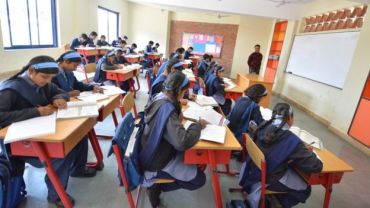
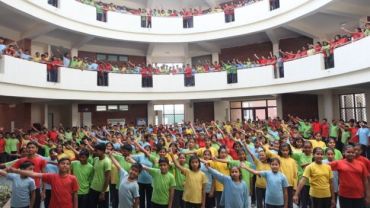
The VidyaGyan Leadership Academy, a boarding school in India‘s Uttar Pradesh state, is offering an elite education for pupils drawn from the rural poor.

There are about 200 places on offer each year – but such is the appetite for families to get a better life for their children, there are 250,000 applications.

The school, set up by the Shiv Nadar Foundation, is completely free, and offers the type of education usually available only to the very wealthy.

Roshni Nadar Malhotra, a businesswoman and trustee of the foundation, says the school has been modelled on India’s private schools, which put students on the pathway to top universities and high-flying careers.

Roshni Nadar Malhotra wants the school to produce a more meritocratic generation of leaders for India

But the VidyaGyan school is open only to the very clever and very poor – which she describes as the “top of the bottom of the pyramid”.

No-one can even apply u

Unless their family income is below the equivalent of £1,500 per year, and the school carries out checks to make sure that better-off families are not trying to get in.

“Most of India is rural, there is a huge population in India not being tapped for their excellence. They have no access to great universities,” says Ms Malhotra, who is chief executive officer of the HCL technology company.

A performer from Uttar Pradesh prepares to take part in a festival

“We wanted to see if we could have an admissions system that was truly meritorious.”

The admissions system operates on an epic scale.

After the initial 250,000 applications, Ms Malhotra says, about 125,000 turn up to take a written test.

The drop-out rate is a reflection of the tough lives of these families, who might struggle to travel to a local test centre or be stopped by bad weather.

The school’s ambition is for its students to compete anywhere in the world

Based on the results, there is a shortlist of about 6,000 students, who then take another set of tests. There are also visits to the homes of applicants.

This sifting process produces an intake of 200 pupils, boys and girls, who are taught, clothed, fed and housed by the school.

These children from the poorest rural families, a deliberate mix of religions and castes, then receive a high-cost education, exposing them to ideas and opportunities.

It is an intensive process, designed to create a “stepping stone” to top universities in India or abroad.

The school has been founded to help clever poor pupils from Uttar Pradesh

It has become such a phenomenon that there are now coaching academies dedicated to training people for the test.

So far the school has cost the foundation £59m – and Ms Malhotra says there have been questions about whether the money would have been better spent on teaching basic literacy to much bigger numbers of young people.The final intake of 200 pupils stands compared with Uttar Pradesh’s population of about 200 million.

But Ms Malhotra says the distinct purpose of the school is to create a leadership academy focusing on providing a chance for disadvantaged youngsters to compete with India’s elite.

These are the children of poor, uneducated farmers, and she wants them to be equipped to reach the top in politics, business or sport.

The school is intended to provide a stepping stone to top universities

And she says there is a “ripple effect” on the home villages of these pupils, as they see their young people being able to go to a top university in India or in Europe or the United States.

“When students get into a great university, it’s a huge aspirational lift for their village. These students become beacons of hope.”

There are also expectations of paying back to their local communities. In the summer, when they go home, they have to carry out a socially useful project, such as providing cleaner water, clearing away rubbish or finding a safer way of cooking.

“It’s about getting their hands dirty and finding out how to solve problems,” says Ms Malhotra.

Once pupils are accepted, everything in the school is free for families

The school’s first graduates have left with “stellar results”, but she also wants them to be equipped to compete with international students anywhere.

“It’s not just about getting in, they need to be able to survive. All of a sudden you’re thrown in with other highly competitive students from all over the world.”

It will be some time before it is possible to see if they become India’s future leaders, she says. “But they’re on their way.”

Source: Is this the world’s most oversubscribed school? – BBC News

Law of Unintended Consequences

continuously updated blog about China & India

ChiaHou's Book Reviews

continuously updated blog about China & India

What's wrong with the world; and its economy

continuously updated blog about China & India