Chindia Alert: You’ll be Living in their World Very Soon
aims to alert you to the threats and opportunities that China and India present. China and India require serious attention; case of ‘hidden dragon and crouching tiger’.
Without this attention, governments, businesses and, indeed, individuals may find themselves at a great disadvantage sooner rather than later.
The POSTs (front webpages) are mainly 'cuttings' from reliable sources, updated continuously.
The PAGEs (see Tabs, above) attempt to make the information more meaningful by putting some structure to the information we have researched and assembled since 2006.
Image copyright ANIImage caption Ms Leona was charged with sedition at a protest event in Bangalore city
An Indian woman has been arrested and charged with sedition for chanting “long live Pakistan” at a protest in the southern city of Bangalore.
Amulya Leona was participating in a demonstration against a controversial citizenship law, which critics say discriminates against Muslims.
Her comments were immediately condemned by a prominent local Muslim politician.
Asaduddin Owaisi, who was at the rally, said neither he nor his party supported India’s “enemy nation Pakistan”.
Muslim politicians in Hindu-majority India are often targeted as being “pro-Pakistan” by political rivals, particularly in the last few years. The neighbouring countries have a historically tense relationship, fighting three wars since Pakistan’s formation following the partition of India in 1947.
After the incident at the protest against the Citizenship Amendment Act (CAA) went viral, Ms Leona and her family were the target of massive outrage.
Clips of her comment were circulated widely, and her father has complained that a group of people came to his house and forced him to chant “hail mother India”. They also told him that he had not brought his daughter up properly and threatened him against getting bail for her.
Police in the district told BBC Hindi that they are investigating his complaint, adding that Ms Leona would be produced before a judicial magistrate in 14 days.
What is the CAA?
The law offers amnesty to non-Muslim illegal immigrants from three countries – Pakistan, Bangladesh and Afghanistan.
It amends India’s 64-year-old citizenship law, which currently prohibits illegal migrants from becoming Indian citizens.
Media caption Anti-citizenship law protests spread across Indian cities
It also expedites the path to Indian citizenship for members of six religious minority communities – Hindu, Sikh, Buddhist, Jain, Parsi and Christian – if they can prove that they are from Muslim-majority Pakistan, Afghanistan or Bangladesh. They will now only have to live or work in India for six years – instead of 11 years – before becoming eligible to apply for citizenship.
The government says this will give sanctuary to people fleeing religious persecution, but critics argue that it will marginalise India’s Muslim minority.
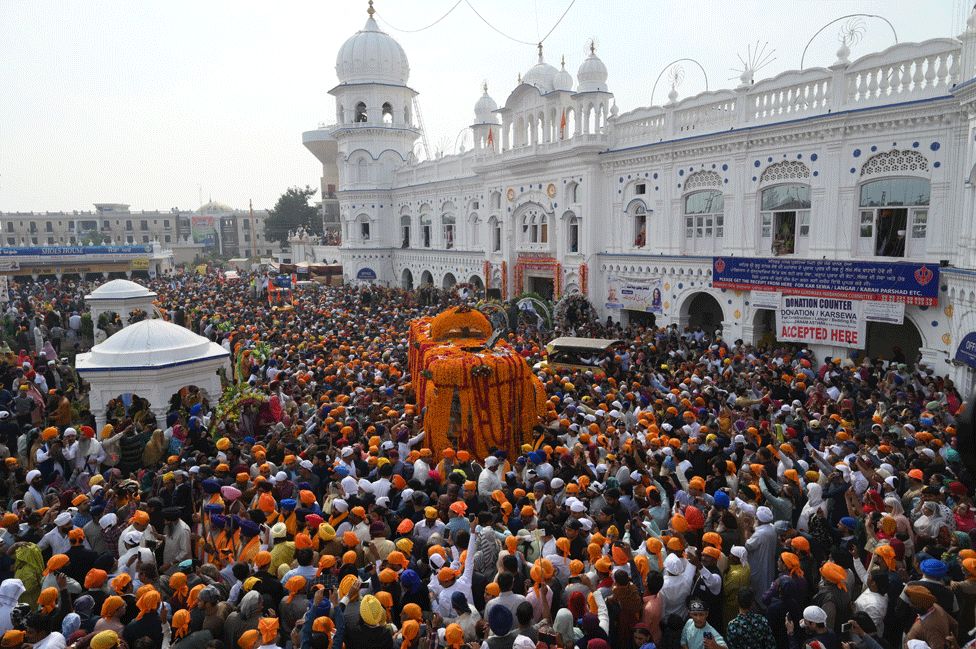
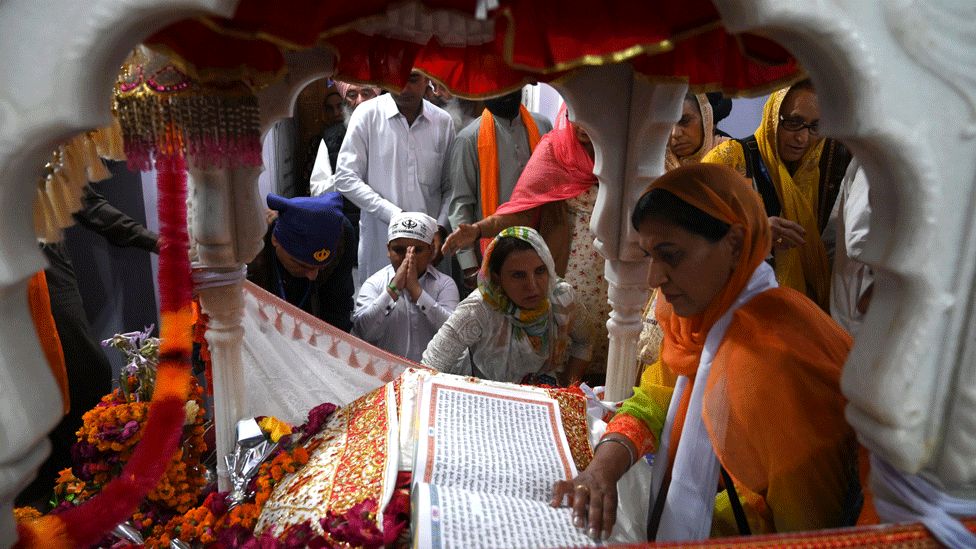
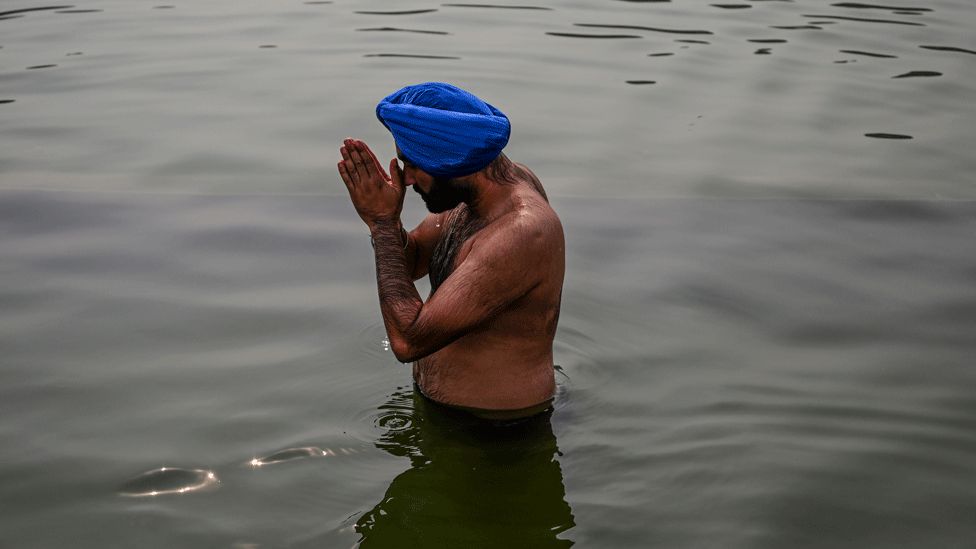
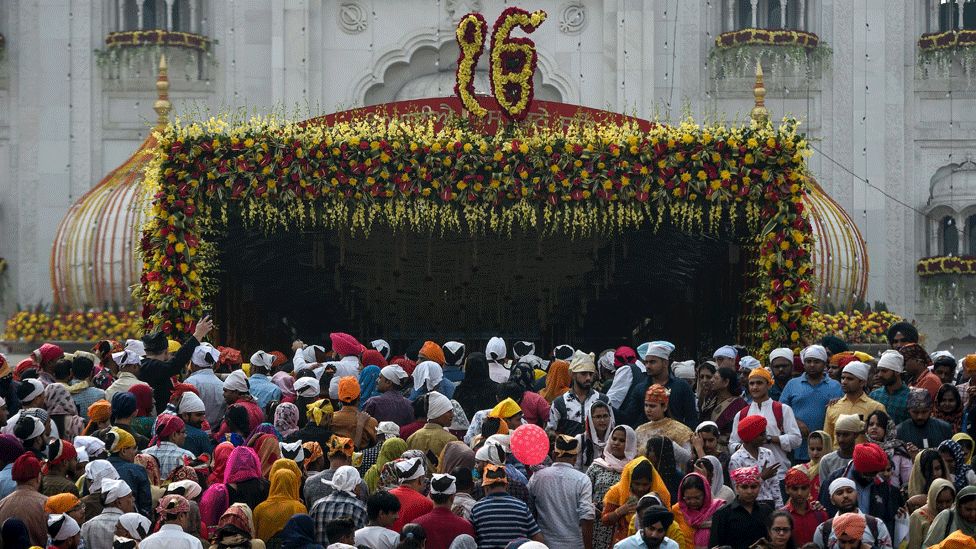
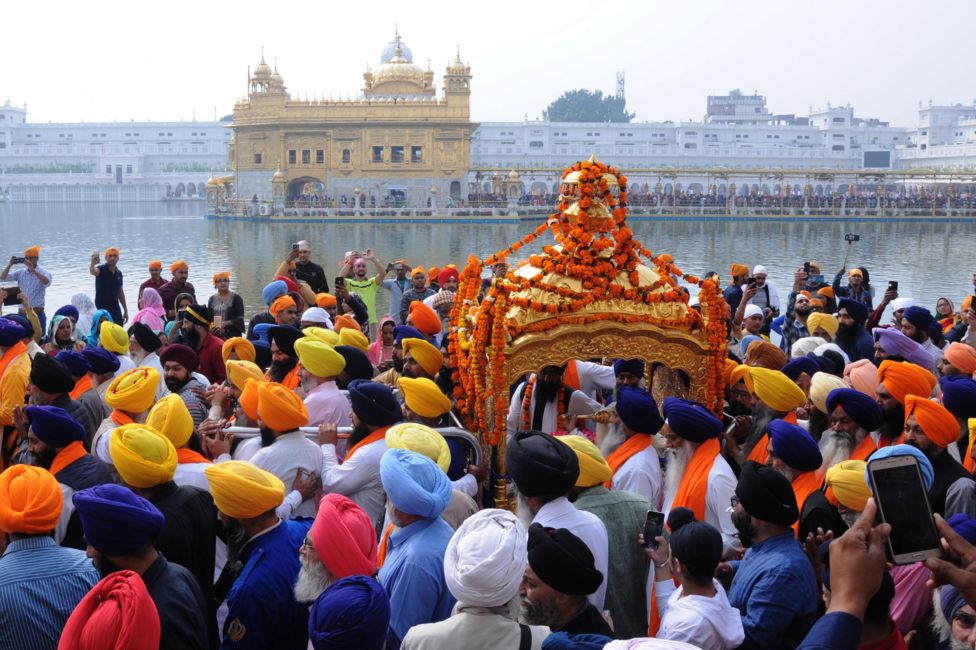
Image copyright AFPCelebrations have taken place in India and Pakistan to mark the 550th anniversary of the birth of Guru Nanak – the founder of Sikhism.
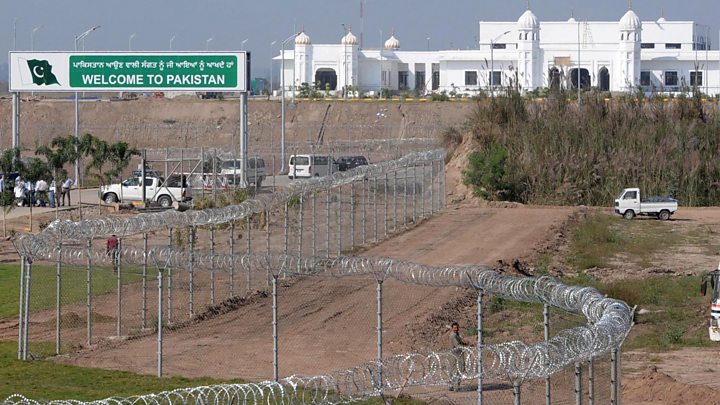
The anniversary comes just a few days after the historic opening of the Kartarpur corridor, which allows Indians access to one of Sikhism’s holiest shrines in Pakistan without having to apply for a visa.
Tensions between the neighbours have made it difficult for Indian pilgrims to visit the site in Pakistan in recent years. But an agreement reached last month allows Indians to make the 4km (2.5-mile) crossing to the Gurdwara Darbar Sahib Kartarpur – where Guru Nanak spent the last 18 years of his life.
On Tuesday, Sikh pilgrims in Pakistan gathered at Nankana Sahib, the birth place of Guru Nanak, which is about 80km (50 miles) from the city of Lahore.
Image copyright AFP
Large numbers of devotees, including women, took part in the religious rituals.
Image copyright AFP
The auspicious day for Sikhs was also marked in India, where Guru Nanak’s birth anniversary is an annual public holiday.
Image copyright AFPSikh devotees gathered in huge numbers at the Bangla Sahib Gurdwara in the capital Delhi.Image copyright AFP
Indian Prime Minister Narendra Modi greeted the nation on the occasion, saying it was “a day to rededicate ourselves” to Guru Nanak’s “dream of a just, inclusive and harmonious society”.
Though Guru Nanak’s anniversary is an important event for Sikhs annually, this time the celebrations were more special due to the opening of the Kartarpur corridor.
Devotees from across the world visit the Kartarpur shrine every year to commemorate his birth. Indian Sikhs will now be able to visit with just their passports, but they will not be allowed to leave the site or stay overnight.
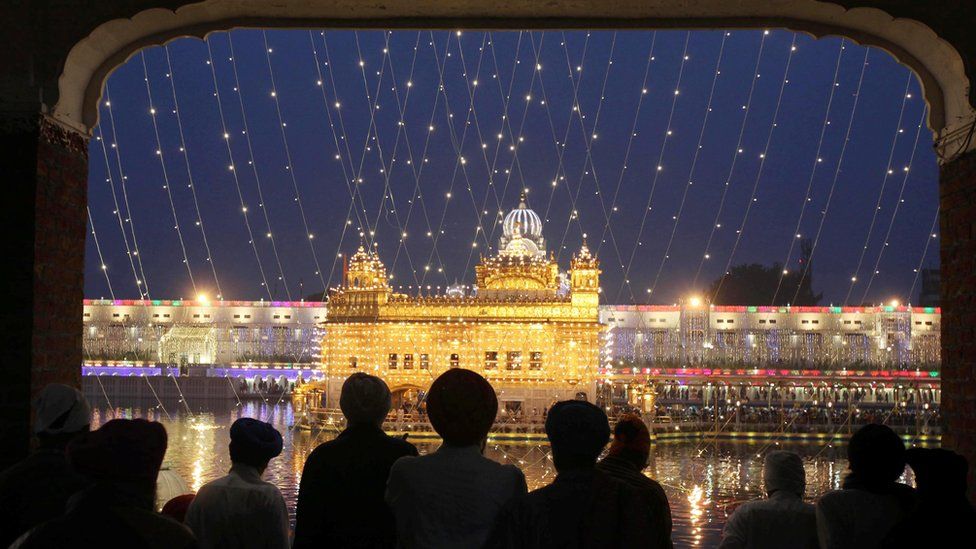
The Golden Temple in Amritsar, in north-western India, is the holiest Gurdwara (where Sikhs worship). On the eve of the anniversary, it was lit up to host processions as Sikh worshippers took part in the three-day celebration of Guru Nanak’s birth.
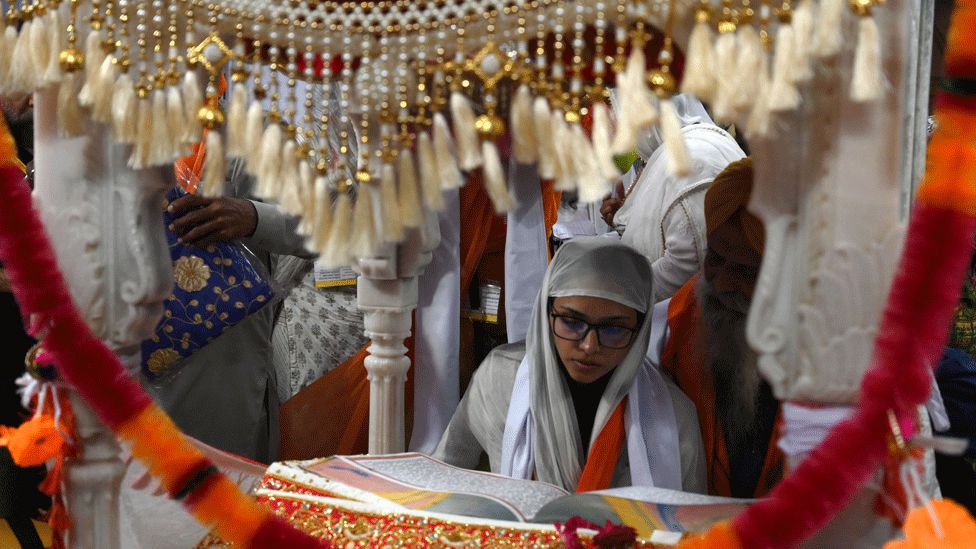
Image copyright REUTERSOn the first day of the celebrations, Sikhs read the Sikh holy book – the Guru Granth Sahib – from beginning to end.
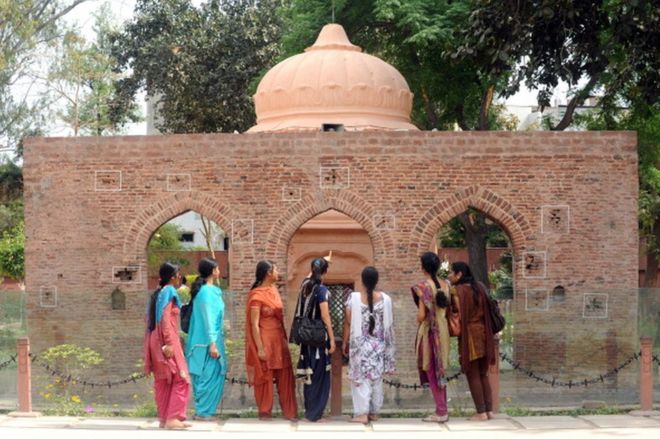
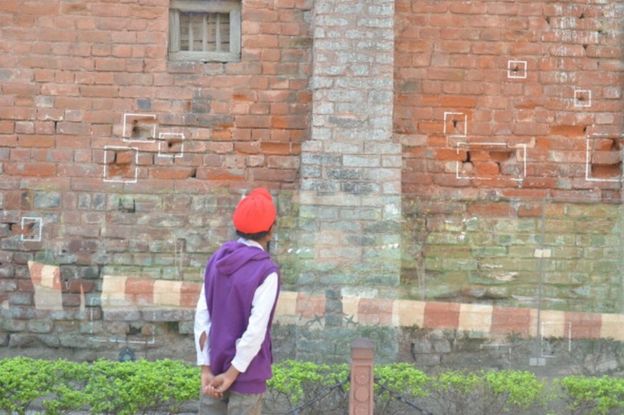
Image copyrightAFPImage captionVisitors can inspect a bullet-ridden wall at the site of the massacre
Hundreds of Indians attending a public meeting were shot dead by British troops in the northern Indian city of Amritsar in 1919. Historian Kim Wagner sifts fact from fiction as the UK House of Lords prepares to debate the massacre, including if Britain should apologise.
On 13 April 1919, Sergeant WJ Anderson witnessed first-hand the brutal massacre of hundreds of Indian civilians at Jallianwala Bagh, a public garden in Amritsar city.
“When fire was opened the whole crowd seemed to sink to the ground, a whole flutter of white garments, with however a spreading out towards the main gateway, and some individuals could be seen climbing the high wall,” Anderson later recalled.
“There was little movement, except for the climbers. The gateway would soon be jammed. I saw no sign of a rush towards the troops.”
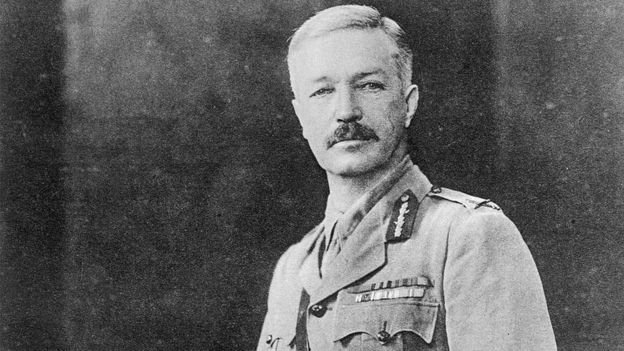
He had served as the bodyguard of Brigadier General RH Dyer, who had rushed to Amritsar a few days earlier to quell what he believed to be a major uprising.
The crowd of more than 20,000 people, however, were not armed rebels. They were local residents and villagers from the surrounding countryside who had come to listen to political speeches or simply to spend a few hours in the gardens.
It was also the day of the Baisakhi festival, which marked the anniversary of the creation of the Khalsa, or Sikh community, and annually attracted thousands of visitors and pilgrims.
The crowd comprised Hindus, Muslims and Sikhs. Most were men and young boys, including some infants; only a few women were present.
Image copyrightGETTY IMAGESImage captionBrigadier General Dyer rushed to Amritsar to quell what he believed to be a major uprising
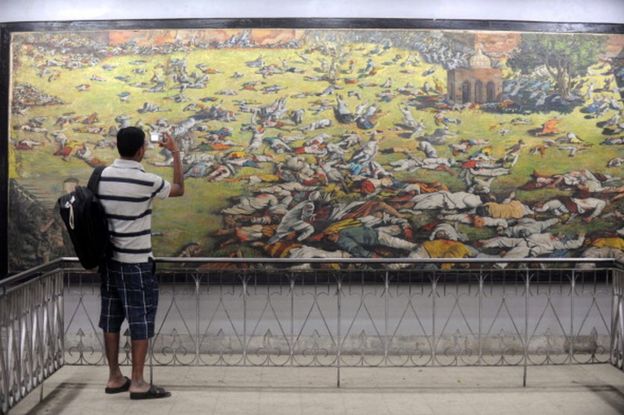
When Gen Dyer ordered his troops to cease firing, Jallianwala Bagh resembled a battlefield strewn with corpses. Between 500 and 600 people were killed, and probably three times as many wounded. The exact numbers will never be known for certain but the official death count, reached months later, was just 379.
In recent years, much of the public debate has focused on calls for a formal British apology – the demand has been led by, among others, Indian politician and author Shashi Tharoor.
Queen Elizabeth II visited the memorial at Jallianwala Bagh in 1997 and then Prime Minister David Cameron visited in 2013 – both showed their respect yet carefully avoided making an actual apology.
In December 2017, the Mayor of London, Sadiq Khan, nevertheless urged the British government to make just such a gesture during his own visit to Amritsar.
“I am clear that the government should now apologise, especially as we reach the centenary of the massacre. This is about properly acknowledging what happened here and giving the people of Amritsar and India the closure they need through a formal apology,” he said.
Image copyrightAFPImage captionOn his 2013 visit, Cameron avoided making an actual apology but said the massacre was “deeply shameful”
Exactly what happened at Jallianwala Bagh, however, remains unclear, and a century later, the actual circumstances of the massacre are still shrouded in myth and misconceptions.
There are, for instance, people, often with a nostalgic attachment to the Empire, who still insist that Gen Dyer only opened fire as a final resort when the crowd ignored his warning to disperse – even though the general himself was quite clear that he gave no such warning.
Similarly, the idea that the shooting was necessary and prevented much worse violence conveniently ignores the fact that Indian riots in April 1919 were in each and every case precipitated by British actions.
Factual inaccuracies are also to be found at the Jallianwala Bagh memorial today. Among other things, a sign claims that 120 bodies of the victims of the massacre were recovered from what has become known as the Martyrs’ Well. It’s believed that many people jumped into the well to escape the bullets.
But there is no evidence for this story, which appears to be based on a mix-up with the infamous well at Kanpur city, where the bodies of British women and children were disposed after a massacre in 1857.
Visual depictions of the Jallianwala Bagh massacre also show machine guns being used, when the historical record is quite clear that the shooting was carried out by 50 Gurkha and Baluchi troops armed with rifles.
Gen Dyer also did not orchestrate the massacre, and deliberately trap the crowd inside the gardens, as some popular accounts have it.
Image copyrightGETTY IMAGESImage captionThe crowd were not armed rebels but local residents and villagers
In fact, it was British panic and misreading of the political turmoil in India that was at the root of the violence.
While Indian nationalists were looking forward to political reforms and greater self-determination after the end of World War One, the British were still haunted by the spectre of the 1857 “mutiny”, an uprising that is often referred to as India’s first war of independence.
So, when riots broke out in Amritsar on 10 April – and five Europeans and dozens of Indians were killed – the authorities responded with immediate and indiscriminate force. Three days later, Gen Dyer entered what he mistakenly perceived to be a war zone.
Where popular depictions show a peaceful crowd of locals quietly listening to a political speech, Gen Dyer instead perceived a defiant and murderous mob, which had only days before run rampant through Amritsar. When he ordered his troops to open fire, it was an act of fear, spurred on by a disastrously flawed threat assessment.
None of this exonerates Gen Dyer or detracts from the sheer brutality of the massacre – nor does it justify the subsequent torture and humiliation of Indians under martial law. The indisputable violence of the Jallianwala Bagh massacre hardly requires any embellishment. Nevertheless, facts matter if we are to pay our respect to those who died rather than simply perpetuate politically convenient fiction. And to understand is not the same as to condone.
Image copyrightGETTY IMAGESImage captionThere are bullet marks on a wall in the garden
Apologies and centenaries, which are essentially about the present rather than the past, are rarely conducive to an honest and nuanced reckoning with history.
An apology from a British government in the throes of Brexit, at the moment, seems highly unlikely. It it indeed doubtful whether an official acknowledgement of the massacre would be construed as more than an act of political expediency.
The question thus remains whether an apology without a genuine understanding of the past can ever provide the “closure” that so many seek.
Image captionGurcharan Singh welcomes the opportunity to unite Indians and Pakistanis
Seventy-five-year-old Gurcharan Singh was just a child during Partition in 1947, when his family left their home in the city of Sialkot, in modern day Pakistan, to head to India.
Now on a visit to the Sikh temple in the Pakistani village of Kartarpur, he was delighted that the two countries had agreed to construct a corridor allowing visa-free access to pilgrims from India.
“Since Pakistan was created our community has wanted this,” he told the BBC. “Two families, Indians and Pakistanis, are meeting again.”
The Gurdwara Darbar Sahib Kartarpur is one of the holiest places in Sikhism. It’s believed to have been built on the site where Guru Nanak, the founder of the religion, died in the 16th Century.
Image captionThe Gurdwara Darbar Sahib Kartarpur, close to the Pakistan-Indian border, is one of the holiest sites in Sikhism
The temple is located around 4km (2.5 miles) from the border with India, but tensions between the neighbouring countries have meant Sikh pilgrims have often found it difficult to visit. Some have had to be content with viewing it through binoculars from India.
The “Kartarpur corridor” will however lead from the Indian border straight to the gurdwara, with the sides fenced off.
The move has been welcomed enthusiastically by the Sikh community, and also represents a rare instance of co-operation between the two countries, which have fought three wars against each other since independence.
Image captionThe ceremony was attended by Sikh children
Relations between India and Pakistan remain strained, but at a ceremony formally starting construction work on the pathway on the Pakistani side of the border, the country’s Prime Minister Imran Khan said: “We will only progress when we free ourselves from the chains of the past”.
A number of Indian politicians were amongst those attending.
Pakistani Foreign Minister Shah Mahmood Qureshi told the BBC the Kartarpur project would help improve the countries’ relationship.
“The more people meet, the more they realise how much in common we have, and what we are missing by not resolving our outstanding issues.” he said.
Formal talks between India and Pakistan have stalled since an attack in 2016, which Indian authorities blamed on Pakistani-backed militants. Pakistan denied the claim.
Prime Minister Khan directly addressed the commonly held view that Pakistan’s powerful military and intelligence services don’t want peace with India, whilst civilian governments generally do.
“My political party, the rest of our political parties, our army, all our institutions are all on one page. We want to move forward,” he said.
Image captionPakistani PM Imran Khan spoke of his hope that the two neighbours can one day be friends
However India’s Foreign Minister, Sushma Swaraj, said the initiative did not mean “bilateral dialogue will start”, adding: “Terror and talks cannot go together. The moment Pakistan stops terrorist activities in India, bilateral dialogue can start.”
Pakistan denies supporting militants targeting Indian forces in Kashmir and in return accuses India of supporting separatist movements within Pakistan.
Following his election victory this summer, Mr Khan announced that for every “one step” India takes on improving relations, Pakistan would take “two”. However, a planned meeting between the countries’ foreign ministers on the sidelines of the United Nations General Assembly in September was cancelled by Indian officials, amidst anger over stamps issued by Pakistan commemorating what they termed Indian atrocities in Kashmir.
Analyst Michael Kugelman, from the Wilson Centre, told the BBC the Kartarpur border crossing was a “significant” development but it would be wrong to suggest that the next step was a peace process.
“It’s a confidence building measure but at the end of the day India and Pakistan are still at loggerheads”.
Image captionSikhs will be celebrating a landmark birthday of their founder next year
Many observers have also predicted that substantial progress on dialogue between the neighbours would have to wait at least until after elections are held in India, next April or May.
Mr Kugelman said: “It’s politically risky for the Indian government, particularly for a Hindu nationalist government like the current one, to extend an olive branch to Pakistan during the height of campaign season.”
The Kartarpur corridor is due to become operational next year, in time for celebrations of the 550th anniversary of the birth of Guru Nanak.
THE fetishisation of British Imperialism is inescapable. Last December, Theresa May cited the East India Company as an example of Britain’s historical trading prowess. Contestants on a recent season of “The Apprentice”, an entrepreneurial reality show, created batches of “Colony Gin”; Marks & Spencer, a retailer, included an “Empire Pie” as part of its Gastropub collection. This nostalgia is borne out by a YouGov poll from 2016, which found that 44% of respondents are proud of Britain’s colonial history.
Those colonised, though, see the empire rather differently. A charge sheet of Britain’s efforts in India—and every territory colonised can produce an equivalent—might list partition, the man-made Bengal famine in 1943 (which resulted in an estimated 3m deaths), the wretched labour system of indenture and the looting of state wealth. Partition alone resulted in 1m deaths and created 15m refugees in a matter of weeks; Hindus and Sikhs fled their homes in what was the become the Muslim state of Pakistan, while Muslims in India took flight in the opposite direction.
“Viceroy’s House”, a new film written and directed by Gurinder Chadha, seeks to document Britain’s role in partition and the cleaving of the Punjab region. In the final months of the Raj, Lord Mountbatten (Hugh Bonneville) arrives to oversee the transfer of power to Hind Swaraj (Indian Home Rule), and reconcile the demands of independence leaders such as Mahatma Gandhi and Jawaharlal Nehru with those of Muhammad Ali Jinnah. Sir Cyril Radcliffe (Simon Callow)—who had never set foot in India before—is drafted in to assess how 175,000 square miles, home to 88m people, should be split. Ms Chadha carefully balances high politics with its impact on ordinary citizens; relations between Hindu, Sikh and Muslim staff become tense as the prospect of annexing India’s Muslim-majority regions emerges.
The film is good in exposing the Machiavellian motives behind this rushed decision, as well as the gut-wrenching suffering that followed (the house, which “makes Buckingham Palace look like a bungalow”, becomes a camp for the displaced). It is not perfect, however. “Viceroy’s House” absolves everyone—Lord Mountbatten, the British, Hindus, Sikhs, Muslims—of blame for the suffering. Some critics have complained that it does not give any attention to the Indian independence struggle, or catalogue the horrors of British rule. These are deserving of films in their own right; Ms Chadha’s decision to focus her lens solely on how partition unfolded is a wise one.
With millions of people involved in the story of partition, “Viceroy’s House” was always going to be a tricky undertaking, likely to be deemed unsatisfactory by many. Ms Chadha tells the story of this multifaceted moment in the region’s history through the lens of one building, framing it as the tale of “the people’s partition” rather than dealing in factionalism and blame. She has subverted the period-drama genre—how many period dramas close on a shot of a desperate refugee camp?—to produce something akin to a “Dummy’s Guide to partition”.
Yet even as a superficial primer, “Viceroy’s House” fills a gap in Britain’s collective consciousness and cultural memory. In the canon of modern British films about India, partition features in “Gandhi” (1982) and “Midnight’s Children” (2012) but gets scant treatment elsewhere. “Viceroy’s House” stands out from these offerings as a British film narrated with heart, soul and profound sadness by a Punjabi film-maker with a personal investment in the story: the closing credits reveal that Ms Chadha’s grandmother lost a child to starvation while fleeing to India.
It will be hard for some to maintain a sense of nostalgia and triumphalism for Britain’s empire after watching “Viceroy’s House”: Ms Chadha intersperses the drama with Pathé news footage of communal violence and Churchill’s dejected newscasts explaining the collapse of law and order. The film has ensured that partition, which is rarely taught in British high schools, has a place in the nation’s shared public culture again. Too right. Partition is as much a part of modern Britain—home to 700,000 Indian and Pakistani Punjabis, many of whom are the children, grandchildren and great-grandchildren of partition—as butter chicken, saag paneer, naan, bhangra and Bollywood.


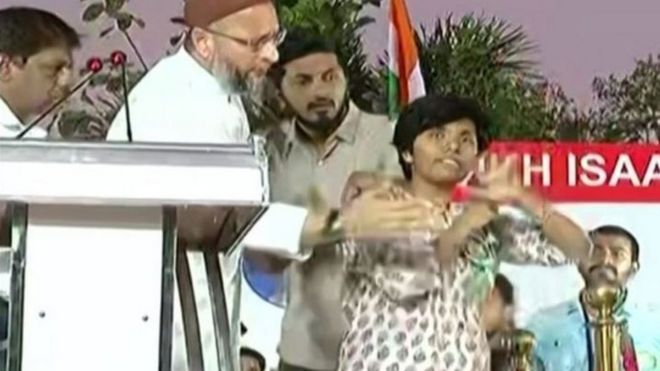 Image copyright ANI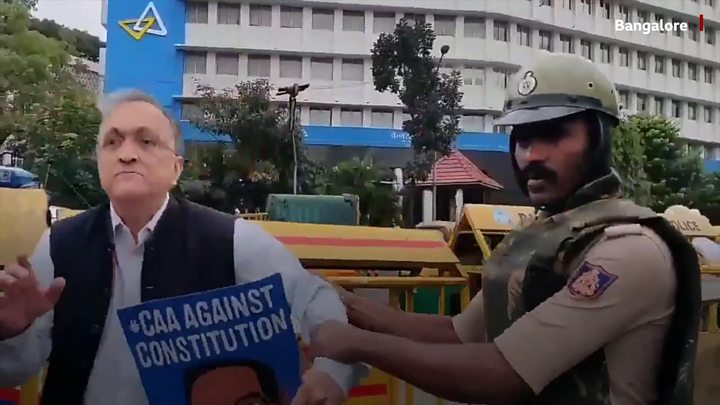



 CHINDIA ALERT: You'll be living in their world, very soon