Archive for ‘Security’

24/09/2019

China 70th anniversary: Pigeon ban and lockdowns as countdown begins

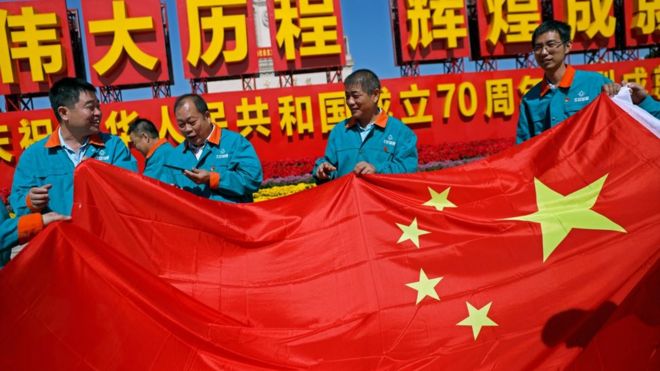
Chinese workers with Chinese flagImage copyright EPA
Image caption China is getting dressed up for its big birthday party

One week from now, the People’s Republic of China will mark its 70th anniversary with celebrations on a scale not seen in China in decades.

Beijing is pulling out all stops and 1 October will be flush with fireworks, fanfare and a huge military parade.

To ensure it goes smoothly, authorities have been ramping up security in the capital – and online – for weeks.

But with yet more protests expected in Hong Kong, the territory might just rain on China’s parade.

What is it all about?

The birth of modern China was declared on 1 October 1949, after the communists under Mao Zedong won the civil war that followed World War Two.
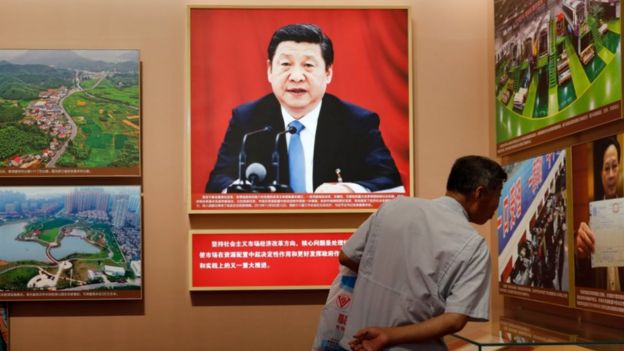
Portrait of Xi JinpingImage copyright EPA
Image caption Exhibitions are highlighting the achievements of the Communist Party

The date is marked every year, but celebrations for this 70th anniversary are expected to eclipse previous events.

It’s the first big anniversary since China has emerged as a global power. While 10 years ago China was a superpower in the making, it is now the world’s second largest economy, almost eye-to-eye with the United States.

What to expect?

The main celebrations will take place in the capital, Beijing, where there will be a grand military parade with “advanced weapons” on display, followed by a “mass pageant”.

President Xi Jinping – considered the most powerful Chinese leader since Mao – will address the Chinese people. His speech is expected to celebrate China’s rapid growth and which will be closely watched for any indication of the country’s direction in the coming years.

The president will also hand out honours for contributions to the country and in the evening there will be a grand gala and fireworks show.

All official Chinese celebrations are carefully choreographed and the success of this one is particularly important to the government.

The Dos and Don’ts

The parade – open to invited guests only – will take place around Tiananmen Square in central Beijing. The surrounding area will be practically under lockdown, and in fact has been so several times already.

During rehearsals leading up to the big day, hotels near Tiananmen Square told guests that for several hours each day, no-one would be able to leave the hotel or return to it should they be out, leading to much travel chaos and rebookings.

Many shops and restaurants in the centre are also closed or have shortened hours and some subway stations are temporarily shut.
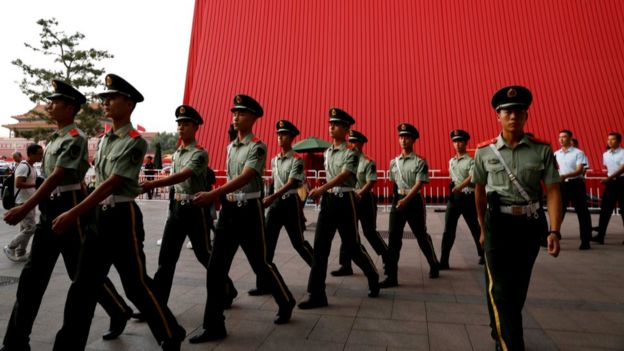
Chinese paramilitary policeImage copyright EPA
Image caption Security is tight ensure the party goes to plan

Trains to Beijing are running numerous safety checks on their passengers and vehicles going into the city are also being tightly watched.

On the big day itself, areas around Tiananmen Square will be blocked and guarded. Local residents will need to identify themselves if they want to pass.

To ensure the sun will shine brightly on the celebration in notoriously polluted Beijing, several coal plants and construction sites in and around the city have been ordered to stop work for the duration.

There’s also a ban on any low-flying aerial vehicles in place. That means anything from light aircraft to drones, balloons and even racing pigeons.

Censorship galore

Across much of the city centre, there are national flags set up at every door. Voluntary inspectors are monitoring the streets and locals have told the BBC they’re being questioned after having even brief conversations with foreigners

One person said she was asked by an inspector: “Who were those foreigners? Why were they here?”

The tight control naturally extends online as well. Popular social media platform Weibo said it was deleting content that “distorts” or “insults” the country’s history ahead of the anniversary.
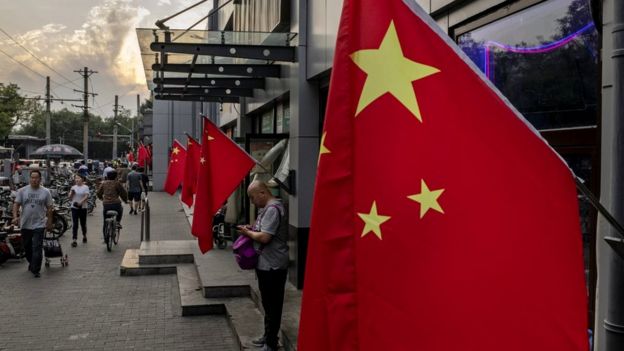
Chinese flags outside a row of shopsImage copyright GETTY IMAGES
Image caption Every house and every shop is sporting a national flag

Chinese journalists are always expected to toe the party line anyway, but starting in October they will have to pass an extra test to prove they are versed particularly in Xi Jinping’s teachings, officially called Xi Jinping Thought on Socialism with Chinese Characteristics, which has been written into the constitution.

Whether or not they pass the exam will then determine whether they’ll be accredited as journalists.

“The fundamental point with this ‘training’ and indoctrination process isn’t so much about the content,” David Bandurski of China Media Watch told the BBC.

“It is about reinforcing the message and understanding among journalists that they work, first and foremost, for the Chinese Communist Party, and serve its agenda.”

So not only will the events be choreographed – the domestic coverage of them will also be tightly guarded.

What about Hong Kong?

Despite Beijing’s determination to let its achievements shine on 1 October, there’s a good chance Hong Kong will pull focus.

Anti-Beijing protests always take place in Hong Kong on China’s National Day, but this time, the activists know that the world is watching.

Anti-government protests have rocked the city for months and the situation shows no sign of dying down.

Clashes between police and activists have been becoming increasingly violent, with police using tear gas and activists storming parliament.
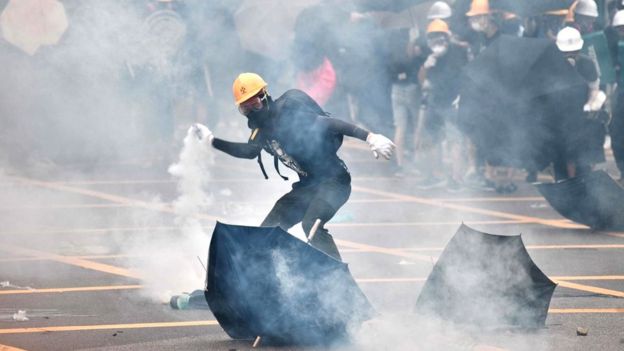
Protester throwing a tear gas can back at the policeImage copyright AFP
Image caption The protests have often escalated into violent clashes

That means two things for 1 October: official celebrations in the territory are being toned down to avoid clashes – the annual fireworks display has been cancelled – while at the same time, activists are planning to step up their protests.

On Sunday 29 September, a “Global Anti Totalitarianism March” is scheduled to take place at various locations around the world in support of Hong Kong.

On 1 October itself, a march in central Hong Kong is planned with everyone asked to wear black.

If the past weeks’ demonstrations are anything to go by, the smiles and celebrations in Beijing will be competing for media space with pictures of tear gas and angry young protesters in Hong Kong.

Source: The BBC

16/05/2014

Islamic leaders join efforts against extremism – China – Chinadaily.com.cn

China’s top Islamic leaders urged the nation’s Muslims to resist religious extremism and oppose to terrorism after a number of violent attacks in the Xinjiang Uygur autonomous region in March and April.

An SVG map of China with the Xinjiang autonomo...

An SVG map of China with the Xinjiang autonomous region highlighted Legend: Image:China map legend.png The orange area is Aksai Chin, a part of Xinjiang which is claimed by India. (Photo credit: Wikipedia)

Around 80 religious leaders and scholars discussed Islamic doctrine by quoting the Quran and the teachings of the Prophet Muhammad on Wednesday and Thursday in Urumqi, the region’s capital. On Thursday, Islamic leaders in China passed a proposal calling on all Muslims in the country to regulate their behavior, resist religious extremism and improve their moral outlook.

Abulitif Abdureyim, director of the Xinjiang Islamic Association, said governments at all levels in the region are resisiting religious extremism.

“The attackers who carried out the terrorist activities cannot go to heaven because they have violated the sayings in the Quran,” he said.

Wang Yujie, a professor of religious studies at Renmin University of China, said separatist forces are the main source of terrorism in Xinjiang.

In recent years, China has seen a number of violent attacks on police, government organs and civilians. Most of the attacks have taken place in Xinjiang.

A national security blue paper said on May 6 that religious extremism was the major reason for 10 violent terrorist attacks last year.

via Islamic leaders join efforts against extremism – China – Chinadaily.com.cn.

Enhanced by Zemanta
08/09/2013

Jairam blames ‘forcible acquisition’ for Naxal problem

The Hindu: “Coming down heavily on PSUs for displacing tribals, Union Minister Jairam Ramesh on Sunday blamed their actions for growth of Naxalism in many areas and cautioned that the era of “forcible acquisition” was now over.

The Union Rural Development Minister said if the new Land Acquisition Act is implemented properly, it will put an end to “inhumane” displacement of tribals from forests and check Maoist menace. File photo

The Union Rural Development Minister said if the new Land Acquisition Act is implemented properly, it will put an end to “inhumane” displacement of tribals from forests and check Maoist menace.

“The record of public sector (PSUs) in displacements is worse than the record of the private sector. This is a sad truth… that more displacement has been caused by government and public sector projects than private sector projects…particularly in Naxal areas. And this is why Naxalism has grown in these areas,” the Minister said.

Mr. Ramesh slammed National Thermal Power Corporation for allegedly seeking police help for forcibly acquiring land in Keredari block of Jharkhand’s Hazaribagh district, where a villager agitating against land acquisition was shot dead two months ago.

He was addressing Hindi and regional media two days after Parliament passed the path-breaking ‘Right to Fair Compensation and Transparency in Land Acquisition, Rehabilitation and Resettlement Act, 2013’.

Criticising NTPC for the alleged forced acquisition, Ramesh said, “Companies must also learn to be sensitive, changing aspirations.”

“NTPC will face a challenge. If there is firing in an NTPC project and people get killed in that firing, they cannot acquire the land…Indian companies still believe that they can use government to forcibly acquire land. That era is gone. You cannot do forcible acquisition,” the Minister said when asked about the reported criticism by a top NTPC official of the new Land Acquisition legislation.

“If this (new) land acquisition law is properly implemented, it will defeat Naxalism,” he said, referring to incidents of “inhumane” displacement of tribals from forests for various public and private sector projects in mineral-rich states like Jharkhand, Odisha and Chhattisgarh.

The new law will be notified in three months.

Mr. Ramesh said, “Land Acquisition is the root of the Maoist issue. If you have a humane, sensitive and responsible land acquisition policy, lot of your problems relating to Naxalism would go. Tribals will be with you.

“It is a fact that many of the tribals have been displaced and they have not got proper compensation, they have not got rehabilitation and resettlement…particularly in mining of coal and irrigation projects,” he added.

Mr. Ramesh, the architect of the new Land Acquisition Bill, said the 119-year-old Land Acquisition Act, 1894, had a “very important role” in encouraging Maoist activities in Odisha, Chhattisgarh, Jharkhand, parts of tribal Maharashtra and tribal Andhra Pradesh.

When asked that 13 laws, including the Indian Railways Act, National Highways Act, Land Acquisition Mines Act and Coal Bearing Areas Acquisition and Development Act, under which bulk of the land acquisition takes place, are exempted from the purview of the Bill, the Minister said, “Within one year, all compensation, all rehabilitation and resettlement…all these Acts will come under the newly enacted legislation.””

via Jairam blames ‘forcible acquisition’ for Naxal problem – The Hindu.

See also:

04/10/2012

* Chinese gov’t to strengthen int’l cooperation on cyber issues

Xinhua: “The Chinese government will continue to strengthen international cooperation on cyber issues, and work with all countries to build an open and secure cyberspace, said an official here on Thursday at the ongoing Budapest conference on cyberspace.

Given the many challenges presented ahead, Huang Huikang, legal advisor and Director-General of the Department of Treaty and Law to China’s foreign ministry emphasized the importance of cooperation across the entire international community.

Although cyberspace is virtual, it needs rules and norms to follow, Huang said. China holds that the United Nations, as the most universal and representative international organization, is the best forum for elaboration of international norms and rules in cyberspace, he added.

Huang said China proposes that the following principles be observed in strengthening international cooperation on internet related issues.

The first, he said, concerned cyber sovereignty. He said that cyber sovereignty is the natural extension of state sovereignty into cyberspace and should be respected and upheld.

“Every country is entitled to formulate its policies and laws in light of its history, traditions, culture, language and customs, and manage the internet accordingly,” he said.

The second concerned the free flow of information, which he called a “double edged sword,” adding that it was no excuse for the “illegal and irresponsible information rampant on the internet,” which threatened national security, social orders and the lawful rights of people.

Huang also called for peaceful use of cyberspace, equitable development, and international cooperation, noting that all countries were equally entitled to share in the management of critical Internet resources. He proposed that international cooperation could be initiated in areas where there were common needs, such as in combating cybercrime and enhancing cyber security.

There are 540 million internet users in China now, making it the world’s top user quantitatively. But only 40 percent of the Chinese people had access to the internet. In 2011, e-commerce in China amounted to 930 billion U.S. dollars, or 12.5 percent of its annual gross domestic product.”

via Chinese gov’t to strengthen int’l cooperation on cyber issues: official – Xinhua | English.news.cn.

Law of Unintended Consequences

continuously updated blog about China & India

ChiaHou's Book Reviews

continuously updated blog about China & India

What's wrong with the world; and its economy

continuously updated blog about China & India