Chindia Alert: You’ll be Living in their World Very Soon
aims to alert you to the threats and opportunities that China and India present. China and India require serious attention; case of ‘hidden dragon and crouching tiger’.
Without this attention, governments, businesses and, indeed, individuals may find themselves at a great disadvantage sooner rather than later.
The POSTs (front webpages) are mainly 'cuttings' from reliable sources, updated continuously.
The PAGEs (see Tabs, above) attempt to make the information more meaningful by putting some structure to the information we have researched and assembled since 2006.
Children from Hejiazhuang primary school paint in Hejiazhuang Village of Wangba Township in Kangxian County, northwest China’s Gansu Province, May 30, 2020. (Xinhua/Chen Bin)
BEIJING, May 31 (Xinhua) — Chinese President Xi Jinping has greeted children of all ethnic groups across the country on International Children’s Day, which falls on June 1.
Xi, also general secretary of the Communist Party of China Central Committee and chairman of the Central Military Commission, called on children to study hard, firm up their ideals and convictions and develop strong bodies and minds to prepare for realizing the Chinese Dream of national rejuvenation.
Xi noted that children nationwide have experienced a special period during the country’s fight against COVID-19 as all Chinese people stand united.
Children paint elephants at the Chimelong Safari Park in Guangzhou, south China’s Guangdong Province, May 27, 2020. Two female Asian elephants gave birth to two babies respectively on April 30 and May 12 in the Chimelong Safari Park in Guangzhou, adding the total number of the Asian elephants here to 27. (Xinhua/Liu Dawei)
Witnessing the great feats of Chinese people working together and rising to challenges, the children have followed the call of the Party and the government to support the anti-epidemic battle with their concrete actions, demonstrating the fine spirit of the country’s children, Xi said.
He stressed that China’s children today are not only undergoing and witnessing the realization of the country’s first centenary goal, they are also a new force for achieving the second centenary goal and building China into a great modern socialist country.
Xi urged Party committees and governments at all levels as well as the society to care for children and create favorable conditions for their growth.
Chinese President Xi Jinping, also general secretary of the Communist Party of China Central Committee and chairman of the Central Military Commission, takes part in a deliberation with his fellow deputies from the delegation of Inner Mongolia Autonomous Region at the third session of the 13th National People’s Congress (NPC) in Beijing, capital of China, May 22, 2020. (Xinhua/Ju Peng)
BEIJING, May 23 (Xinhua) — “What is people first?” Chinese President Xi Jinping asked, before offering his own answer when he was talking with lawmakers at the ongoing national legislative session.
“So many people worked together to save a single patient. This, in essence, embodies doing whatever it takes (to save lives),” he said.
Xi, also general secretary of the Communist Party of China Central Committee and chairman of the Central Military Commission, is a deputy to the 13th National People’s Congress.
During his deliberations with fellow deputies from Inner Mongolia Autonomous Region on Friday, “people” was a keyword.
Xi referred to a story told by another deputy that morning. Luo Jie, from the COVID-19 hard-hit province of Hubei, told reporters at the session how medical workers in his hospital spent 47 days saving an 87-year-old COVID-19 patient.
“About 10 medical workers meticulously took care of the patient for dozens of days, and finally saved the patient’s life,” Xi said. “I am really impressed.”
In the COVID-19 pandemic, health workers around the world got to know the elderly are the most difficult to treat and require the most sophisticated medical resources. China has given every patient equal treatment irrespective of their age or wealth.
Chinese President Xi Jinping, also general secretary of the Communist Party of China Central Committee and chairman of the Central Military Commission, takes part in a deliberation with his fellow deputies from the delegation of Inner Mongolia Autonomous Region at the third session of the 13th National People’s Congress (NPC) in Beijing, capital of China, May 22, 2020. (Xinhua/Huang Jingwen)
In Hubei alone, more than 3,600 COVID-19 patients over the age of 80 have been cured. In the provincial capital Wuhan, seven centenarian patients have been cured.
“We mobilized from around the nation the best doctors, the most advanced equipment and the most needed resources to Hubei and Wuhan, going all out to save lives,” Xi said during the deliberations, adding that the eldest patient cured is 108 years old.
“We are willing to save lives at all costs. No matter how old the patients are and how serious their conditions have become, we never give up,” Xi said.
Xi joined political advisors and lawmakers on Thursday and Friday in paying silent tribute to the lives lost to COVID-19 as the top political advisory body and the national legislature opened their annual sessions.
This year’s government work report said China’s economy posted negative growth in the first quarter of this year, but it was “a price worth paying” to contain COVID-19 as life is invaluable.
“As a developing country with 1.4 billion people, it is only by overcoming enormous difficulties that China has been able to contain COVID-19 in such a short time while also ensuring our people’s basic needs,” the report said.
Epidemic response is a reflection of China’s governing philosophy.
The fundamental goal for the Party to unite and lead the people in revolution, development and reform is “to ensure a better life for them,” Xi said.
The nation’s average life expectancy reached 77 years in 2018, more than double that in 1949, when the people’s republic was founded.
Chinese people are not just living longer but better lives, with more material wealth and broader choices to pursue individual dreams. All rural poor will bid farewell to poverty this year as part of the goal of building a moderately prosperous society in all respects.
The Party’s long-term governance, Xi said, rests on “always maintaining close bond with the people.”
“We must always remain true to the people’s aspiration and work in concert with them through thick and thin,” Xi said.
Chinese President Xi Jinping, also general secretary of the Communist Party of China Central Committee and chairman of the Central Military Commission, checks the ecological protection work of the Fenhe River in Taiyuan, capital city of north China’s Shanxi Province, May 12, 2020. (Xinhua/Li Xueren)
BEIJING, May 13 (Xinhua) — Chinese President Xi Jinping attaches great importance to ecological conservation and environmental protection. He has spoken of the issue on many occasions. The following are some highlights of his quotes.
— Lucid waters and lush mountains are invaluable assets.
— Ecological conservation and environmental protection are contemporary causes that will benefit many generations to come.
— A sound ecological environment is the basic foundation for the sustainable development of humanity and society.
— We should adhere to the integrated protection and restoration of mountains, rivers, forests, farmlands, lakes and grasslands, and coordinate efforts to strengthen ecological and environmental protection in river basins with efforts to promote an energy revolution, green production and lifestyle, and economic transformation and development.
— A good ecological environment is the fairest public product and the most accessible welfare for the people.
— The quality of the eco-environment is the key to building a moderately prosperous society in all respects.
— Economic development should not be achieved at the cost of the ecology. The ecological environment itself is the economy. Protecting the environment is developing productivity.
— We shall protect ecosystems as preciously as we protect our eyes, and cherish them as dearly as we cherish our lives.
— The history of civilizations shows that the rise or fall of a civilization is closely tied to the quality of the ecological environment.
WINDHOEK, May 1 (Xinhua) — China’s poverty eradication policy and deliberate attempts to improve the lives of the rural population is a model for Namibia and Africa in general to follow in dealing with inequality in society, experts have said.
University of Namibia social and political analyst Ndumbah Kwamwayah said China has laid a strong foundation in dealing with poverty and emancipating its people since the days of Mao Zedong.
“Chinese literature especially the life journey of Chairman Mao is a good benchmark for developing countries that want to find ways of creating equal societies. If you check here in Namibia inequality and rural poverty are there despite our economy being agro-based.
“We need to take a cue from countries like China who have created better societies through improving agriculture production and mechanization through investing heavily in local people,” he said.
According to Kamwayah, China continues to value its agro-based economy as well as investment in rural development.
“China through its leaders in the past and present has come up with strong policies of decentralizing key services and also curbing rural urban drift through developing villages. Chinese literature also strongly captures the aspect of local development.
“In Namibia there are many regions including the Kunene, Zambezi and Kavango which are heavily affected by poverty. These need deliberate policies to be improved,” he said.
Political analyst from University of Namibia, Hoze Riruako said poverty eradication remains one of the biggest challenges confronting Namibia in contemporary times.
“What is more important is not to reproduce the Chinese way of doing things but to pick certain traits that can dent poverty and rural development from them,” he said.
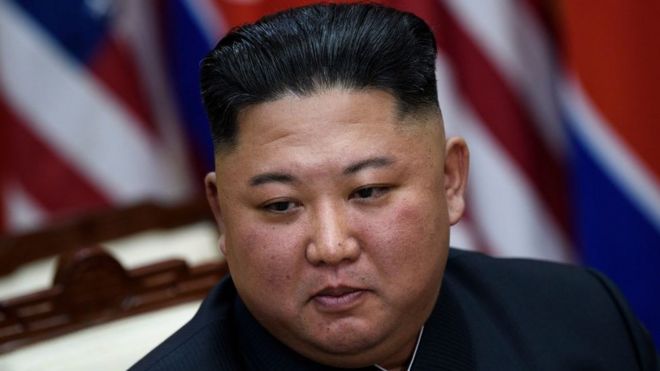
Image copyright BRENDAN SMIALOWSKIImage caption Kim Jong-un has not been seen in public for more than two weeks
Speculation and rumour about Kim Jong-un’s health may amount to nothing, but questions about who might succeed him in the short or long term will always be there. The BBC spoke to analysts about the contenders and whether history is on their side.
A male member of the Kim family has been in charge of North Korea ever since its founding by Kim Il-sung in 1948 – and the mythology of this family runs deep throughout society.
Propaganda about its greatness begins for citizens before they can even read: pre-schoolers sing a song called: “I want to see our leader Kim Jong-un.”
So how can you imagine a North Korea without this symbolic and political figure at the top? How would elites organise themselves, as well as society as a whole?
The easy answer is: we don’t know. More interestingly, they don’t know either. They have never had to do it.
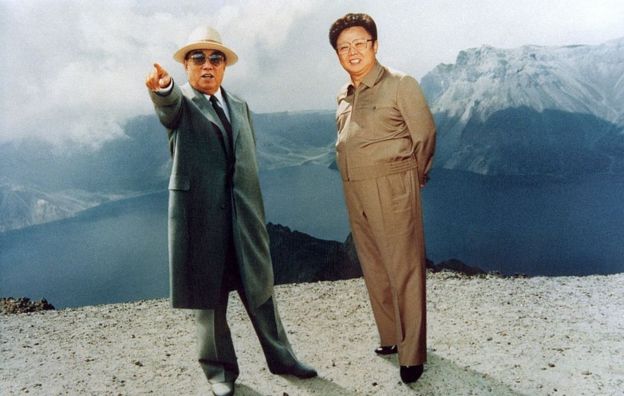
Image copyrightXINHUAImage captionKim Il-sung is the founder of North Korea and his son Kim Jong-il took over
As Kim Jong-un was being prepared for power, they even began using the term “Paektu Bloodline” to help legitimise his rule. Paektu is the sacred and mythologised mountain where Kim Il-sung is said to have waged guerrilla war and where Kim Jong-il was reportedly born. Kim Jong-un still goes there when he wants to emphasise important policy decisions.
There has always been a Kim at the ideological heart of the country.
What would North Korea be like without such an heir? Kim Jong-un, 36, is believed to have children – but they are far too young. It is thought he has three children, the oldest being 10 and the youngest three. Kim Jong-un himself was considered young when he took power – he was 27.
It is likely that some sort of group leadership would emerge, perhaps as in Vietnam, that leans heavily on the founder’s teachings and legitimacy to boost their own standing.
Observers can track who holds certain key positions and can follow news and open-source intelligence about important institutions, but can’t really tell how factions are developing, nor who is holding power through personal rather than institutional bonds. Moreover, sometimes vice or deputy directors wield more real power than the titular heads of institutions. This makes all predictions extremely difficult.
The three remaining Kims
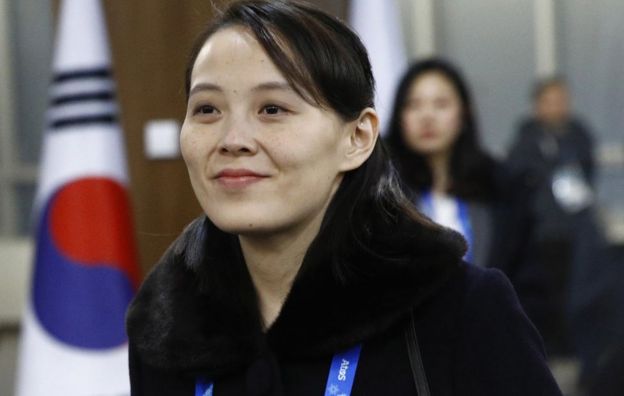
Image copyrightPATRICK SEMANSKY – POOL /GETTY IMAGESImage captionKim Yo-jong, as the only woman in the top leadership, has sparked fascination
The are three Kims who could potentially be involved in the political make-up of North Korea if Kim Jong-un were to disappear. They all face limitations in carrying on family rule.
The first is Kim Yo-jong, Kim Jong-un’s younger sister. She is said to have been a favourite of her father who commented on her precocity, her interest in politics from a young age. Her manner is efficient, mild and one suspects rather observant. Much has been made of her closeness to her brother. At the Singapore Trump-Kim summit she was famously on hand to pass him a pen to sign the agreement with, and at the next summit in Hanoi, was pictured peeking out from behind corners as her brother posed for statesman-like photos.
Yet she was not above a temporary demotion after the Hanoi summit – purportedly because of its failure although this will never be confirmed. She doesn’t sit on the top policy-making body, the State Affairs Commission, but is an alternate member of the Politburo and vice director of the Propaganda and Agitation Department (PAD) of the Workers’ Party of Korea. These may seem like incomprehensible acronyms but the PAD is a powerful organisation that ensures ideological loyalty in the system.
She is a woman, however, and this makes it hard to imagine her occupying the top position in such a deeply patriarchal country. North Korea is an extremely male state, in which gender carries rigid expectations. Being supreme leader, and certainly running the military, does not fit in the range of womanly duties.
The second is Kim Jong-chul. He is Kim Jong-un’s older brother, but has never appeared interested in politics or power. (He is known to be interested in Eric Clapton.) At most, he could be a symbolic link to the Kim family: perhaps made the head of a foundation and put forward to read the odd speech.
The final one is Kim Pyong-il, Kim Jong-il’s half-brother. His mother – Kim Jong-il’s stepmother – was angling to have him become Kim Il-sung’s successor. She failed and was sidelined by Kim Jong-il as he rose in influence. Kim Pyong-il was sent to Europe in 1979, where he has held various ambassadorships, returning to North Korea only last year. This means it is very unlikely he has the network to be a central player in elite politics in Pyongyang.
The second-most powerful man in North Korea right now
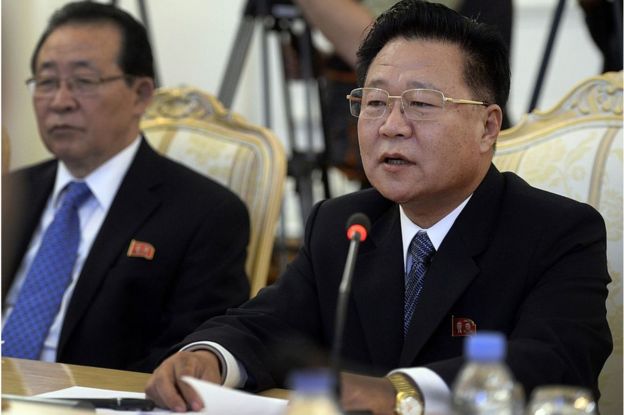
Image copyrightALEXANDER NEMENOV/AFP VIA GETTY IMAGESImage captionAs special envoy for Kim Jong-un Choe Ryong-hae (right) has met foreign dignitaries
There are other individuals who have been central in the Kim Jong-un era, but it is difficult to know who among them would form co-operative relationships and who would compete with one another.
One is Choe Ryong-hae. He has had his ups and downs under Kim Jong-un, but having weathered a few storms currently sits on the presidium of the politburo and is also first vice chairman of the State Affairs Commission. Last year he became the first new president in 20 years, replacing the aging Kim Yong-nam – so he is the person who represents the North at international engagements.
Choe has also held high positions in the military and the Organization and Guidance Department (OGD) of the Worker’s Party of Korea, responsible for enforcing loyalty throughout the regime. This is an extremely powerful organisation: it enforces the adherence of all citizens to North Korea’s ideology. He is probably the second most powerful man in North Korea.
The old spymasters and rising political grandees
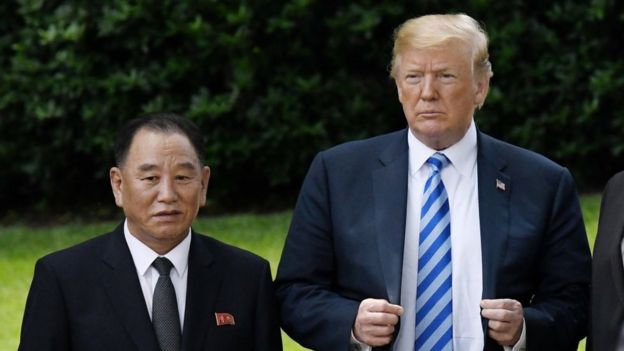
Image copyrightOLIVIER DOULIERY-POOL/GETTY IMAGESImage captionKim Yong-chol travelled to Washington DC to meet Donald Trump
Another is Kim Yong-chol. This general paved the way for the Trump-Kim summits, meeting US Secretary of State Mike Pompeo several times. He has been head of the United Front Department (responsible for relations with South Korea) and the Reconnaissance General Bureau, the country’s main intelligence service. He seems to have suffered a demotion following the collapse talks with the United States, but it is unlikely this spymaster will remain obscure for long.
Yet another is Kim Jae-ryong. As well as being on the State Affairs Commission, he is Premier of the Cabinet, a moderately influential position. Relatively little is known about him, but his star has risen in the past years as others have fallen. He is known for managing industries and ran the most isolated province, home to key military-industrial sites, for several years. This may mean he has been closely involved in the nuclear program.
Jong Kyong-taek is responsible for the State Security Department, which investigates and punishes political crimes. It also helps physically protect the leadership. These are crucial responsibilities that help enforce stability in the system.
Hwang Pyong-so is another official who has held top military posts and has run the OGD in the Kim Jong-un era. Like Choe (and many others) he has been disciplined; he doesn’t seem to have been rehabilitated in the same way, however. Other 2010s foreign policy stalwarts Ri Yong-ho and Ri Su-yong have also seen roles diminish recently. They have been replaced by Ri Son-gwon and Kim Hyung-jun. The former is said to be an ally of Kim Yong-chol.
The military enforcers
A handful of top generals of the Korean People’s Army (KPA) would also certainly exert influence in any transition period. Currently, two men sit atop the General Political Bureau of the KPA, Kim Su-gil and Kim Won-hong. This bureau enforces political loyalty in the military, something that would be absolutely crucial during periods of uncertainty.
Kim Won-hong, helps illustrate how difficult it is to predict how power would be shared if Kim Jong-un were no longer there. Kim Won-hong and Hwang Pyong-so had been thought to be rivals, competing to influence Kim Jong-un at the other’s expense.
Amongst top elites, who would clash and who would ally? Would there be pro and anti-Kim Yo-jong factions? Would the fear of instability stop rivalries from getting out of hand? After all, it is in no elite politician’s interest to see the state collapse, opening the door for some kind of takeover by South Korea, or even China.
There is currently no perfect contender: his sister would have to overcome the sexism and the break from tradition of a male heir. Anybody else is not directly descended from that all-important Paektu bloodline. but in the end, they will all have to think of the unity of the state they have defied every international norm to preserve.
Tokyo (Reuters) – Japan on Saturday moved to contain the economic impact of a coronavirus outbreak originating in China as strict new measures aimed at limiting the spread of the virus, including targeting foreign visitors, came into effect.
Japan had 17 confirmed cases as of Friday, including some without symptoms. One of the most recent was a bus guide who worked on a bus tour for tourists from China – the same tour as a bus driver who also came down with the virus.
Prime Minister Shinzo Abe told a Saturday meeting of a government task force coordinating Japan’s response to the virus to come up with steps aimed at easing the impact of the outbreak on Japan’s economy.
Abe has made tourism a key part of his economic policy, with a large proportion of foreign visitors from China, and major Japanese companies have a number of factories in China.
“I ask ministers to compile measures to use reserves (in the state budget) and implement them as soon as possible,” Abe was quoted by Kyodo news agency as saying.
“The new coronavirus is having a major impact on tourism, the economy and our society as a whole. The government will do its utmost to address the impact.”
No further details were given, though Abe stressed ensuring that Japanese residents have access to medical checkups and masks, which have been selling out around the nation.
New measures to fight the disease took effect on Saturday, including banning the entry of Chinese holding passports issued by Hubei, where the disease is thought to have originated, as well as all foreigners who had visited the province within two weeks, whether they show symptoms or not.
The government also brought forward implementing measures including compulsory hospitalisation and the use of public funds for treatment by six days to Saturday.
Of the 2.6 million tourists who came to Japan in December 2019, nearly 600,000 were Chinese, outnumbered only by South Koreans, government data shows. Japan aims to have 40 million tourists visit the country in 2020, up from 31.8 million in 2019.
On Friday, the president of Japanese airline ANA Holdings (9202.T) said it was considering suspending flights to China after February reservations plunged, Jiji news agency reported.
JTB Corporation, Japan’s largest travel agency, said it was suspending tours to China throughout February, Kyodo news agency reported.
LANZHOU, Sept. 18 (Xinhua) — A total of 26 participants from 21 countries including Brazil, New Zealand and the United States attended the closing ceremony of the Gansu International Fellowship Program held Tuesday in the capital city of Lanzhou, northwest China’s Gansu Province.
Held by the provincial government, the 30-day program, starting from Aug. 20, focused on China’s overall development in areas such as the economy, society and culture, as well as its anti-poverty campaign.
Economic experts, scientists and sociologists from local universities and research institutes as well as government departments were invited to share their experience and give lectures.
During the program, all participants visited the Mogao Grottoes, a UNESCO World Heritage site. Based on the culture courses, they exchanged ideas with local officials and experts.
“I was very impressed with the comprehensive structure planning being undertaken to turn Lanzhou and Gansu as a whole into a major hub of China,” said Robert Love, a strategy and policy planner with Selwyn District Council, New Zealand, after his visit to the Lanzhou Urban Planning Exhibition Hall.
Philippe Dall’Agnol, a state attorney from Brazil, told Xinhua that China’s poverty alleviation efforts and means of increasing production were particularly worth studying, adding that when he returns to Brazil, he will continue to be a messenger of peace and a bridge of friendship, to actively promote exchanges and cooperation between the two countries.
Since it was initiated in 2006, a total of 309 participants from 62 countries have graduated from the program, making it an important platform for international exchanges and cooperation.
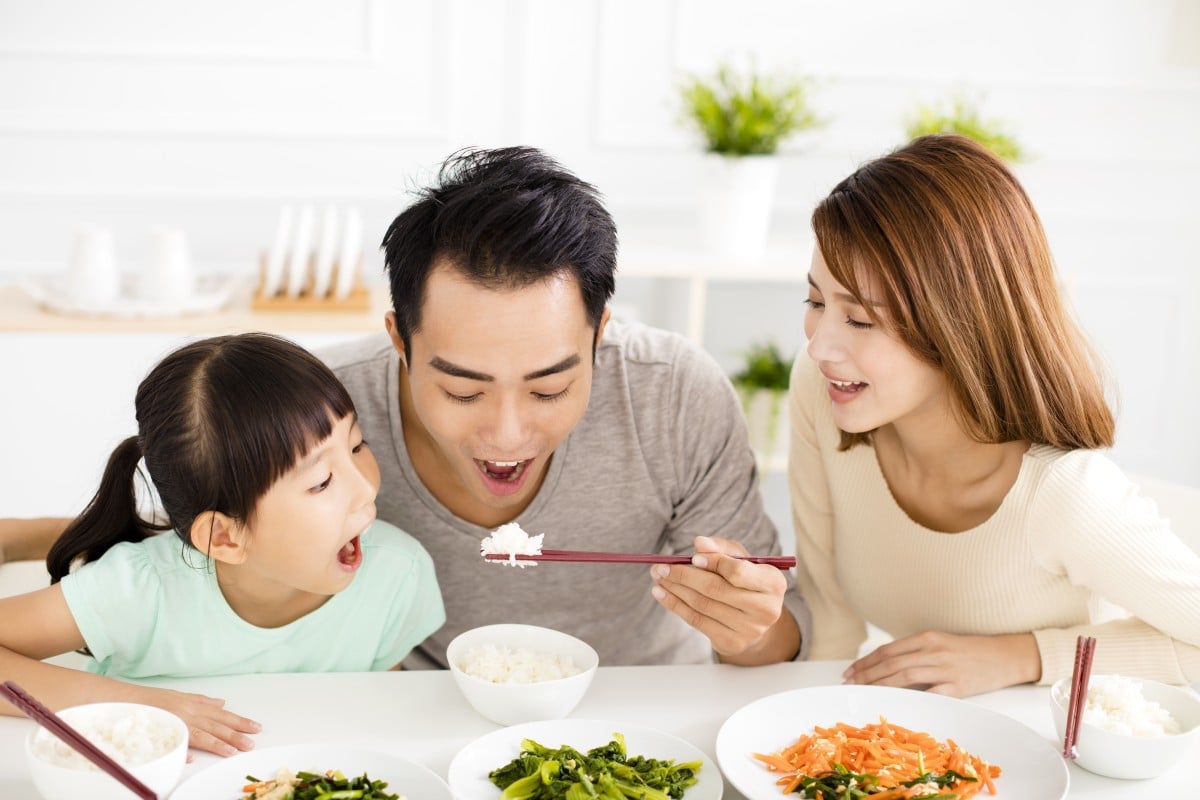
The traditional view that the man of the house must be the breadwinner may be crumbling, according to a recent survey
Just over half of the men questioned said they were in favour of stay-at-home fathers. Photo:Shutterstock
More Chinese husbands are open to the idea of becoming stay-at-home fathers in a shift away from traditional mores, according to a recent survey.
The idea that the man of the house should be the breadwinner, while child care and domestic duties are the woman’s duties, is deep-rooted in Chinese culture.
But the survey, jointly conducted by the state-run China Youth Daily and questionnaire website wenjuan.com earlier this month, found that 52.4 per cent of male respondents supported the idea of men being a full-time carer.
The number in favour was lower among women, just 45.8 per cent of whom supported the idea.
But however keen men may be about the idea, there may also be practical difficulties.
Yu Xiang, a middle schoolteacher in Shanghai who has a six-month-old daughter, said he was willing to be a stay-at-home father but in reality it was not practical to do that because his wife, who is also a teacher, did not earn enough to support the family.
He also said his wife was not happy leaving him to do the housework, adding that she often scolded him for doing it badly. “She also said he would not feel comfortable letting me take care of our daughter,” he said. “She says I am too careless.”
Chinese father decides to drop in on daughter’s school … via helicopter
Robin Ge, a financial manager from Shanghai, admitted he took a more old-fashioned view of household duties.
The father of a five-year-old boy said he would not accept the idea of becoming a stay-at-home father even if his wife, an office worker, started earning more than him.
“Perhaps I am a traditional Chinese man,” he said. “I believe men should earn more than women. I remember my father told me years ago that a man’s status in his family is determined by his economic status. Compared with stay-at-home mothers, the acceptance rate for stay-at-home fathers among the public is very low.
“I agree that a father caring for the kids has benefits, such as helping the kid to be brave and responsible. However, that doesn’t mean a man needs to be full-time father. What he should do is to spend much of his spare time caring for and playing with his kid.”
The survey questioned 1,987 married people, some 89.2 per cent of whom were parents. Sixty per cent of the respondents agreed that the stereotypical view of the husband being the breadwinner put fathers off staying at home to look after the children.
However, the number of women who said they were opposed to the idea of stay-at-home fathers, 30.9 per cent, was slightly higher than the 28 per cent of men who did not support the notion.
But women whose husbands have given up their jobs to look after the children generally appreciated what they had done.
“I don’t think a man who stays at home is a failure in life. His sacrifice helps me so much and I really am grateful for his support,” a woman wrote on China’s leading parental website ci123.com, adding that this kind of family is more stable and the relationship between husband and wife is more harmonious.
Chinese father takes daughter, 10, to top school’s open day despite her being on an IV drip
Zhang Baoyi, a sociology professor at the Tianjin Academy of Social Sciences, said he believed attitudes would change as society evolved.
“To embrace this practice, we need to recognise the contribution and value of homemakers,” Zhang told China Youth Daily.
“The fact that dads are willing to be more involved in their children’s lives shows that the traditional mentality of ‘career husband and domestic wife’ is changing.”
Zhang also said that more parents in general were willing to stay at home to provide full-time child care because they were attaching increasing importance to their children’s education.
“The number of stay-at-home fathers or mothers is increasing,” he said.
“Couples should adjust the [family] model … according to their economic conditions and abilities to educate the children.”




 CHINDIA ALERT: You'll be living in their world, very soon