Archive for ‘South Africa’

08/11/2019

Xi Focus: Xi’s trip to Greece, Brazil to advance bilateral ties, BRICS cooperation

BEIJING, Nov. 7 (Xinhua) — Chinese President Xi Jinping’s upcoming visit to Greece and Brazil is expected to intensify China’s relations with the two countries and enhance BRICS cooperation, officials said here Thursday.

At the invitation of Greek President Prokopis Pavlopoulos, Xi will pay a state visit to Greece from Nov. 10 to 12, said Vice Foreign Minister Qin Gang.

This will be the first visit to the European country by a Chinese president after an interval of 11 years, which will exert a historic influence of China-Greece ties and push forward China-Europe relations and Belt and Road cooperation, Qin said.

He noted that China and Greece, both with old civilizations, are trustworthy and helpful friends respecting and supporting each other on core interests and major concerns.

Greece is among the first European Union (EU) countries to sign an intergovernmental cooperation document with China to jointly construct the Belt and Road, Qin said, adding that Greek prime ministers attended the first and second Belt and Road Forum on International Cooperation in Beijing.

The two sides have conducted fruitful cooperation on the principle of mutual benefit and win-win cooperation and witnessed increased bilateral trade and investment, Qin said.

“The Piraeus Port project, a flagship project for the Belt and Road cooperation, has made important contributions to the local economic and social development of Greece and played an important role in advancing connectivity in various regions around the globe,” said the vice foreign minister.

Speaking of people-to-people and cultural exchanges, Qin said peoples of the two countries respect each other and advocate openness and inclusiveness in their close interactions.

“Both China and Greece hold that different civilizations should respect each other and facilitate experience sharing, mutual learning and conversation among civilizations,” he said.

China and Greece are new friends of the “17 +1” cooperation. In April this year, Greece became a full member of the China-Central and Eastern European Countries Cooperation Mechanism, adding new opportunities to the development of this mechanism, which is also conducive to developing China-EU relations and China-EU connectivity, Qin said.

Greek Prime Minister Kyriakos Mitsotakis led a delegation to the ongoing second China International Import Expo (CIIE). Xi met with him, and the two leaders visited the Greek pavilion, Qin said.

According to Qin, in Greece, Xi is scheduled to hold talks respectively with Pavlopoulos and Mitsotakis, in a bid to consolidate political mutual trust and traditional friendship between the two countries, intensify pragmatic cooperation in trade, investment, infrastructure and other fields, uphold multilateralism and free trade and build an open world economy.

Besides, Qin noted that the Chinese and Greek leaders will conduct cultural exchanges and advocate dialogues among civilizations.

The two sides will issue a joint statement on strengthening the comprehensive strategic partnership, draw up a blueprint for the development of bilateral ties, sign intergovernmental cooperation documents on investment and education, and ink commercial agreements in such fields as ports, finance, and energy.

Greece, in the West, and China, in the East, are heirs of ancient civilizations. Noting that both China and Greece are faced with the mission of rejuvenation and prosperity, Qin said the two countries can enlighten the world to deal with various problems and challenges.

Xi’s upcoming visit to Greece shows respect and appreciation of the ancient Chinese civilization to the ancient Greek civilization, as well as the expectation of jointly building a community with a shared future for humanity, Qin said.

It is believed the visit will elevate the level of bilateral cooperation in an all-round way and inject new impetus to the development of China-EU relations with fruitful results, Qin stressed.

According to Vice Foreign Minister Ma Zhaoxu, at the invitation of Brazilian President Jair Messias Bolsonaro, Xi will attend the 11th BRICS summit in Brasilia, the capital of Brazil, from Nov. 13 to 14.

BRICS is the acronym for an emerging-market bloc that groups Brazil, Russia, India, China and South Africa.

Xi is scheduled to attend the closing ceremony of the BRICS business forum, closed and public meetings of the BRICS leaders’ meeting and the BRICS leaders’ dialogue with the BRICS Business Council and the New Development Bank. The leaders’ declaration is expected to be released, Ma said.

Xi will hold talks with Bolsonaro, sign cooperation documents in various fields, and hold bilateral meetings with leaders of other participating countries to exchange views on ties and BRICS cooperation, Ma said.

As the world is undergoing changes rarely seen in a century and confronted with unprecedented opportunities and challenges, BRICS countries have drawn ever-growing attention worldwide, Ma said, stressing that China appreciates the efforts made by Brazil in its preparation and stands ready to jointly prompt the meeting to achieve fruitful results.

He voiced expectations of the Chinese side.

“The Chinese side hopes that BRICS countries will further enhance political mutual trust, boost mutually beneficial cooperation and forge a more comprehensive, closer and broader partnership,” Ma said.

As for safeguarding multilateralism and strengthening global governance, Ma voiced China’s determination to make joint efforts with other BRICS countries to safeguard the rules-based multilateral trade system, the international order based on international law, and the international system with the UN at the core.

This aims to promote a more equitable, open, transparent and inclusive global governance system and safeguard common interests and development space of emerging markets and developing countries, Ma said.

“China believes the five BRICS countries should follow the trend of the new industrial revolution and facilitate economic transformation and upgrading,” Ma noted.

As an important outcome of last year’s Johannesburg meeting, the BRICS partnership for a new industrial revolution has progressed well in the past year, he said, adding that China is willing to work with concerned parties to accelerate the development of the partnership and tap more potential for cooperation projects, so as to propel high-quality development of the five countries.

“China looks forward to more cooperation on economy, trade, finance, political security and people-to-people exchanges, with projects meeting the development needs of the five countries and serving the interests of their peoples,” he said.

The Chinese side believes that with concerted efforts of all parties and under the political guidance of the five countries’ leaders, the 11th BRICS Summit will be a full success, Ma said, stressing that the BRICS countries will continue to contribute to world peace and development and the building of a community with a shared future for humanity.

Source: Xinhua

30/10/2019

Premier Li meets South African deputy president

CHINA-BEIJING-LI KEQIANG-SOUTH AFRICA-MEETING

Chinese Premier Li Keqiang meets with South African Deputy President David Mabuza at the Great Hall of the People in Beijing, capital of China, Oct. 29, 2019. (Xinhua/Ding Haitao)

BEIJING, Oct. 29 (Xinhua) — Chinese Premier Li Keqiang met with South African Deputy President David Mabuza Tuesday in Beijing, calling on the two sides to promote bilateral relations for new development.

Noting that South Africa is an important African country, Li said the continued development of bilateral relations is beneficial to China-Africa cooperation.

China is ready to work with South Africa to consolidate mutual political trust and promote practical cooperation and people-to-people exchanges to push for new development in bilateral relations, he said.

“Both China and South Africa are developing countries and have broad common interests,” said Li, adding that China stands ready to work with South Africa to closely communicate and coordinate in international and regional affairs and enhance cooperation in multilateral mechanisms such as the UN and BRICS, to jointly safeguard developing countries’ interests and maintain regional and world peace.

Mabuza, who is on an official visit to China and will co-chair the seventh plenary session of the China-South Africa Bi-National Commission with his Chinese counterpart, offered his congratulations for the 70th anniversary of the founding of the People’s Republic of China.

He thanked China for its long-standing support for South Africa and African countries’ development and conveyed his admiration for China’s great development achievements.

Mabuza said his country is willing to learn from China’s development experience, deepen practical cooperation across the board with China and push bilateral relations to reach a new level.

Source: Xinhua

08/09/2019

How a ban on sale of wild African elephants to zoos could affect China

  • International watchdog to vote on whether to extend restrictions to southern African countries that are the biggest exporters
  • If passed, China may find it hard to buy elephants from Africa
An elephant is hoisted into Chongqing zoo in southwestern China, on loan from another Chinese zoo. Photo: Reuters

China, one of the leading buyers of African elephants, could face difficulty in acquiring the mammals if a widening of a ban on their sale to zoos is ratified next week by the global regulator of wildlife trade.

A motion further restricting the sale of live elephants was on Sunday supported by 46 countries at the committee stage of the Convention on International Trade in Endangered Species of Wild Fauna and Flora (Cites) in Geneva. It will go to a final vote on August 28.

The sale of elephants from West, Central and East Africa is already banned – but there is a lower level of protection for them in southern African countries such as South Africa, Namibia and Zimbabwe, which are the top three exporters of wild elephants to overseas zoos, according to Cites.

Keeping elephants caught from the wild in zoos is considered cruel by conservation and animal rights groups.

Conservationists criticised Zimbabwe’s capture of 35 baby elephants that were exported to a Chinese zoo in February. There was also uproar from activists in 2015 when a video filmed in a Chinese zoo showed two dozen elephants bought from Zimbabwe exhibiting signs of distress.

Zimbabwe was among 18 countries that opposed the potential ban at the committee stage, along with the United States – another leading buyer of elephants from Africa. China was one of 19 countries that abstained, while the European Union’s 28 countries did not vote.

If the motion is passed, China and the US – both known to be buying elephants from Africa and keeping them in so-called captive facilities or zoos – may find it hard to source the animals from the continent. Zimbabwe has come under global scrutiny
for its capture and sale of elephants to captive facilities including zoos and safari parks in China and the US.

Peter Knights, founder and chief executive of WildAid, an environmental organisation in San Francisco, explained that Cites still allowed the movement of live elephants for on-site conservation efforts such as moving the animals back into the wild or to a national park where they had been depleted.

“This is not primarily a conservation issue but more about animal welfare,” he said. “As highly social, intelligent animals, African elephants do not usually do well in captivity, requiring very large areas, and often developing behavioural problems in captivity and not usually reproducing successfully – indicating far from ideal housing.”

According to Humane Society International, which promotes animal welfare, Zimbabwe has sold more than 100 baby elephants to zoos in China since 2012, with a further 35 reportedly awaiting export.

On Monday, 55 elephant specialists protested to the US wildlife management agency about plans for the country’s zoos to import juvenile elephants caught in the wild from Zimbabwe. They asked the agency to prohibit imports of wild-caught elephants for captivity in US facilities.

“We are vehemently opposed to the proposed imports,” the experts wrote in a letter to the agency. “Young elephants are dependent on their mothers and other family members to acquire necessary social and behavioural skills. Male calves only leave their natal families at 12 to 15 years old and females remain for life. Disruption of this bond is physically and psychologically traumatic for both the calves and remaining herds and the negative effects can be severe and lifelong.”

The letter said that eSwatini, formerly Swaziland, had sold a total of 11 wild elephants to two American zoos in 2003, and a further 18 to three US zoos in 2016.

‘Hundreds’ of elephants are being poached each year in Botswana

Concerns about keeping elephants in zoos come at a time when the animals remain under threat in Africa from poachers who kill them for ivory.

Southern African countries such as Botswana, Namibia, Zimbabwe and Zambia are pushing to reopen the trade in ivory. Zambia is seeking to have the classification of its elephants downgraded to allow commercial trade in registered raw ivory with approved trading partners.

Other countries, including Kenya, Nigeria and Gabon, are seeking the highest possible levels of protection for all of Africa’s elephants.

Two previous attempts at regulating the ivory trade failed to curb poaching, which has caused elephant numbers to dwindle over the past two decades. A 2016 study estimated that 30,000 to 40,000 elephants were being killed every year, with about 400,000 remaining in total.

Knights, of WildAid, said that between 1975 and 1989 – the first period in which the ivory trade was regulated – half of Africa’s elephants were lost. During the second attempt at regulation between 2008 and 2017, participating countries claimed to have addressed the problem but poaching increased.

“It is clear that we cannot control ivory trade and that legal trade stimulates poaching and demand for ivory, rather than substituting for it as some countries suggest. The price fell by two-thirds when China banned domestic sales,” Knights said, adding that demand for ivory came primarily from Asia.

“Most seized shipments are en route to China. It has banned all sales and is making a great effort to crack down on illegal trade.”

Source: SCMP

18/08/2019

Japan seeks to counter China in Africa with alternative ‘high-quality’ development

  • Beijing will be watching as leaders of African nations and international organisations gather for development summit in Yokohama later this month
  • Tokyo is expected to use the conference to articulate how its approach to aid and infrastructure is different from Chinese projects
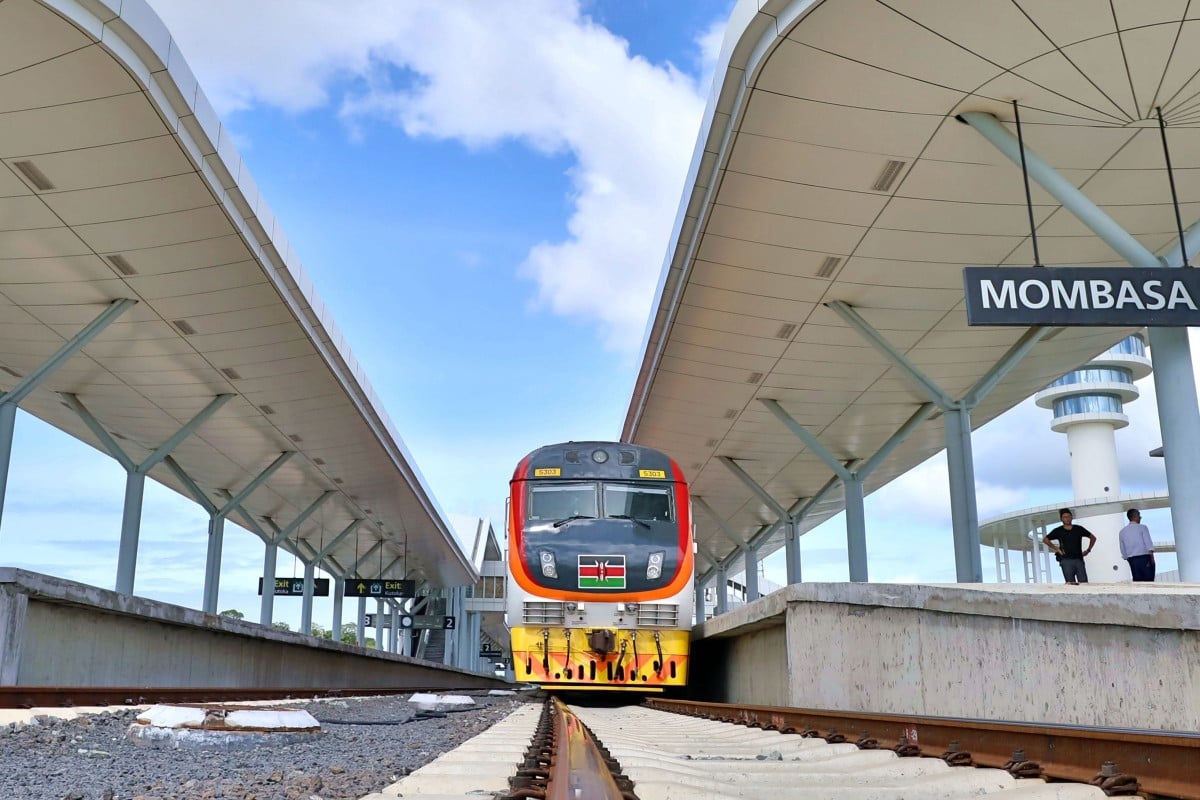
The Mombasa-Nairobi Standard Guage Railway, funded by China, opened in 2017. Japan has criticised Chinese lending practices in Africa. Photo: Xinhua
The Mombasa-Nairobi Standard Gauge Railway, funded by China, opened in 2017. Japan has criticised Chinese lending practices in Africa. Photo: Xinhua
The long rivalry between China and Japan is again playing out in Africa, with Tokyo planning to pour more aid into the continent and invest in infrastructure projects there.
Beijing – which has for decades funnelled money into the continent – will be watching as the leaders of 54 African countries and international organisations descend on Yokohama later this month for the seventh Tokyo International Conference on African Development (TICAD).

Japan reportedly plans to pledge more than 300 billion yen (US$2.83 billion) in aid to Africa during the conference. While that might not be enough to alarm China – which in recent years has been on a spending spree in the continent – it will be paying close attention.

Japan has in the past used the meetings to criticise Chinese lending practices in Africa, saying it was worried about the “unrealistic” level of debt incurred by African countries – concerns that China has dismissed.
This year, analysts expect Tokyo will use the conference to articulate how its approach to African development is substantively different from that of the Chinese.

“So, look for the words ‘quality’, ‘transparency’ and ‘sustainability’ to be used a lot throughout the event,” said Eric Olander, managing editor of the non-partisan China Africa Project.

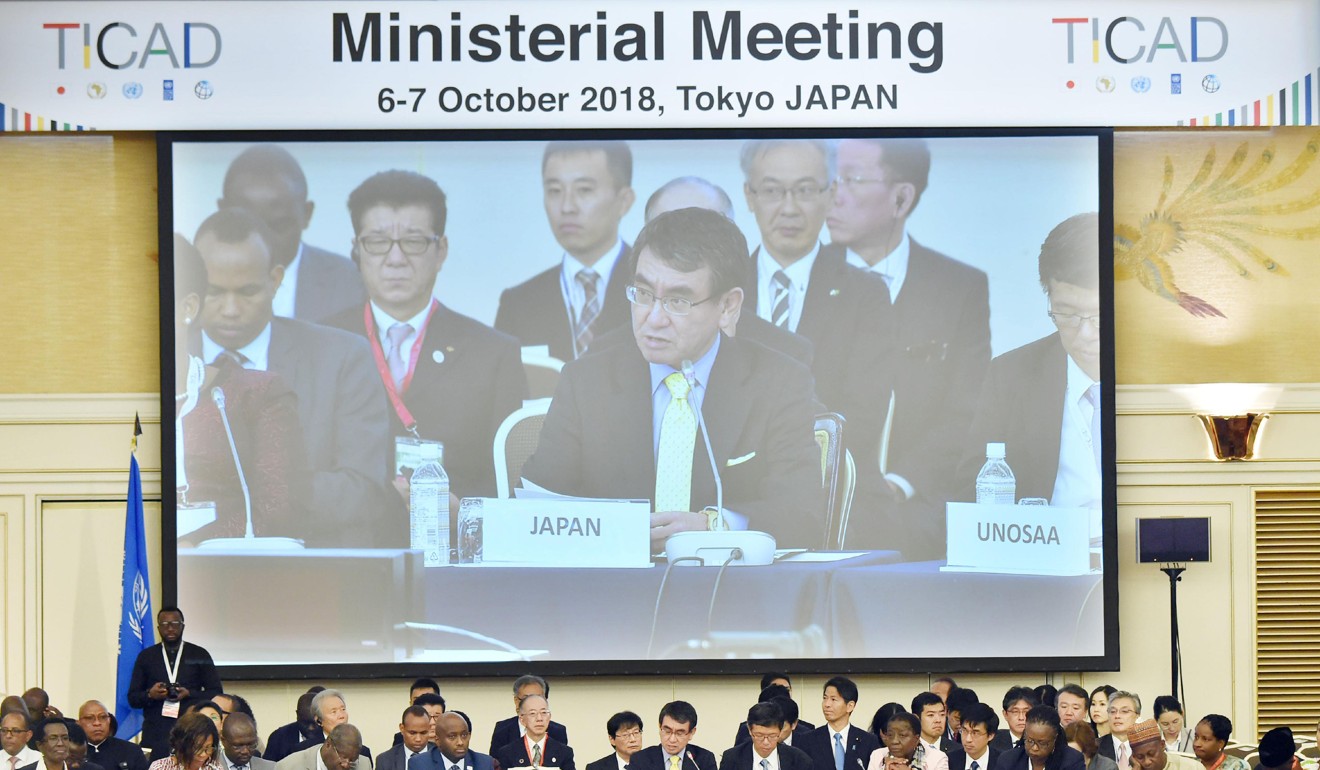
Japanese Foreign Minister Taro Kono gives a speech at the TICAD in Tokyo in October. Japan will reportedly pledge US$2.83 billion in aid to Africa this year. Photo: The Yomiuri Shimbun

Olander said Japan often sought to position its aid and development programmes as an alternative to China’s by emphasising more transparency in loan deals, higher-quality infrastructure projects and avoiding saddling countries with too much debt.

“In some ways, the Japanese position is very similar to that of the US where they express many of the same criticisms of China’s engagement strategy in Africa,” Olander said.

But the rivalry between China and Japan had little to do with Africa, according to Seifudein Adem, a professor at Doshisha University in Kyoto, Japan.

“It is a spillover effect of their contest for supremacy in East Asia,” said Adem, who is from Ethiopia.

“Japan’s trade with Africa, compared to China’s trade with Africa, is not only relatively small but it is even shrinking. It is a result of the acceleration of China’s engagement with Africa.”

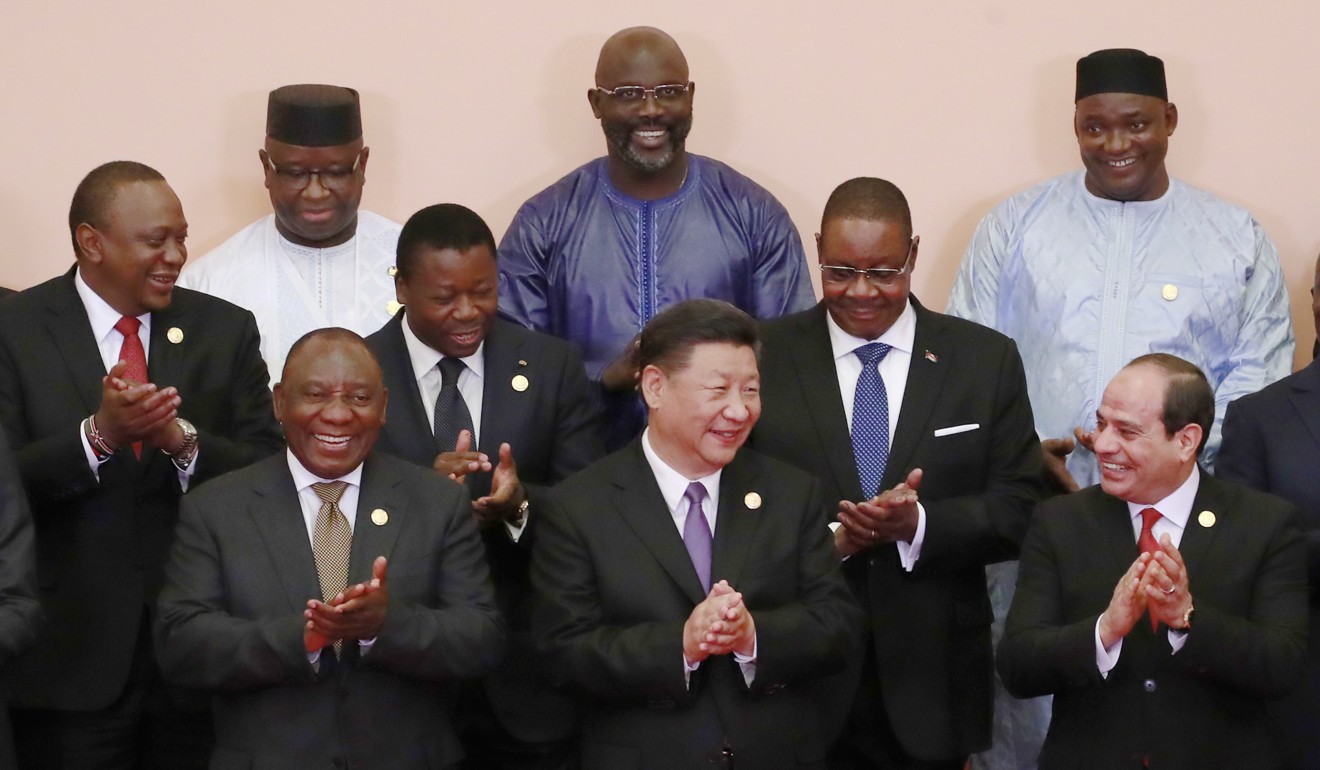
Chinese President Xi Jinping attends a group photo session with African leaders during the Forum on China-Africa Cooperation in Beijing last year. Photo: AP

Japan launched the TICAD in 1993, to revive interest in the continent and find raw materials for its industries and markets for products. About a decade later, China began holding a rival event, the Forum on China-Africa Cooperation.

It is at heart an ideological rivalry unfolding on the continent, according to Martin Rupiya, head of innovation and training at the African Centre for the Constructive Resolution of Disputes in Durban, South Africa.

“China cast Japan as its former colonial interloper – and not necessarily master – until about 1949. Thereafter, China’s Mao [Zedong] developed close relations, mostly liberation linkages with several African nationalist movements,” Rupiya said.

Beijing had continued to invoke those traditional and historical ties, which Japan did not have, he said.

“Furthermore, Japan does not command the type of resources – call it largesse – that China has and occasionally makes available to Africa,” Rupiya said.

Although both Asian giants have made inroads in Africa, the scale is vastly different.

While Japan turned inward as it sought to rebuild its struggling economy amid a slowdown, China was ramping up trade with African countries at a time of rapid growth on the continent.

That saw trade between China and Africa growing twentyfold in the last two decades. The value of their trade reached US$204.2 billion last year, up 20 per cent from 2017, according to Chinese customs data. Exports from Africa to China stood at US$99 billion last year, the highest level since the 1990s. Meanwhile, through its Belt and Road Initiative that aims to revive the Silk Road to connect Asia with Europe and Africa, China is funding and building Kenya’s Standard Gauge Railway and the Addis Ababa-Djibouti Railway. Beijing is also building major infrastructure projects in Zambia, Angola and Nigeria.

Japan’s trade with Africa is just a small fraction of Africa’s trade with China. In 2017, Japan’s exports to the continent totalled US$7.8 billion, while imports were US$8.7 billion, according to trade data compiled by the Massachusetts Institute of Technology.

How speaking with one voice could help Africa get a better deal from China

But Japan now appears eager to get back in the game and expand its presence in Africa, and analysts say this year’s TICAD will be critical – both in terms of the amount of money Tokyo commits to African development and how it positions itself as an alternative to the Chinese model.

Ryo Hinata-Yamaguchi, a visiting professor at Pusan National University in South Korea, said the continent was “economically vital to Japan, both in trade and investments”.

“Moreover, Japan has established some strong links with African states through foreign aid,” Hinata-Yamaguchi said.

“Japan’s move is driven by both economic and political interests. Economically, Japan needs to secure and maintain its presence in, and linkages with, the African states while opening new markets and opportunities,” he said.

To counter China’s belt and road strategy, Japan has launched the Asia-Africa Growth Corridor project, an economic cooperation deal, with India and African countries.

Tokyo meanwhile pledged about US$30 billion in public-private development assistance to Africa over three years at the 2016 TICAD, in Nairobi. But China offered to double that amount last year, during its Forum on China-Africa Cooperation in Beijing.

Still, Japan continues to push forward infrastructure projects on the continent. It is building the Mombasa Port on the Kenyan coast, while Ngong Road, a major artery in Nairobi, is being converted into a dual carriageway with a grant from Tokyo.

Japan is also funding the construction of the Kampala Metropolitan transmission line, which draws power from Karuma dam in Uganda. In Tanzania, it provided funding for the Tanzania-Zambia Railway Authority (Tazara) flyover. And through the Japan International Cooperation Agency, Tokyo also helps African countries improve their rice yields using Japanese technology.

There are nearly 1,000 Japanese companies – including carmakers like Nissan and Toyota – operating in Africa, but that is just one-tenth the number of Chinese businesses on the continent.

Are Chinese loans putting Africa on the debt-trap express?

Olander said Japan’s construction companies were among the best in the world, albeit not necessarily the cheapest, and that Tokyo was pushing its message about “high-quality” construction.

XN Iraki, an associate professor at the University of Nairobi School of Business, said Japan wanted to change its approach to Africa on trade, which had long been dominated by cars and electronics.

“[It has] no big deals like China’s Standard Gauge Railway. But after China’s entry with a bang – including teaching Mandarin through Confucius Institutes – Japan has realised its market was under threat and hence the importance of the TICAD, which should remind us that Japan is also there.”

Source: SCMP

28/07/2019

Chinese FM says BRICS cooperation a strategic choice, urges bigger BRICS role in world affairs

BRAZIL-RIO DE JANEIRO-CHINA-WANG YI-BRICS-MEETING

Chinese State Councilor and Foreign Minister Wang Yi (2nd L) poses for a group photo with Brazilian Foreign Minister Ernesto Araujo (3rd L), Russian Foreign Minister Sergey Lavrov (1st L), South African Foreign Minister Naledi Pandor (2nd R) and India’s Minister of State for External Affairs Vijay Kumar Singh in Rio de Janeiro, Brazil, July 26, 2019. Wang Yi attended the Formal Meeting of the BRICS Ministers of Foreign Affairs in Rio de Janeiro. (Xinhua/Xin Yuewei)

RIO DE JANEIRO, July 27 (Xinhua) — The rise of emerging markets and developing countries, represented by the BRICS countries, has bolstered a more multi-polar world, Chinese State Councilor and Foreign Minister Wang Yi said here on Friday.

At the Formal Meeting of the BRICS Ministers of Foreign Affairs, Wang also said BRICS cooperation is not a band-aid solution for the five countries but a strategic choice that focuses on common and long-term development and harbors bright prospects.

The five countries are Brazil, Russia, India, China and South Africa.

Wang said no matter how the international landscape changes, the direction of the BRICS cooperation must not change. Faced with new challenges, the five countries should let their voices be heard, offer more solutions to pressing global issues and play a greater role in world affairs.

Wang pointed out that unilateralism undermines international rules and challenges the international rule of law, which exacerbates the instability and uncertainty of the world.

The BRICS countries must take the lead in maintaining multilateralism and safeguarding the global governance system with the UN as its core and under international law.

Furthermore, the bloc should safeguard the multilateral trading system represented by the WTO and protect the common interests and development space of emerging market and developing countries, he said.

The five countries together must continue to integrate the interests of other emerging market countries and developing countries through flexible and diverse platforms such as “BRICS Plus.”

At the meeting, the five foreign ministers all agreed to safeguard the purposes and principles of the UN Charter, defend multilateralism and free trade, oppose unilateralism and protectionism, strengthen global governance, and build a community with a shared future for humankind.

They agreed that regional hotspot issues should be resolved through dialogue and consultation and that BRICS cooperation should work to benefit the peoples of the five countries.

The foreign ministers also agreed to maintain vigilance on cybersecurity issues and expressed opposition to the use of cybersecurity to suppress the development of science and technology in other countries. They agreed to strive toward an open and non-discriminatory environment for the application of information technology.

The foreign ministers were tasked with preparing for the BRICS summit to be held in Brasilia in November.

Source: Xinhua

28/07/2019

Latin America trade grows as China and US tussle for influence

  • Chinese Foreign Minister Wang Yi wraps up tour of Brazil and Chile, as Colombian president heads for Beijing
  • Ecuador president tells US Secretary of State Mike Pompeo ‘smaller countries pay when the big ones fight’
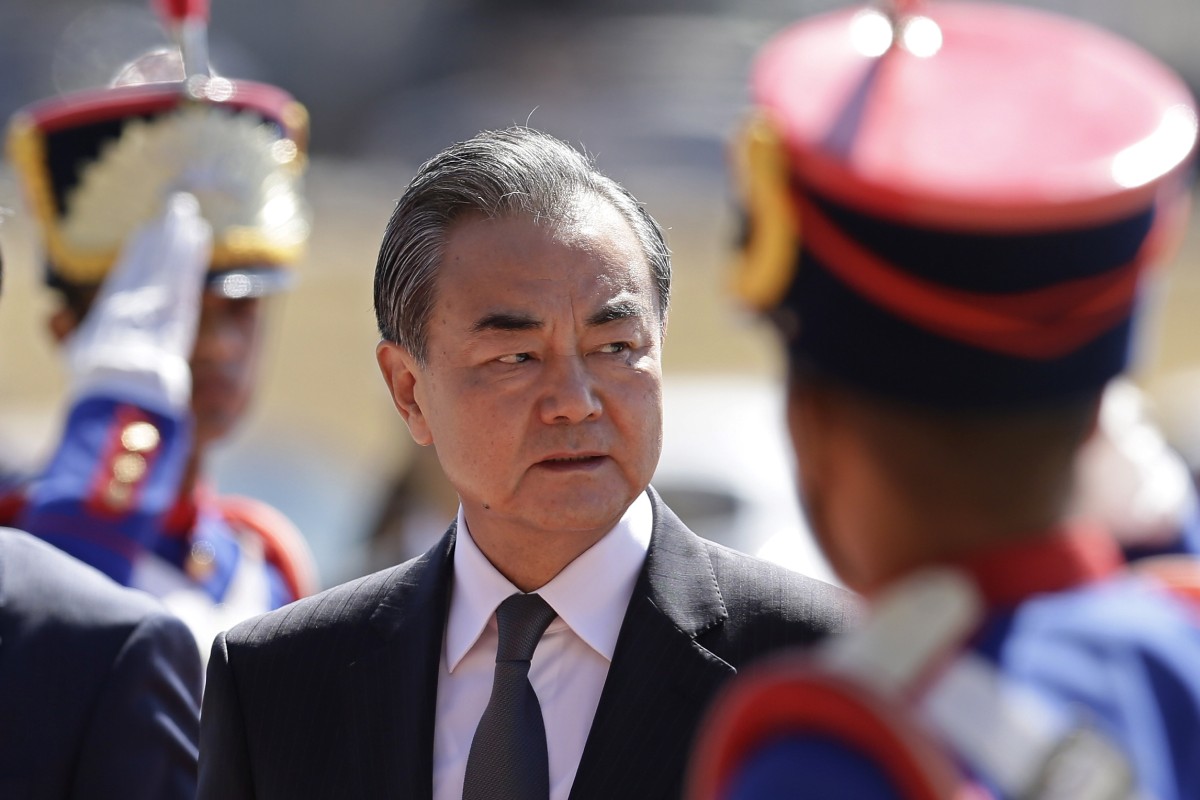
Chinese Foreign Minister Wang Yi is greeted by an honour guard as he arrives at the Itamaraty Palace for a meeting with his Brazilian counterpart Ernesto Araujo on Thursday. Photo: AP
Latin American countries are caught in the middle of a geopolitical tug of war between Beijing and Washington as China boosts its ties in the region in a bid to counterbalance the effects of its trade war with the US.
China’s Foreign Minister Wang Yi wraps up a tour of Latin America on Sunday which began last week in Brazil and ended with an official visit to Chile. He returns to Beijing on the same day Colombia’s President Ivan Duque Marquez arrives for a three-day state visit to China which will include a meeting with Chinese President Xi Jinping.
Wang was in Brazil for the latest summit of foreign ministers from the BRICS countries – an association of emerging countries made up of Brazil, Russia, India, China and South Africa – as well as the third China-Brazil foreign ministers’ comprehensive strategic dialogue with Brazilian Foreign Minister Ernesto Araujo.
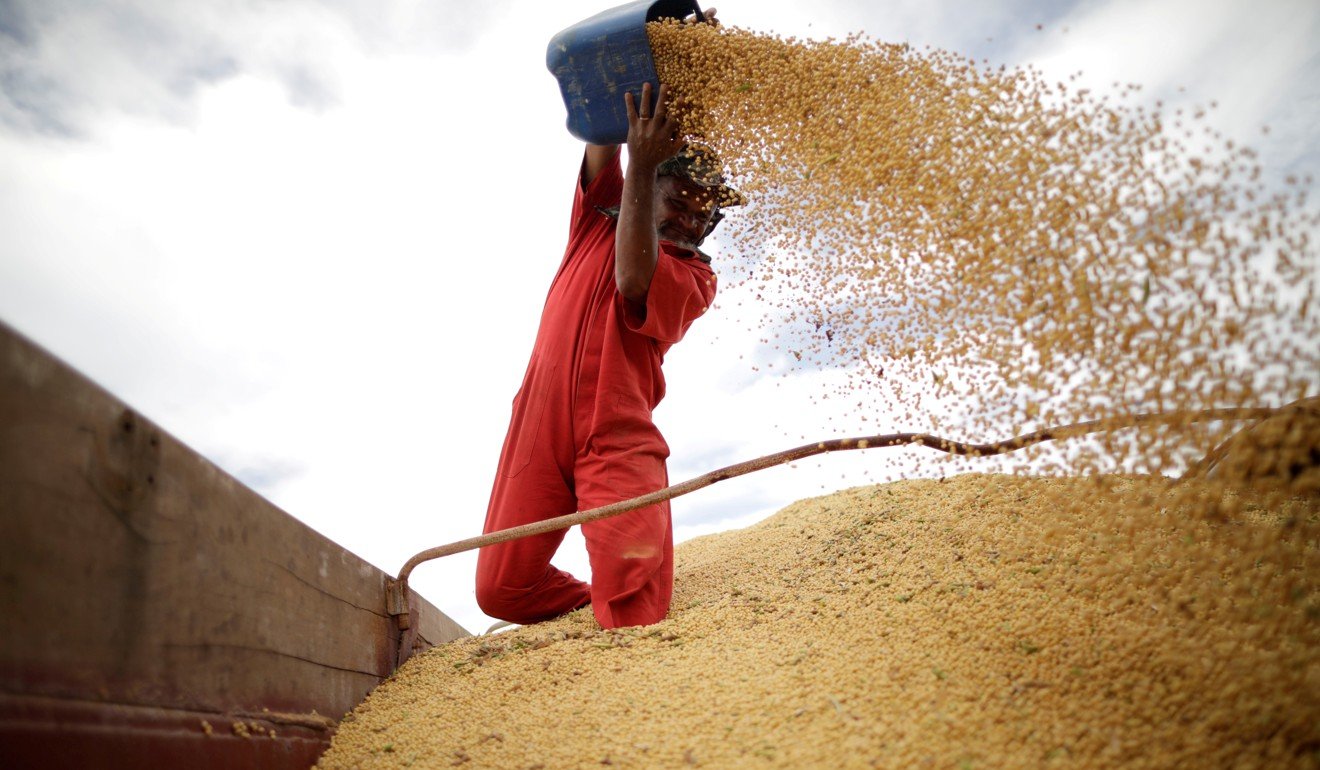
China has overtaken the US as Brazil’s largest trading partner, with Brazilian soybeans – one of the country’s biggest exports – and other agricultural products replacing American imports since the start of the US-China trade war a year ago.
Brazilian soybeans – one of the country’s biggest exports – and other farm products are being sold to China as a result of the trade war. Photo: Reuters

The growing importance of China to Brazil’s economy has created a difficult position for President Jair Bolsonaro, who accused Beijing of trying to buy Brazil during his election campaign, but changed tack on assuming office in January.

In March, Bolsonaro called China his country’s “main partner, politically as well as economically and commercially” and announced plans to travel to Beijing this year, a visit which was confirmed on Tuesday for late October.

China is now Latin America’s second largest trading partner with bilateral trade at US$307.4 billion, growing 18.9 per cent over the previous year, according to China’s ministry of commerce, in a relationship focused on commodity imports, including mining products like copper and energy, as well as soybeans and other agricultural goods.

While the US and China have tentatively agreed to resume talks in Shanghai next week, China and Latin American countries are likely to continue deepening their trade relations as production chains realign as a result of the trade war, according to Gustavo Oliveira, assistant professor of global and international studies at the University of California, Irvine.

“This means Chinese imports of Latin American agricultural and mineral commodities, and Latin American imports of Chinese manufactured products and hi-tech, might contribute to China’s ability to stand its ground against US pressure,” he said.

China in Latin America: partner or predator?
Oliveira said domestic contradictions in most Latin American countries complicated relations with China, as few leaders had the capacity to press or leverage China for much. “Unfortunately, therefore, most in this crop of Latin American leaders are basically placing themselves as junior partners or pawns in the geopolitical tug of war between the US and China.”
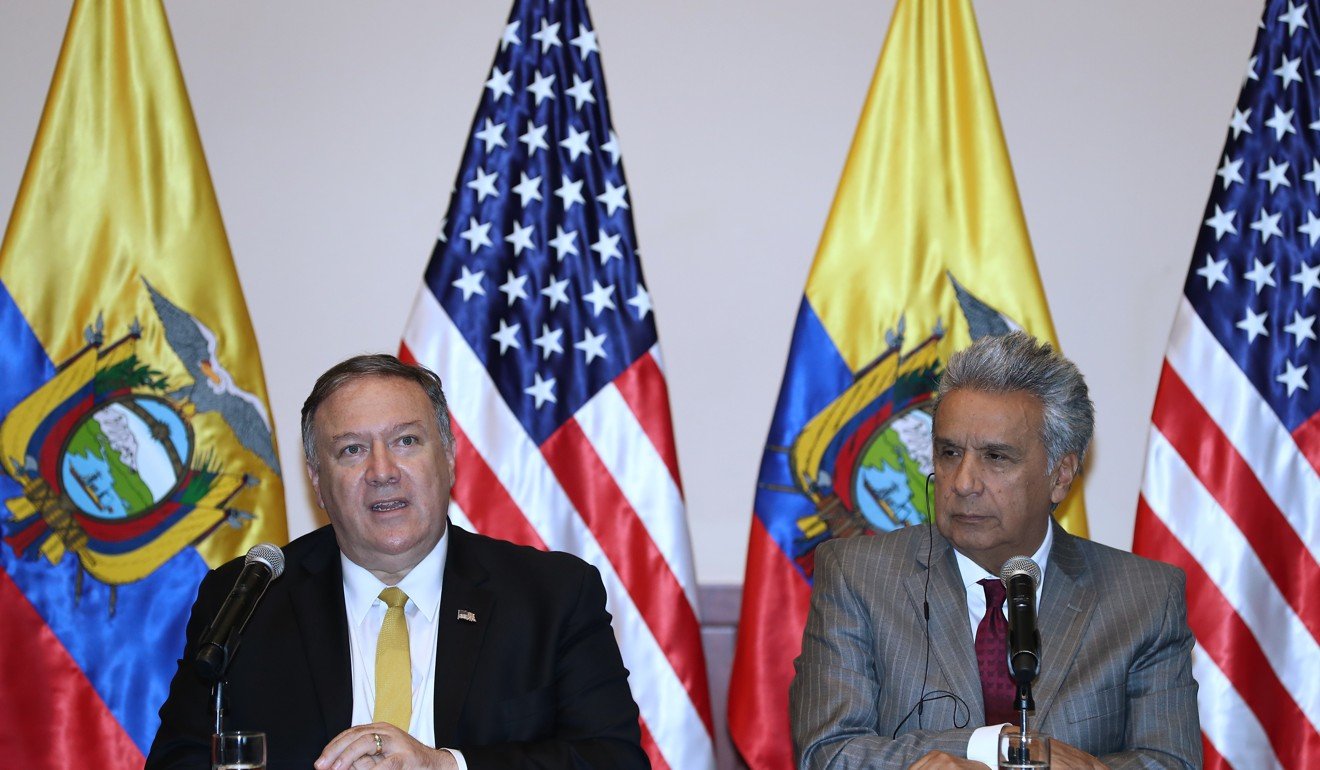
US Secretary of State Mike Pompeo put the pressure on Latin American countries over their relationship with China during his four-day tour of the region last weekend, when he visited Argentina, Ecuador, Mexico, and El Salvador.
In a joint interview with Pompeo during the visit, Ecuador’s new President Lenin Moreno defended the country’s China ties, and urged Washington and Beijing to resolve their conflicts for the benefit of other nations in the region.
“We hope that the US and China, the greatest powers in the world now, will find agreement easily because, unfortunately, when the big ones are discussing or fighting and have conflicts, the ones that are paying for all of that are the smaller countries,” he said.
“Now, when two elephants fight, the ones who lose are the insects who are of course being crushed by the elephants in the attempt to evade them.”
US Secretary of State Mike Pompeo (left) and Ecuadorian President Lenin Moreno hold a joint press conference during Pompeo’s tour of Latin America on July 20. Photo: EPA-EFE

Pompeo blasted China’s role in the region during a previous tour of South America in April, when he singled out Beijing’s support for President Nicolas Maduro of Venezuela. Maduro is backed by Beijing, Russia and other allies, while the US and many European countries have supported opposition leader Juan Guaido as legitimate president since elections in January.

Speaking from Chile on that tour, Pompeo said Beijing’s calls for non-intervention in Venezuela were “hypocritical” and aimed at protecting Beijing’s investments in the country, as well as debts owed to China by Venezuela.

Pompeo also accused Beijing of “sowing discord” in the region through debt traps. “When China does business in places like Latin America, it often injects corrosive capital into the economic bloodstream, giving life to corruption and eroding good governance,” he said.

Professor Cui Shoujun of Renmin University in Beijing said Washington’s concerns about “debt trap diplomacy” in Latin America reflected concerns that China’s growing involvement in financing infrastructure and development projects would make the region more pro-China.

“China’s interests in Latin America go beyond raw materials extraction,” he said. “The biggest point of tension between the US and China in the region is perhaps that China presents an alternative model for development that is very different from the Western model.”

‘Mr Pompeo, you can stop’: China hits back over Latin America criticism

While the US was drumming up tensions about China across the world, Beijing was not openly retaliating but responding with investment and trade for global partners, said Kevin Gallagher, researcher on China-Latin America ties, and professor at Boston University.

“The US points fingers and makes angry speeches in the region as China cuts investment deals and helps address infrastructure needs,” he said.

“Latin American countries’ governments are rightly keeping their heads down on the broader geopolitical winds, and are getting down to business with their largest trading partner.”

Source: SCMP

28/06/2019

Xi puts forward 3-point proposal on developing China-African relations

JAPAN-OSAKA-XI JINPING-CHINA-AFRICA-LEADERS-MEETING

Chinese President Xi Jinping chairs a China-Africa leaders’ meeting in Osaka, Japan, June 28, 2019. The meeting was also attended by South African President Cyril Ramaphosa, also former African co-chair of the Forum on China-Africa Cooperation (FOCAC); Egyptian President Abdel-Fattah al-Sisi, also rotating chair of the African Union; Senegalese President Macky Sall, current African co-chair of the FOCAC; and UN Secretary-General Antonio Guterres. (Xinhua/Pang Xinglei)

OSAKA, June 28 (Xinhua) — Chinese President Xi Jinping put forward here Friday a three-point proposal on building a closer community with a shared future between China and African countries.

On the sidelines of the Group of 20 summit in the Japanese city of Osaka, Xi chaired a China-Africa leaders’ meeting, which was also attended by South African President Cyril Ramaphosa, also former African co-chair of the Forum on China-Africa Cooperation (FOCAC); Egyptian President Abdel-Fattah al-Sisi, also rotating chair of the African Union; Senegalese President Macky Sall, current African co-chair of the FOCAC; and UN Secretary-General Antonio Guterres.

Source: Xinhua

26/06/2019

China, Africa eye a community of shared future via cooperation

CHINA-BEIJING-YANG JIECHI-SOUTH AFRICAN FM-MEETING (CN)

Yang Jiechi, a member of the Political Bureau of the Central Committee of the Communist Party of China (CPC) and director of the Office of the Foreign Affairs Commission of the CPC Central Committee, meets with South African Foreign Minister Naledi Pandor in Beijing, capital of China, June 25, 2019. (Xinhua/Zhang Ling)

BEIJING, June 25 (Xinhua) — China on Tuesday vowed to work with African countries to enhance cooperation based on equality and openness to build a community of shared future.

That came as Chinese State Councilor and Foreign Minister Wang Yi addressed the opening ceremony of the Coordinators’ Meeting on the Implementation of the Follow-up Actions of the Beijing Summit of the Forum on the China-Africa Cooperation (FOCAC).

After reading Chinese President Xi Jinping’s congratulatory letter to the meeting, Wang said the letter fully expressed Xi’s profound friendship toward African countries and their people, and demonstrated the Chinese government’s strong willingness to engage in friendly cooperation.

In delivering on the blueprint for China-Africa cooperation in the new era, China stands ready to work with the African side in implementing promises with concrete and effective actions, and achieving full implementation of consensus and outcomes concluded at the FOCAC Beijing Summit, Wang said.

Wang also called for sticking to the fundamental purpose of building a community of shared future and the development path of jointly constructing the Belt and Road, upholding multilateralism, and safeguarding the common interests of developing countries and emerging markets.

“Any disturbance will not affect our resolve to enhance cooperation, and any difficulty will not hinder our joint advancement in achieving rejuvenation,” he said.

After the opening ceremony, Yang Jiechi, a member of the Political Bureau of the Central Committee of the Communist Party of China (CPC) and director of the Office of the Foreign Affairs Commission of the CPC Central Committee, met with four foreign ministers from African countries, including Nabeela Tunis from Sierra Leone, Simeon Oyono Esono Angue from Equatorial Guinea, Naledi Pandor from South Africa, and Amadou Ba from Senegal.

Also on Tuesday, Wang Yi met with foreign ministers from Zimbabwe, Lesotho, Cote d’Ivoire, Equatorial Guinea, Ghana, Uganda and Libya, and an official on economics from Eritrea.

Source: Xinhua

25/06/2019

China, African countries vow to enhance cooperation

CHINA-BEIJING-WANG YI-SOUTH AFRICA-FM-MEETING (CN)

Chinese State Councilor and Foreign Minister Wang Yi (R) meets with South African Foreign Minister Naledi Pandor in Beijing, capital of China, June 24, 2019. Naledi Pandor was here to attend the Coordinators’ Meeting on the Implementation of the Follow-up Actions of the Beijing Summit of the Forum on the China-Africa Cooperation (FOCAC). (Xinhua/Zhai Jianlan)

BEIJING, June 24 (Xinhua) — Chinese State Councilor and Foreign Minister Wang Yi held respective meetings with foreign ministers from nine African countries on Monday, and they pledged efforts to strengthen cooperation and uphold multilateralism.

The foreign ministers are Naledi Pandor from South Africa, Palamagamba Kabudi from Tanzania, Ezechiel Nibigira from Burundi, Aurelien Agbenonci from Benin, Nhial Deng Nhial from South Sudan, Mamadou Tangara from Gambia, Joseph Malanji from Zambia, Luis Filipe Tavares from Cape Verde, and Gbehzohngar Findley from Liberia.

The African foreign ministers are in Beijing to attend the Coordinators’ Meeting on the Implementation of the Follow-up Actions of the Beijing Summit of the Forum on the China-Africa Cooperation (FOCAC), with the aim of better implementing the outcomes of Beijing Summit in 2018.

While holding talks with Pandor, Wang hailed the solid mutual trust and deep-rooted traditional friendship between China and South Africa.

Wang said China and South Africa, both as major representatives of emerging markets and developing countries, should jointly safeguard the missions and principles of the United Nations Charter, champion multilateralism, uphold basic norms governing international relations, and oppose any form of unilateralism and bullying, to promote world peace, development and prosperity.

Pandor said South Africa and the whole African continent, as China’s partners for jointly resisting unilateralism and bullying practice, would stand together with China in safeguarding multilateralism and an open, inclusive global trade system.

In the meeting with Kabudi, Wang expressed China’s readiness to work with Tanzania to keep high-level exchanges, and avail the opportunity of jointly building the Belt and Road and the Coordinators’ Meeting to ensure better outcomes in bilateral cooperation.

Calling the Beijing Summit of the FOCAC a milestone, Kabudi said Tanzania is willing to facilitate cooperation in infrastructure construction, industrial capacity, and in cultural, educational sectors and other areas.

In respective meetings with Nibigira, Agbenonci, Nhial and Tangara, Wang said the current international situation is complex but China’s determination to strengthen its solidarity and friendship with African countries remains unchanged.

Nibigira said Burundi agreed with the Belt and Road Initiative and would continue to support China on issues concerning China’s core interests and major concerns.

Agbenonci said multilateralism was now the only correct choice. Only through multilateralism can the voice of small and medium-sized countries, especially African nations, be heard, he said.

Nhial said South Sudan thanked China for its help in various fields, especially its support and contributions to the peace process in South Sudan.

Tangara said since the resumption of diplomatic relations between China and Gambia, bilateral cooperation in various fields had developed fast, and Gambia can be trusted as a sincere partner of China.

When holding separate meetings with Malanji, Tavares and Findley, Wang said China would continue to uphold justice and pursue the shared principles of sincerity, results, affinity and good faith.

China’s cooperation with Africa is sincere and selfless, and has no geopolitical purposes, said Wang, adding that China had always followed the principle of non-interference, provided aid as Africa needed, carried out South-South cooperation, and helped achieve common development.

He said China-Africa cooperation was conducive to Africa’s infrastructure construction, economic and social benefits, and self-development.

“Africa offers a grand stage of cooperation between different countries, not an arena of major powers’ game,” said Wang, adding that “African friends will get a right conclusion on who truly attaches importance to, respect, and support Africa.”

Malanji said claims that Zambia-China cooperation had led to Zambia’s debt problem were inconsistent with the facts and China’s loans were used on the infrastructure that Zambia needs most, to promote Zambia’s economic development and bring social welfare.

Tavares said Cape Verde cherished relations with China and upheld the one-China principle. He said Cape Verde stood ready to fully implement consensus reached by leaders of the two countries, enhance strategic dialogue, and deepen cooperation, particularly marine economy cooperation, to push bilateral relations into a new era.

Findley said China is Liberia’s true friend which has helped fight Ebola alongside Liberia and played an important role in post-epidemic reconstruction. He said Liberia is ready to enhance mutually beneficial cooperation with China.

Also on Monday, Yang Jiechi, a member of the Political Bureau of the Central Committee of the Communist Party of China (CPC) and director of the Office of the Foreign Affairs Commission of the CPC Central Committee, met with all delegation heads here to attend the coordinators’ meeting.

The meeting will formally open Tuesday morning.

Source: Xinhua

08/06/2019

Factbox: China, Africa to embrace closer economic, trade ties

BEIJING, June 8 (Xinhua) — China and African countries will see more intimate economic and trade ties as the first China-Africa Economic and Trade Expo will open on June 27 in Changsha, the capital city of Hunan Province.

A total of 53 African countries have confirmed to attend the expo, and international organizations including the United Nations Industrial Development Organization, the World Food Programme and the World Trade Organization will also send representatives to attend the event.

Here are some facts and figures revealing the growing vitality of trade between China and Africa as well as broader economic exchanges.

— China has been the largest trading partner of Africa for 10 consecutive years.

— In 2018, trade volume between China and Africa amounted to 204.2 billion U.S. dollars, up 20 percent year on year.

— China’s imports of non-resource products from Africa have increased significantly. In 2018, China’s imports from Africa went up 32 percent year on year, with the imports of agricultural products up 22 percent.

— China’s exports of mechanical, electrical and high-tech products accounted for 56 percent of its total exports to African countries.

— China has finished the negotiations of a free trade agreement with Mauritius.

— More than 3,700 Chinese enterprises have been set up in Africa by the end of 2018, with combined direct investment over 46 billion dollars.

— China’s financial institutions have established more than 10 branches in Africa.

— South Africa and seven other countries have included the Chinese currency renminbi (RMB), or the yuan, in their foreign exchange reserves.

— China has formed RMB clearing arrangements with Zambia and signed currency swap agreements with four African countries including Morocco.

Source: Xinhua

Law of Unintended Consequences

continuously updated blog about China & India

ChiaHou's Book Reviews

continuously updated blog about China & India

What's wrong with the world; and its economy

continuously updated blog about China & India