Chindia Alert: You’ll be Living in their World Very Soon
aims to alert you to the threats and opportunities that China and India present. China and India require serious attention; case of ‘hidden dragon and crouching tiger’.
Without this attention, governments, businesses and, indeed, individuals may find themselves at a great disadvantage sooner rather than later.
The POSTs (front webpages) are mainly 'cuttings' from reliable sources, updated continuously.
The PAGEs (see Tabs, above) attempt to make the information more meaningful by putting some structure to the information we have researched and assembled since 2006.
PLA commander says new law will help to crack down on separatist and foreign forces in ‘two sessions’ interview
Military has ‘determination, confidence and ability’ to safeguard national security interests and Hong Kong prosperity
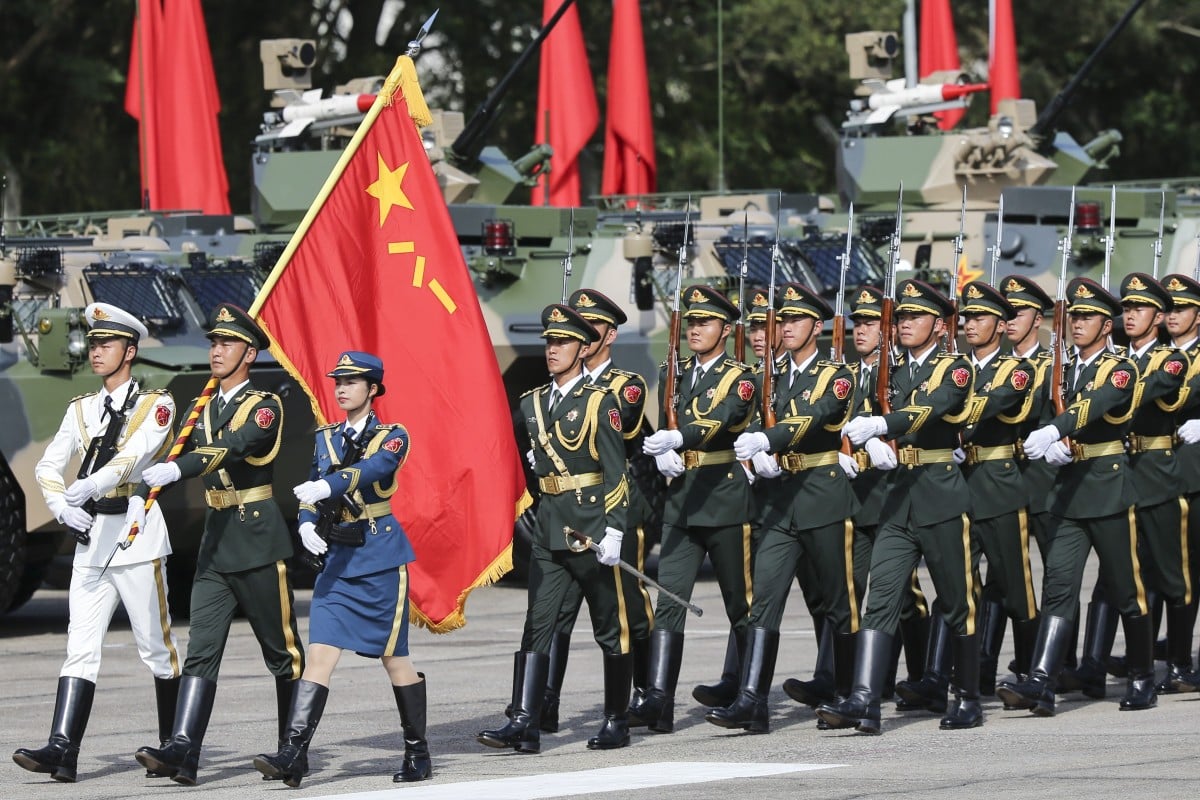
China’s People’s Liberation Army has said its Hong Kong garrison will “resolutely” safeguard national security and sovereignty. Photo: Sam Tsang
The People’s Liberation Army has said the Chinese military will “resolutely” safeguard China’s national security and sovereignty, in its first statement since Beijing announced plans to impose a sweeping national security law in Hong Kong.
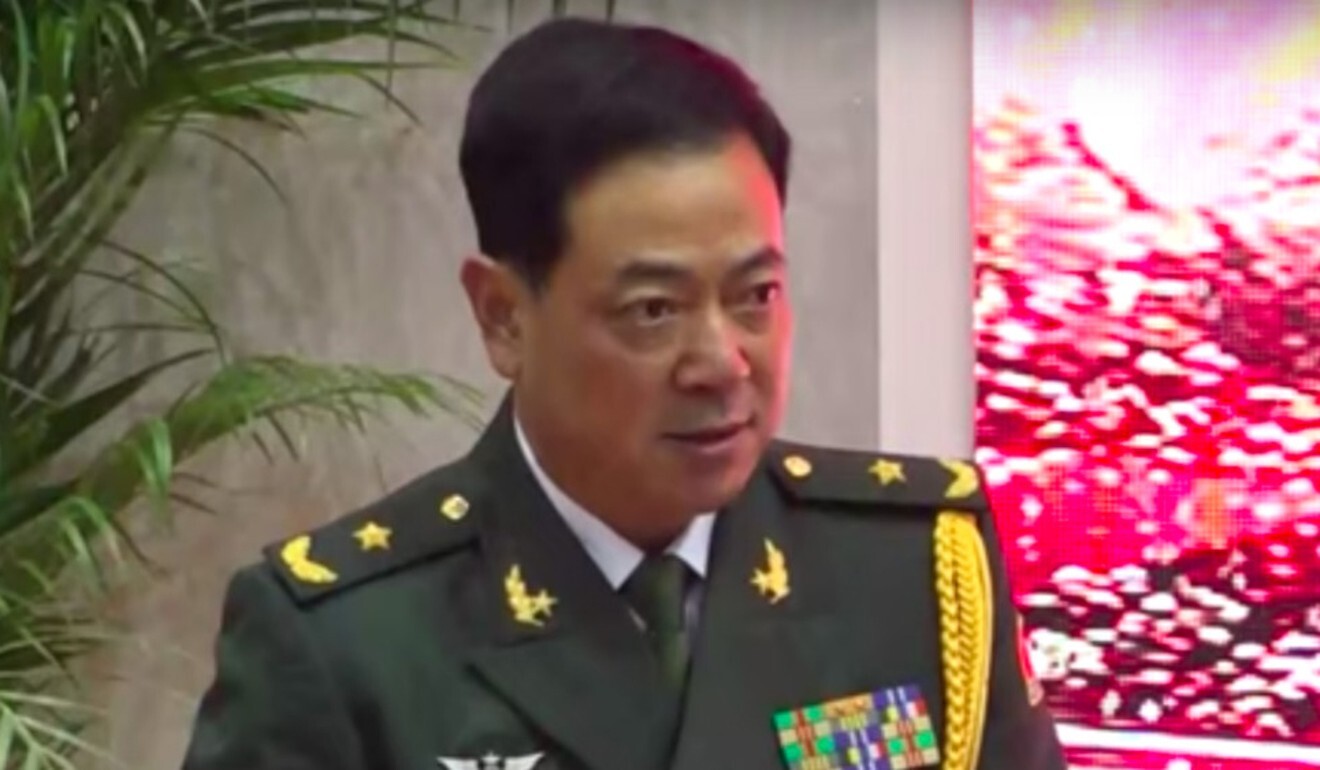
Chen Daoxiang, commander of the PLA’s Hong Kong garrison, said it would “act with firm resolve to implement the central government’s decision and plans” as well as continuing to implement the “one country, two systems” policy in the city.
How China is drafting a new Hong Kong national security law at the National People’s Congress
Speaking on the sidelines of China’s annual parliamentary meetings, also known as the
, Chen told state broadcaster CCTV that the new law would help to crack down on separatist and foreign forces aiming to undermine China’s national unity.
“[The garrison] will implement, according to law, various tasks delegated by the party and the people, and has the determination, confidence and ability to safeguard national security and development interest as well as Hong Kong’s continuing prosperity,” he said.
Commander of the PLA Hong Kong garrison Chen Daoxiang. Photo: Weibo
The proposal to impose a national security law in Hong Kong – which will give Beijing more direct control over the city – was introduced by China’s legislature on Friday. Beijing has blamed foreign forces for inciting last year’s months-long protests in Hong Kong, sparked by opposition to a separate and now-withdrawn extradition bill, and described the unrest as a grave threat to national security.
Separately, CCTV reported that a group of top military officials said in a session on Tuesday that there was a “great urgency” for Beijing to impose the law in a bid to address the “new risks and challenges” in governing the city.
The officials, who included Central Military Commission vice-chairmen Xu Qiliang and Zhang Youxia, said the plan was a “very timely, necessary and important” step to prevent and punish efforts to undermine China’s national sovereignty and security.
They reiterated the PLA’s commitment to opposing intervention from foreign forces in Hong Kong as well as maintaining China’s national unity and territorial integrity.
“Hong Kong affairs are purely China’s internal affairs. We resolutely oppose efforts by any foreign country, organisation and individual in interfering with Hong Kong affairs, and will resolutely guard against and contain any attempts by external forces in … engaging any separatist, subversion and infiltration activities,” they said, according to CCTV.
The planned national security law has drawn strong condemnation from the US government, with Secretary of State Mike Pompeo calling it a “death knell” for the territory’s relative autonomy. White House national security adviser Robert O’Brien said on Sunday that the US government would likely impose sanctions on China if Beijing went ahead with the plan.
Countries must respect each others’ systems and be wary of US political forces who want to ‘hijack relations’, Wang tells press conference at ‘two sessions’
Beijing is not looking for confrontation and wants to work with Washington to fight coronavirus, minister says
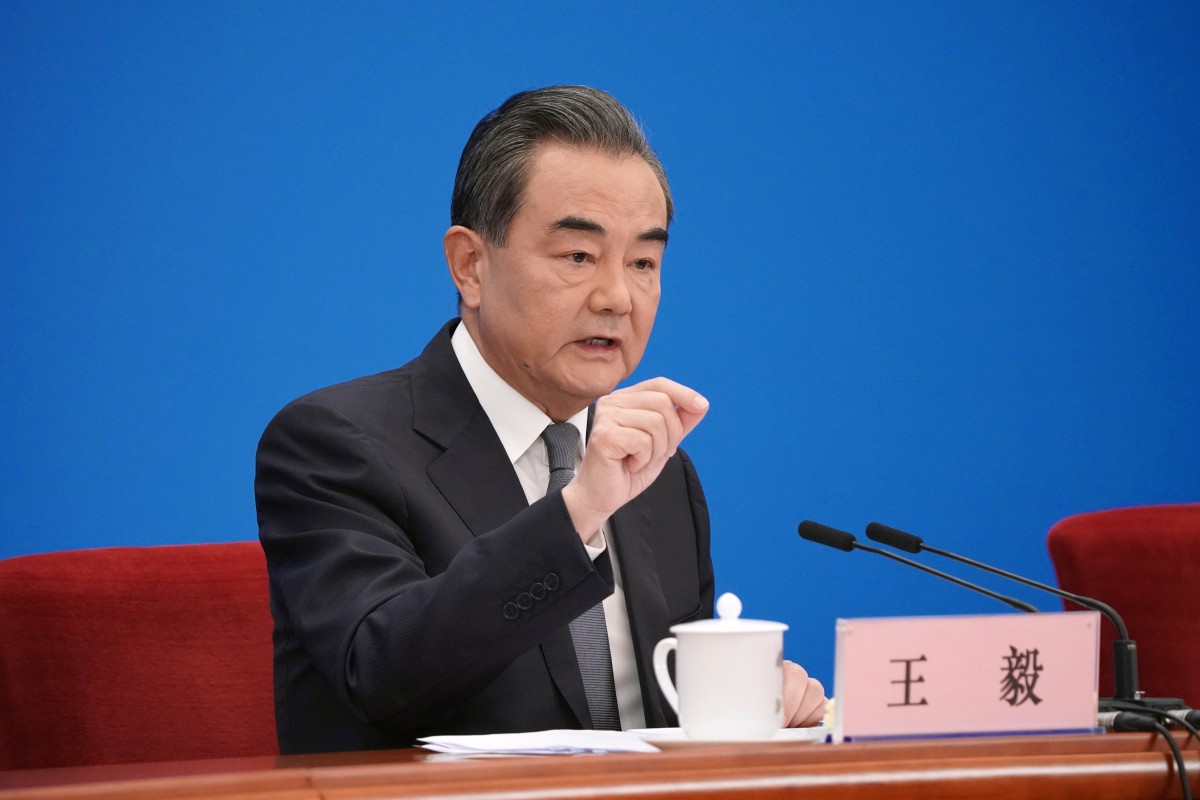
Foreign Minister Wang Yi said China did not want to replace or change the US. Photo: Xinhua
China and the US should try to avoid a new cold war and find new ways to cooperate despite their differences, China’s Foreign Minister Wang Yi said on Sunday.
“We need to be alert to efforts by some political forces in America to hijack China-US relations and who try to push the two countries towards a so-called ‘new cold war’.
“This is a dangerous attempt to turn back the course of history,” Wang told a press conference on the sidelines of the annual parliamentary meetings known as the ‘two sessions’.
Ties between the two countries have further worsened due to escalating tensions over the handling of the Covid-19 pandemic.
Voices calling for decoupling have been on the rise in the US, with some arguing that the two countries are edging towards a new cold war akin to that against the Soviet Union.
Wang called for the two countries to respect each other’s political systems and to find a way to get along despite their differences.
The two nations should step up cooperation on global pandemic control, and coordinate on macro policies to deal with the economic impact.
“China has no intention of changing the United States, much less replacing it. The US should give up the wishful thinking that it can change China.”
“For the benefit of the two peoples, as well as the future and well-being of humankind, China and the US should and must find a way to coexist peacefully despite the differences in system and cultures of the two societies.”
Wang said China will not seek confrontation with the United States, but China is determined to protect its sovereignty, territorial integrity and development.
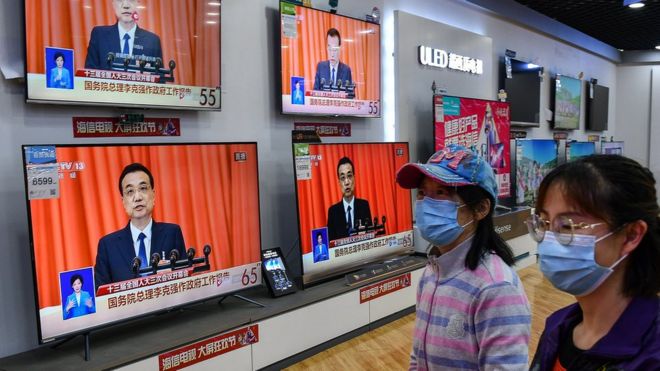
Image copyright AFP / GETTYImage caption Shoppers walking past a broadcast of Chinese Premier Li Keqiang delivering his speech at the opening of the NPC on Thursday
China’s ruling Communist Party has set in motion a controversial national security law for Hong Kong, a move seen as a major blow to the city’s freedoms.
The law to ban “treason, secession, sedition and subversion” could bypass Hong Kong’s lawmakers.
Critics say China is breaking its promise to allow Hong Kong freedoms not seen elsewhere in China.
It is likely to fuel public anger and may even trigger fresh protests and demands for democratic reform.
The plan was submitted at the annual National People’s Congress (NPC), which largely rubber-stamps decisions already taken by the Communist leadership, but is still the most important political event of the year.
Hong Kong, a semi-autonomous region and an economic powerhouse, was always meant to have introduced such laws after the handover from British control to Chinese rule in 1997.
After last year’s wave of sustained and violent protest, Beijing is now attempting to push them through, arguing “law-based and forceful measures” must be taken to “prevent, stop and punish” such protests in the future.
On Friday, Hong Kong’s government said it would co-operate with Beijing to enact the law, adding it would not affect the city’s freedoms.
That article says Hong Kong “must improve” national security, before adding: “When needed, relevant national security organs of the Central People’s Government will set up agencies in Hong Kong to fulfil relevant duties to safeguard national security in accordance with the law.”
China could essentially place this law into Annex III of the Basic Law, which covers national laws that must be implemented in Hong Kong – either by legislation, or decree.
Addressing the congress, Premier Li Keqiang spoke of the economic impact of the coronavirus and on Hong Kong and Macau said: “We’ll establish sound legal systems and enforcement mechanisms for safeguarding national security in the two Special Administrative Regions.”
What do opponents say the dangers are?
Hong Kong is what is known as a “special administrative region” of China.
It has observed a “one country, two systems” policy since Britain returned sovereignty in 1997, which has allowed it certain freedoms the rest of China does not have.
Pro-democracy activists fear that China pushing through the law could mean “the end of Hong Kong” – that is, the effective end of its autonomy and these freedoms.
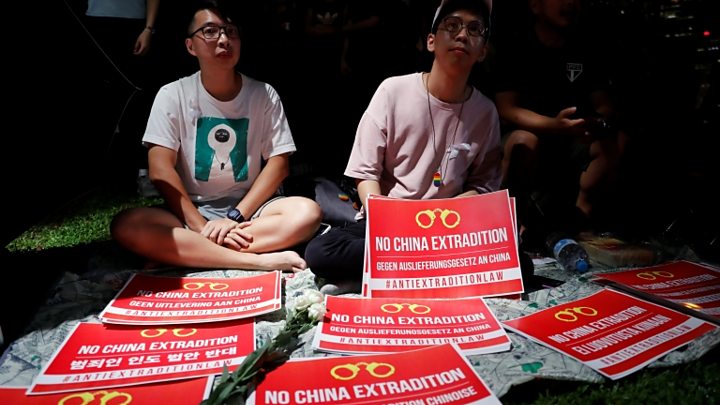
Last year’s mass protests in Hong Kong were sparked by a bill that would have allowed extraditions to mainland China.
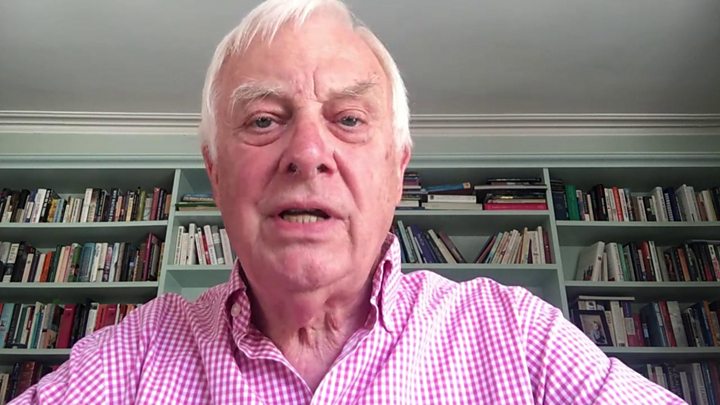
Media caption Former Hong Kong governor Chris Patten: “UK should tell China this is outrageous”
The bill was paused, then withdrawn – but the protests continued until the virus outbreak at the end of the year.
The US has also weighed in, with President Trump saying the US would react strongly if it went through – without giving details.
It is currently considering whether to extend Hong Kong’s preferential trading and investment privileges.
Why is China doing this?
Mr Wang said the security risks had become “increasingly notable” – a reference to last year’s protests.
“Considering Hong Kong’s situation at present, efforts must be made at the state-level to establish and improve the legal system and enforcement mechanisms,” he is quoted as saying in state media.
Media caption The BBC’s Helier Cheung on Hong Kong’s 2019 protests
Beijing may also fear September’s elections to Hong Kong’s legislature.
If last year’s success for pro-democracy parties in district elections is repeated, government bills could potentially be blocked.
What is Hong Kong’s legal situation?
Hong Kong was under British control for more than 150 years up to 1997.
The British and Chinese governments signed a treaty – the Sino-British Joint Declaration – that agreed Hong Kong would have “a high degree of autonomy, except in foreign and defence affairs”, for 50 years.
This was enshrined in the Basic Law, which runs out in 2047.
Incident happened on Friday afternoon in waters close to Diaoyu Islands, which are controlled by Tokyo but claimed by Beijing
Japanese fishing boat had three crew members on board but no one was hurt, reports say
The Diaoyu Islands are the focus of a long-running territorial dispute between China and Japan. Photo: Kyodo
Japan said it deployed patrols and issued warnings to a group of Chinese coastguard vessels spotted pursuing a Japanese fishing boat in the hotly contested waters of the East China Sea on Friday.
The Japan Coast Guard said on Saturday that four Chinese coastguard vessels entered waters close to the Diaoyu Islands – a group of uninhabited islands controlled by Tokyo and known locally as known as Senkaku – at about 4pm.
The face-off took place about 50 minutes later, when two of the Chinese vessels began to chase a Japanese fishing boat in a stretch of water about 12km (7.5 miles) southwest of Uotsuri, one of the largest islands in the group, news agency Jiji Press cited the coastguard’s regional headquarters in Naha as saying.
After the maritime agency sent patrol ships to the scene and issued a warning over the radio, the Chinese ships left the area, the report said.
The fishing vessel had three crew members on board at the time of the pursuit but no one was hurt, it said.
An unnamed official from the Japanese coastguard was quoted as saying that “we don’t think that a dangerous event has happened”.
Earlier on Friday, China Coast Guard said on its official Weibo social media account that a fleet of its vessels had “patrolled the territorial waters around the Diaoyu Islands”.
The four Chinese vessels were in the region for about two hours, Japan’s Kyodo News reported.
China’s foreign ministry did not immediately respond to requests for comment.
The uninhabited but resource-rich islands and reefs of the East China Sea have been the setting for territorial disputes between China and Japan for decades, though relations between the two Asian giants have been steadily improving in recent years.
Japanese Prime Minister Shinzo Abe has visited Beijing twice since 2018, while officials from the two sides are working to rearrange a state visit to Japan by Chinese President Xi Jinping that had been planned for last month but had to be postponed because of the coronavirus pandemic.
The Japanese government bought the Diaoyu Islands from a private owner in 2012, but Beijing claims them. Patrols by Chinese coastguard vessels are common in the area, with the latest – excluding Friday – happening on April 17.
Beijing has also sought to assert its sovereignty in the region by imposing annual summer fishing bans in the East China Sea, including in the waters off the Diaoyu Islands. This year’s ban began on May 1 and runs until August 16.
Move to create administrative units for disputed Paracel and Spratly Islands angers Hanoi
China has been engaged in a series of stand-offs with rival claimants recently
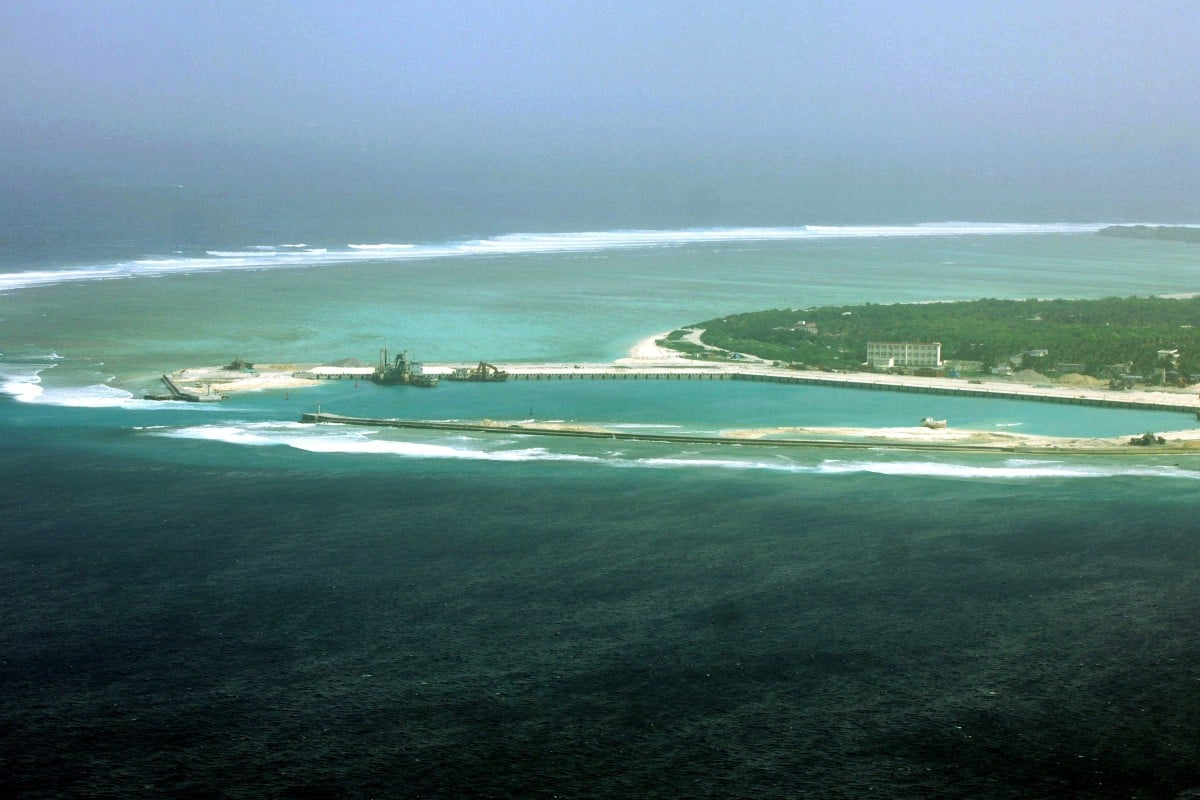
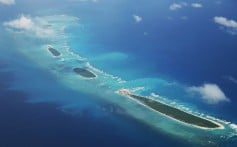
An aerial view of Sanha, a city created to assert China’s claims over the disputed waters. Photo: AFP
China’s latest activities in the South China Sea have triggered a strong protest from rival claimant Vietnam, which said the move “seriously violated” its sovereignty.
The complaint came after China announced on Sunday that it had set up two new administrative districts on the Paracel and Spratly Islands.
The two districts – which China referred to as Xisha and Nansha – will be under the control of Sansha, a city the Chinese government created in 2012 to assert its claims over the South China Sea.
Vietnam’s foreign ministry spokesperson Le Thi Thu Hang issued a statement of protest on Sunday, and said the move would further complicate the situation in the South China Sea.
“These acts are not conducive to the development of the friendly relations between countries and further complicate the situation in the East Sea [Vietnam’s name for the South China Sea], the region and the world,” she said.
“Vietnam demands that China respect Vietnam’s sovereignty and annul its wrongful decisions and not repeat similar activities in the future.”
Under the new plan, the new district of Xisha will be in charge of Paracel Islands, which are also claimed by Vietnam and Taiwan. The Nansha district will manage the Spratly Islands, where there are also multiple competing claims.
Beijing marks out claims in South China Sea by naming geographical features
21 Apr 2020
Chinese Foreign Ministry spokesman Geng Shuang said on Monday that the establishment of the new districts was in line with China’s normal administrative rules.
“China has been resolutely opposing Vietnam’s words and deeds that undermine China’s sovereignty and rights and interests in the South China Sea, and will continue to take necessary measures to firmly safeguard China’s sovereignty and rights and interests.” he said in a press conference
Vietnam is the only claimant which has publicly protested about the move so far. But Zhang Mingliang, an specialist in Southeast Asian politics with Jinan University, said it was likely to have alarmed other members of the Association of Southeast Asian Nations (Asean).
More footage emerges from 2018 near collision of US and China warships in South China Sea
“Setting up such districts will not have much use or actual benefit, and it will cause opposition among the Asean states, many of which have long been suspicious of China’s intentions over the South China Sea,” said Zhang.
“The coronavirus outbreak has already caused some grievances among them towards China, even though they have not been as vocal as the Western countries,” he said.
Richard Heydarian, an academic and former Philippine government adviser, described the move as China taking advantage of a “strategic vacuum” created by the Covid-19 crisis.
South China Sea: Chinese ship Haiyang Dizhi 8 seen near Malaysian waters, security sources say
18 Apr 2020
“On the one hand it’s engaging in face mask diplomacy [providing medical supplies to other countries] … but on the other hand it’s on the offensive,” he said.
“All of them should be seen as part of one package in which China seizes the strategic opportunity of not only its neighbouring countries scrambling to deal with the coronavirus outbreak, but also the US Navy’s suspension of overseas appointments.”
China has recently become involved in a series of stand-off with other claimants in the contested waters.
A Chinese government survey ship reportedly tagged an exploration vessel operated by Malaysia’s state oil company Petronas in the area, and remained off the Malaysian coastline as of late Sunday.
Earlier this month, Vietnam lodged an official protest with China after a Vietnamese fishing boat sunk after a collision in the Paracel Islands.
TAIPEI (Reuters) – Anger at being confused with China amid the coronavirus outbreak and Beijing’s stepped-up efforts to assert sovereignty is stirring heated debate in Taiwan about how to further distance itself from its giant and often threatening neighbour
At its core is a debate about whether to drop “China” from the island’s official name, the Republic of China.
During the virus crisis, the World Health Organization (WHO), which considers the island part of China, has listed Taiwan’s far lower case number under China’s, and China has repeatedly insisted only it has the right to speak for Taiwan on the global stage, including about health issues.
Taipei says this has confused countries and led them to impose the same restrictions on Taiwanese travellers as on Chinese, and has minimised Taiwan’s own successful efforts to control the virus.
Taiwan has been debating for years who it is and what exactly its relationship should be with China – including the island’s name. But the pandemic has shot the issue back into the spotlight.
Lin I-chin, a legislator for the ruling Democratic Progressive Party (DPP), said in parliament last month that Taiwan should change its English name to “Republic of Chunghwa”, an English rendering of the word Taiwan uses for China in its name.
“Taiwan has been brought to grief by China,” she said.
On Sunday, the New Power Party, one of Taiwan’s smaller opposition groups, released the results of a survey in which almost three-quarters of respondents said Taiwan passports should only have the word “Taiwan” on them, removing any reference to China.
“During this epidemic period, our people have been misunderstood by other countries, highlighting the urgency of changing the English name,” it said in a statement.
Taiwan’s Foreign Ministry has given a cautious response to the passport idea, noting that according to the constitution, the official name is Republic of China and that the word Taiwan was already added to passport covers in 2003.
“In the future, if there is consensus between the ruling and opposition parties on this new name, the Foreign Ministry shall cooperate in handling it,” spokeswoman Joanne Ou said.
But the government is wary of a name change for Taiwan, saying there is no consensus for such a radical move.
Although the DPP supports the island’s independence – theoretically meaning the official formation of a Republic of Taiwan – President Tsai Ing-wen says there is no need to do so, as the island is already an independent country called the Republic of China. She often refers to the island as the Republic of China, Taiwan.
‘REPUBLIC OF TAIWAN’
Premier Su Tseng-chang has said changing the island’s name isn’t the most urgent issue facing Taiwan.
“If we want to change then it might as well be to ‘Republic of Taiwan’. Taiwan is more well known,” Su said in parliament. “But if there’s no national consensus, a name change isn’t the most important thing for now.”
Taiwan’s official name is a throwback to when the Kuomintang party fled to the island after losing the Chinese civil war to the Communists in 1949, and continued to claim to be China’s legitimate government.
“The Republic of China is a country, Taiwan is not,” Chen Yu-jen, a Kuomintang legislator from the island of Kinmen, which sits just offshore from the Chinese city of Xiamen, told parliament on Monday.
The statement drew a sharp rebuke from Su, who told reporters it meant Chen had no right to be a member of the legislature. Chen said she was simply stating the facts, and that Taiwan is a geographic name, not a national name.
China’s pressure on Taiwan diplomatically and militarily during the virus crisis has also reduced Beijing’s already low standing in the eyes of many Taiwanese.
A March poll commissioned by Taiwan’s China-policy making Mainland Affairs Council and carried out by Taipei’s National Chengchi University showed more than three-quarters of respondents believed China’s government was unfriendly to Taiwan’s, the highest level in a decade.
Any name change would infuriate China, which has a law mandating the use of force to stop Taiwan independence.
MUNICH (Reuters) – U.S. Secretary of State Mike Pompeo defended on Saturday his nation’s global role despite misgivings in Europe, vowing that Western values would prevail over China’s desire for “empire”.
Pompeo was seeking to reassure Europeans troubled by U.S. President Donald Trump’s “America first” rhetoric, ambivalence over the transatlantic NATO military alliance and tariffs on European goods.
“I’m happy to report that the death of the transatlantic alliance is grossly exaggerated. The West is winning, and we’re winning together,” he said in a speech at the Munich Security Conference, listing U.S. steps to protect liberal democracies.
RELATED COVERAGE
U.S., allied firms testing alternatives to Chinese 5G technology – Esper
Pompeo was, in part, responding to German President Frank-Walter Steinmeier, who on Friday accused the United States, Russia and China of stoking global mistrust.
Trump’s decision to pull out of the 2015 Iran nuclear deal, as well as the Paris climate accord, have undermined European priorities, while moves such as recognition of Jerusalem as Israel’s capital have weakened European diplomacy, envoys say.
Pompeo defended the U.S. strategy, saying Europe, Japan and other American allies were united on China, Iran and Russia, despite “tactical differences.”
He reiterated Washington’s opposition to the Nord Stream 2 gas pipeline under construction between Russia and Germany under the Baltic Sea, a project backed by the government of German Chancellor Angela Merkel.
Citing Russia’s 2014 annexation of Crimea, cyber threats in Iran and economic coercion by China, Pompeo said those countries were still “desiring empires” and destabilising the rules-based international system.
U.S. Secretary of Defense Mark Esper, speaking immediately after Pompeo, focused his remarks solely on China, accusing Beijing of a “nefarious strategy” through telecommunications firm Huawei [HWT.UL].
“It is essential that we as an international community wake up to the challenges presented by Chinese manipulation of the long-standing international rules-based order,” Esper said.
He said it was not too late for Britain, which last month said it would allow Huawei a limited role in building its 5G networks, to take “two steps back,” but added he still needed to asses London’s decision.
“We could have a win-win strategy if we just abide by the international rules that have been set in place for decades … that respect human rights, that respect sovereignty,” he said.
has further bolstered its defence links with the United States with plans to build an F-16 fighter jet maintenance centre, as the Taipei government continues to resist Beijing’s objective of unification.
The self-ruled island’s Aerospace Industrial Development Corporation (AIDC) and US defence contractor Lockheed Martin signed a strategic partnership agreement on Tuesday that aimed to promote the establishment of an F-16 fighter jet maintenance centre in Taiwan, to be completed by 2023.
It is the latest of several significant agreements with the US during Donald Trump’s presidency. Trump approved a US$2.2 billion arms sale on July 8 that included 108 American-made M1A2T Abrams tanks and 250 Stinger missiles.
He was quicker to approve F-16 sales than his predecessors, agreeing in August to sell the island 66 F-16V jets, which will mean Taiwan owns the most F-16s in the Asia-Pacific region.
Trump also approved, in September last year, a US$330 million deal to provide spare parts and other logistics for several types of the island’s military aircraft – less than a year after the US agreed to sell US$1.4 billion of missiles, torpedoes and an early warning system to Taiwan.
Beijing views Taiwan as a breakaway province to be reunited with the mainland by force if necessary.
‘Fighter jets trump battle tanks’ in Taiwan’s US arms priorities
Collin Koh, a research fellow at the S. Rajaratnam School of International Studies with Nanyang Technological University in Singapore, said the planned maintenance centre underlined how Taiwan-US military ties had become stronger under the more enthusiastic US administration of Trump and the Taiwanese presidency of
“The [F-16 fighter jet maintenance] centre, by improving the availability and readiness of the F-16 fleet, allows Taiwan to sustain its combat aviation, not only for daily operation but also for training,” Koh said.
“This does represent a step up. Taiwan is no longer just an end-user operating the American hardware, but will also be empowered to service it. It is designed to help Taiwan achieve better defence self-sufficiency, one of the key pledges by the Tsai administration.”
Tang Shaocheng, a senior researcher in international relations at Taiwan’s National Cheng-chi University, said the increasingly close relations between Taipei and Washington made dealing with the island more tricky for Beijing.
Beijing ‘interferes daily’ in Taiwan’s election, says Tsai Ing-wen
“The Tsai administration cares about what the US thinks but not what Beijing thinks, paving the way for ever-closer ties,” Tang said. “That definitely leaves less room for Beijing to get Taipei into its orbit, by using various economic measures.”
Beijing has suspended exchanges with Taipei and staged a series of war games around Taiwan to intimidate the island since Tsai, of the independence-leaning Democratic Progressive Party, became president in 2016 and refused to accept its one-China policy.
Beijing has also tried to isolate Taiwan internationally by poaching its diplomatic allies
since Tsai took office, has repeatedly warned Washington against seeking closer military ties with Taipei, and has protested against every arms deal the two have made.
The US acknowledges the Chinese claim that it has sovereignty over Taiwan, which split from the mainland in 1949 and is self-governing. However, the US regards the status of Taiwan as unsettled and supports the island with arms sales and other measures, such as by sending warships through the Taiwan Strait that separates the island from China.
Latest measures grant island’s people and enterprises more equal treatment with their mainland counterparts
Package in March last year was dismissed by Taiwan’s Mainland Affairs Council as an attempt to buy political support
Taipei’s elections in January could influence the tone of cross-strait relations. Photo: EPA-EFE
Beijing announced a series of sweeteners for Taiwanese businesses and individuals on Monday – including participation in its 5G research and allowing Taiwanese to use mainland consular services – only two months before Taiwan’s critical presidential election.
The latest 26 measures drawn up by 20 government departments, including the State Council’s Taiwan Affairs Office and the National Development and Reform Commission, are designed to attract more Taiwanese to live and work in mainland China, despite worsening cross-strait relations.
But Taiwan’s Mainland Affairs Council criticised the move as an attempt by the Chinese Communist Party to “divide Taiwan internally, and was a further reflection of attempts to try to interfere in and influence Taiwan’s election”.
It follows a similar package of 31 measures unveiled by Beijing in March last year, which included tax incentives, preferential land-use policies for Taiwanese businesses on the mainland and benefits for Taiwanese individuals in studying or living on the mainland.
Taiwan charges pro-Beijing politicians with accepting mainland cash
The latest measures to grant Taiwan-funded enterprises more equal treatment with their mainland counterparts include offering access to research and development in 5G technology, investment in passenger and cargo air services, the establishment of microlending and financing companies and the right to apply for financial guarantees from local government funds.
Taiwanese individuals will also be officially entitled to mainland Chinese consular protection abroad, will be treated the same as their mainland counterparts when buying residential property on the mainland, and will be able to train in Beijing for the 2020 Olympic Games.
Beijing claims sovereignty over self-ruled Taiwan, and has not renounced the use of force to take the democratic island into its fold. Beijing’s ruling Communist Party has stressed its intention to promote “peaceful reunification”, pledging in its communique from the fourth plenary meeting of the party’s elite last week to “deepen cross-strait integration and development” while opposing Taiwanese independence.
The latest measures from Beijing came ahead of Taiwan’s presidential and legislative elections in January. Relations across the Taiwan Strait have been frozen under the administration of independence-leaning Taiwanese President, ostensibly over her refusal to accept the “1992 consensus”, or the understanding that there is only “one China” – something that Beijing considers a prerequisite for any talks with Taipei.
Taiwan’s Mainland Affairs Council said on Monday that the roll-out of the 26 measures one year later was intended to “cover up” the fact that the 31 measures had not been executed properly, and reflected administrative problems on the mainland amid slowing economic growth.
“Even more than that, it also reflects that during this period Taiwanese people have rejected ‘one country, two systems’ and do not agree with the results of the Communist Party’s united front divisions,” the council said.
“We urge the Communist Party officials to specifically implement protections for Taiwanese businesses and Taiwanese people in their investments and lives.”
Joseph Wu, Taipei’s foreign minister, also responded with a tweet written in simplified Chinese – which is used on the mainland – rather than the traditional Chinese used in Taiwan.
“China’s Taiwan Affairs Office came out with 26 measures and last year there were 31 – it looks like there are so many measures,” he wrote. “But we in Taiwan do not need one country, two systems, so there is really no need to be so polite. Giving your people more freedom is also good!”
Ongoing anti-government protests in Hong Kong – which is semi-autonomous from Beijing under the one country, two systems model – have highlighted for many Taiwanese voters the threat from Beijing to the island’s sovereignty.
The latest polling by the MAC found that 89 per cent of respondents opposed the one country, two systems framework that Beijing proposed for Taiwan, up from 75 per cent in a similar survey in January.
Edward I-hsin Chen, a political-science professor at Chinese Culture University in Taipei, said the impact of the 26 measures on the election would depend on how they were implemented, but that one country, two systems was clearly not palatable for Taiwanese voters, whether they supported Tsai’s Democratic Progressive Party (DPP) or the mainland-friendly Kuomintang (KMT).
“Taiwan, of course, will not accept one country, two systems, so these policies will need to be more long-term. Mainland officials did not handle the Hong Kong issue very well, so it will be very hard for one country, two systems in Taiwan – blue and green will both reject it,” he said, referring to the party colours for the KMT and DPP. “But it is good for Taiwanese people and businesses to be able to take part in the 5G sector, and there will be more cooperation in the future.”
Lin Chingfa, former chairman of the Beijing-based Association of Taiwan Investment Enterprises, said he believed the new measures were intended to appeal to Taiwanese youth.
“A very important direction for cross-strait cooperation nowadays is to bridge the opportunities available in mainland China for young people who feel deprived from the slow Taiwanese economy. Some of these policies should be especially appealing to them because it shows that the country hopes to make it more convenient for young Taiwan people willing to come,” Lin said.
He said this approach was especially obvious in the measures that were introduced to provide equal treatment for Taiwan people on the mainland – for example the opportunities for Taiwan people to apply for scholarships and the expansion of places for Taiwanese students at universities.
was back in waters close to home on Friday afternoon, according to an online platform that provides information about maritime activity.
As of 4pm, the Haiyang Dizhi 8 (Marine Geology 8), which had been operating close to Vanguard Bank – a disputed reef in the Spratly Island chain claimed by both Beijing and Hanoi – was located just off Macau, the MarineTraffic service said.
China’s foreign ministry said on Thursday that the vessel had finished the work it had started “in Chinese-controlled waters in early July”.
“According to our understanding the work is now complete,” spokeswoman Hua Chunying told a regular press briefing, without elaborating.
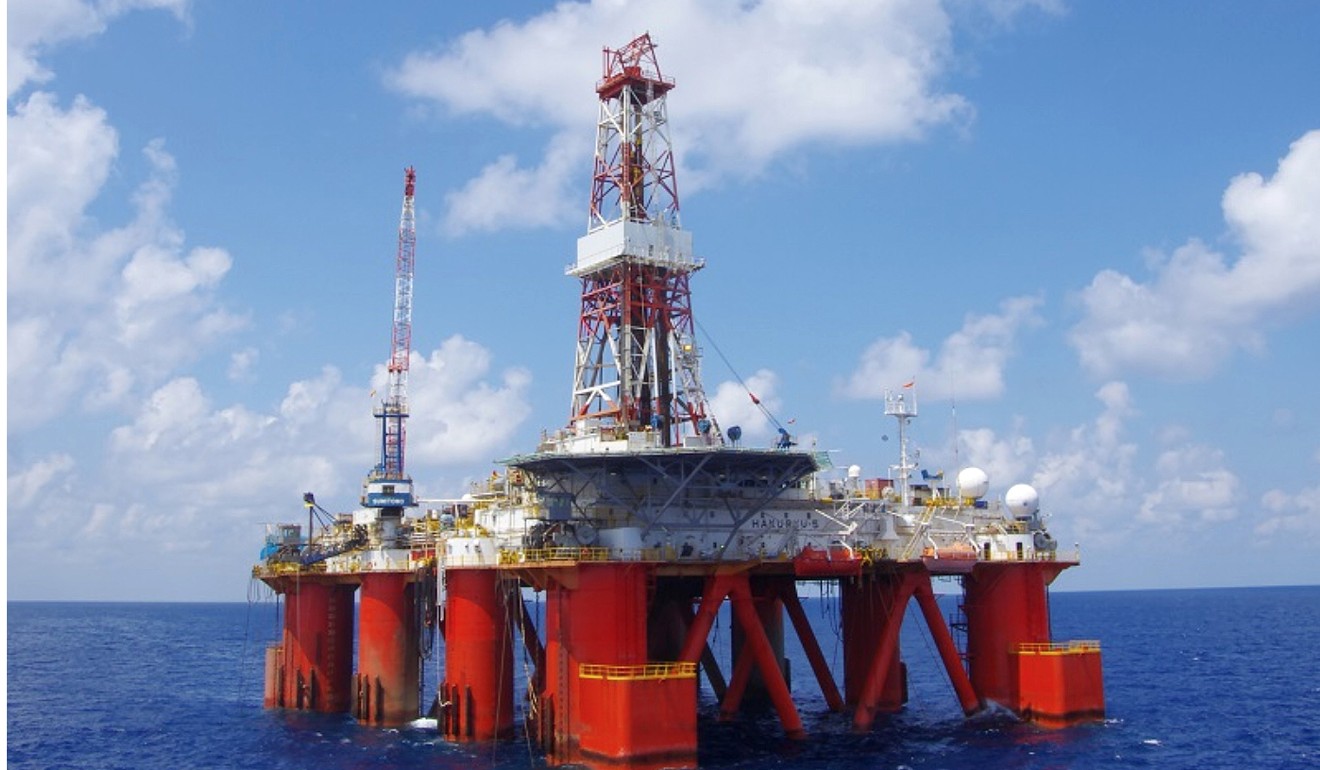
The Japanese oil rig, Hakuryu 5, is reported to have completed its drilling mission near Vanguard Bank earlier this week. Photo: Japan Drilling Co
While in the Vanguard Reef area, the Haiyang Dizhi 8, escorted by heavily armed coastguard vessels, made multiple passes by an oil block operated by Russian energy company Rosneft.
Observers say the presence of the Chinese vessels in the region is part of Beijing’s efforts to prevent Hanoi from partnering with international energy firms to explore energy reserves in the disputed waterway. The latest activity triggered a months-long stand-off between the two countries.
The departure of the Haiyang Dizhi 8 came amid reports that the Japanese oil rig, Hakuryu 5, owned by Tokyo-based Japan Drilling Company and employed by Rosneft, had earlier this week completed a drilling mission it started in May near Vanguard Bank.
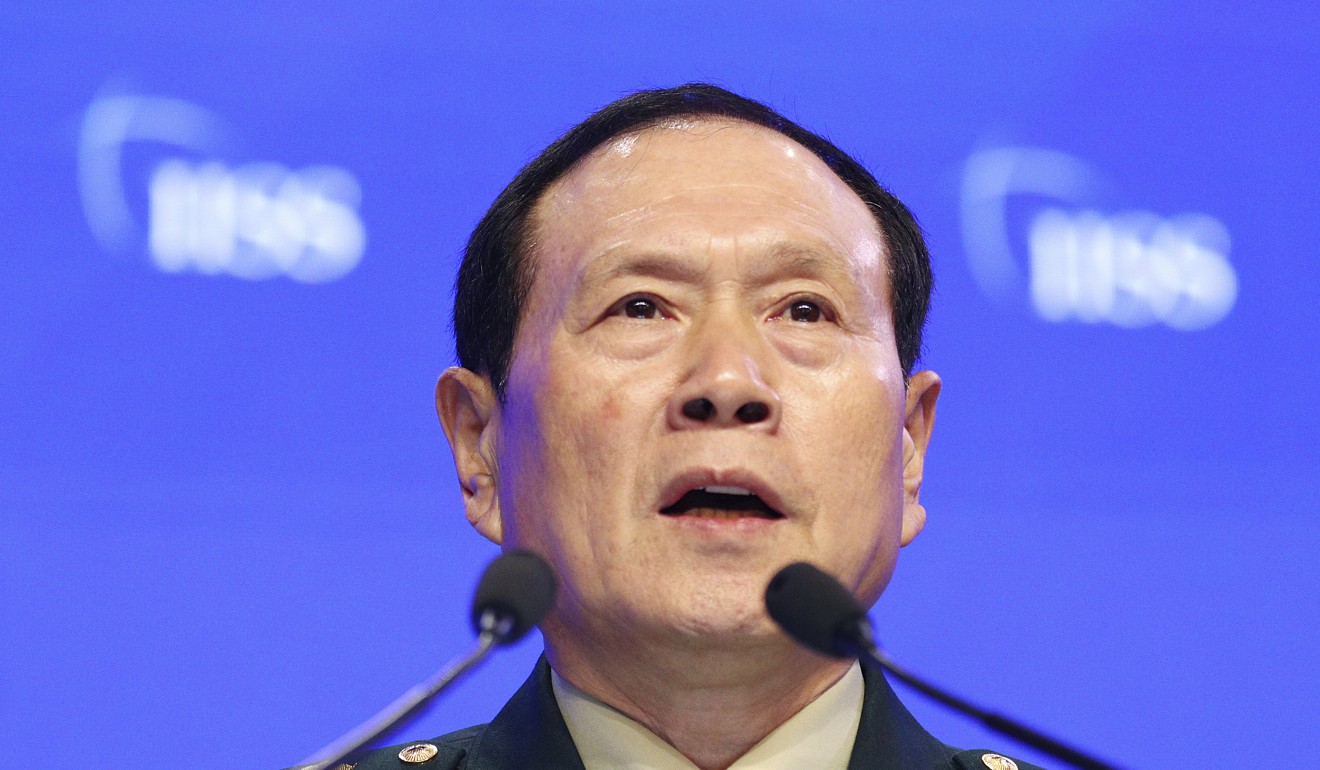
China’s Defence Minister Wei Fenghe told a regional security conference that the South China Sea was an inalienable part of China’s territory. Photo: AP
Although China and Vietnam have said they are looking for a diplomatic solution to prevent confrontations, neither has shown any signs of backing down and tensions have continued to rise.
On Monday, China’s Defence Minister Wei Fenghe told military and defence officials attending a regional security conference in Beijing that the South China Sea was an inalienable part of China’s territory.
“We will not allow even an inch of territory that our ancestors have left to us to be taken away,” he said in his opening speech at the Xiangshan Forum.
Also on Monday, Vietnamese Prime Minister Nguyen Xuan Phuc told lawmakers at the National Assembly that Hanoi would never give any territorial concessions.
“The situation in the South China Sea has become increasingly complicated,” he said. “Our party and state have consistently stated that what belongs to our independence, sovereignty and territorial integrity, we will never give up.”
Last week, Hanoi pulled DreamWorks’ animated film Abominable from theatres over a scene featuring a map that shows Beijing’s self-declared “nine-dash line” in the South China Sea. China uses the U-shaped line to claim sovereignty over more than 80 per cent of the resource-rich waterway, parts of which are also claimed by Vietnam, Malaysia, the Philippines and Brunei.
Ian Storey, a senior fellow at the ISEAS-Yusof Ishak Institute in Singapore, said that the withdrawal of the Haiyang Dizhi might only be “temporary”.
“China has made its point about drilling activities within the nine-dash line and expects Vietnam to suspend further exploration and production activities,” he said. “[But] of course Vietnam won’t.”
China, Malaysia seek to resolve South China Sea disputes with dialogue mechanism
Zhang Mingliang, a specialist in Southeast Asian affairs at Jinan University in the south China city of Guangzhou, said that the Chinese ship’s withdrawal was unlikely to have had anything to do with the comments made by Vietnam.
“I think the main reason is that it had finished its work,” he said. “But the withdrawal could also be seen as an attempt to ease the [China’s] tensions with the US.”
The significance for relations between Beijing and Hanoi was minimal, he said, as the two nations were engaged in one of the world’s most complicated territorial disputes.
“The impact on Sino-Vietnam relations will be limited because there have been too many disputes like this one,” he said.






 CHINDIA ALERT: You'll be living in their world, very soon