09/05/2020
- Nations may need help from China during virus outbreaks but remain wary of Beijing as adversary in disputed waters
- Analysts say code of conduct negotiations are too sensitive and important for virtual meetings and may be delayed until coronavirus crisis is resolved
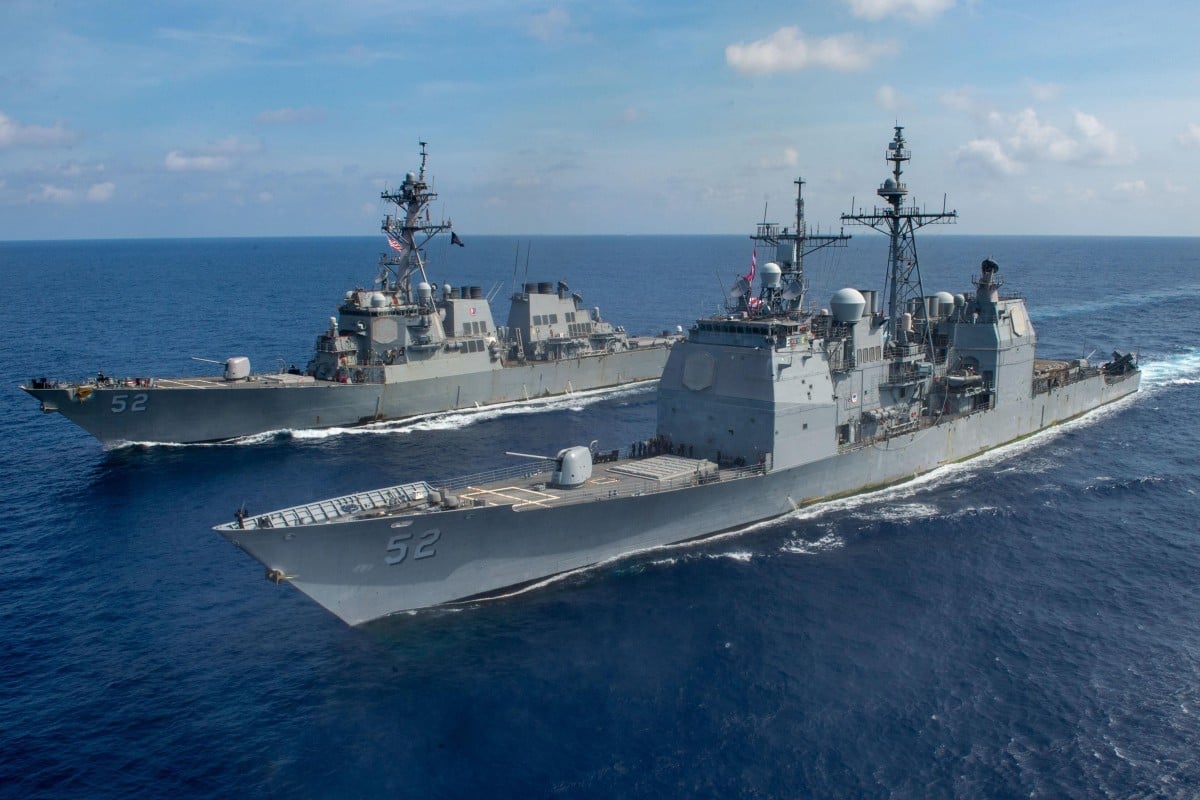
On April 18, the US Navy Ticonderoga-class guided missile cruiser USS Bunker Hill (front) and Arleigh-Burke class guided-missile destroyer USS Barry transit the South China Sea. The presence of both Chinese and American navy ships in the area in recent weeks worries Southeast Asian nations. Photo: US Navy
Negotiations between China and its Southeast Asian neighbours for a
South China Sea
code of conduct have been postponed as the nations involved put their efforts into containing
the Covid-19 pandemic, creating uncertainty about whether the two sides can work together amid rising tensions in the contested territory.
Southeast Asian nations are increasingly caught in a dilemma whether to maintain relations with Beijing during the pandemic while also fearing that tensions over the disputed waters are spiralling out of control. Both Chinese and United States navies are sending vessels to the area more frequently.
Indonesian Foreign Minister Retno Marsudi expressed concern over recent activities in the South China Sea, noting that they might potentially escalate tensions at a time when global collective effort to fight Covid-19 was essential.
Speaking on Wednesday, she called on all parties to respect international law, particularly the United Nations Convention on the Law of the Sea.
“While negotiation of the code of conduct is being postponed due to Covid-19, Indonesia calls on all relevant parties to exercise self-restraint and to refrain from undertaking action that may erode mutual trust and potentially escalate tension in the region,” she said.
Indonesia’s Foreign Minister Retno Marsudi. Photo: AP
Calls for a binding code of conduct surfaced in 1995 when China occupied Mischief Reef
, a maritime feature claimed by the Philippines. China did not agree to start talks until 1999, and subsequent negotiations led to a non-binding Declaration on Conduct in 2002.
The
Association of Southeast Asian Nations (Asean) and China agreed in 2018 on a draft code laying the foundations for conduct in the disputed waters. At that time, Chinese Premier Li Keqiang said China hoped to complete the negotiation by the end of 2021, a move he said could show China and Asean could jointly maintain regional peace.
Named and claimed: is Beijing spoiling for a new fight in the South China Sea?
27 Apr 2020
But tensions over the South China Sea have not calmed and, in fact, have surged in recent months with both Beijing and Washington seen to be using the Covid-19 pandemic to create a stronger presence there.
This year, the US has conducted four freedom of navigation operations in the South China Sea and China has scrambled air and sea patrols to expel US vessels.
The confrontation between Beijing and Southeast Asian nations has also intensified. Last month,
a Vietnamese fishing boat sank after a collision with a Chinese coastguard vessel near the Paracel Islands, known in China as the Xisha Islands, and in Vietnam as the Hoang Sa Islands.
On Saturday, the 35th escort fleet of the Chinese navy also
conducted drills in the Spratly Islands chain – known as Nansha Islands in China – after completing an operation in the Gulf of Aden, off Somalia. Analysts said the drill aimed to boost far-sea training for combat ships and boost protection against piracy for Chinese merchant ships.
Collin Koh, a research fellow at the S. Rajaratnam School of International Studies, based at Nanyang Technological University in Singapore, said the code of conduct talks had been delayed because of the pandemic, but Beijing was consolidating its position in the South China Sea amid the outbreak.
“So it’s doing what it can now to consolidate and further enhance its position before talks restart, and by then these moves will raise Beijing’s leverage in the negotiations with its Asean counterparts,” he said.
“The current situation gives it a window of opportunity amid this interlude on the talks, to further advance its physical hold in the South China Sea, especially while Asean parties have their hands full on the pandemic”.
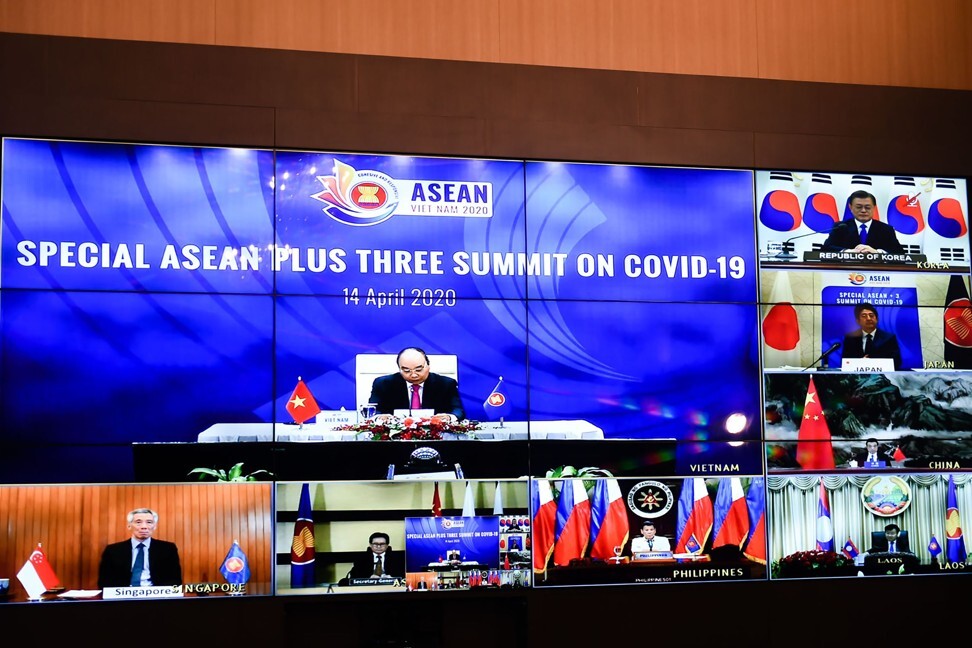
Asean nations have turned their attention to coping with coronavirus outbreaks in their own countries. On April 14, a live video conference for the special Asean Plus Three Summit on the coronavirus pandemic was held in Hanoi. Photo: AFP
Kang Lin, a researcher with Hainan University, said progress for the code of conduct would still go ahead, but it might be affected as face-to-face meetings between officials were disrupted.
“The negotiations involves multiple departments, such as diplomacy, maritime affairs, fisheries and even oil and gas-related departments,” he said, adding that those discussions might go online and might not be as effective.
“It is not easy to predict to what extent it will affect next year's goals. If the pandemic cannot be eliminated in the first half of next year, it may be longer than the three-year period we had previously scheduled,” he said.
Richard Heydarian, an academic and former Philippine government adviser, said video-conference meetings would be inadequate for negotiations about the future of the South China Sea.
“The problem with the negotiation of the code is that these are very sensitive, difficult negotiations. I don't think you can really do it just online, these are things that are done in the corridors of power,” he said. “It’s close to impossible to have that right now with the suspension of all international meetings in the Asean.”
Heydarian said Southeast Asian nations hoped to get help from China to contain the pandemic, but were showing unease about Beijing.
“I think there is a lot of resentment building against China,” he said. “There is also a lot of desperation to get assistance from China and, at the same time, complete helplessness with the fact that it is very hard to conduct any important extended international meeting on the level of Asean and beyond under current circumstances.”
Chinese Foreign Ministry spokesman Hua Chunying said on Thursday that China would push forward negotiations on the code of conduct, and hoped the code would be useful for peace and stability over the South China Sea.
Source: SCMP
Posted in adversary, ASEAN, Association of Southeast Asian Nations (ASEAN), Beijing, China, China’s, chinese foreign ministry spokesman, Chinese premier Li Keqiang, Code of conduct, complex, coronavirus crisis, delayed, disputed waters, during, expose, guided missile cruiser, guided-missile destroyer, gulf of aden, Hanoi, important, Indonesian Foreign Minister, Nansha Islands, Nanyang Technological University, nations, negotiations, neighbours, outbreaks, pandemic, piracy, relationship, resolved, S. Rajaratnam School of International Studies, sensitive, Singapore, Somalia, South China Sea, southeast asian nations, Spratly Islands, talks, Uncategorized, United Nations Convention on the Law of the Sea (UNCLOS), US Navy, virtual meetings, Virus, wary |
Leave a Comment »
20/04/2020
- Move to create administrative units for disputed Paracel and Spratly Islands angers Hanoi
- China has been engaged in a series of stand-offs with rival claimants recently
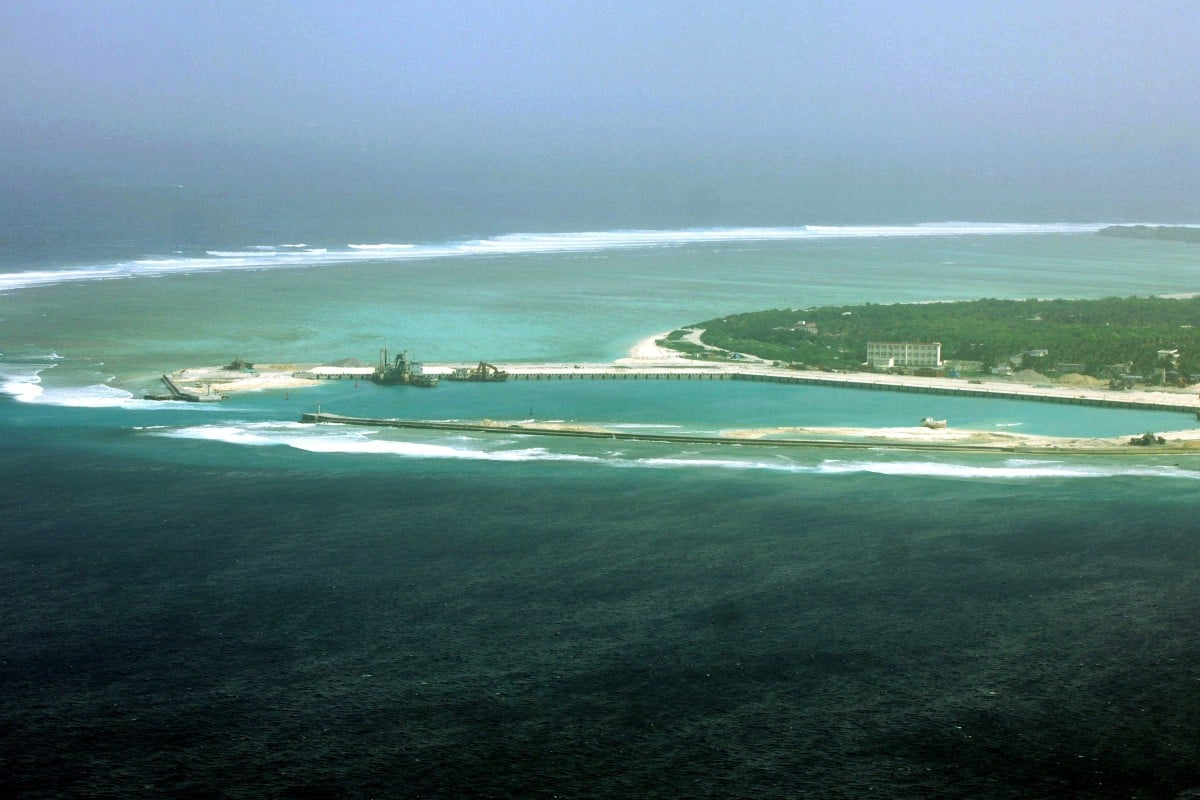
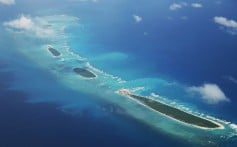
An aerial view of Sanha, a city created to assert China’s claims over the disputed waters. Photo: AFP
China’s latest activities in the South China Sea have triggered a strong protest from rival claimant Vietnam, which said the move “seriously violated” its sovereignty.
The complaint came after China announced on Sunday that it had set up two new administrative districts on the Paracel and Spratly Islands.
The two districts – which China referred to as Xisha and Nansha – will be under the control of Sansha, a city the Chinese government created in 2012 to assert its claims over the South China Sea.
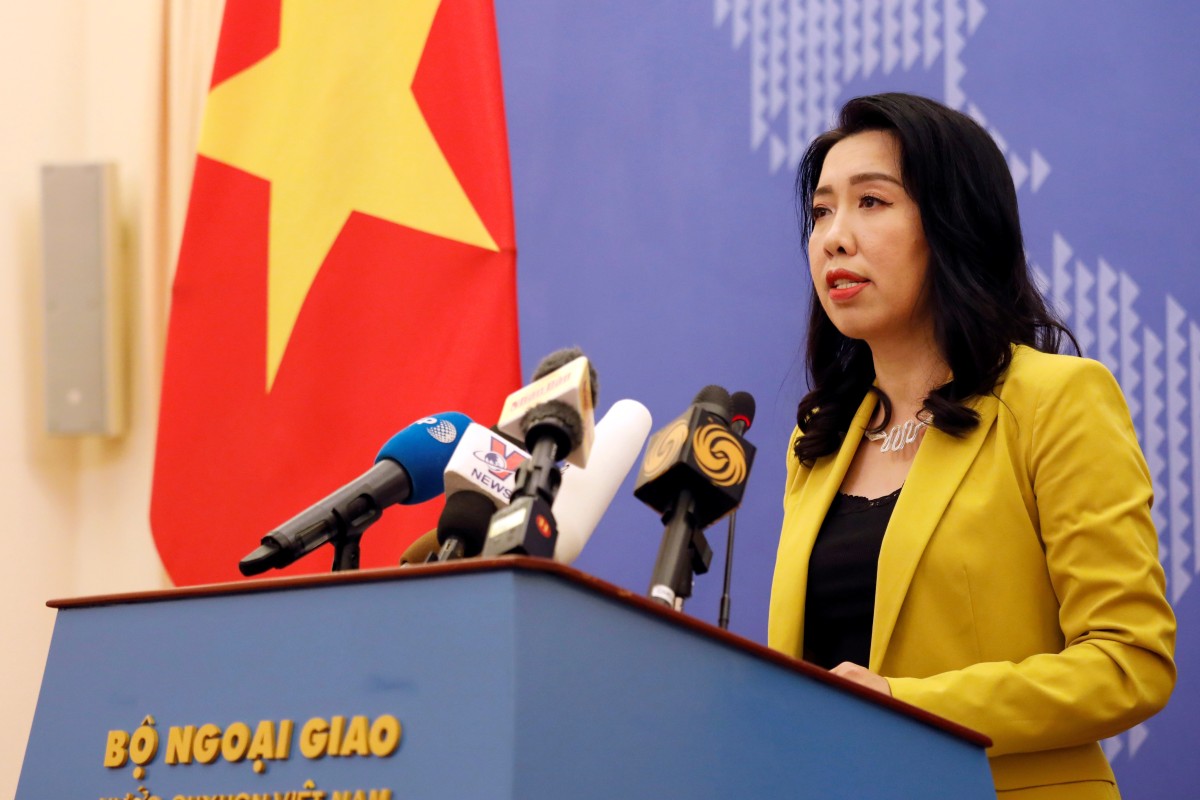
Vietnam’s foreign ministry spokesperson Le Thi Thu Hang issued a statement of protest on Sunday, and said the move would further complicate the situation in the South China Sea.
“These acts are not conducive to the development of the friendly relations between countries and further complicate the situation in the East Sea [Vietnam’s name for the South China Sea], the region and the world,” she said.
“Vietnam demands that China respect Vietnam’s sovereignty and annul its wrongful decisions and not repeat similar activities in the future.”
Under the new plan, the new district of Xisha will be in charge of Paracel Islands, which are also claimed by Vietnam and Taiwan. The Nansha district will manage the Spratly Islands, where there are also multiple competing claims.
Beijing marks out claims in South China Sea by naming geographical features
Chinese Foreign Ministry spokesman Geng Shuang said on Monday that the establishment of the new districts was in line with China’s normal administrative rules.
“China has been resolutely opposing Vietnam’s words and deeds that undermine China’s sovereignty and rights and interests in the South China Sea, and will continue to take necessary measures to firmly safeguard China’s sovereignty and rights and interests.” he said in a press conference
Vietnam is the only claimant which has publicly protested about the move so far. But Zhang Mingliang, an specialist in Southeast Asian politics with Jinan University, said it was likely to have alarmed other members of the Association of Southeast Asian Nations (Asean).
More footage emerges from 2018 near collision of US and China warships in South China Sea
“Setting up such districts will not have much use or actual benefit, and it will cause opposition among the Asean states, many of which have long been suspicious of China’s intentions over the South China Sea,” said Zhang.
“The coronavirus outbreak has already caused some grievances among them towards China, even though they have not been as vocal as the Western countries,” he said.
Richard Heydarian, an academic and former Philippine government adviser, described the move as China taking advantage of a “strategic vacuum” created by the Covid-19 crisis.
South China Sea: Chinese ship Haiyang Dizhi 8 seen near Malaysian waters, security sources say
“On the one hand it’s engaging in face mask diplomacy [providing medical supplies to other countries] … but on the other hand it’s on the offensive,” he said.
“All of them should be seen as part of one package in which China seizes the strategic opportunity of not only its neighbouring countries scrambling to deal with the coronavirus outbreak, but also the US Navy’s suspension of overseas appointments.”
China has recently become involved in a series of stand-off with other claimants in the contested waters.
A Chinese government survey ship reportedly tagged an exploration vessel operated by Malaysia’s state oil company Petronas in the area, and remained off the Malaysian coastline as of late Sunday.
Earlier this month, Vietnam lodged an official protest with China after a Vietnamese fishing boat sunk after a collision in the Paracel Islands.
Source: SCMP
Posted in accuses, angers, Association of Southeast Asian Nations (ASEAN), ‘seriously violating, Beijing, chinese government, collision, coronavirus outbreak, COVID-19, fishing boat, Foreign Ministry spokesperson, Haiyang Dizhi 8, Hanoi, Malaysian, Nansha, Paracel, South China Sea, Southeast Asian, sovereignty, Spratly Islands, sunk, Taiwan, Uncategorized, Vietnam, warships', Xisha |
Leave a Comment »
28/07/2019
- Hanoi says it has sent several messages to Beijing that a Chinese survey ship vacate the waters located in its exclusive economic zone
- ‘Vietnam resolutely and persistently protects our sovereign rights … by peaceful means on the basis of international laws,’ a foreign ministry spokesperson said
Vietnamese foreign ministry spokeswoman Le Thi Thu Hang. Photo: Reuters
Vietnam on Thursday called for the “immediate withdrawal” of a Chinese ship in the
, as the stand-off over the disputed waters intensified.
Beijing last week issued a new call for Hanoi to respect its claims to the resource-rich region – which has historically been contested by Vietnam, as well as Taiwan, the Philippines, Malaysia and Brunei.
Hanoi responded by saying it had sent several messages to Beijing insisting that a Chinese survey ship vacate its waters, and doubled down on Thursday with new demands for the vessel’s removal.
“Vietnam has had several appropriate diplomatic exchanges … requesting immediate withdrawal from Vietnam’s exclusive economic zone,” a foreign ministry spokesperson told reporters, while refusing to disclose the ship’s precise location.
“Vietnam resolutely and persistently protects our sovereign rights … by peaceful means on the basis of international laws,” Le Thi Thu Hang added.
The ship, owned by the government-run China Geological Survey, begun research around the contested Spratly Islands on July 3, according to the US-based Center for Strategic and International Studies (CSIS).
Before it was spotted, a Chinese coastguard vessel also patrolled near Vietnamese supply ships in a “threatening manner”, CSIS said.
China has not confirmed the presence of its ships in the area.
China’s neighbours boost coastguards as tensions rise in South China Sea
Beijing invokes its so-called nine-dash line to justify its claim to historic rights to the waterway, and has previously built up artificial islands as well as installed airstrips and military equipment in the region.
The line runs as far as 2,000km (1,240 miles) from the Chinese mainland to within a few hundred kilometres of the Philippines, Malaysia and Vietnam.
In 2014 Beijing moved an oil rig into waters claimed by Hanoi, sparking deadly anti-China protests across Vietnam.
The latest stand-off in the sea prompted a swift rebuke from the United States over the weekend, calling for an end to China’s “bullying behaviour”.
US accuses China of acting like a bully in the South China Sea
“China’s repeated provocative actions aimed at the offshore oil and gas development of other claimant states threaten regional energy security,” the US State Department said Saturday.
The US has long called for freedom of navigation in the South China Sea, and on Thursday said it sailed a warship through the Taiwan Strait
Posted in Beijing, Brunei, Center for Strategic and International Studies (CSIS), China Geological Survey, Chinese ship, Chinese survey ship, demand, disputed, Exclusive economic zone, Hanoi, immediate withdrawal, international laws, Malaysia, Philippines, South China Sea, Spratly Islands, Taiwan, Taiwan Strait, Uncategorized, Vietnam |
Leave a Comment »
29/05/2019
- Academic on-board the HMAS Canberra says pilots were struck by lasers on a voyage from Vietnam to Singapore, during which they were being tailed by a Chinese warship
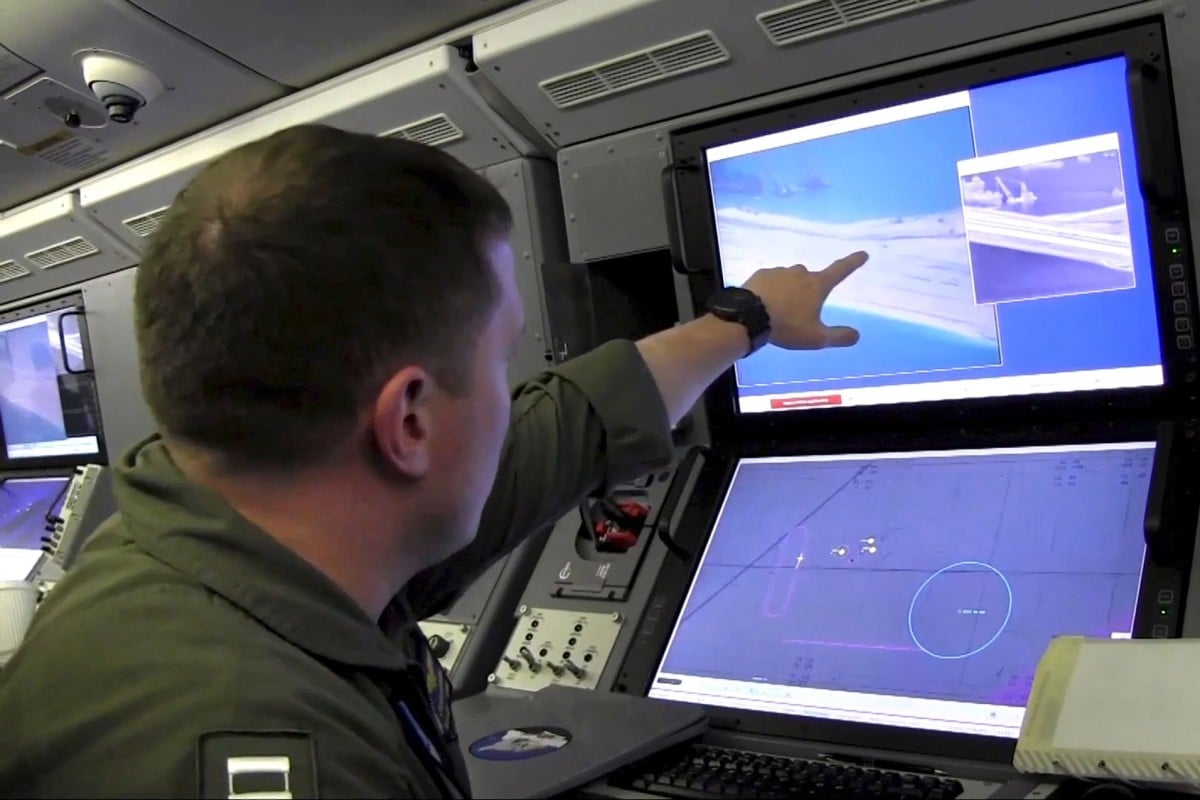
US Navy personnel point at a computer screen showing Chinese activity on the Fiery Cross Reef in the Spratly Islands in the South China Sea. An Australian scholar said
Chinese ships pointed lasers at them during a flight over the disputed sea. Photo: Reuters
Australian navy helicopter pilots were hit by lasers and forced to land during exercises in
, according to one witness on-board the aircraft.
Scholar Euan Graham, who said he was on the Royal
flagship HMAS Canberra during a voyage from Vietnam to Singapore, said the lasers had been pointed from passing fishing vessels while the Canberra was being
.
“Was this startled fishermen reacting to the unexpected? Or was it the sort of coordinated harassment more suggestive of China’s maritime militia? It’s hard to say for sure, but similar incidents have occurred in the western Pacific,” he wrote on the website The Strategist run by the Australian Strategic Policy Institute, an independent, non-partisan think tank based in Canberra.
His account of the incident appeared on Tuesday.
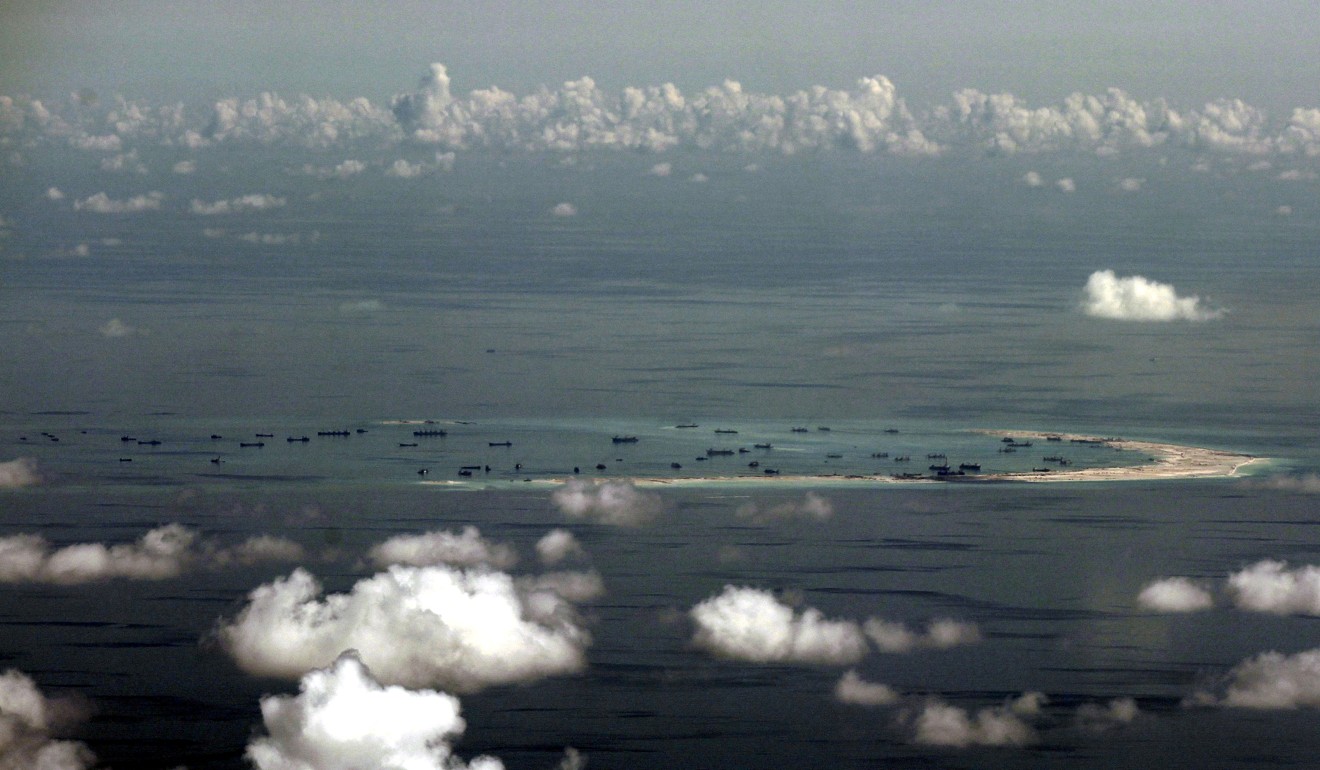
The Mischief Reef in the Spratly Islands in the South China Sea, where China is said to be increasing its military presence. Photo: Reuters
China maintains a robust maritime militia in the South China Sea, composed of fishing vessels equipped to carry out missions just short of combat. China claims the strategic waterway virtually in its entirety and is sensitive to all foreign naval action in the area, especially by
such as Australia.
Similar incidents involving lasers and the Chinese military have been reported as far away as Djibouti, where the US and China have bases. Last year, the US complained to China after lasers were directed at aircraft in the Horn of Africa nation, causing minor injuries to two American pilots.
China denied that its forces targeted the US military aircraft.
Graham said that while bridge-to-bridge communications with the Chinese during the voyage were courteous, the Chinese requested the Australian warships notify them in advance of any corrections to their course.
That was something the Australian navy was “not about to concede while exercising its high-seas freedoms”, Graham wrote.
In South China Sea, Asean has a choice: ‘Asian values’ or rule of law?
He wrote that the constant presence of Chinese vessels shadowing foreign ships appeared to indicate that the Chinese fleet had grown large enough to allow it to have vessels lying in wait for just such orders.
He said their trailing actions also appeared to show that China’s over-the-horizon surveillance capability was also maturing, supported by technology based at points such as Fiery Cross Reef in the contested Spratly island group where China has built military installations and an airstrip atop coral reefs.
Five other governments have claims in the South China Sea that overlap with China’s, and the US and its allies insist on the right to sail and fly anywhere in the area is permitted under international law, despite China’s differing interpretation of such guidelines.
Graham, who is executive director of La Trobe Asia at La Trobe University in Australia, was one of several academics invited to observe Australia’s engagement exercise Indo-Pacific Endeavour 2019.
Source: SCMP
Posted in Australian, Australian Strategic Policy Institute, Australian warships, Beijing’s ‘maritime militia’, bridge-to-bridge communications, Canberra, Chinese fleet, Chinese warship, Fiery Cross Reef, force, HMAS Canberra, Horn of Africa, Indo-Pacific Endeavour, land, lasers, navy helicopter, Scholar, Singapore, South China Sea, Spratly Islands, tailed, Uncategorized, Vietnam |
Leave a Comment »





 CHINDIA ALERT: You'll be living in their world, very soon