Archive for ‘State Council Information Office’

16/03/2020

China eyes rescheduled parliament for late April or early May – sources

BEIJING (Reuters) – China tentatively plans to hold its delayed annual gathering of parliament in late April or early May, two people involved in preparations told Reuters, as new coronavirus cases in the country drop sharply even as they surge elsewhere.

The annual meetings of the National People’s Congress (NPC) and the Chinese People’s Political Consultative Conference (CPPCC), known as the “two sessions”, were scheduled for early March but were delayed due to the virus outbreak, with no new date announced.

Holding the events, which typically draw a combined 5,000 delegates to Beijing’s Great Hall of the People, would be a major indication that the Chinese leadership sees things as returning to normal.

The State Council Information Office and the media department of the Standing Committee of the NPC did not immediately respond to faxed requests for comment on Monday.

The outbreak that originated in the central city of Wuhan has infected more than 80,000 people in the country, killed 3,200 and wreaked economic havoc, causing factory output to plunge at the sharpest pace in three decades.

The NPC’s timing is not finalised, and one of the people said the number of attendees may be reduced, with those visiting from outside Beijing needing to undergo quarantine.

People now arriving in the capital from elsewhere in China must spend two weeks in quarantine.

“We still have to play it by ear, as the coronavirus rapidly spreads across the world,” said the person, declining to be identified given the sensitivity of the matter.

The NPC, China’s parliament, usually sits for at least 10 days. The CPPCC, a largely ceremonial advisory body, runs in parallel.

During parliament, legislators pass laws and unveil economic targets, defence spending projections and other important policy decisions. It is also an occasion for China’s ruling Communist Party to announce major policy and personnel changes.

This year, the NPC is expected to discuss the recent months of anti-government protests in Hong Kong, with China’s economy also expected to be a key item on the agenda.

Source: Reuters

13/03/2020

China Focus: China report says human rights situation deteriorating in U.S.

BEIJING, March 13 (Xinhua) — China on Friday issued a report on human rights violations in the United States.

Titled “The Record of Human Rights Violations in the United States in 2019,” the report said the facts detailed in the document show that “in recent years, especially since 2019, the human rights situation in the United States has been poor and deteriorating.”

The State Council Information Office released the report based on published data, media reports and research findings. It began by citing a quote from U.S. Secretary of State Mike Pompeo in a speech on April 15, 2019: “We lied, we cheated, we stole … It reminds you of the glory of the American experiment.”

“The remarks of U.S. politicians have completely exposed their hypocrisy of adopting double standards on human rights issues and using them to maintain hegemony,” read the report.

The United States released annual reports to “distort and belittle” human rights situation in countries and regions that did not conform to U.S. strategic interests, but turned a blind eye to the “persistent, systematic and large-scale” human rights violations in its own country, the report said.

Consisting of foreword and seven chapters, it detailed facts on human rights violations in the United States relevant to civil and political rights, social and economic rights, discrimination suffered by ethnic minorities, discrimination and violence against women, living conditions of vulnerable groups, and abuses suffered by migrants, as well as U.S. violations of human rights in other countries.

The lack of restraint in the right to hold guns has led to rampant gun violence, posing a serious threat to citizens’ life and property safety in the United States, the report said.

“The United States is a country with the worst gun violence in the world,” read the report. In total, 39,052 people died from gun-related violence in the United States in 2019, and a person is killed with a gun in the United States every 15 minutes, figures showed.

Wealth polarization in the United States hit a 50-year high in 2018, the report said. In 2018, the wealthiest 10 percent held 70 percent of total household wealth. The bottom 50 percent saw essentially zero net gains in wealth over the past 30 years, it noted.

Regarding discrimination suffered by ethnic minorities in the United States, the report said the political structure and ideology of white supremacy in the United States have caused ethnic minorities to suffer all-round discrimination in various fields such as politics, economy, culture and social life.

Since 2016, white supremacy in the United States has shown a resurgence trend, leading to racial opposition and hatred, it noted.

Women in the United States face severe discrimination and violence, according to the report. Women in the United States were 21 times more likely to die by firearm homicide than women in peer nations, it noted, adding that sexual assault cases against women kept increasing.

About the living conditions of vulnerable groups, the report said tens of millions of U.S. children, elderly people, and disabled people live without enough food or clothing, and face threats of violence, bullying, abusing and drugs.

“The U.S. government not only has insufficient political will to improve the conditions for vulnerable groups but also keeps cutting relevant funding projects,” read the report.

While levels of extreme poverty worldwide had dropped dramatically, the poverty ratio of U.S. children was about the same rate as 30 years ago, it said.

The report noted the increasingly strict and inhumane measures taken by the U.S. government against immigrants in recent years, in particular, the “zero-tolerance” policy, which caused the separations of many immigrant families.

Many unaccompanied immigrant children were held in overcrowded facilities, without access to adequate healthcare or food, and with poor sanitation conditions, the report said.

It noted grave abuses at detention facilities for immigrants, including injecting them with sedatives, keeping them in handcuffs, and depriving them of clothing and mattresses.

The United States also wantonly trampled on human rights in other countries and was responsible for many humanitarian disasters around the world, according to the report.

The economic embargo against Cuba and the unilateral sanctions against Venezuela imposed by the United States had been a massive and flagrant violation of the human rights of people in these countries, the report said.

The United States withdrew from several multilateral mechanisms, including the UN Human Rights Council and the UN Global Compact on Migration, shirking off its international obligations and making troubles to the international governance system, it noted.

Source: Xinhua

08/12/2019

Participants visit Shanghai before attending South-South Human Rights Forum

CHINA-SHANGHAI-PARTICIPANTS OF SOUTH-SOUTH HUMAN RIGHTS FORUM-VISIT (CN)

Participants learn about the construction of Shanghai West Bund in Shanghai, east China, Dec. 7, 2019, before attending the upcoming 2019 South-South Human Rights Forum. (Photo by Wang Xiang/Xinhua)

SHANGHAI, Dec. 7 (Xinhua) — Officials and scholars from more than 70 Asian, African and Latin American developing countries, as well as the United Nations, visited Shanghai on Saturday before attending the upcoming 2019 South-South Human Rights Forum.

The forum, hosted by the State Council Information Office and the Ministry of Foreign Affairs, will be held in Beijing from Dec. 10 to 11.

According to the Beijing Declaration issued at the first South-South Human Rights Forum held in Beijing in 2017, participants agreed that the right to subsistence and the right to development were the primary basic human rights.

During the one-day trip in Shanghai, the officials and scholars, from countries including Laos, Brunei, South Africa, Mexico and Mauritius, visited the city’s financial district and the World Expo Museum, snapped pictures of local residents’ life scenes on the bank of the Huangpu River, and investigated the progress of waste sorting in ordinary residential streets. They were impressed by the prosperous and orderly development of the mega city.

“I think China is becoming more open and confident about human rights. The changes I saw here are examples of the great improvements in the Chinese people’s rights to subsistence and development,” said Davina Sigauta Rasch, director of Corporate Service of the Ombudsman Office in Samoa, who studied international economics and trade from 2009 to 2013 at the Southwestern University of Finance and Economics in Chengdu, Sichuan Province.

She said that compared with 10 years ago, China has made significant progress in the emerging fields such as high-speed railways and mobile payments, which directly improved people’s lives. China is not only developing itself, but also helping other developing countries, she said.

Her idea was echoed by Lionel Vairon, CEO of CEC Consulting in Luxembourg and also a senior research member of the Charhar Institute, a private think tank in China.

Over the past 70 years since the founding of the People’s Republic of China, great achievements which have attracted worldwide attention have been made, he said, adding that the international community should not ignore China’s progress in human rights out of ideological misunderstanding and prejudice.

“In the future, global governance must make a choice between the policy of strong-power hegemony and the path of a community with a shared future for humanity. And the latter is the wisdom China has contributed to the world,” he said.

Source: Xinhua

20/09/2019

China Focus: China publishes white paper on progress of women’s cause in 70 years

CHINA-BEIJING-SCIO-WOMEN'S CAUSE-WHITE PAPER (CN)

A white paper titled “Equality, Development and Sharing: Progress of Women’s Cause in 70 Years Since New China’s Founding” is released by the State Council Information Office in Beijing, capital of China, Sept. 19, 2019. China on Thursday issued a white paper on the progress of women’s cause in the past 70 years since the founding of the People’s Republic of China. TO GO WITH “China publishes white paper on progress of women’s cause in 70 years” (Xinhua/Zhang Yuwei)

BEIJING, Sept. 19 (Xinhua) — China on Thursday issued a white paper on the progress of women’s cause in the past 70 years since the founding of the People’s Republic of China (PRC).

The white paper, titled “Equality, Development and Sharing: Progress of Women’s Cause in 70 Years Since New China’s Founding,” was released by the State Council Information Office.

The founding of the PRC in 1949 ushered in a new era for women in China, changing their social status from an oppressed and enslaved group in the past thousands of years to masters of their own fate, the white paper said.

As the Chinese nation is rising and growing richer and stronger, Chinese women’s social status has undergone enormous changes, it said.

“The great achievements China has made in the development of women’s cause is attributed to the leadership of the Communist Party of China (CPC),” said Huang Xiaowei, vice president of the All-China Women’s Federation, at a press conference.

The progress made by Chinese women led by the CPC is not only of considerable significance to China’s national rejuvenation but also a notable contribution to human civilization progress, Huang said.

As China’s development has entered a new era, promoting gender equality and women’s overall development at a higher level not only meets opportunities but also has a long way to go, the white paper said.

Under the guidance of Xi Jinping Thought on Socialism with Chinese Characteristics for a New Era, China will always adhere to safeguarding and improving women’s livelihoods, promote women’s all-round development, and lead hundreds of millions of women in working for national rejuvenation, it said.

MORE WORKING WOMEN

China has promulgated laws and regulations to fully protect women’s economic rights and interests, especially the right to equal employment, ensuring equal pay to men and women for equal work and eliminating gender discrimination in employment, the white paper said.

Women account for 40 percent of the labor force in China. In 2017, there were 340 million working women, doubling the figure in 1978.

Women’s job options have greatly expanded. In 2010, 46.8 percent of women worked in industry and service sectors, up 24.8 percentage points from 1982.

HIGHER POLITICAL STATUS

China has drawn up and implemented laws to guarantee that women share equal rights with men to vote, to be elected, and to participate in the administration of state affairs, the white paper said, adding that over the past four decades since the reform and opening-up, new opportunities and channels have been opened to women to participate in politics.

In 2017, women accounted for 52.4 percent of public servants newly-recruited by the central government organs and their affiliates, and the proportion was 44 percent among local governments.

The ratio of women deputies to the 13th National People’s Congress (NPC) was 24.9 percent, 12.9 percentage points higher than that of the first NPC in 1954.

MORE EDUCATED WOMEN

Chinese women’s education level has been dramatically lifted over the past seven decades, according to the white paper.

The illiteracy rate among females aged 15 and above dropped from 90 percent before the founding of the PRC to 7.3 percent in 2017, which was a historic change.

The gender gap in the nine-year compulsory education has been basically eliminated. In 2017, the net primary school enrollment rates of boys and girls were both 99.9 percent while the proportions of girls in primary schools and junior high schools were 46.5 percent and 46.4 percent respectively, 18.5 and 20.8 percentage points higher than those in 1951 respectively

In 2017, the gross high school enrollment rate was 88.3 percent, with girls accounting for 47.7 percent of all students in high schools.

Meanwhile, women accounted for 52.5 percent of students in regular institutions of higher education, 28.4 percentage points higher than in 1978, 32.7 percentage points higher than in 1949.

HEALTHIER WOMEN

Women’s health has further improved in China. Women’s average life expectancy grew to 79.4 years in 2015, an increase of 10.1 years over 1981 and 42.7 years over 1949, according to the white paper.

The maternal mortality rate has fallen 79.4 percent from 88.8 per 100,000 in 1990 to 18.3 per 100,000 in 2018, meaning that China has achieved the United Nations Millennium Development Goals ahead of time.

Source: Xinhua

03/09/2019

Series of cultural events to celebrate 70th anniversary of China-Mongolia ties kick off

ULAN BATOR, Sept. 2 (Xinhua) — A series of cultural events to celebrate the 70th anniversary of the establishment of diplomatic ties between China and Mongolia kicked off at the Mongolian National Modern Art Gallery here on Monday.

Hundreds of people from various fields of both countries, including Mongolian Minister of Education, Culture, Science and Sports Yondonperenlei Baatarbileg and Chinese Ambassador to Mongolia Xing Haiming attended the opening ceremony.

“We will relive the China-Mongolia friendship through more than 20 activities including cultural performances, exhibitions, exchanges of books, watching movies and TV series and free medical exams under a broader theme called ‘Feel China’ for the 70th anniversary of the establishment of diplomatic relations between China and Mongolia,” Xing said at the ceremony.

The ambassador noted that China attaches great importance to China-Mongolia relations and is willing to deepen the alignment of the China-proposed Belt and Road Initiative and Mongolia’s Development Road Program on the basis of equality and mutual benefit.

He expressed hope that the two countries will work together to boost the friendly and mutually beneficial cooperation that brings tangible benefits to the two countries and peoples.

For his part, Baatarbileg said that the culture of any country is a guarantee of independence and the value of its people.

“I have no doubt that the cultural events can give Mongolians a deeper understanding of China’s culture,” he said, noting that the Mongolian government will support any activities aimed at promoting the history and culture of the two countries.

Visitors can partake in martial arts training, craft traditional Chinese embroidery, attend film screenings and taste a variety of Chinese foods.

The events are co-organized by China’s State Council Information Office, China’s Inner Mongolia Autonomous Region, the Mongolian Ministry of Education, Culture, Science and Sports and governor’s office of the Mongolian capital Ulan Bator.

The events run until Friday.

Source: Xinhua

21/07/2019

Uygurs in Xinjiang didn’t choose to be Muslims, China says in white paper

  • Islam was forced on ethnic group ‘by religious wars and the ruling class’, Beijing says in latest report defending its actions in far western region
  • Uygurs’ ancestors were enslaved by the Turks, document says
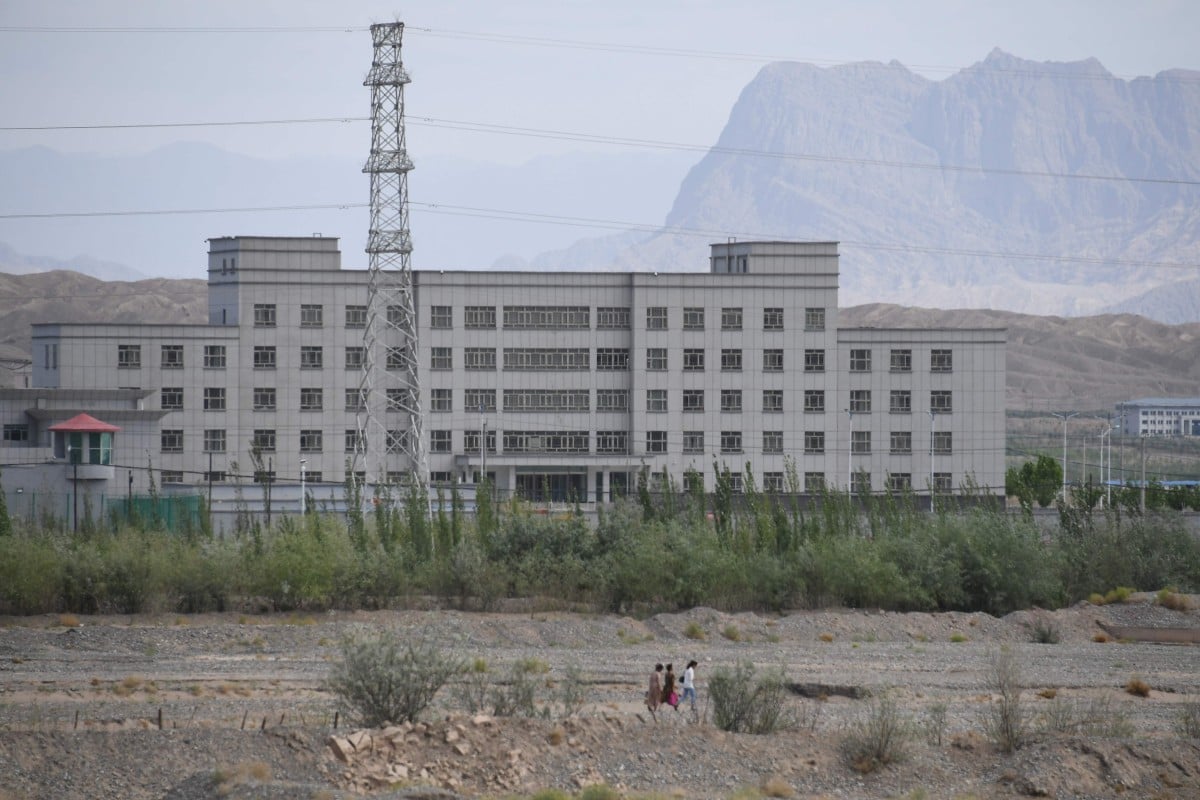
Beijing has issued a white paper seemingly designed to defend its actions in Xinjiang where as least 1 million Uygurs are being held in detention centres. Photo: AFP
Uygurs became Muslims not by choice but by force, and Islam is not their only religion, Beijing said in a white paper published on Sunday, as it continued its propaganda campaign to justify its controversial policies in the far western province of

Xinjiang

.

“The Uygur people adopted Islam not of their own volition … but had it forced upon them by religious wars and the ruling class,” according to the document released by the State Council Information Office.

Islamic beliefs were forced on the Uygurs during the expansion of Arabic states. This is a historical fact, the report said, though that did not undermine the Uygurs’ religious rights now.

The report said also that there are Uygurs who hold to faiths other than Islam, and others who do not practise any religion at all.

The paper also took aim at the Uygurs’s historic links with Turkey.

“Historically, the Uygurs’ ancestors were enslaved by the Turks,” it said, citing a history of conflicts between the two groups dating back to the 8th century.

China promotes Xinjiang as tourist idyll

The white paper was issued amid a campaign by Beijing to justify its policies in the restive region, which is home to more than 10 million Uygurs, most whom are Muslim.

Earlier this month, the ambassadors of 22 countries signed a letter calling on Beijing to halt its mass detention of Uygurs in Xinjiang, the first such joint move on the issue at the UN Human Rights Council.

The signatories included envoys from Britain, France, Germany, Australia, Canada, Japan and Switzerland. The United States, which quit the forum a year ago, did not sign the letter.

China responded by issuing a letter signed by the ambassadors of 37 countries, including several Muslim majority states like Saudi Arabia and Pakistan, backing its policies in the region.

Beijing said the show of support was “a powerful response to the groundless accusations made against China by a small number of Western countries”.

UN experts and activists say at least 1 million Uygurs and other Muslims are currently being held in detention centres in Xinjiang. China describes the facilities as training and education centres that aim to stamp out religious extremism and provide people with useful skills. It has never said how many people are being detained in them.

The United States has repeatedly criticised Beijing over its policies in Xinjiang.

On Wednesday, US President Donald Trump met victims of religious persecution from around the world, including Jewher Ilham, a Uygur woman whose father Ilham Tohti was sentenced to life imprisonment in 2014 after being found guilty of promoting separatism.

“That’s tough stuff,” Trump said after hearing Ilham’s account of her father’s ordeal.

China describes the detention camps in Xinjiang as training and education centres. Photo: AFP
In January, US lawmakers nominated the imprisoned economist, writer and former professor at Minzu University in Beijing, for the 2019 Nobel Peace Prize in a bid to pressure China to stop its crackdown on the minority group.
Sunday’s white paper is the latest in a string of similar documents published recently by Beijing as it seeks to defend the legitimacy of its policies in Xinjiang. In a document issued in March, it said that over the past five years it had arrested nearly 13,000 “terrorists” in the region.
Xinjiang camps defended at UN human rights forum
Neither the March report nor Sunday’s white paper mentioned Beijing’s other controversial policies in the region, such as the collection of DNA samples and extensive surveillance on local people.
“Xinjiang has borrowed from international experiences, combined them with local realities, and taken resolute measures against terrorism and extremism,” it said.
The measures have been effective, it said, though did not elaborate.
Over the past year, China has increased its efforts to defend the camps, including organising strictly controlled visits by selected diplomats and journalists to see the people who live in them.
State media has also released videos showing seemingly happy and healthy people inside the camps in a bid to counter accounts of harsh conditions and abuse published by the Western media.
Source: SCMP
Law of Unintended Consequences

continuously updated blog about China & India

ChiaHou's Book Reviews

continuously updated blog about China & India

What's wrong with the world; and its economy

continuously updated blog about China & India