Chindia Alert: You’ll be Living in their World Very Soon
aims to alert you to the threats and opportunities that China and India present. China and India require serious attention; case of ‘hidden dragon and crouching tiger’.
Without this attention, governments, businesses and, indeed, individuals may find themselves at a great disadvantage sooner rather than later.
The POSTs (front webpages) are mainly 'cuttings' from reliable sources, updated continuously.
The PAGEs (see Tabs, above) attempt to make the information more meaningful by putting some structure to the information we have researched and assembled since 2006.
People work at a construction site of a utility tunnel in Wuhan, central China’s Hubei Province, April 30, 2020. (Xinhua/Xiao Yijiu)
BEIJING, May 1 (Xinhua) — China is getting the world’s largest workforce back to work as the nationwide battle against COVID-19 has secured major strategic achievements.
The unprecedented fight has nurtured new trends in the workplace. For example, more attention is being paid to public health and e-commerce to boost consumption and emerging sectors brought by new applications based on the country’s rapid new infrastructure development of 5G networks and data centers.
In this aerial photo taken on April 29, 2020, representatives of frontline health workers fighting COVID-19 attend a bell-ringing ceremony at the Yellow Crane Tower, or Huanghelou, a landmark in Wuhan, central China’s Hubei Province. (Xinhua/Xiao Yijiu)
ANGELS OF PUBLIC HEALTH
Ye Man, head nurse of gastrointestinal department of Hubei General Hospital East District, one of the five remaining COVID-19 designated hospitals in Wuhan, is taking her first weeklong vacation since January.
The 34-year-old mother of two started to take a week off on Monday, one day after her hospital cleared all remaining confirmed COVID-19 patients. The nine ICU wards in her hospital had been kept occupied over the past several months.
Friday marked International Workers’ Day, and the start of China’s five-day public holiday. Ye said she planned to visit urban parks with her family during the holiday.
At her busiest point, she and her colleagues took care of a ward filled with 40 COVID-19 patients.
“It was a really tough time,” she recalled. She had to wear a protective gown and a mask for nine hours a day and be separated from her family to avoid possible cross-infections.
Wuhan, capital of central China’s Hubei Province and once hard hit by COVID-19, cleared all confirmed cases in hospitals on April 26. Over 42,000 medical workers mobilized nationwide to aid Hubei have contributed to achieving a decisive outcome in the fight to defend Hubei and Wuhan.
In an inspection tour to Wuhan on March 10, President Xi Jinping, also general secretary of the Communist Party of China Central Committee and chairman of the Central Military Commission, lauded medical workers as “the most beautiful angels” and “messengers of light and hope.”
To reward brave and dedicated medics, major tourist sites in Hubei are offering free entry to medical staff over the following two years.
Chinese President Xi Jinping, also general secretary of the Communist Party of China Central Committee and chairman of the Central Military Commission, learns about development of the black fungus industry in Jinmi Village of Xiaoling Township in Zhashui County, Shangluo City, northwest China’s Shaanxi Province, April 20, 2020. (Xinhua/Xie Huanchi)
LIVESTREAMING ANCHORS
“We have a new batch of supplies today. Those who did not get the goods should hurry to buy now,” said Li Xuying, a livestreaming anchorwoman selling agaric mushrooms in Zhashui, a small county deep in the Qinling Mountains in northwest China’s Shaanxi Province.
Li has been prepared for a boom of online shopping in the holiday, because online buyers rushed to her livestreaming website to place orders, after Xi inspected the county and chatted with her in the village of Jinmi during a recent tour to Shaanxi.
“I used to sell goods worth about 50,000 yuan (7,070 U.S. dollars) on average after a six-hour livestreaming session. Now the sales are 10 times that,” she said.
Li was one of the 10 sales staff sent by the local agricultural e-commerce firm to Chinese e-commerce platform Taobao’s headquarters for livestreaming training. She said livestreaming is effective in bridging buyers and farmers, through which viewers can watch planting and harvesting online.
With the number of netizens in China reaching 904 million in March, e-commerce has been one of the popular means of promoting the sale of farm produce and helping farmers shake off poverty. Despite the impact of COVID-19, the country is determined to eradicate absolute poverty by the end of this year.
Workers work at the construction site of a 5G base station at Chongqing Hi-tech Zone in Chongqing, southwest China, April 15, 2020. (Xinhua/Wang Quanchao)
HI-TECH WORKERS IN “NEW INFRASTRUCTURE” BUILDING
As an elasticity calculation engineer of Alibaba Cloud, Zhao Kun and his colleagues always stay on alert for high data flow, for example, brought by the anticipated online shopping spike during the holiday.
“The profession, which may sound obscure, is actually closely connected to everyone’s life, as cloud computing is the infrastructure supporting high-tech applications of artificial intelligence and blockchain,” said Zhao.
The Chinese leadership has underscored expediting “new infrastructure” development to boost industrial and consumption upgrading and catalyze new growth drivers.
Seizing the opportunities of industrial digitization and digital industrialization, China needs to expedite the construction of “new infrastructure” projects such as 5G networks and data centers, and deploy strategic emerging sectors and industries of the future including the digital economy, life health services and new materials, President Xi has said.
During the epidemic, Zhao and his colleagues expanded more than 100,000 cloud servers to ensure the stable operation of “cloud classrooms” and “cloud offices” for millions of people working and studying from home.
In the “new infrastructure” building, people like Zhao contribute to constructing the virtual infrastructure of an ecosystem, which enables e-commerce, e-payment, online teaching and the digital transformation of manufacturing and supply chain management.
In early April, China released a plan on promoting the transformation of enterprises toward digitalization and intelligence by further expanding the application of cloud and data technologies, to nurture new business models of the digital economy.
NEW DELHI (Reuters) – India plans to take advantage of low prices for oil from Saudi Arabia and the United Arab Emirates to top up its strategic petroleum reserves (SPR), two sources familiar with the matter said on Monday.
Global oil prices have fallen around 40% in March as the impact of the coronavirus pandemic has destroyed demand, while supplies are growing following Moscow’s refusal to back deeper output cuts at a meeting of the Organization of the Petroleum Exporting Countries and its OPEC+ allies.
Leading OPEC producers Saudi Arabia and Abu Dhabi have said they will increase output while cutting prices, giving big consumers the chance to fill up at discounted prices.
“It is an opportune time for us and for them (Abu Dhabi National Oil Company and Saudi Aramco) to finalize the deals and fill the SPRs…If there is any delay, we might fill the SPRs on our own,” said an official familiar with the matter, asking not to be named.
A second source, who also requested anonymity, said the oil ministry has written to the finance ministry to release about 48-to-50 billion rupees ($673.7 million) to buy oil in 8-9 very large crude carriers for filling the storage.
Indian Strategic Petroleum Reserves Ltd (ISPRL) and India’s oil and finance ministry had no immediate comment, while ADNOC and Saudi Aramco declined to comment.
India, the world’s third biggest oil importer and consumer, imports about 80% of its oil needs and has built strategic storage at three locations in southern India to store up to 36.87 million barrels of oil or about 5 million tonnes to protect against supply disruption.
ISPRL, a company charged with building of strategic storage, has signed a memorandum of understanding (MOU) with the UAE’s national oil company ADNOC for the lease of half of its 2.5 million tonnes Padur facility.
Last year it signed an MoU with Saudi Aramco for the lease of a quarter of Padur SPR.
The leases allow the national oil companies to store their oil, some of which will cater for India’s strategic needs, while they can sell the rest to Indian refiners.
Padur has four compartments that hold about 4.6 million barrels each. The ISPRL has received 1 VLCC with Arab Mix to fill one compartment and will get a second VLCC in April, a third source said.
The ISPRL has already leased half of the 1.5 million tonnes capacity in Mangalore storage to ADNOC, which has stored about 5.5 million barrels of Das oil in the cavern, while ISPRL has retained the remainder.
“This is the right time to fill the SPRs before prices start moving up,” a third source said.
India has also filled its 1.03 million tonnes Vizag facility with Basra oil from another OPEC producer Iraq.
While India is primarily taking advantage of low prices as a consumer nation, U.S. President Donald Trump aimed to help U.S. energy producers struggling to cope with the price fall by announcing he would take advantage of low prices to fill up the nation’s emergency reserve.
As US financial support expires in 2023, Beijing could ‘loosen the screws’ on regional alliance with lucrative development deals
Independence vote in Micronesia’s Chuuk state in March could raise the stakes, potentially allowing China access to strategically vital waters
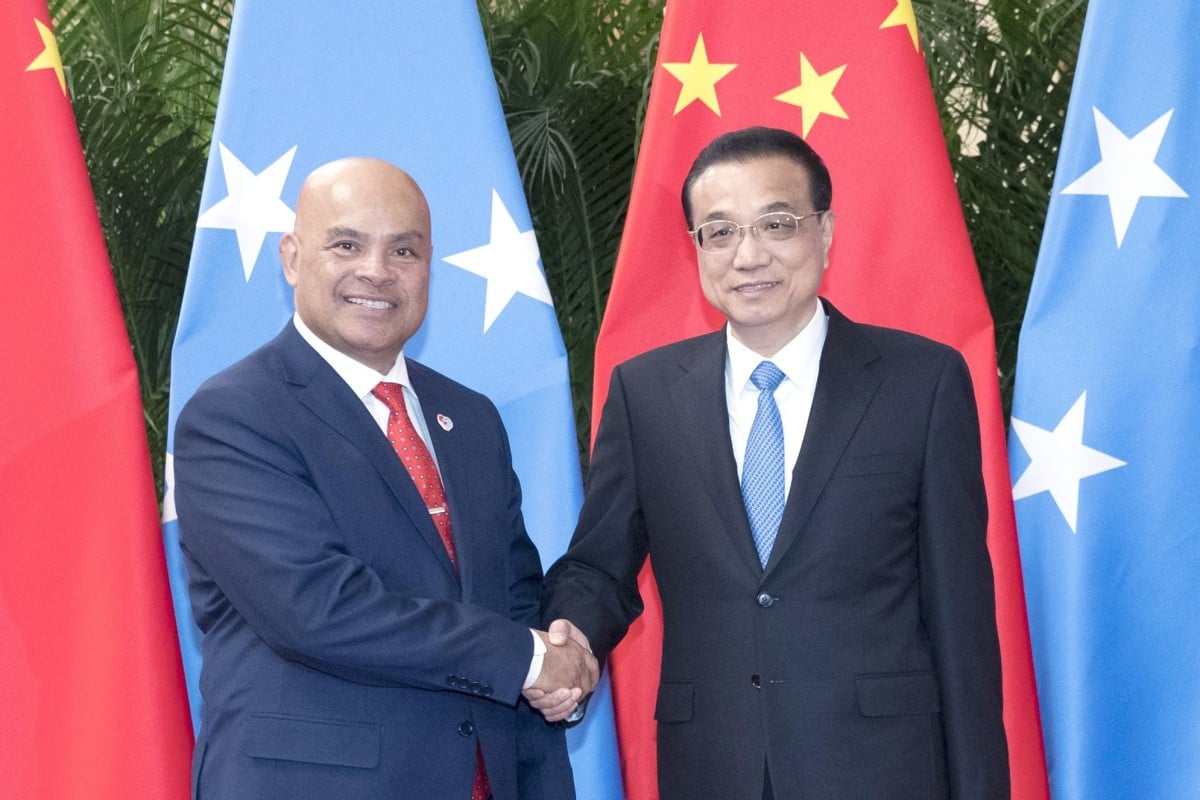
President of the Federated States of Micronesia David Panuelo shakes hands with Chinese Premier Li Keqiang at the Great Hall of the People in Beijing. Photo: Xinhua
In China earlier this month, David Panuelo, the president of the Federated States of Micronesia, climbed the Badaling section of the Great Wall. And, according to Huang Zheng, Beijing’s ambassador to the Pacific nation, the countries’ “great friendship rose to even greater heights” during Panuelo’s visit.
Chinese investment in Micronesia reached similarly lofty levels in conjunction with Panuelo’s trip, which marked three decades of diplomatic ties and included meetings with President Xi Jinping and Premier Li Keqiang. Beijing has committed US$72 million in economic development deals, almost as much as its total investment of the previous three decades.
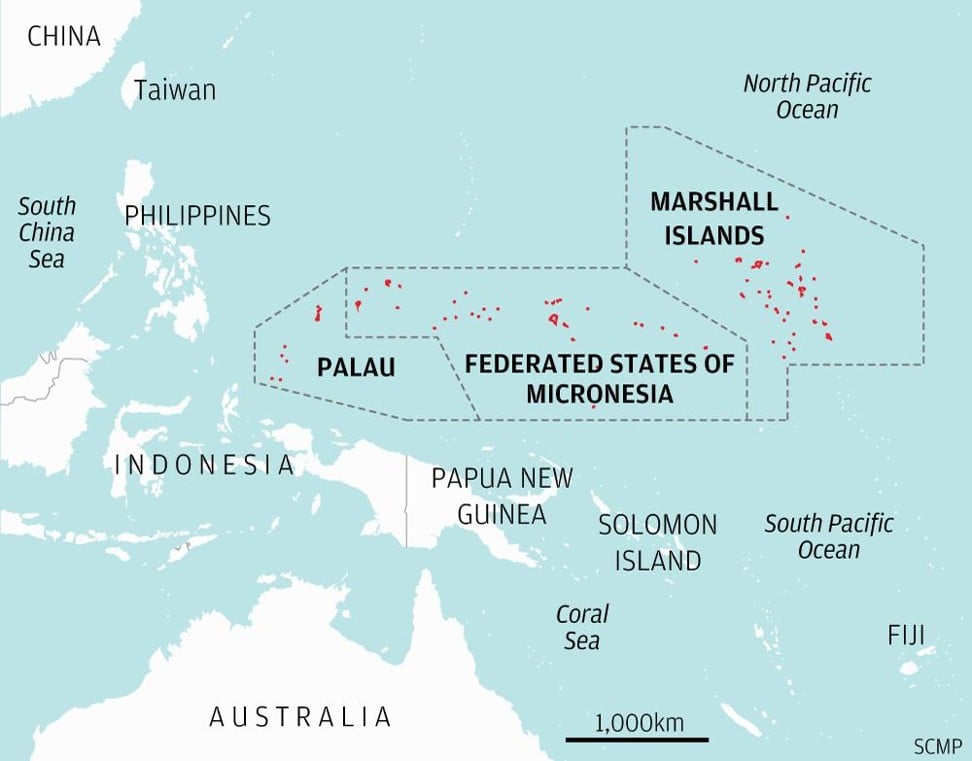
Micronesia is one of three Pacific nations with agreements with Washington, known as the Compact of Free Association (COFA), which allows their citizens to live and work in the US. In exchange, Micronesia, neighbouring Palau and the Marshall Islands grant the US exclusive military and defence access to their territorial waters – more than 2 million square miles of the Pacific that have been an essential element of Washington’s power projection in the region since World War II.
Much of China’s funding has been directed to Micronesia’s Chuuk state, which will in March vote in an independence referendum.
Although Chuuk is home to fewer than 50,000 people, its waters include one of the region’s deepest and most strategically appealing lagoons, creating extra incentive for Beijing and potential concern for Washington as the two countries
With a population of just 113,000 people, Micronesia relies on remittances sent home by citizens working in the US as well as the financial support from Washington under COFA. That assistance is scheduled to expire in 2023, creating uncertainty about the future of the relationship and making Chinese investment even more influential.
“Panuelo’s visit to China is a perfect example of how [the Chinese side] just needs to do a little to get a lot,” said Derek Grossman, senior analyst at Rand Corporation, a Washington think tank. “US$100 million is not very much for them and they can essentially loosen the screws [on COFA] with that.”
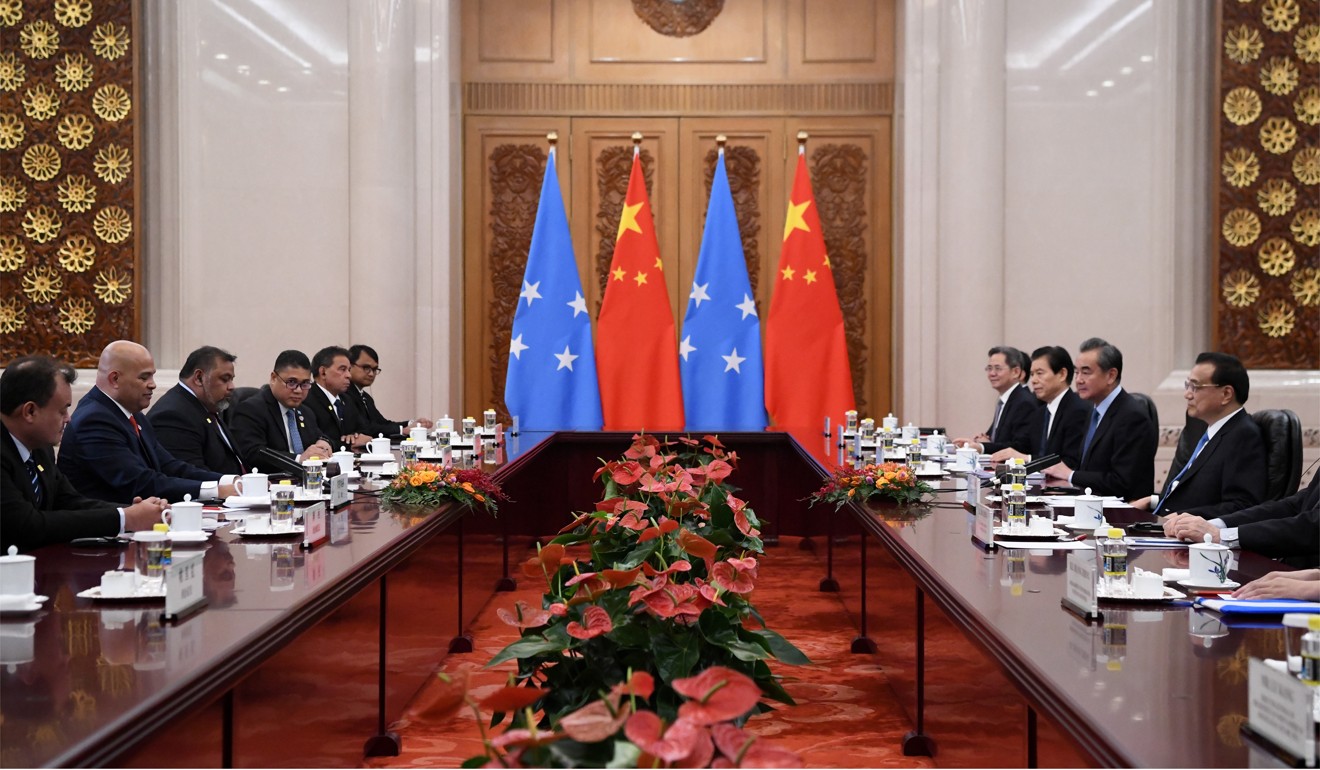
Micronesian President David Panuelo (second on left) and Chinese Premier Li Keqiang (right) during their talks in Beijing. Photo: EPA-EFE
The value of Micronesia’s bilateral trade with China has increased by nearly 30 per cent annually for the past five years, according to Micronesia’s Foreign Ministry. In 2017, the island nation signed onto President Xi’s signature Belt and Road Initiative which aims to build a vast network of strategic investment, trade routes and infrastructure projects across more than 150 countries.
US-China tech war’s new battleground: undersea internet cables14 Dec 2019
In recent years Chinese funding in Micronesia has built office and residential complexes for government officials, a showpiece new convention centre in the capital city Palikir, transport infrastructure and student exchanges, according to a recent report by Rand.
Jian Zhang, associate professor at UNSW Canberra at the Australian Defence Force Academy, said Beijing’s investment reflected a decision to cultivate broader, deeper ties.
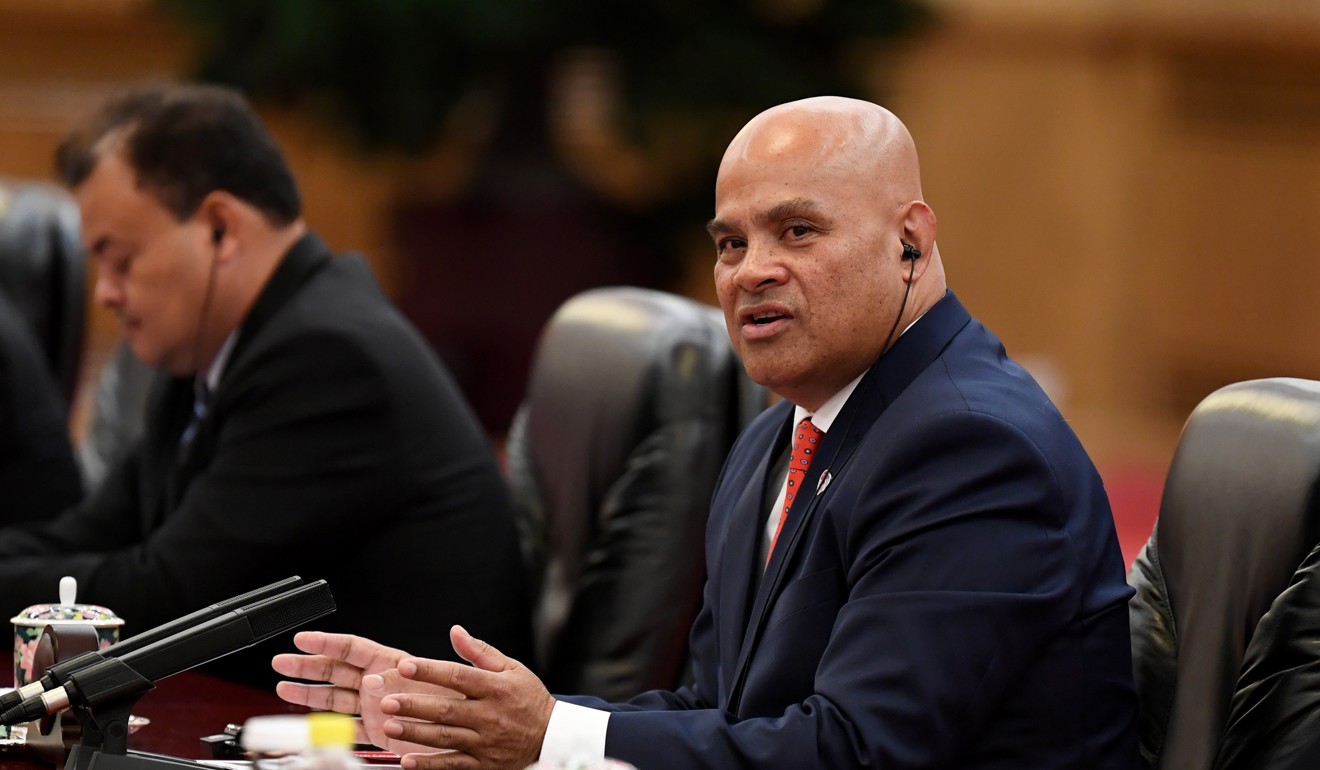
Micronesian President David Panuelo during his meeting with Chinese officials in Beijing. Photo: EPA-EFE
“China’s interest in building the relationship with Micronesia is not just about its diplomatic rivalry with Taiwan or economic interests,” he said. “It has elevated the relationship to a comprehensive strategic partnership which encompasses all areas.”
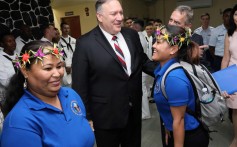
During his recent visit, Panuelo described China as Micronesia’s top economic partner and the US as its top security partner. Pompeo’s visit to Micronesia highlights US anxiety about rising Chinese influence in Pacific 5 Aug 2019
Gerard Finin, professor of regional planning at Cornell University, who previously worked with the US Department of State in the Pacific, said: “China’s leadership consistently accords large ocean states the full protocol that is expected when a head of state visits.
“In contrast, Washington has only had a limited number of meetings and never hosted an official state visit to Washington for the leader of a Pacific Island nation,” said Finin.
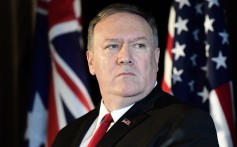
US President Donald Trump in May hosted the leaders of Micronesia, Palau and the Marshall Islands together at the White House. When Mike Pompeo visited Micronesia
in August, he became the only sitting US secretary of state to have done so.
Pompeo said negotiations to update COFA had begun but no details have been made public. Micronesia has assembled a team to conduct the negotiations but the US has not, the Honolulu Civil Beat website reported.
US Secretary of State Mike Pompeo visited Micronesia in August. Photo: AFP
Breakaway vote could raise the stakes
Panuelo’s team met Micronesian students studying in China and representatives of state-owned China Railway Construction Corporation, which will build the roads in Chuuk, funded in part by US$50 million from Beijing. Construction of the Chuuk government complex was also funded by Beijing and the state’s governor joined Panuelo for his visit.
Should Chuuk vote to separate from Micronesia in March, it could also mean breaking from COFA, jeopardising the US work privileges of thousands of Chuukese and opening the state’s waters to other partners, particularly China.
Chuuk is home to one of the deepest lagoons in the Pacific, a geographic rarity of particular value in strategic military operations and submarine navigation.
US Coast Guard looks to bolster Pacific allegiances as Chinese clout grows
22 Oct 2019
Zhang said Beijing would explore any opportunity to build a port with potential military capability.
“China has a long-term need to gain a strategic foothold in the region,” Zhang said. “That is a key part of the Belt and Road Initiative. At the general level it’s an economic initiative but an important aspect of the maritime Silk Road is to develop a network of strategically located port facilities.”
Sabino Asor, chair of the public education committee for the Chuuk Political Status Commission, told Civil Beat seceding from Micronesia would be the best option for Chuuk’s future.
“There is no encouraging prospect if Chuuk remains within the Federation,” he said.
However, Patrick Buchan, at Washington think tank Centre for Strategic and International Studies, said Chuuk’s dependence on remittances from the US made breaking from COFA unlikely.
China courts Pacific island states in pursuit of ‘foothold’ as US risks losing influence
8 Aug 2019
In the meantime, uncertainty over COFA negotiations persists, although there is a chance it will be renewed with few changes.
“There is circulation with people easily coming and going that provides a level of understanding and friendship that does not exist between too many other countries,” Finin said.
However, China’s most attractive feature may be its willingness to at least discuss the most pressing concern of Pacific Island nations: climate change.
“When the Trump administration talks about how it doesn’t believe in climate change, or can’t even say the words – that is really offensive for Pacific nations,” Grossman said. “China knows that, and is taking full advantage of it.”
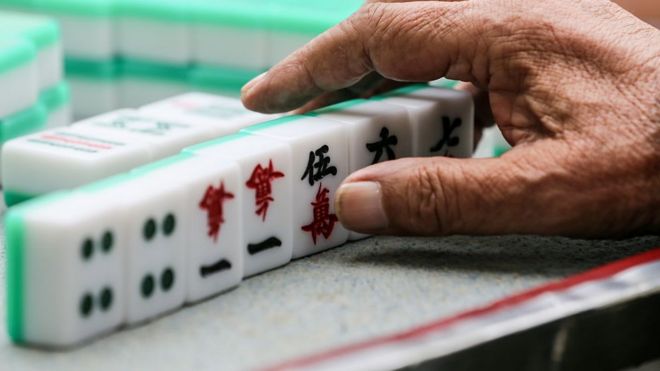
Image copyright GETTY IMAGESImage caption Mahjong has been referred to as the “quintessence of Chinese culture”
An apparent police ban on all mahjong parlours in a Chinese city led to panic among aficionados of China’s national pastime.
Police in Yushan in southeast China first announced the ban at the weekend, saying it was to curb illegal gambling and “purify social conduct”.
This led to shock and outrage with many calling the strategic, tile-based game the “quintessence of Chinese culture”.
Police then clarified that only unlicensed parlours would be shut.
It comes after several other cities also announced parlours encouraging gambling would be shut.
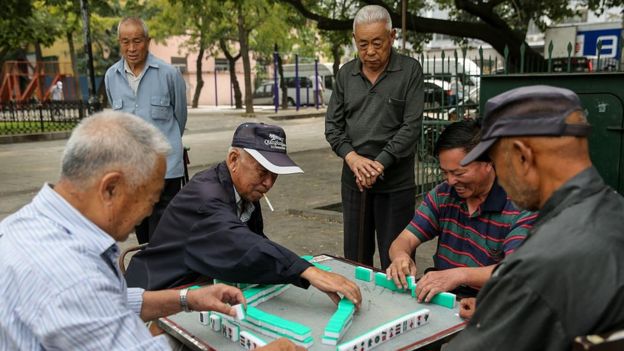
Mahjong is one of the most popular games in China, especially with older people.
While it does not have to be played with money, it is common for players to gamble with small amounts. A typical mahjong game could see players bet anywhere from $1 to $15.
‘People can gamble with anything’
On 20 October, police in Yushan, a small county in China’s southeast Jiangxi province, issued a statement announcing that all mahjong parlours in the county would be “closed” by 22 October.
Authorities said the ban would be enacted in an effort to “push forward the campaign against crimes and gangs… [to] solve the gambling and noise problem [and] purify social conduct”.
Gambling is illegal in China but under Jiangxi province law, those who engage in “win-loss entertainments such as mahjong and poker involving a small amount of money… shall not be punished”.
However, the law adds that people who “[gamble] money of more than 200 yuan ($28; £21)” could be subject to punishment.
Image copyright GETTY IMAGESImage caption It’s a familiar sight to see retirees gather in parks to play mahjong
It wasn’t long before the backlash kicked in.
Some people pointed out that while China does face a widespread problem of illegal gambling dens, many mahjong parlours are in fact, legally operated with licenses.
Another commenter on social media site Weibo said: “Not all people play mahjong for gambling,” according to state media ECNS.
“My grandparents play mahjong as part of their daily entertainment”.
Others said it was a “lazy” solution by the government in an attempt to curtail illegal gambling.
“Mahjong [itself] is not a problem. People can gamble with anything,” said one comment on Weibo.
But one social media user saw the positive side of the ban, saying: “Finally! I have been woken up numerous times [by] mahjong players.”
Mahjong is known to be quite a noisy game, as the heavy tiles often make clacking sounds as they are shuffled around.
But their joy was short lived. Just one day after they made the announcement, Yushan authorities revised their statement, saying licensed mahjong parlours would not be affected.
They also clarified that the ban was meant to target places that encouraged “illegal gambling”.
Despite this, some licensed parlour owners told local news outlets that they were also not operating amid the clampdown, but it was unclear whether that was voluntary or enforced by officials.
Several other cities in Jiangxi have also banned mahjong in recent days, but had made it clear in their announcements that registered mahjong parlours would not be affected.
What is mahjong?
Mahjong is a game played with a set of 144 tiles based on Chinese characters and symbols
It developed in the late 19th century, during China’s Qing dynasty, but became popular in the 20th century
It is conceptually similar to the western card game Rummy
The game has also gone on to gain popularity in the West – and has recently made several appearances in mainstream pop culture.
It was featured as part of a pivotal moment in the Hollywood blockbuster Crazy Rich Asians, where two main characters met for a showdown of a game at a mahjong parlour.
Chinese President Xi Jinping, also general secretary of the Communist Party of China Central Committee and chairman of the Central Military Commission, delivers a speech as he meets representatives of space scientists and engineers who participated in the research and development of the Chang’e-4 mission at the Great Hall of the People in Beijing, capital of China, Feb. 20, 2019. (Xinhua/Ju Peng)
BEIJING, Feb. 20 (Xinhua) — Chinese President Xi Jinping met representatives of space scientists and engineers who participated in the research and development of the Chang’e-4 mission at the Great Hall of the People in Beijing Wednesday afternoon.
Xi, also general secretary of the Communist Party of China (CPC) Central Committee and chairman of the Central Military Commission, noted that there is no end for space exploration.
Xi called on science and technology workers and space engineers in China to ride on the wave of the Chang’e-4 mission to achieve the general goal of China’s lunar project, make more efforts to push forward the international aerospace cause and bring more Chinese wisdom, solutions and force to the peaceful use of space and the building of a community with a shared future for humanity.
Members of the Standing Committee of the Political Bureau of the CPC Central Committee Li Keqiang, Li Zhanshu, Wang Yang, Wang Huning, Zhao Leji and Han Zheng also attended the meeting.
Xi shook hands with the scientists and engineers, inquired about their work and life and took pictures with them.
In a speech addressing the meeting, Xi first extended his sincere regards to all those who have made historic contributions to the country’s space undertakings and expressed warm congratulations to all those who have contributed to the Chang’e-4 mission eminently.
“Your outstanding feats achieved in mounting the science and technology peak and exploring the universe’s mysteries have set a model for the whole Party, the whole armed forces and people of all ethnic groups in China to strive for a new era and start a new journey, for which our country and people thank you,” Xi said.
“Five years ago, we celebrated the success of the Chang’e-3 mission. Five years later, we are here to celebrate the success of the Chang’e-4 mission,” he said.
He pointed out that the Chang’e-4 mission, by adhering to independent, collaborative and open innovations, has realized the first-ever patrol and exploration on the far side of the moon by a human spacecraft and engraved Chinese “footprints” there for the first time.
“It is another vivid practice of exploring to establish a new institution that can pool the resources of the whole country,” Xi said.
“Experience tells us that great undertakings begin with dreams, and dreams are the source of vitality. China is a nation that pursues dreams bravely. The CPC Central Committee’s decision to implement the lunar exploration project is to pursue the nation’s unyielding dream of flying into the sky and reaching for the moon,” he noted.
Each bold idea and its successful implementation in lunar exploration is a full demonstration of the human capacity to gain knowledge of and utilize a celestial body, he said.
“In the journey of building a great modern socialist country and realizing the great rejuvenation of the Chinese nation, every industry and every person should dream and strive courageously and fulfill their dreams with arduous and continuous efforts, step by step and baton by baton just like in a relay race,” he emphasized.
“Experience tells us that great undertakings are based on innovation, and innovation determines the future. It won’t be a smooth path to build a leading nation in science and technology, and only innovation can help gain advantages,” he said.
“The mission has made multiple innovations come true and filled a series of international and domestic gaps, which has fully displayed the innovative spirit just as making the first move in chess or taking the initiative in battle,” he added.
China should have a grasp of the general trend of the science and technology development in the world, foster respect for science and focus on strategic, basic and pioneering sectors, said Xi.
China should shore up its weakness in certain areas, keep pace with the leaders in some areas, and strive to lead in other areas, aim for significant breakthroughs in core and key technologies, improve the overall efficiency of the national innovation system, boost science and technology strength and innovation ability, in a bid to earn itself a spot in the global hi-tech sector, he said.
“Experience tells us that great undertakings succeed in solid work,” Xi noted. He said China need to encourage more prominent scientists, leading talent, young scientists and innovation teams to lead the trend and work hard to realize the value of life by contributing to the nation’s great undertakings.
Xi pointed out that exploring the vast universe is a common dream of all humankind. China has been actively advancing international space cooperation and carried out productive cooperation with multiple countries and international organizations. The complete success of the Chang’e-4 mission, for instance, includes contributions of many countries.
China is willing to work with countries around the world and follow the principle of achieving shared growth through discussion and collaboration, so as to deepen the international exchanges on basic scientific research, boost big science projects and step up opening-up and cooperation to enhance innovation ability and push forward the development of science.
The Chang’e-4 mission had two launches. The relay satellite, named Queqiao, meaning Magpie Bridge, was launched on May 21, 2018. The Chang’e-4 probe, launched from the Xichang Satellite Launch Center in southwest China on Dec. 8, 2018, touched down on the far side of the moon on Jan. 3.
Scientific research involving multiple countries and international organizations has been carried out.
The complete success of Chang’e-4 mission marks the first-ever international organizations, patrol and exploration on the far side of the moon by a spacecraft, the first communication link between Earth and the far side of the moon and the first footprints there in the history of lunar exploration, which unveils its mysteries and opens a new chapter in mankind’s exploration of the universe.








 CHINDIA ALERT: You'll be living in their world, very soon