Archive for ‘summit’

01/05/2020

Huawei, China’s mobile carriers bring 5G communications to Mount Everest

  • This marks the latest mobile network upgrade on Mount Everest, where Chinese carriers had previously installed 2G, 3G and 4G equipment
  • China Mobile plans to deploy Huawei 5G gear at an altitude of 6,500 metres, providing network coverage to the mountain’s summit
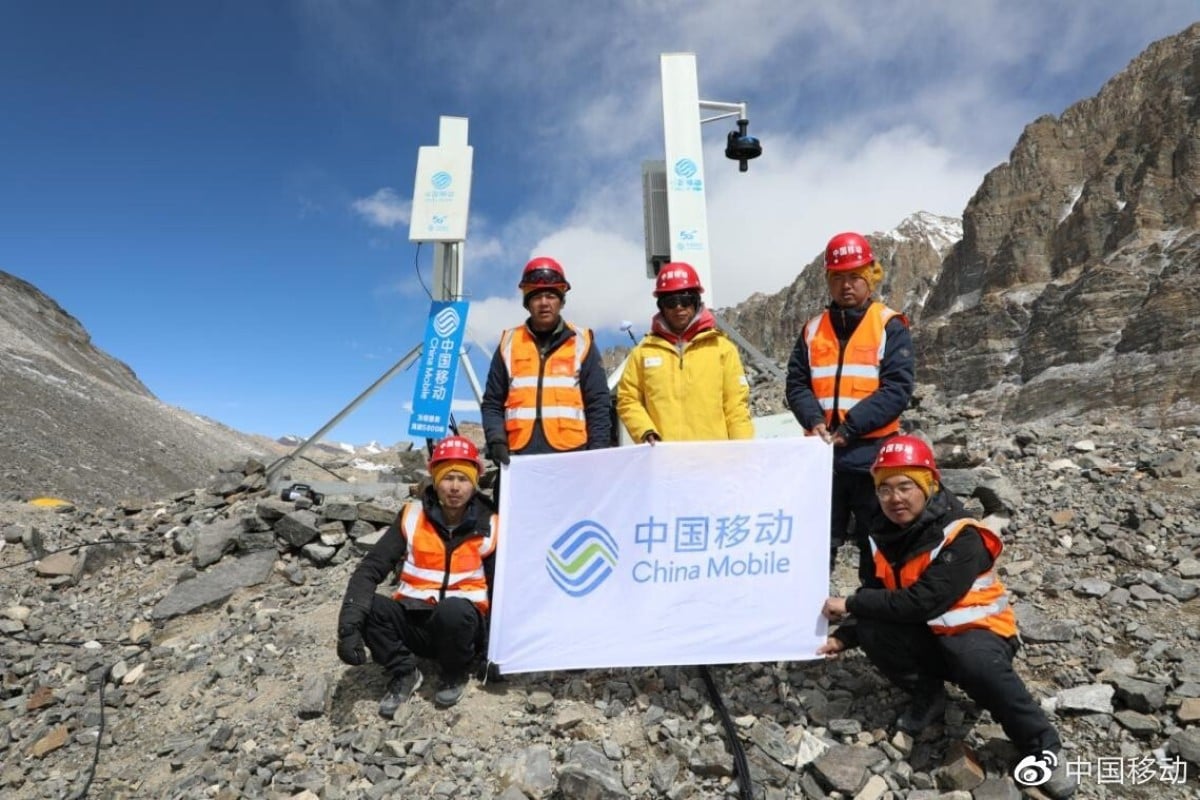
A team from China Mobile shows off the initial 5G base stations, supplied by Huawei Technologies, that the telecoms carrier deployed on Mount Everest this April. Photo: Weibo
Huawei Technologies has teamed up with wireless network operators China Mobile, China Unicom and China Telecom to roll out advanced 5G infrastructure on

Mount Everest

, the world’s highest mountain above sea level.

The deployment of 5G base stations on the famous Himalayan mountain, with an elevation of 8,848 metres, has extended the reach of the next-generation mobile technology, which has been held up as “the connective tissue” for the Internet of Things, autonomous cars, smart cities and other new applications – providing the backbone for the industrial internet. The new 5G infrastructure roll-outs were announced by Huawei in a post on Chinese microblogging site Weibo on Monday and confirmed by its spokeswoman on Tuesday.
China Mobile, the world’s largest wireless network operator, said its 5G project on Mount Everest marked “not only another extreme challenge in a human life exclusion zone, but also laid a solid foundation for the later development of 5G smart tourism and 5G communications for scientific research”, according to the company’s post on Weibo on Monday.
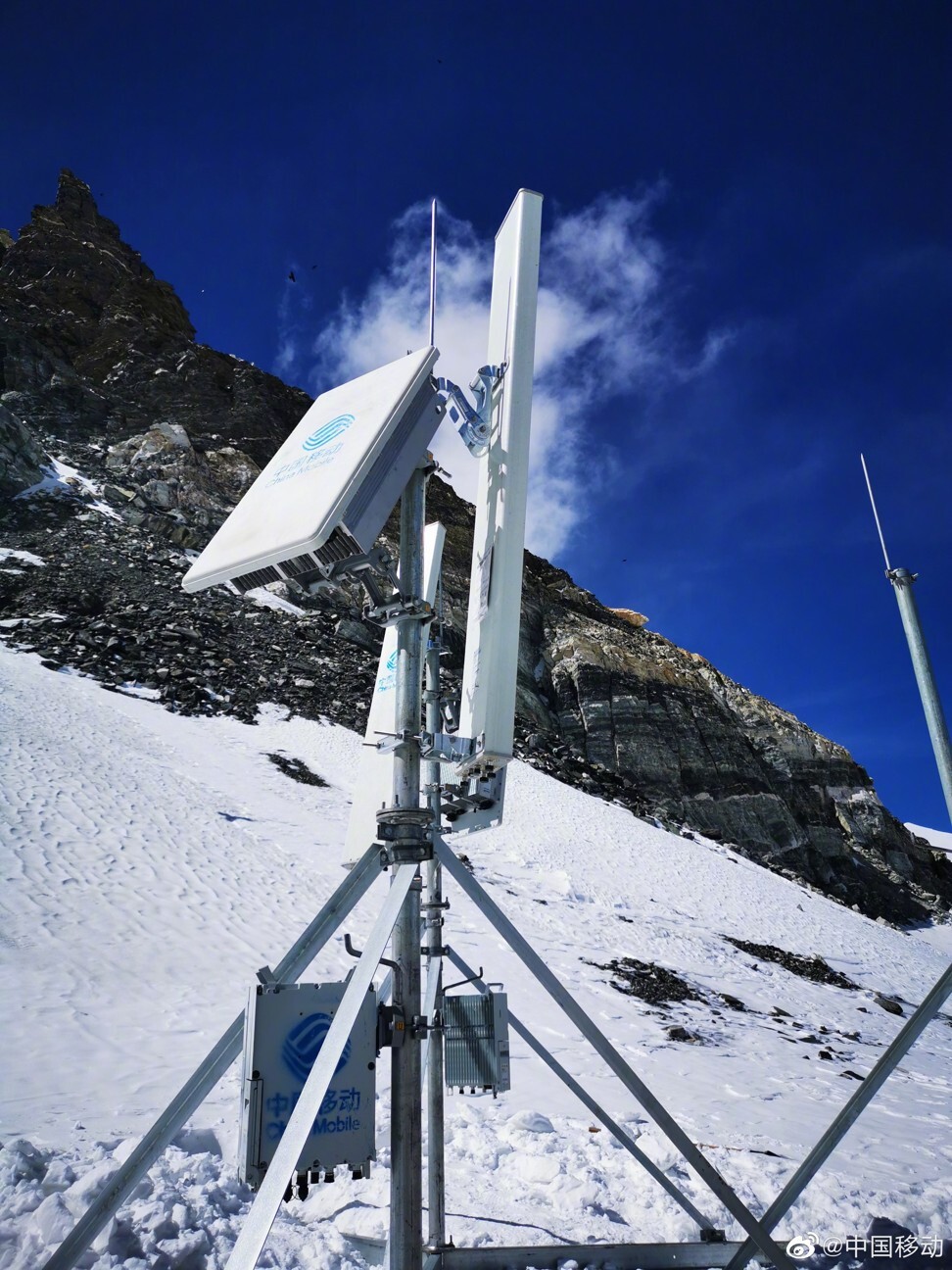
The Hong Kong and New York-listed carrier set up three 5G base stations – radio access gear that connects mobile devices to the broader telecommunications network – on April 19 in two camps at altitudes of 5,300 metres and 5,800 metres, which provide online download speed of about 1 gigabit per second.
China Mobile plans to install two more 5G base stations, supplied by telecommunications gear maker Huawei Technologies, on Mount Everest before April 25. Photo: Weibo
Installation of two more base stations are expected to be completed by China Mobile before April 25 in another camp at an altitude of 6,500 metres, providing 5G network coverage to the summit of Mount Everest. The international border between China and Nepal is 1,414 kilometres in length and runs across that summit.
More than 150 China Mobile employees are taking part on the construction and maintenance of the new 5G base stations as well as upgrading existing infrastructure on the surrounding areas, according to the company. It said 25 kms of new optical cables have also been laid out to support this project.

China Telecom confirmed its Mount Everest project on Tuesday in a statement, which said its 5G base stations were installed on April 13 at an altitude of 5,145 metres. It partnered with state-run China Central Television to broadcast a 24-hour live-streamed programme on April 14 from Mount Everest, which had an audience of more than six million people.

China Mobile did not immediately respond to a request for comment. China Unicom did not immediately reply to a separate request for comment.

Nepal suspends Everest permits over coronavirus
Delivering 5G network connectivity to Mount Everest bolsters the three telecoms carriers commitment to push ahead with the nationwide roll-out of 5G mobile services
 amid the coronavirus crisis. Their effort comes after concerns were raised that

the outbreak had prompted delays in the installation of 5G base stations

across the country.

Mobile network operators in China launched initial commercial 5G services last year. The country has already deployed more than 160,000 5G base stations, covering more than 50 cities, according to a report published last month by the GSMA, the trade body which represents mobile operators worldwide.

While initial commercial 5G mobile services were launched in countries like South Korea, the US, and Australia, the scale of China’s market is likely to dwarf the combined size of those economies, negating any first-mover advantage.

The steady annual deployment of new 5G base stations is critical to meet future demand in the world’s second largest economy and biggest smartphone market. China is expected to have 600 million 5G mobile users by 2025, which would make up 40 per cent of total global 5G subscribers, according to the GSMA.

Source: SCMP

01/05/2020

China launches mission to determine height of Mount Everest once and for all

  • Project will examine whether earthquake and changing wind speeds have affected peak’s snowcap
  • Survey team hoping the BeiDou satellite navigation system and other Chinese technology can help them find the answer
A Chinese team is preparing to determine the exact height of Mount Everest. Photo: AFP
China is sending a surveying and mapping team to the summit of Mount Everest this month in a bid to end the long-running debate over the precise height of the world’s tallest mountain.
The mission was announced on Wednesday at one of the mountain’s base camps in Tibet, where a team of 53 surveyors has been making technical preparations since March 2. The team will use China’s BeiDou navigation satellite system and Chinese surveying instruments for the project.
Mount Everest – known as Sagarmatha in Nepal and Qomolangma in Tibet – lies in the Himalayas on the border between China and Nepal. The two countries have long disputed whether measurements of the mountain should include its snowcap or be limited to the rock base.
Nepal suspends Everest permits over coronavirus
In 2005, a Chinese expedition assessed the peak and measured the height from both the rock base and from the top of the snowfall. The result, a rock height of 8,844.43 metres (29,017.2 feet), was declared by China to be the most accurate and precise measurement to date.

Nepal has long held that Everest’s snowcap should be included, putting the iconic peak at 8,848 metres, a height which is widely accepted. However, geologists believe the snowcap may have shrunk by several centimetres after the magnitude 8.1 earthquake in 2015. Changing wind speeds are also believed to have affected it.

Chinese President Xi Jinping visited Nepal in October. Photo: EPA-EFE
Following a state visit to Nepal by Chinese President Xi Jinping in October, the two countries agreed to jointly launch a scientific research project to determine the exact height of Everest, recognising the peak as “an eternal symbol of the friendship between the two countries”.

China’s natural resources ministry said the project indicated a new step in the friendship and highlighted the historical significance of the mission, which coincides with the 60th anniversary of the first Chinese ascent of the mountain’s north side as well as the 45th anniversary of China’s first precise measurement of the peak.

The results of the survey will be used for geodynamics research and the precise depth of the summit’s snowcap, meteorological and wind speed data will offer first-hand materials for glacier monitoring and biological environment protection.

In a separate development, China Mobile said on Thursday that the entire peak now had 5G coverage.
In a joint project with Huawei, 5G antennas were installed at the mountain’s advance base camp, at a height of 6,500 metres. Antennas were installed earlier in April at the lower base camp, at 5,300 metres and at 5,800 metres.
Source: SCMP
10/09/2019

China’s border region to promote AI cooperation with ASEAN

NANNING, Sept. 9 (Xinhua) — South China’s Guangxi Zhuang Autonomous Region on Monday pledged to enhance cooperation with the Association of Southeast Asian Nations (ASEAN) on artificial intelligence (AI).

Chen Wu, chairman of the regional government, said at the First China-ASEAN AI Summit that Guangxi will actively promote technical cooperation, trade, investment and industrial exchange in the AI sector with the ASEAN countries.

Toward this end, the region will speed up the construction of platforms for infrastructure, information sharing and technical cooperation, among others, Chen said.

Guangxi, which boasts both sea and overland links with ASEAN, is building the China-ASEAN Information Harbour to boost digital cooperation with Southeast Asia.

“The summit has sounded the clarion call for the development of AI and big data industry in Guangxi,” said Wang Jingjing, Guangxi regional director of the Chinese AI firm iFlytek.

Hailing the region’s policy and geographical advantages on ASEAN cooperation, Wang said iFlytek hopes to set up an institute on ASEAN languages in Guangxi to facilitate communication between China and ASEAN countries

Source: Xinhua

31/07/2019

China and US court Asean members to strengthen Indo-Pacific ties as trade war enters second year

  • China’s Wang Yi and US’ Mike Pompeo at summit in Thailand to sell their visions of future for Southeast Asia
  • Analysts expect pragmatism from Asean as world’s two biggest economic powers play diplomatic game
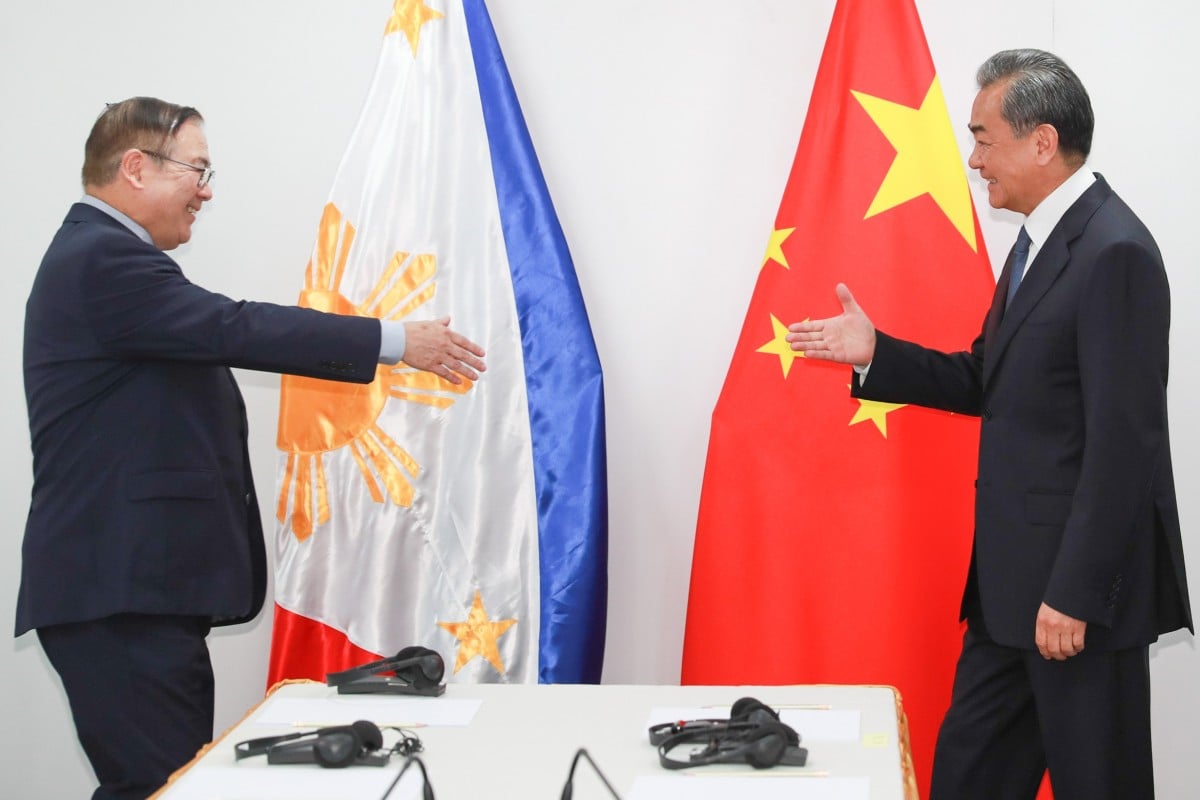
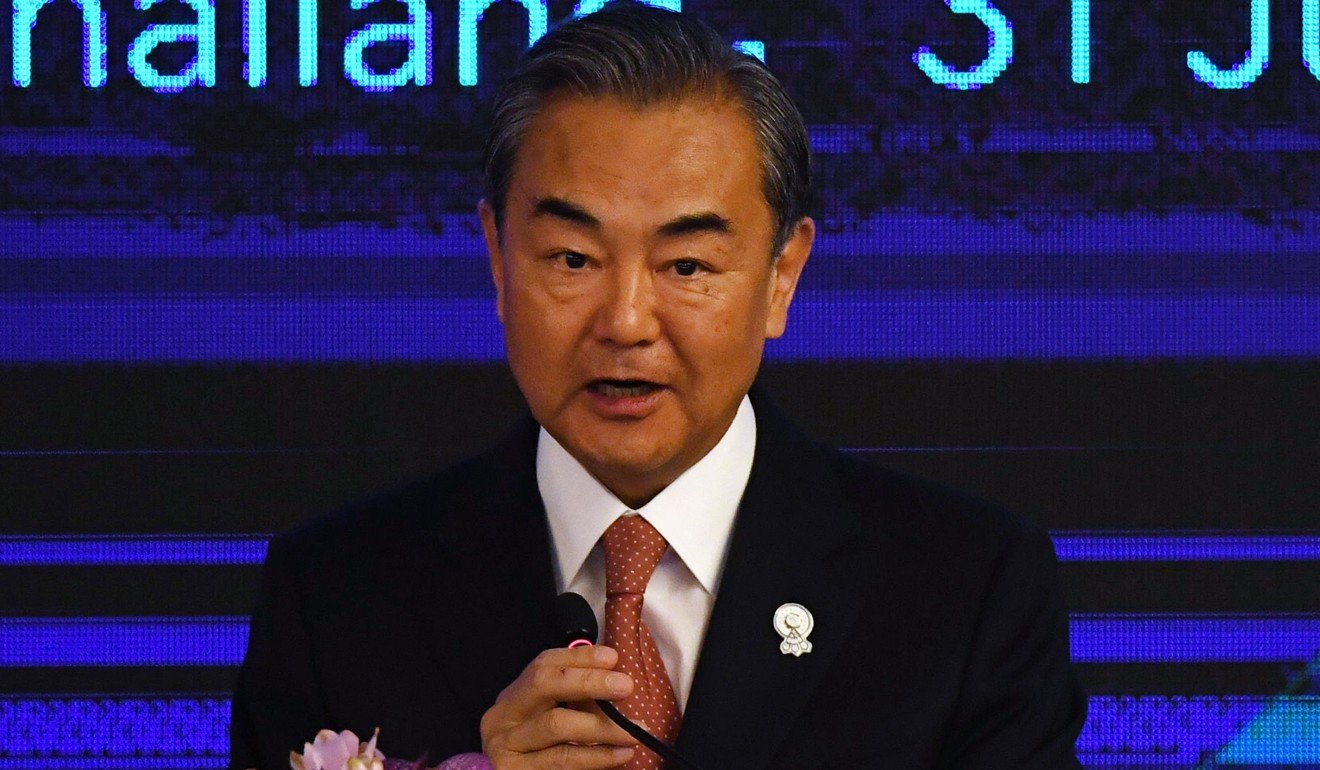
Chinese Foreign Minister Wang Yi (right) greets his Philippine counterpart Teodoro Locsin at the Asean meeting in Bangkok, Thailand. Photo: Xinhua
China and the United States are on a mission to strengthen ties with allies and expand their influence in Southeast Asia this week as their trade war enters a second year.
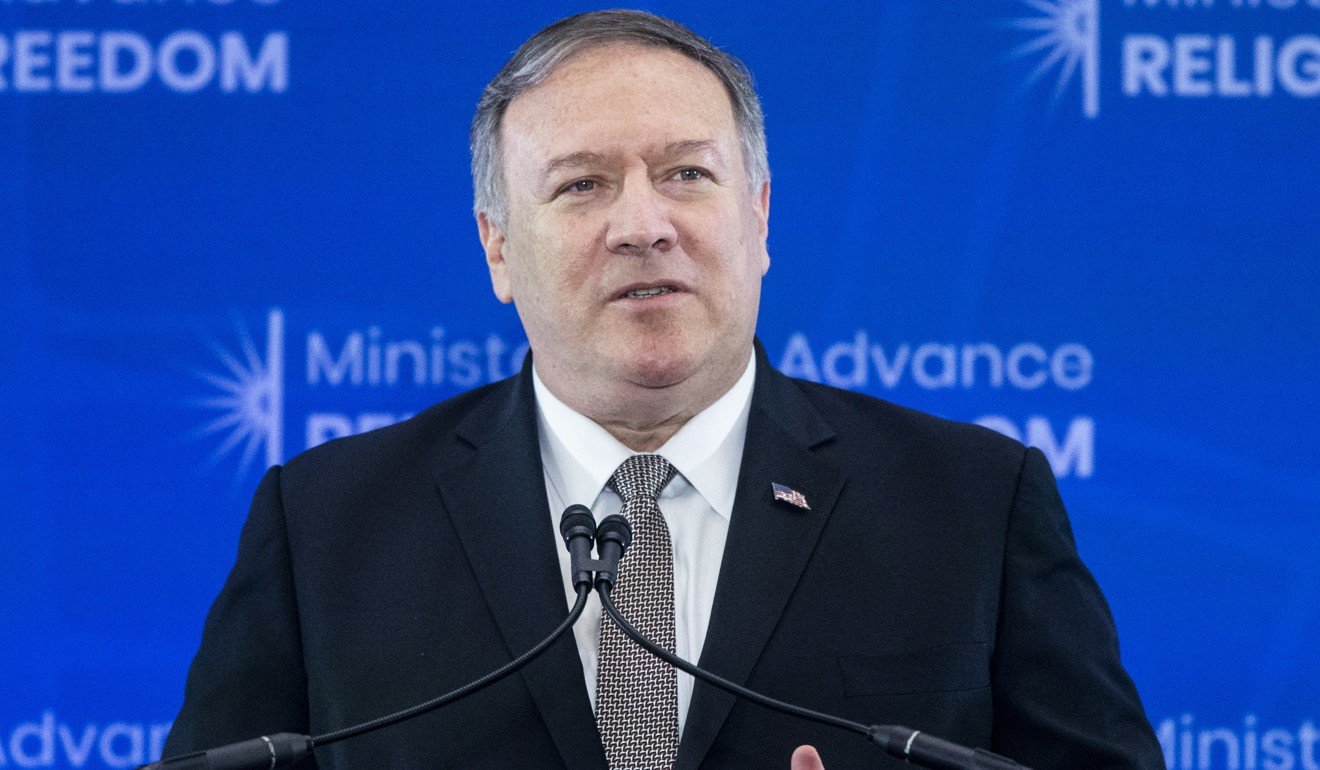
US Secretary of State Mike Pompeo arrived for a meeting of the Association of Southeast Asian Nations (Asean) in Bangkok on Wednesday to promote the US-led Indo-Pacific strategy, while Chinese Foreign Minister Wang Yi touched down a day earlier to advance Beijing’s Belt and Road Initiative.
The US Department of State said Pompeo’s trip was aimed at deepening Washington’s “long-standing alliances and vibrant bilateral relations with these countries, and [to] reaffirm our commitment to Asean, which is central to our vision for the Indo-Pacific region”.
In Beijing on Wednesday, Chinese foreign ministry spokeswoman Hua Chunying said that while their meeting was yet to be set, Wang and Pompeo were expected to meet and talk “frankly” about bilateral relations.
“I think that it is indeed necessary for China and the United States to maintain communication, as the two countries face many situations,” Hua said. “The issues would be communicated frankly”.

The Indo-Pacific strategy is a military and economic framework to contain China’s expansion into the Pacific and Indian oceans, and give an alternative to Beijing’s flagship belt and road development programme.

En route to Thailand, Pompeo said that after a stalled start to US Indo-Pacific policy during the Barack Obama administration, Washington’s strategy was well on its way to bearing fruit for the US and its allies.

South China Sea tensions, US-China trade war loom over Asean summit

“We have watched these coalitions build out,” he said.

Pompeo dismissed claims that China’s sphere of influence among Asean members was growing, saying such speculation was “not factually accurate”.

“[Asean countries] are looking for partners that are going to help them build out their economies and to take good care of their people,” he said, pledging greater engagement from President Donald Trump’s administration.

Pompeo was expected to sit down on Friday with his South Korean and Japanese counterparts to consolidate their trilateral alliance in the region.

He was also expected to hold talks with Thai Foreign Minister Don Pramudwinai that day.

US Secretary of State Mike Pompeo is expected to meet Chinese Foreign Minister Wang Yi at Asean in Thailand. Photo: EPA-EFE

Meanwhile, Wang launched his belt and road pitch to his Cambodian, Philippine and Indonesian counterparts after he arrived in Thailand for the gathering, which ends on Saturday.

The belt and road projects are largely commercial and aimed at strengthening land and sea infrastructure linking Asia, Europe and Africa. But they raised suspicion in the West that they are aimed at eroding the US-led world order.

During his meeting with Philippine Foreign Affairs Secretary Teodoro Locsin, Wang said: “China is willing to have high-level exchanges with the Philippines, to deepen the mutual trust, and promote the Belt and Road Initiative [in the Philippines] … to accelerate the development of regional infrastructure.”

Can China’s trade boost with Asean help get the Regional Comprehensive Economic Partnership over the line?

This year’s Asean forum was taking place as countries were more receptive to Chinese initiatives, in part due to the unpredictability of the US administration, according to Rajeev Ranjan Charturvedy, a visiting fellow at the S. Rajaratnam School of International Studies at Nanyang Technological University in Singapore.

“Policy uncertainties under the Trump administration have already pushed some Asean countries towards China in ways that would have seemed unlikely a few years ago,” Charturvedy said.

Analysts said Trump’s “America first” approach shaped his Asean policy. The president had vowed to apply “punishments” to countries – including Asean member states – for contributing to the US trade deficit.

Chinese Foreign Minister Wang Yi is talking to Asean counterparts at a time when they are receptive to China’s proposals, an analyst says. Photo: AFP

Trump was absent at the Asean summit in Singapore last year, leading to concerns that Washington’s commitment to Asia was declining.

Charturvedy said the Asean forum’s focus was about building constructive regionalism, but China’s attitudes to security could pose a challenge.

“[However] Asean countries clearly hope not to be forced to choose between the US and Chinese offers. Rather, they would like more freedom of choice while accommodating for a larger role for China in the region,” he said.

Clarita Carlos, a professor of political science at the University of the Philippines, suggested that Asean members would be pragmatic during the forum.

Robert Lighthizer warns Vietnam over trade deficit with US

They would try to find their own balance between the two major powers – as countries rather than a bloc – to try to maximise each state’s interests and advantages, Carlos said.

“Vietnam has a love-hate relationship with China, especially as a winner in the ongoing US-China trade war,” she said. “Singapore has close relations with China. There are also ups and downs in the relationship with China for Brunei, Malaysia and Indonesia.”

Source: SCMP

22/06/2019

Southeast Asian leaders open summit in Bangkok

BANGKOK (Reuters) – Southeast Asian leaders opened a two-day summit in Bangkok on Saturday, though it was unclear what progress their 10-country group could make on disputes in the South China Sea and the plight of ethnic Rohingya fleeing Myanmar.

Formed more than half a century ago, the Association of Southeast Asian Nations (ASEAN) has historically struggled with challenges facing the region because it works only by consensus and is reluctant to become involved in any matter regarded as internal to a member state.

Thai Prime Minister Prayuth Chan-ocha was making his debut as a civilian leader representing current chair Thailand, after a general election in March that opposition parties say was designed to ensure his victory five years after the former army chief seized power in a 2014 coup.

Officials are expected to discuss a Code of Conduct (COC) for negotiations over the South China Sea, one of the world’s busiest waterways and a potential flashpoint, as it is claimed by several ASEAN members as well as China.

However, it was unlikely much progress would be made, though member nations might discuss the June 9 collision of a Philippine boat and a Chinese fishing vessel.

“It is encouraging to see that the ASEAN-China talks on the COC have continued,” said Marty Natalegawa, former foreign minister of Indonesia.

“However, there is real risk that developments on the ground – or more precisely at sea – are far outpacing the COC’s progress thereby possibly rendering it irrelevant.”

Philippine President Rodrigo Duterte has accepted China’s proposal to jointly investigate allegations that a Chinese fishing vessel abandoned 22 Filipinos after it sank their boat in the South China Sea, his spokesman said on Saturday.

Rights groups have also called on ASEAN leaders to rethink support for plans to repatriate Rohingya Muslims who have fled member state Myanmar, where activists say returnees could face discrimination and persecution.

More than 700,000 Rohingya crossed into Bangladesh in 2017, according to U.N. agencies, after a crackdown by Myanmar’s military sparked by Rohingya insurgent attacks on the security forces.

However, it is unlikely that there will be any criticism of Myanmar at the summit over the Rohingya, said Prapat Thepchatree, a political science professor at Thailand’s Thammasat University said.

“This issue has been a very sensitive one for ASEAN,” he said.

Host country Thailand deployed about 10,000 security forces around Bangkok for the summit, mindful of a decade ago when Thailand last hosted an ASEAN summit and dozens of protesters loyal to military-ousted former premier Thaksin Shinawatra forced their way into the meeting venue.

But on Saturday morning, only a small group of people had planned to stage a protest to call Prayuth’s election the product of a rigged system.

The group, called Citizens Wanting Elections, was stopped by police before it could reach a meeting point near the summit venue. The group later released a statement welcoming visiting leaders but criticising Prayuth.

“The individual who serves as President of ASEAN, who welcomes everyone today, did not come from a clean and fair election,” the letter said.

Source: Reuters

06/05/2019

Summit demonstrates China’s leapfrog into digital world

CHINA-FUJIAN-HUANG KUNMING-DIGITAL CHINA SUMMIT-SPEECH(CN)

Huang Kunming, a member of the Political Bureau of the Communist Party of China (CPC) Central Committee, also head of the Publicity Department of the CPC Central Committee, speaks at the opening ceremony of the second Digital China Summit in Fuzhou, southeast China’s Fujian Province, May 6, 2019. (Xinhua/Ding Lin)

FUZHOU, May 6 (Xinhua) — China on Monday sounded another heartening note for its development of information technologies, as both companies and the government rush to harness the nationwide tech boom to raise efficiency, buoy public satisfaction and even tackle corruption.

The second Digital China Summit opened Monday in eastern China’s Fujian Province, shedding light on the latest information technologies that have penetrated the country’s government, industries and society.

The Chinese government has expected information technologies to nurture new economic engines and upgrade old industries as the country shunts from the high-speed economic growth to the path of high-quality development.

Huang Kunming, a member of the Political Bureau of the Communist Party of China (CPC) Central Committee, in a keynote speech at the summit called for advancing the building of a digital China and smart society, stressing the role of information technology in promoting high-quality development.

Huang, also head of the Publicity Department of the CPC Central Committee, said China’s advantages in internet technology innovation, technology application and as a huge market should be transformed into advantages in developing a digital economy.

The official called for achieving breakthroughs in core technologies, enhancing protection of intellectual property rights, advancing information infrastructure construction and narrowing digital gaps between urban and rural areas.

A report reviewing the country’s digital development in 2018 was also issued at the summit, pointing to rapid growth in sectors including electronic information manufacturing, software service, communications and big data.

The report published by the Cyberspace Administration of China said the country last year recorded more than 9 trillion yuan (1.3 trillion U.S. dollars) in online retail. China’s digital economy reached 31.3 trillion yuan in scale, accounting for one-third of the national GDP in 2018.

Provincial-level e-government platforms have also slashed time for getting government permits by an average of 30 percent, noted the report.

Trendy technologies from driverless vendor vehicles and facial recognition security checks to 5G networks are being used at the event in the city of Fuzhou. A number of tech companies are displaying their cutting-edge products including Baidu’s driverless vehicles, Huawei’s AI chip “Ascend” and Foxconn’s “future factories.”

Pony Ma, CEO of China’s Internet giant Tencent, said at the summit that the company, by working with Fujian police, has used its facial recognition technology to help 1,000 families find missing family members in the past two years.

Hu Xiaoming, president of Ant Financial that runs the popular online payment network Alipay, said at the event that one of every four Chinese now handles government services on Alipay, making it the country’s largest platform that offers access to government services.

E-GOVERNMENT

One of the major highlights at the summit’s exhibition area are the many e-government apps, which have mushroomed across China to incorporate a wide range of government and public services. They are part of the government’s efforts to cut red tape to benefit residents and businesses alike.

In Fuzhou, the host city of the event, a citizen’s typical day now revolves around the e-Fuzhou app, which allows users to buy bus tickets, pay tuition fees and manage social security accounts without the need of visiting government offices.

A slew of digital technology applications, including the big data credit inquiry system, the online tax bureau, and the paperless customs clearance system, have also been developed in the province over the years.

Dingxi, one of the least developed cities in west China’s Gansu Province, has a booth displaying an online monitoring platform, which it launched last year to allow villagers to scrutinize the management of poverty-relief funds and report any signs of corruption.

“We went door-to-door to teach villagers how to use mobile phones to check the subsidies they are entitled to and the sum other families actually received,” said Yang Sirun, an inspector with the city’s discipline inspection commission.

“In the past, some wealthy families feigned poverty to claim subsistence allowances, while some officials fraudulently pocketed subsidies in the names of families that had moved away. The new platform can easily expose such ‘micro corruption,'” Yang said.

The official said since its launch, over 3,400 officials and residents have voluntarily turned in their illegal gains for fear of being reported. “Many hidden problems were also found during the collation of data from different departments, which proves big data’s power in fighting corruption,” he said.

The summit from May 6 to 8 aims to serve as a platform for issuing China’s policies on IT development and displaying the achievements and experience of e-government and the digital economy.

More than 1,500 officials, company representatives and scholars are attending the event, which is co-organized by the Cyberspace Administration of China, National Development and Reform Commission, Ministry of Industry and Information Technology and Fujian provincial government.

Source: Xinhua

Law of Unintended Consequences

continuously updated blog about China & India

ChiaHou's Book Reviews

continuously updated blog about China & India

What's wrong with the world; and its economy

continuously updated blog about China & India