Chindia Alert: You’ll be Living in their World Very Soon
aims to alert you to the threats and opportunities that China and India present. China and India require serious attention; case of ‘hidden dragon and crouching tiger’.
Without this attention, governments, businesses and, indeed, individuals may find themselves at a great disadvantage sooner rather than later.
The POSTs (front webpages) are mainly 'cuttings' from reliable sources, updated continuously.
The PAGEs (see Tabs, above) attempt to make the information more meaningful by putting some structure to the information we have researched and assembled since 2006.
Members of a Chinese surveying team reach the summit of Mt. Qomolangma on May 27, 2020. A Chinese surveying team reached the summit of Mount Qomolangma on Wednesday morning, a crucial step in the country’s mission to remeasure the height of the world’s highest peak. (Xinhua/Penpa)
MOUNT QOMOLANGMA BASE CAMP, May 27 (Xinhua) — A Chinese surveying team reached the summit of Mount Qomolangma on Wednesday morning to conduct a series of surveys on the pinnacle of the planet.
The event marked a crucial step in China’s mission to remeasure the height of the world’s highest peak, which scientists believe will enhance human knowledge of nature and help boost scientific development.
After summiting, team members began erecting a survey marker on the snow-covered peak, which measures less than 20 square meters.
The surveying team set off for the summit from an assault camp at an altitude of 8,300 meters at around 2:10 a.m. Wednesday.
BEIJING, April 17 (Xinhua) — The lander and rover of the Chang’e-4 probe have resumed work for the 17th lunar day on the far side of the moon after “sleeping” during the extremely cold night.
The lander woke up at 1:24 p.m. Friday (Beijing time), and the rover awoke at 8:57 p.m. Thursday. Both are in normal working order, according to the Lunar Exploration and Space Program Center of the China National Space Administration.
The Chang’e-4 probe, launched on Dec. 8, 2018, made the first-ever soft landing on the Von Karman Crater in the South Pole-Aitken Basin on the far side of the moon on Jan. 3, 2019.
A lunar day equals 14 days on Earth, and a lunar night is the same length. The Chang’e-4 probe, switching to dormant mode during the lunar night due to the lack of solar power, has survived about 470 Earth days on the moon.
The rover Yutu-2, or Jade Rabbit-2, has worked much longer than its three-month design life, becoming the longest-working lunar rover on the moon.
Carrying scientific instruments such as panoramic camera, lunar penetrating radar, infrared imaging spectrometer and neutral atom detector, the rover will continue to move northwest to conduct scientific detection.
The scientific tasks of the Chang’e-4 mission include conducting low-frequency radio astronomical observation, surveying the terrain and landforms, detecting the mineral composition and shallow lunar surface structure and measuring neutron radiation and neutral atoms.
The Chang’e-4 mission embodies China’s hope to combine wisdom in space exploration with four payloads developed by the Netherlands, Germany, Sweden and Saudi Arabia.
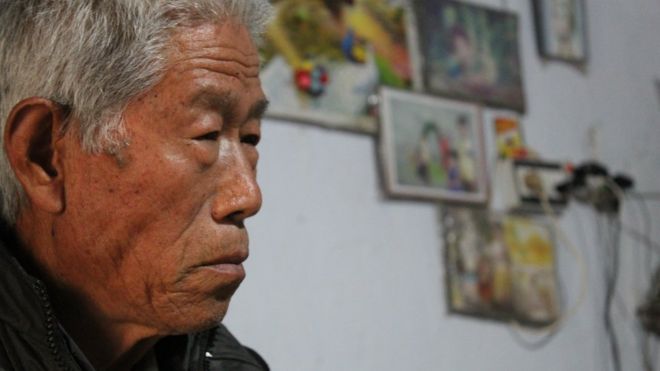
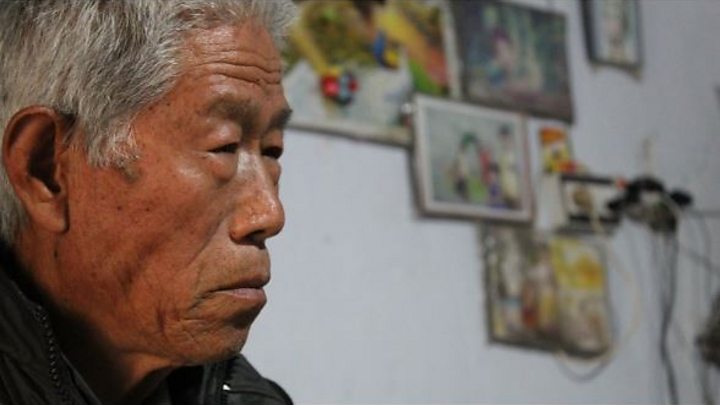
Image caption Wang Qi has been waiting for months to see his family in India
In 1963, a former Chinese army surveyor crossed into India and was captured weeks after a war between the two countries. Wang Qi was then left in a central Indian town for more than five decades before he was allowed to travel back home to China in 2017.
The BBC reported his story at the time and videos of the emotional family reunion in China were watched by millions.
But now, more than 30 months later, his story has taken an unexpected turn – Mr Wang is stuck in China and unable to return to India.
He has been waiting for more than four months for officials to renew his Indian visa so that he can travel back to India where his children and grandchildren live.
“Why are they doing this? I’ve been fighting for such a long time. How much longer can I fight?” Mr Wang told me over the phone from his home city of Xianyang.
The BBC has emailed the Indian embassy in Beijing and is yet to receive a response.
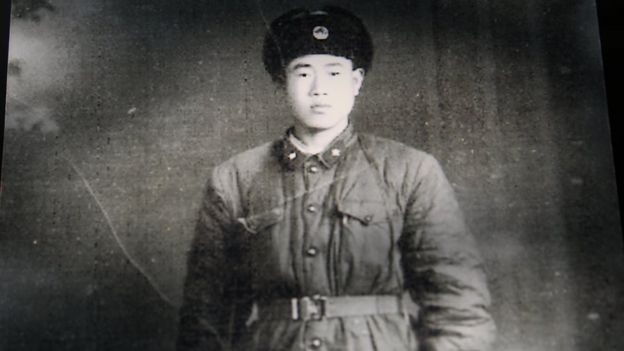
Born to a farmer family in Shaanxi with four brothers and two sisters, he studied surveying and joined China’s People’s Liberation Army in 1960.
Mr Wang says he was “tasked with building roads for the Chinese army” and was captured when he “strayed erroneously” into Indian territory in January 1963.
Image caption He joined China’s People’s Liberation Army in 1960
“I had gone out of my camp for a stroll but lost my way. I was tired and hungry. I saw a Red Cross vehicle and asked them to help me. They handed me over to the Indian army,” he said.
After he was captured, he spent the next seven years in multiple prisons before he was released by a court order in 1969.
Police took him to Tirodi, a far-flung village in the central state of Madhya Pradesh, where he ended up living for most of his life.
Instead he worked at a flour mill, eventually marrying a local woman and raising a family with her. Neighbours said they lived in “utter poverty”.
It was never clear whether Mr Wang was actually a prisoner of war. But he was denied official Indian documents or citizenship, and he was also denied permission to return to China. Officials told the BBC in 2017 that there were “deficiencies” and a “lack of interest” in the case over the years.
A Chinese passport holder, Mr Wang was reunited with his family in China in 2017. After the BBC reported his story, he received a one-year multiple entry Indian visa.
Media caption Wang Qi did not see his family in China for decades
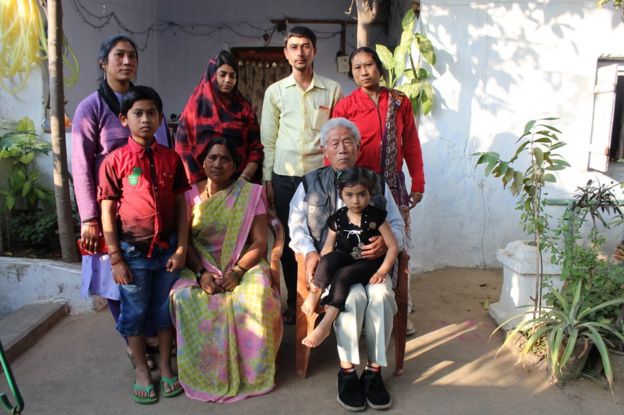
He kept coming back to India to meet his wife, children and grandchildren who continued to live here.
When Mr Wang first arrived in China, he received a rapturous welcome. Crowds met him with banners reading, “Welcome home, soldier, it’s been a rough journey”.
But according to Mr Wang’s son, Vishnu, his father’s request to local officials to clear his salary for the period of his stay in India, remains unanswered.
Vishnu also adds that it’s unclear if his father still has any claim to ancestral property in China after being away for so many years.
“He was ecstatic to have met his family after decades. He didn’t want anything else.”
In 2017, Mr Wang rushed back to India to take care of his wife, who was hospitalised due to “liver complications”.
“Getting funds for the expensive treatment was very difficult. We tried everywhere, begged for money but didn’t receive any response,” Vishnu says.
She died within a fortnight.
Image caption Mr Wang married an Indian woman and raised a family with her
“My father’s visa was renewed in 2018. He applied again in April 2019 but he is still waiting,” Vishnu adds.
Xianyang and Beijing, where the Indian embassy is located, are more than 1,000 kilometres (621 miles) apart – and travelling between the two cities isn’t easy for Mr Wang, who is nearly 80 years old, Vishnu says.
“My father is fed up. He doesn’t understand why this is taking so long.”



 CHINDIA ALERT: You'll be living in their world, very soon