Archive for ‘Suzhou’

23/04/2020

McDonald’s, Starbucks, Subway among foreign firms set to test China’s digital currency

  • Test in Xiong’an, the new city being built south of Beijing, will focus on everyday goods and services for the first time
  • American food outlets to be included in the digital currency tests, conducting small transactions with local firms
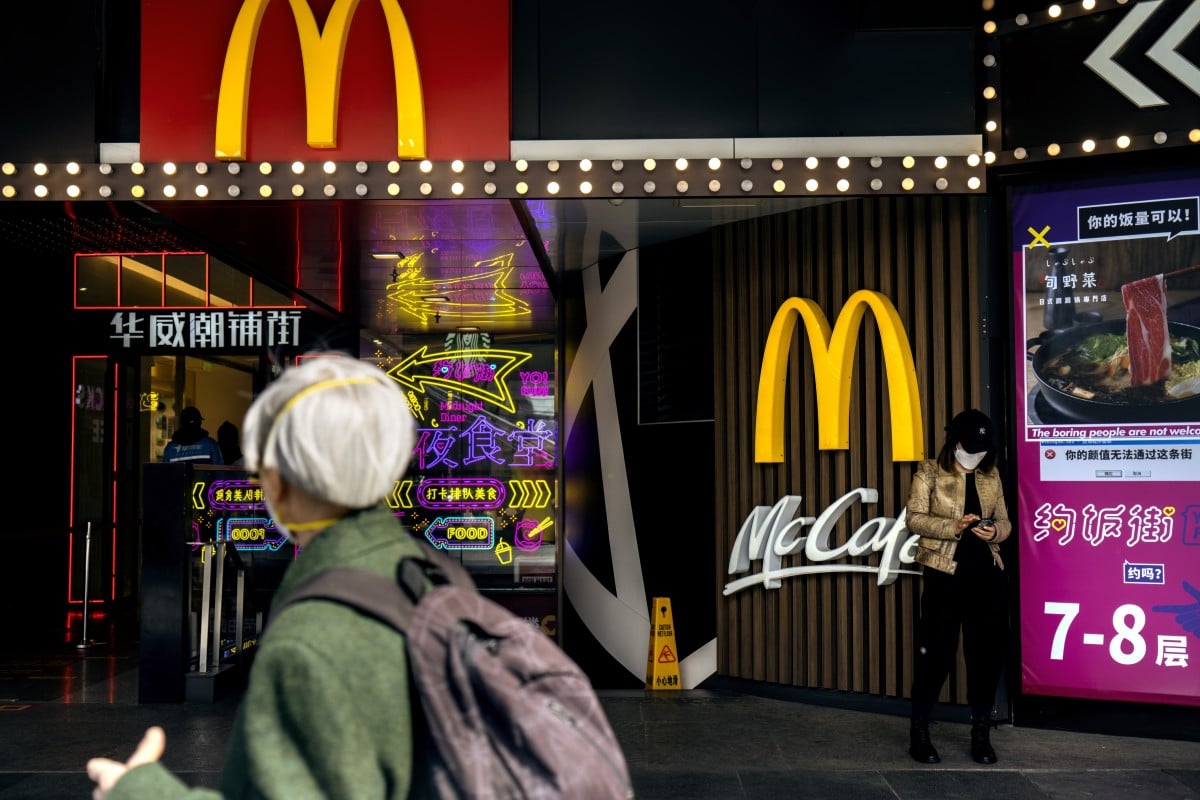
American chains Starbucks, McDonald’s and Subway were named on the People’s Bank of China’s list of firms that will test the digital currency in small transactions with 19 local businesses. Photo: Bloomberg

China’s central bank has accelerated the testing of its new sovereign digital currency and, for the first time, will include some foreign consumer brands in the programme.

American chains Starbucks, McDonald’s and Subway were named on the People’s Bank of China (PBOC)’s list of firms that will test the digital currency in small transactions with 19 local businesses.
The global names will be joined by local hotels, convenience stores, a stuffed bun shop, a bakery, a bookstore and a gym, according to details revealed at a promotional event in the Xiong’an New Area, a city being built south of Beijing, news portal Sina.com reported.
The inclusion of businesses providing everyday goods and services marks an expansion of the PBOC’s testing. It follows a previous disclosure that last week in Suzhou the digital currency was used to pay half public sector workers’ travel subsidies for May.
Is China a currency manipulator?
Wednesday’s promotional event was organised by the local branch of the National Development and Reform Commission, the powerful planning agency, and attended by representatives of the Big Four state-owned banks and two of the country’s internet giants – Alibaba and Tencent.

China has not released a timetable for launching the digital yuan, but last week’s reports on new testing have fanned speculation that it could be imminent.

The tests were reportedly accelerated after Facebook launched its Libra project in June last year, an attempt to create a global digital currency pegged to a basket of currencies and backed by global commercial giants.

The Libra Association, the consortium managing the project, announced changes last week in an attempt to win regulatory approval and pave the way for an official launch sometime later this year. The consortium said it would create multiple digital units tied to existing currencies such as the US dollar or the euro, rather than a single token based on a basket of currencies.

China’s official digital currency, known as Digital Currency Electronic Payment (DCEP), came into the public spotlight last week when a screenshot of a test version of an app developed by the Agricultural Bank of China circulated online.

The digital currency app has several basic functions, similarly to other Chinese online payment platforms such as Alipay and WeChat Pay – the country’s two most popular online payment tools – allowing users to make and receive payments, and transfer money.

“It’s certain that the DCEP is now in its final testing stage and should be officially launched,” BlockVC, an investment firm, said in a research note.

The PBOC’s digital currency research institute confirmed last Friday that testing was being conducted in four cities: Shenzhen, Suzhou, Xiong’an and Chengdu. In addition, venues for the 2022 Winter Olympics in Beijing and Zhangjiakou will join the testing programme in the future.

What is the Hong Kong Dollar Peg?
The institute, which was inaugurated in 2017, said that the test versions and applications of the currency had not been finalised.

The project testing is based on two principles: the central bank issues the virtual money to commercial banks who then pass it on to consumers, and that is aimed at replacing cash in all transactions.

China is the first major economy to publicly announce plans for a sovereign digital currency, aiming to better control the rapid rise of digital payments worldwide.

The PBOC has, however, cracked down on the trading of other digital currencies and banned banks from accepting cryptocurrencies, which it views as a risk to financial stability.

Source: SCMP
23/02/2020

Coronavirus: Taiwanese workers call time on mainland China over Covid-19 fears

  • An extended Lunar New Year holiday provides people from the self-ruled island with the opportunity to rethink their careers as the death toll from the deadly infection continues to rise
  • Online poll finds 63 per cent of Taiwanese unwilling to return to mainland China over health concerns
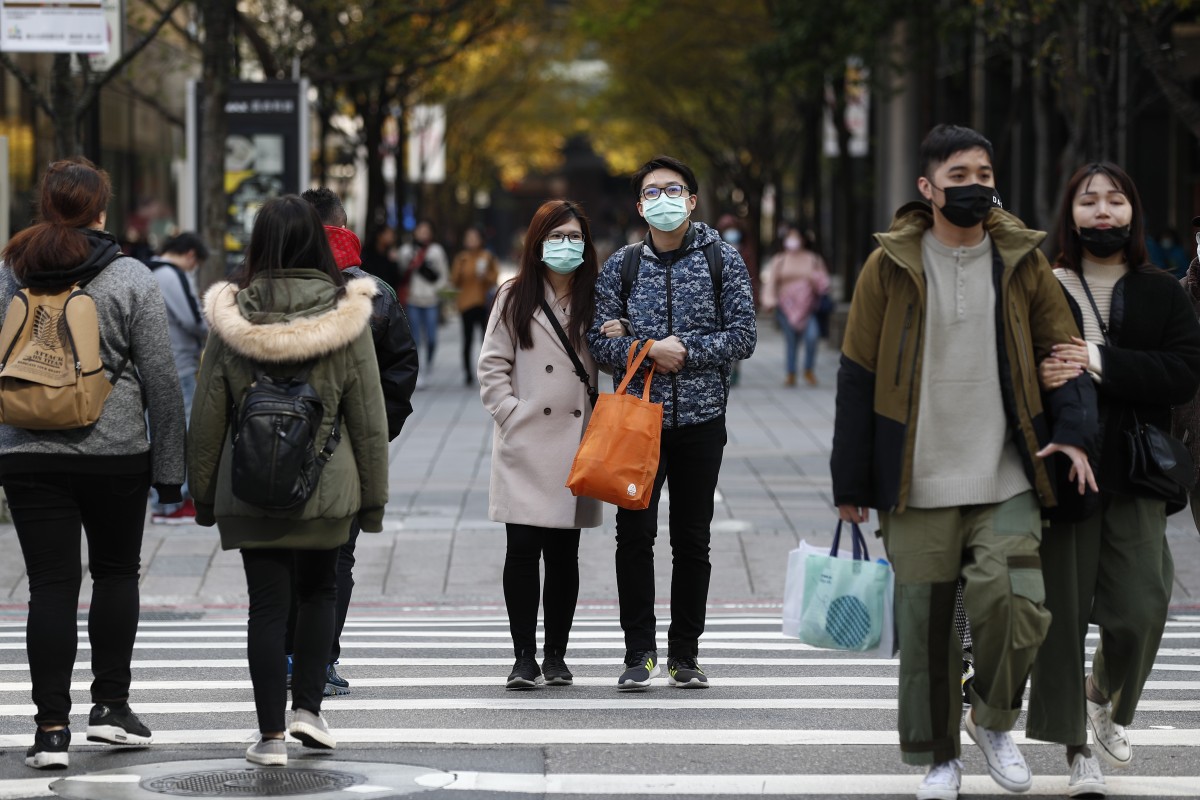
Many Taiwanese are opting not to return to their jobs in mainland China because of the coronavirus epidemic. Photo: EPA-EFE

Taiwanese account manager Douglas Liu values his life more than his job, which is why he will be staying at home on Monday rather than going back to work in the mainland China city of Suzhou.

Liu returned to his home in Taipei on January 10 for an extended Lunar New Year

 holiday – and to vote in the island’s presidential election – and planned to go back to work on February 1. But as the coronavirus epidemic worsened, the 45-year-old changed his plans.
“Last week, my company told me I should resume work on February 24, but after I argued in vain over the risk of returning to Suzhou, I tendered my resignation,” he said. “After all, my life is more important.”
Liu works for a firm that manufactures chest freezers for the mainland Chinese market.
“With more than 80 coronavirus infections in Suzhou and little sign of it subsiding, who knows what could happen to me if I return,” he said.
More than 78,700 people have contracted the virus since it was first detected in Wuhan, the capital of central China’s Hubei province, at the end of last year, and close to 2,500 have lost their lives to it.

As of Saturday, about 98 per cent of the infections and 99 per cent of the fatalities were in mainland China, two figures that have prompted many Taiwanese to rethink their employment plans.

According to a survey conducted last week by online recruitment agency 104 Job Bank, 63 per cent of Taiwanese with jobs on the mainland said they would not be returning to work after the extended Lunar New holiday. Before Wuhan was placed under lockdown on January 23 in a bid to contain the coronavirus outbreak, the figure was just 50 per cent.

“The intensification of the outbreak has created panic and insecurity for Taiwanese who work in mainland China and the lockdown of many cities has further discouraged them from returning to their jobs,” said Jason Chin, a senior vice-president at the recruitment agency.

Wuhan has been on lockdown since January 23. Photo: Reuters
Dozens of cities across China have introduced some form of restriction on the movement of residents, and several remain under total lockdown.

Chin said that the containment efforts had made it impossible for many companies to resume normal operations and provided a catalyst for Taiwanese workers to seek employment elsewhere.

“Taiwanese often to change jobs after the Lunar New Year, so the mainland government’s policy of delaying the resumption of regular business activities has given them more time to look for work outside mainland China,” he said.

Shannon Chiu is another Taiwanese who decided to call time on the mainland because of the coronavirus outbreak.

After two years working for an agricultural technology company in Zhengzhou, the capital of central China’s Henan province, she said she already had concerns about the standards of health care there.

“Being sick in Zhengzhou is a nightmare for Taiwanese because of the poor organisation and registration procedures,” she said.

“You either have to wait hours to see a doctor or go hospital-hopping in the hope of getting an appointment somewhere else.”

Chiu said she was still working in Zhengzhou after the outbreak had been reported in Wuhan – about 500km (310 miles) to the south – but no one in the city was wearing a face mask.

“I was lucky because I came back to Taiwan a week before the lockdown and my company allowed me to continue working from Taipei,” she said.

“Although I no longer enjoy the expatriate benefits, I feel a lot safer here because I don’t think I would survive if I was put in a mainland hospital because of Covid-19.”

Source: SCMP

15/09/2019

China Focus: Shanghai tourism festival witnesses consumption upgrade

SHANGHAI, Sept. 14 (Xinhua) — As the 2019 Shanghai Tourism Festival opened Saturday evening, the festival, which began in 1990, has been a witness to China’s development and citizens’ consumption upgrade over the past few decades.

Twenty-five floats, which represent China’s well-known tourist destinations such as Nanjing and Suzhou cities in Jiangsu Province, and 32 performance groups from 19 countries and regions, including Germany, Switzerland and France, participated in the dance and music show in downtown Shanghai, attracting some 300,000 spectators.

The festival, which will last until Oct. 6, will feature 100 activities including some for overseas travelers. A folk culture exhibition on Belt and Road countries will also be held. Dozens of tourist sites, museums and galleries in Shanghai will offer half-price admissions during the event.

The first tourism festival in Shanghai attracted half a million tourists from home and abroad. The 2018 festival attracted 12.7 million visitors. As people’s living standards have improved remarkably, tourism is not a luxury any more, but a necessity for many citizens.

“In 1995, the company rewarded me with a trip to Hainan. I was so proud and cherished it very much,” recalled a Shanghai taxi driver surnamed Guo, 54. “Now, our income has increased a lot, travel becomes a routine for most people who are willing to pay their own money to relax.”

Thirty years ago, ideal tourism resources were lacking, said Lu Guojun, a clerk with Shanghai Huangpu River Cruise Group Co., Ltd, citing the swaths of croplands along the eastern coast of the river which flows through the city center.

In recent years, with improved infrastructure and rapid development of service economy, more companies have joined the development of the river tourism, Lu said.

Dai Bin, president of the China Tourism Academy in Beijing, said people’s aspirations for a better life lead to their high expectations of tourism quality.

In August, China issued a guideline to unleash the cultural and tourism consumption potential, urging efforts to deepen supply-side reform in cultural and tourism industries.

On Friday, Shanghai signed agreements with six cities and regions including Budapest, Phnom Penh and Bangkok to boost culture and tourism exchange.

Culture and tourism promote mutual friendship and understanding, said Yu Xiufen, head of the Shanghai Municipal Administration of Culture and Tourism.

In 2018, domestic tourists made 5.54 billion trips, up 10.8 percent year on year, and the total number of inbound and outbound tourists reached 291 million, up 7.8 percent. The total tourism revenue reached 5.97 trillion yuan (842.7 billion U.S. dollars) last year, up 10.5 percent, data of the Ministry of Culture and Tourism showed.

Source: Xinhua

19/05/2019

Four more Chinese cities warned over pace of home price growth

BEIJING (Reuters) – China’s housing regulator has urged four more cities to prevent their residential property markets from overheating in the latest sign that authorities are not about to relax their grip on the real estate business in order to spur the economy.

The cities of Suzhou, Foshan, Dalian and Nanning have been told by the Ministry of Housing and Urban-Rural Development to stabilize land and housing prices as well as market expectations, the official Xinhua news agency reported late on Saturday.

Six other cities were warned by the ministry last month to monitor the growth of home prices in their markets, after some cities, including, Foshan quietly started to relax some curbs since December to spur demand.

China’s home property market is a key plank of the economy, influencing tens of related sectors such as construction and financial services.

The sector has held up well despite a slowdown in growth in the world’s second-biggest economy, with policymakers walking a fine line between preserving stability and hurting market sentiment.

Renewed tensions between China and the United States over trade have also added pressure on Chinese policymakers to keep the domestic economy on a stable footing, while continuing to fend off risks such as housing bubbles.

Average new home prices in China’s 70 major cities rose 0.6% in April, unchanged from the pace of growth in March, according to a monthly official survey.

Most of the 70 cities surveyed by the National Bureau of Statistics still reported monthly price gains for new homes. The number increased to 67 in April from 65 in March, signaling a slight strengthening in the market.

The housing ministry reiterated that “houses are for living in, not for speculation”, according to the Xinhua news agency on Saturday.

Even before the ministry’s latest warning, the prosperous city of Suzhou, just northwest of Shanghai, had already rolled out new property curbs.

On May 11, Suzhou said it would restrict buyers of new homes in some districts from selling their property within three years.

Source: Reuters

Law of Unintended Consequences

continuously updated blog about China & India

ChiaHou's Book Reviews

continuously updated blog about China & India

What's wrong with the world; and its economy

continuously updated blog about China & India