Archive for ‘swine fever outbreak’

06/09/2019

Chinese medicine herbs could defeat devastating cotton virus, study suggests

  • Scientists find some chemicals can kill the cotton leaf curl Multan virus and others can boost cotton plants’ immunity to it
  • It is feared the virus could wreak havoc in China’s Xinjiang region, which produces most of the country’s cotton
A cotton picker in Xinjiang, where cases of the virus have been reported. Photo: Xinhua

Chinese scientists have found chemicals in medicinal herbs that could tame a destructive plant virus threatening the cotton industry in its western Xinjiang region.

Some small-molecule chemicals in herbs commonly used in Chinese medicine can effectively suppress cotton leaf curl Multan virus, according to ongoing research led by Professor Ye Jian at the Institute of Microbiology in Beijing.

By targeting WRKY20, a gene in the virus’ DNA, the chemicals could disrupt the viral infection and transmission, Ye’s team found.

Some early findings from their research were published last month in the journal Science Advances.

The leaf curl virus – a species of Begomovirus, the largest genus of plant viruses – poses a significant threat to the world’s cotton plantations, causing leaf curling, stunted growth and lower yields of cotton fibre. It costs the cotton industry in the Indian subcontinent about US$1 billion a year, according to a press release about the study from the Chinese Academy of Sciences.

Were there to be a pandemic in China, the drop in output and measures to contain it could cost the cotton farming industry 50 billion yuan (US$7 billion), according to some researchers’ estimates, the academy added.

The first known cases of the virus in China over the past decade were limited to coastal areas in the country’s east, but several cases have now been reported in Xinjiang Uygur autonomous region.

“We are running out of time,” Ye told the South China Morning Post.

Cotton is a pillar industry in Xinjiang, which provides more than 80 per cent of China’s total cotton production. The industry also contributes up to 50 per cent of the income of farmers involved in it, according to government statistics.

Exact figures for infections in the region are not available, but outbreaks so far remain isolated, according to Ye and other researchers with knowledge of the situation.

Double threat to China’s cotton industry: warmer weather and mirid bug

However, Professor Gao Feng, cotton researcher at the Agricultural College of Shihezi University in Xinjiang, warned that leaf curl virus could reduce cotton production in an infected field to almost zero.

“A large-scale outbreak has not occurred yet, but the threat is very serious and people are very nervous,” Gao told the Post. “We are in desperate need of a solution.”

The challenges facing China’s pork industry highlight the danger viruses can pose to the domestic market. A swine fever outbreak that has wiped out 100 million pigs caused pork prices to rise, forcing China to look to new countries to import from, such as Portugal and Argentina.

Its biggest overseas supplier of cotton is the United States, with which it is locked in a protracted trade war. In July, the government allowed some Chinese companies to buy a total of 50,000 tonnes of cotton from the US without tariffs being charged.

The central and regional governments fear that falling incomes caused by the impact of an outbreak on the cotton industry would increase the risk of ethnic conflict, social instability and anti-government thoughts.

Ye’s team adopted two approaches to fighting the virus.

How trade war with the US is changing China’s cotton industry

Some chemicals they discovered could improve cotton plants’ immunity against the infection by stimulating them to generate an antibody that killed the virus. The other chemicals they found could target the virus, directly reducing its intensity.

“They can be used as sprays,” Ye said, adding that he planned to reveal the chemical composites and related herbs in a paper to be published in a peer-reviewed journal in the coming months.

The discovery could offer an environmental benefit, too. Cotton farmers in Xinjiang use pesticides to deter the whiteflies that transmit the virus, but their overuse has affected Xinjiang’s delicate ecology, which in its desert areas is particularly vulnerable to disturbance.

In the agricultural research community, there is growing concern that some whitefly species will become resistant to pesticides. “If that happens, we will have a major problem,” Ye said.

He said the chemicals identified in the ongoing study would not harm the environment.

“These chemicals come from plants, so the negative impact to the environment would be minimal,” he said.

The study also found that it may be possible to use the cotton leaf curl Multan virus to benefit farmers. It stimulates cotton plants to generate a chemical that is harmful to other insects, such as the bollworm, that compete with whiteflies for food, meaning that it could be genetically modified into a pest control agent.

Most cotton species in commercial plantations are genetically modified to produce an insecticide to kill bollworm. Ye said a man-made virus could reduce the dependence on genetically modified plants.

Source: SCMP
15/04/2019

How China’s swine fever outbreak is upending global soybean market

  • Getting rid of the disease in a nation that consumes half the world’s pork could take three to five years
  • Demand for soybeans used in feed is expected to be curbed
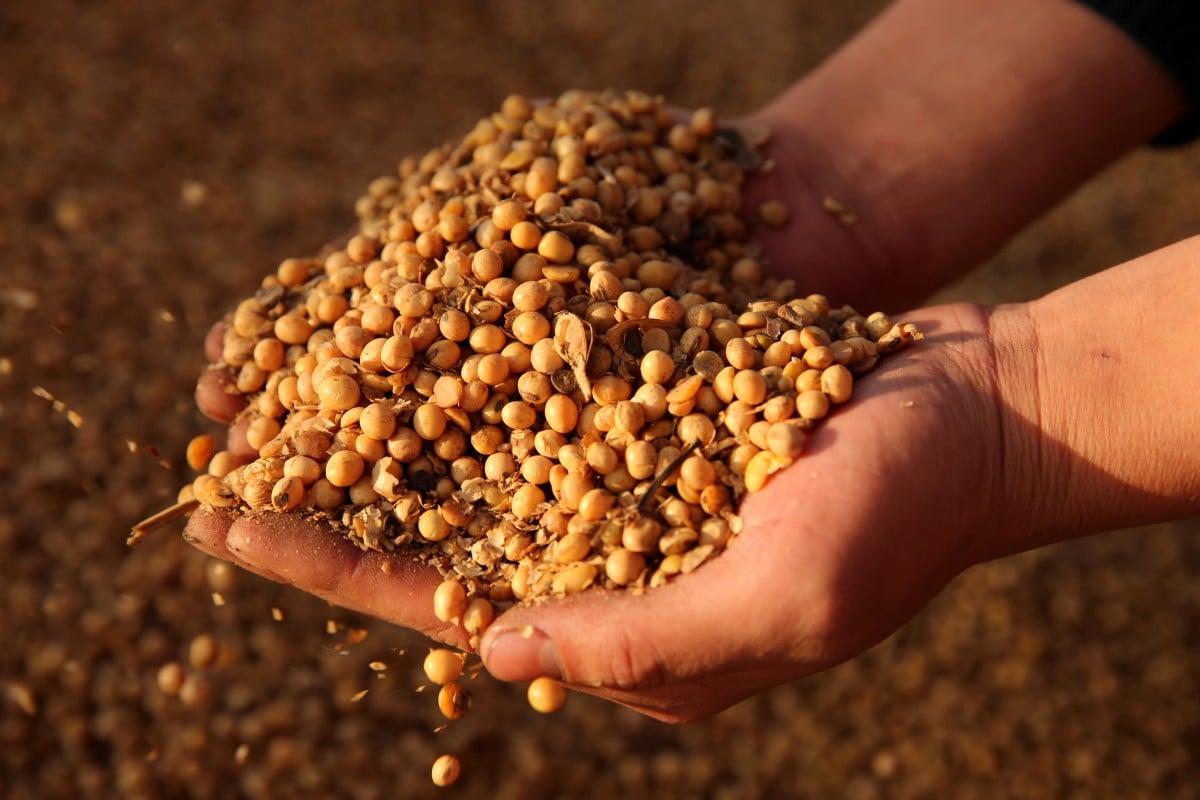
A decline or slower growth in Chinese soy imports has been forecast for the next couple of years. Photo: Reuters
Forget Donald Trump’s trade war. It’s a deadly pig disease spreading through China that will really reshape the global soybean market for years to come.
Getting rid of the disease and rebuilding the herd in a nation that consumes half the world’s pork will take three to five years, curbing demand for soybeans used in feed, according to analysts.
Given China is the largest soybean importer and most of its shipments usually come from the US, the oilseed has been the poster-child for the tit-for-tat tariff spat. While trade tensions have prompted China’s feed makers to curb the oilseed’s usage, it is the pig virus that will upend the market.

The US Department of Agriculture and Intl FCStone are already forecasting a decline or slower growth in Chinese soy imports for the next couple of years.

“Today, African swine fever is the bigger story as it relates to demand,” said Corey Jorgenson, president of the grain unit of US crop handler The Andersons, which buys and sells corn, wheat and soybeans from American farmers. “It will impact us for a crop year or more. This is not a 2019 event.”

African swine fever, first spotted in Africa in the 1900s, kills most infected pigs within 10 days, although it isn’t known to harm humans. China has already culled more than a million pigs after 122 outbreaks in 30 provinces. The disease shows no signs of abating.

Cargill, one of the top agriculture commodity traders, said quarterly earnings from animal nutrition and Chinese oilseed crushing were hit by the virus. Andersons also has soybean demand destruction built into its projections.

Pork production in China probably will decline about 30 per cent this year, a drop roughly the size of Europe’s entire annual supply, according to Rabobank, a top lender to the agriculture industry.

Pork production in China is expected to drop about 30 per cent this year, according to Rabobank, a top lender to the agriculture industry. Photo: Bloomberg

The number of breeding sows in China already slumped 21 per cent in March from a year earlier, according to a report by the Ministry of Agriculture and Rural Affairs published on Friday.

The bank says it will take at least three years to rebuild the herd. Informa’s Agribusiness Intelligence is betting on three years, while brokerage FCStone expects at least five years.

China inflation soars on African swine fever epidemic
The structure of China’s pork industry makes it “nearly impossible” to stop the spread of African swine fever, said Arlan Suderman, chief commodities economist for FCStone.

That is because a large part of the production and slaughter is in small family-owned operations. Many farmers who had the disease and tried to repopulate their herds ended up getting it again, according to Informa.

“We are seeing that the Chinese hog producer today is not repopulating those facilities because either they are afraid they are going to get African swine fever from a neighbour or it is still in the building and they cannot get it cleaned,” said David Williams, director of global proteins at Informa.

Chinese soy imports dropped 14 per cent in the first quarter, partly as the trade war pushed feed makers to switch to alternatives.

Why are the little piggies no longer going to market in China’s Shandong?

While some fear that could be a permanent change, Jim Sutter, the chief executive of the US Soybean Export Council, says feed makers would return to using whatever is more economical when the trade war ends, and that includes soy.

Soybean imports by China are forecast to decline for the first time in 15 years to 88 million tonnes this season and FCStone says purchases could drop again to 71 million tonnes in 2019-20 due to the impact of African swine fever – the firm’s forecast also assumes the continuation of the tariff dispute.

Soybean imports by China are forecast to decline for the first time in 15 years to 88 million tonnes this season. Photo: Reuters

The USDA’s Foreign Agriculture Service still expects imports to grow next season, albeit at a slower pace. They would remain below levels reached in 2017-18.

China is buying enough soybeans “that they don’t need to try to influence the trade talks”, said Suderman. “That is masking the drop in consumption right now, but that means they will have more soybeans in storage that they can use down the road as well, so eventually we will see that full drop in demand.”

Pork group scraps big trade event over African swine fever fears

It’s not all bad news for the soybean market. In the medium term, China will need to import more pork and other meats. As a result, American pork exports will probably jump 20 per cent this year, while European Union shipments could climb 10 to 15 per cent, Informa estimates.

All of that will require expansion of herds, boosting demand for soy meal and increasing crush margins for the likes of Archer-Daniels-Midland and Bunge.

Soybean-based feed for pigs was already becoming pricier before the swine virus outbreak, because of the trade war. Photo: AFP

China’s appetite for pork is already starting to pick up. The nation bought a record 77,700 tonnes of US supply in the week ended April 4, even as 25 per cent tariffs on American product remained in place, according to USDA data. The purchase sent Chicago futures up by the daily maximum allowed by the exchange.

The spread of the virus combined with China’s voracious appetite for pork means June hog futures are already up 21 per cent this year, the best performing agricultural benchmark in the Bloomberg Commodity Index.

China to expand soybean crop, subsidies to cut reliance on US imports

Pork prices are expected to rise by more than 20 per cent in the US this year and 15 per cent in western Europe, according to Informa forecasts.

“People are continuing to want to eat pork,” USSEC’s Sutter said in an interview after returning from a trip to China.

“They might in the short run be eating other meats because the price of pork has gone up. But people did not think when we asked them the question that there would be a long-term loss in demand for pork in China. People did not think that was the case.”

Source: SCMP

Law of Unintended Consequences

continuously updated blog about China & India

ChiaHou's Book Reviews

continuously updated blog about China & India

What's wrong with the world; and its economy

continuously updated blog about China & India