Archive for ‘Switzerland’

08/04/2020

Xi and his unremitting call for global health cooperation

BEIJING, April 7 (Xinhua) — Over the past seven years, Chinese President Xi Jinping has on various occasions stressed the importance of global health cooperation, expressed China’s support for international health organizations, and voiced the country’s determination to help improve global health governance.

His remarks on global public health in recent years, especially in the last few months, have become particularly meaningful as countries worldwide mark the 2020 World Health Day on Tuesday amid a raging COVID-19 pandemic.

Back in 2013, during a meeting with then World Health Organization (WHO) Director-General Margaret Chan in Beijing, Xi said China will continue to improve public health and enhance cooperation with the WHO.

He also expressed his hope that China and the WHO could work closer to help promote Chinese medicine and medical products into overseas markets, and jointly assist African countries to improve their disease control and public health systems to meet the United Nations Millennium Development Goals.

In March 2015, Xi pointed out in a meeting in China’s Hainan province with Bill Gates, co-chair of the Bill & Melinda Gates Foundation, that preventing and controlling public epidemics is a common challenge to the international community and requires strengthening international cooperation on joint control.

Two years later, during his trip to Switzerland, Xi paid a special visit to the WHO headquarters, in which he co-witnessed with Chan the signing of a memorandum of understanding between China and the WHO pledging to step up health cooperation under the framework of the China-proposed Belt and Road Initiative.

During the meeting with Chan, Xi noted that China stands ready to enhance cooperation with the WHO in implementing the 2030 Agenda for Sustainable Development and assisting other developing countries.

Also in 2017, in his congratulatory letter to a meeting of BRICS countries’ health ministers, Xi called on relevant parties to study work in the field of traditional medicine and make joint efforts to tackle public health challenges.

“It is our common good vision that everyone enjoys good health,” he said in the letter.

In the past several months of 2020 which witnessed a hike in global caseload of COVID-19 infections, Xi has taken each opportunity to reiterate his call for global public health cooperation against the virus.

When meeting with visiting WHO Director-General Tedros Adhanom Ghebreyesus in Beijing in January, Xi said China attaches great importance to the cooperation with the WHO, and is ready to work with the organization as well as the international community to safeguard regional and global public health security.

In February, in a reply letter to Gates, Xi said “we are resolute in protecting the life and health of the people of China, and of all countries around the world. We are determined to do our part to uphold global public health security.”

In March, when the global anti-virus fight entered a critical stage, Xi highlighted the need for international health cooperation not only in several domestic meetings on epidemic prevention and control, but also in phone conversations with foreign leaders and heads of international organizations, as well as in such global events as the Extraordinary G20 Leaders’ Summit.

On March 12, Xi spoke with United Nations (UN) Secretary-General Antonio Guterres over phone, and urged the international community to take urgent action and carry out effective international cooperation in joint prevention and control, so as to form a strong concerted force to beat the disease.

China stands ready to share its experience with other countries, carry out joint research and development on drugs and vaccines, and offer as much assistance as it can to countries where the disease is spreading, Xi said.

Several days later, speaking at a meeting of the Standing Committee of the Political Bureau of the Communist Party of China Central Committee, he required closer cooperation with the WHO to strengthen the analysis and prediction of the changes in the global epidemic situation, and improvement in strategies and policies to cope with imported risks.

On March 21, in a phone conversation with his French counterpart, Emmanuel Macron, Xi pointed out that public health security is a common challenge faced by humanity.

China, he said, is willing to make concerted efforts with France to enhance international cooperation in epidemic prevention and control, support the UN and WHO playing a core role in improving global public health governance, and build a community of common health for mankind.

Three days later, talking with Kazakh President Kassym-Jomart Tokayev over phone, Xi said in the battle against the current global public health crisis, the urgency and significance of building a community with a shared future for mankind have become even greater.

On March 26, in his keynote speech at the Extraordinary G20 Leaders’ Summit via video, Xi said at such a moment, it is imperative for the international community to strengthen confidence, act with unity and work together in a collective response.

He called on G20 members to jointly help developing countries with weak public health systems enhance preparedness and response, and enhance anti-epidemic information sharing with the support of WHO and to promote control and treatment protocols that are comprehensive, systematic and effective.

Source: Xinhua

07/04/2020

Coronavirus: How China’s army of food delivery drivers helped keep country going during outbreak

  • Buying and paying for meals and supplies online was already second nature for many Chinese before the Covid-19 lockdown
  • The supply and delivery networks that were already in place were able to work with the authorities in cities like Wuhan
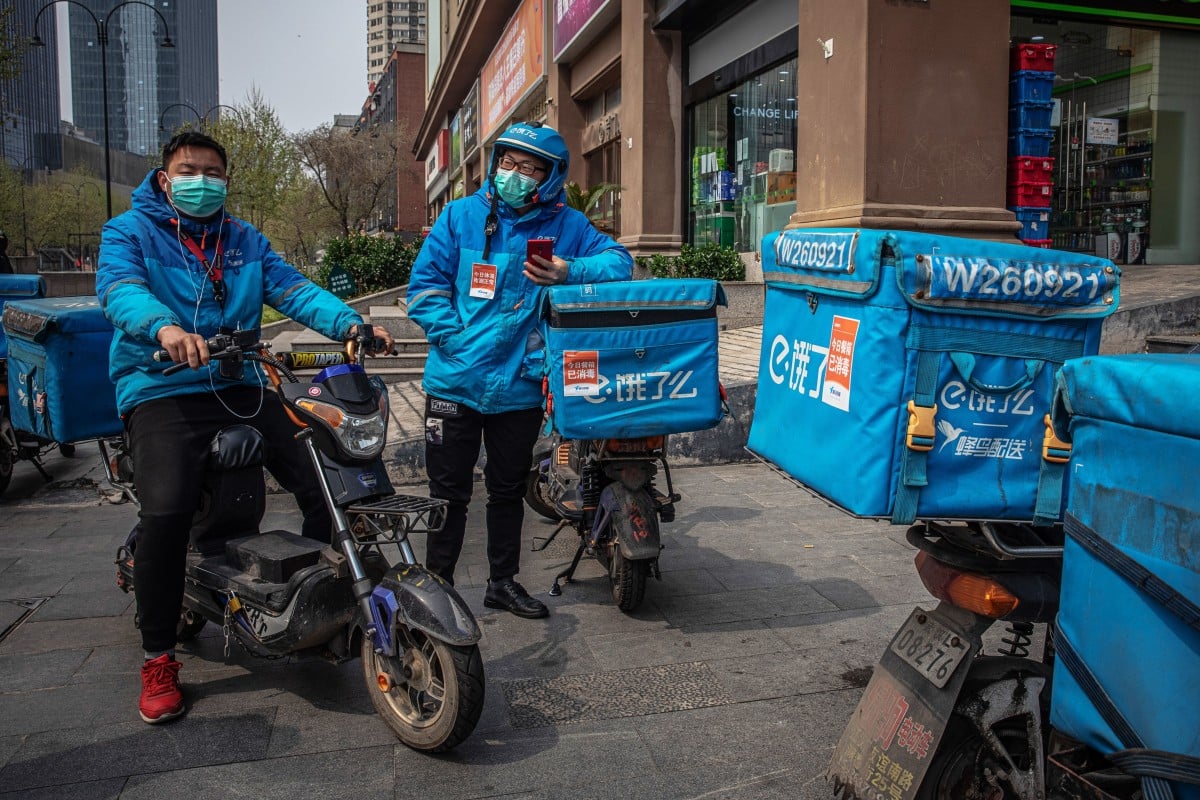
China’s established home delivery system played an important role in getting food and other necessities to residents during the Wuhan lockdown. Photo: EPA-EFE
When Liu Yilin, a retired middle schoolteacher in Wuhan, first heard rumours of a

highly contagious disease

spreading in the central Chinese city he started to stock up on supplies such as rice, oil, noodles and dried pork and fish.

These preparations spared the 66-year-old from some of the early panic when 
the city went into lockdown in late January

and shoppers flooded to the markets and malls to snap up supplies.

But as time went on and with residents banned from leaving their homes, he became increasingly concerned about getting hold of fresh supplies of vegetables, fruit and meat until the nation’s vast network of delivery drivers came to the rescue.
“It was such a relief that several necessity purchasing groups organised by community workers and volunteers suddenly emerged on WeChat [a leading social media app] days after the lockdown,” Liu said. “China’s powerful home delivery service makes life much easier at a time of crisis.”

Hu Xingdou, a Beijing-based independent political economist said: “Home delivery played a very important role amid the coronavirus outbreak. To some extent, it prevented people from starving especially in cases when local governments took extreme measures to isolate people.”

According to Liu, people in Wuhan during the lockdown had to stay within their residential communities, with community workers guarding the exits.

Human contact was limited to the internet. Residents placed orders online with farmers, small merchants or supermarkets to buy daily necessities, and community workers helped distribute the goods from deliverymen.

Every morning, Liu passed a piece of paper with his name, phone number and order number to a community worker who would collect the items from a courier at the gate of the residential area.

Thanks to a high population density in urban areas, affluent labour force and people’s openness to digital life, China has built a well-developed home delivery network.

Extensive funding from technology companies has been invested in hardware infrastructure, software to improve logistics and big data and cloud computing to help predict consumers’ behaviour.

Mark Greeven, professor of innovation and strategy at IMD Business School in Lausanne, Switzerland, said: “Whether it is delivery of products, air parcels or fresh food or even medicine or materials for medical use, China has a very well developed system. Much better developed than I think almost any other places in the world.

“Well before the crisis, China had started to embrace digital technology in daily life whether it is in consumption, business, government and smart cities and use of third party payments. All of these things have been in place for a long time and the crisis tested its agility and capability to deal with peak demand.”

China’s e-commerce giants help revive sales of farm goods from Hubei

3 Apr 2020
According to e-commerce giant JD.com, demands for e-commerce and delivery services spiked during the outbreak of Covid-19, the illness caused by the new coronavirus.
It sold around 220 million items between January 20 and February 28, mainly grains and dairy products with the value of beef orders trebling and chicken deliveries quadrupling compared with a year ago.
Tang Yishen, head of JD Fresh, its fresh foods subsidiary, said: “The surge of online demand for fresh merchandise shows the pandemic helped e-commerce providers further penetrate into the life of customers. It also helped upstream farm producers to know and trust us.”
Meituan Dianping, a leading e-commerce platform, said its grocery retail service Meituan Instashopping reported a 400 per cent growth in sales from a year ago in February from local supermarkets.
The most popular items ordered between January 26 and February 8 were face masks, disinfectant, tangerines, packed fresh-cut fruits and potatoes.
The food delivery service Ele.me said that, between January 21 and February 8, deliveries of frozen food surged more than 600 per cent year on year, followed by a nearly 500 per cent growth in delivery of pet-care products. Fresh food deliveries rose by 181 per cent while drink and snack deliveries climbed by 101 per cent and 82 per cent, respectively. Ele.me is owned by Alibaba, the parent company of the South China Morning Post.
Chinese hotpot restaurant chain adapts as coronavirus fears push communal meals off the menu
E-commerce providers used the opportunity to show goodwill and improve their relationship with customers and partners, analysts say.
Sofya Bakhta, marketing strategy analyst at the Shanghai-based Daxue Consulting, said the food delivery sector had made significant headway in reducing physical contact during the outbreak.
Delivery staff left orders in front of buildings, in lifts or temporary shelters as instructed by the clients as most properties no longer allowed them inside.
Some companies also adopted more hi-tech strategies.
In Beijing, Meituan used self-driving vehicles to deliver meals to contactless pickup stations. It also offered cardboard boxes to be used as shields aimed at preventing the spread of droplets among its clients while they ate in their workplaces. In Shanghai, Ele.me employed delivery drones to serve people under quarantine in the most affected regions.
Some companies even “shared” employees to meet the growing labour demand in the food delivery industry that could not be satisfied with their ordinary workforce, Bakhta said.
More employees from restaurants, general retail and other service businesses were “loaned” to food delivery companies, which faced manpower shortages during the outbreak, according to Sandy Shen, senior research director at global consultancy Gartner.
“These arrangements not only ensured the continuity of the delivery service but also helped businesses to retain employees during the shutdown,” she said.
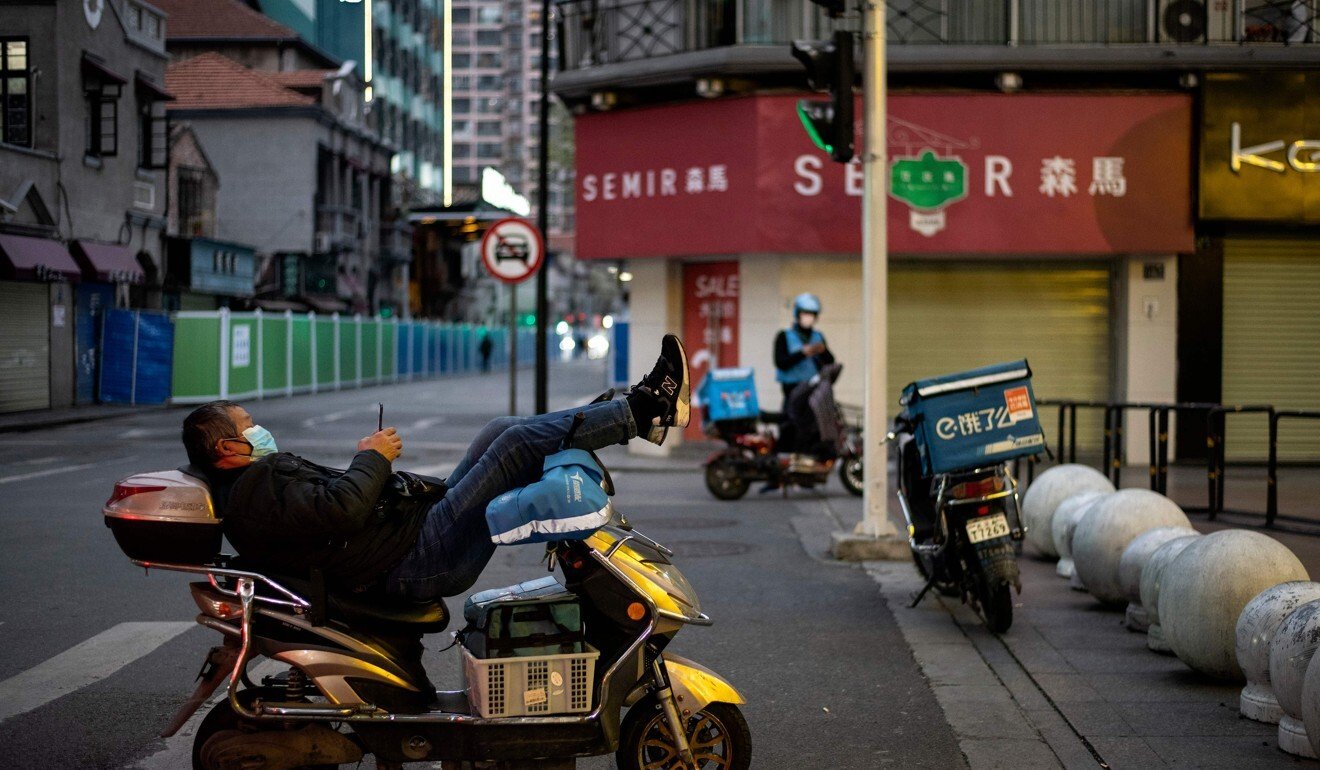
A delivery man takes a break between orders in Wuhan, central China, during the lockdown. Photo: AFP
Mo Xinsheng became one such “on-loan” worker after customers stopped coming to the Beijing restaurant where he worked as a kitchen assistant.
“I wanted to earn some money and meanwhile help people who are trapped at home,” said Mo, who was hired as a delivery man.
But before he could start work he had to go through lengthy health checks before he was allowed into residential compounds.
He also had to work long hours battling the wind and cold of a Beijing winter and carrying heavy loads.
“I work about 10 hours every day just to earn several thousand yuan [several hundred US dollars] a month,” he said.
“Sometimes I almost couldn’t breathe while my hands were fully loaded with packages of rice, oil and other things.
“But I know I’m doing an important job, especially at a time of crisis,” Mo said, “It was not until then that I realised people have become so reliant on the home delivery system.”
Woman uses remote control car to buy steamed buns amid coronavirus outbreak in China
The delivery system has been improved by an effective combination of private sector innovation and public sector coordination, said Li Chen, assistant professor at the Centre for China Studies at Chinese University of Hong Kong.
“[In China,] government units and the Communist Party grass roots organisations have maintained fairly strong mobilisation capabilities to cope with emergencies, which has worked well in the crisis,” he said.
However, Liu, the Wuhan resident, said prices had gone up and vegetables were three times more expensive than they had been over Lunar New Year in 2019.
“There were few varieties that we could choose from, apart from potatoes, cabbage and carrots,” he said.
“But I’m not complaining. It’s good we can still get fresh vegetables at a difficult time. Isn’t it? After all, we are just ordinary people,” he said.
Source: SCMP
05/04/2020

As Trump administration debated travel restrictions, thousands streamed in from China

(Reuters) – In defending his strategy against the deadly coronavirus, President Donald Trump repeatedly has said he slowed its spread into the United States by acting decisively to bar travelers from China on Jan. 31.

“I was criticized by the Democrats when I closed the Country down to China many weeks ahead of what almost everyone recommended. Saved many lives,” he tweeted, for instance, on March 2.

But Reuters has found that the administration took a month from the time it learned of the outbreak in late December to impose the initial travel restrictions amid furious infighting.

During that time, the National Security Council staff, the state department and other federal agencies argued about everything from how best to screen for sick travelers to the economic impact of any restrictions, according to two government officials familiar with the deliberations.

The NSC staff ultimately proposed aggressive travel restrictions to high-level administration officials – but it took at least a week more for the president to adopt them, one of the government officials said.

In meetings, Matthew Pottinger, deputy national security adviser and a China expert, met opposition from Treasury Secretary Steven Mnuchin and National Economic Council director Larry Kudlow, said two former NSC officials and one of the government officials involved in the deliberations. The two top aides were concerned about economic fallout from barring travelers from China, the sources said.

Each day that the administration debated the travel measures, roughly 14,000 travelers arrived in the United States from China, according to figures cited by the Trump administration. Among them was a traveler who came from Wuhan to Seattle in mid-January, who turned out to be the first confirmed case in the United States.

On Jan. 22, Trump downplayed the threat posed by the virus, telling CNBC from the World Economic Forum in Davos, Switzerland, “We have it totally under control.”

The battle within the White House over whether and how to stop infected travelers from China lasted nine more days.

On Jan. 31, Trump issued a proclamation barring entry of non-U.S. citizens, other than the immediate family of citizens and permanent residents, who had traveled to China within the last two weeks. The restrictions have since been expanded to many other countries.

It is unclear when the president was made aware of the NSC’s proposal and what prompted his decision to act, but the decision followed the World Health Organization’s declaration the day before that the epidemic was a “public health emergency of international concern.”

U.S. Centers for Disease Control and Prevention officials told Reuters that they contributed to the decision as part of the administration’s newly convened coronavirus task force.

A Treasury Department spokesperson said that Mnuchin “never objected to the decision to restrict flights from China.”

A White House spokesman, Judd P Deere, said: “Any suggestion that Larry Kudlow objected to restricting flights from China to contain COVID-19 and protect the health of the American people is completely false. Larry fully supported the President’s bold decision.”

In a statement, NSC spokesman John Ullyot said that the council’s early meetings about the coronavirus involved great expertise and robust discussion and were professional.

As of April 4, the coronavirus has infected more than 300,000 people in the United States, and killed over 8,000, according to the Reuters coronavirus tracker. The country has more cases than anywhere else in the world.

The sources for this story, former NSC members, public health officials and others involved in, or briefed on, the administration’s response, spoke on condition of anonymity because they were not authorized to comment on the record.

POPPING A FLARE

The NSC, which operates within the White House to coordinate policies and recommendations involving national security across agencies, was at the center of the effort to formulate the early response to the outbreak.

The council was first notified of the outbreak on the morning of Dec. 31, according to one of the government officials involved, when an NSC official was forwarded an email from a Department of Health and Human Services (HHS) attache in Beijing that had been sent to senior HHS officials the night before.

The “pop-a-flare” notice, as it is known, described strange cases of pneumonia that could not be definitively traced to seasonal flu, said the government official, who saw the message. The email said the Chinese would soon be notifying the World Health Organization, the official said.

On Jan. 3, Dr. Gao Fu, head of China’s disease control agency, informed his U.S. counterpart, Dr. Robert Redfield, director of the CDC, in an emotional telephone call that the outbreak was growing out of control, according to the same federal official and a former NSC official. Both said they had been informed of the details.

Gao’s agency did not respond to a request for comment.

Ullyot, the NSC spokesman, disputed the timeline, saying the council did not learn of the coronavirus outbreak until Jan. 3. The CDC, a part of HHS, confirmed to Reuters that it learned of an outbreak in late December and that the call with Gao occurred Jan. 3.

Health agencies were scrambling to gather information, the two government officials involved in the deliberations said. Questions went back to the U.S. Embassy in Beijing, and experts across the government: How many travelers arrive daily from Wuhan, China, the initial site of the outbreak? What U.S. airports do they fly into? What would be the pros and cons, including costs, of any travel restriction?

In discussions with the NSC, public health officials, including from HHS and CDC, initially argued for the targeted approach of medically screening travelers from Wuhan, as they sifted through information about where and how quickly the virus was spreading, one of the government officials involved said. Public health officials tend not to favor border closures because they can restrict medical response and divert limited resources.

The NSC’s Pottinger was pushing hard for strict travel restrictions – expressing doubt about the truth of the data China was releasing, according to the official.

There was “a lot of yelling, a sign of frustration,” said a former NSC staffer who was not in the meetings but got messages from colleagues in attendance expressing dismay. The person described the messages but did not share them with Reuters. The two current federal officials confirmed the acrimony.

The NSC struggled to reconcile conflicting viewpoints, the two government officials involved said.

The debate delayed the screening of travelers from China by at least a week, one of the officials said. CDC officials ultimately announced enhanced medical screenings for travelers from Wuhan at three international airports, in Los Angeles, San Francisco and New York’s John F. Kennedy, on Jan. 17, expanding them to 20 U.S. airports by Jan. 28.

At one point, during a meeting, Pottinger snapped at health officials that their approach “really has to take a step back,” so that national security interests could shape the response, the official said.

The CDC declined to comment on the debate.

Some former NSC officials who spoke to Reuters traced what they saw as an ineffective response by the council in part to structural changes in 2018 in which former National Security adviser John Bolton had folded the council’s Global Health Security and Biodefense directorate into a larger operation, with the result that pandemic planning was not as great a priority. Others said that, under Bolton, the NSC worked effectively on biopreparedness, but after he departed it lost a number of important experts.

NSC spokesman Ullyot rejected as false the suggestion that the council lacked expertise. The council is staffed by officials with “extensive experience in virology, infectious disease epidemiology, global health security, public health, and emergency response,” he said.

The NSC’s own public health experts were involved in the discussions from the beginning, advocating “early and often” for traveler screening and raising the issue of banning flights from Wuhan, he said.

While the conflict soured the interactions, one of the government officials involved said, data soon emerged that led the health agency officials to agree with Pottinger: A travel restriction for all of China was needed. They saw that there were thousands of travelers arriving daily from Wuhan’s Hubei province to the United States, as well as a rising number of Covid-19 cases reported by the Chinese government beginning in mid-January, the source said.

In its statement to Reuters, the CDC did not directly address what led to its ultimate decision to support the travel restrictions.

By Jan. 24, the staff of the NSC had proposed restricting flights from China, said the government official involved in the deliberations. But as Pottinger met with deputies from other cabinet-level agencies, the recommendation met with resistance because of concerns about spooking the markets and scaring the public, three sources with knowledge of the deliberations told Reuters.

STILL DIVIDED

With opinions still divided, the matter went to top White House aides, at which point Treasury Secretary Mnuchin and National Economic Council director Kudlow argued strongly against the travel restrictions, said two former NSC officials and the government official involved in the deliberations.

In addition to the impact on the stock market, the two top aides expressed concern about the supply chain for everything from semiconductors to ingredients for pharmaceuticals, said one of the government officials involved in the deliberations.

Pottinger was “pleading with Mnuchin and others” to stop travelers from coming, the former NSC official said.

By then, the first known patient in the United States – a man in his 30s who had traveled from Wuhan to Seattle on Jan. 15 – tested positive for the coronavirus disease, COVID-19.

He had slipped through travel screenings because his trip had been broken up, so the Wuhan origin of his trip had not been obvious to customs agents, said the government official with knowledge of the deliberations.

At the World Economic Forum in Davos, Switzerland, President Trump told CNBC on Jan. 22: “It’s one person coming in from China, and we have it under control. It’s going to be just fine.”

On Jan. 29, the Council of Economic Advisers, which advises the president on economic policy, presented an analysis describing a worst-case scenario of what a pandemic and travel restrictions could do to the economy, according to one of the government officials involved in the deliberations, who read it. The report supported Kudlow and Mnuchin’s arguments against such restrictions and “scared everyone,” the source said.

The next day, at an afternoon meeting of the White House’s newly formed coronavirus task force, as well as other attendees, travel restrictions were still being debated, according to the government official involved in the deliberations and a former NSC official who learned of the meeting from former colleagues.

During the meeting, Mick Mulvaney, then President Trump’s chief of staff, entered the room, telling a smaller group, including Pottinger: “The president wants to see you now,” according to the official involved in the deliberations and the former NSC officials.

Mulvaney referred questions to the White House, which did not respond.

Trump issued the order the next day. By then, the novel coronavirus was already carving a lethal path through a Seattle nursing home.

Source: Reuters

04/04/2020

Mass lockdowns in Europe may have helped save 59,000 lives, says study

  • Researchers from Imperial College in London looked at how 11 countries had responded to the crisis and estimated how many lives had been saved by intervention
  • Some of the worst affected countries such as Italy and Spain would have seen tens of thousands more deaths, according to the model
Empty streets outside the Colosseum in Rome. Photo: AFP

Mass lockdowns and widespread social distancing may have prevented 59,000 Covid-19 deaths, according to a new model from Imperial College in London.

A team of researchers – including Neil Ferguson, whose projections helped inform the British government’s response to the outbreak and Samir Bhatt – estimated that tens of thousands of lives had been saved in 11 countries as a result of measures such as case isolation, school closures, bans on mass gatherings as well as local and national lockdowns.

The measures had a “substantial impact in reducing transmission” for countries with more advanced epidemics, with an estimated 38,000 deaths averted in Italy and 16,000 in Spain, but it is “too early to be sure” about similar reductions for countries in the earlier stages of the outbreak, researchers said.

Most countries in the model – Austria, Belgium, Denmark, France, Germany, Norway, Sweden, Switzerland and the United Kingdom – began their interventions between March 12 and 14.

“While we cannot determine which set of interventions have been most successful, taken together, we can already see changes in the trends of new deaths,” the researchers said.

“We note that substantial innovation is taking place, and new, more effective interventions or refinements of current interventions, alongside behavioural changes will further contribute to reductions in infections.”

The report, published on Monday, also estimated that between 7 and 43 million people had been infected in the 11 countries by late March – somewhere between 1.88 per cent and 11.43 per cent of the population – and said a large number of cases had probably gone unreported.

On average, the proportion of the population infected in the assessed countries was 4.9 per cent, with the highest estimates in Spain and Italy, and the lowest in Germany and Norway.

The coronavirus that causes Covid-19 first began to spread late last year in central China, but has since become a devastating global pandemic, with the most confirmed cases in the United States, Italy, Spain, Germany, France and mainland China.

Life under Italy’s lockdown: the hard lessons other countries must learn

2 Apr 2020

A separate study by Ferguson and other researchers, including Imperial College epidemiologist Azra Ghani, published on Monday in The Lancet found that the overall case fatality ratio for Covid-19 was lower than estimates for the severe acute respiratory syndrome (Sars) and Middle East respiratory syndrome (Mers) coronaviruses, but “substantially higher” than those of recent influenza pandemics such as the H1N1 influenza in 2009.

“With the rapid geographical spread observed to date, Covid-19 therefore represents a major global health threat in the coming weeks and months,” the researchers said.

“Our estimate of the proportion of infected individuals requiring hospitalisation, when combined with likely infection attack rates (around 50–80 per cent), show that even the most advanced health care systems are likely to be overwhelmed.

“These estimates are therefore crucial to enable countries around the world to best prepare as the global pandemic continues to unfold.”

Italy ‘still proud to be part of EU’ amid stronger ties with China and coronavirus pandemic

2 Apr 2020

The study also found that the risk of death increased significantly for individuals in older age groups, although they noted early results indicate children are not at a lower risk of infection compared with adults.

Using data from China, researchers estimated the overall case fatality ratio to be at 1.38 per cent, with a lower ratio of 0.32 per cent for under-60s, compared with 6.4 per cent for over-60s and rising to 13.4 per cent for people who were over 80.

“It is clear from the data that has emerged from China that case fatality ratio increases substantially with age,” they said.

The age gradient was also observed in cases outside China, where the fatality ratio was estimated at 1.4 per cent for people under the age of 60, compared with 4.5 per cent for those 60 and over.

Source: SCMP

17/03/2020

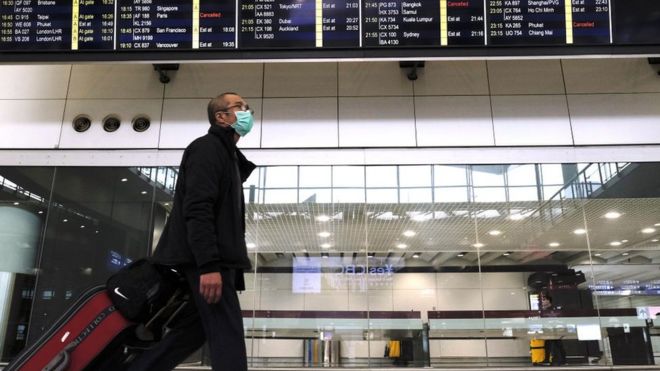
Coronavirus: Hong Kong to quarantine all arrivals from abroad

Aman wearing a mask pulls suitcase as he walks past a flight information display boardImage copyright GETTY IMAGES
Image caption Chief Executive Carrie Lam said the majority of Hong Kong’s cases had been imported

Hong Kong will quarantine all people arriving from abroad for 14 days, its leader Carrie Lam has said.

The restrictions, which will kick in on Thursday, will not apply to those from Macau or Taiwan. Entrants from mainland China already had to self-isolate.

Ms Lam said the majority of Hong Kong’s cases had been imported, adding that “strict measures” were needed.

Hong Kong has seen 57 new infections over the past two weeks, 50 of which were imported, said Ms Lam.

“If we exclude these imported, we only have seven local cases in the past week,” she said.

“If we do not impose strict measures, our previous efforts could be wasted.”

Ms Lam also advised residents to avoid all non-essential travel.

There are at least 155 confirmed cases in the territory, which detected its first cases in January.

The territory – a special administrative region of China – has so far been able to avoid the contagion seen elsewhere, thanks partly to a quick government response.

In January, cross-border travel with mainland China was slashed. Soon afterwards, health workers went on strike to demand a total border shutdown.

Presentational grey line

Some of the restrictions in the Asia-Pacific region, as of 17 March:

  • Australia – All travellers will have to self-isolate for 14 days. Foreign nationals who have been to China, Iran, Korea and Italy not allowed in
  • New Zealand – Everyone entering the country will have to self-isolate for 14 days. This excludes those from small Pacific islands with no confirmed virus cases
  • South Korea – Travellers from China’s Hubei province not allowed in. International arrivals from certain countries will need to submit papers on their health condition
  • Singapore – All visitors with travel history to France, Germany, Italy, Spain, South Korea and China banned from entering or transiting. Residents with recent history to these countries will have to self-isolate for 14 days. All those entering from Japan, Switzerland, the UK and Asean countries will have to self-isolate for 14 days
  • Malaysia – All foreign visitors have been banned, all Malaysians will not be allowed to travel overseas until 31 March. All returning Malaysians will have to self quarantine for 14 days
  • Japan – Ban on entry to travellers who have been to parts of China, South Korea, Iran or Italy in 14 days before arrival
Presentational grey line

The number of confirmed coronavirus cases and deaths outside China has now surpassed the number inside.

More than 100,000 people have been infected outside China, while just over 80,000 cases have been reported inside.

There have been more than 182,000 confirmed cases of coronavirus globally and over 7,000 deaths, according to a tally from Johns Hopkins University.

Media caption Steps the NHS says you should take to protect yourself from Covid-19

Source: The BBC

15/03/2020

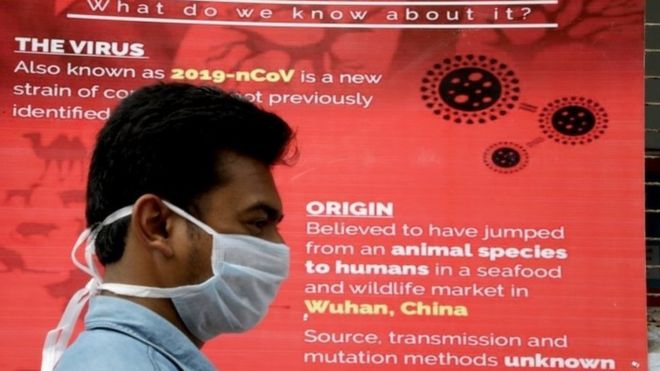
Coronavirus: Second death confirmed in India

Coronavirus advisory hangs at the entrance of the Infectious Diseases (ID) Hospital in Kolkata, India, 04 March 2020Image copyright EPA
Image caption India has stopped exports of masks to make sure there are ample domestic supplies

A 68-year-old woman from Delhi has been confirmed as the second Indian to die from the coronavirus.

The woman, who had underlying health conditions, is thought to have been infected by her son who travelled to Switzerland and Italy last month.

India’s first fatality from the virus was confirmed on Thursday.

The 76-year-old man, from the southern state of Karnataka, died after returning from a month-long visit to Saudi Arabia on 29 February.

People who came in contact with the man are being traced and quarantined, the state’s health minister said. India has 82 confirmed cases of the virus, the health ministry says.

The Delhi woman’s son was “initially asymptomatic but developed a fever and cough after one day”, a government statement said. The family were then screened and the mother and son admitted to hospital.

The 76-year-old Karnataka man was screened at the airport on his return but showed no symptoms at the time. After he developed difficulties last week, he was taken to hospital. He died on Tuesday but it was not reported until Thursday.

Banner image reading 'more about coronavirus'
Banner

India’s Supreme Court has said it will only hear urgent cases from Monday, and has restricted the number of people who can enter a courtroom.

Karnataka has banned all gatherings including weddings, sports events and conferences for a week as the country attempts to slow the spread of the virus.

Malls, movie theatres, pubs and night clubs have also been shut.

“The government will decide on further action after a week following a review,” the state’s chief minister BS Yediyurappa announced on Friday.

But he said that government offices would continue to function as normal.

India has taken a number of steps to halt the spread of Covid-19:

  • All visas, barring a select few categories, have been suspended for a month
  • Visa-free travel afforded to overseas citizens of the country has been suspended until 15 April and even those allowed in could be subject to 14 days of quarantine
  • Schools, colleges and movie theatres in the capital, Delhi, have been shut until 31 March
  • The Indian Premier League (IPL), featuring nearly 60 foreign players and scheduled to begin on 29 March, has been postponed to 15 April
  • Two one-day cricket matches between India and South Africa will be played behind closed doors

India’s health ministry says it was among the first countries in the world to prepare for an outbreak of the respiratory illness, and denied allegations that it was slow in testing suspected cases.

“Our surveillance system is strong and we are able to quickly identify any symptomatic patients,” RR Gangakhedkar from the Indian Council of Medical Research (ICMR) told reporters on Thursday.

However, there are concerns about whether the country will be fully equipped to prevent and treat an outbreak.

It would be near impossible for India to force its citizens into mass quarantine and hospitalise people in numbers like China, says the BBC’s Soutik Biswas.

Our correspondent says there are also concerns about the country’s poor healthcare data. India has a shoddy record in even recording deaths and disease – only 77% of deaths are registered, and doctors are more likely to get the cause of death wrong than right, according to a study the Toronto-based Centre for Global Research. There is patchy data for flu-related deaths.

Source: The BBC

26/02/2020

Coronavirus pandemic a question of ‘when’ not ‘if’, warns U.S.

SHANGHAI/SEOUL (Reuters) – Asia reported hundreds of new coronavirus cases on Wednesday, including a U.S. soldier stationed in South Korea, as the United States warned of an inevitable pandemic and outbreaks in Italy and Iran spread to other countries.

World stocks tumbled for the fifth day on fears of prolonged disruption to global supply chains, while safe-haven gold rose back toward seven-year highs and U.S. bond yields held near record lows.

Stock markets globally have wiped out $3.3 trillion of value in the past four trading sessions, as measured by the MSCI all-country index.

The disease is believed to have originated in a market selling wildlife in the central Chinese city of Wuhan late last year and has infected about 80,000 people and killed more than 2,700, the vast majority in China.

The U.S. Centers for Disease Control and Prevention urged Americans to prepare, saying that while the immediate risk there was low the global situation suggested a pandemic was likely.

“It’s not a question of if. It’s a question of when and how many people will be infected,” the CDC’s principal deputy director, Anne Schuchat, said on Tuesday.

World Health Organization (WHO) chief Tedros Adhanom Ghebreyesus, however, advised against referring to a pandemic.

“We should not be too eager to declare a pandemic without a careful and clear-minded analysis of the facts,” Tedros said in remarks to Geneva-based diplomats.

“Using the word pandemic carelessly has no tangible benefit, but it does have significant risk in terms of amplifying unnecessary and unjustified fear and stigma, and paralyzing systems. It may also signal that we can no longer contain the virus, which is not true.”

‘DON’T WAIT’

The United States has reported 57 cases of the virus. U.S. President Donald Trump, back in Washington after a visit to India, said on Twitter that he would meet U.S. officials for a briefing on the coronavirus on Wednesday.

Dr Bruce Aylward, head of a joint WHO-Chinese mission on the outbreak, told reporters on his return to Geneva that countries’ preparations should not wait.

“Think the virus is going to show up tomorrow. If you don’t think that way, you’re not going to be ready,” he said. “This a rapidly escalating epidemic in different places that we have got to tackle super-fast to prevent a pandemic.”

Aylward said China’s “extraordinary mobilization” showed how an aggressive public health policy could curb its spread.

The WHO says the outbreak peaked in China around Feb. 2, after authorities isolated Hubei province and imposed other containment measures.

China’s National Health Commission reported another 406 new infections on Wednesday, down from 508 a day earlier and bringing the total number of confirmed cases in mainland China to 78,064. Its death toll rose by 52 to 2,715.

The WHO said only 10 new cases were reported in China on Tuesday outside Hubei.

South Korea, which with 1,261 cases has the most outside China, reported 284 new ones including a U.S. soldier, as authorities readied an ambitious plan to test more than 200,000 members of a church at the center of the outbreak.

Of the new cases, 134 were from Daegu city, where the virus is believed to have been passed among members of the Shincheonji Church of Jesus, the Korea Centers for Disease Control and Prevention said.

The U.S. military said a 23-year-old soldier based in Camp Carroll, about 20 km (12 miles) from Daegu, had been infected and was in self-quarantine at home.

OLYMPIC WORRIES

In Japan, Prime Minister Shinzo Abe called for sports and cultural events to be scrapped or curtailed for two weeks to stem the virus as concern mounted for the 2020 Tokyo Olympics.

Japan’s professional baseball teams would play matches without spectators until March 15 due to virus concerns, Kyodo news agency reported.

Japan has nearly 170 virus cases, besides the 691 linked to a cruise ship that was quarantined of its coast this month. Six people have died in Japan, including four from the ship.

There have been nearly 50 deaths outside China, including 11 in Italy and 19 in Iran, the most outside China, according to a Reuters tally.

Iran’s deputy health minister – seen mopping his brow at a televised news conference – was among its 139 coronavirus infections. Cases linked to Iran have been reported across the region.

Kuwait said six new coronavirus cases, all linked to travel to Iran, took its tally to 18, while Bahrain said its infections had risen to 26 after three new ones on a flight from Iran.

The United Arab Emirates, which has reported 13 coronavirus cases, is prepared for “worst case scenarios” as it spreads in the Middle East, a government official said.

In Europe, Italy has become a front line in the global outbreak with 322 cases. Italians or people who had recently visited the country, have tested positive in Algeria, Austria, Croatia, Romania, Spain and Switzerland.

Two hotels, one in Austria and one in Spain’s Canary Islands, were also locked down after cases emerged linked to Italy. Spain also reported its first three cases on the mainland.

France, with 17 cases, reported its second death.

Source: Reuters

02/11/2019

China’s Nobel ambitions on show as dozens of science laureates meet in Shanghai

  • Chinese academics and young scientists join global scientific elite to explore frontiers of research
  • International joint laboratory announced at Shanghai forum
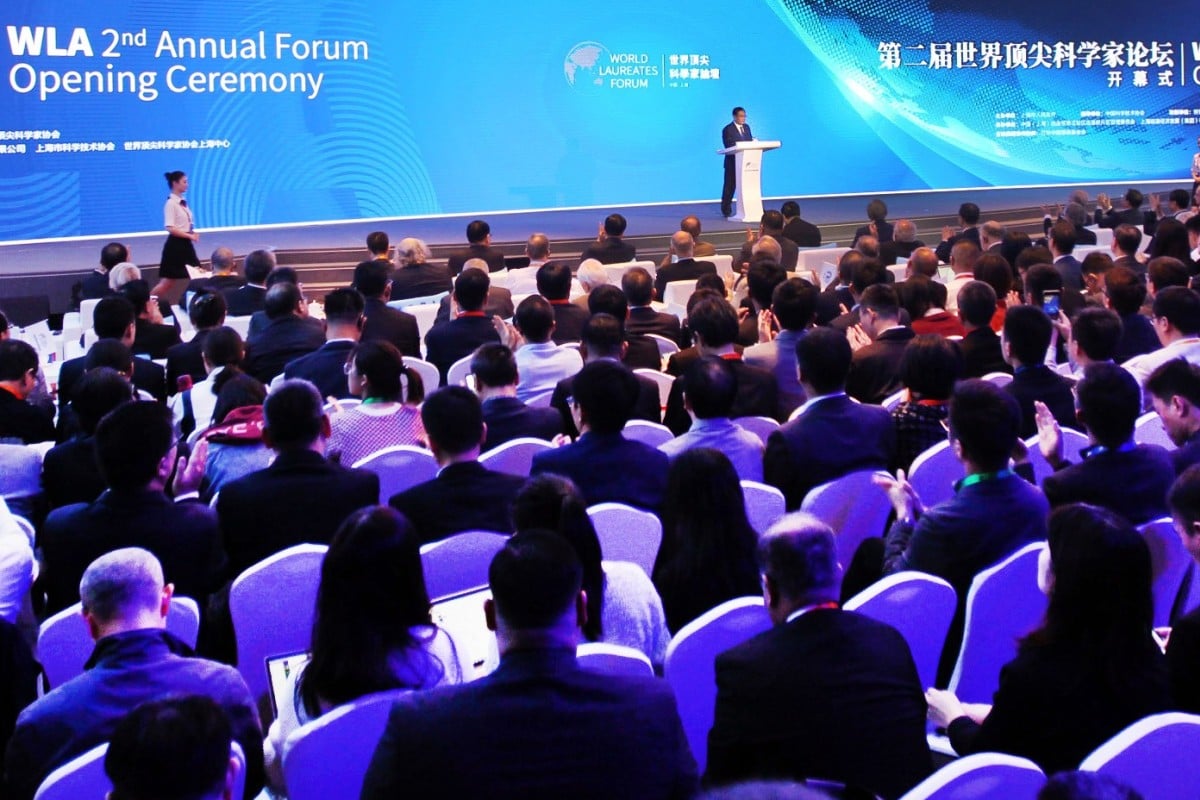
More than three dozen Nobel Prize winners for science were among the gathering in Shanghai for the second annual forum of the World Laureates Association. Photo: Xinhua

Shanghai hosted one of the largest gatherings of Nobel laureates in the world last week, with 44 Nobel Prize-winning scientists in the city for a government-sponsored forum with the lofty goal of discussing science and technology for the “common destiny of mankind”.

The four-day forum, which brought together young Chinese scientists and the cream of the international scientific crop, was a signal of China’s ambitions for its own researchers to take their place at the forefront of development and bring home their own prizes.

Experts agreed the event – the second in an annual “World Laureates Forum” – was hardly a public relations stunt, but a testament to China’s deep-seated, steadfast desire to learn from the world’s top scientists and join them, and their home countries, as leaders on the frontier of science and produce regular home-grown contenders for top prizes.

“The Nobel Prize is the holy grail for China, and it is still quite elusive for Chinese indigenous scientists to be awarded this prestigious recognition,” said Chengxin Pan, an associate professor of international relations at Australia’s Deakin University. “You could say China has a Nobel Prize complex.”

China says US tech ban is a barrier but will not halt scientific advance
Becoming a leader in the sciences was more than just an issue of driving economic expansion through technology and innovation, it was a matter of national preservation with deep roots in Chinese history, Pan said.

“China sees the lack of power, lack of scientific achievements and modern technology as largely responsible for the backwardness and humiliation it suffered during much of the 19th century and early 20th century,” he said.

“They need to make up for lagging behind by engaging with the top leading scientists in the world, wherever they are from.”

To that end, celebrated theoretical physicists, organic chemists, neuroscientists and biologists joined Chinese academics and youth scientists for the conference organised by the Shanghai city government and an association of top global scientists known as the World Laureates Association.

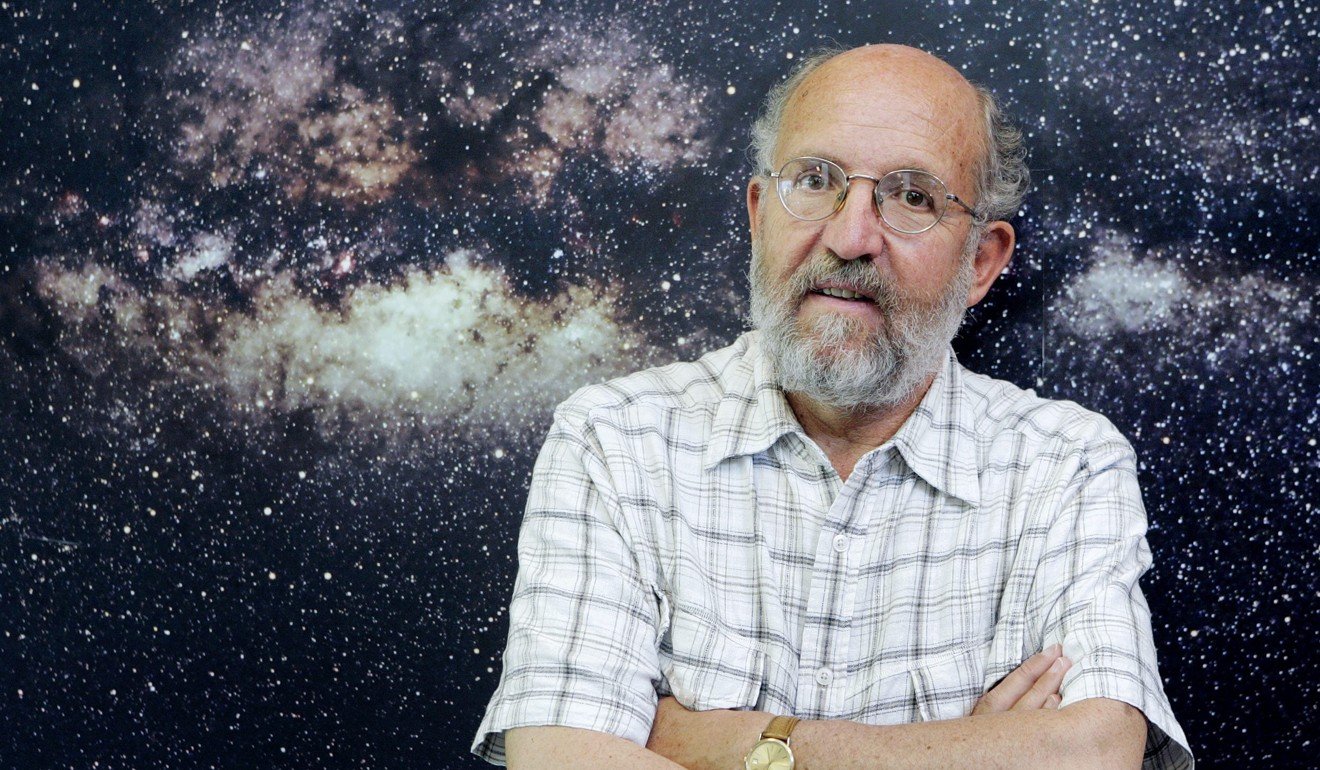
Among them were 2019 Nobel Prize for physics laureates Michel Mayor and Didier Queloz, as well as winners of other top prizes including the Wolf Prize, Lasker Award, and Fields Medal for mathematics. Discussions included the latest breakthroughs in disease prevention and drug development, sustainability and new energy, aerospace and black holes, as well as what drives their scientific curiosity.

Swiss professor Michel Mayor, astrophysicist and director of the Geneva Observatory, was one of the co-winners of the 2019 Nobel Prize in physics and among the attendees at the forum in Shanghai. Photo: EPA-EFE

The event, which culminated with the announcement of an international joint research laboratory for the world’s top scientists, to be established in Shanghai, was lauded by President Xi Jinping in an open letter to the attendees.

“China attaches great importance to the development of the frontier fields of science and technology,” Xi said, stressing China’s willingness to “work with all countries of the world” to “address the challenges of our age”.

The high calibre meeting was a rare opportunity for China to broadcast its message of commitment to scientific advancement, at a time when the reputation of its universities, academics and hi-tech companies have been taking a broad hit as part of a blowback from the US-China trade and tech wars, as well as suspicion among Western countries of China’s geopolitical aims.

In the past year, a number of major global Chinese tech companies, including Huawei and Hikvision, have been blacklisted in the US, while US tech giants like Google and Apple noticeably skipped out on China’s annual state-run World Internet Conference last month. Academic ties between Chinese and Western universities have also been called into question over suspicions of espionage, fraud, and intellectual property theft.

“China is saying we are still open for business and, at this juncture, we more warmly welcome foreign scientists and collaboration between countries in science and technology,” said Zhu Tian, an economics professor at the Chinese Europe International Business School in Shanghai.

60 science groups demand US end crackdown on foreign-born researchers

The past decade has seen China advance rapidly in the sciences. A surge in government funding, along with successive top level strategies to build up science and tech – including the Made in China 2025 innovation blueprint – and a significant uptick in international collaborations, have propelled the nation on to the global scientific stage.

Recent developments, like the first successful landing of a probe on the far side of the moon earlier this year, the dominance of the 5G network technology created by China’s Huawei, and the opening of the world’s largest radio telescope in Guizhou in 2017, have also raised the country’s profile in emerging tech and science.

But, so far, China’s rising visibility as a scientific powerhouse has been largely driven by scale. A June report by the journal Nature found researchers affiliated with the Chinese Academy of Sciences contributed the greatest number of “high-quality natural sciences research” to international journals compared with their peers at other institutions, while last month the journal found the top four “fastest rising” new universities for research output were all from mainland China.

“To some in the outside world, China is already a powerhouse in innovation … but in terms of the quality of innovations or scientific research, China still lags behind developed countries like the US, UK or Switzerland,” Zhu said.

Despite “making the fastest progress among all countries”, and significant leaps as a developing nation, “China is not at the frontier of technology or science yet,” he said, which is why international engagement, like the recent summit, is key to China’s growth.

“In order to catch up you have to know what is the frontier, you have to learn from those who are at the frontier.”

It is a point further underlined by the numerous blog posts and widely circulated articles in Chinese media about China’s meagre Nobel track record. Apart from one celebrated exception – 2015 Nobel laureate for medicine Tu Youyou – Chinese-born scientists who have won the prize did so for their work in overseas laboratories, or after changing citizenship.

Nobel Prize winner may have found solution to malaria drug resistance

Tu was the People’s Republic of China’s first Nobel Prize winner in the sciences and the country’s first woman to win the prize in any category.

Among China’s other Nobel laureates in the sciences are 1957 physics prizewinners Li Zhengdao and Yang Chen-ning, who won their award while in the US, having left China before the Communist Party takeover in 1949. Both later became US citizens. In 2017, 

Yang returned to China,

relinquishing his US citizenship to become a Chinese citizen.

China has worked hard to reverse the damage of brain drain, for example with its flagship “Thousand Talents” programme, a high-profile, state-backed recruitment drive set up in 2008 to attract overseas Chinese students and academics back to China with generous funding.
But reaching the frontiers of science, and making Nobel-worthy advancements, will also require China to do some reshuffling of its domestic priorities, which have been heavy on producing innovations in applied sciences and tech, but lighter on the basics – like physics, chemistry, and biology – whose mysteries are probed by the leading labs around the developed world.
Chinese scientists turn black coal by-product into gleaming white paper
“China in the past has been known as a place for incremental innovation, and not the place where really radical innovation and big breakthroughs have come from, but they don’t want to be tinkering at the margins, they want to be a major innovation powerhouse,” said Andrew Kennedy, an associate professor in the policy and governance programme at the Australian National University.
To change this, China has begun to raise investment in basic sciences, Kennedy said, pointing to National Bureau of Statistics figures which indicate an average spending increase of more than 20 per cent each year between 1995 to 2016. Even so, spending at the end of that period – some US$11.9 billion at market rates – still lagged well below the figure cited for the US in 2015, which rang up US$83.5 billion, he said.
Chinese scientists develop laser that could track submarines
The gathering of science laureates itself was further indication of that shift to place more emphasis on basic sciences, the kinds of disciplines the laureates lead, and could be a major boost to that agenda, according to Naubahar Sharif, associate professor of social science and public policy at Hong Kong University of Science and Technology.
“This [event] is a rocket-propelled, massive injection of scientific power into one place, and China has ambitions to gear up their own scientists to this level,” Sharif said, “and I’m sure the local Chinese scientists have been prepped to take advantage of it.”
While China has work to do in pushing back on criticism of questionable practices in intellectual property transfer, or the extent to which they share their own advances with others, collaboration with leading scientists is a crucial part of China’s “long-haul” vision in the sciences, Sharif said.
“If you rub shoulders with the most prestigious scientists of your era, your local scientists will learn something, and there’s going to be knowledge exchange and making linkages and a start to partnerships,” he said.
“This is the way that getting to that frontier can be achieved.”
Source: SCMP
14/10/2019

Chinese NPC Tibetan delegation visits Switzerland, recounts development in Tibet

SWITZERLAND-CHINA-NPC-TIBETAN DELEGATION-VISIT

Nyima Cering (R), deputy director of the Standing Committee of the Tibet Autonomous Region People’s Congress, poses for a group photo with President of Zurich City Parliament Heinz Schatt in Zurich, Switzerland, Oct. 11, 2019. A Tibetan delegation of the Chinese National People’s Congress (NPC), led by Nyima Cering, visited Switzerland from Wednesday to Sunday. (Photo by Ruben Sprich/Xinhua)

ZURICH, Switzerland, Oct. 13 (Xinhua) — A Tibetan delegation of the Chinese National People’s Congress (NPC) visited Switzerland from Wednesday to Sunday and briefed Swiss lawmakers and officials on Tibet’s historic achievements in economic and social development.

The delegation, led by Nyima Cering, deputy director of the Standing Committee of the Tibet Autonomous Regional People’s Congress, met with First Vice President of the Swiss Council of States Hans Stockli, Deputy Governor of Canton of Bern Pierre Alain Schnegg, President of Zurich City Parliament Heinz Schatt and local Chinese compatriots.

Based on his personal experience and citing detailed figures, Nyima Cering recounted the major economic and social developments in Tibet in the past 60 years since the start of democratic reform there, thanks to the full support of the central government, assistance from all over the country and the concerted efforts of all ethnic groups in Tibet.

Stockli applauded the major economic and social developments in Tibet, and expressed the willingness to enhance mutual understanding to boost China-Switzerland exchanges and cooperation between legislative bodies.

Source: Xinhua

15/09/2019

China Focus: Shanghai tourism festival witnesses consumption upgrade

SHANGHAI, Sept. 14 (Xinhua) — As the 2019 Shanghai Tourism Festival opened Saturday evening, the festival, which began in 1990, has been a witness to China’s development and citizens’ consumption upgrade over the past few decades.

Twenty-five floats, which represent China’s well-known tourist destinations such as Nanjing and Suzhou cities in Jiangsu Province, and 32 performance groups from 19 countries and regions, including Germany, Switzerland and France, participated in the dance and music show in downtown Shanghai, attracting some 300,000 spectators.

The festival, which will last until Oct. 6, will feature 100 activities including some for overseas travelers. A folk culture exhibition on Belt and Road countries will also be held. Dozens of tourist sites, museums and galleries in Shanghai will offer half-price admissions during the event.

The first tourism festival in Shanghai attracted half a million tourists from home and abroad. The 2018 festival attracted 12.7 million visitors. As people’s living standards have improved remarkably, tourism is not a luxury any more, but a necessity for many citizens.

“In 1995, the company rewarded me with a trip to Hainan. I was so proud and cherished it very much,” recalled a Shanghai taxi driver surnamed Guo, 54. “Now, our income has increased a lot, travel becomes a routine for most people who are willing to pay their own money to relax.”

Thirty years ago, ideal tourism resources were lacking, said Lu Guojun, a clerk with Shanghai Huangpu River Cruise Group Co., Ltd, citing the swaths of croplands along the eastern coast of the river which flows through the city center.

In recent years, with improved infrastructure and rapid development of service economy, more companies have joined the development of the river tourism, Lu said.

Dai Bin, president of the China Tourism Academy in Beijing, said people’s aspirations for a better life lead to their high expectations of tourism quality.

In August, China issued a guideline to unleash the cultural and tourism consumption potential, urging efforts to deepen supply-side reform in cultural and tourism industries.

On Friday, Shanghai signed agreements with six cities and regions including Budapest, Phnom Penh and Bangkok to boost culture and tourism exchange.

Culture and tourism promote mutual friendship and understanding, said Yu Xiufen, head of the Shanghai Municipal Administration of Culture and Tourism.

In 2018, domestic tourists made 5.54 billion trips, up 10.8 percent year on year, and the total number of inbound and outbound tourists reached 291 million, up 7.8 percent. The total tourism revenue reached 5.97 trillion yuan (842.7 billion U.S. dollars) last year, up 10.5 percent, data of the Ministry of Culture and Tourism showed.

Source: Xinhua

Law of Unintended Consequences

continuously updated blog about China & India

ChiaHou's Book Reviews

continuously updated blog about China & India

What's wrong with the world; and its economy

continuously updated blog about China & India