Archive for ‘Dinosaurs’

09/08/2019

This tiny ‘cockroach robot’ could be the future of search and rescue when disasters strike

  • Chinese and US researchers take inspiration from the hardy insect to design a robot that moves fast and is hard to squash
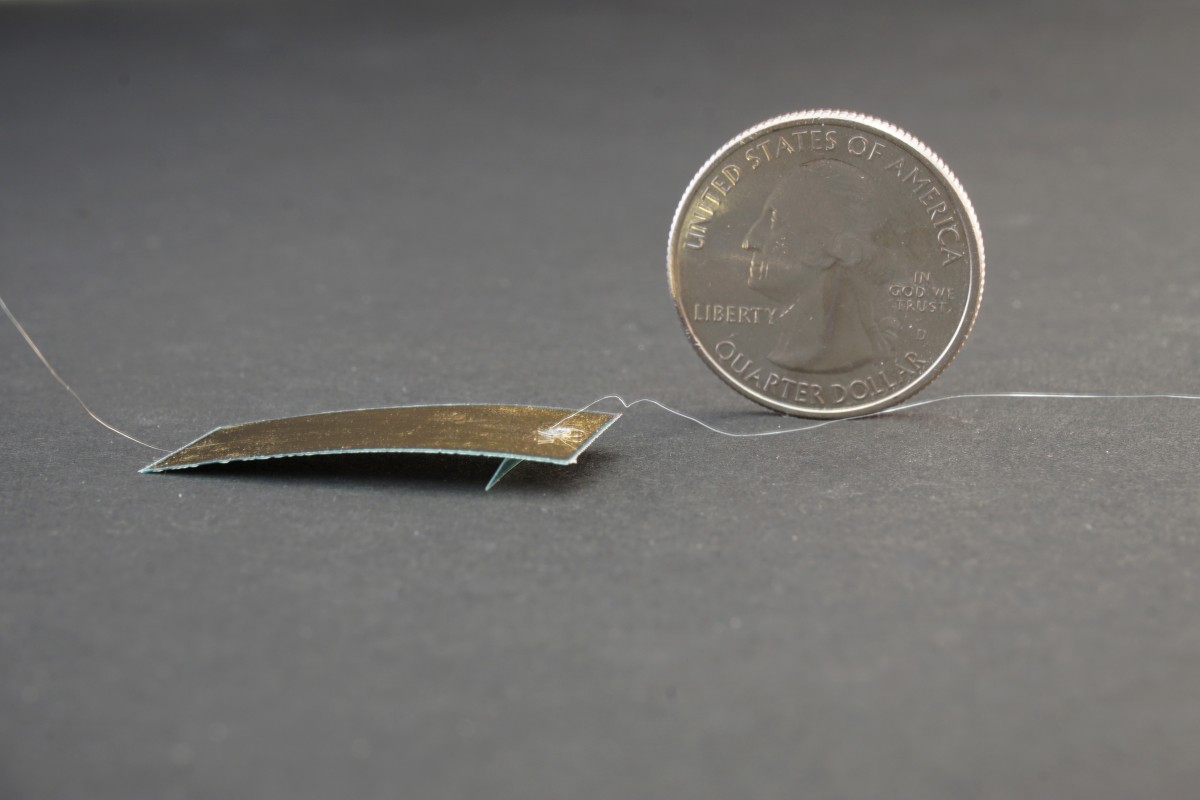
A prototype soft robot, which is about the size of a postage stamp, was developed by a group of researchers from China and the US. Its design was inspired by the capabilities of the hardy cockroach. Photo: Handout
Cockroaches are near-indestructible little creatures. These hardy insects have existed since at least 320 million years ago, outliving dinosaurs. A cockroach can also carry loads of up to 900 times its body weight, shrink to a quarter of its height to fit into small crevices and live for a week without its head.
Inspired by the qualities of this humble bug, a group of researchers from China and the United States have created a prototype of a fast-moving and near-indestructible miniature robot, which could potentially replace sniffer dogs in detecting people trapped in a rubble after a major earthquake or similar disastrous event.
Researchers from China’s Tsinghua University and the University of California, Berkeley, published their study on so-called soft robots in the academic journal Science Robotics last week.
“Although the cockroach is an annoying pest, it has certain interesting features, including the ability to move fast in a narrow space and being hard to squash,” said Zhang Min, an assistant professor at Tsinghua University’s Graduate School in Shenzhen and one of the study’s authors, in an email interview. “These features inspired us to develop a fast-moving and robust soft robot.”

Their work on soft robots was conducted under the Tsinghua-Berkeley Shenzhen Institute partnership, an initiative to collaborate with global researchers on fields such as environmental science and new energy technology.

Scientists have long taken inspiration from insects, including cockroaches, for engineering robots. Researchers from UC Berkeley previously developed a palm-sized, roach-like robot – about 20 times the size of the bug – for rescue use in 2017.

By comparison, the new prototype achieved breakthroughs in terms of size and more importantly, the speed and robustness.

The latest robot, which is about the size of a postage stamp and weighs less than one-tenth of a gram, is composed of a flexible piezoelectric thin film and a polymer skeleton with two legs.
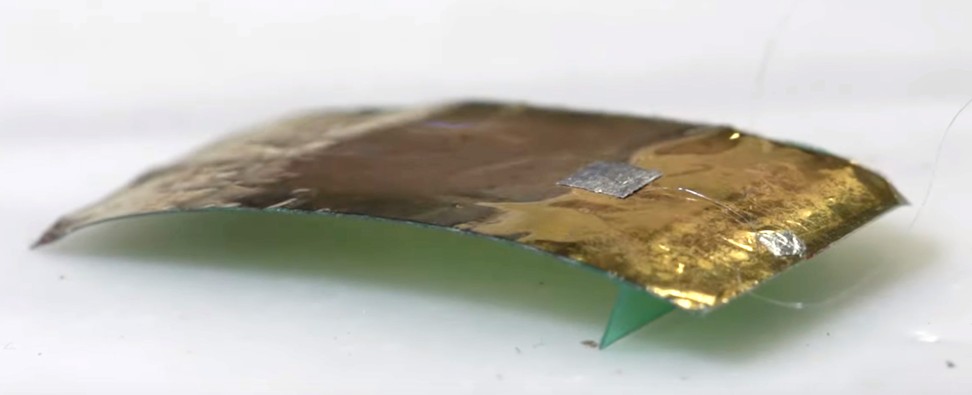
This screenshot from a video provides a closer look at the prototype soft robot developed by a group of researchers from China and the US. Its features were inspired by the sturdy qualities of the humble cockroach. Photo: YouTube

Despite its petite frame, this prototype showed the fastest speed among insect-scale robots in a similar weight range, as well as “ultra-robustness”, according to Lin Liwei, a professor of mechanical engineering at UC Berkeley who directed the research, in a separate email interview.

It can move as fast as a cockroach with speeds of up to 20 body lengths per second. It also continued to move after it was stepped on by an adult human weighting 60 kilograms, which is about 1 million times heavier than the robot, according to the study.
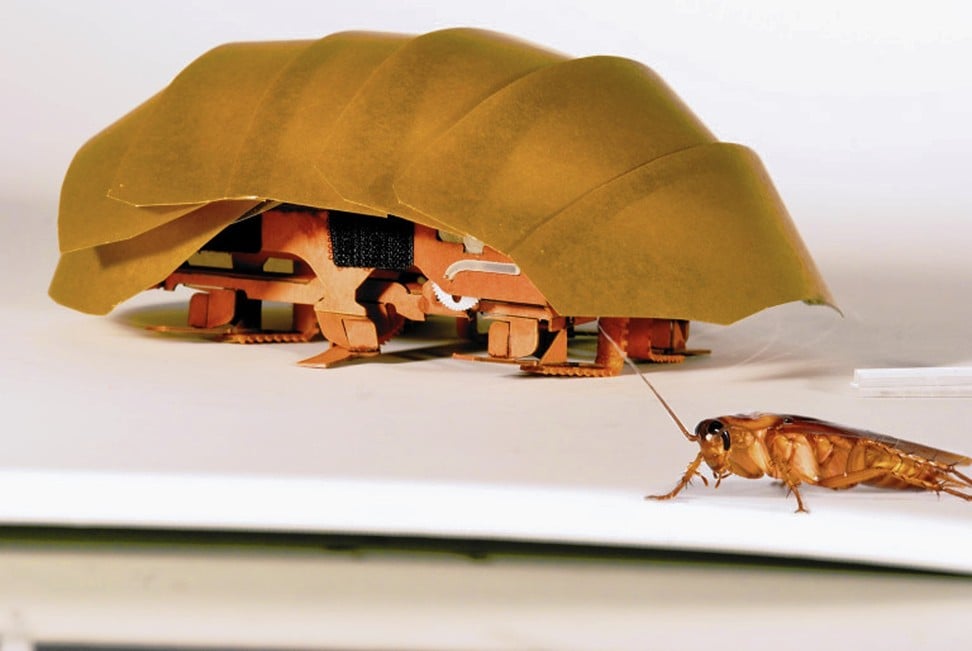
In 2017, researchers of the PolyPEDAL Lab at the University of California, Berkeley, designed a compressible robot, CRAM, that was about 20 times the size of a real cockroach. Photo: Handout

Those features sets up the robot for potential application in disaster relief, a field in which its size, agility and resilience would be invaluable to help detect survivors trapped beneath the rubble in catastrophes, such as major earthquakes.

Earthquakes have caused much devastation in China, a seismically active country with the world’s biggest population. For example, about 87,000 people died and more than 370,000 were injured when a magnitude-8 earthquake struck Wenchuan, a county in southwestern China’s Sichuan province, in 2008.

“The key innovation is the soft materials and structures used in the robot,” Lin said. “If the robot is too soft, it won’t be able to move fast. If the robot is too stiff, it can’t withstand the force of human weight.” The study detailed how the right combination of soft materials and structure enabled the robot to operate efficiently.

While the robot is currently attached to thin cables for power, the researchers are working to integrate a battery and control circuit to get rid of the existing wire in its design, helping expand its use in other applications.

“We want to make the robot carry small sensors, like a gas sensor, to provide it with more functions,” said Zhong Junwen, a researcher at UC Berkeley and one of the authors of the study, in a separate email interview. “With such a sensor, the robot can detect harmful gas leakage.”

Source: SCMP
04/06/2019

Could caped dinosaur found in China glide like Batman?

  • 163-million-year-old fossil represents something new in evolutionary history
  • Researchers say discovery is extraordinary
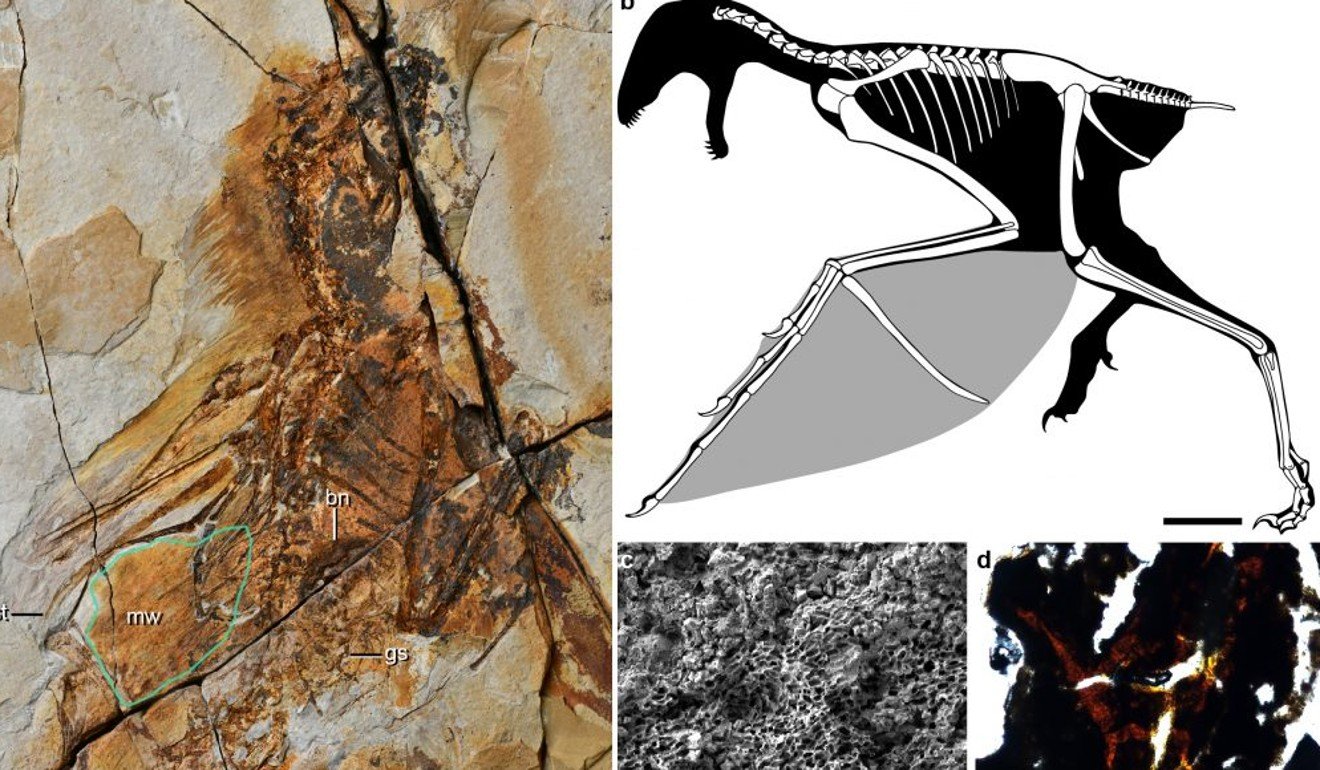
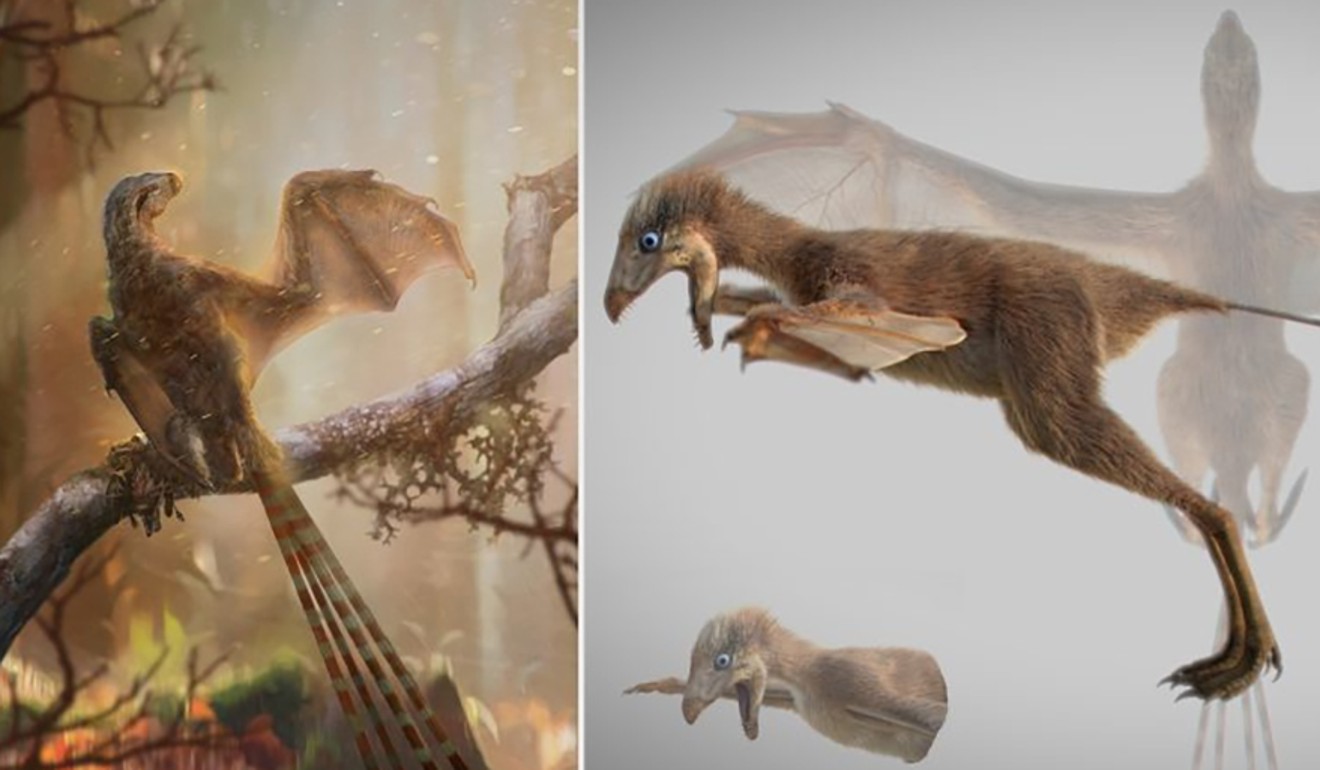
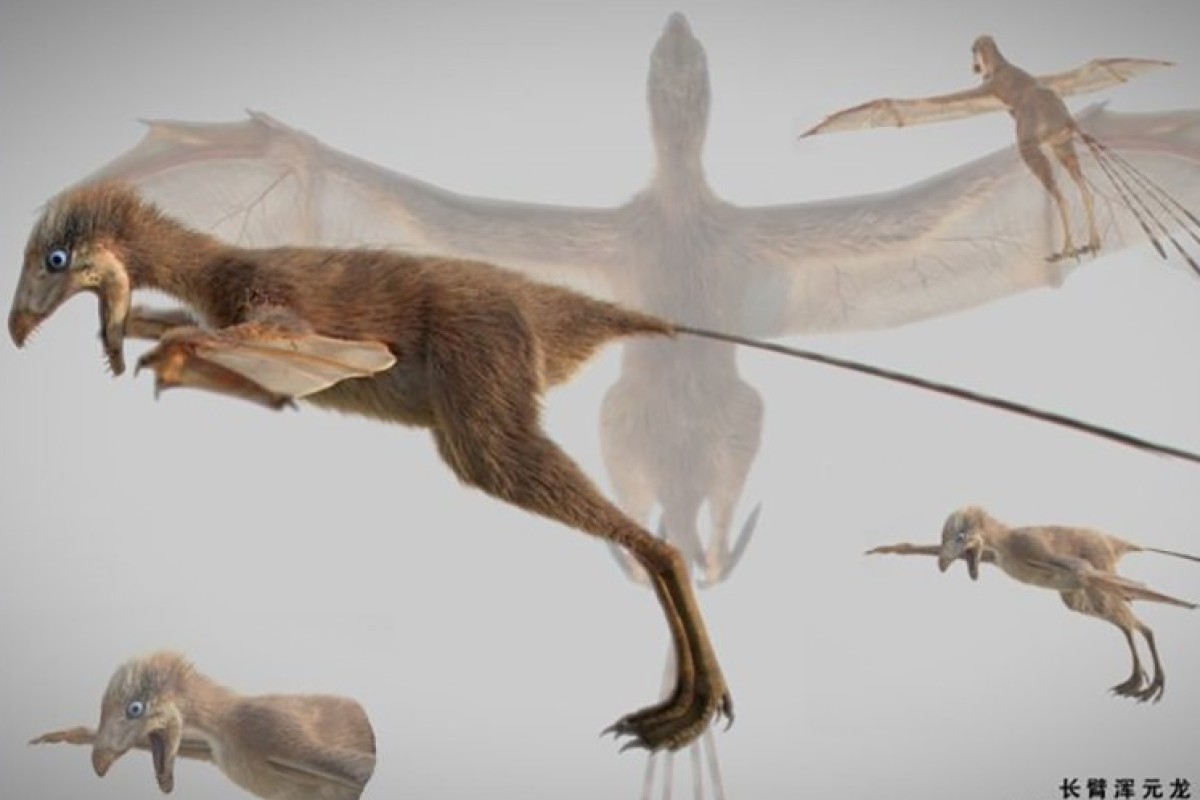
A small, tree-climbing dinosaur discovered in China has overturned evolutionary history with its cape-like membrane. Photo: Handout
Chinese scientists have discovered a new dinosaur species which appears to have been equipped – like Batman – with a cape that may have given it the ability to glide.

Researchers say the finding is extraordinary, representing something new in evolutionary history.

The little tree-climbing dinosaur – about the size of a magpie – was equipped with a soft, smooth membrane draped over its long, strong forearms that may have looked like the wings of a bat when spread.

The 163-million-year-old fossil has been named Ambopteryx longibrachium and was found at Wubaiding village, Liaoning province, northeast China, in 2017, according to a paper published in the journal Nature on Thursday.
The 163-million-year-old fossil found in eastern China showed long, strong forearms draped in a smooth cape-like membrane. Photo: Handout

Lead author Dr Wang Min, a researcher with the Chinese Academy of Sciences’ Institute of Vertebrate Palaeontology and Palaeoanthropology in Beijing, said quite a number of dinosaurs had birdlike feathers and some eventually evolved into birds.

“But bat-like wings? The idea has not been widely accepted,” he said.

The possibility was first raised a few years ago when a close relative of the newly discovered dinosaur was found, also in China, with a finger bone which had never before been seen in dinosaurs.

Scientists discover ‘nightmare’ crab with cartoon eyes
A small number of researchers suspected the bone could have been used to hold membrane, but the mainstream scientific community remained sceptical.

Why on earth, some critics argued, would a dinosaur need membrane when it already had feathers?

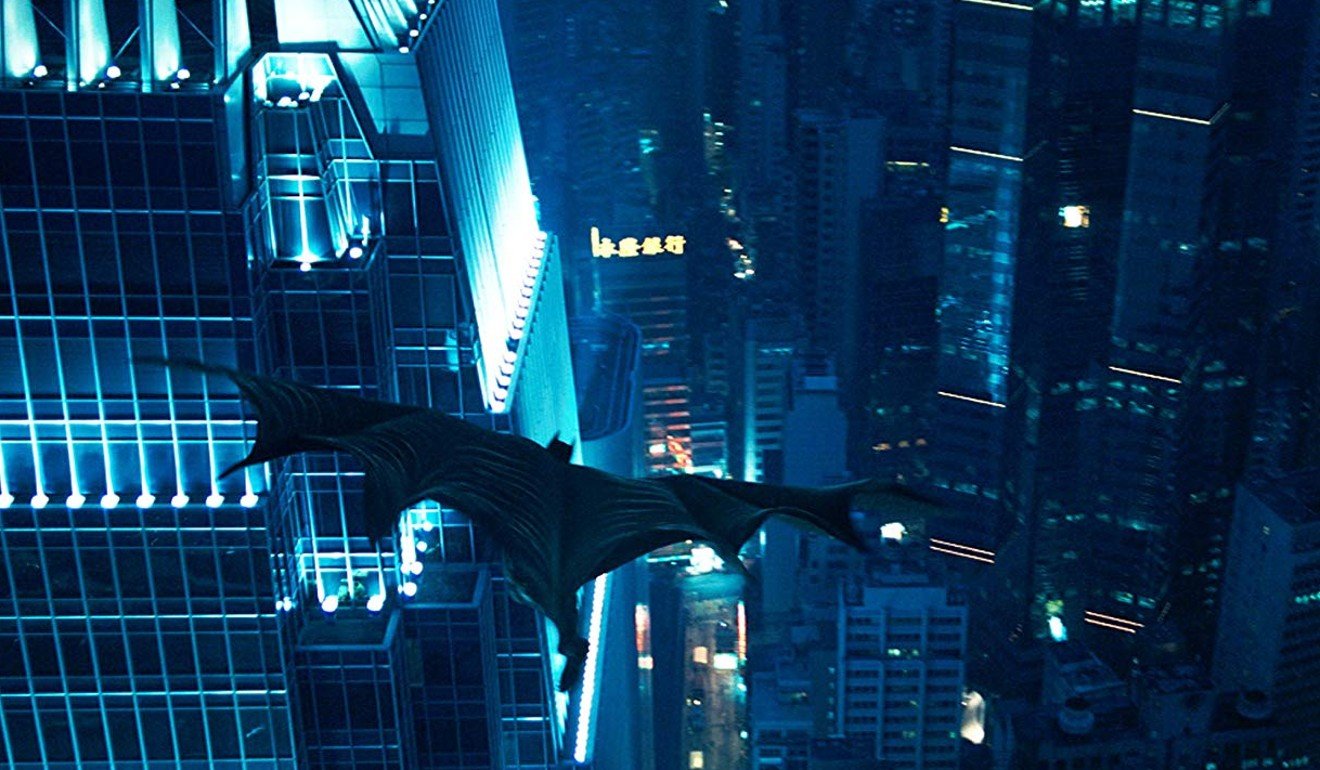
In the 2008 film “The Dark Knight”, Batman uses his cape to glide among the skyscrapers of Hong Kong. Researchers believe the new dinosaur may have used its cape-like membrane in a similar way. Photo: Handout

Ambopteryx longibrachium, nonetheless, had the same peculiar finger bone, only this time scientists were also able to observe a large membrane and a thick layer of hair over its head, neck and shoulders.

The hair and membrane was not an efficient combination for flight aerodynamics. But “in evolution, nothing is impossible”, Wang said.

The tiny T. rex cousin that humans could look down on

The dinosaur lived in thick forest and could have been easy prey to large predators. But its wings might have given it the ability to hop from tree to tree, and they could also have been useful when hunting.

The dinosaur had a slim body about the size of a magpie, with a soft, smooth membrane draped over its forearms like a cape. Photo: Handout

Wang and his colleagues found traces of small bones in the remnant of its stomach. While a tree-climbing dinosaur’s main diet should have been fruit, it could sometimes hunt as well, according to the researchers.

An absence of a large chest bone suggested the dinosaur could not fly at will, like a bird or bat. It remains unclear how long the species survived, but it eventually vanished, probably because of competition from better-equipped winged animals with all-feather or all-membrane wings.

Source: SCMP

06/06/2014

Stunning fossil eggs provide insight on ancient flying reptiles | Reuters

A spectacular fossil find in China – a prehistoric egg extravaganza from 120 million years ago – is providing unique insight into the lifestyle and gender differences of pterosaurs, the flying reptiles that lived alongside the dinosaurs.

An artist rendition depicts ecological reconstructions of Hamipterus, the flying reptiles that lived alongside the dinosaurs. REUTERS/Chuang Zhao/Handout via Reuters

Until now, only four pterosaur eggs had ever been found, and all were flattened during the process of fossilization.

But Chinese scientists said on Thursday they had unearthed five pterosaur eggs preserved beautifully in three dimensions at a site in northwestern China that also includes no fewer than 40 adult individuals of a newly identified species that lived in a bustling colony near a large freshwater lake.

“This is definitely the most important pterosaur site ever found,” said paleontologist Zhonghe Zhou, director of the Chinese Academy of SciencesInstitute of Vertebrate Paleontology and Paleoanthropology.

The creature, Hamipterus tianshanensis, had a crest atop its elongated skull, pointy teeth for catching fish and a wingspan of more than 11 feet (3.5 meters).

via Stunning fossil eggs provide insight on ancient flying reptiles | Reuters.

Enhanced by Zemanta
03/11/2013

Jurassic parks rise in east as China catches dinosaur fever | The Times

National pride, an epic drive for museum construction and an unprecedented number of holes in the ground mean that the global future of dinosaur hunting will be Chinese.

Chinese archeologist uncovering dinosaur fossils at a site in Zhucheng, known as “dinosaur city,” in northeast China’s Shandong province. Archaeologists in China have uncovered more than 3,000 dinosaur footprints, believed to be more than 100 million years old, state media reported on February 7, 2010, in an area said to be the world’s largest grouping of fossilised bones belonging to the ancient animals, after a three-month excavation at a gully in Zhucheng

The Chinese enthusiasm for palaeontology and regional one-upmanship, played out with 150 million year-old skeletons, could have a dramatic effect on the dinosaur names learnt and loved by children around the world.

China’s rich subterranean reserves of dinosaur fossils have already produced the Tsintaosaurus and Shantungosaurus, named decades ago after the places in which they were found. More recent additions include the Zhuchengtyrannus (from Zhucheng) and the Huanghetitan liujiaxiagensis, the latter named after a reservoir.

In many cases, discoveries of new species in China have prompted a fundamental rethink about dinosaur biology, their evolution and the way they were dispersed around the world. Discoveries in eastern China of thousands of fossilised eggs and embryos brought new theories about how dinosaurs grew; the world’s largest “graveyard” of dinosaurs in Shandong province offered the intriguing insight that dinosaurs of different species shared nests.

With Chinese funding increasingly available to domestic and international teams, the next two decades could see the familiar pantheon of Tyrannosaurus rex, Diplodocus and Triceratops joined by herds of newly discovered species named in honour of obscure corners of China where local governments are eagerly financing dinosaur digs. Only last month, a study in Shanxi province near the Yungang grottoes announced the discovery of a new hadrosaurid dinosaur from the late Cretaceous period: Yunganglong datongensis. It was greeted with huge excitement, because it could throw light on how a whole class of dinosaurs, the Hadrosauridae, evolved. New Chinese names have an element of whimsy: in April this year, international researchers agreed that a fossil found in the remote western Xinjiang region in 2006 was a 161 million year-old meat-eating theropod. It was named Auron Zhaoi after the dragon king in China’s most famous folk tale.

Although it has been clear for nearly a century that China is fabulously blessed with fossils, domestic interest has historically been limited, said Xu Xing, the senior professor at the Institute of Vertebrate Paleontology and Paleoanthropology in Beijing. However, the past decade has seen a surge of interest that has corresponded with China’s protracted economic boom.

“When I started, there was just one person applying to study palaeontology — me. Now this institute alone has intakes of 20 students a year and there are new institutes opening around the country,” Professor Xu said. Local governments from Inner Mongolia to Hunan were competing to build museums around dinosaurs found on their patches and financing digs that might make a name for them, he added. Huang Dong, curator of the new £10 million Heyuan Dinosaur Museum in Guangdong province, said that it receives around 120,000 visitors a year. A further £40 million of investment in a dinosaur park is planned.

via Jurassic parks rise in east as China catches dinosaur fever | The Times.

Law of Unintended Consequences

continuously updated blog about China & India

ChiaHou's Book Reviews

continuously updated blog about China & India

What's wrong with the world; and its economy

continuously updated blog about China & India