Chindia Alert: You’ll be Living in their World Very Soon
aims to alert you to the threats and opportunities that China and India present. China and India require serious attention; case of ‘hidden dragon and crouching tiger’.
Without this attention, governments, businesses and, indeed, individuals may find themselves at a great disadvantage sooner rather than later.
The POSTs (front webpages) are mainly 'cuttings' from reliable sources, updated continuously.
The PAGEs (see Tabs, above) attempt to make the information more meaningful by putting some structure to the information we have researched and assembled since 2006.
163-million-year-old fossil represents something new in evolutionary history
Researchers say discovery is extraordinary
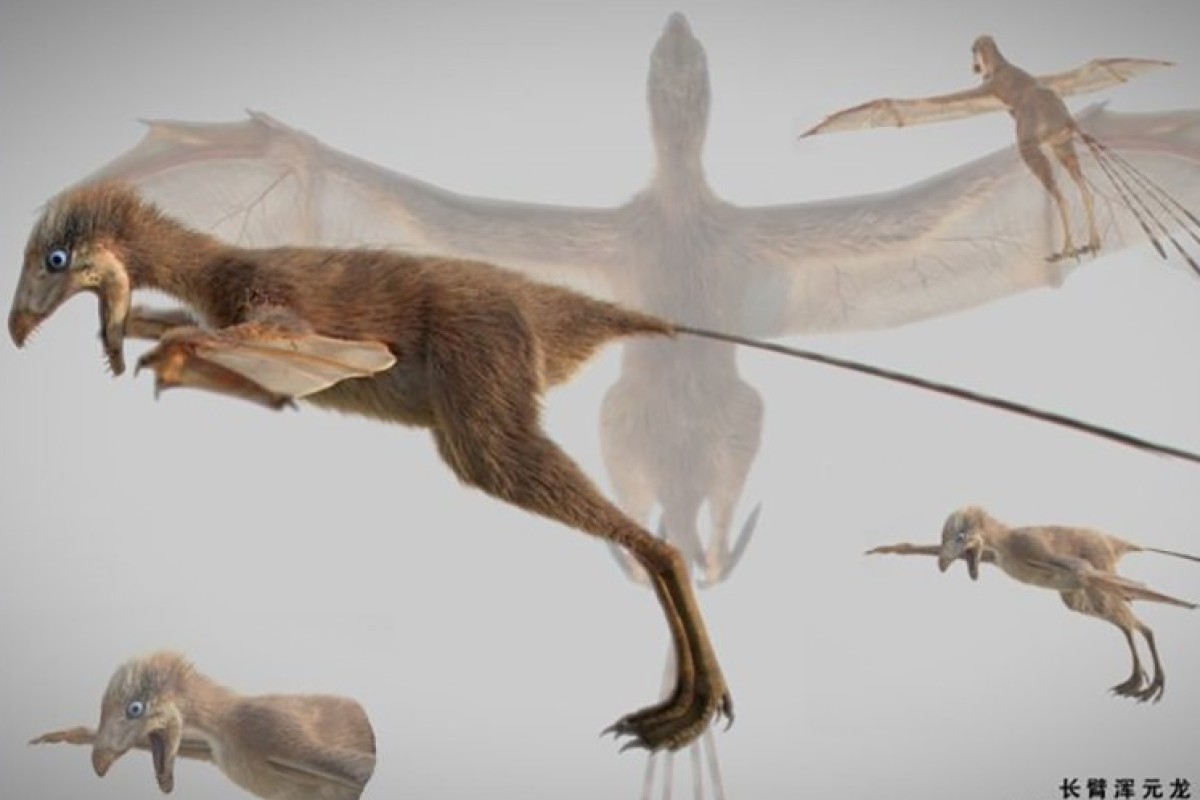
A small, tree-climbing dinosaur discovered in China has overturned evolutionary history with its cape-like membrane. Photo: Handout
Chinese scientists have discovered a new dinosaur species which appears to have been equipped – like Batman – with a cape that may have given it the ability to glide.
Researchers say the finding is extraordinary, representing something new in evolutionary history.
The little tree-climbing dinosaur – about the size of a magpie – was equipped with a soft, smooth membrane draped over its long, strong forearms that may have looked like the wings of a bat when spread.
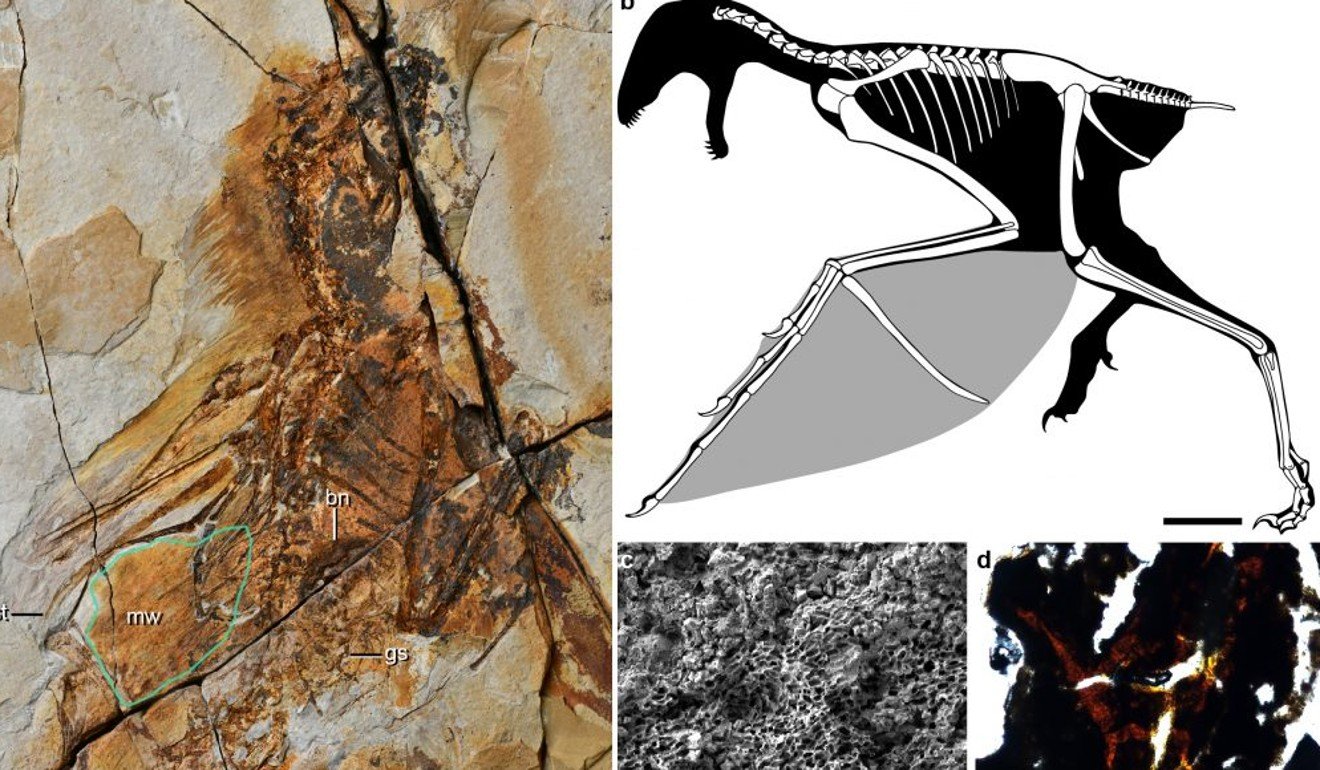
The 163-million-year-old fossil has been named Ambopteryx longibrachium and was found at Wubaiding village, Liaoning province, northeast China, in 2017, according to a paper published in the journal Nature on Thursday.
The 163-million-year-old fossil found in eastern China showed long, strong forearms draped in a smooth cape-like membrane. Photo: Handout
Lead author Dr Wang Min, a researcher with the Chinese Academy of Sciences’ Institute of Vertebrate Palaeontology and Palaeoanthropology in Beijing, said quite a number of dinosaurs had birdlike feathers and some eventually evolved into birds.
“But bat-like wings? The idea has not been widely accepted,” he said.
The possibility was first raised a few years ago when a close relative of the newly discovered dinosaur was found, also in China, with a finger bone which had never before been seen in dinosaurs.
Scientists discover ‘nightmare’ crab with cartoon eyes
A small number of researchers suspected the bone could have been used to hold membrane, but the mainstream scientific community remained sceptical.
Why on earth, some critics argued, would a dinosaur need membrane when it already had feathers?
In the 2008 film “The Dark Knight”, Batman uses his cape to glide among the skyscrapers of Hong Kong. Researchers believe the new dinosaur may have used its cape-like membrane in a similar way. Photo: Handout
Ambopteryx longibrachium, nonetheless, had the same peculiar finger bone, only this time scientists were also able to observe a large membrane and a thick layer of hair over its head, neck and shoulders.
The hair and membrane was not an efficient combination for flight aerodynamics. But “in evolution, nothing is impossible”, Wang said.
The tiny T. rex cousin that humans could look down on
The dinosaur lived in thick forest and could have been easy prey to large predators. But its wings might have given it the ability to hop from tree to tree, and they could also have been useful when hunting.
The dinosaur had a slim body about the size of a magpie, with a soft, smooth membrane draped over its forearms like a cape. Photo: Handout
Wang and his colleagues found traces of small bones in the remnant of its stomach. While a tree-climbing dinosaur’s main diet should have been fruit, it could sometimes hunt as well, according to the researchers.
An absence of a large chest bone suggested the dinosaur could not fly at will, like a bird or bat. It remains unclear how long the species survived, but it eventually vanished, probably because of competition from better-equipped winged animals with all-feather or all-membrane wings.
“I believe my father would have been thrilled to know this,” Li’s dad Lee Hsien Yang said
Sex between men remains illegal in Singapore but the city state’s first PM had been known to express a different opinion from the government in his later years
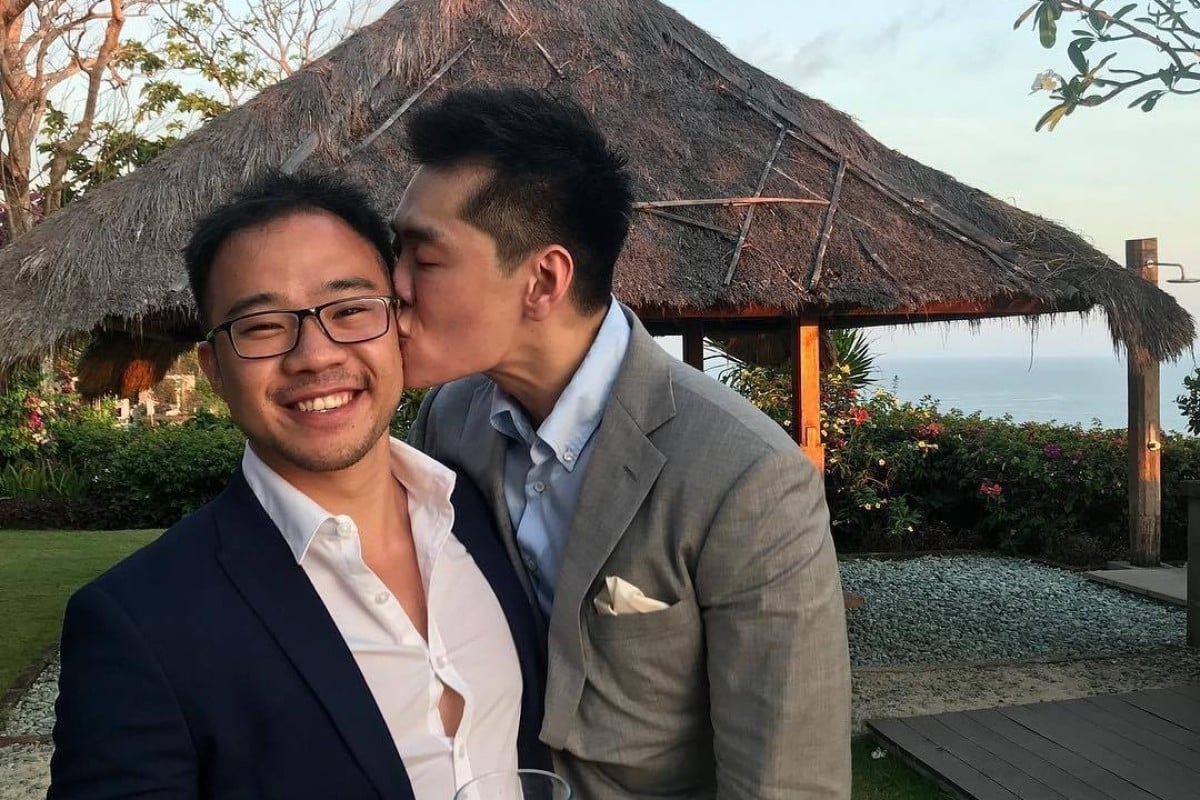
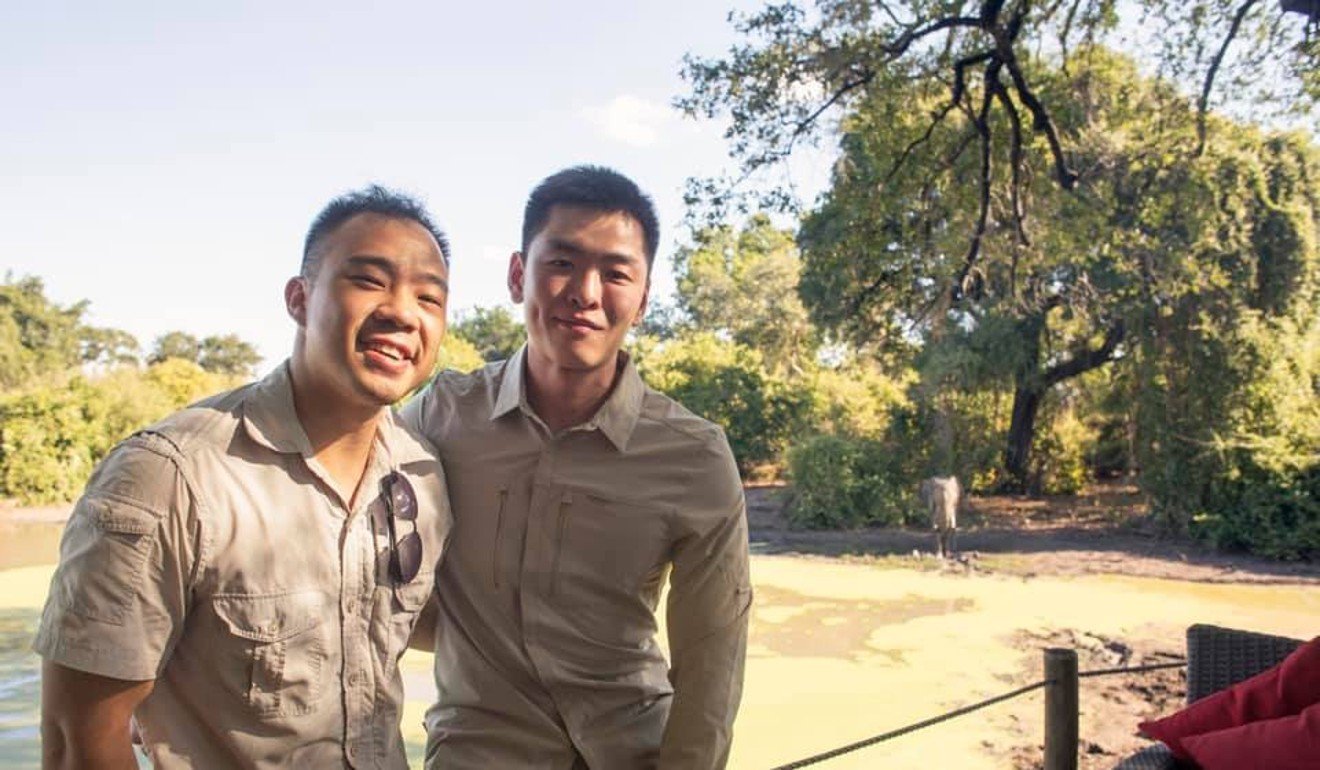
Li Huanwu (R) with his boyfriend Heng Yirui. Photo: Facebook
revealed on Friday he had married his boyfriend in South Africa, prompting a flurry of mostly positive reactions in his country, where male homosexuality is banned, and around the region.
Li Huanwu, the second son of Lee Hsien Yang, was seen with his partner Heng Yirui in an Instagram post the latter shared online on Friday with a caption that read: “Today I marry my soulmate. Looking forward to a lifetime of moments like this with [Huanwu].”
The picture showed both in matching white shirts and khaki trousers at a game reserve in Cape Town.
“I’ll echo my comment I made to Pink Dot – today would have been unimaginable to us growing up. We are overjoyed to share this occasion in the glowing company of friends and family,” Li told the South China Morning Post.
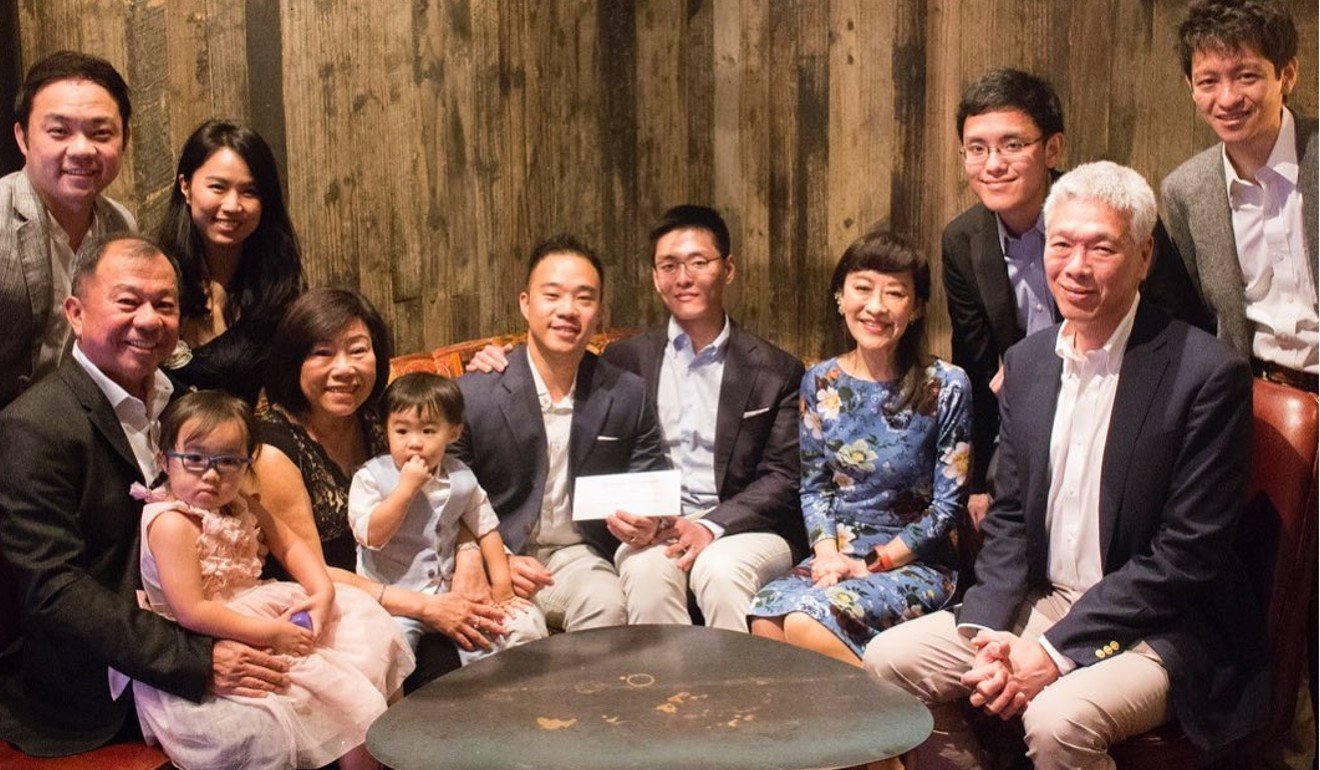
The happy couple with their families. Photo: Facebook
Li’s father, Lee Hsien Yang, is himself the second and youngest son of the elder Lee, who died in March 2015.
Asked about his son’s nuptials, Lee told the Post : “I believe my father would have been thrilled to know this.”
under Section 377A of the Penal Code but Lee Kuan Yew, who was Prime Minister for 31 years until 1990, had been known to express a different opinion from the government in his later years.
Li’s wedding was held in South Africa, where same-sex marriages were legalised in 2006. It also came amid celebrations lauding
, including Mothership.sg and The Independent, were quick to pick up on the announcement while mainstream media outlets steered clear of reporting it.
Mothership’s Facebook post by Saturday had attracted 1,700 likes and 400 comments, mostly positive and congratulating the pair. One user, Donna Lim, commented: “Congrats! Love has no boundaries.”
In mainland China, multiple posts of Li’s wedding surfaced on social media app WeChat, which have garnered hundreds of likes and comments as of Saturday afternoon.
A few reacted with disdain but many of the Chinese commentators also congratulated the couple, with some hoping that Li would front the fight for gay rights in Singapore.
Why some members of Singapore’s LGBT community prefer life in the shadows
“…Homosexuality is illegal in Singapore, and now, Lee Kuan Yew’s grandson is taking the lead,” said a netizen with the username Tired and Humorous.
Another netizen added: “Gay love is still love, homophobia is a disease.”
Comments on the WeChat posts also noted how the lesbian, gay, bisexual and transgender (
) community in Singapore were subject to a law that criminalises sex between gay men.
“It turns out that Singapore is so traditional, it can lead to a conviction,” said one user named Facecover.
The Drum Tower, another user, added: “Singapore’s anti-same sex law was set by the British colony, but now the UK has legalised same-sex marriage.”
Li Huanwu had gone public about his partner more than a year before the wedding. In 2018, he and Heng appeared in a lesbian, gay, bisexual and transgender campaign titled Out in Singapore. Both had also attended
, an annual celebration to support the LGBT community in Singapore that year.
‘Worse than the Kardashians’: family feud turns ugly as siblings target PM’s wife
Li Huanwu’s father, Hsien Yang and his sister Lee Wei Ling are estranged from their eldest brother and current Singapore Prime Minister Lee Hsien Loong because of a dispute over their father’s wishes to have their
In his book Hard Truths to Keep Singapore Going published in 2011, the elder Lee, who retired from government that same year, said that homosexuality was “not a lifestyle”.
Li Huanwu (R) and Heng Yirui. Photo: Facebook
“You can read the books you want, all the articles. You know that there’s a genetic difference,” Lee said.
“They are born that way and that’s that. So if two men or two women are that way, just leave them alone.”
Earlier, in a book The Wit & Wisdom of Lee Kuan Yew, published in 2007, Lee was quoted as saying: “If in fact it is true, and I have asked doctors this, that you are genetically born a homosexual – because that’s the nature of the genetic random transmission of genes – you can’t help it. So why should we criminalise it?”
SHENZHEN, May 25 (Xinhua) — A southern Chinese trade hub boasting special links with Hong Kong is hoping the enhanced efforts to build the g will revitalize its tourism industry and local economy.
Chung Ying Street, or “Sino-British Street,” straddles the Hong Kong Special Administrative Region and the mainland city of Shenzhen and has been a special zone where local residents from both sides are allowed to cross the border freely.
It was once a boomtown popular among mainland visitors, who entered with a special permit to snatch duty-free goods from Hong Kong, but fell into decline after travel to Hong Kong was made easier for mainlanders.
The street derived from a small village, which was divided by the “Sino-British” borderline after Hong Kong became a British colony in the 19th century.
Sha Jintao, a 73-year-old resident, remembers how the street became a boomtown as China opened up and tightened links between the mainland and Hong Kong.
“When I was a child, there were only a few farmers and fishermen living on the mainland side of the street, while the Hong Kong side bustled with shops and businesses,” Sha said.
But as Shenzhen rose as a forefront of China’s reform and opening up starting in the late 1970s, the street became the center of changes. New shops and factories propped up with the inflow of Hong Kong investments, and the fancy commodities from its Hong Kong stores wooed in large numbers of mainland tourists.
Historical records show the number of tourists flocking into the 250-meter-long street peaked at 100,000 a day in the 1980s. As many as 89 jewelry stores opened in its heyday and sold 5 tonnes of gold jewelry in half a year.
SURVIVAL CRISIS
The heyday was however short-lived. After Hong Kong returned to the motherland in 1997, the street began to lose its appeal, as shopping in Hong Kong was made much easier for mainland tourists. Its daily visitors dropped below 10,000 after 2003, when mainlanders were allowed to independently travel to Hong Kong.
Many stores closed due to a loss of customers, and some survived by selling fake jewelry, winning the street much notoriety, recalled Sha, who then headed the local neighborhood committee.
Sha said the ephemeral boom was limited to the era when most Chinese had limited access to the outside world, so as the country opened its door wider, the street’s function as a “window” faced an inevitable doom.
“Now with a smartphone, a consumer could easily buy goods from across the globe,” he said, referring to China’s cross-border e-commerce boom. “So if is just for the purpose of shopping, why take the trouble of traveling to the Chung Ying Street?”
The street is now more of a cultural site, dotted with relics and museums displaying its history, but locals are hopeful that the ongoing construction of the Guangdong-Hong Kong-Macao Greater Bay Area will usher in another golden era for their neighborhood.
China has planned to turn the greater bay area, which encompasses Hong Kong, Macao and nine cities in Guangdong Province, into the world’s largest bay area in terms of GDP by 2030.
Earlier this month, the city government of Shenzhen said it will upgrade its ports with Hong Kong to boost the greater bay area development. The Shatoujiao Subdistrict, where the Chung Ying Street is located, was reserved for a new cooperation zone featuring tourism and consumption.
Optimism is running high in the community. New industries like artificial intelligence (AI), health and high-end shipping service have taken root in Yantian District, which administers Shatoujiao, and Sha is buzzing around to connect business people from Hong Kong and Shenzhen.
“Shatoujiao and its Chung Ying Street have boasted the one-of-the-kind advantage in Shenzhen-Hong Kong cooperation. We’ll work hard to turn the blueprint of the greater bay area into a reality here,” said Chen Qing, party secretary of Yantian.
Self-ruled island cannot match Beijing’s spending, but innovation can help it succeed in a one-sided military conflict, observers say
First of Tuo Jiang-class stealth warships expected to be ready by 2021
Taiwan began mass production of its Tuo Jiang-class missile corvettes on Friday.
Taiwan has begun mass production of its home-grown Tuo Jiang-class missile corvettes and high-speed minelayers as it seeks to shore up its naval forces amid rising hostility from Beijing.
Dubbed the “aircraft carrier killer”, the small but powerful corvette, which has a displacement of 680 tonnes and a top speed of 45 knots, is a state-of-the-art stealth warship built by Lung Teh Shipbuilding.
A total of three corvettes will be built under the NT$31.6 billion (US$1 billion) Hsun Hai project, the self-ruled island’s navy said.
The warship is equipped with one of the world’s most technologically advanced computer systems and built partly with high-entropy metal alloys for extra strength and durability, it said. Its stealth technology and low radar cross section makes the ship virtually invisible at sea and even more obscure when operating close to the coastline.
Armed with eight subsonic Hsiung Feng II and eight supersonic Hisung Feng III anti-ship missile launchers, the corvettes are intended to take over many of the missions currently undertaken by larger, less manoeuvrable and more expensive frigates and destroyers, the navy said.
In the event of an actual armed conflict with Beijing, the warships would also boost Taiwan’s ability to counter a much larger and better equipped rival, a concept known as asymmetric warfare.
Taiwan simulates repelling invasion as Beijing threat persists
In a ceremony on Friday at Lung Teh’s shipyard in Suao, Yilan county, to mark the start of mass production, Taiwanese President Tsai Ing-wen said the move was made possible after the navy succeeded in overcoming a number of design and technological issues regarding the warship, an earlier version of which she boarded soon after becoming the island’s leader in 2016.
Together with the construction of the high-speed minelayers, also by Lung Teh, and a home-grown submarine at a separate shipyard in Kaohsiung, Tsai said Taiwan was entering a “new era” of naval strength that would give it the ability to thwart any attempts by the People’s Liberation Army to invade its territory.
“This proves we are able to build our own warships and launch a new era of the naval force,” she said.
Construction of the Tuo Jiang-class corvettes was under way, with the first expected to be ready for delivery to the navy in 2021 and the last by 2025, Tsai said.
The first batch of four minelayers would also be ready by 2021, she said.
Taiwan has sought to counter the rising threat from mainland China by developing more of its own military hardware in recent years. Beijing’s military budget for 2019 is 1.2 trillion yuan, or about 16 times as much as Taiwan’s.
Beijing considers Taiwan a wayward province awaiting reunification, by force if necessary, and suspended all official exchanges with it after Tsai, from the independence-leaning Democratic Progressive Party, was elected president and refused to accept the one-China principle.
Experts doubt China’s ability to launch assault on Taiwan
Over the past three years Tsai has prioritised Taiwan’s military expansion, ordering the Chungshan Institute of Science and Technology – the island’s top weapon research and development agency – to speed up production of weapons like the surface-to-air Skybow-III and supersonic anti-ship Hsiung Feng-III missiles.
Taiwan is also expected next year to begin mass production of its CM-34 Clouded Leopard eight-wheeled armoured vehicles and has set a target to manufacture 284 of them by 2023.
Four prototypes of the vehicles, which passed pre-production tests in October, are expected to take part in the island’s annual Han Kuang war games next week.
Chieh Chung, a national security research fellow at the National Policy Foundation in Taipei, said that because of the huge discrepancies in their military budgets Taiwan could not engage in an arms race with the mainland so had to be more innovative.
“Taiwan has to develop an asymmetric defence strategy,” he said. “Take the Tou Jiang corvettes, for example. Because of their high speed, stealth function, small size and powerful weaponry, they can be deployed anywhere near Taiwan’s coast and called into action very quickly to fend off enemy vessels,” he said.
“The same applies to the high-speed minelayers, which can drop mines very quickly and make it very hard for enemy ships to attack the coast,” he said.
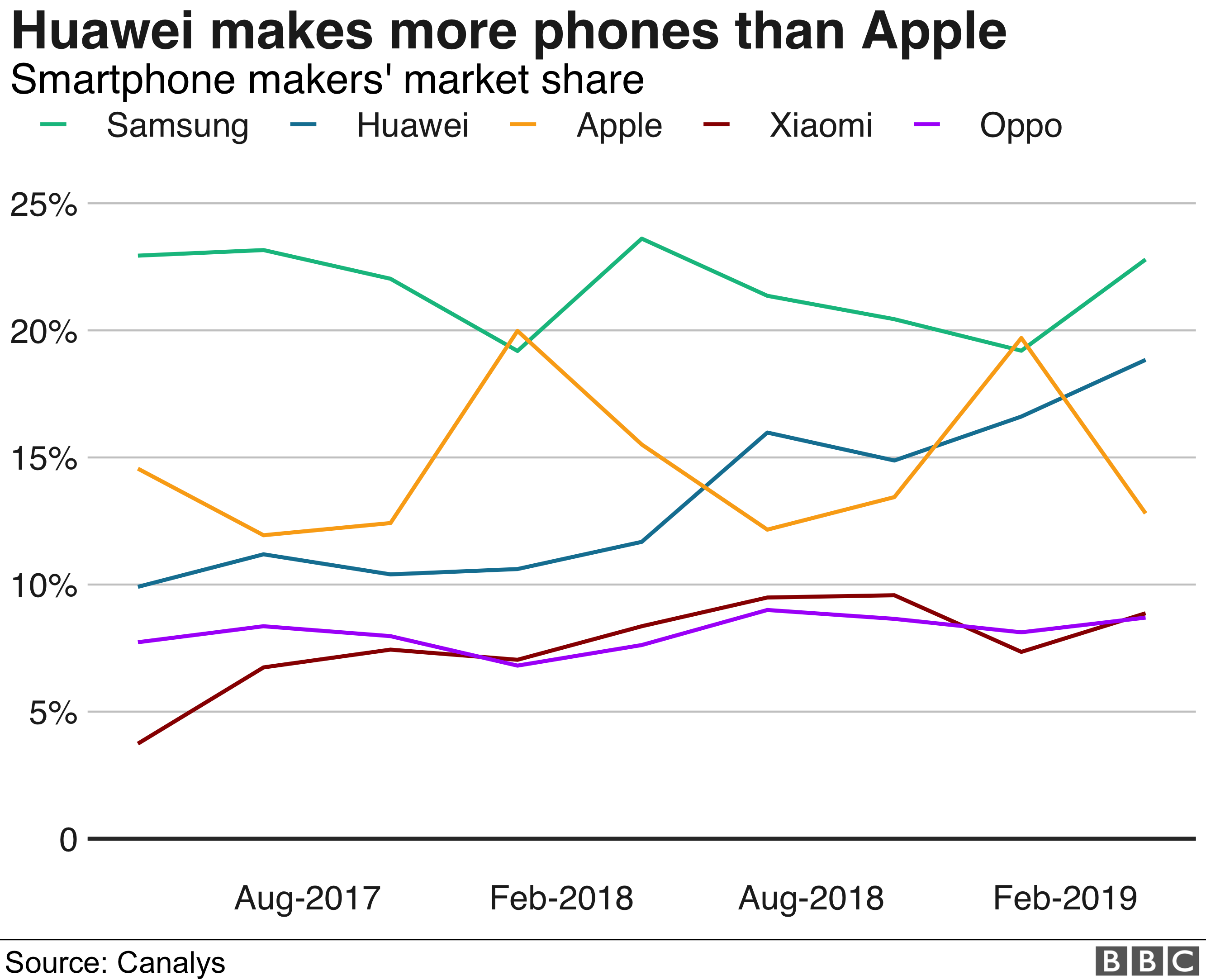
Google has barred the world’s second biggest smartphone maker, Huawei, from some updates to the Android operating system, dealing a blow to the Chinese company.
New designs of Huawei smartphones are set to lose access to some Google apps.
The move comes after the Trump administration added Huawei to a list of companies that American firms cannot trade with unless they have a licence.
Google said it was “complying with the order and reviewing the implications”.
Huawei said it would continue to provide security updates and after sales services to all existing Huawei and Honor smartphone and tablet products covering those have been sold or still in stock globally.
“We will continue to build a safe and sustainable software ecosystem, in order to provide the best experience for all users globally,” it added.
What does this mean for Huawei users?
Existing Huawei smartphone users will be able to update apps and push through security fixes, as well as update Google Play services.
But when Google launches the next version of Android later this year, it may not be available on Huawei devices.
Future Huawei devices may no longer have apps such as YouTube and Maps.
Huawei can still use the version of the Android operating system available through an open source licence.
Ben Wood, from the CCS Insight consultancy, said the move by Google would have “big implications for Huawei’s consumer business”.
What can Huawei do about this?
Last Wednesday, the Trump administration added Huawei to its “entity list“, which bans the company from acquiring technology from US firms without government approval.
In his first comments since the firm was placed on the list, Huawei chief executive Ren Zhengfei told Japanese media on Saturday: “We have already been preparing for this.”
He said the firm, which buys about $67bn (£52.6bn) worth of components each year according to the Nikkei business newspaper, would push ahead with developing its own parts.
Huawei faces a growing backlash from Western countries, led by the US, over possible risks posed by using its products in next-generation 5G mobile networks.
Several countries have raised concerns that Huawei equipment could be used by China for surveillance, allegations the company has vehemently denied.
Huawei has said its work does not pose any threats and that it is independent from the Chinese government.
However, some countries have blocked telecoms companies from using Huawei products in 5G mobile networks.
So far the UK has held back from any formal ban.
“Huawei has been working hard on developing its own App Gallery and other software assets in a similar manner to its work on chipset solutions. There is little doubt these efforts are part of its desire to control its own destiny,” said Mr Wood.
Media caption We explain the controversy around Huawei’s 5G tech – using castles
Short-term damage for Huawei?
By Leo Kelion, BBC Technology desk editor
In the short term, this could be very damaging for Huawei in the West.
Smartphone shoppers would not want an Android phone that lacked access to Google’s Play Store, its virtual assistant or security updates, assuming these are among the services that would be pulled.
In the longer term, though, this might give smartphone vendors in general a reason to seriously consider the need for a viable alternative to Google’s operating system, particularly at a time that the search giant is trying to push its own Pixel brand at their expense.
As far as Huawei is concerned, it appears to have prepared for the eventuality of being cut off from American know-how.
Its smartphones are already powered by its own proprietary processors, and earlier this year its consumer devices chief told German newspaper Die Welt that “we have prepared our own operating systems – that’s our plan B”.
Even so, this move could knock its ambition to overtake Samsung and become the bestselling smartphone brand in 2020 seriously off course.
What about the US-China trade war?
The latest move against Huawei marks an escalation in tensions between the firm and the US.
It comes as trade tensions between the US and China also appear to be rising.
The world’s two largest economies have been locked in a bruising trade battle for the past year that has seen tariffs imposed on billions of dollars worth of one another’s goods.
Earlier this month, Washington more than doubled tariffs on $200bn of Chinese goods, prompting Beijing to retaliate with its own tariff hikes on US products.
The move surprised some – and rattled global markets – as the situation had seemed to be nearing a conclusion.
The US-China trade war has weighed on the global economy over the past year and created uncertainty for businesses and consumers.
BEIJING, May 5 (Xinhua) — The Chinese mainland’s Taiwan affairs chief on Sunday called on youths on both sides of the Taiwan Strait to jointly shoulder the historic mission of national rejuvenation and contribute to cross-Strait integrated development.
Liu Jieyi, head of the Taiwan Work Office of the Communist Party of China Central Committee and the Taiwan Affairs Office of the State Council, made the remarks at the opening ceremony of a summit on cross-Strait exchange and cooperation among the youths.
Young people on the two sides of the Strait should value this great time, be responsible and do their share in safeguarding and building the common home of compatriots on the two sides of the Strait, Liu said.
“Attempts by the ‘Taiwan independence’ forces to undermine cross-Strait peace and obstruct national development will never be allowed,” he said.
He also pledged to provide better conditions for youths from Taiwan to carry out exchanges, study, work and start businesses on the mainland.
As Saturday marks the centenary of the May Fourth Movement, Liu called on the youths on both sides of the Strait to pass on the May Fourth spirit, which refers to patriotism, progress, democracy and science, with patriotism at the core.
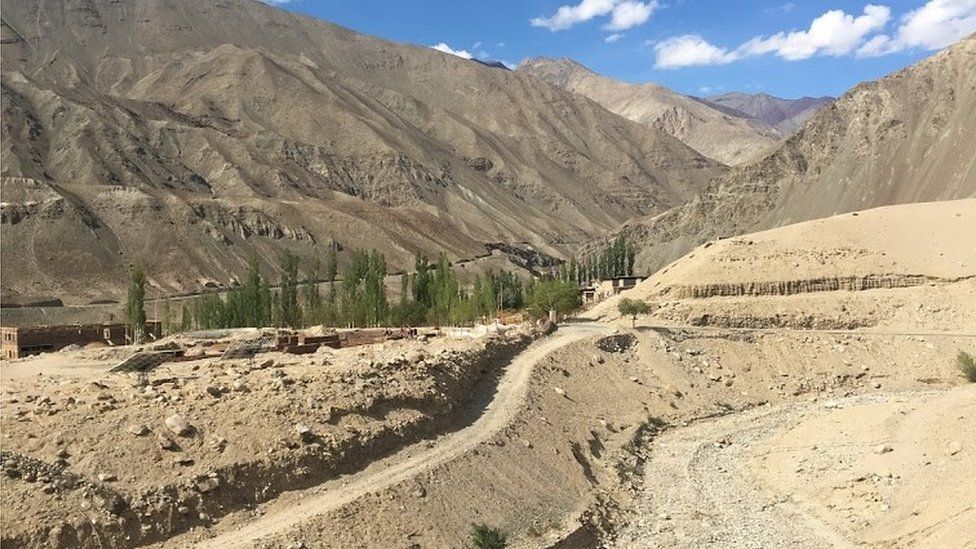
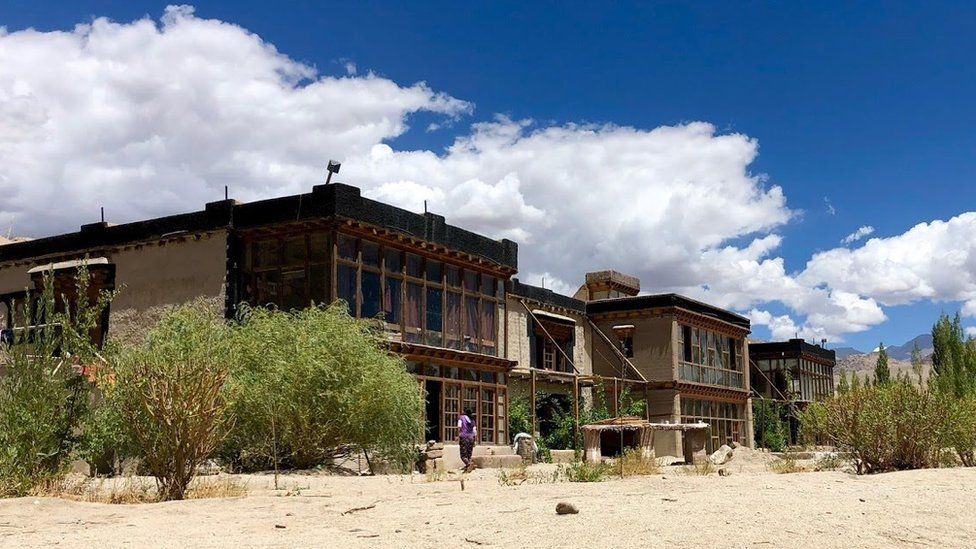
Image captionThe school’s surrounding mountainous landscape is almost devoid of vegetation as it is above the tree line
Secmol is a school pioneering practical green education in one of the world’s harshest environments.
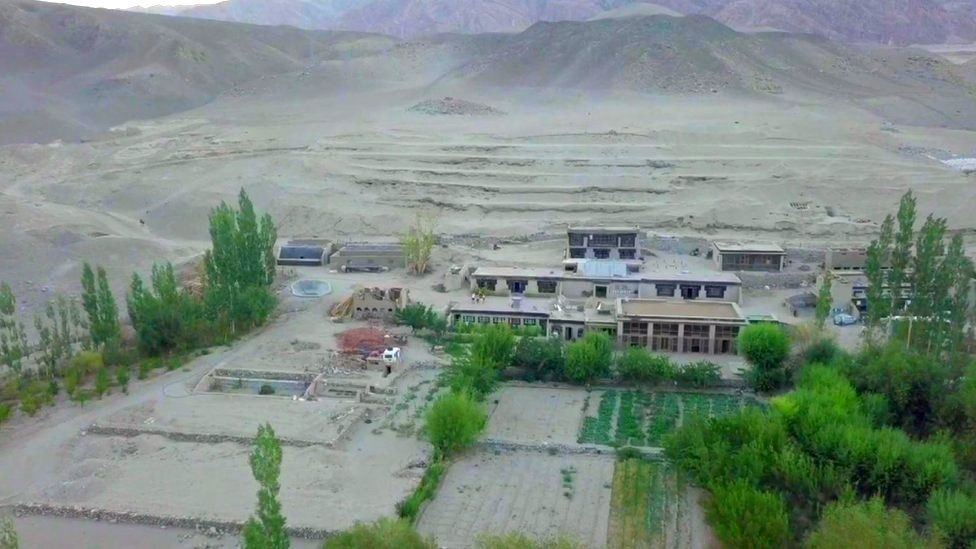
Its campus is perched nearly 11,000ft (3,350m) up in the pre-Himalayan mountains along the Indus River in Ladakh, in the Indian state of Jammu and Kashmir.
The teenage pupils at Secmol (Students’ Educational and Cultural Movement of Ladakh) lack wi-fi and almost all phone coverage, in an area only accessible by air during the long harsh winter when deep snow renders roads out of the province impassable.
The surrounding mountainous landscape is almost devoid of vegetation as it is above the tree line.
Image copyrightSUMEDH CHAPHEKAR
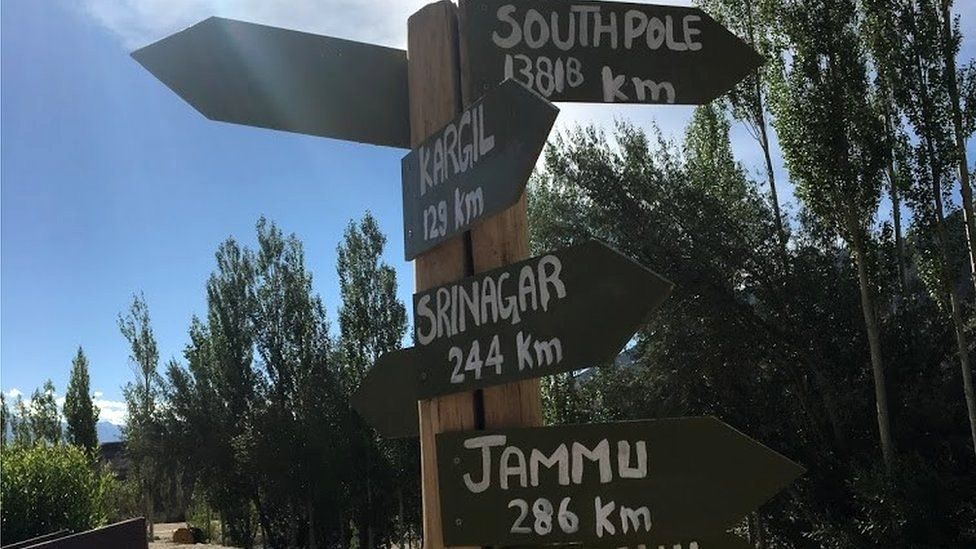
The school even sets its own time zone to maximise sunlight, which also reminds every student and visitor that when they pass the gates they are entering a different world.
Pupils are all from the regular Ladakhi school system and only those who have failed their year 10 exams are permitted to attend. There are also a number of university students who form a core part of the community along with the teachers.
School director Konchok Norgay explained to the BBC that the students learn about the environment for an hour or two each day.
In a typical maths lesson, they may calculate if the water from the spring is enough for tree planting, or work out the efficiency of the solar cooker that they use for heating water.
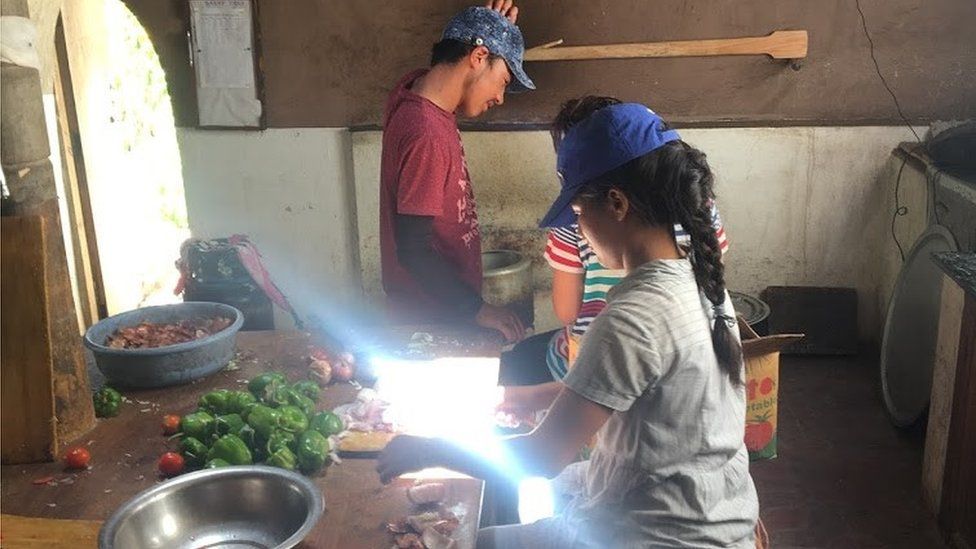
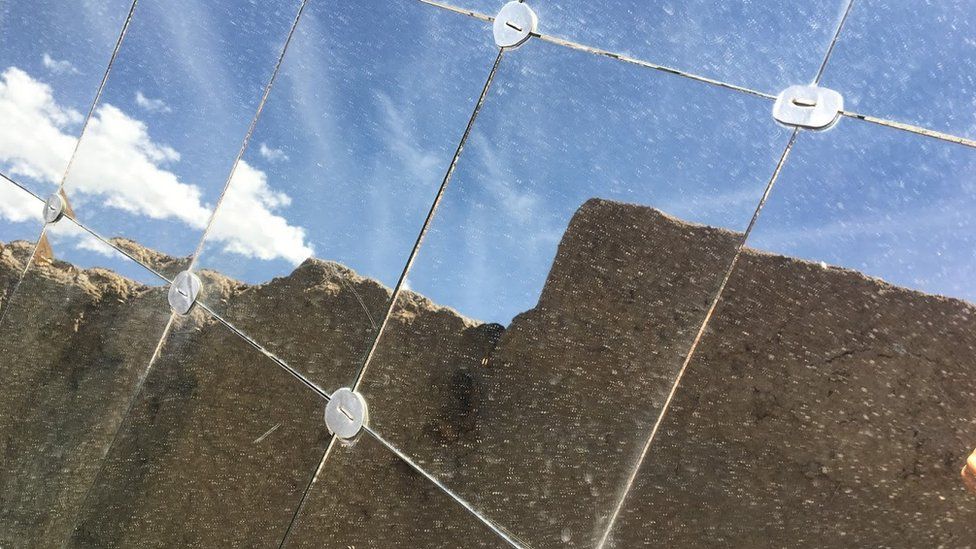
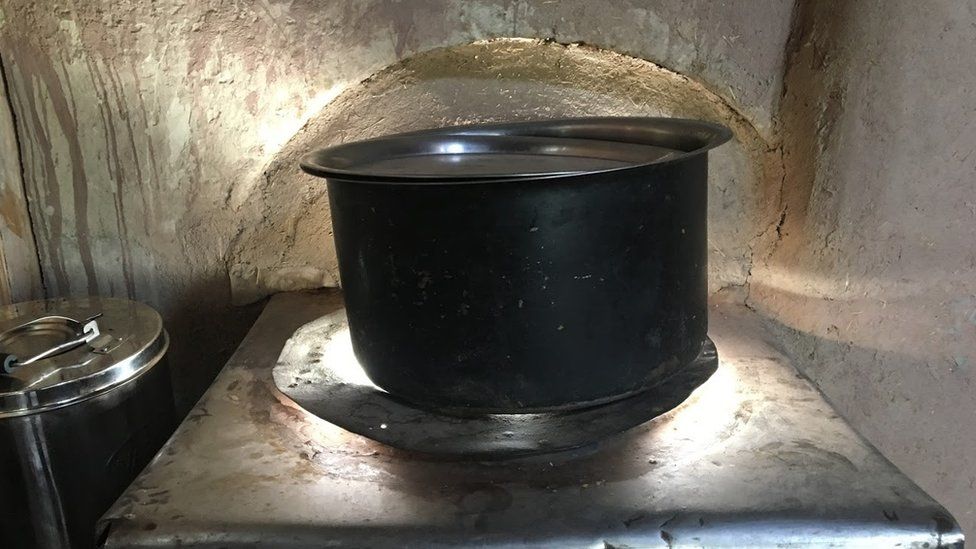
The solar cooker looks impressive, with mirrors crafted to catch the harsh sunlight, focusing their power to create intense heat.
But it is currently only used to boil water for tea.
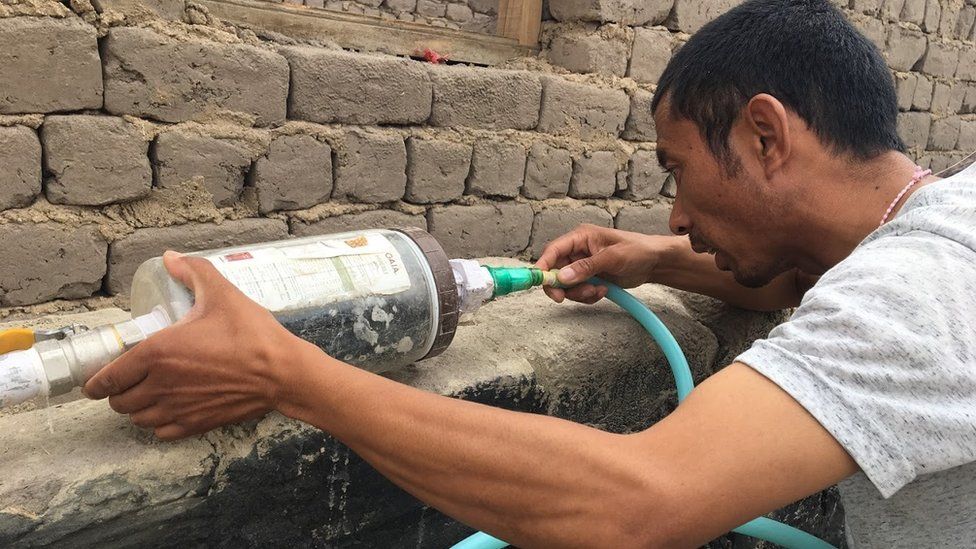
Norgay proudly showed off his experimental biogas methane digester, which is powered by slurry.
Dung is mixed with water and then placed in a long tube and left for several days.
The gas rises to the top, and is filtered through steel wool to ensure the gas does not corrode the oven, before reaching a plastic inflatable reserve tank.
“It’s fantastic as not only do you use less commercial gas, but you use natural materials instead,” student Stanzin Sungrab says. “And we can use the slurry waste as fertiliser in the kitchen garden.”
Each student must perform daily responsibility shifts and develop their confidence with nightly presentations to the rest of the school and visitors.
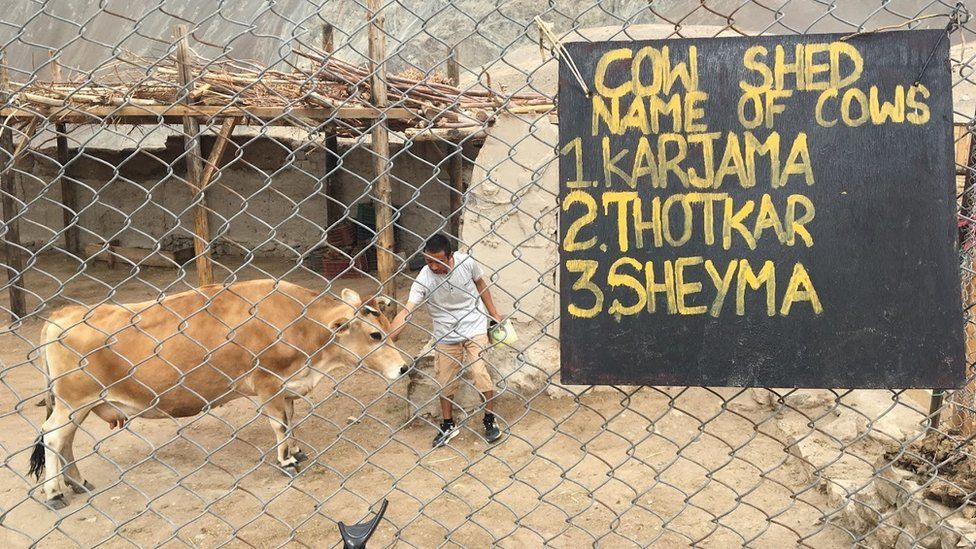
Stanzin has spent many hours developing relationships with Karjama, Thotkar and Sheyma, the campus cows.
When students are not on the 04:00 breakfast preparation shift, the day starts at 07:00 with a seven-minute group meditation.
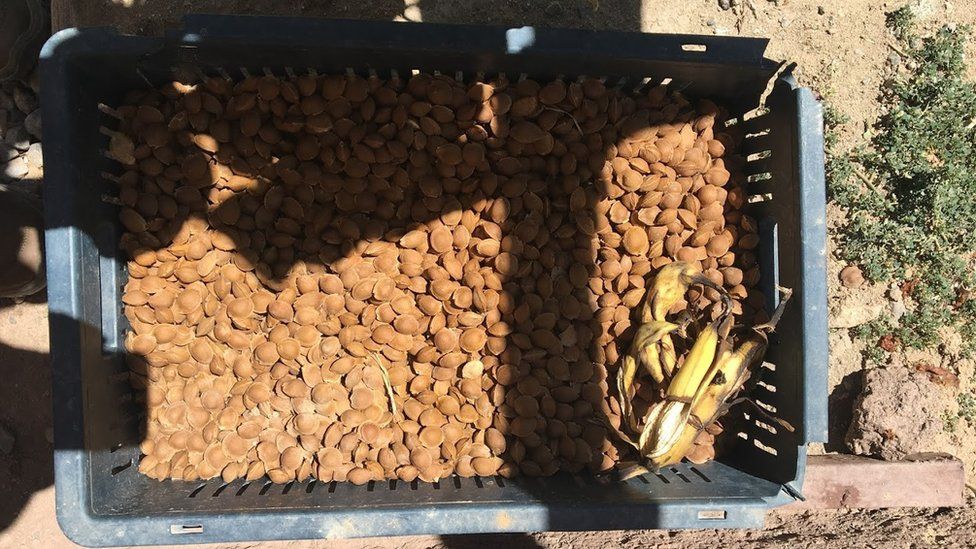
Students are encouraged to focus on goals for the day over a meal of cold roti bread and homemade apricot jam.
The apricot stones are sent to a neighbouring monastery, where the kernels are recycled into apricot oil.
Innovation is hard-wired into the architecture of the campus, challenged by an environment where winter temperatures typically reach -15C to -25C, and summer can often peak at 30C.
Ladakh has longstanding environmental credentials – even if the recent sprouting of large concrete hotels and increasing pollution in the capital Leh are challenging its green record.
“We banned plastic bags here 30 years ago,” says Sonam Gatso, who operates a local green organisation.
Sonam also believes local Buddhist culture helps promote environmental awareness. “We try to be compassionate as we believe in Karma – cause-and-effect. If you do wrong to anyone else or the environment, wrong will come to you.”
Secmol is an impressive school, but how far can its lessons extend beyond its innovative but isolated campus?
Urgain Nurbu, a former Secmol student who is now living on campus again, has been so inspired by what he learnt that he organised an environmental youth camp in his remote village.
The camp-goers make rain jackets from old plastic, and Urgain invites environmental speakers to inspire the young people.
One graduate has started her own eco-travel company, another makes environmentally-themed films.
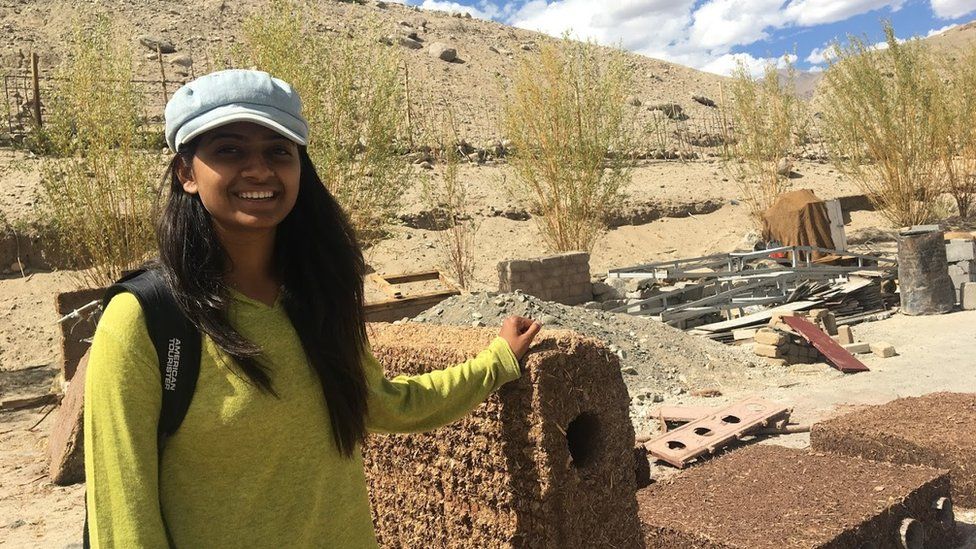
Shara, an architectural student, is now experimenting with creating pre-fabricated building blocks from mud, wood shavings and straw.
She is part of a team designing a new university in the area which plans to teach eco-tourism and green architecture, scaling the influence of ideas nurtured in Secmol’s pioneering atmosphere.
For now, the school’s impact is achieved by transforming individual mindsets to create a sense of shared responsibility.
“My grandfather told me how quiet and beautiful our village used to be and there were fish in the river,” student Padma Doma told the BBC.
“That’s why it’s so important to me to protect our precious environment. In the future, maybe it can be like that again.
“I want to go home and convince my family to segregate their garbage. Will they listen? Perhaps not, but I will try, and if I see somebody throwing away a packet, I will pick it up.”
Stanzin feels this is “a really critical time for our planet”.
“In our homes we throw away garbage but here we recycle. In our homes we throw away plastic but here we use it for insulation.”
As the environment is so harsh, Ladakhis are very conscious of subtle changes in the weather, and have become increasingly aware of climate change, he says.
“Last year, we didn’t have much snow so there’s not enough snowmelt in the springtime. Because we are so high up and everything must be treasured, you learn to understand the value of the smallest drop of water.”
All photos Emily Kasriel unless indicated. Subject to copyright.
India’s Prime Minister Narendra Modi wants more than a billion Indians connected to the internet – and his BJP government is counting on a project taking cheap high-speed broadband to rural areas to achieve this.
The project, to build a nationwide optical fibre network, was launched in 2014 and is the flagship scheme of the government’s Digital India programme.
In the run-up to the Indian election, which gets under way on 11 April, BBC Reality Check is examining claims and pledges made by the main political parties.
So has the project been a success?
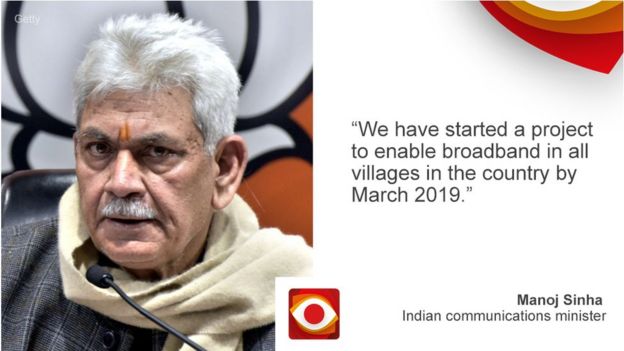
Pledge: Indian Communications Minister Manoj Sinha promised to provide every village in the country with high speed broadband and that this would be achieved by March 2019.
Verdict: The project to set up digital infrastructure in rural India has made substantial headway but has so far achieved less than 50% of its intended target.
An ambitious plan
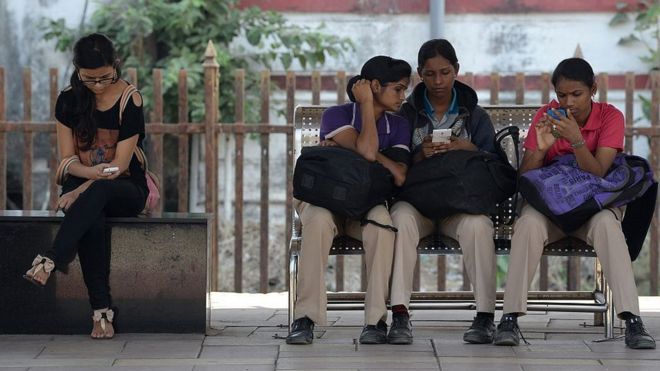
India has the second highest number of internet users in the world but the penetration is quite low for its size and population.
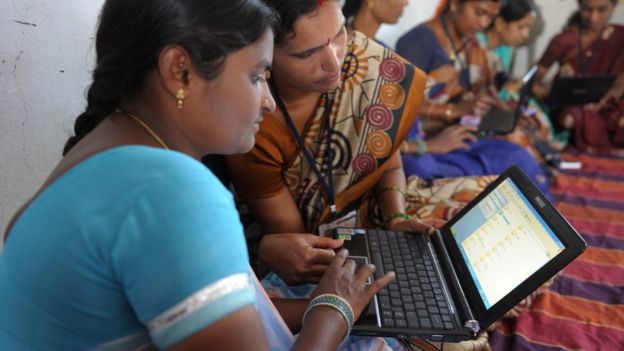
The BharatNet scheme aims to connect more than 600,000 villages in India with a minimum broadband speed of 100Mbps.
It would enable local service providers to offer internet access to the local population, primarily through mobile phones and other portable devices.
India’s telecom regulator says there were 560 million internet connections in India in September last year.
What’s been achieved so far?
The government’s overall target is to connect 250,000 village councils covering more than 600,000 individual villages across the country.
The work of laying cables and installing equipment to connect 100,000 of them was finally completed in December 2017 after significant delays.
This milestone was hailed a success but there were also critical voices, especially from government opponents about whether the cables were actually operational.
Image copyrightGETTY IMAGES
The next phase, to connect the remaining councils by March 2019, has been under way for a year now.
In total, as of the end of January this year, official data shows optical fibre cables have been laid in 123,489 village councils – and equipment installed in 116,876 of them.
There is also a plan to install wi-fi hotspots in more than 100,000 council areas – but as of January these were operational in only 12,500 of them.
Old plan, new name
It has been an ambition of successive governments to connect all India to the internet but plans have hit many roadblocks.
BharatNet was first conceived in 2011 by the then Congress government as the National Optical Fibre Network but did not make much headway in its pilot phase.
A parliamentary committee said the project had been affected by “inadequate planning and design” from 2011 to 2014.
When the BJP came to power in 2014, it took over the project and has pushed ahead with national broadband coverage.
And in January last year, the government said it would complete the work ahead of the stipulated deadline of March 2019.
Has the deadline been met?
There was impressive progress made in 2016 and 2017 but since then the pace has slowed.
In January this year, the agency executing BharatNet said 116,411 village councils were “service ready”.
This means that provisions for ready-to-use connectivity have been made.
But not all “service ready” village councils have proper connections, says Osama Manzar, from the non-governmental Digital Empowerment Foundation (DEF).
And only 31 of them had “functional”, but slow, internet connections.
Mr Manzar notes that this is problematic considering “the public welfare distribution and the financial sectors rely heavily on digital infrastructure today”.
BharatNet has faced also difficulties with electricity supply, theft, low-quality cables and poorly maintained equipment.
And these delays come as India aims to provide broadband in all households and move to 5G networks by 2022.
An official source defended BharatNet as a large-scale infrastructure project tackling difficult sites and not a service scheme, saying it was natural to see delays between set-up and use.
BEIJING, March 13 (Xinhua) — China’s emerging industries will become a major driving force for investment growth this year, the Economic Information Daily reported Wednesday.
China will increase policy support for and infrastructure investment in emerging industries in 2019, including commercial applications of 5G, artificial intelligence, industrial internet and internet of things, according to the National Development and Reform Commission (NDRC).
The country will cultivate emerging industrial clusters with market influence and distinctive advantages that can vigorously drive regional economic transformation, the newspaper quoted Ren Zhiwu, deputy secretary-general of the NDRC, as saying.
The Ministry of Industry and Information Technology also plans to promote the deep integration of the internet, big data and artificial intelligence with the real economy, and encourage innovation in new technologies and new forms of industry, the newspaper said.
Local governments will also step up support for strategic emerging industries in financial aid, technological innovation and the business environment. Efforts should be made to improve strategic emerging industries’ capabilities to innovate, said the newspaper.
BEIJING, March 6 (Xinhua) — China has created a special committee to implement the country’s national nutrition plan, according to the National Health Commission (NHC).
Jointly established by NHC and 17 other government departments to coordinate and advance nutrition and health related work, the national nutrition and health committee held its inaugural meeting on Feb. 28 in Beijing, said a source of the NHC.
During the meeting, the committee adopted the regulation on its work and the main tasks for 2019 on the national nutrition plan.
Among the key jobs are improving food nutrition and health standards that build upon food safety, and establishing subcommittees at local levels to organize nutrition education and training, to conduct pilot programs and spread scientific knowledge in this regard.
Innovation will also be encouraged in the efforts, while nutrition intervention will be introduced in the campaign to battle poverty.
The national nutrition plan (2017-2030) was released by the General Office of the State Council in July 2017, with the goal of raising awareness of nutrition among the Chinese people, reducing obesity and anemia among students.









 CHINDIA ALERT: You'll be living in their world, very soon