Archive for ‘the Basic Law’

01/06/2020

Hong Kong: Boris Johnson urged to form alliance over China security law

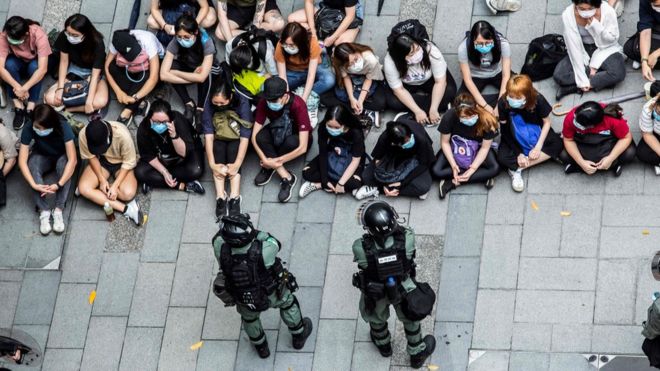
Riot police detain a group of people during a protest in the Causeway Bay district of Hong KongImage copyright AFP
Image caption Beijing’s proposed security law has sparked protests in Hong Kong

Seven former UK foreign secretaries have urged Boris Johnson to form a global alliance to coordinate the response to the China-Hong Kong crisis.

China is facing mounting criticism over a planned security law for Hong Kong which would make it a crime to undermine Beijing’s authority.

Foreign Secretary Dominic Raab said the UK would not turn a blind eye.

Hong Kong was handed back to China from British control in 1997 but under a unique agreement.

The former British colony enjoys some freedoms not seen in mainland China – and these are set out in a mini-constitution called the Basic Law.

But there are fears the proposed law, which has sparked a mass of anti-mainland protests in Hong Kong, could compromise some of the freedoms guaranteed by the Basic Law.

In their letter to the prime minister, the cross-party group of former cabinet ministers says the UK government must be seen to lead the international response, as many countries take their cue from Britain over its former colony.

Jeremy Hunt, David Miliband, Jack Straw, William Hague, Malcolm Rifkind, David Owen and Margaret Beckett all expressed their concern at what they call China’s “flagrant breach” of Sino-British agreements by imposing tough national security laws on Hong Kong.

They urged Mr Johnson to set up an “international contact group” of allies to coordinate any joint action, similar to that set up in 1994 to try to end the conflict in the former Yugoslavia.

A Downing Street spokesman insisted the government was already playing a leading role with international partners in urging China to think again.

Mr Raab said the new security legislation “very clearly violates” the autonomy that is guaranteed under Chinese law as well as that in the 1997 agreement.

He confirmed the UK will allow those who hold British National (Overseas) passports to come to the UK and apply to study and work for an extendable 12-month period.

This will in turn “provide a path to citizenship”, he told the BBC’s Andrew Marr Show on Sunday.

Mr Raab said up to three million people registered as a British national (overseas) in Hong Kong could be eligible for UK citizenship if China presses ahead with the law.

Meanwhile, the chairman of Commons foreign affairs committee, Tom Tugendhat, said the government must realise that China has a “very, very authoritarian system of government” and should rethink the partnership between the two.

Source: The BBC
12/09/2019

Hong Kong protesters sing and boo China anthem

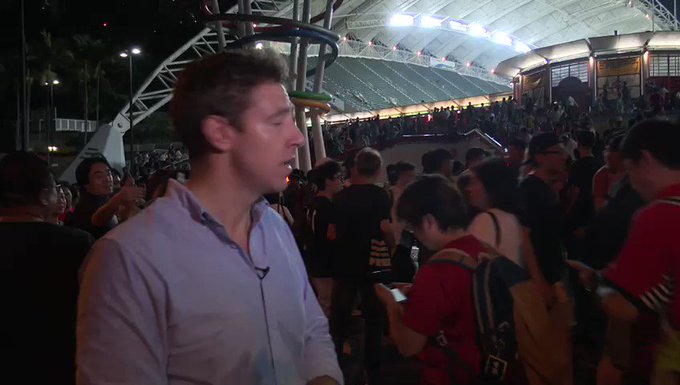
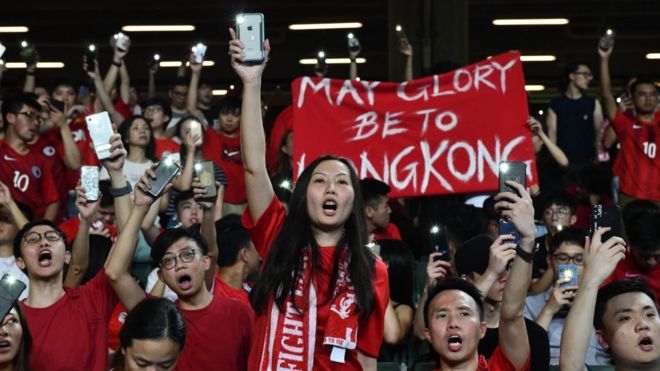
Football fans hold up their phones and shout during a protest at the end of the World Cup qualifying match between Hong Kong and Iran at Hong Kong Stadium on September 10, 2019Image copyright GETTY IMAGES
Image caption Protesters sang their new rallying cry at a stadium on Tuesday night

Hong Kong’s protest movement made its presence felt in a sports stadium and shopping malls on Tuesday.

Fans attending a football match drowned out the pre-game Chinese national anthem with loud booing.

Protesters have also staged flash events in shopping malls, singing Glory to Hong Kong which has become an unofficial anthem of the movement.

The protesters won a major concession last week when the extradition bill which sparked the unrest was scrapped.

But this has failed to end the unrest as protesters continue to demand full democracy and an investigation into allegations of police abuses.

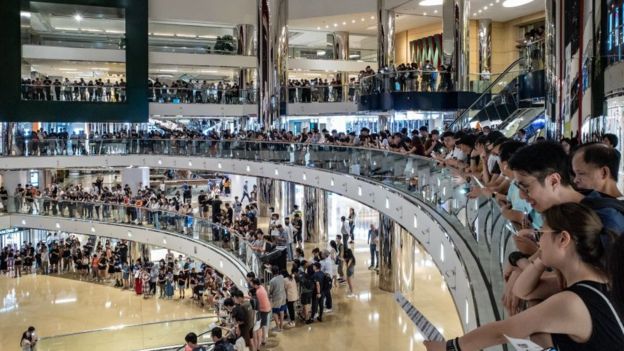
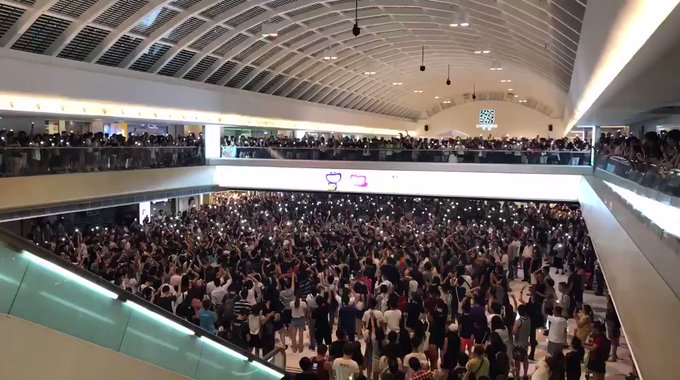
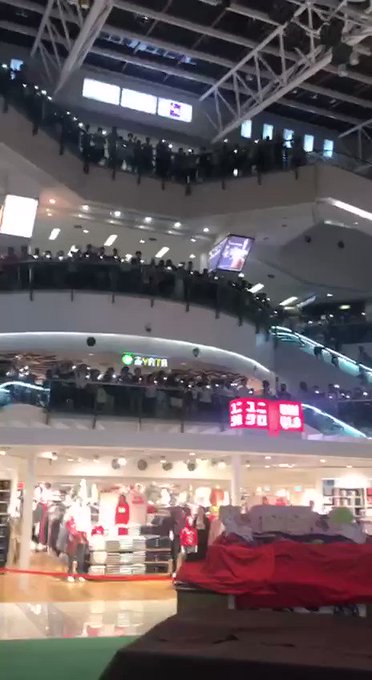
On Tuesday night, thousands of protesters gathered in shopping malls across Hong Kong chanting slogans and singing Glory to Hong Kong.

Residents and protesters sing songs and shout slogans as they gather at a shopping mall after business hours in Tai Koo districtImage copyright GETTY IMAGES
Image caption Many protesters flooded shopping malls

In the popular shopping district of Mongkok, a sea of protesters dressed in black were seen congregating across the different levels of one mall.

Another video showed protesters chanting “Go Hong Kong” – a phrase that has been used frequently as a sign of encouragement.

Shopping malls have been the scene of clashes in recent weeks, with one incident in July seeing riot police fight battles with protesters inside a mall in the district of Sha Tin.

But the recent events have played out peacefully.

Glory to Hong Kong was written by a local musician in response to calls for an anthem for protesters.

The lyrics include lines such as “Do you feel the rage in our cries? Rise up and speak up” and “persevere, for we are as one”.

The new rallying cry has joined other popular songs used by the protest movement, including Do You Hear the People Sing? from musical Les Miserables and the Christian hymn Sing Hallelujah to the Lord.

It was also heard at the Hong Kong v Iran football match on Tuesday at Hong Kong Stadium.

The 2022 Fifa World Cup qualifier saw thousands of protesting booing when the Chinese national anthem played before the start of the game.

The jeering, which could be heard from outside the stadium, was intended as a clear “message” to Beijing that they do not want to be part of China in the future, says the BBC’s Nick Beake who was at the game.

It’s not the first time people in Hong Kong have been heard booing the Chinese anthem – though it is not clear how long they might be able to do this.

In 2017 China passed a law making it illegal to disrespect the anthem, but the law has yet to be passed in Hong Kong.

‘Too little, too late’

Hong Kong, formerly a British colony, returned to Chinese rule in 1997.

Under the “one country, two systems” rule, the city is granted a high level of autonomy, an independent judiciary and rights such as freedom of speech.

But those freedoms – the Basic Law – expire in 2047 and it is not clear what Hong Kong’s status will then be.

There has been growing anti-mainland sentiment in recent years, and anger at what many feel is increasing mainland interference in Hong Kong affairs.

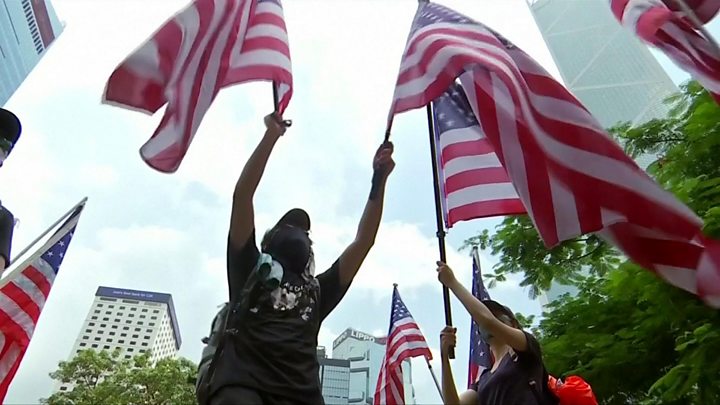
Media caption Protesters sang the US anthem outside the consulate

This reached a tipping point when the Hong Kong parliament proposed a new law that would have enabled suspects in Hong Kong to be extradited to China.

Hundreds of thousands of people marched on the streets in protest of the law, demanding that it be abandoned. The government initially suspended in June, and then finally dropped earlier this week – almost three months after protests first begun.

But protesters have said this is “too little, too late”, and their demands have evolved into calls for a much wider set of reforms, including a call for universal suffrage.

Source: The BBC

Law of Unintended Consequences

continuously updated blog about China & India

ChiaHou's Book Reviews

continuously updated blog about China & India

What's wrong with the world; and its economy

continuously updated blog about China & India