Archive for ‘The Lancet’

09/04/2020

Pass the salt: The minute details that helped Germany build virus defences

MUNICH (Reuters) – One January lunchtime in a car parts company, a worker turned to a colleague and asked to borrow the salt.

As well as the saltshaker, in that instant, they shared the new coronavirus, scientists have since concluded.

That their exchange was documented at all is the result of intense scrutiny, part of a rare success story in the global fight against the virus.

The co-workers were early links in what was to be the first documented chain of multiple human-to-human transmissions outside Asia of COVID-19, the disease caused by the coronavirus.

They are based in Stockdorf, a German town of 4,000 near Munich in Bavaria, and they work at car parts supplier Webasto Group. The company was thrust under a global microscope after it disclosed that one of its employees, a Chinese woman, caught the virus and brought it to Webasto headquarters. There, it was passed to colleagues – including, scientists would learn, a person lunching in the canteen with whom the Chinese patient had no contact.

The Jan. 22 canteen scene was one of dozens of mundane incidents that scientists have logged in a medical manhunt to trace, test and isolate infected workers so that the regional government of Bavaria could stop the virus from spreading.

That hunt has helped Germany win crucial time to build its COVID-19 defences.

The time Germany bought may have saved lives, scientists say. Its first outbreak of locally transmitted COVID-19 began earlier than Italy’s, but Germany has had many fewer deaths. Italy’s first detected local transmission was on Feb. 21. By then Germany had kicked off a health ministry information campaign and a government strategy to tackle the virus which would hinge on widespread testing. In Germany so far, more than 2,100 people have died of COVID-19. In Italy, with a smaller population, the total exceeds 17,600.

CHART: Contrasting curves reut.rs/3c2UZA4

“We learned that we must meticulously trace chains of infection in order to interrupt them,” Clemens Wendtner, the doctor who treated the Munich patients, told Reuters.

Wendtner teamed up with some of Germany’s top scientists to tackle what became known as the ‘Munich cluster,’ and they advised the Bavarian government on how to respond. Bavaria led the way with the lockdowns, which went nationwide on March 22.

Scientists including England’s Chief Medical Officer Chris Whitty have credited Germany’s early, widespread testing with slowing the spread of the virus. “‘We all know Germany got ahead in terms of its ability to do testing for the virus and there’s a lot to learn from that,’” he said on TV earlier this week.

Christian Drosten, the top virologist at Berlin’s Charite hospital, said Germany was helped by having a clear early cluster. “Because we had this Munich cohort right at the start … it became clear that with a big push we could inhibit this spreading further,” he said in a daily podcast for NDR radio on the coronavirus.

Drosten, who declined to be interviewed for this story, was one of more than 40 scientists involved in scrutiny of the cluster. Their work was documented in preliminary form in a working paper at the end of last month, intended for The Lancet. The paper, not yet peer-reviewed, was shared on the NDR site.

ELECTRONIC DIARIES

It was on Monday, Jan. 27, that Holger Engelmann, Webasto’s CEO, told the authorities that one of his employees had tested positive for the new coronavirus. The woman, who was based in Shanghai, had facilitated several days of workshops and attended meetings at Webasto’s HQ.

The woman’s parents, from Wuhan, had visited her before she travelled on Jan. 19 to Stockdorf, the paper said. While in Germany, she felt unusual chest and back aches and was tired for her whole stay. But she put the symptoms down to jet lag.

She became feverish on the return flight to China, tested positive after landing and was hospitalised. Her parents also later tested positive. She told her managers of the result and they emailed the CEO.

In Germany, Engelmann said he immediately set up a crisis team that alerted the medical authorities and started trying to trace staff members who had been in contact with their Chinese colleague.

The CEO himself was among them. “Just four or five days before I received the news, I had shaken hands with her,” he said.

Now known as Germany’s “Case #0,” the Shanghai patient is a “long-standing, proven employee from project management” who Engelmann knows personally, he told Reuters. The company has not revealed her identity or that of others involved, saying anonymity has encouraged staff to co-operate in Germany’s effort to contain the virus.

The task of finding who had contact with her was made easier by Webasto workers’ electronic calendars – for the most part, all the doctors needed was to look at staff appointments.

“It was a stroke of luck,” said Wendtner, the doctor who treated the Munich patients. “We got all the information we needed from the staff to reconstruct the chains of infection.”

For example, case #1 – the first person in Germany to be infected by the Chinese woman – sat next to her in a meeting in a small room on Jan. 20, the scientists wrote.

Where calendar data was incomplete, the scientists said, they were often able to use whole genome sequencing, which analyses differences in the genetic code of the virus from different patients, to map its spread.

By following all these links, they discovered that case #4 had been in contact several times with the Shanghai patient. Then case #4 sat back-to-back with a colleague in the canteen.

When that colleague turned to borrow the salt, the scientists deduced, the virus passed between them. The colleague became case #5.

Webasto said on Jan. 28 it was temporarily closing its Stockdorf site. Between Jan. 27 and Feb. 11, a total of 16 COVID-19 cases were identified in the Munich cluster. All but one were to develop symptoms.

All those who tested positive were sent to hospital so they could be observed and doctors could learn from the disease.

Bavaria closed down public life in mid-March. Germany has since closed schools, shops, restaurants, playgrounds and sports facilities, and many companies have shut to aid the cause.

HAMMER AND DANCE

This is not to say Germany has defeated COVID-19.

Its coronavirus death rate of 1.9%, based on data collated by Reuters, is the lowest among the countries most affected and compares with 12.6% in Italy. But experts say more deaths in Germany are inevitable.

“The death rate will rise,” said Lothar Wieler, president of Germany’s Robert Koch Institute for infectious diseases.

The difference between Germany and Italy is partly statistical: Germany’s rate seems so much lower because it has tested widely. Germany has carried out more than 1.3 million tests, according to the Robert Koch Institute. It is now carrying out up to 500,000 tests a week, Drosten said. Italy has conducted more than 807,000 tests since Feb. 21, according to its Civil Protection Agency. With a few local exceptions, Italy only tests people taken to hospital with clear and severe symptoms.

Germany’s government is using the weeks gained by the Munich experience to double the number of intensive care beds from about 28,000. The country already has Europe’s highest number of critical care beds per head of the population, according to a 2012 study.

Even that may not be enough, however. An Interior Ministry paper sent to other government departments on March 22 included a worst-case scenario with more than 1 million deaths.

Another scenario saw 12,000 deaths – with more testing after partial relaxation of restrictions. That scenario was dubbed “hammer and dance,” a term coined by blogger Tomas Pueyo. It refers to the ‘hammer’ of quick aggressive measures for some weeks, including heavy social distancing, followed by the ‘dance’ of calibrating such measures depending on the transmission rate.

The German government paper argued that in the ‘hammer and dance’ scenario, the use of big data and location tracking is inevitable. Such monitoring is already proving controversial in Germany, where memories of the East German Stasi secret police and its informants are still fresh in the minds of many.

A subsequent draft action plan compiled by the government proposes the rapid tracing of infection chains, mandatory mask-wearing in public and limits on gatherings to help enable a phased return to normal life after Germany’s lockdown. The government is backing the development of a smartphone app to help trace infections.

Germany has said it will re-evaluate the lockdown after the Easter holiday; for the car parts maker at the heart of its first outbreak, the immediate crisis is over. Webasto’s office has reopened.

All 16 people who caught COVID-19 there have recovered.

Source: Reuters

04/04/2020

Mass lockdowns in Europe may have helped save 59,000 lives, says study

  • Researchers from Imperial College in London looked at how 11 countries had responded to the crisis and estimated how many lives had been saved by intervention
  • Some of the worst affected countries such as Italy and Spain would have seen tens of thousands more deaths, according to the model
Empty streets outside the Colosseum in Rome. Photo: AFP

Mass lockdowns and widespread social distancing may have prevented 59,000 Covid-19 deaths, according to a new model from Imperial College in London.

A team of researchers – including Neil Ferguson, whose projections helped inform the British government’s response to the outbreak and Samir Bhatt – estimated that tens of thousands of lives had been saved in 11 countries as a result of measures such as case isolation, school closures, bans on mass gatherings as well as local and national lockdowns.

The measures had a “substantial impact in reducing transmission” for countries with more advanced epidemics, with an estimated 38,000 deaths averted in Italy and 16,000 in Spain, but it is “too early to be sure” about similar reductions for countries in the earlier stages of the outbreak, researchers said.

Most countries in the model – Austria, Belgium, Denmark, France, Germany, Norway, Sweden, Switzerland and the United Kingdom – began their interventions between March 12 and 14.

“While we cannot determine which set of interventions have been most successful, taken together, we can already see changes in the trends of new deaths,” the researchers said.

“We note that substantial innovation is taking place, and new, more effective interventions or refinements of current interventions, alongside behavioural changes will further contribute to reductions in infections.”

The report, published on Monday, also estimated that between 7 and 43 million people had been infected in the 11 countries by late March – somewhere between 1.88 per cent and 11.43 per cent of the population – and said a large number of cases had probably gone unreported.

On average, the proportion of the population infected in the assessed countries was 4.9 per cent, with the highest estimates in Spain and Italy, and the lowest in Germany and Norway.

The coronavirus that causes Covid-19 first began to spread late last year in central China, but has since become a devastating global pandemic, with the most confirmed cases in the United States, Italy, Spain, Germany, France and mainland China.

Life under Italy’s lockdown: the hard lessons other countries must learn

2 Apr 2020

A separate study by Ferguson and other researchers, including Imperial College epidemiologist Azra Ghani, published on Monday in The Lancet found that the overall case fatality ratio for Covid-19 was lower than estimates for the severe acute respiratory syndrome (Sars) and Middle East respiratory syndrome (Mers) coronaviruses, but “substantially higher” than those of recent influenza pandemics such as the H1N1 influenza in 2009.

“With the rapid geographical spread observed to date, Covid-19 therefore represents a major global health threat in the coming weeks and months,” the researchers said.

“Our estimate of the proportion of infected individuals requiring hospitalisation, when combined with likely infection attack rates (around 50–80 per cent), show that even the most advanced health care systems are likely to be overwhelmed.

“These estimates are therefore crucial to enable countries around the world to best prepare as the global pandemic continues to unfold.”

Italy ‘still proud to be part of EU’ amid stronger ties with China and coronavirus pandemic

2 Apr 2020

The study also found that the risk of death increased significantly for individuals in older age groups, although they noted early results indicate children are not at a lower risk of infection compared with adults.

Using data from China, researchers estimated the overall case fatality ratio to be at 1.38 per cent, with a lower ratio of 0.32 per cent for under-60s, compared with 6.4 per cent for over-60s and rising to 13.4 per cent for people who were over 80.

“It is clear from the data that has emerged from China that case fatality ratio increases substantially with age,” they said.

The age gradient was also observed in cases outside China, where the fatality ratio was estimated at 1.4 per cent for people under the age of 60, compared with 4.5 per cent for those 60 and over.

Source: SCMP

13/02/2020

Chinese officials’ phone apology to patients as coronavirus deaths hit 1,115

  • WHO scientists co-write letter saying December 26 data indicating Sars-like coronavirus was not passed to global health community for 17 days
  • Hundreds of Chinese sign petition asking legislature to protect freedom of speech, amid discontent over outbreak’s handling and anger over Dr Li Wenliang’ death
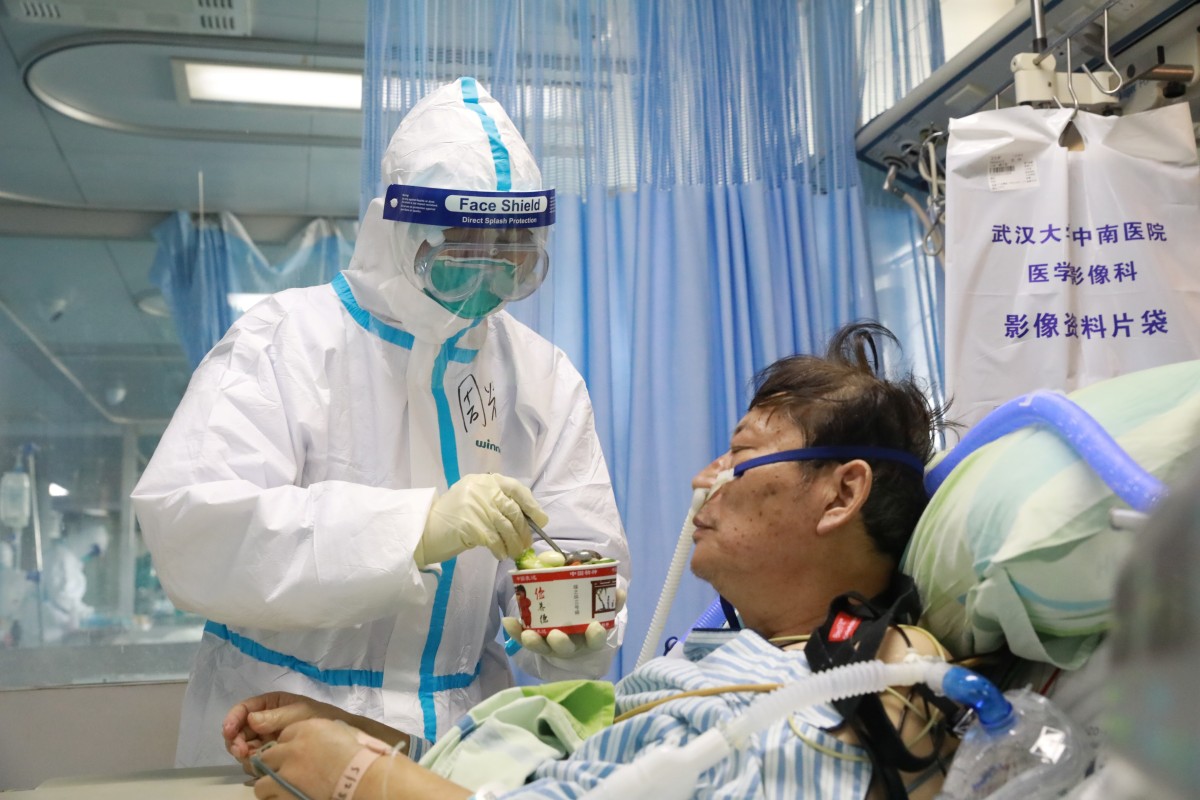
A nurse in a protective suit feeds a coronavirus patient in an isolated ward in Wuhan. Photo: Reuters

China’s health authority reported 97 new deaths caused by the coronavirus and 2,015 newly confirmed cases of infection, taking its totals to 1,113 and 44,653 respectively.

As of Tuesday, 744 recovered patients had been discharged and the total number of recovery cases stood at 4,740.

Outside Hubei province, the epicentre of the coronavirus, the rise in new infections reported by China slowed for an eighth consecutive day.

Apology for slow treatment

A district leader in Hubei’s capital of Wuhan apologised on Tuesday to critically ill patients who had not been treated in a timely manner, state media reported.

Staff in the Wuchang district who were in charge of a chaotic bus transfer of people to hospital on Sunday were ordered to apologise to patients and their families one by one by telephone.

Wuchang officials told state media that mistakes had been made and the district’s most urgent priority was to admit all patients to hospitals or other medical facilities as soon as possible.

As coronavirus cases get priority in Wuhan, other patients are losing hope

13 Feb 2020

The district leader, who visited hospitals to apologise in person, was mocked online for wasting protective suits when the city faces a shortage of medical supplies.

“Health care workers don’t have enough protective gear, why are you wearing it to apologise?” one person wrote on China’s Twitter-like Weibo. “These people are suspected cases, not confirmed ones. It’s a pity to waste the protective gear – it protects the lives of health care workers!”

“I really don’t think it’s necessary to apologise one by one, just apologise in the newspaper! Don’t waste time and protective clothing on formalities,” another person wrote.

Reporting system ‘needs update’

A group of scientists have called for changes in the way new viruses are reported, after a delay of more than two weeks between the first indication of a coronavirus strain in Hubei and the release of critical information to the global health community.

The group said in a letter to The Lancet that data indicating a Sars-related coronavirus was obtained by researchers on December 26.

Life inside China’s rapidly built hospitals in Wuhan, the epicentre of the coronavirus outbreak
“The Chinese authorities ruled out Sars and Mers, as well as a few other non-coronaviruses, on January 5, and confirmed a novel coronavirus as a potential cause on January 9. However, the genome sequence – crucial for rapid development of diagnostics needed in an outbreak response – was not released until January 12, 17 days after the preliminary sequence data were obtained,” they wrote.
The letter mentioned the “crucial role” of doctors in detecting the outbreak in China, including “eight doctors who were wrongly accused of spreading ‘fake news’” – a reference to a group that included Li Wenliang, the doctor hailed as a whistle-blower who later succumbed to the disease.
WHO head warns ‘time is of the essence’ in limiting coronavirus spread
13 Feb 2020

“There are lessons the global health community can and should learn and act on so that we can better respond to the next EZV (emerging zoonotic virus) event, which is almost certain to happen again. These lessons are definitely not unique to China,” they wrote.

Two of the letter’s authors sit on the committee that provides the World Health Organisation (WHO) advice about when to declare a public health emergency of international concern – a status given to the coronavirus on January 30.

Hubei reports 94 new deaths

Health authorities in Hubei reported 94 new deaths attributable to the contagion on Tuesday and 1,638 newly confirmed cases, taking the province’s totals to 1,068 and 33,366 respectively. They had reported 103 fatalities and 2,097 newly confirmed cases a day earlier.

Coronavirus illness is named Covid-19 as hopes rise that cases may peak soon

13 Feb 2020

Some 1,104 of the new cases announced were confirmed in Wuhan, where the virus is believed to have originated at a seafood and meat market.

The figures from Hubei on Tuesday showed the province’s lowest number of new cases in a day since the beginning of February, and the first time it had reported fewer than 2,000 new cases in a day since February 2.

China disinfects entire cities to fight coronavirus outbreak, some twice a day

Disease can spread faster than Sars: WHO

Michael Ryan, the WHO’s head of emergency programmes, said on Tuesday in Geneva that the disease caused by the coronavirus – now officially named Covid-19 by the WHO – had the potential to spread faster than either the Ebola or Sars viruses. Earlier this week, Covid-19 exceeded the Sars outbreak of 2002-03 in terms of deaths attributed to it.

Transmission methods have been shown to include human-to-human contact, and the incubation period is believed to be up to 14 days.

In recent days, epidemiologists have said that the contagion may also spread through “aerosol transmission” – when tiny particles or droplets of the virus suspended in the air are inhaled.

At least 500 Wuhan medical staff infected with coronavirus

13 Feb 2020

Others indicated that transmissions were possible from patients who showed mild or no symptoms.

WHO officials said on Tuesday that the agency had also activated a UN crisis management team to better assess and mitigate the outbreak’s economic implications.

Petition calls for freedom of speech

Hundreds of Chinese, led by academics, have signed an online petition calling on the national legislature to protect citizens’ right to freedom of speech, amid growing public discontent over the handling of the coronavirus outbreak.

It also follows a massive outpouring of grief and anger over the death of Wuhan-based Dr Li Wenliang.

Coronavirus: hundreds in China sign petition calling for free speech

13 Feb 2020

The petition is gaining momentum online, but some of the signatories and other rights activists have already come under pressure. Addressed to the National People’s Congress (NPC), it lists five demands for Beijing.

The demands are: to protect people’s right to freedom of expression; to discuss the issue at NPC meetings; to make February 6, the day Li died, a national day for free speech; to ensure no one is punished, threatened, interrogated, censored or locked up for their speech, civil assembly, letters or communication; and to give equitable treatment, such as medical care, to people from Wuhan and Hubei province. Many have reported experiencing discrimination elsewhere in the country.

“I am so proud of him,” China’s top medical expert Zhong Nanshan mourns whistle-blower doctor’s dea

US repeats concern over China’s purchases

The outbreak could have an impact on China’s commitment to buy more US agricultural products this year under the US-China phase one trade deal, White House national security adviser Robert O’Brien said on Tuesday.

“We expect the phase one deal will allow China to import more food and open those markets to American farmers, but certainly, as we watch this coronavirus outbreak unfold in China, it could have an impact on how big – at least in this current year – the purchases are,” O’Brien told an event at the Atlantic Council, a Washington think tank.

‘No US doctors in China’

O’Brien said there were no American doctors on the ground in China so far, despite US offers to help fight the outbreak.

“We’ve offered the Chinese the opportunity to have American doctors … and other experts come to China to help them. That offer has not been accepted at this point but that is an outstanding offer,” he said.

Coronavirus outbreak exposes fallacy of the phase-one trade deal

11 Feb 2020

But US officials said on Monday that China had agreed to allow American health experts into the country.

“China has accepted the United States’ offer to incorporate a group of experts into a WHO mission to China to learn more about and combat the virus,” White House spokesman Judd Deere said.

In a tweet on Monday, WHO director general Tedros Adhanom Ghebreyesus said an advance team of WHO experts had arrived in China to “lay the groundwork for the larger international team”.

Tibet’s only patient cured

The only Covid-19 patient in Tibet was cured and discharged from hospital on Wednesday afternoon, People’s Daily reported, citing the patient’s doctor at the Third People’s Hospital of Tibet.

The patient, a 34-year-old man from Suizhou, Hubei province, spent three days on a train before reaching Lhasa on January 24. He sought medical treatment a day later and was isolated for treatment, before being confirmed as being infected on January 29.

US to test antiviral drugs in hopes of combating coronavirus

13 Feb 2020

The man tested negative for the virus on Sunday and Tuesday, and CAT scans and clinical symptoms showed he had been cured. He left Tibet by train on Wednesday afternoon, according to thePeople’s Daily report.

Iran denies report of Covid-19 death

Iran’s health ministry has denied a report that an Iranian woman has died of a suspected coronavirus infection.

The state daily newspaper Iran reported on Wednesday that a 63-year-old woman had died in a Tehran hospital on Monday and that an investigation had been ordered into the cause of her death. No sources were cited in the report.

A spokesman for Iran’s health ministry denied the report. “There have been no cases of coronavirus in Iran,” he said.

Iranian health authorities have repeatedly said there were no confirmed cases of coronavirus in the country.

Exams under threat

Chinese authorities are considering whether to postpone the country’s college entrance exams, due to take place in June.

“Those responsible for arranging college entrance exams need to put the lives and health of candidates and testing staff first,” Wang Hui, a Ministry of Education official, said at a press briefing on Wednesday. “We will closely monitor the development of the outbreak, evaluate the possible impact on the exams and carefully formulate a plan.”

Source: SCMP

Law of Unintended Consequences

continuously updated blog about China & India

ChiaHou's Book Reviews

continuously updated blog about China & India

What's wrong with the world; and its economy

continuously updated blog about China & India