Archive for ‘the Netherlands’

30/05/2020

China battles to control nationalist narrative on social media

  • Embassy in France removes ‘false image’ on Twitter in latest online controversy amid accusations of spreading disinformation
  • After months of aggressive anti-US posts by Chinese diplomats Beijing is cracking down on ‘smear campaigns’ at home
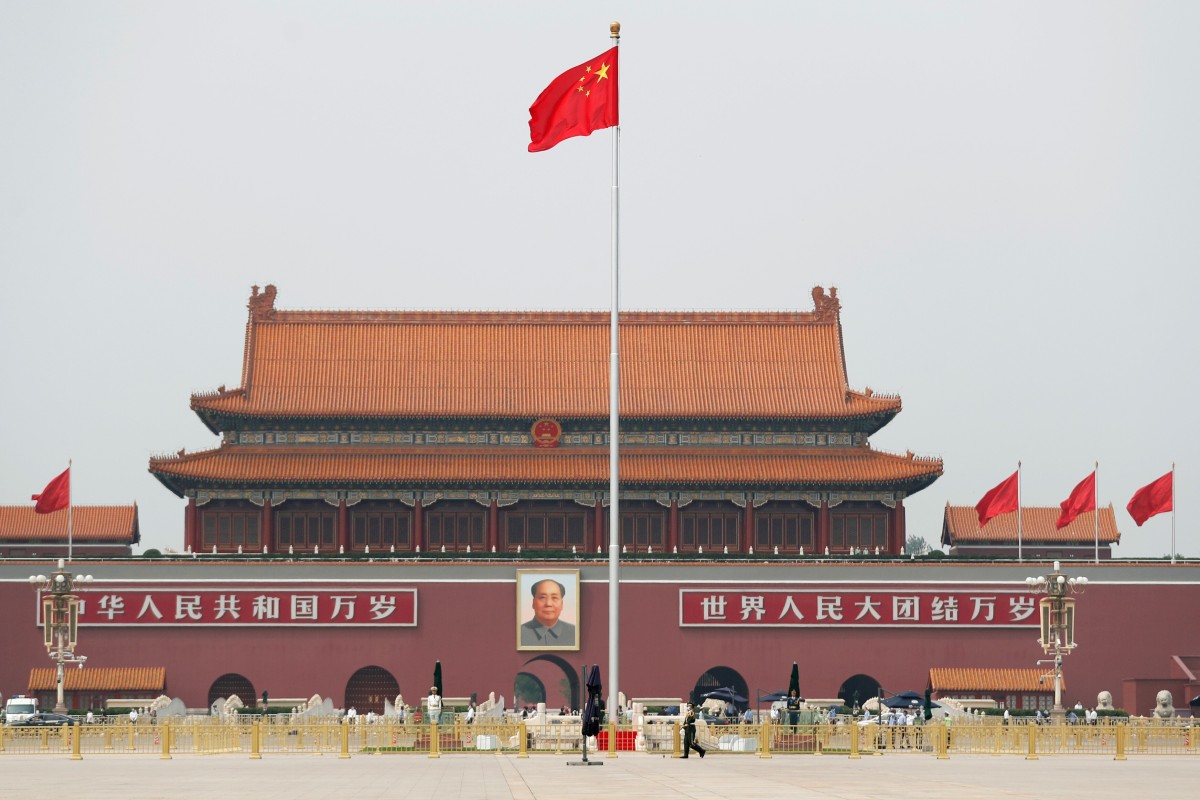
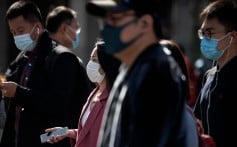
Beijing’s ‘Wolf Warrior’ diplomacy has coincided with a rise of nationalist content on Chinese social media. Photo: Reuters

Beijing is battling allegations that it is running a disinformation campaign on social media, as robust posts by its diplomats in Western countries promoting nationalist sentiment have escalated into a spat between China and other countries, especially the United States.

In the latest in a series of online controversies, the Chinese embassy in France claimed its official Twitter account had been hacked after it featured a cartoon depicting the US as Death, knocking on a door marked Hong Kong after leaving a trail of blood outside doors marked Iraq, Libya, Syria, Ukraine and Venezuela. The inclusion in the image of a Star of David on the scythe also prompted accusations of anti-Semitism.

Top China diplomats call for ‘Wolf Warrior’ army in foreign relations

25 May 2020
“Someone posted a false image on our official Twitter account by posting a cartoon entitled ‘Who is Next?’. The embassy would like to condemn it and always abides by the principles of truthfulness, objectivity and rationality of information,” it said on Monday.

The rise of China’s aggressive “Wolf Warrior” diplomacy has been regarded by analysts as primarily aimed at building support for the government at home but the latest incident is seen as an attempt by Beijing to take back control of the nationalist narrative it has unleashed.

Florian Schneider, director of the Leiden Asia Centre in the Netherlands, said the removal of the embassy’s tweet reflected a constant concern in Beijing about the range of people – including ordinary citizens – who were involved in spreading nationalistic material online.

“The state insists that its nationalism is ‘rational’, meaning it is meant to inspire domestic unity through patriotism but without impacting national interests or endangering social stability,” he said.

“This makes nationalism a mixed blessing for the authorities … if nationalist stories demonise the US or Japan or some other potential enemy, then any Chinese leader dealing diplomatically with those perceived enemies ends up looking weak.

“Trying to guide nationalist sentiment in ways that further the leadership’s interests is a difficult balancing act and I suspect this is partly the reason why the authorities are currently trying to clamp down on unauthorised, nationalist conspiracy theories.”

Too soon: Chinese advisers tell ‘Wolf Warrior’ diplomats to tone it down
14 May 2020
Last month the European Union toned down a report which initially accused China of running a “global disinformation campaign”
to deflect blame for the coronavirus outbreak using “overt and covert tactics”. The section was removed after intervention by Beijing.

The report came after months of social media posts – including by Chinese diplomats – defending China against accusations it had mishandled the coronavirus pandemic and attacking the US and other perceived enemies.

In March, Chinese foreign ministry spokesman Zhao Lijian promoted a conspiracy theory on Twitter suggesting the virus had originated in the US and was brought to China by the US Army. His comments were later downplayed, with China’s ambassador to the US Cui Tiankai saying questions about the origin of the virus should be answered by scientists.

Schneider said this showed that the state-backed nationalistic propaganda online was at risk of backfiring diplomatically.

“The authorities have to constantly worry that they might lose control of the nationalist narrative they unleashed, especially considering how many people produce content on the internet, how fast ideas spread, and how strongly commercial rationales drive misinformation online,” he said.

Last month, a series of widely shared social media articles about people in different countries “yearning to be part of China” resulted in a diplomatic backlash against Beijing. Kazakhstan’s foreign ministry summoned the Chinese ambassador in April to lodge a formal protest against the article.

Following the incident, the Cyberspace Administration of China, the country’s internet regulator which manages the “firewall” and censors material online, announced a two-month long “internet cleansing” to clear privately owned accounts which engage in “smear campaigns”.

A popular account named Zhidao Xuegong was shut down by the Chinese social media platform WeChat’s owner Tencent on Sunday after publishing an article which claimed Covid-19 may have killed 1 million people in the US and suggested the dead were “very likely” being processed as food.

The article had at least 100,000 readers, with 753 people donating money to support the account. According to Xigua Data, a firm that monitors traffic on Chinese social media, the account garnered more than 1.7 million page views for 17 articles in April.

According to a statement from WeChat, the account was closed for fabricating facts, stoking xenophobia and misleading the public.

A journalism professor at the University of Hong Kong said this case differed from the Chinese embassy’s tweet, despite both featuring anti-US sentiment.

Masato Kajimoto, who leads research on news literacy and the misinformation ecosystem, said the closure of the WeChat account seemed to be more about Chinese authorities feeling the need to regulate producers of media content whose motivations were often financial rather than political.

“I would think the government doesn’t like some random misinformation going wild and popular, which affects the overall storylines they would like to push, disseminate and control,” he said.

One way for China to respond to the situation was to fact-check social media and to position itself as a protector facts and defender of the integrity of public information, he said.

“In the age of social media, both fake news and fact-checking are being weaponised by people who try to influence or manipulate the narrative in one way or another,” Kajimoto said.

“Not only China but also many other authoritarian states in Asia are now fact-checking social media. Governments in Singapore, Thailand, Indonesia and other countries all do that.

“Such initiatives benefit them because they can decide what is true and what is not.”

Source: SCMP
17/04/2020

China’s Chang’e-4 probe resumes work for 17th lunar day

BEIJING, April 17 (Xinhua) — The lander and rover of the Chang’e-4 probe have resumed work for the 17th lunar day on the far side of the moon after “sleeping” during the extremely cold night.

The lander woke up at 1:24 p.m. Friday (Beijing time), and the rover awoke at 8:57 p.m. Thursday. Both are in normal working order, according to the Lunar Exploration and Space Program Center of the China National Space Administration.

The Chang’e-4 probe, launched on Dec. 8, 2018, made the first-ever soft landing on the Von Karman Crater in the South Pole-Aitken Basin on the far side of the moon on Jan. 3, 2019.

A lunar day equals 14 days on Earth, and a lunar night is the same length. The Chang’e-4 probe, switching to dormant mode during the lunar night due to the lack of solar power, has survived about 470 Earth days on the moon.

The rover Yutu-2, or Jade Rabbit-2, has worked much longer than its three-month design life, becoming the longest-working lunar rover on the moon.

Carrying scientific instruments such as panoramic camera, lunar penetrating radar, infrared imaging spectrometer and neutral atom detector, the rover will continue to move northwest to conduct scientific detection.

The scientific tasks of the Chang’e-4 mission include conducting low-frequency radio astronomical observation, surveying the terrain and landforms, detecting the mineral composition and shallow lunar surface structure and measuring neutron radiation and neutral atoms.

The Chang’e-4 mission embodies China’s hope to combine wisdom in space exploration with four payloads developed by the Netherlands, Germany, Sweden and Saudi Arabia.

Source: Xinhua

31/03/2020

Coronavirus: Countries reject Chinese-made equipment

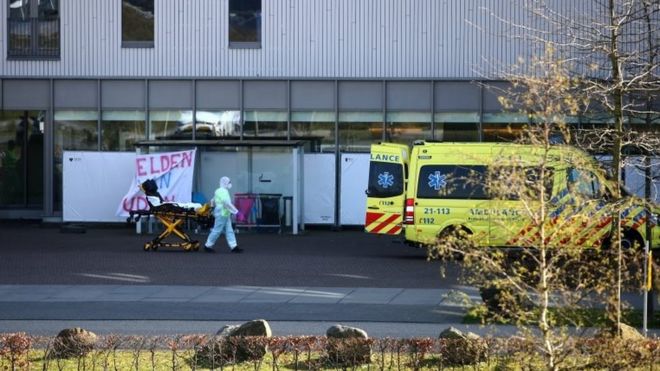
A man in protective gear wheels a stretcher into a hospital in Uden, the NetherlandsImage copyright GETTY IMAGES
Image caption The Netherlands has been among the countries reporting faulty Chinese-made equipment

A number of European governments have rejected Chinese-made equipment designed to combat the coronavirus outbreak.

Thousands of testing kits and medical masks are below standard or defective, according to authorities in Spain, Turkey and the Netherlands.

Europe has reported hundreds of thousands of cases of coronavirus.

More than 10,000 people have died in Italy since the outbreak began.

The virus was first detected in China at the end of 2019. The government implemented strict lockdown measures to bring it under control.

What’s wrong with the equipment?

On Saturday, the Dutch health ministry announced it had recalled 600,000 face masks. The equipment had arrived from a Chinese manufacturer on 21 March, and had already been distributed to front-line medical teams.

Dutch officials said that the masks did not fit and that their filters did not work as intended, even though they had a quality certificate,

Presentational grey line

You may also be interested in:

Presentational grey line

“The rest of the shipment was immediately put on hold and has not been distributed,” a statement read. “Now it has been decided not to use any of this shipment.”

Spain’s government encountered similar problems with testing kits ordered from a Chinese company.

It announced it had bought hundreds of thousands of tests to combat the virus, but revealed in the following days that nearly 60,000 could not accurately determine if a patient had the virus.

The Chinese embassy in Spain tweeted that the company behind the kits, Shenzhen Bioeasy Biotechnology, did not have an official license from Chinese medical authorities to sell its products.

It clarified that separate material donated by the Chinese government and technology and retail group Alibaba did not include products from Shenzhen Bioeasy.

Turkey also announced that it had found some testing kits ordered from Chinese companies were not sufficiently accurate, although it said that some 350,000 of the tests worked well.

Allegations of defective equipment come after critics warned China could be using the coronavirus outbreak to further its influence.

In a blog post last week, EU chief diplomat Josep Borrell warned that there is “a geo-political component including a struggle for influence through spinning and the ‘politics of generosity’.”

“China is aggressively pushing the message that, unlike the US, it is a responsible and reliable partner,” he wrote. “Armed with facts, we need to defend Europe against its detractors.”

What’s the situation in Europe?

On Monday, Spain reported 812 new deaths in the space of 24 hours – bringing its total death toll to 7,340. It now has more than 85,000 infections – surpassing the number of cases reported in China.

Media caption Spanish doctor “scared and exhausted” by pandemic

New measures have also come into force in Spain banning all non-essential workers from going to their jobs. The restrictions will be in place for at least two weeks.

Italy remains the worst affected country worldwide. More than 10,000 people have died from the virus there, and it has recorded nearly 100,000 infections. Only the US has more confirmed cases, although the death toll there is far lower.

Source: The BBC

15/09/2019

Jiangsu Cultural and Tourism Carnival held in The Hague, the Netherlands

THE NETHERLANDS-THE HAGUE-CHINA-JIANGSU-TOURISM CARNIVAL

A waiter serves a dish named “sweet soup balls”, in the shape of riverstones, at the “Huaiyang Cuisine Week” in The Hague, the Netherlands, Sept. 13, 2019. A series of events including a tourism seminar, a photo exhibition and a Huaiyang Cuisine Week activity were held during the Jiangsu Cultural and Tourism Carnival. The carnival, held from Sept. 7 to 19 in the Netherlands, aims to encourage more foreign tourists to visit China’s eastern coastal province of Jiangsu. (Xinhua/Lin Liping)

Source: Xinhua

30/07/2019

Reckitt cuts sales target as China infant formula demand slows

LONDON (Reuters) – Reckitt Benckiser (RB.L) cut its full-year revenue target after reporting lower than expected second-quarter sales in its last quarter under long-time chief executive Rakesh Kapoor, hurt by a surprise slowdown in demand for infant formula in China.

Shares of the British household goods maker, which had risen the previous day to near their highest level for the year, fell as much as 5.7% in early trade.

The Durex condom and Lysol disinfectant maker said it now expects full-year like-for-like sales growth of between 2% and 3%, down from its previous target of 3% to 4%.

Reckitt, which maintained its “broadly flat” operating margin target, said slowing birth rates over the past two years and increased competition had led to market share losses for its Enfamil infant nutrition products in China, its biggest market for baby food.

The company is also recovering from supply chain disruptions in China, after technical issues at a baby formula factory in the Netherlands, which supplies the Asian market, prevented it from supplying retailers with formula in the third quarter of 2018.

The disruption forced mothers to turn to rival products and in part helped rival Danone (DANO.PA), which last week reported strong infant nutrition sales in China as its strategy to focus on more premium products paid off.

For Reckitt, the slowdown resulted in a surprise 1% drop in like-for like sales in its health business, even as sales of its over-the-counter products, such as Mucinex cough medicine, rebounded after several quarters of decline.

Analysts were expecting Reckitt’s Health business, which also sells Scholl foot products and Nurofen tablets, to rise 1.3%.

“Within Health, Infant and child nutrition was a big negative surprise,” Bernstein analyst Andrew Wood said, adding he expects the business to grow in the third quarter as it faces an easier comparison with last year.

DISAPPOINTING PERFORMANCE

Overall like-for-like sales were flat in the second quarter, missing the 1.9% growth analysts on average had expected, according to a company supplied consensus.

Net revenue rose 2% to 3.08 billion pounds against analysts’ average estimate of 3.13 billion.

The second-quarter report is the last under Chief Executive Rakesh Kapoor, who in September hands over to PepsiCo executive Laxman Narsimhan.

Kapoor said on a media call he was disappointed by the company’s performance in the first half but was “confident growth would be second-half weighted.”

Kapoor, CEO for the past eight years, said he was bullish that increased investments behind its brands and in medical channels, as well as new products such as Mucinex Night Shift and Enfagrow Pro Mental, and its expansion into new cities in China would help drive that growth.

He also said a plan to split the group into two business units – one for health and one for hygiene and home products – was on track for completion in mid to late 2020.

Still, analysts said the new CEO has a tough task.

“The patchy half-year figures mean the incoming CEO Laxman Narasimhan has a difficult job on his hands to try and put the business back on track, as well as decide the strategic future direction of the group,” investment firm AJ Bell said.

Reckitt shares were down 3% at 6,469 pence by 0830 GMT and were among the biggest losers in the FTSE .FTSE index.

Source: Reuters

28/06/2019

China calls for more practical cooperation with the Netherlands

CHINA-BEIJING-LI KEQIANG-DUTCH PM-TALKS (CN)

Chinese Premier Li Keqiang holds talks with Dutch Prime Minister Mark Rutte in Beijing, capital of China, June 27, 2019. (Xinhua/Wang Ye)

BEIJING, June 27 (Xinhua) — Chinese Premier Li Keqiang held talks with visiting Dutch Prime Minister Mark Rutte Thursday in Beijing, calling for more mutually beneficial cooperation.

Noting that the Netherlands is China’s second-largest trade partner in the European Union, Li said the two countries enjoy broad cooperation prospects, and China will work with the Netherlands to enhance exchanges at all level, consolidate political mutual trust, tap the potential of cooperation, communicate and coordinate closely on international and regional affairs, and continuously upgrade bilateral relations.

In face of increasing instabilities and uncertainties in the world, China is ready to enhance the synergy of development strategies with the Netherlands, expand two-way opening-up, provide an open, transparent, and non-discriminatory business environment for enterprises from both countries, to contribute to the world economic growth, Li said.

He called for enhanced cooperation in key areas including trade, investment, innovation, clean energy, agriculture, and third-part markets, for win-win results.

Li said China attached great importance to relations with EU, and firmly supported the process of European integration.

China will work with the EU to implement the outcomes of the China-EU leaders’ meeting, accelerate the investment agreement negotiation, reach a geographical indication agreement as scheduled, jointly safeguard multilateralism and free trade, promote inclusive development, and maintain peace and stability, Li said.

Rutte said Premier Li’s visit to the Netherlands last year had injected new impetus to the development of bilateral relations.

Faced with the downward pressure of global economy and trade, the Netherlands is willing to make joint efforts with China to enhance cooperation, champion multilateralism and maintain international orders, Rutte said.

Source: Xinhua

03/06/2019

Chinese vice president visits Germany, vows closer cooperation

GERMANY-CHINA-WANG QISHAN-VISIT

Chinese Vice President Wang Qishan meets with German President Frank-Walter Steinmeier in Berlin, Germany, May, 31, 2019. Wang Qishan paid a visit to Germany from Thursday to Sunday at the invitation of the German Federal Government. (Xinhua/Rao Aimin)

BERLIN, June 2 (Xinhua) — Chinese Vice President Wang Qishan paid a visit to Germany from Thursday to Sunday at the invitation of the German Federal Government.

During his visit in Berlin, Wang met with German President Frank-Walter Steinmeier, Chancellor Angela Merkel and Foreign Minister Heiko Maas separately.

When meeting with Steinmeier, Wang said that China and Germany were both major world economies and major countries with great influence. The relations between the two countries have gone beyond bilateral scope and bear global significance.

Wang said in recent years the high-level contacts were frequent, and the cooperation in all fields has been constantly deepened, adding he is willing to push for new development of the all-around strategic partnership through his visit.

Noting the ties between China and Germany is currently facing a new situation, Wang called on the two countries to set a model of win-win cooperation for the world through deepening collaboration, to bring stability to the world through guiding the China-EU cooperation, and to strength the power to safeguard multilateralism through boosting global governance.

For his part, German President Steinmeier said that the current international landscape is complicated and turbulent, and multilateralism is under threat.

He noted that Germany highly values the ties with China, adding Germany is willing to strengthen communication and coordination with China at all levels, and to continue the pragmatic cooperations in Industry 4.0 and in other fields.

Germany and China, and Europe and China, should join hands to maintain the world peace and stability, free trade, and existing international orders, Steinmeier added.

When meeting with Merkel, Wang said China sticks to peaceful development, and will through steadily deepening reform and opening up, solve the existing problem of imbalance and insufficient development to meet people’s desire for a better life and to fulfill the promises of the party and the government to the people.

Wang said China cannot develop itself in isolation from the world, nor can the world develop without the 1.4 billion Chinese people, and China advocates countries to together build a community of shared future for humankind.

Facing the profound and complex changes in the international situation, China always insists on doing its own share firstly, staying calm and clear-headed, showing composure, shouldering responsibility and reacting rationally, he noted.

Wang called on China and Germany, as all-around strategic partners, to strengthen cooperation in building a more fair and reasonable global governance system, and to jointly face the uncertainties.

The Chinese vice president also said that China has always viewed Europe from a strategic height and with a long-term vision, and firmly supported the European integration. Wang added that China is a trustworthy partner for Europe to have dialogue on an equal footing.

Chancellor Merkel said Germany appreciates China’s great achievements in economic development and believes that China can definitely achieve the ambitious goals of eradicating poverty and finishing building a moderately prosperous society on schedule.

Facing the current complex and volatile international environment in which various new problems emerge, Merkel said, Germany is always committed to safeguarding the principle of multilateralism and the existing international order.

She noted that Germany advocates to strengthen international coordination and collaboration through dialogue, disagrees with the action of exerting threat and pressure to solve problems.

She believed that Germany and China, as well as Europe and China, share broad consensus on a wide range of issues, expressing Germany’s willingness to strengthen communication, exchanges and cooperation with China, and to improve global governance system jointly with China.

When meeting with Heiko Maas, Wang said China and Germany share common interests in many fields such as deepening pragmatic cooperation, safeguarding multilateralism and free trade, improving global governance and promoting world peace.

Looking to the next stage of the bilateral relations, Wang advocates that both sides should set the right direction for the Sino-German, Sino-European win-win cooperation, encourage the enhanced exchanges in ideology, talents as well as science and technology, cement the friendship between the two peoples, and to inject more positive energy into the world.

Echoing Wang’s comments, Maas said Germany is willing to strengthen strategic communication and cooperation on multilateral issues with China, as well as to jointly tackle global challenges, safeguard multilateralism and international order, promote the liberalization of international trade.

During his visit to Germany, Wang also met with mayor of Hamburg Peter Tschentscher and Bavarian governor Markus Soeder and visited the port of Hamburg.

Before his tour to Germany, the Chinese Vice president also visited Pakistan and the Netherlands.

Source: Xinhua

11/04/2019

Chinese ‘spies’ stole Dutch chip machinery giant’s secrets, newspaper says

  • Links between company accused of receiving confidential information and Beijing, according to report
  • Investigation follows US court ruling against six Chinese employees of semiconductor maker ASML
A newspaper in the Netherlands claims to have found evidence that six employees of Dutch semiconductor giant ASML passed corporate secrets to a company linked to the Chinese government. Photo: AFP
An investigation by a financial newspaper in the Netherlands has concluded that Chinese employees stole corporate secrets from Dutch semiconductor equipment giant ASML, resulting in hundreds of millions of dollars in losses.
The daily newspaper, Het Financieele Dagblad, reported on Thursday that ASML itself had “found no hard proof of involvement of the Chinese government” but that its own probe had determined that stolen technology had been ultimately leaked to a state-linked company.
According to the newspaper report, high-level Chinese employees in the research and development department of ASML’s US subsidiary were behind the breach.

An ASML spokeswoman said the company was aware of the report and was preparing a response.

The chip maker caught in US assault on China’s tech ambitions
ASML is the dominant maker of lithography systems, used to trace out the circuitry of semiconductor chips.
The newspaper based its report partly on company sources and partly on a November 2018 ruling by a California court in a suit between ASML’s US subsidiary and a subsidiary of a Chinese company, XTAL Inc.

The documents from the California Superior Court in Santa Clara show six former ASML employees, all with Chinese names, breached their employment contracts by sharing information on ASML software processes with XTAL, according to the report.

“The FDs investigation found XTAL’s Chinese parent company Dongfang Jingyuan has ties with the Chinese Ministry of Science and Technology,” the newspaper said.

The court awarded ASML US$223 million in damages and XTAL filed for bankruptcy a month later.

The Dutch intelligence agency has included warnings in its annual threat assessments for the past several years, saying that China is targeting tech companies in the Netherlands, as it does in other countries, for intellectual property theft.

In 2015, ASML disclosed a breach of its computer systems, but said at the time damage from the hack was limited and released few further details.

ASML’s sales to China doubled to 1.8 billion euros (US$2 billion) in 2018 from 919 million euros in 2017 as Beijing makes growth of its semiconductor industry a priority.

ASML CEO Peter Wennink said in January he saw no let-up in demand from China, despite an economic slowdown.

Source: SCMP

11/03/2019

India engaged with China for lunar mission, talks failed to take off

China’s Chang’e-4 lunar exploration mission was the first one to land on the far side of the moon – the side that’s not visible from earth – on January 3.

INDIA Updated: Mar 11, 2019 13:47 IST

Sutirtho Patranobis
Sutirtho Patranobis
Hindustan Times, Beijing
India,China space mission,space mission
The top space agencies – the China National Space Administration (CNSA) and Indian Space Research Organisation (ISRO) – confirmed the information but did not share details why the cooperation failed to take off.(Corbis via Getty Images)
A rare opportunity for India and China to cooperate in a high-profile space mission fell through after the two countries disagreed on the nature of the Indian payload to be carried on the Chang’e-4 lunar mission, it has emerged.
China’s Chang’e-4 lunar exploration mission was the first one to land on the far side of the moon – the side that’s not visible from earth – on January 3. Since landing, the mission has sent back stunning first-time images from the moon’s surface. It has been carrying out a series of scientific research tasks involving multiple countries and organisations.
China’s lunar exploration chief Wu Weiren called the mission a “huge stride” for China.
It could have been a breakthrough stride for Sino-India cooperation in space – both countries have successful space programs – as well had Chang’e-4 carried the Indian payload.
The top space agencies – the China National Space Administration (CNSA) and Indian Space Research Organisation (ISRO) – confirmed the information but did not share details why the cooperation failed to take off.
“In April 2015, Xu Dazhe, the incumbent administrator of CNSA wrote a letter to the heads of the world’s major space agencies, invited them to participate in the piggy-back cooperation of Chang’ e-4 mission, which received positive responses from more than a dozen national space agencies,” the Chinese agency told HT over email.
“China also received applications from India for the piggy-back cooperation. However, due to the different nature of the missions of the two sides, the Indian payload on Chang’ e-4 could not be carried through (after) the evaluation,” the agency said.
The payload in this context could have been a satellite or space probe equipment.
“No, we will not be able to comment on that … Yes, we will not comment on that,” an ISRO spokesperson said.
Several countries including Germany, Sweden, the Netherlands, and Russia have cooperated in the ongoing mission.
India and China formally established the Sino-Indian Joint Committee on Space Cooperation in 2015. In the same year, the first meeting of the joint committee was held in Beijing, and the outline of Sino-Indian space cooperation was signed.
“The outline includes 19 projects in seven areas: Remote sensing satellites, space-based meteorology, space science and lunar and deep space exploration, education and training, piggy-back launch services, satellite navigation, and space components,” CNSA said.
“The MoUs signed have provided a platform (for the two countries) to work but there is nothing as of now; all at dialogue stage. There are international forums where they are there and we are there but nothing (bilateral),” ISRO’s spokesperson said.
Last year, the then Indian ambassador to China Gautam Bambawale visited CNSA twice in half a year and exchanged views with Zhang Kejian, the CNSA head, on promoting Sino-Indian space cooperation.
“The two sides reviewed the course of Sino-Indian space cooperation in recent years, agreed to further promote the process of Sino-Indian space cooperation with an active and open attitude of cooperation, and agreed to convene the second meeting of the Sino-Indian Space Joint Committee in 2019,” CNSA said.
The Chinese space agency said it is open to cooperating with India.
“CNSA is open to international cooperation in lunar and deep space exploration… and international cooperation for a series of deep space exploration activities, such as Chang’ e 6 sampling return, the Mars exploration, and asteroid exploration, Jupiter galaxy, and planetary crossing exploration,” it said.
“We are willing to work hand in hand with space agencies, space institutions, and foreign space exploration enthusiasts to explore the mysteries of the universe.”
Source: Hindustan Times
Law of Unintended Consequences

continuously updated blog about China & India

ChiaHou's Book Reviews

continuously updated blog about China & India

What's wrong with the world; and its economy

continuously updated blog about China & India