Chindia Alert: You’ll be Living in their World Very Soon
aims to alert you to the threats and opportunities that China and India present. China and India require serious attention; case of ‘hidden dragon and crouching tiger’.
Without this attention, governments, businesses and, indeed, individuals may find themselves at a great disadvantage sooner rather than later.
The POSTs (front webpages) are mainly 'cuttings' from reliable sources, updated continuously.
The PAGEs (see Tabs, above) attempt to make the information more meaningful by putting some structure to the information we have researched and assembled since 2006.
Image copyright GETTY IMAGESImage caption Mr Kejriwal has proposed free travel on buses and the city’s famed Delhi metro rail service
The chief minister of India’s capital Delhi created a minor sensation when he announced that women would no longer have to pay for public transport.
Arvind Kejriwal said that free rides on city buses and the metro would help improve women’s safety in the city.
Delhi reports some of the highest numbers of rape in India. The 2012 gang rape and murder of a student on a bus in the city sparked massive protests.
However not everyone is convinced that Mr Kejriwal’s proposal will help.
Dinesh Mohan, a transport expert with the Indian Institute of Technology in Delhi, told the BBC that making public transport free wouldn’t solve the problem.
“You need to think about the entire journey and not just the metro – you have to take into account how safe or unsafe sidewalks are and what the journey to the metro station is like in the first place. So if the idea is to make it safer for women, that experience has to be continuous. Safety can’t begin and end at the metro station. I don’t see any thought behind this initiative yet.”
Despite Mr Kejriwal’s announcement, women will have to wait a while to see if it is actually implemented.
The proposal still has to be approved by the federal government because it is an equity partner along with the Delhi government in the Delhi Metro Rail Corporation.
But Mr Kejriwal has said that the federal government’s permission is not necessary as the Delhi government will bear the cost.
Delhi transport minister Kailash Gahlot said since this qualifies as a subsidy, they did not require any such permission.
Some have dismissed the entire thing as a pre-election gimmick by Mr Kejriwal – Delhi will hold state assembly elections next year.
Architect and urban planner Sonal Shah said on Twitter that a number of factors had to be taken into consideration for women’s safety to be addressed effectively. She said that transport access was “not equal for men and women”, adding that a number of existing issues with public transport had to be addressed first.
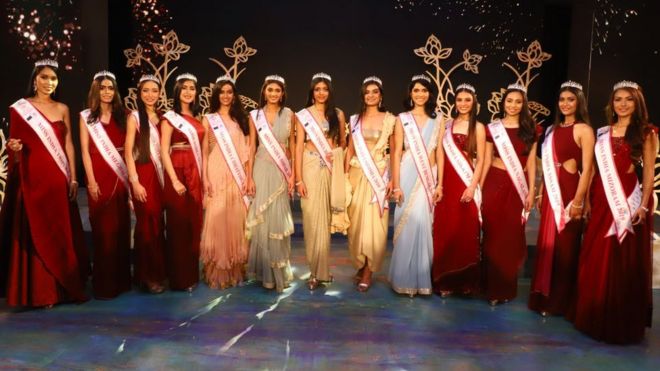
Image copyright GETTY IMAGESImage caption Critics say many participants in this year’s beauty pageant look similar
It is the contest that kick-started Bollywood superstar Priyanka Chopra’s career, so it is unsurprising that this year’s Miss India finalists have such wide smiles in their publicity shots.
After all, this is a competition with the power to change lives.
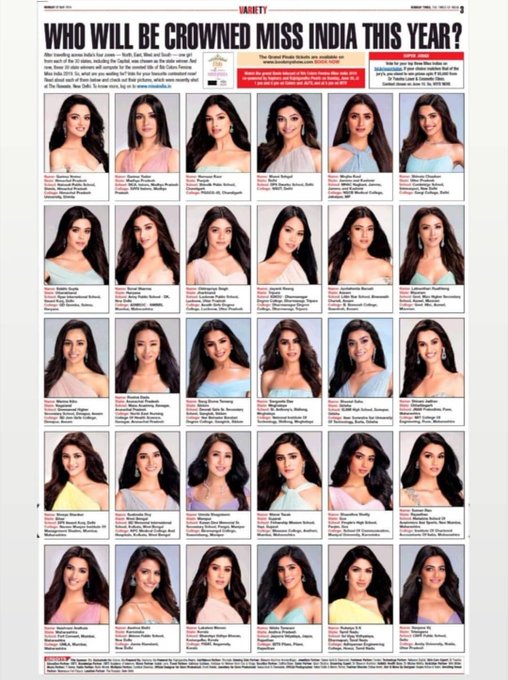
But instead of being able to enjoy their success, they have found themselves at the centre of a storm over a photo collage which, critics say, suggests the organisers are obsessed with fair skin.
The collage published in the Times of India newspaper – which belongs to the group that organises the annual beauty pageant – depicts 30 headshots of beautiful women.
But when a Twitter user shared it and posed a question: “What is wrong with this picture?” it began to gain traction.
With their tame, glossy, shoulder-length hair and a skin tone that is virtually identical, some quipped that they all looked the same. Others wondered out loud – albeit as a joke – if in fact they were all the same person.
As the picture gained traction on Twitter, critics made the point that while there was nothing wrong with the image of the women themselves, the lack of diversity in skin colour has once again highlighted India’s obsession with being fair and lovely.
As social media chatter grew, we tried to get in touch with the organisers but there has been no response so far.
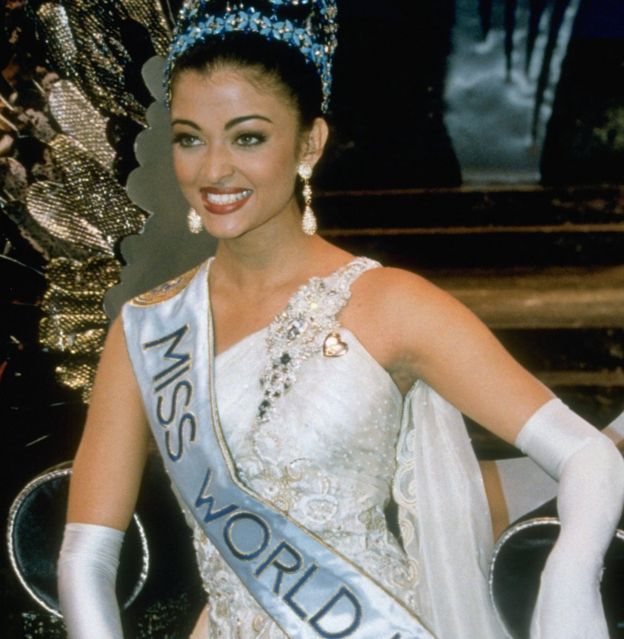
Beauty pageants have been serious business in India since the mid-1990s. The country has produced several famous Miss Indias, like Aishwarya Rai, Sushmita Sen and Ms Chopra, who also won global titles. Many pageant winners have also gone on to have lucrative Bollywood careers.
Over the years, institutions that train young women aspiring to participate in beauty pageants have mushroomed across the country.
But again, many of their biggest successes have been women who are light-skinned.
Image copyright GETTY IMAGESImage caption Aishwarya Rai soon after she was crowned Miss World 1994
This is hardly surprising.
India’s obsession with fairness, especially when it comes to women, is well known and many regard fair skin as being superior to darker tones.
It has always been accepted for instance, that fairer is better in the marriage market.
And ever since the 1970s, when Fair and Lovely – India’s first fairness cream – was introduced, skin whitening cosmetics have been among the highest selling in the country and, over the years, top Bollywood actors and actresses have appeared in advertisements to endorse them.
Commercials for such creams and gels promised not just fair skin but also peddled them as means to get a glamorous job, find love, or get married.
And pageants like this, which favour a particular type of skin tone, only serve to perpetuate that stereotype.
In 2005, some bright spark decided that it was not just women who needed fairer skin, so along came India’s first fairness cream for men – Fair and Handsome.
Endorsed by Bollywood superstar Shah Rukh Khan no less, it soon became a huge success.
But this has not stopped the flood of new creams and gels that claim to lighten everything from armpit hair to – hold your breath – female genitalia.
Their popularity in India can be gauged from the fact that fairness creams and bleaches sell for hundreds of millions of dollars every year and, according to one estimate, the market for women’s fairness products is expected to be 50bn rupees ($716m; £566m) by 2023.
The defenders of skin whitening products say it’s a matter of personal choice, that if women can use lipstick to make their lips redder, then what’s the big deal about using creams or gels to appear fairer?
It may sound logical, but campaigners point out that this obsession with fair skin is grossly unfair – the “superiority” of light skin is subtly, but constantly, reinforced and that perpetuates societal prejudice and hurts people with darker complexions who grow up with low self-confidence. It also impacts their personal and professional success, they say.
We’ve heard models with darker skin colours say how they were overlooked for assignments and I can remember only a few darker-skinned Bollywood actresses in leading roles.
Image copyrightGETTY IMAGESImage captionBeauty pageants have been accused of favouring a particular skin tone
In 2014, the Advertising Standards Council of India (ASCI), a self-regulatory body of advertisers, issued a set of guidelines barring commercials from depicting people with darker skin colour as “unattractive, unhappy, depressed or concerned” and said that they should not be shown as being at a disadvantage when it came to “prospects of matrimony, jobs or promotions”.
The ads, however, continue to be made, even though they are a bit more discreet now compared to the earlier in-your-face sort of campaigns. Popular film actors and actresses also continue to endorse them.
But as I write this piece, a heart-warming piece of news is just being reported: South Indian actress Sai Pallavi has confirmed that she rejected a 20m rupee deal to appear in a fairness cream advertisement earlier this year.
“What am I going to do with the money I get from such an ad? I don’t have… big needs.
“I can say that the standards we have are wrong. This is the Indian colour. We can’t go to foreigners and ask them why they’re white.
“That’s their skin colour and this is ours,” she was quoted as saying.
Pallavi’s comments are being hailed as a breath of fresh air by commentators, especially as they are seen in context to the Miss India collage where all contestants look the same – whitewashed.
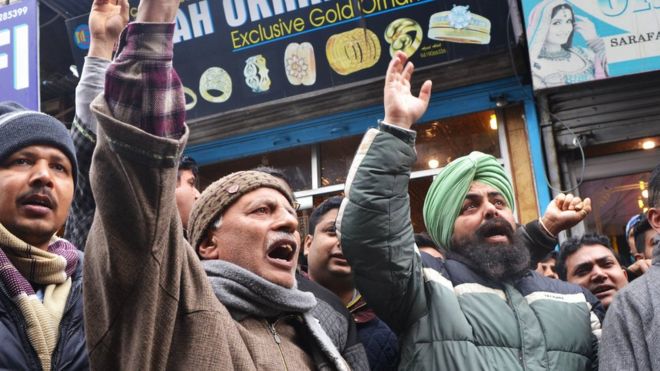
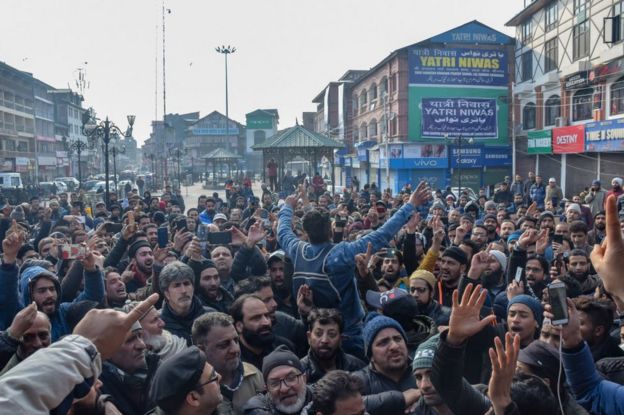
Image copyrightGETTY IMAGESImage captionProtests have been held in Indian-administered Kashmir over attacks on Kashmiris in other parts of India
India’s top court has ordered the government to protect Kashmiri people from attacks in apparent retaliation for last week’s deadly bombing in Indian-administered Kashmir.
There have been several reports of Kashmiri students and businessmen being harassed or beaten up in recent days.
The Supreme Court has also sought a response from the states where these alleged incidents happened.
The attack has sparked anger and anti-Pakistan protests across India.
The suicide bombing of an Indian security convoy in Pulwama on 14 February was claimed by a Pakistan-based militant group and has led to a war of words between nuclear-armed India and Pakistan.
But in some cases the anger has been directed against Kashmiri people living in other parts of India. The attack, which killed more than 40 Indian paramilitary police, was the deadliest against Indian forces in Kashmir in decades.
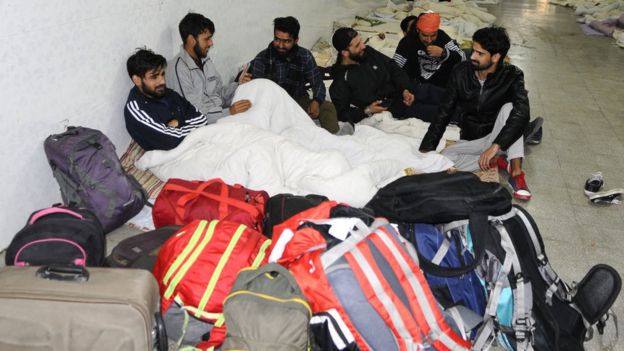
Hundreds of Kashmiri students, traders and businessmen have returned to Kashmir from various Indian cities out of fear that they could face harassment or attack.
India has long had a volatile relationship with Muslim-majority Kashmir, where there has been an armed insurgency against Indian rule since the late 1980s.
The region has been a flashpoint between India and Pakistan since independence. Both countries claim all of Kashmir but control only parts of it. They have fought two wars and a limited conflict over the territory.
Image copyrightGETTY IMAGESImage captionKashmiri students living in Dehradun and other cities have returned home since the attack
What did the court say?
The court’s decision singled out the federal government as well as governments in 10 states which are home to a sizeable Kashmiri population.
It asked authorities to widely publicise the details of officials who Kashmiris can contact if they face threats or violence.
The order was in response to a petition seeking protection for Kashmiris living across India. Tehseen Poonawala, one of the petitioners, told the BBC that he was moved to act because he was “disturbed” after reading reports of Kashmiris being attacked.
“It’s not about Kashmiris. It’s about human beings. We cannot be a country that responds with mob violence,” he said.
What happened to Kashmiri students?
In the days following the attack, isolated incidents of students from Kashmir being beaten up or evicted from their accommodation in northern Indian states were reported in local media. Kashmiri Muslims were warned to stay vigilant and India’s Central Reserve Police Force (CRPF) offered help to those in need, but also warned of false reports.
“We did so to provide protection to the [Kashmiri] students,” the college principal, Aslam Siddidqu, told the BBC, adding that he had faced pressure from right-wing groups.
Federal education minister Prakash Javadekar has denied that “incidents” have taken place involving Kashmiri students.
But a police official in Dehradun told the BBC that 22 students had been arrested for protesting and demanding that Kashmiri students be expelled from colleges in the city.
Image copyrightGETTY IMAGESImage captionMarkets and businesses were closed to protest against violence
What’s the bigger picture?
The attack has raised tensions between India and Pakistan, which have fought two wars and a limited conflict in the region and are both nuclear powers.
India has accused Pakistani intelligence services of having a hand in the attack, which was claimed by militant group Jaish-e-Mohammad.
Pakistan denies this and has warned that it will retaliate if India takes military action. In his first comments addressing the attack, Prime Minister Imran Khan said India should “stop blaming Pakistan without any proof or evidence” and urged Indian authorities to share any “actionable intelligence”.
India has moved to impose trade restrictions on Pakistan. It has also said it will build dams to reduce the flow of water to Pakistan from three rivers in India. Similar plans were announced in 2016, after a deadly militant attack on an Indian base in Kashmir.


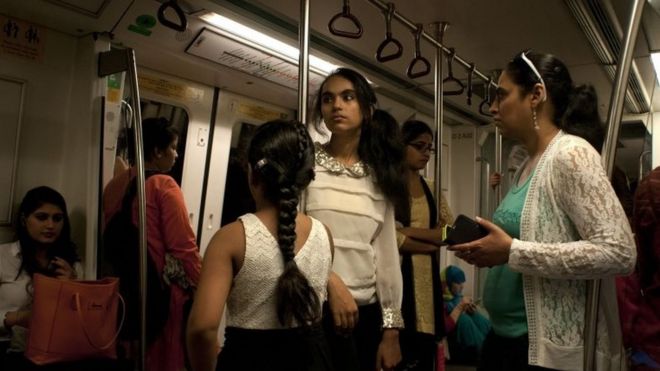 Image copyright GETTY IMAGES



 CHINDIA ALERT: You'll be living in their world, very soon