Chindia Alert: You’ll be Living in their World Very Soon
aims to alert you to the threats and opportunities that China and India present. China and India require serious attention; case of ‘hidden dragon and crouching tiger’.
Without this attention, governments, businesses and, indeed, individuals may find themselves at a great disadvantage sooner rather than later.
The POSTs (front webpages) are mainly 'cuttings' from reliable sources, updated continuously.
The PAGEs (see Tabs, above) attempt to make the information more meaningful by putting some structure to the information we have researched and assembled since 2006.
Even though officials have sounded more positive about negotiations with the US recently, failure to achieve a deal would see tariffs on $200bn (£152bn) of Chinese goods rise almost immediately and could see the US impose fresh tariffs.
Still, Mr Evans-Pritchard said “broader weakness in global demand means that, even if Trump and Xi finalise a trade deal soon, the outlook for exports remains gloomy.”
BEIJING (Reuters) – China’s exports likely contracted in February after a surprise bounce in January, while imports fell for a third straight month, a Reuters poll showed, heightening anxiety over whether Washington and Beijing can resolve deep differences over trade.
China’s exports in February are expected to have fallen 4.8 percent from a year earlier, according to the median estimate of 32 economists in a Reuters poll, following a 9.1 percent rise in January.
Such a drop would be the biggest since December 2016, and suggest a further weakening in global demand.
Imports in February are expected to have fallen 1.4 percent from a year earlier, compared with the previous month’s 1.5 percent decline.Stronger-than-expected imports could prompt some China watchers to say the economy is showing signs of bottoming out in response to a string of stimulus measures in 2018.
But most analysts typically caution that China’s data early in the year can be highly distorted by the timing of the Lunar New Year holidays, when some business rush out shipments or scale back output before shutting for a extended break. As such, analysts’ estimates for February varied widely.
TRADE DEAL NOT A SILVER BULLET
In recent weeks, the United States and China appear to have moved closer to a trade deal that would roll back tit-for-tat tariffs on each others’ goods, with Beijing making pledges on structural economic changes, a source briefed on negotiations said on Sunday.
But President Donald Trump will reject any pact that is not perfect, Secretary of State Mike Pompeo said this week.
Even if concrete steps such as dismantling tariffs are agreed, it would not be a panacea for all of China’s economic woes. Its exporters would have to piece supply chains back together, win back market share and contend with slowing demand globally.
Factory surveys have suggested exports and imports will remain weak in coming months, with February’s official gauge showing export orders fell to their weakest level since the global financial crisis.
China’s overall trade surplus is seen to have shrunk sharply to $26.38 billion in February from $39.16 billion the previous month, according to the Reuters poll.
In response to growing domestic and global pressure, China’s government this week unveiled a 2019 economic growth target of 6.0-6.5 percent, down from an actual 6.6 percent in 2018, the slowest pace in nearly 30 years.
China to slash taxes, boost lending to prop up slowing economy
Premier Li Keqiang told parliament on Tuesday that China will shore up the economy through billions of dollars in additional tax cuts and infrastructure spending, and will lower real interest rates.
“A set of pro-growth measures are planned despite positive progress in U.S.-China trade talks, which makes us think that either China doesn’t have full confidence in a trade truce or that the damages from the trade conflict cannot easily be undone,” said Iris Pang, Greater China economist at ING.
China has attacked Ms Meng’s arrest and the extradition process as a “political incident”. She denies all the charges against her.
What does Ms Meng’s lawsuit say?
Ms Meng’s claim – filed in British Columbia’s Supreme Court on Friday – seeks damages against the Royal Canadian Mounted Police (RCMP), Canadian Border Services Agency (CBSA) and the federal government for allegedly breaching her civil rights under Canada’s Charter of Rights and Freedoms.
She says CBSA officers held, searched and questioned her at the airport under false pretences before she was arrested by the RCMP.
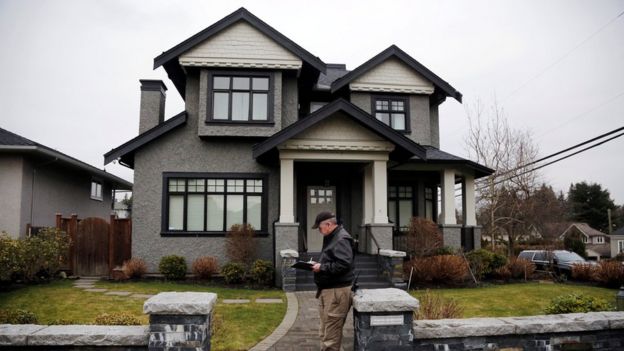
Image copyrightREUTERSImage caption Ms Meng has a property in Vancouver and is currently out on bail
Her detention was “unlawful” and “arbitrary”, the suit says, and officers “intentionally failed to advise her of the true reasons for her detention, her right to counsel, and her right to silence”.
Where are we in the extradition process?
Ms Meng, 47, will next appear in court on Wednesday, when it will be confirmed that Canada has issued a legal writ over her extradition to the US. A date for an extradition hearing will be set.
But this is still the early stages. A judge must authorise her committal for extradition and the justice minister would then decide whether to surrender her to the US.
There will be chances for appeal and some cases have dragged on for years.
The Meng Wanzhou case – how did we get here?
1 December: Ms Meng, the daughter of Huawei’s founder, is arrested while changing planes at Vancouver airport
7 December: Ms Meng first appears in court in Vancouver, where it is revealed she is accused of breaking US sanctions on Iran. China demands her release
10 December: Canadian citizens Michael Kovrig and Michael Spavor are arrested in China
11 December: Ms Meng is released on bail
28 January: US formally charges Ms Meng with fraud and Huawei with circumventing US sanctions on Iran and stealing technology from T Mobile
2 March: Canada says Ms Meng’s extradition can move forward but the process is expected to be long
What is Huawei accused of?
The US alleges Huawei misled the US and a global bank about its relationship with two subsidiaries, Huawei Device USA and Skycom Tech, to conduct business with Iran.
US President Donald Trump’s administration has reinstated all sanctions on Iran removed under a 2015 nuclear deal and recently imposed even stricter measures, hitting oil exports, shipping and banks.
It also alleges Huawei stole technology from T Mobile used to test smartphone durability, as well as obstructing justice and committing wire fraud.
In all, the US has laid 23 charges against the company.
Some Western nations are reviewing business with the firm over spying concerns, although Huawei has always maintained it acts independently.
How has China reacted?
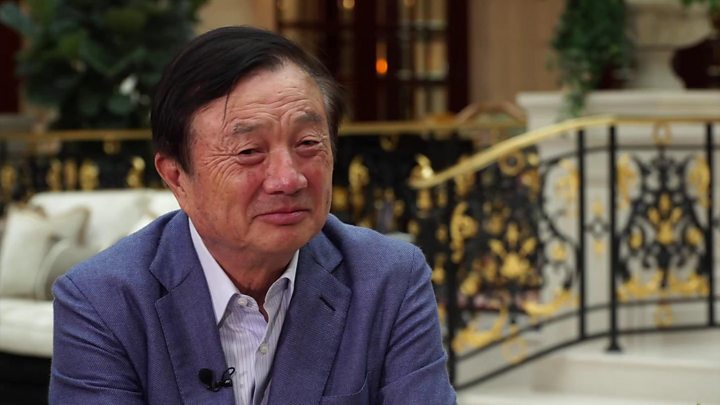
Media caption – Huawei founder Ren Zhengfei on the arrest of his daughter
The arrest has seriously strained relations between China, and the US and Canada.
Beijing says it is an “abuse of the bilateral extradition treaty” between Canada and the US, and has expressed its “resolute opposition” and “strong dissatisfaction” with the proceedings.
China also says the accusations against Huawei, the world’s second biggest smartphone maker by volume, are a “witch-hunt”.
Two Canadian citizens are thought to have been detained in China in retaliation for the arrest.
China and the US are also engaged in tough trade negotiations to end a major tariff dispute.


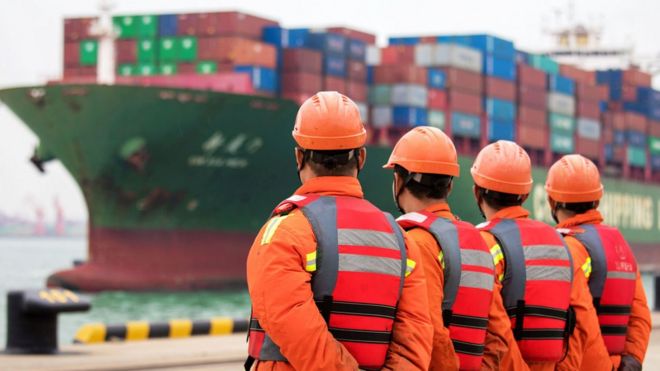 Image copyrightGETTY IMAGES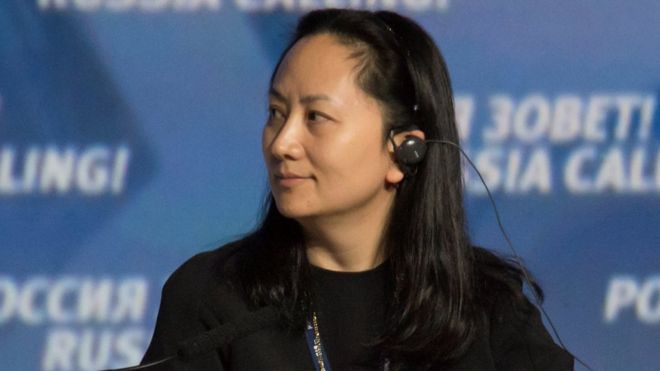


 CHINDIA ALERT: You'll be living in their world, very soon