Chindia Alert: You’ll be Living in their World Very Soon
aims to alert you to the threats and opportunities that China and India present. China and India require serious attention; case of ‘hidden dragon and crouching tiger’.
Without this attention, governments, businesses and, indeed, individuals may find themselves at a great disadvantage sooner rather than later.
The POSTs (front webpages) are mainly 'cuttings' from reliable sources, updated continuously.
The PAGEs (see Tabs, above) attempt to make the information more meaningful by putting some structure to the information we have researched and assembled since 2006.
BEIJING, June 18 (Xinhua) — China on Tuesday said its determination to maintain the Joint Comprehensive Plan of Action (JCPOA) is unwavering and is willing to continue to make efforts for the full and effective implementation of the JCPOA.
Chinese State Councilor and Foreign Minister Wang Yi made the remarks when meeting the press after his meeting with Syrian Deputy Prime Minister and Foreign Minister Walid Mualem.
Calling on all parties to jointly promote the alleviation of Iranian nuclear issue and the situation in the Gulf region, instead of letting it get worse, even slipping into conflicts, Wang urged all parties to firmly maintain the deal.
Wang said ensuring the full and effective implementation of the JCPOA was not only a decision made by the UN Security Council but also the only effective way to resolve the Iranian nuclear issue, which is related to the common interests of the international community.
He urged all parties to maintain rationality and restraint, rather than to “open Pandora’s box”, noting that the United States should change its “maximum pressure” policy.
“There is as no basis for unilateralism in international law,” said Wang, adding that unilateralism will create greater crises instead of solving problems.
Noting the International Atomic Energy Agency has confirmed that Iran has fulfilled its obligations under the JCPOA for 15 consecutive times, Wang said China hoped that Iran could make careful decisions and would not abandon the JCPOA easily.
He also urged other parties to respect the reasonable demands of the Iranian side and take active measures to maintain the balance of rights and obligations under the JCPOA.
Wang noted that China has recently conducted close coordination and cooperation with related parties, resulting in important progress in the reconstruction of the Arak heavy water reactor facility.
“The Chinese side is willing to continue making efforts for the full and effective implementation of the JCPOA. At the same time, we will firmly safeguard our own legitimate rights and interests,” Wang said.
Chinese President Xi Jinping, also general secretary of the Communist Party of China (CPC) Central Committee and chairman of the Central Military Commission, shakes hands with delegates attending the 13th Party Congress of the Chinese People’s Liberation Army (PLA) Air Force in Beijing, capital of China, June 18, 2019. (Xinhua/Li Gang)
BEIJING, June 18 (Xinhua) — Chinese President Xi Jinping on Tuesday met with delegates attending the 13th Party Congress of the Chinese People’s Liberation Army (PLA) Air Force in Beijing.
Xi, also general secretary of the Communist Party of China (CPC) Central Committee and chairman of the Central Military Commission, extended congratulations on the convening of the congress and sincere greetings to all the delegates and service personnel of the Air Force.
Li Zhanshu (R), chairman of the National People’s Congress Standing Committee, holds talks with Egypt’s Parliament Speaker Ali Abdel-Aal in Beijing, capital of China, June 18, 2019. (Xinhua/Rao Aimin)
BEIJING, June 18 (Xinhua) — Li Zhanshu, chairman of the Standing Committee of the National People’s Congress (NPC), held talks with Egypt’s Parliament Speaker Ali Abdel-Aal here on Tuesday.
The two also attended the first phase of the fifth meeting of the exchange mechanism between Chinese and Egyptian parliaments.
Hailing the sound development of bilateral ties in the past, Li said China has always viewed and promoted the China-Egypt ties from a strategic height and a long-term perspective and worked together with Egypt to support each other on issues concerning core interests and major concerns.
China stands ready to enhance alignment of development strategies with Egypt, intensify Belt and Road cooperation so as to lift bilateral ties to a new level, he said.
Stressing that China stands for further consolidation of an open, inclusive, transparent, non-discriminatory and rules-based multilateral trading system, Li called China and Egypt to enhance unity and cooperation and contribute to the common development of developing countries and the building of a community with a shared future for humanity.
Li also called on the NPC and Egypt’s Parliament to strengthen exchanges at different levels, in various forms and via different channels, give full play to the role of the exchange mechanism between the two legislature bodies and share experiences on legislation, supervision and state governance so as to inject new impetus into bilateral ties.
Ali said Egypt speaks highly of the Belt and Road Initiative and believes that it will bring huge opportunities to bilateral cooperation.
Egypt will as always firmly support China on issues of China’s major concerns and is ready to enhance bilateral cooperation in fighting terrorism and coordination in international affairs, Ali said, adding that Egypt’s parliament looks forward to closer cooperation with the NPC.
Also on Tuesday, Wang Yang, chairman of the Chinese People’s Political Consultative Conference (CPPCC) National Committee, met with Ali.
The CPPCC is willing to strengthen exchanges with Egyptians in all sectors of society and play an active role in deepening the friendship between the two peoples and promoting the development of bilateral relations, said Wang.
‘Traditional friendship’ between two nations will continue whatever the future brings, Xi says ahead of two-day trip to Pyongyang
Visit comes amid rising tensions between Beijing and Washington, and stalled negotiations on the denuclearisation of the Korean peninsula
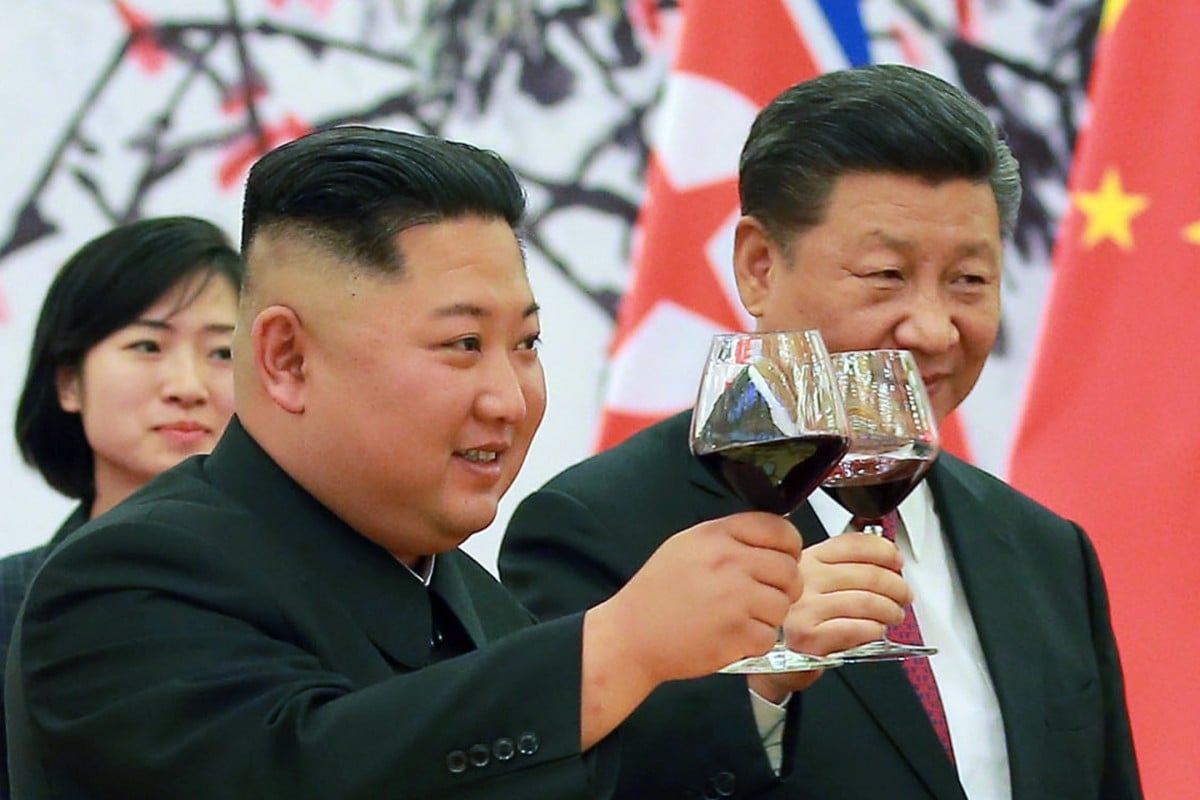
Chinese President Xi Jinping says China will continue to “firmly support” North Korean leader Kim Jong-un. Photo: AP
Chinese President Xi Jinping has pledged his full support for North Korean leader Kim Jong-un and promised to play an active role in efforts to bring peace and stability to the region, a day ahead of his
Xi’s comments, in an editorial published by North Korean newspaper Rodong Sinmunon Wednesday, come as China remains locked in a trade and technology war with the United States, and after a second summit between US President Donald Trump and Kim in Hanoi in February failed to achieve any progress on the denuclearisation of the Korean peninsula.
“No matter how the international situation changes”, China would “firmly support Chairman Kim Jong-un to lead the North Korean party and people to implement the new strategic line”, the article said.
As well as expressing the two sides’ desire to strengthen “strategic communication and exchanges”, Xi said Beijing would continue to support Pyongyang in its negotiations with other countries.
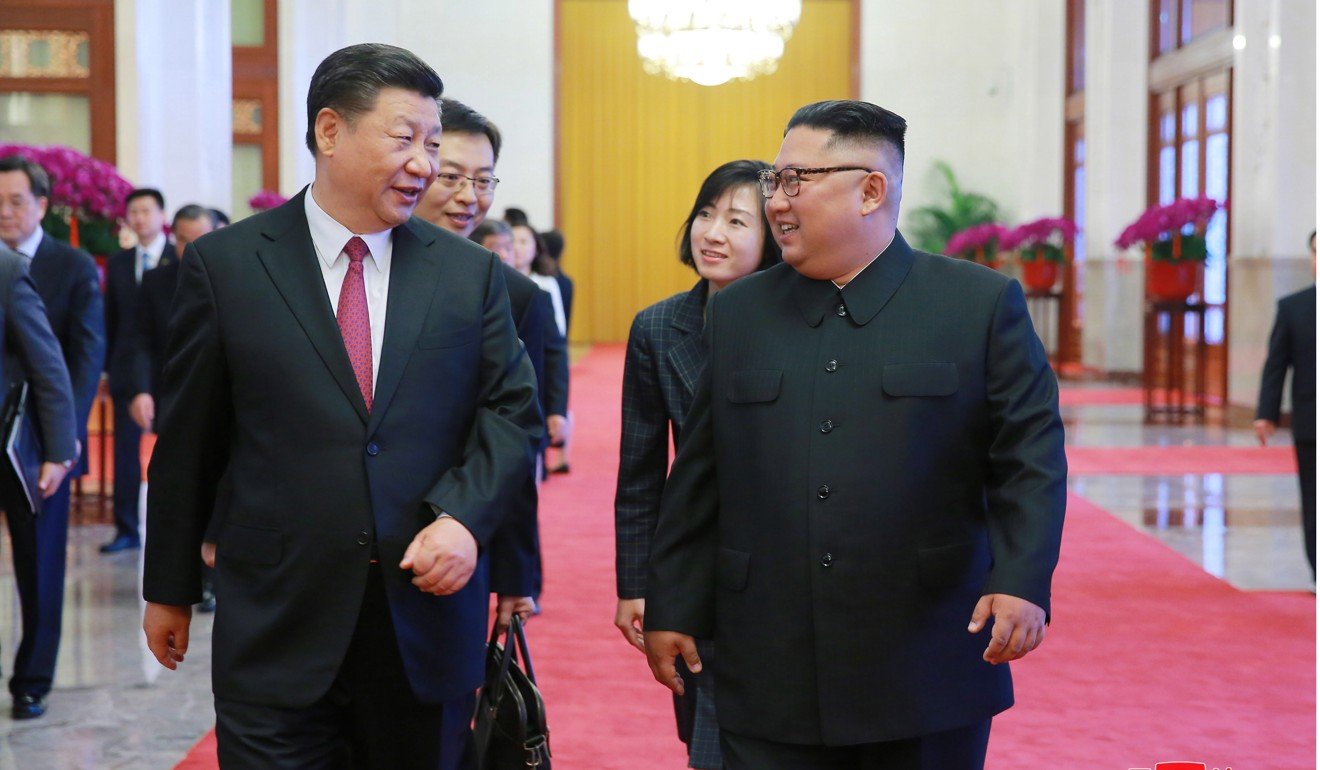
Xi Jinping (left) says China will “contribute to peace, stability, development and prosperity in the region”. Photo: EPA-EFE
“We will actively contribute to peace, stability, development and prosperity in the region by strengthening communication and coordination with the Democratic People’s Republic of Korea,” he said, referring to the country by its official name.
China would also engage with other stakeholders “by jointly expediting progress on dialogue and negotiations on the issues of the Korean peninsula”, he said.
Xi’s state visit to North Korea aims for ‘new impetus’ in ties
Speaking ahead of Xi’s two-day trip to Pyongyang, which starts on Thursday, Chinese foreign ministry spokesman Lu Kang said on Tuesday that the outcome of the Trump-Kim summit in Hanoi was “a little unexpected” and that China was encouraging both sides to continue their dialogue.
” from Kim that had “reset” the tone between the two countries. In May, he said Pyongyang was “not ready to negotiate”.
One of the major stumbling blocks in the negotiation process has been the United Nations sanctions. Pyongyang has stipulated that they should be lifted as a precondition of the denuclearisation process while Washington has insisted they should remain in place until North Korea provides clear evidence the process is under way.
China, meanwhile, has been accused of providing large amounts of humanitarian aid to its neighbour to help offset the impact of the sanctions.
Xi said China would continue to support North Korea in raising “legitimate concerns through dialogue”.
“No matter how the wind and clouds of the international situation change, our two parties and two peoples inherit and carry forward the traditional friendship between China and the DPRK,” he said.
Zhao Tong, a fellow at the Carnegie-Tsinghua Centre for Global Policy, said that while the main aim of Xi’s visit was to reaffirm ties, its timing, amid the US-China dispute, was designed to show Beijing still had a role to play in the negotiations.
“As China-US strategic rivalry grows, China wants to maintain its geopolitical influence on the Korean peninsula. By demonstrating its unique relations with the DPRK at a time when neither Washington nor Seoul is able to resume high-level engagements with Pyongyang, Beijing is signalling to Washington that it is still a helpful, constructive and indispensable partner to resolve important regional problems,” he said.
Xi’s visit to North Korea will be the first by a Chinese leader since Hu Jintao in 2005.
Osaka summit intended to pull bilateral ties away from brinkmanship that has dragged relations to lowest point in decades
Trade war just one of the items on the agenda, analysts say, along with principles of relationship, North Korea, and Huawei
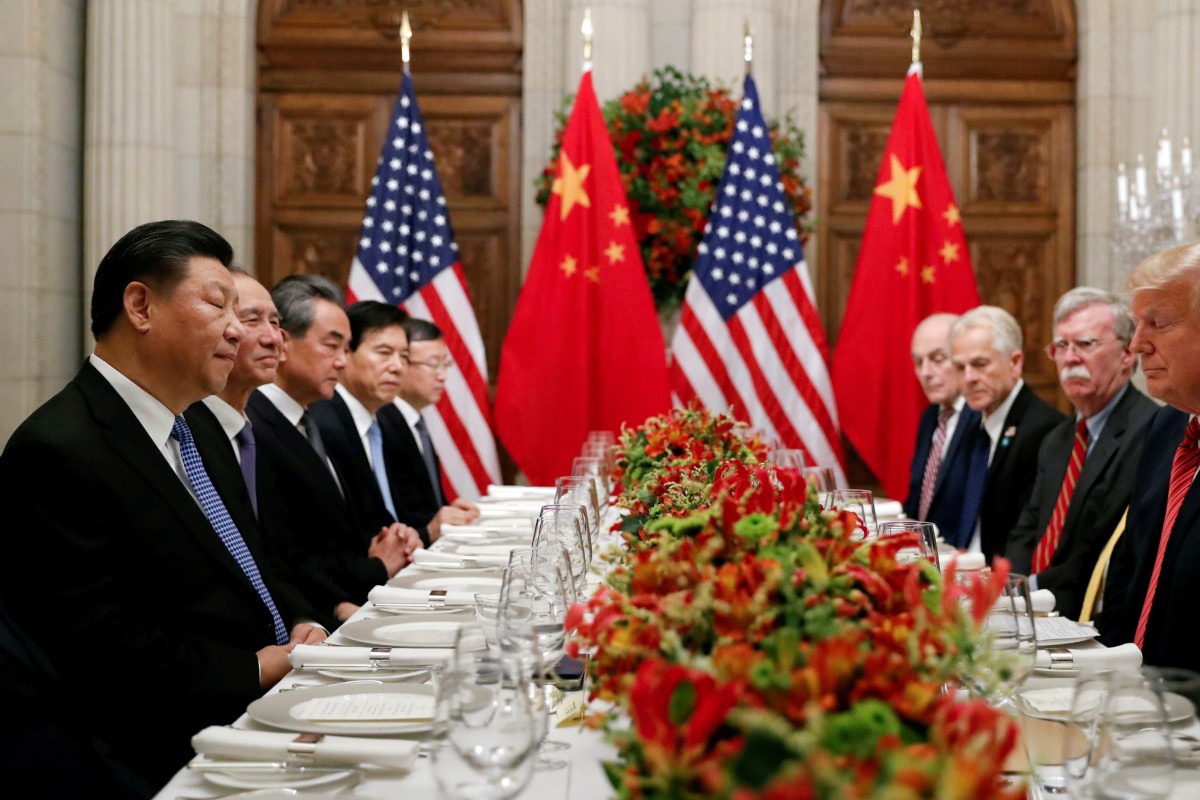
The last time the US President Donald Trump and China’s President Xi Jinping met was in Buenos Aires in December. Analysts are confident that their meeting at the G20 Summit in Osaka this month can yield a freeze in the escalation of the trade war. Photo: Reuters
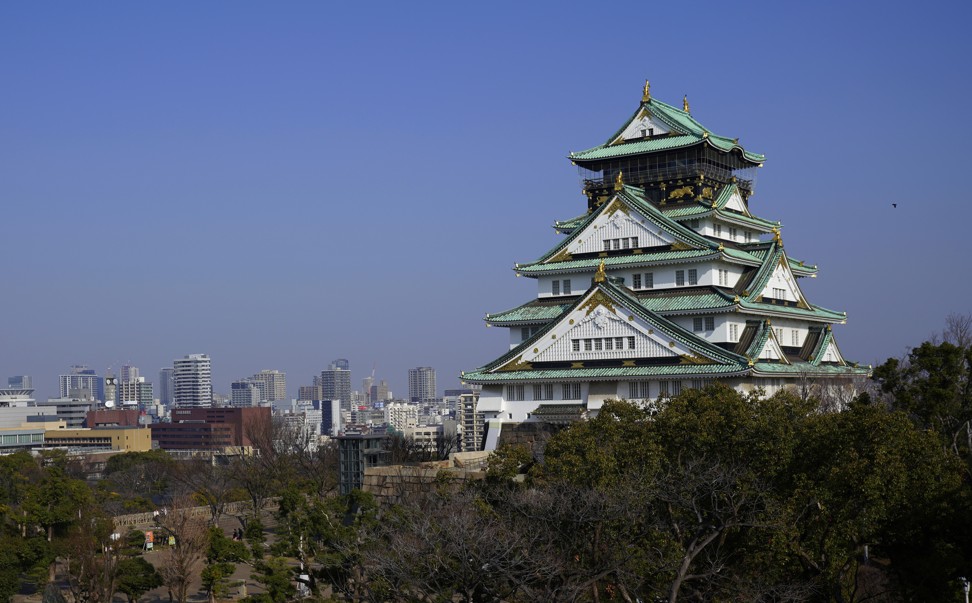
When Chinese President Xi Jinping meets his US counterpart Donald Trump in Japan at the end of the month they are expected to discuss a broad range of issues, including the trade war, in an effort to stop the relationship from tilting towards sustained confrontation, analysts said.
Neither side has provided an agenda for the meeting on the sidelines of the G20 leaders summit in Osaka, despite confirmation coming from both sides that it was to take place, after weeks of speculation.
A summary of Tuesday’s phone conversation between Xi and Trump published by Xinhua, however, implied that the leaders would cover more strategic issues, leaving the nuts and bolts of a trade deal to their negotiating teams. Meanwhile, China’s foreign ministry spokesperson Lu Kang said at a regular press conference on Wednesday that the two leaders would discuss the overall direction of bilateral relations, but he did not elaborate further.
Both China and the United States have confirmed that their leaders will meet in Osaka at the end of June, at a time when US-China relations have nosedived. Photo: AP
, a former vice-minister at China’s Ministry of Commerce, predicted that Beijing would use the meeting to make clear a few principles regarding the bilateral relationship.
“It’s inevitable [for China and the US] to have problems in certain fields, but both sides should resolve the problems through dialogue on an equal footing rather than opting for a trade war, a tech war, or a financial war,” said Wei, now a vice-chair at the state-backed China Centre for International Economic Exchanges, a think tank.
He added that China would try to convince the US that it had no intention of challenging its global hegemony, but that China’s own “core interests”, including its sovereignty, territorial rights and room to develop, “must be respected”.
A government official in Beijing, who declined to be identified, said China was pinning its hopes on the leaders’ summit to ease general tensions between Beijing and Washington, even though the chances of the leaders reaching any concrete agreements in Osaka was small.
“Without a leaders’ summit, it would be difficult to push ahead the work [to reach agreements] at the ministerial or lower levels,” the source said.
Wei Jianguo, a former vice-minister at China’s Ministry of Commerce, predicted that Beijing would use the meeting to make clear a few principles regarding the bilateral relationship. Photo: Handout
The last summit between Trump and Xi in Buenos Aires in December resulted in a tariff truce and negotiations that continued until early-May. But the talks failed to achieve a deal to end the conflict, resulting in the US more than doubling tariffs on US$200 billion of Chinese imports and threatening tariffs on almost all remaining Chinese imports, valued at US$300 billion by the US government.
he was willing to exchange views with Trump on “the fundamental issues” affecting China-US relations, came at a low point in recent China-US relations.
The tariff increase followed the collapse of trade talks in early-May, while hostile rhetoric has spread into the political and military spheres. The US labelled China a “strategic competitor” and accused Beijing of conducting sustained espionage to impede US’s national security, while China blamed the US for trying to thwart China’s development by targeting Huawei and infringing on China’s sovereignty over Taiwan and Hong Kong.
Zhou Rong, a senior fellow from the Chongyang Institute for Financial Studies at the Renmin University of China, said the two leaders have a long list of issues to talk about this time in addition to trade, including Taiwan, the South China Sea, as well as the treatment of Chinese companies in the US. China can offer to help on some issues but “the US should not force China to swallow bitter fruit it cannot digest”, Zhou said.
Ni Feng, a specialist in Sino-US relations at the Chinese Academy of Social Sciences, said they would discuss the “overall direction” of their bilateral relationship, including where the two nations could engage in “competition and cooperation”.
He added that North Korea may be on the agenda because “China and the US share the same goal of the denuclearisation of the Korean peninsula.”
Another source in the Chinese government, who wished to remain anonymous, said Xi was very likely to bring up the US’ blacklisting of Huawei, China’s leading technology firm. Washington has effectively banned American companies from providing key components to the Shenzhen-based company.
Meng Wanzhou, Huawei’s chief financial officer and the daughter of founder Ren Zhengfei, is currently on bail in Canada awaiting extradition to the US to face charges that both she and Huawei violated US sanctions on Iran.
During Tuesday’s call, Xi told Trump that China “hopes the US side can treat Chinese businesses fairly”, Xinhua reported.
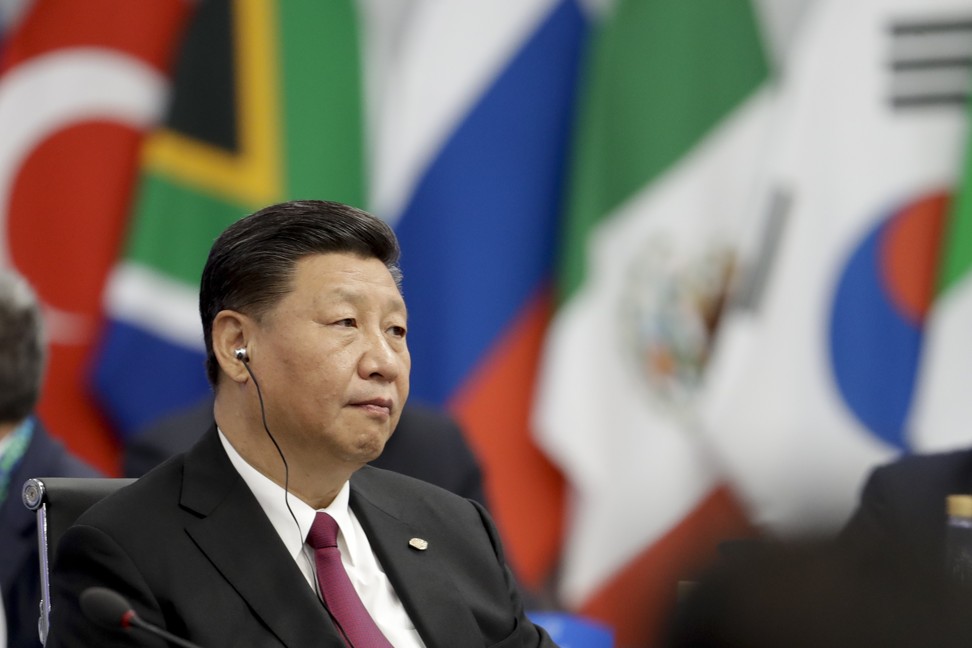
China’s President Xi Jinping waits for the start of the G20 summit in Buenos Aires, Argentina, Friday, Nov. 30, 2018. Photo: AP
At the same time, Trump and Xi agreed that the two countries’ trade negotiators would start to talk again before the meeting in Japan, raising prospects for a second truce in the trade war, or even a deal to end the conflict.
Matthew Goodman, a researcher at the Centre for Strategic and International Studies in Washington, wrote in a note that a Trump-Xi deal on trade-in Osaka “is certainly possible”.
The most likely outcome is similar to the one reached in Buenos Aires in December last year, when Trump and Xi “agreed to a temporary truce while trade negotiators work to hammer out a deal”, Goodman wrote. “This would postpone the worst effects of the current escalation but is unlikely to solve the deepening and dangerous rift in US-China relations”.
The South China Morning Post previously reported that the Osaka summit meeting, which is likely to take place on Saturday June 29, could also be a sit-down dinner between Trump, Xi and their top economic and security aides, as occurred in Buenos Aires. Trump tweeted Tuesday night that he would have an “extended” meeting with Xi in Japan.
Trade talks grinded to a halt last month when Mr Trump accused China of reneging on its promises and raised tariffs on $200bn (£159.2bn) worth of Chinese goods.
The move came as a surprise to many who had thought the US and China were nearing a trade deal. China retaliated with its own tariff hikes.
The Trump administration has threatened to impose tariffs on another $300bn worth of Chinese products if the two sides can’t reach an agreement on trade.
Tariffs on billions of dollars worth of goods from the US and China imposed over the past year have weighed on the global economy and hit financial markets.
Companies ranging from retailers to electronics firms have made submissions to the US trade department warning that more tariffs will hurt their business and consumers.
Still, in his latest comments the US president appeared more optimistic about striking a trade deal.
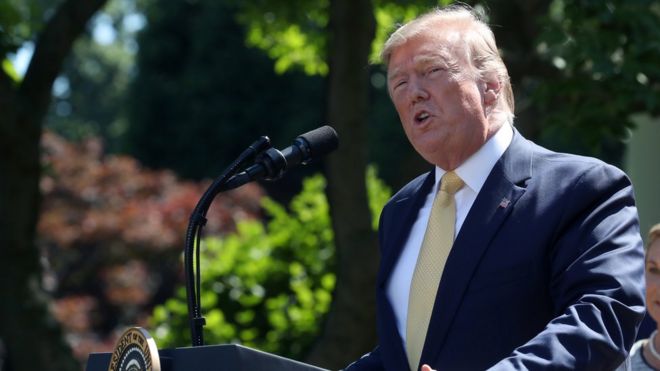
“I think we have a chance. I know that China wants to make a deal. They don’t like the tariffs, and a lot of companies are leaving China in order to avoid the tariffs,” Mr Trump told reporters at the White House on Tuesday.
Despite moves to resume talks, recent comments from both sides suggest they still remain far apart on many issues.
Sticking points in trade negotiations have included how to enforce a deal and how fast to roll back tariffs.
British trade officials’ anxious moments unfounded as £500 million agreement signed
Strong statement on Hong Kong protest by UK Foreign Secretary Jeremy Hunt fails to scupper talks
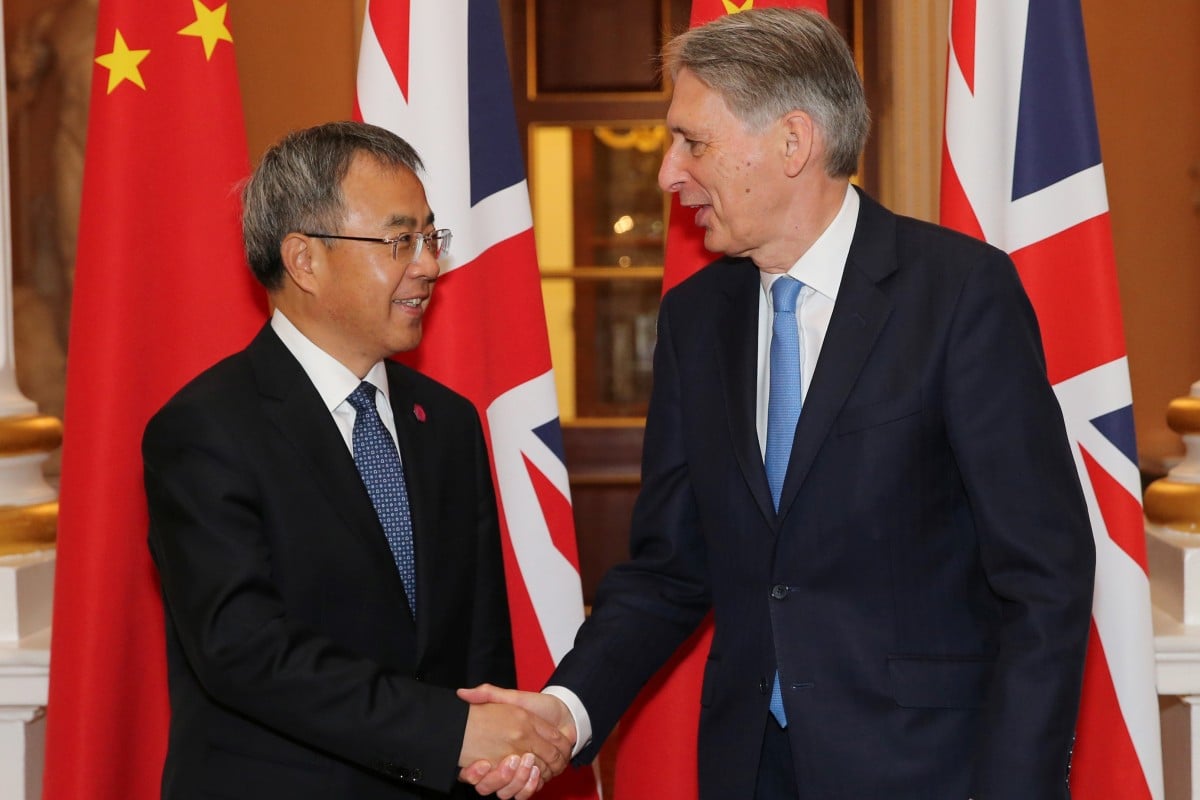
Chinese Vice-Premier Hu Chunhua (left) and British Chancellor Philip Hammond shake hands at London’s Mansion House. Photo: Reuters
China and Britain have clinched £500 million (US$630 million) worth of deals in a high-profile trip by a Chinese vice-premier to London on Monday, despite fears by British trade officials that the talks might be derailed because of protests in Hong Kong.
Vice-Premier Hu Chunhua and British Chancellor Philip Hammond vowed to work together to protect global trade, but not before officials in Whitehall wondered if the public uproar in Hong Kong would scupper a deal they see as a vital boost amid the Brexit uncertainty.
Hong Kong people took to the streets on two consecutive Sundays to protest against a bill that could allow extraditions from Hong Kong to mainland China. An estimated 2 million people took part in the most recent march on Sunday, calling for the bill to be scrapped altogether.
The anxiety of officials over the trade deal was compounded by a strongly worded statement by Jeremy Hunt, the foreign secretary now vying to be Britain’s next prime minister, who called on the Hong Kong government to “listen to the concerns of its people and its friends in the international community and to pause and reflect on these controversial measures”.
US forced to perform tricky balancing act over Hong Kong extradition bill
But as soon as Hong Kong Chief Executive Carrie Lam Cheng Yuet-ngor announced the suspension of the bill, Hunt issued another statement, this time “praising” the decision.
“Whitehall is so concerned about how the two events will affect each other. The foreign office didn’t want to understate the relevance of the Sino-British Joint Declaration, while the Exchequer wanted to make sure the deals would be signed,” a source with knowledge of the ongoing developments told the South China Morning Post.
The job consequently fell to Theresa May – who is entering her final days as prime minister – to raise the issue of Hong Kong with Hu.
Her office did not elaborate on their conversations, but a Conservative Party source said: “I expect her mention of Hong Kong to be minimal and a matter of mere gesture. To infuriate the world’s second biggest economy would be the last thing for a caretaker PM to do.”
Hong Kong has continued to be a subject of interest for foreign leaders following the suspension of the contentious bill that would allow anyone in Hong Kong suspected of mainly serious crimes to be sent to mainland China for trial.
China halts WTO battle over market economy status
US President Donald Trump would touch upon the issue if and when he met Chinese President Xi Jinping during the G20 summit in Japan later this month, US Secretary of State Mike Pompeo said on Sunday.
In the light of the ongoing trade war with the US,
but has been a largely untouched subject since Britain decided to leave the European Union a year later.
While in London, Hu co-chaired the latest China-UK Economic and Financial Dialogue with Hammond. The pair also officiated at the launch of the long-awaited London-Shanghai Stock Connect project, which went live on Monday and enables companies listed in Britain to sell shares in China.
Hong Kong must defend its values to forge an economic future
Under the scheme, Shanghai-listed companies can raise new funds via London’s stock market while British companies can broaden their investor base by selling existing shares in Shanghai.
Britain has hailed the deals with China as a diplomatic success amid the business uncertainties looming over Brexit, with Secretary for International Trade Liam Fox calling the creation of 175 new jobs in Britain “significant wins” for the British market.
Although Britain stopped short of endorsing China’s Belt and Road Initiative, the two countries concluded a memorandum of understanding on infrastructure cooperation in third countries, according to a statement by Britain’s Department of International Trade.
Britain also secured permission from China to export beef by the end of the year at the earliest, ending more than two decades of a Chinese government ban implemented in response to the BSE outbreak.
Image copyright GETTY IMAGESImage caption Empty water pots in Chennai, which has run out of water
The southern Indian city of Chennai (formerly Madras) is in crisis after its four main water reservoirs ran completely dry.
The acute water shortage has forced the city to scramble for urgent solutions, including drilling new boreholes.
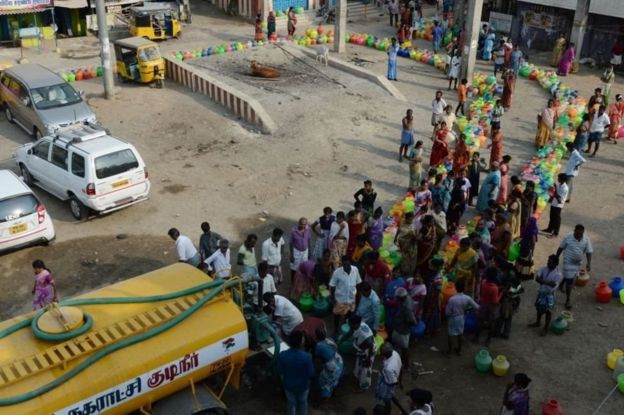
Residents have had to stand in line for hours to get water from government tanks, and restaurants have closed due to the lack of water.
“Only rain can save Chennai from this situation,” an official told BBC Tamil.
The city, which, according to the 2011 census, is India’s sixth largest, has been in the grip of a severe water shortage for weeks now.
As the reservoirs started to run dry, many hotels and restaurants shut down temporarily. The Chennai metro has turned off air conditioning in the stations, while offices have asked staff to work from home in a bid to conserve water.
Image copyright GETTY IMAGESImage caption People queue to get water from government trucks
Vinoth Kaligai, the general secretary of an IT workers’ association, confirmed that some firms had told employees to stay at home. “But homes are also running out of water, so what are we supposed to do?” he added.
The situation has also prompted clashes to break out between residents. Last week, police arrested a man for stabbing his neighbour during a fight over water-sharing in the neighbourhood.
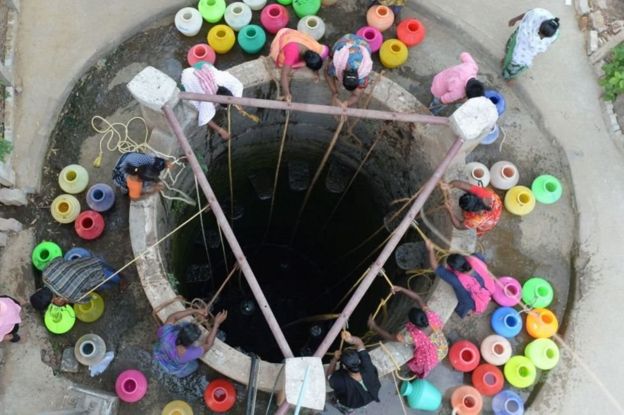
Officials are trying to find alternative sources of water, with the city’s water department starting to identify and extract water from quarries.
But the big concern is the dry reservoirs and low groundwater levels.
Image copyright GETTY IMAGESImage caption The search is now on for new sources of water
“The only way to make this better is to improve the groundwater level,” Nakkeeran, a social activist, said. “We’ve had dry years before but the groundwater was our saviour.”
The water crisis has also meant that most of the city has to depend solely on Chennai’s water department, which has been distributing water through government trucks across neighbourhoods.
“The destruction has just begun,” an official said. “If the rain fails us this year too, we are totally destroyed.”
CHONGQING, June 16 (Xinhua) — Tourist toilets newly installed, renovated or expanded in China over the past one and a half years totalled 30,000, the Ministry of Culture and Tourism said Sunday.
That accounted for 47 percent of the target set in a three-year plan issued by the government, ministry figures showed.
To boost domestic tourism, China aims to install or upgrade a total of 64,000 toilets for tourists from 2018 to 2020, according to the plan.
Since the toilet revolution was launched in 2015 to increase the number and sanitation of toilets at tourist sites, China has seen much improvement in terms of the quantity and quality of tourist toilets, with higher level of management of toilets, according to the ministry.
It is expected the two leaders will meet in Japan at the end of June
Analysts see an increasing caution from China amid low expectations of any deal
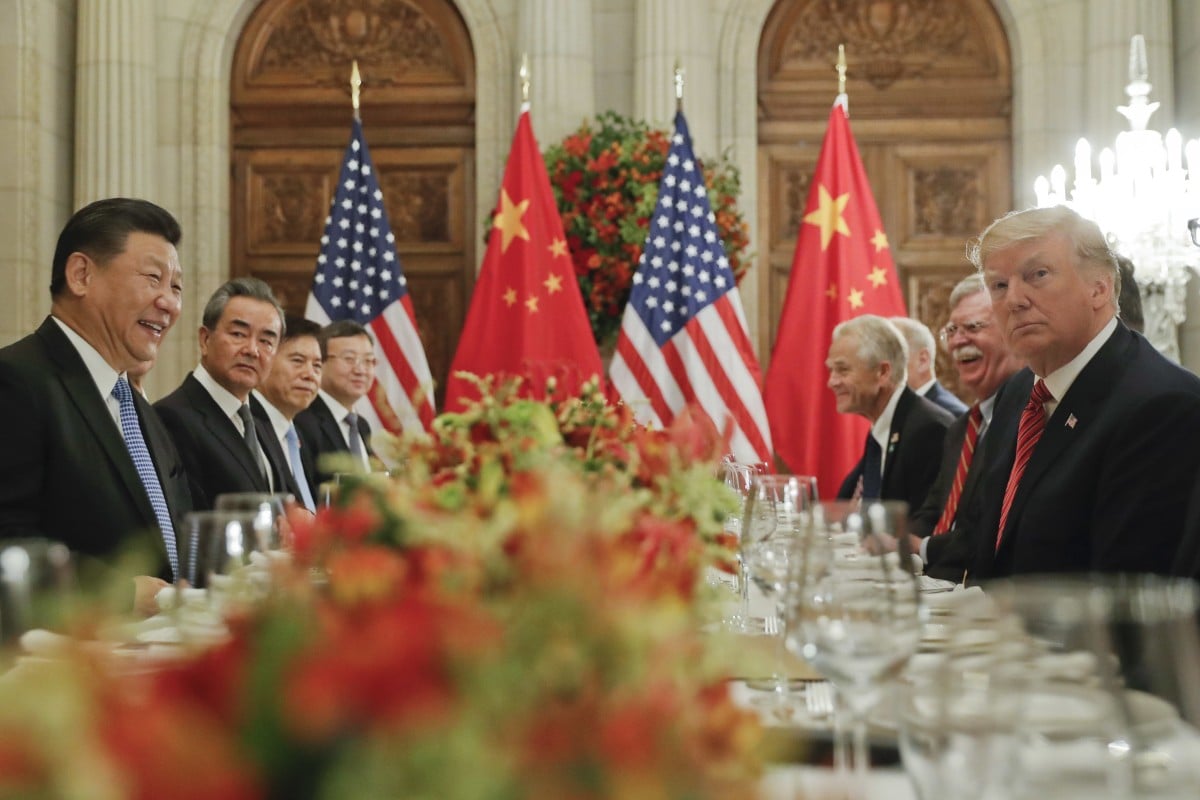
Chinese President Xi Jinping and US President Donald Trump last met in Argentina in December on the sidelines of the G20 summit. Photo: AP
China’s relative silence in response to comments by US President Donald Trump in relation to the trade war is due to Beijing redoubling its efforts to take a cautious approach ahead of future talks amid “low expectations” of a quick deal after negotiations collapsed last month, analysts said.
Trump has openly threatened to levy tariffs on additional Chinese products if a meeting with counterpart Xi Jinping does not take place at the G20 summit in Japan at the end of the month, while also urging Beijing to return to talks based on terms negotiated earlier in the year.
“It’s me right now that’s holding up the deal,” Trump said on Tuesday. “And we’re going to either do a great deal with China or we’re not going to do a deal at all.”
China, though, has remained tight-lipped on both a meeting and also the prospects of future talks, with the foreign ministry yet to confirm whether there will be a summit between
in Osaka. The South China Morning Post reported this week that the two leaders could share a more formal dinner, similar to the scene witnessed on the sidelines of the G20 summit in Argentina in December.
That meeting produced a ceasefire and more than five months of negotiations until early May when the talks broke down and the US more than doubled tariffs on US$200 billion in Chinese imports to 25 per cent.
Shi Yinhong, an international relations expert from Renmin University of China, said China had very low expectations ahead of the G20 summit in Japan due to the current level of strained bilateral relations.
Trump’s open threats had put Xi “in a very disadvantageous position”, as any agreement “would be seen as being weak or surrendering to US pressure”, he said.
Instead, the two sides were likely to reach “piecemeal deals” on smaller issues such as people-to-people exchanges and relaxation of visa restrictions, according to Shi, which in turn might help to build a friendlier atmosphere to pave the way for more substantive talks in the future.
It’s me right now that’s holding up the deal. And we’re going to either do a great deal with China or we’re not going to do a deal at all: Donald Trump
China’s state-controlled media outlets have maintained their criticism of the US for starting the trade war, although editorials carried by Xinhua and the People’s Daily have not given concrete information about Beijing’s demands, instead, in its latest editorial, Xinhua urged “US politicians to treat China’s rise with reasonable sense”.
Geng Shuang, a foreign ministry spokesman, said last week that China was aware of hopes emerging from the US side of a meeting between Trump and Xi in Osaka, but that China had no information to disclose on that subject, reiterating government statements from previous days.
Amid a war of words between Beijing and Washington over which side is to blame for the stalled trade talks, both sides have showcased their willingness to talk as long as the conditions are appropriate. Commerce vice-minister Wang Shouwen said at the start of June that China “is always sincere” about negotiating with the US, but the talks must be conducted with mutual respect.
“Otherwise, the negotiation would be meaningless. Even if there’s negotiation, there won’t be an enforceable and sustainable agreement,” Wang said.
Xi said at an economic forum in Russia last week that he did not want to see a decoupling of the US and China and believed that “my friend” Trump did not want that either.
“Trump’s stance that he is unlikely to make any concessions is very clear. So, China should be very cautious when arranging a bilateral meeting with him,” said Liu Weidong, a China-US affairs expert from the Chinese Academy of Social Sciences, a state think tank
Scott Kennedy, a senior adviser at the Centre for Strategic and International Studies in Washington, said Trump and Xi may reach “some sort of truce” as they did in Buenos Aires so that “both sides agree to put on hold their various actions against the other and not further escalate”, but added that the chance was small.




 CHINDIA ALERT: You'll be living in their world, very soon