Chindia Alert: You’ll be Living in their World Very Soon
aims to alert you to the threats and opportunities that China and India present. China and India require serious attention; case of ‘hidden dragon and crouching tiger’.
Without this attention, governments, businesses and, indeed, individuals may find themselves at a great disadvantage sooner rather than later.
The POSTs (front webpages) are mainly 'cuttings' from reliable sources, updated continuously.
The PAGEs (see Tabs, above) attempt to make the information more meaningful by putting some structure to the information we have researched and assembled since 2006.
NEW DELHI (Reuters) – An Indian court on Friday sentenced seven Muslim men to life in prison for the murder of two Hindu men in 2013 in the northern state of Uttar Pradesh, an incident that had sparked religious riots killing about 65 people and displacing thousands.
The riots began in the district of Muzaffarnagar, 130 km (81 miles) northeast of New Delhi, and spread to other areas in the country’s most populous state months before the 2014 election won by Prime Minister Narendra Modi’s Hindu nationalist party.
A court in Muzaffarnagar sentenced the men after they were found guilty of killing the two Hindus in the village of Kawal on Aug. 27, 2013, prosecutor Rajeev Sharma told Reuters.
Reuters could not immediately contact the families of the convicted men.
Nearly all the victims here of the riots were Muslims, including about 12,000 people who were made temporarily homeless due to the unrest that polarised western Uttar Pradesh on religious lines.
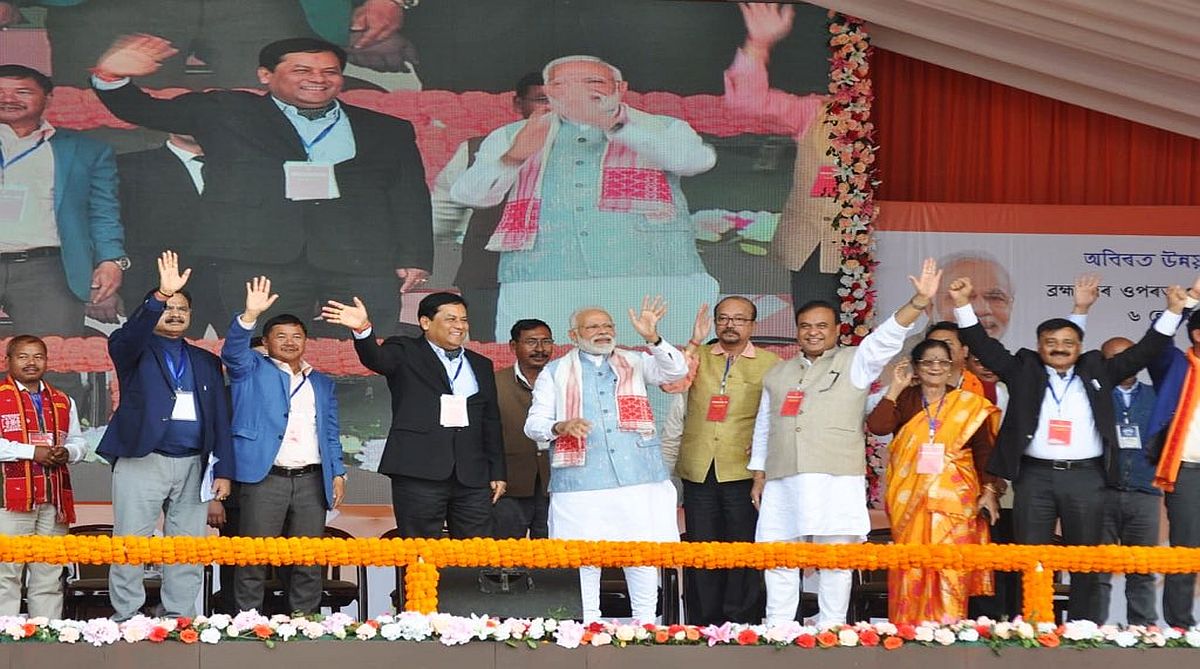
Modi’s visit was part of a series of public meetings in the region aimed at garnering support for the Bharatiya Janata Party ahead of elections that are due to be held by May.
Both India and China have sought to rebuild trust after an armed standoff over a stretch of the Himalayan border in 2017.(Twitter/BJP4India)
Prime Minister Narendra Modi’s visit to Arunachal Pradesh on Saturday saw jagged exchange between China and India. China’s foreign ministry Objected to PM Modi’s Arunachal visit saying “resolutely opposes” activities of Indian leaders in the region.
Responding to China’s objection to PM Modi’s visit to the northeastern state, the Ministry of External Affairs (MEA) said the state is “an integral and inalienable part of India.” Modi’s visit was part of a series of public meetings in the region aimed at garnering support for the Bharatiya Janata Party ahead of elections that are due to be held by May.
“The State of Arunachal Pradesh is an integral and inalienable part of India. Indian leaders visit Arunachal Pradesh from time to time, as they visit other parts of India… This consistent position has been conveyed to Chinese side on several occasions,” news agency ANI quoted MEA as saying.
Despite recent efforts to improve bilateral ties in both countries, disputes over the mountainous Indo-China border – which triggered a war in 1962 – and the region that China claims as southern Tibet have remained a sensitive issue.
“China urges the Indian side to proceed from the overall situation of bilateral relations, respect China’s interests and concerns, cherish the momentum of improving relations between the two countries, and refrain from any actions that intensify disputes and complicate the border issue,” the country’s foreign ministry said in a statement.
On Saturday, India’s foreign ministry did not immediately respond to a request for comment.
Both India and China have sought to rebuild trust after an armed standoff over a stretch of the Himalayan border in 2017.
Modi and Chinese President Xi Jinping met a number of times last year to give impetus to the trade discussions. But progress, according to Indian government officials and representatives of various Indian trade bodies, has been very slow.
PM Modi said the NDA government was ready to fully protect the culture, resources and the language of the Northeast states.
SNS Web | New Delhi | February 9, 2019 3:04 pm
Rumours being spread over Citizenship Bill, says PM Modi amid protests, inaugurates projects in Assam
Amid angry protests, Prime Minister Narendra Modi on Saturday said huge misinformation campaign has been carried out over the Citizenship (Amendment) Bill while addressing a rally in Assam’s Amingaon.
He further said the NDA government was ready to fully protect the culture, resources and the language of the Northeast states.
In an indirect attack at the opposition, PM Modi said: “false rumours about the citizenship bill are being spread by people sitting in AC rooms”.
Defending the Bill, he said we must “understand the pain of people forced to flee their homes and leave behind all they own”.
Prime Minister Narendra Modi on Friday fired a fresh salvo at the Opposition accusing the Congress of “ignoring the real heroes of India”.
His remarks came close on the heels of Bhupen Hazarika being conferred the Bharat Ratna posthumously.
“I pay my tributes to Dr Bhupen Hazarika. He raised his voice for the deprived and the poor,” PM Modi said.
Repeating his BC and AD jibe, PM Modi said, “I want to ask Congress, why did they fail to confer Bharat Ratnas to those who really deserved it. Why did they ignore real ratnas of India.”
The prime minister had earlier in the Lok Sabha said, “Our friends in Congress see things in two time periods. BC- Before Congress, when nothing happened. AD- After dynasty- where everything happened.”
Earlier, PM Modi inaugurated the Numaligarh Refinery Ltd’s bio-diesel refinery and the Barauni-Guwahati gas pipeline.
He also laid the foundation stone of a six-lane bridge over river Brahmaputra.
“Today is a new chapter in the history of the Northeast,” PM Modi said after the inauguration.
“Assam is on the path to progress,” says PM Modi. “We have launched projects worth thousands of crores.”
A 729 km gas pipeline from Barauni – Guwahati passing through Bihar, West Bengal, Sikkim and Assam will also be laid by the prime minister.
PM Modi kicked off his two-day visit of the Northeast on Friday evening.
Modi was shown black flags in at least two places on Saturday for the second consecutive day in Assam over the contentious Citizenship Bill.
Modi, who was on his way to the airport from the Raj Bhawan in Guwahati, was shown black flags by protesters belonging to the Asom Jatiyatabadi Yuva Chhatra Parishad (AJYCP) at Machkhowa area.
Minutes later, a group of students showed black flags to the prime minister when his huge convoy was passing through the Gauhati University at Jalukbari area.
On Friday evening, Modi was shown black flags in at least four different locations as soon as he landed in Guwahati and was travelling from the airport to the Raj Bhawan to spend the night.
While hundreds of Gauhati University students waved black flags at Modi in Jalukbari area, activists of the Krishak Mukti Sangram Samiti (KMSS) and AJYCP did the same at Adabari and Fancy Bazar areas.
Members of the All Assam Students Union (AASU) were also seen waving black flags at the prime minister and shouting slogans as his convoy crossed the AASU headquarters on the Mahatma Gandhi Road at Uzan Bazar.
Slogans like ‘Modi go back’, ‘Scrap Citizenship Amendment Bill’, ‘Joi Aai Asom (Glory to Mother Assam)’ was heard.
This is Modi’s third visit to Assam since December 25, 2018, when he inaugurated the Bogibeel bridge. In his second visit on January 4 this year, the prime minister had told a rally in Silchar that the Citizenship Bill would be passed by Parliament soon, triggering widespread protests in the state.
The Citizenship (Amendment) Bill seeks to provide Indian citizenship to Hindus, Jains, Christians, Sikhs, Buddhists and Parsis from Bangladesh, Pakistan and Afghanistan after six years of residence in India even if they do not possess any document.
The bill was passed by the Lok Sabha during the Winter Session on January 8 and has been awaiting Rajya Sabha nod.
Later in the day, PM Modi is scheduled to fly to Tripura to address a public rally.
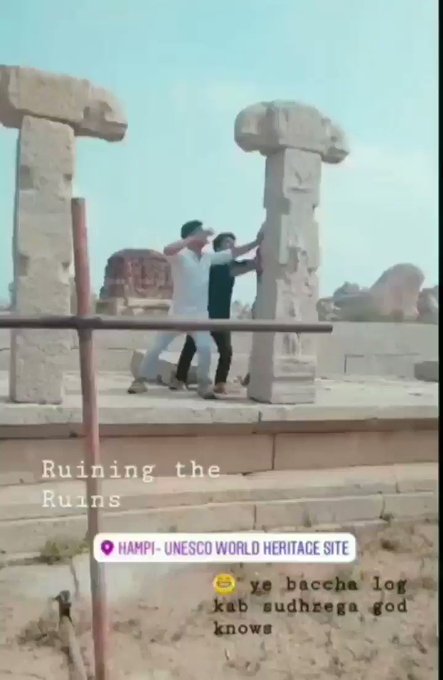
In addition to the three men who pushed the pillar, which was located outside a temple, a fourth person who was filming the incident has also been arrested.
The Archaeological Survey of India (ASI), which looks after heritage sites in the country, registered a police complaint on 6 February, a few days after the video surfaced.
However, police are not sure when the incident took place.
“We are investigating this – it could have even occurred a year or two ago,” an officer told BBC Hindi’s Imran Qureshi.
NEW DELHI (Reuters) – The Reserve Bank of India’s surprise decision to cut interest rates for the first time in 18 months on Thursday is a pre-election stimulus gift from a compliant central bank for Prime Minister Narendra Modi.
But businesses and farmers – and even some of his own supporters – say it may be too little, too late to help the economy ahead of voting, which must be held by early May.
The quarter-point reduction in the benchmark repo rate follows intense pressure late last year on the RBI to listen to government and business concerns and ease monetary policy.
The threat to the central bank’s autonomy led to the departure in December of its governor, Urjit Patel, and his replacement by Shaktikanta Das, whose views were much more in line with the Modi administration.
There have been signs that Modi’s support has crumbled in parts of a countryside that supported his Hindu nationalist Bharatiya Janata Party (BJP) in the last election in 2014. Among the voters’ biggest concerns are the impact of low farm prices on rural incomes and whether there is enough job creation.
The rate cut will benefit Modi’s government as it will boost economic growth and lending to small businesses, according to Ashwani Mahajan, a leader of the economic wing of the powerful Hindu nationalist group, Rashtriya Swayamsevak Sangh, which is the fountainhead of the BJP.
But it still wasn’t enough, he said.
“The new governor has passed the litmus test, though with 50 percent marks,” said Mahajan, co-convenor of the Swadeshi Jagran Manch, adding that the rate cut should have been at least half a percentage point.
Four of six members of the RBI’s monetary policy committee (MPC) voted to cut the rates, while all six members voted for a change in the monetary policy stance to “neutral” from “calibrated tightening”.
The RBI also eased bank lending restrictions for non-banking finance companies and raised the limit on “collateral free” farm loans in an attempt to boost lending to nearly 120 million rural households.
In recent weeks, it has also eased curbs on some state-owned bank lenders and is set to provide the government with a bigger dividend out of surplus central bank funds.
The BJP welcomed the decisions as they will help to dispel any perceptions that the government has not addressed credit issues facing businesses. Some of those issues worsened dramatically after the government suddenly banned the use of then existing high-denomination banknotes in 2016 and hastily introduced a new national sales tax in 2017.
The rate cut comes after the government introduced a budget last week that also provided stimulus for the economy, including handouts for farmers and modest tax cuts for the lower middle class.
Gopal Krishna Agarwal, the BJP’s spokesman on economic affairs, said the government had been asking the central bank to cut rates for some time.
“The decision would supplement government’s measures announced in the budget and will boost lending to farmers, housing and manufacturing sectors,” he said.
SURPRISE FOR MARKETS
Despite all the lobbying that has been going on, the rate cut was still a surprise for financial markets. Most economists had expected rates to be left unchanged and then possibly cut at the next meeting in April.
But the faster-than-expected move isn’t likely to help the economy much, they said.
“The rate cut is unlikely to give a major fillip to investments as capacity utilisation still remains low in the manufacturing sector,” said Devendra Kumar Pant, chief economist, India Ratings & Research, the arm of rating agency Fitch.
It could sow the seeds for inflation – especially when added to the fiscal stimulus in the budget – in the second half of the next financial year, which begins on April 1, he warned.
Mark Williams, Chief Asia Economist of Capital Economics in London, said there was a growing perception that the central bank had allowed its focus on controlling inflation to slip, and therefore higher inflation and higher interest rates were likely over the long term.
Some economists also felt that there was a danger that a largely independent central bank could come under government pressure – providing too much stimulus for the economy after last week’s budget handouts.
BOE sees weakest UK outlook since 2009 on Brexit, global slowdown
“TOO LITTLE TOO LATE”
Some politicians and stock market analysts said the rate cut decision may not improve Modi’s chances in the election as the banks could take time to pass on rate cut benefits.
The BJP lost three key state elections to the opposition Congress late last year and national polls have indicated that Modi faces a tough re-election battle against a resurgent opposition as Congress and regional parties form alliances.
The rate cut also underlines fears about slowing economic growth.
The MPC announced on Thursday that it had trimmed its economic growth forecast to 7.2-7.4 percent for the period from April-September this year from its previous 7.5 percent estimate.
Business and farm leaders said they were also sceptical about the impact of the rate cut – and said it was the inability to borrow that was the biggest problem.
“Our loan requirement has been rising as fertiliser and diesel prices are going up. Many times, we borrow from private moneylenders at a rate of 24 percent as banks refuse to lend us more,” said Deshpal Rana, a farmer from Shamli in the northern state of Uttar Pradesh.
Praveen Khandelwal, secretary of the Confederation of All India Traders, a traders lobby group, said a majority of India’s traders and small manufacturers were finding it difficult to borrow from banks, who are struggling to deal with $150 billion in distressed assets.
“Today’s repo rate would largely benefit bankers rather than borrowers,” he said.
Prime Minister Narendra Modi addressed a public meeting in Chhattisgarh’s Raigarh district. The Prime Minister is also scheduled to address a rally in West Bengal’s Maynaguri on Friday,
This will be the prime minister’s first rally in Chhattisgarh after the BJP suffered a massive loss in the state assembly elections in December last year.
“All the preparations have been completed for the PM’s rally in Kodatarai village in Raigarh,” a spokesperson of the party said.
The rally is aimed at energising party workers and supporters ahead of the Lok Sabha elections, he said.
In Bengal, the prime minister laid the foundation stone for the four laning of the Falakata-Salsalabari section of National Highway-31 D in Jalpaiguri. This 41.7 km-long section of National Highway falls in the Jalpaiguri district in West Bengal, and will be constructed at a cost of about Rs 1938 crore, a statement from the Prime Minister’s Office said.
BENGALURU/NEW DELHI (Reuters) – Jaguar Land Rover’s owner Tata Motors Ltd stunned markets by posting the biggest-ever quarterly loss in Indian corporate history of about $4 billion (£3.1 billion) on slumping China sales, sending its shares crashing as much as 30 percent.
Tata Motors also warned that the Jaguar Land Rover (JLR) unit, which brings in most of its revenue, would swing to an operating loss in the year to March versus an earlier projection for breakeven, given weak sales at the luxury British carmaker.
JLR’s China retail sales almost halved in the December quarter as overall demand in the world’s biggest auto market contracted last year for the first time since the 1990s. The firm has also been buffeted by Brexit woes and weaker business for diesel cars that account for bulk of its sales in Europe.
SPONSORED
Tata Motors turned in a third-quarter loss of 269.93 billion rupees ($3.8 billion) on Thursday, more than half its current market capitalisation of $6.1 billion, mostly due to a massive impairment at JLR. Analysts were expecting a profit.
“We are now taking clear and decisive actions in JLR to step up its competitiveness, reduce costs and improve cash flows and make the business fit for the future,” Chief Financial Officer PB Balaji told reporters on a conference call on Thursday.
JLR has taken steps to address the slide in China sales by changing its strategy to focus on profits for dealers instead of sales and incentivising retail sales over wholesale, he said.
FILE PHOTO – A Tata Tigor car is pictured at the assembly line inside the Tata Motors car plant in Sanand, on the outskirts of Ahmedabad, India, August 7, 2018. REUTERS/Amit Dave
“We are encouraged by continued demand for the refreshed Range Rover and Range Rover Sport,” JLR Chief Commercial Officer Felix Brautigam said in a statement.
“With deliveries of the new Evoque due to start later this quarter, we look forward to building momentum.”
But analysts expect JLR to struggle to generate profit with China’s economy projected to slow further this year after growth eased to its weakest pace in almost three decades in 2018.
JLR’s overall retail sales in January plunged 11 percent.
(For an interactive graphic on monthly sales at Jaguar Land Rover, click: tmsnrt.rs/2te4M1L)
BROKERAGE SLASH PRICE TARGETS
The dour numbers prompted Tata investors to make a beeline for the exits as markets opened on Friday, with shares of the company skidding to their lowest in nine years at one point.
The stock was down about 20 percent by 0720 GMT near 150 rupees, on track for its sharpest drop since 2003.
Slideshow (2 Images)
At least four brokerages cut their price target for Tata Motors shares after its quarterly loss.
Analysts at Jefferies pegged the stock at 250 rupees, versus an earlier target of 300 rupees, citing weak performance at JLR.
Tata Motors took a non-cash charge of 278.38 billion rupees for an impairment at JLR in the quarter. Changes in market conditions, especially in China, technology disruptions and rising cost of debt led to the charge.
JLR, Britain’s biggest carmaker, also faces disruption due to persistent uncertainty over a Brexit deal and has decided to halt production for a couple of weeks in April.
British Prime Minister Theresa May’s Brexit deal was rejected in parliament last month and the government is trying to make changes to win the support of lawmakers even as the date for Britain’s departure from the European Union looms less than two months away.
(For an interactive graphic on sales of India’s biggest automakers, click tmsnrt.rs/2Hr877P)
Image copyrightIQIYIImage captionYanxi Palace – a danger to Chinese society?
It was one of China’s most popular shows of 2018 – but it’s now being pulled from TV screens across the country.
The story of Yanxi Palace, a drama about life in imperial China, broke records when it was released last year.
It was streamed more than 15 billion times on China Netflix-like iQiyi and became the most watched online drama in China for 39 consecutive days.
All that changed in late January when a state media article criticised the “negative impact” of imperial dramas, and it wasn’t long before Yanxi Palace was taken off air.
So why has this blockbuster show fallen from grace?
‘Bad for Chinese society’
It all started when Theory Weekly – a title linked to state newspaper the Beijing Daily – posted an article criticising period dramas and singling out Yanxi Palace in particular.
It listed several “negative impacts” these shows had on Chinese society, like propagating a luxurious and hedonistic lifestyle, encouraging admiration for imperial life and a glorification of emperors overshadowing the heroes of today.
The magazine named several other popular imperial period dramas, like Ruyi’s Royal Love in the Palace, Scarlet Heart and The Legend of Mi Yue.
Image copyrightGETTY IMAGESImage captionChina wants entertainment to always also promote socialist values
Shortly after the piece was published, Yanxi Palace and Ruyi’s Royal Love in the Palace were pulled from state-run TV channels.
The shows are, however, still available on iQiyi, the place that Yanxi Palace was initially produced for and was first shown.
Rival versions of history
“It’s not the first time something like this has happened,” Prof Stanley Rosen, a China specialist at the University of Southern California, told the BBC.
“But I would say the censorship is certainly getting worse.
“Yanxi Palace was seen as promoting incorrect values, commercialism and consumerism; not the socialist core values that Beijing wants to see promoted.”
“For those who are overseeing those productions there should always some educational value or some promotion of Chinese cultural values or some sort of historical narrative that matter,” explains Manya Koetse, editor-in-chief of What’s on Weibo, a website tracking Chinese social media.
Prof Zhu Ying of the Film Academy at Hong Kong’s Baptist University told the BBC. “Censors tend to turn a blind eye to entertainment programs of frivolous nature.
“But that’s only until they become too popular and threaten social norms, morally and ideologically. Yanxi is a perfect example of such a show.”
Given the popularity of Yanxi Palace, the Theory Weekly article unsurprisingly became a widely debated topic on the internet – and with most comments condemning the critique, authorities were as little pleased with the online debate as with the series itself.
One post, by online news website Phoenix, was shared more than 10,000 times and had more than 32,000 comments, Ms Koetse explains. All of those comments have since been blocked and the entire comment section is turned off.
“The fact that most comment sections have been locked/shut down for now is quite telling,” she says.
Too successful abroad?
Another problem might have been the attention Yanxi Palace received from international audiences.
“It could be that the show became too popular outside China,” says Mr Rosen. “It’s a contradiction of wanting to succeed overseas but also wanting to control the message.”
Beijing wants Chinese culture to be promoted outside of China but showing the values that the authorities want to see portrayed.
Image copyrightIQIYIImage captionBeijing hopes to control the narrative of how China used to be
So if a show is popular outside China but carries the wrong values, authorities might think it’s better to not have it at all.
Beijing is keen to control the narrative of China’s past and president.
President Xi Jinping is promoting the idea of the rise of China as peaceful, and that China believes in harmony.
Yanxi Palace, though, paints an image of a China of intrigue and backstabbing.
“It flies in the face of the message that China wants to send about its peaceful rise,” Mr Rosen says.
Eager self-censorship
With Yanxi Palace still available online, it’s unlikely Beijing will be able to undo whatever perceived damage the series might have done.
But the very public criticism sends a signal to future programmes.
Often, it only takes one person from the political leadership to see the show, dislike it and contact the propaganda department to arrange for a critical article to be written.
Once published, everybody knows the criticism has high level backing; then TV channels will very quickly self-censor and drop whatever show has fallen from grace.
“Historical dramas have been popular in China since the 1990s,” says Ms Koetse. “And one of the reasons why is that official censors used to have somewhat different standards for them than for the more contemporary dramas.”
“But if the focus of one of those programmes is too much on conspiracy, power struggles and conflict, then I can imagine that this is not the message about Chinese history they want to see.”
For future projects this means that producers will likely be more careful.
Already, anything done for TV or streaming has to be vetted and approved. And producers will be less likely to plan an elaborate historical drama if there’s a chance it will get shot down by the censors.
“And censorship is getting tighter, I would say,” Mr Rosen says. “It’s not just series or movies, it’s also targeting music like rap for instance.”
Struggling for soft power
China often stands in its own way when it comes to building up its soft power.
A point in case are the movies it enters into the Oscars foreign movie category.
There’ve been plenty of strong candidates in recent years but those didn’t get picked, says Mr Rosen, likely because they tell a story that Beijing thinks reflects negatively on China.
The 2017 movie Angels Wear White dealt with child molestation while 2018’s Dying to Survive told the story of a cancer patient illegally importing medicine from India.
Both movies were successful in China and have received international praise – but they don’t depict the version of China that Beijing wants to world to hear.
“If they tolerated a little bit more criticism, they could be much more successful when it comes to soft power,” Mr Rosen sums up.
“But they worry that once they open the floodgates, they won’t be able to retain their control anymore.”
SHANGHAI, Feb. 7 (Xinhua) — Making a big purchase ahead of the Lunar New Year can be a lot of fuss. But as markets go smart, shopping has become a pleasure, even during the busiest time of the year.
At a Carrefour supermarket “Le Marche” in Shanghai’s Changning District, customers can choose from several payment measures instead of queuing in a long line at the checkout counter.
There are smart machines where customers can scan barcodes on groceries in front of a screen and pay through a WeChat mini-app on their smartphones.
Smart payment has improved shopping efficiency, especially during shopping seasons, according to the supermarket manager.
“The penetration rate of mobile payment in Carrefour stores in China has surpassed 50 percent, and the rate of smart cashiers has reached 38 percent,” said Nathalie Yu, vice president of Carrefour China.
Carrefour has worked with China’s Internet companies such as Meituan, JD and Ele.me on its digitalization of retail service and logistics. Customers can also go to the Carrefour online supermarket and receive orders at home within hours.
The U.S. retail giant Walmart has also sped up its “smart revolution” in the Chinese market, with over 400 outlets supporting “Scan and Go.” It has also introduced an online search map of groceries to improve shopping efficiency.
As of June 2018, there were 802 million Internet users in China, 788 million of whom were mobile users. Over 569 million Chinese shopped online at least once and 557 million used their mobile phones for shopping.
In a Sam’s club outlet under Walmart in Shanghai’s Pudong District, an interactive area showcasing daily products gets a “facelift” every week. Just before the Lunar New Year, the area was transformed into a children’s bedroom, which attracted children and their parents to take a rest.
According to Chen Zhiyu, a senior vice president of Walmart China, it is a trend that many groceries are going online, yet people still go to supermarkets to enjoy family get-together time and explore new products.
In “Le Marche,” 78 percent of the display area is food, with imported food taking a considerable part of the shelves. Customers can have their fresh seafood cooked to dine in the supermarket.
“We will promote more ‘Le Marche’ in other Chinese cities,” said Thierry Garnier, executive director of Carrefour Asia, adding that industry peers and partners from more than 10 countries had come to Shanghai to learn from such innovation.
CHONGQING, Feb. 7 (Xinhua) — A self-driving bus assisted by the 5G mobile network is on a test run in Chongqing, a vehicle-manufacturing powerhouse in southwestern China, local authorities said.
The bus, equipped with technologies such as Controller Area Network and laser radar, is able to complete all autonomous operations with the assistance of the 5G mobile network.
The electric-powered 12 seater has a designed maximum speed of 20 km per hour.
The bus was co-developed by China Mobile, tech giant Huawei, Southeast University and French company Easy Mile.







 CHINDIA ALERT: You'll be living in their world, very soon