Chindia Alert: You’ll be Living in their World Very Soon
aims to alert you to the threats and opportunities that China and India present. China and India require serious attention; case of ‘hidden dragon and crouching tiger’.
Without this attention, governments, businesses and, indeed, individuals may find themselves at a great disadvantage sooner rather than later.
The POSTs (front webpages) are mainly 'cuttings' from reliable sources, updated continuously.
The PAGEs (see Tabs, above) attempt to make the information more meaningful by putting some structure to the information we have researched and assembled since 2006.
Godse, who shot Gandhi in the chest three times at point-blank range on 30 January 1948, was an activist with nationalist right-wing groups, including the Hindu Mahasabha.
Hindu hardliners in India accuse Gandhi of having betrayed Hindus by being too pro-Muslim, and even for the division of India and the bloodshed that marked Partition, which saw India and Pakistan created after independence from Britain in 1947.
This is not the first time the controversial fringe group has tried to glorify Godse and celebrate Gandhi’s assassination.
KAKRIPUR/MAHABAN, India (Reuters) – As night fell on the bucolic northern Indian hamlet of Mahaban, Gopi Chand Yadav gathered blankets and a flashlight to spend the night sitting on a wooden platform in his field. His task: to use bamboo sticks to ward off stray cattle from intruding and eating a maturing mustard crop.
Like Yadav, many thousands of farmers stay awake to guard their farms over a cold winter or face losing their crops to the cattle – a double whammy for growers already reeling from a plunge in Indian crop prices.
While stray cows ambling around towns and villages have always been a feature of life in rural India, farmers say their number has increased sharply in recent years to the extent that they have become a menace, and blame the policies of Prime Minister Narendra Modi’s Hindu nationalist government.
Protecting cows – considered sacred to Hindus – was one of the measures meant to shore up support in the heavily populated, Hindi-speaking belt across northern India that has been a heartland of the ruling Bharatiya Janata Party’s (BJP). Instead, it is creating a backlash, even among Hindu farmers.
“We already had enough problems and now the government has created one more,” said octogenarian farmer Baburao Saini from Kakripur village, about 85 kilometres (50 miles) from New Delhi. “For the first time, we’ve been forced to stay in the fields to protect our crops.”
More than 50 farmers Reuters spoke to in Mahaban and nine other villages in Uttar Pradesh state said they would think twice before voting for Modi’s BJP in the next general election, due by May. The cattle issue and low farm prices are major reasons behind their disillusionment with a party that most say they voted for in the last election in 2014.
Modi swept Uttar Pradesh at that poll, winning 73 of 80 seats in India’s most populous state, with rural voters swayed by a promise of higher crop prices, and as Hindu farmers supported the BJP amid tensions with the minority Muslim community.
COW PROTECTION
Modi is trying hard to claw back support among India’s 263 million farmers and their many millions of dependents after the BJP lost power in December to the opposition Congress in three big northern states where agriculture is a mainstay.
Indian farmers keep cows to produce milk, cheese and butter, but to harm or kill a cow, especially for food, is considered taboo by most Hindus.
Most states in India have long outlawed cow slaughter, but after coming to power in 2014 the BJP ratcheted up its distaste for trade in cattle, launching a crackdown on unlicensed abattoirs in Uttar Pradesh and on cattle smuggling nationwide.
At the same time, a wave of attacks on trucks carrying cattle by Hindu vigilante groups has scared away traders, most of whom are Muslims, bringing to a halt the trade even in bullocks, which are not considered sacred. Rising sales of tractors and increasing mechanisation mean that more animals are redundant for use in farming.
The farmers Reuters spoke to said they revered cows as most devout Hindus would, but a sudden halt in the trade of cattle had hit the rural economy. In their view, the government should come up with more cow shelters and let cattle traders deal in other animals without fear of attack.
“The government has only enforced the laws by closing down unlicensed abattoirs and cracking down on cattle smuggling,” said BJP spokesman Gopal Krishna Agarwal, who added that he runs a cow shelter of 1,300 cattle. “We’re not trying to hurt either any community or the rural economy.”
CROP TRAMPLED
Fodder prices have gone up by more than a third in the past year and most farmers cannot afford to keep cows after they stop producing milk, said farmer Rajesh Pahalwan as he smoked a hookah pipe in the village of Manoharpur. Six farmers sitting with him mainly nodded in agreement.
In India, the world’s biggest milk producer, about 3 million cattle become unproductive every year. In the past, Hindu farmers would sell unproductive cows to Muslim traders and about 2 million of these would end up smuggled to Bangladesh for meat and leather. But that trade has now been throttled by the government crackdown, trade and industry officials say.
That has led to many unproductive cattle being abandoned, farmers said, but governments – both state and federal – have failed to construct new shelters, leaving rising numbers of stray cattle that are feeding on crops, or even garbage.
“The government clearly did not think of alternatives before putting these curbs in place,” said farmer Deepak Chaudhary, who grows wheat on the outskirts of Mathura, considered to be the birthplace of the Hindu God Krishna. “As Hindus, we treat cows as sacred but these unwarranted measures have upended the economics of farming.”
Vietnamese-style reforms might work for North Korea
The government did provide some relief in its interim budget last week as it announced a cow welfare programme costing 7.50 billion rupees (80.79 million pounds) in the year beginning April.
But there are hardly any “adequate measures to rehabilitate” cattle, said Fauzan Alvi, vice-president of the All India Meat and Livestock Exporters Association.
“Forget about cows, we cannot sell even a single animal to even our relatives thanks to cow vigilante groups which are aided and abetted by the BJP,” said the wheat farmer Chaudhary.
Modi has in the past condemned violence by cow vigilantes, but critics and opposition politicians say some of the right-wing Hindu groups involved have links to his party, a charge the BJP denies.
Nearly 85 percent of India’s farmers own less than 2 hectares (5 acres) of land, so even a relatively small area damaged has a big impact on their livelihood.
Only two weeks ago, some cattle ravaged an acre of wheat grown by farmer Chandra Pal in the Mathura district of Uttar Pradesh.
“My investment went down the drain after some stray cattle trampled and ate up the crop,” he said.
Many farmers in Uttar Pradesh are now using barbed wire to stop animals from entering their farms, but that is expensive.
“We have been at the receiving end of anti-farmer policies of the government and the problem of stray cattle is just another blow to us,” said farmer Amar Chand, from Maholi village who voted for Modi in 2014. “Unlike the previous general election, farmers are not solidly behind Modi, who’s on shaky ground this time round.”
This is the first time Robert Vadra is appearing before any probe central agency in connection with allegations of dubious financial dealings and comes days after Priyanka Gandhi was formally inducted into the Congress party.
Robert Vadra was dropped off at the ED office by his wife Priyanka Gandhi Vadra. (HT PHOTO/Burhaan Kinu)
Robert Vadra, brother-in-law of Congress president Rahul Gandhi, reached the Enforcement Directorate office in Delhi on Thursday after the agency summoned him in a money laundering case. Robert Vadra was dropped off at the office by his wife and Priyanka Gandhi Vadra.
This is the first time Robert Vadra is appearing before any probe central agency in connection with allegations of dubious financial dealings and comes days after Priyanka Gandhi was formally inducted into the Congress party. She has been tasked with reviving the party in eastern Uttar Pradesh.
Robert Vadra arrived at the ED’s office located in central Delhi’s Jamnagar House at 3.45 pm. He has been told to cooperate with the ED investigation by a Delhi court that he had approached for anticipatory bail.
The case relates to allegations of money laundering in the purchase of a London-based property at 12, Bryanston Square. Robert Vadra has denied the allegations on several occasions in the past, called termed them a political witch hunt and accused the BJP-led national coalition of attempting to distract attention from its failures.
The Enforcement Directorate had told the court that it has received information about various new properties in London which belongs to Vadra, including two houses of five and four million each, six other flats and more properties.
The ED had carried out raids in this case in December last year and questioned Robert Vadra’s aide Manoj Arora, an employee of a firm linked to Vadra, Skylight Hospitality LLP.
Vadra has also been directed by the Rajasthan High Court to appear before the ED on February 12 in connection with another money laundering case being probed by the agency.
A five-judge Constitution Bench headed by the then Chief Justice Misra had on September 28 last year junked the age-old tradition of the Lord Ayyappa temple by a majority verdict of 4:1.
SNS Web | New Delhi | February 6, 2019 3:18 pm
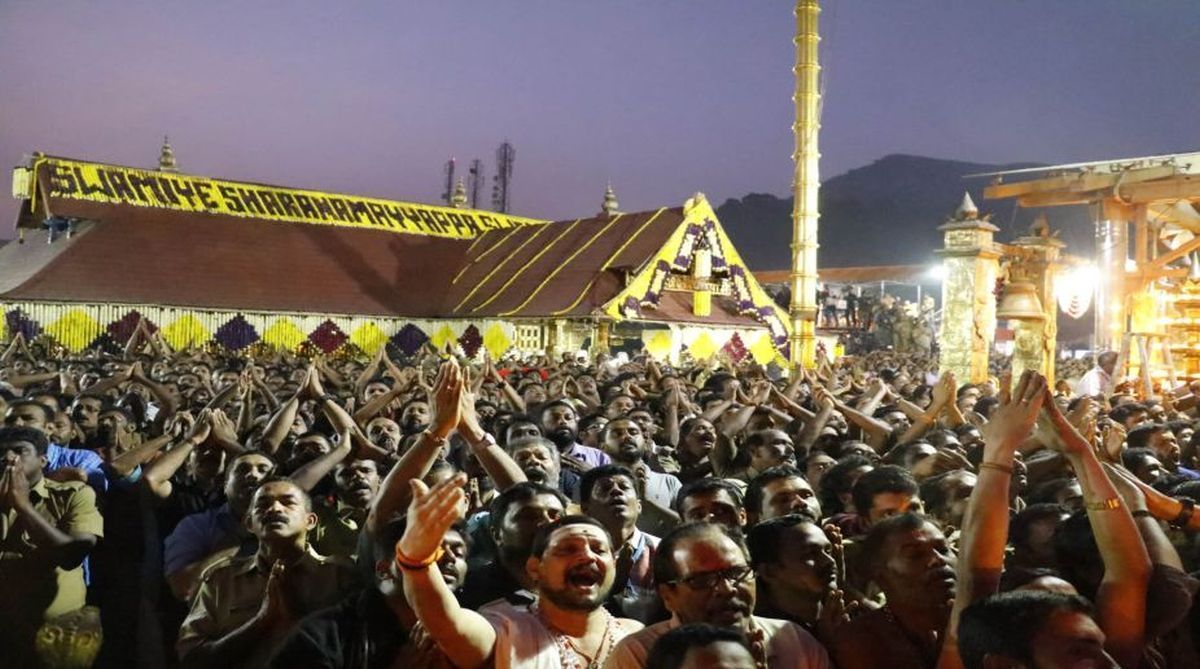
Devotees at Sabarimala temple (Photo: IANS)
In a complete turnaround from its earlier stand that women aged between 10 and 50 should not be allowed inside the Sabarimala temple, the Travancore Dewasom Board, on Tuesday opposed the review and told the Supreme Court that it wants the verdict allowing women of all ages to stay.
“Everyone is entitled to enter the temple. Any practice has to be dominant with the view of equality,” the board said adding “We have to move and transform the society to include women in all walks of life”.
“We have taken a decision to respect the judgement,” the board added.
It is an essential part of the Hindu religion to allow women to enter the temple, the temple board said.
Following the temple board’s U-turn in the matter, Justice Justice Indu Malhotra said, “There is a complete change of stand by the Travancore Dewasom Board”.
Justice Indu Malhotra had presented a dissenting opinion on the Supreme Court’s September verdict saying, “the court should not interfere in matters of faith”.
Advocate Indira Jaising arguing for women rights said that “purification ceremony being held affirms that menstruating women are considered polluted”.
“Social boycott going on against the women who entered the temple,” she added.
She further asserted that women should be allowed to enter the temple which is set to open on February 12.
The apex court has reserved its verdict on the matter.
Several organisations including the Nair Service Society and the Thantri of the Sabarimala temple had earlier in the day advanced arguments before the bench and sought reconsideration of the verdict.
Senior advocate K Parasaran appearing for the Nair Service Society told the court that “the exclusionary practice in Sabarimala is based on the character of the deity”.
The petitioners also argued that “Sabarimala custom cannot be equated to untouchability. It is only a religious custom”.
Abhishek Manu Singhvi appearing for ex-Chairman of the Devaswom Board argued before the court that “untouchability will not be applicable as it is not a caste or religion-based exclusion. There is no exclusion of men and women, but only exclusion for a class of women.”
The Supreme Court, in its September judgement, had said the practice is akin to untouchability.
Senior Advocate Nafade argued that “religion was a matter of faith and only community can decide the custom, not the court”.
“As long as the community decides not to change the practice, the Supreme Court cannot intervene,” he said.
The Chief Justice also allowed 90 minutes to those supporting the Supreme Court verdict.
Jaideep Gupta, arguing for the Kerala state said that there was no need to review the verdict.
Opposing the review, the government said there was also a consensus of judges on three issues – First, that Sabarimala is not a denominational temple, second, that a person’s right to worship in a temple is taken away for a major part of her life, and third, that the rule violated the act governing the temples itself.
The government further submitted that only if it is a denominational temple, the question of essential practice arises.
“Jagannath temple is unique in its practice and yet this court has held it’s not a denominational temple… similarly Kashi Vishwanath and Tirupati have been said not to be denominational,” it said.
The 65 petitions including 56 review petitions and four fresh writ petitions are being heard by a Constitution bench comprising Chief Justice Ranjan Gogoi and Justices RF Nariman, AM Khanwilkar, DY Chandrachud and Indu Malhotra.
The petitions were earlier scheduled to be heard on January 22 but were postponed since Justice Indu Malhotra went on medical leave.
On November 13, in a rare instance, the Supreme Court decided to go for open court hearing of the petitions seeking a recall of its order permitting women of all age groups to pray at the Sabarimala temple.
The Lord Ayyappa temple has since then witnessed massive protests by various devotee groups and Hindu outfits against the Pinarayi Vijayan government’s decision to implement the apex court order without going for any review petition.
Only two women — Bindu and Kanakadurga — managed to enter the temple in the wee hours of January 2 with tight police security.
Though many attempts were made by some young women, to enter the temple of the ‘Naishtik Brahmachari’, the eternally celibate deity, the devotees backed by priests stood their ground, saying they would not allow the tradition to be breached.
The temple remains open only for 127 days in a year.
A five-judge Constitution Bench headed by the then Chief Justice Misra had on September 28 last year junked the age-old tradition of the Lord Ayyappa temple by a majority verdict of 4:1.
“Right to worship is given to all devotees and there can be no discrimination on the basis of gender,” former chief justice Dipak Misra had observed.
Build stuff or buy stuff? China has long been a believer in the former to deal with a slowdown in its economy. Now it’s trying to shift the emphasis to the latter.
This year will be a big test of how far it’s come in the transition from state-backed investment to domestic consumption as the main driver of growth.
China’s President Xi Jinping has warned of a “struggle” as his country faces an economic slowdown, the likes of which it hasn’t seen for almost 30 years.
A series of stimulus measures have been unveiled by the government not to boost the economy, but to manage the slowdown.
“China’s goal is not growth, it’s stability,” says economist Andy Xie.
“The option for stimulated growth again, that is not on the table. The debt level is simply too high, not like in 2008.”
‘Less room to manoeuvre’
China’s debt has doubled in the aftermath of the global financial crisis 10 years ago, to around 300% of the size of its economy.
“The level is so high now it’s not easy to move the economy,” Mr Xie says.
Image captionEconomist Andy Xie says China’s debt levels limit its options
Whether it wants to borrow more to build, or to encourage people to buy, he thinks China’s ruling Communist Party has far less room to manoeuvre.
“It’s not easy to move the needle when the base is so large,” he says.
It’s cutting some taxes, to put more money in peoples’ pockets. It’s reduced the reserve rate for banks, so they don’t have to keep as much capital in the safe, and can – in theory – lend more out and boost spending.
And yes, it is splurging cash on big infrastructure projects – railways, bridges, and a vast new city near Beijing.
‘High risk’ firms
Only one of those measures is likely to help Wu Yijian.
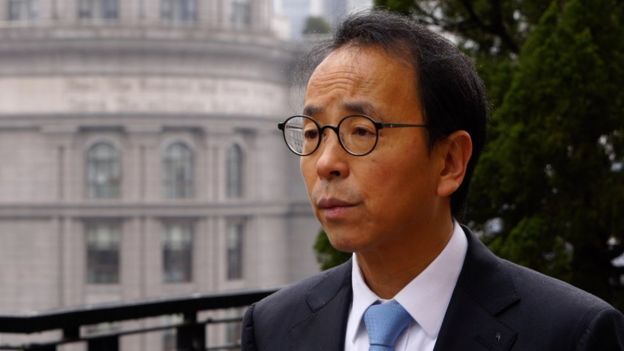
Mr Wu is a consumption success story. He is the co-founder of a tech start-up that makes desk top robots, in various sizes, which help China’s children play and learn.
Xiao Bai – or Little White – is powered by voice recognition and artificial intelligence that Mr Wu and his co-founders have spent 20 years developing.
As we stood in his office in Shanghai he called its name. It swivelled towards us and blinked. But private firms like his aren’t the focus of China’s stimulus efforts.
He told me sales “increased” in 2018 “but it’s not as good as we planned”.
Venture capital – private money – helped get them to where they are.
He says they won’t be turning to China’s state-owned banks – almost all of the banks here are state-owned or controlled – for help if things get tough in 2019.
Image captionWu Yijian depends on venture capital to fund projects like this robot
“Government banks have very low interest rates but that kind of money is not suitable for the company like us.”
He told me that’s because banks “hate” risk and his company is still considered “high risk”.
It’s mostly big, state controlled firms that benefit from those low interest loans. That kind of preferential treatment has long been a central tenet of a Communist government that treated private enterprise as second class.
“Traditional banks, they prefer collateral, like property. But tech companies like us we don’t have properties. The biggest assets are human resources,” Mr Wu told me.
He likes the tax cuts though. He hopes that will mean more parents buying more desk top robots.
President Xi has talked about his “two unwaverings” – an unwavering commitment to state-backed firms and the private sector.
It’s the latter after all that creates by far the most new jobs.
Song Junfu is well placed to deal with whatever 2019 throws at him.
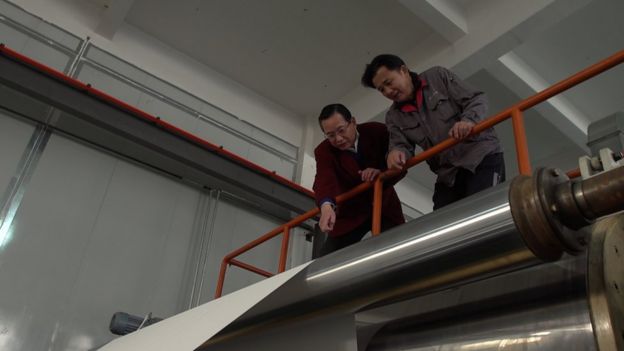
His business is paper. Most importantly, paper for the furniture industry. Mr Song’s company makes advanced paper used to imprint patterns on synthetic leather. Which is why he is based in Haining, a city developed by the government to focus on furniture.
“For our business, I would say, it won’t be affected that seriously… partially because of the advanced features of our product, [plus] there’s a big need for the product in China.”
As we stood in front of a long, green, four metre high piece of machinery at his plant he said “we feel confident in the market”.
He also has the support of the Agricultural Bank of China, one of the big four state-owned banks.
Image copyrightGETTY IMAGESImage captionSong Junfu’s company has benefitted from government support
“The support of the government can be a plus, let’s say, to help the development of the business,” he told me.
“Financially we can get support, to maybe move your project a little faster.”
Mr Song’s company is private, and it’s taken decades of first study, then development and investment to get to where it is now.
It is very far from the often inefficient, behemoth state-owned entities.
But as a manufacturer, he’s more likely to benefit from any direct stimulus measures than the robot makers of Shanghai.
He doesn’t need the help though. Even with a trade war with the US causing huge anxiety for many of China’s manufacturing exporters like him, he thinks he can absorb any hit.
There is a “big, nice margin” on the products they export to the US he told me, so “even if we make 5% or 10% less, for us it’s still good business.”
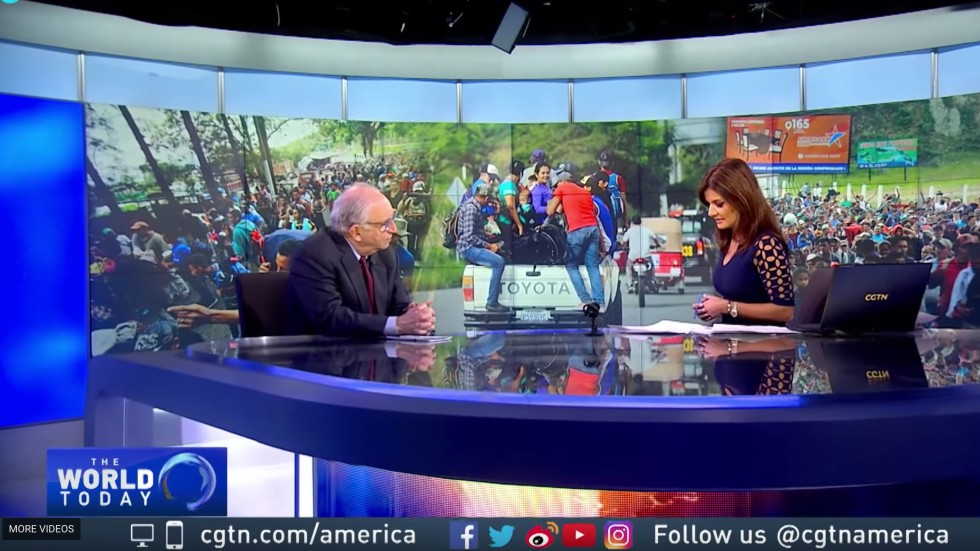
CGTN America – the US division of China Global Television Network – denied that it was engaged in any “political activities” as defined by the Foreign Agent Registration Act (FARA), a federal law from 1938 that monitors the operation of overseas lobbyists and propagandists.
China Global Television Network was, until January 2017, the name of the international operation of state-owned broadcaster China Central Television (CCTV).
CGTN America said it had “elected to file this registration statement out of an abundance of caution and in the spirit of cooperation with US authorities”.
It identified itself as the Washington news bureau of CCTV to produce material for 24-hour broadcasts that target English-speaking audiences in more than 100 countries.
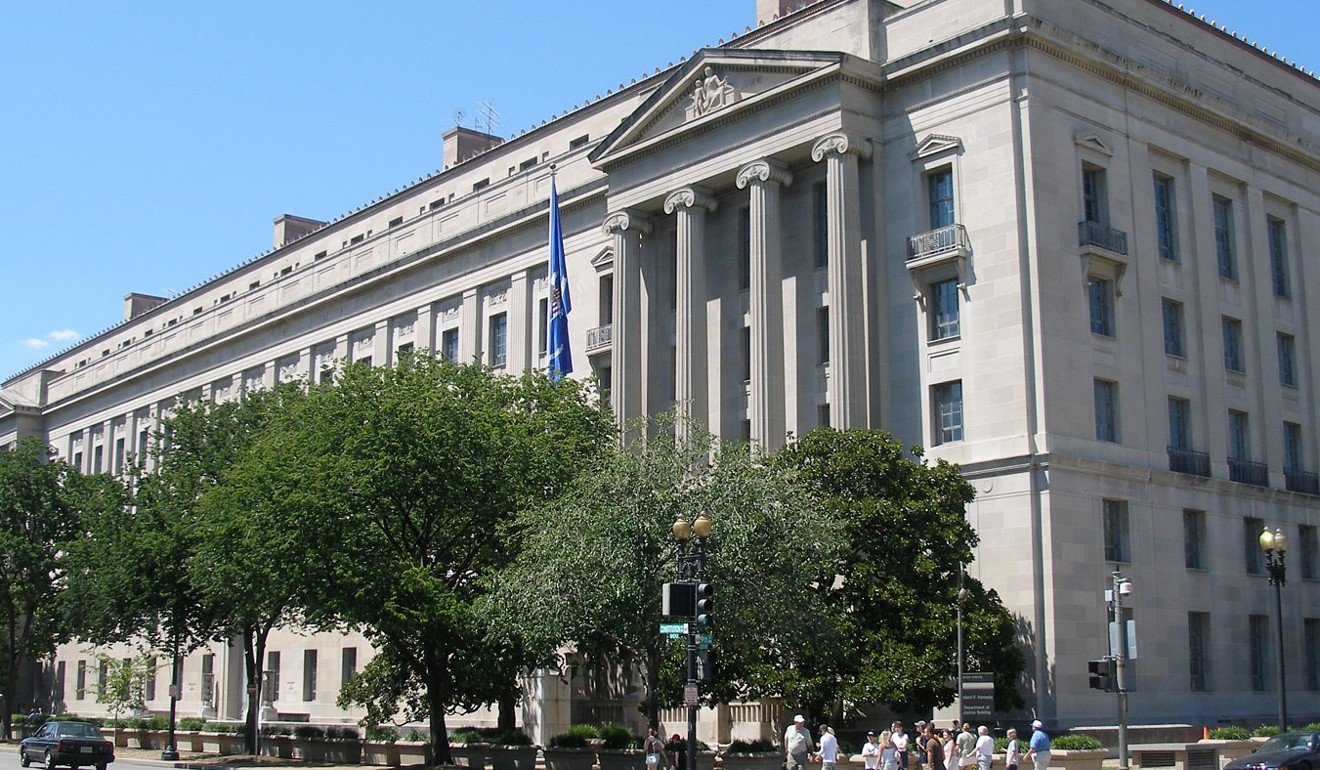
CCTV disagreed with the decision by the US Department of State to characterise CGTN America’s relationship with a foreign government and a foreign political party as one of interest to Washington, it said.
CGTN America’s registration was filed as Beijing and Washington sought to end a damaging trade dispute.
On Friday, a Chinese delegation led by Vice Premier Liu He concluded two days of talks in Washington, while a US party – to be led by US Trade Representative Robert Lighthizer – is expected in Beijing this month.
Those talks may pave the way for a meeting between Chinese President Xi Jinping and US President Donald Trump before a trade war truce expires on March 1.
CGTN America’s registration took place about six months after Washington ordered it and Xinhua News Agency to acknowledge their affiliation with Beijing and disclose ownership and budgets. The Chinese Foreign Ministry said at the time this order was “politicising” media activities.
Xinhua, one of the major official mouthpieces of the Communist Party, has not registered.
Under the registration act, which was enacted to counter Nazi Germany’s propaganda efforts in the US – CGTN America must update its registration filing with the US government every six months and submit copies of reports to the justice department for scrutiny within 48 hours of distribution.
Washington’s surveillance of foreign media has intensified since late 2017 when RT, the Russian state-backed English-language news outlet, was ordered by the justice department to register as a foreign agent amid investigations into Russia’s alleged interference in the 2016 presidential election.
While chairing a UN Security Council meeting in September, US President Donald Trump accused Beijing of planning to interfere in November’s congressional election because of his trade policies against China, although those accusations were not substantiated.
BEIJING, Feb. 6 (Xinhua) — Railway passenger trips in China rose 8.6 percent year on year to 143 million during the first 15 days of the annual travel rush around the Spring Festival.
On Jan. 26, more than 10.49 million passenger trips were made by rail, a daily record for the travel rush, data from the China Railway Corporation (CRC) showed.
Hundreds of millions of Chinese are going back to their hometowns to celebrate the Chinese Lunar New Year with their families.
The annual travel rush (chunyun) around the festival often puts the transport system to the test.
As more trains have been put into operation, railway transport capacity improved by 5.3 percent this year during the travel rush, according to the CRC.
The Spring Festival travel rush started from Jan. 21 and will last till March 1, with railway trips expected to hit 413 million in total, up 8.3 percent.
ADDIS ABABA, Feb. 5 (Xinhua) — Ethiopia is to commission the Chinese built Debre Birhan industrial park by the end of February, state media outlet Amhara Mass Media Agency (AMMA) reported on Tuesday.
Debre Birhan industrial park constructed by China Communications Construction Company (CCCC) at a cost of 71 million U.S. dollars is expected to create job opportunities for about 1,000 Ethiopians once it starts operations, reported AMMA.
Stretched on 75 hectares of land, Debre Birhan industrial park will have eight industrial sheds ready to accommodate prospective investors once it’s fully commissioned.
Speaking to Xinhua recently, Lelise Neme, CEO of Ethiopia Industrial Park Development Corporation (IPDC), said Ethiopia aims to commission six industrial parks, including Debre Birhan industrial park, before the end of the current fiscal year 2018/19, in July.
“Ethiopia has invested around 1.3 billion U.S. dollars in the construction of around a dozen industrial parks, which it sees as a key strategy of achieving Ethiopia’s industrial ambitions,” said Neme.
“Ethiopia has so far built and commissioned five industrial parks and with the anticipated commissioning of six more industrial parks in 2018/19, Ethiopia’s industrialization ambitions will receive a massive boost,” Neme told Xinhua.
With Ethiopia attracting large-scale investment in the export-import-oriented manufacturing sector, especially from Chinese firms, the country sees improving the efficiency and speed of the logistics sector as key to meet national manufacturing revenue goals.
Ethiopia plans to increase the number of operational industrial parks from the current five to around 30 by 2025, as part of its efforts to make the country a light manufacturing hub and lower-middle-income economy in the same period.
ZHENGZHOU, Feb. 5 (Xinhua) — As the G402 high-speed train pulls into Xinxiang East station in central China’s Henan Province, Li Xiang, who’s been waiting on the platform, trots down to coach No.13 with a lunch-box.
Li works at the railway station. His wife, Zou Xiaojuan, is on the train at the moment. She is not a passenger but in charge of catering services on board.
During the coming Spring Festival travel rush, an estimated 413.3 million train trips will be made as people head home for the most important family gathering of the year.
The G402 high-speed train from the southwest China city of Guiyang to Beijing stops at Xinxiang every five days, each time for no more than two minutes.
It’s the longest time the young couple spend together at work.
Li hands the lunch-box to his wife after guiding passengers on and off the train. Zou, in return, gives Li a “finger heart” by crossing her thumb and index fingers while no one’s watching. It’s a touching scene.
The two-minutes is bittersweet, the small lunch-box becoming a symbol of their love.
The romance began with an encounter when Zou Xiaojuan wearing her uniform, was commuting by train via Xinxiang East station and drew Li’s attention.
“I’ll never forget the day we met,” Li said. It was Dec. 6, 2014, and he was supposed to get a day off but stood in for a sick colleague. Following standard procedures, Li made inquiries with Zou, who happened to be standing by his side.
“Is everything fine?” he asked.
“Yep, all going well,” she replied.
Just pleasantries perhaps, but Li remembered her name and where she worked. They became friends. Once in a chat, Zou said that she had never tried the spicy noodles, the local cuisine, even after so many stops at Xinxiang.
When Zou stopped at the station next, she found a thermal bag that contained spicy noodles at the door of the train. Li had been listening. She did not open the bag until after work, but the cool noodles warmed her heart.
“Our encounter is full of coincidences, which coincidentally put us together,” Li said. After the two met, Zou worked on many high-speed trains on different routes because of staff transfers, but everyone would make a stop at Xinxiang. Each time when the train stopped at the platform, there was a red thermal bag quietly placed at her door.
To ensure his wife eats well, Li has learned to cook. Spicy noodles have been replaced by fried rice, fried noodles and pumpkin soup.
Due to the increasing density of rail networks, the time for the G402 high-speed train to stop at Xinxiang East station was cut from six minutes in 2016 to two in 2019.
Each one of the couple has responsibilities of his or her own in this two minutes. Zou is required to station at the door while Li has to serve the passengers. No contact is made other than picking up the bag through the door.
Sometimes the two get so busy that they even don’t have time to meet. In such cases, Li leaves the bag by the door, while his wife pulls down the window shade to the upper third — it is their “missing-you” code.
BEIJING, Feb. 5 (Xinhua) — China’s inter-bank payment and settlement system passed a tough test on Lunar New Year’s eve as the Chinese zealously snatched lucky money in virtual red envelopes for good fortune.
China UnionPay, a leading payment network, processed inter-bank payment and settlement deals worth 261.7 billion yuan (about 39 billion U.S. dollars) Monday night, the Lunar New Year’s eve, up 81.3 percent from the same day of last year, Shanghai Securities News reported Tuesday on its APP.
The average response time for each deal processed by China UnionPay’s network was only 220 milliseconds, and no deals failed.
Citing sources with China UnionPay, the newspaper said the country’s inter-bank payment system had been “well tested in a reality check.”
As authorized by the People’s Bank of China, China UnionPay handled only a portion of the country’s inter-bank payment and settlement needs during the Spring Festival, which mainly involves the Wechat red packets launched by Tencent and Baidu red packets.
Giving cash in red envelopes (hongbao) is a traditional practice during the Spring Festival and it has been shifting online thanks to the promotion of mobile payment in which people use apps to send, snatch and draw virtual hongbaos on their smartphones.
The digital red envelope race during the Chinese New Year holiday has become a new tradition since Tencent made a splash in 2014 with the hongbao service on its popular instant messaging app WeChat, drawing millions of new users for its mobile payment service.
The race has been particularly fierce this year, as more tech giants lavished lucky money to attract mobile users.
Chinese artificial intelligence giant Baidu, for instance, took the lead this year by preparing a record high of 1.9 billion yuan (281.7 million U.S. dollars) for digital red envelopes after becoming the exclusive red envelope partner of the China Central Television (CCTV) Spring Festival Gala, the most-watched annual show on Chinese New Year eve.
Alibaba continued its game of collecting five blessings to share the lucky money of 500 million yuan, while Weibo prompted users to retweet certain posts to share 100 million yuan. Many firms put 2,019 yuan into red envelopes as the biggest prize.
Tencent also rolled out a specific hongbao service for firms to give red envelopes to their employees in its latest efforts to boost services for corporate customers.
Douyin, a leading Chinese short-video platform, jumped onto the wagon by partnering with the CCTV gala and launching a red envelope game worth 500 million yuan in total, in an effort to encourage users to send short-video new year greetings to expand on its already 500-million-plus monthly active users.
Compared to the everyday needs for inter-bank payment and settlement, the Spring Festival holiday is much more demanding as a larger amount of deals under more diverse trading scenarios need to be processed concurrently, according to sources with China UnionPay.
Apart from red packet deals, online and offline payment concerning dining, transportation, shopping in department stores, currency conversion, cross-border withdrawals and remittance, centralized receiving and payment and other kinds of deals saw a substantial growth during the holiday.
To cope with the demand, China UnionPay said it had established one-for-one real-time communication and response mechanism with key commercial banks and payment institutions and monitored the transaction processing under all sorts of trading scenarios.


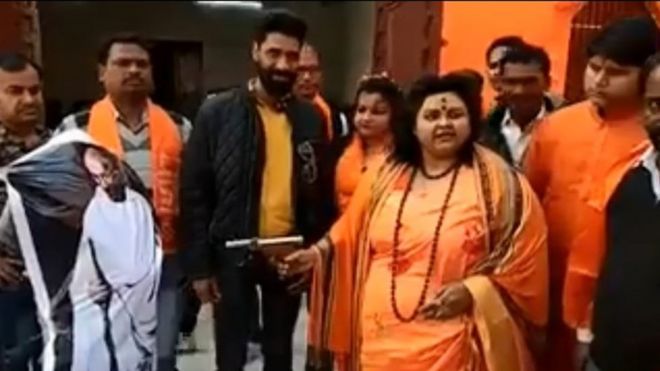 Image copyrightSCREENGRAB
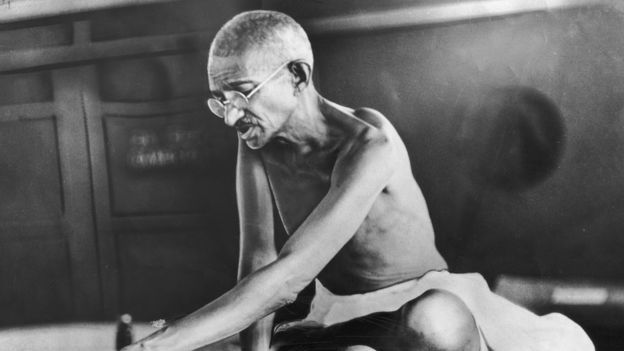 Image copyrightGETTY IMAGES





COMMENTS: