Archive for ‘Uncategorized’

09/12/2018

China, Duterte and the Philippine dam set to become a reality, despite four decades of protest

  • Dumagats fear US$232 million project will displace them from lands they have called home for generations
  • Project aims to augment water security for fast-growing metropolitan Manila
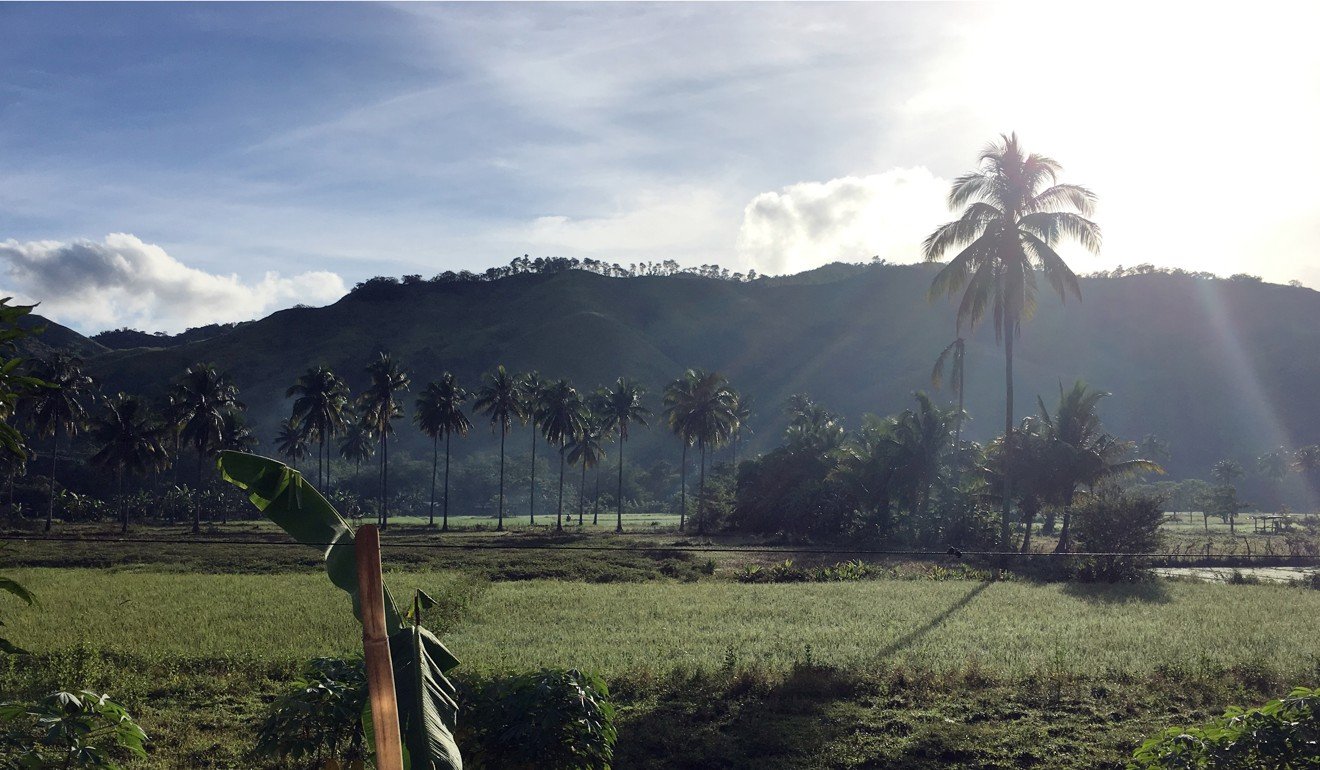
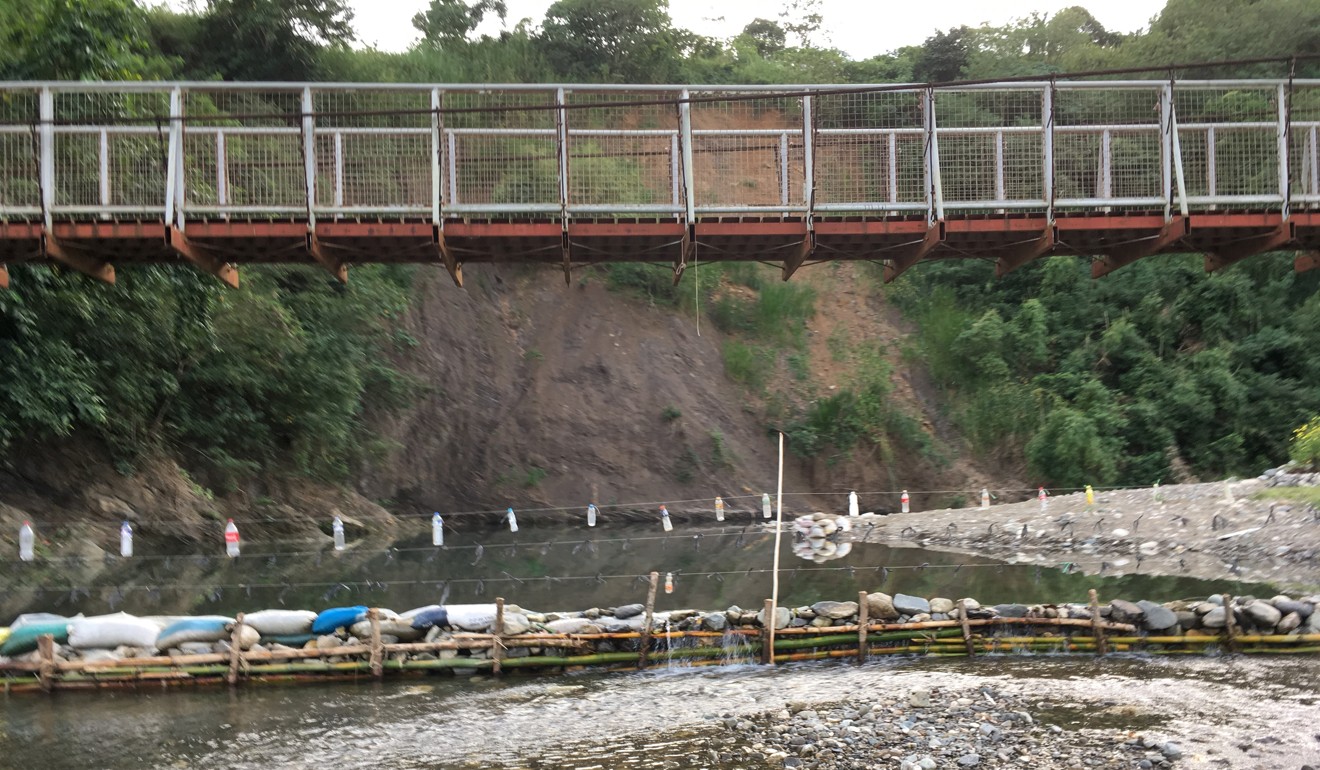
  • Deep inside the Sierra Madre mountain range about 60km (37 miles) east of the Philippine capital of Manila, distance is measured in river crossings.

    Deep inside the Sierra Madre mountain range about 60km (37 miles) east of the Philippine capital of Manila, distance is measured in river crossings.

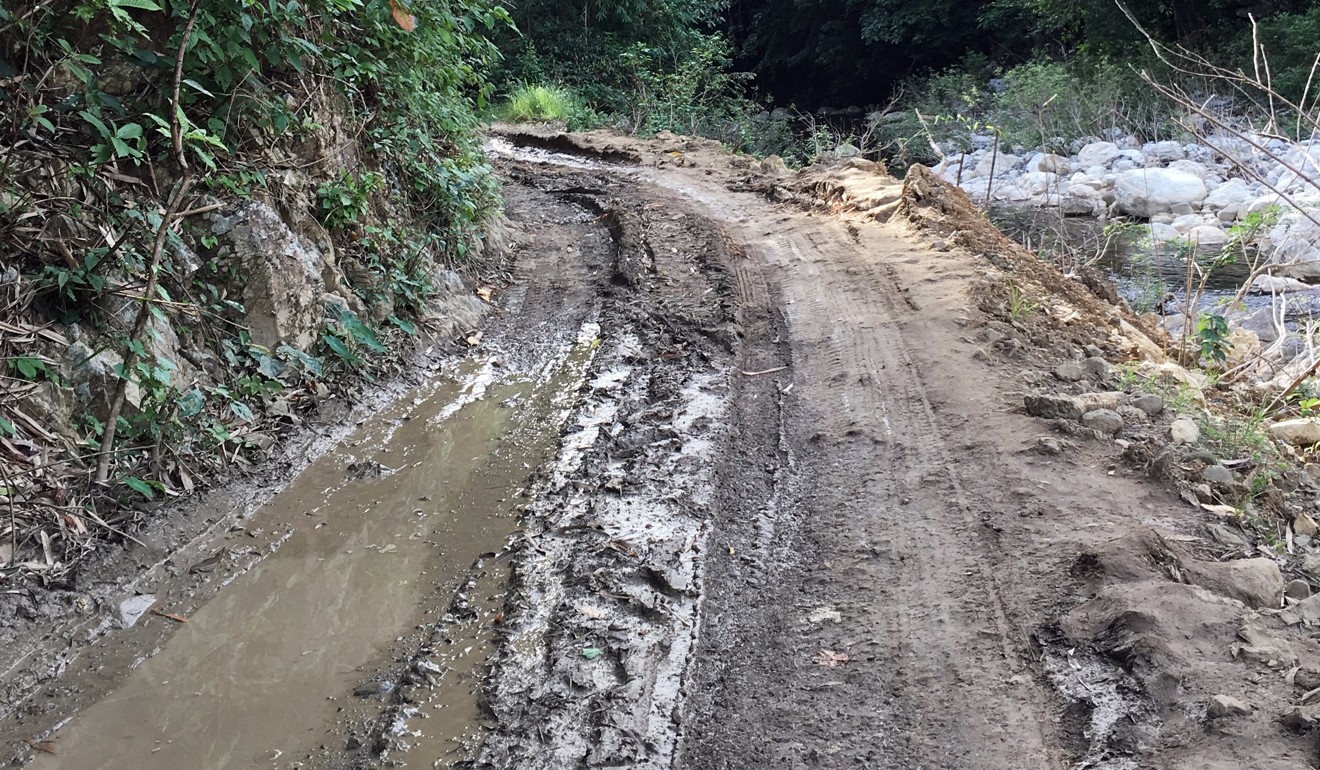
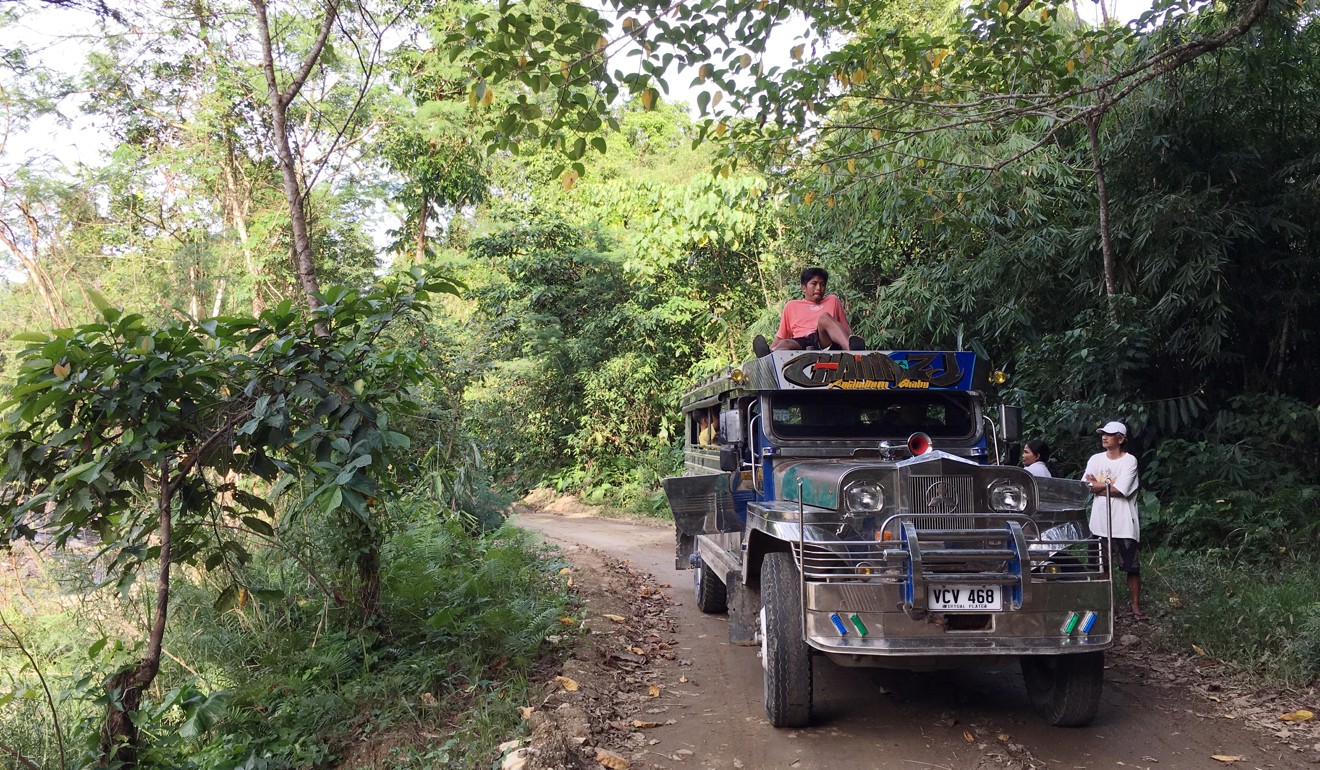
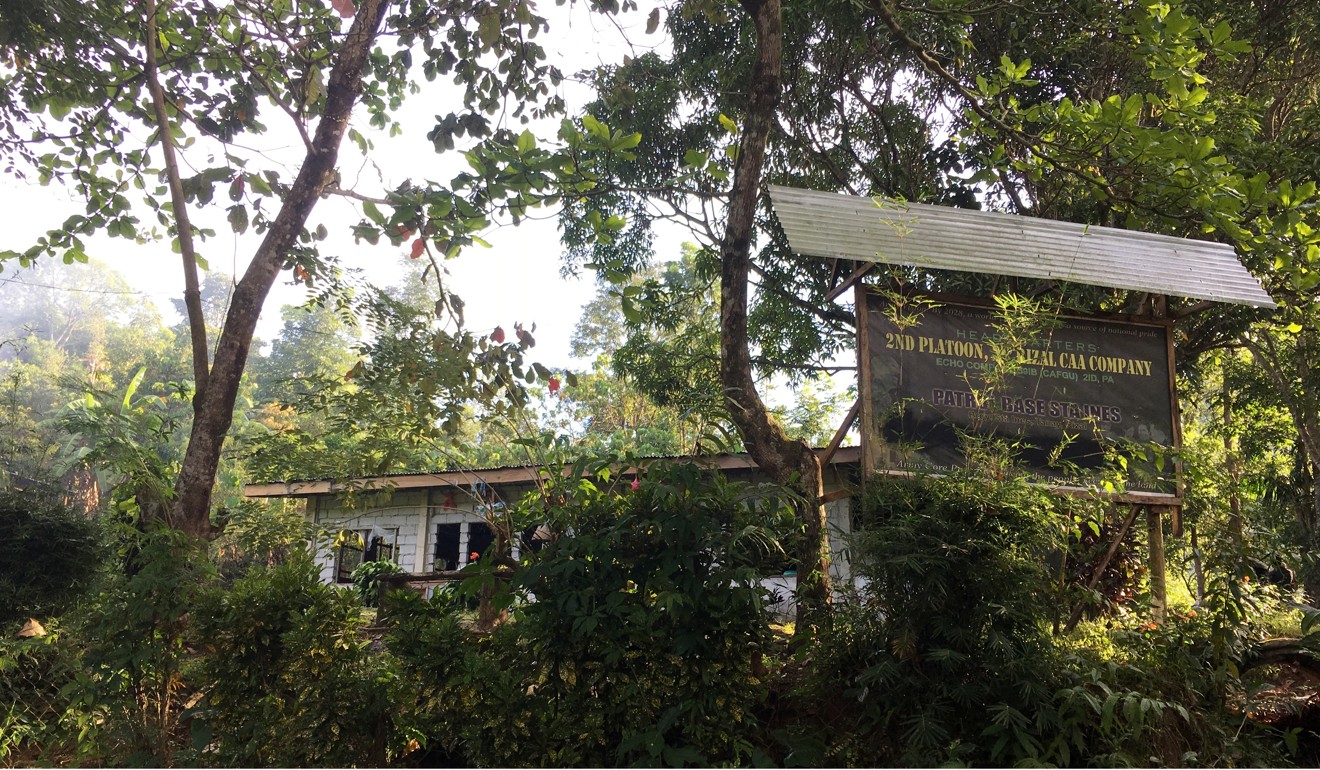
    It takes 13 crossings – a rocky journey by motorcycle, jeep or boat – from the administrative centre of the Santa Ines district to reach the remote area known as Sitio Nayon, the ancestral lands of the historically nomadic Dumagat tribe.

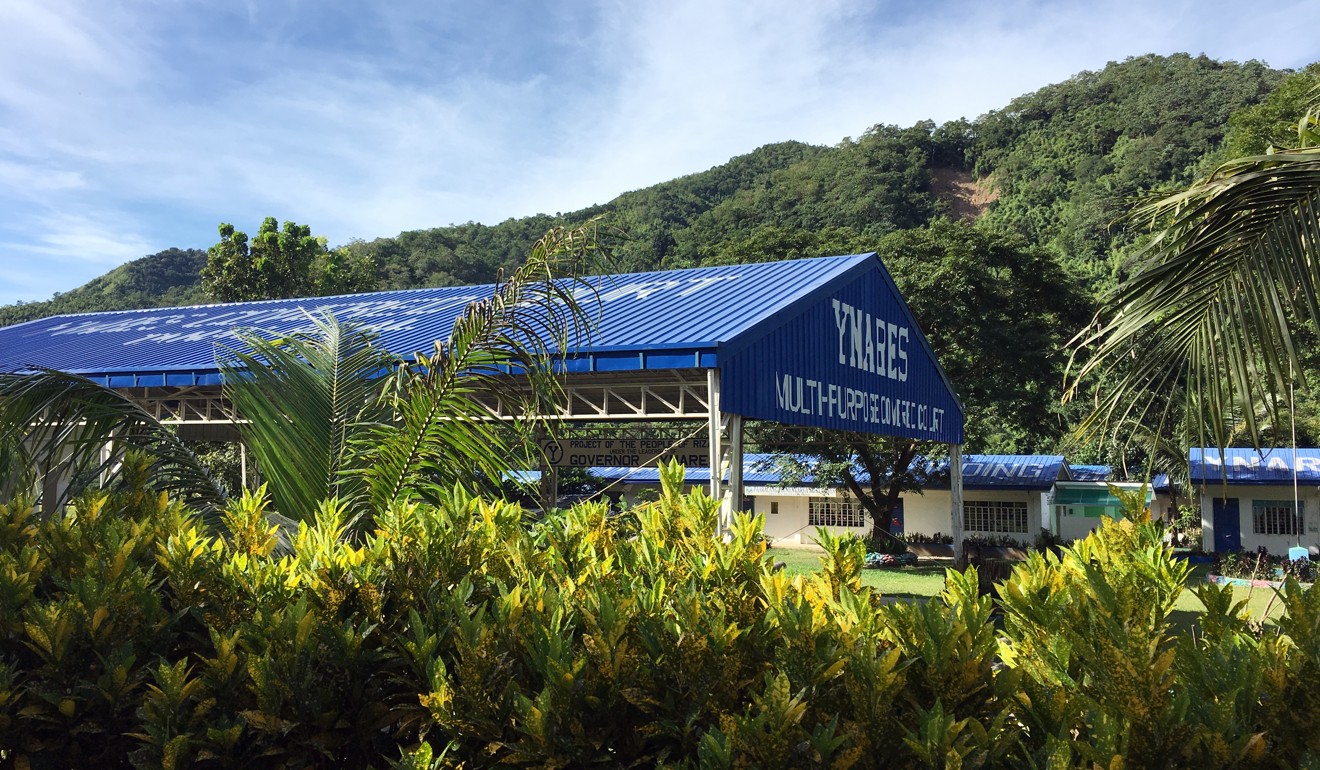
    Even by jeepney, the ubiquitous open-backed passenger truck, the journey takes an hour. Despite the distance, dozens of anxious villagers came together at the local community hall one afternoon to speak out against what they see as a looming threat to their way of life: the China-funded Kaliwa dam.

    “What will happen if we are forced to go elsewhere? We don’t know where to go,” Dante Alcien, from a nearby district in Lumutan, Quezon province, said to the villagers. “The Chinese government is committing a grave sin by building this dam. They are invading our territory.”

    The Dumagats fear that the 12.2 billion peso (US$231 million) mega dam, being built to augment water security for rapidly urbanising Metro Manila will displace them from the lands they have called home for generations.

    While the government projected that only 56 families would be directly displaced by the dam, villagers are concerned about the unknowns: a lack of information from the government, the potential environmental and flooding impact, and the prospect of approval for bigger dams in their river basin.

    Across the affected areas of Quezon and Rizal provinces, indigenous peoples have geared up for a long fight. It is a battle that has been raging for nearly four decades – starting in the late 1970s, when the project was first conceived during then strongman Ferdinand Marcos’ dictatorship.
    In late November, the dam officially got the go-ahead to proceed when a loan agreement and commercial contract were signed during Chinese President Xi Jinping’s high-profile visit to Manila. Twenty-nine deals were signed during his trip, marking the rapprochement between the two countries under the administration of Philippine President Rodrigo Duterte.

    The Kaliwa dam has been both a priority for China in the Philippines and a flagship water project for Duterte’s “Build, Build, Build” programme. Officials aimed to break ground quickly to allay concerns about the security of Manila’s water supply and the length of time it is taking the promised Chinese funds to come through.

    “It doesn’t look good that after waiting for 38 years, your president … cannot even inaugurate it, and this is just a small project in relation to the others,” said Reynaldo Velasco, administrator of the Metropolitan Waterworks and Sewerage System, the government agency that heads the project. “This is how we do things in the Philippines; only in the Philippines.”
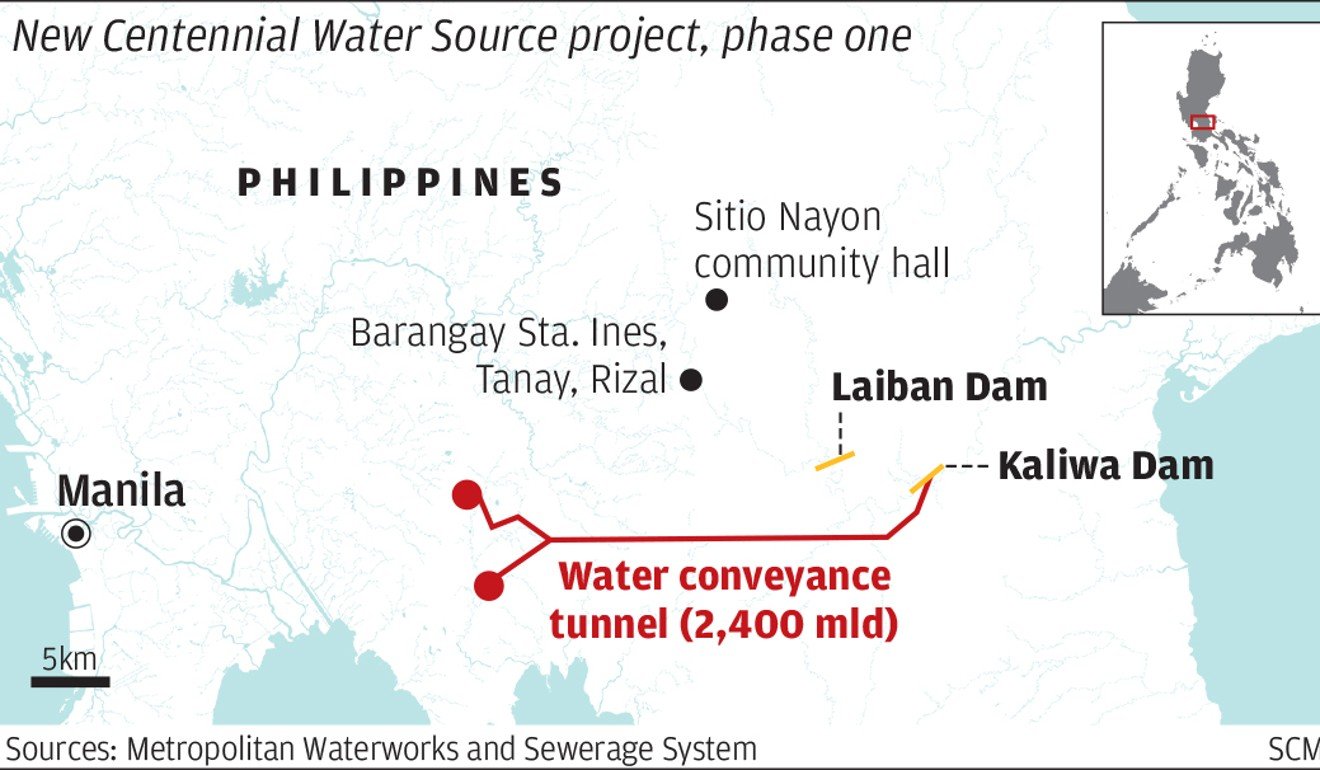
    The dam will supply an extra 600 million litres (158.5 million gallons) of water per day to Metro Manila – the seat of government and one of the three defined metropolitan areas of the Philippines. It was approved for construction in May 2014 by the National Economic and Development Authority and is the first phase of the broader New Centennial Water Source project, likely to be followed by the larger Kanan and Laiban dams.

    All three projects will stem from the Kaliwa-Kanan-Agos River Basin, with the Kaliwa dam set to be built in eastern Quezon province and connected to Metro Manila through neighbouring Rizal province by a 27.7km water supply tunnel, capable of conveying 2.4 billion litres per day.
    Chinese funding was earmarked for the Kaliwa dam as part of the US$9 billion in pledges that Duterte secured from Beijing in 2016.

    The Chinese government has poured funding into megaprojects around the world, in what observers see as a concerted effort to expand the country’s global presence and influence.

    Projects funded by Beijing have drawn criticism for laxer lending standards, and raised questions about transparency and the involvement of state-owned contractors. But Duterte, known for his anti-Western rhetoric, welcomes Chinese trade and aid, including Beijing’s support for his bloody war on drugs.
    For the Kaliwa dam, the financing model is official development assistance from China, switched over in June 2017 from a public-private partnership. The Export-Import Bank of China, the state-owned provider of export financing, will fund 85 per cent of the project, with the Metropolitan Waterworks and Sewerage System footing the rest of the bill.

    Under the official development help model, the Chinese embassy in the Philippines recommended three Chinese companies for the dam. State-owned China Energy was formally awarded the contract in August.

    Construction is expected to begin next year and finish by 2023, but Velasco has asked the Chinese contractor to finish the dam before Duterte’s term ends in 2022, joking that he would hang the company’s country manager from a large tree if it was not finished in time.

    “I already put out the rope for him – I’m just kidding,” he said in his office. “I’m asking them, because it is a big giant company in China, to do it earlier, before my president steps down … It’s possible. They have the technology. We have vetted their capabilities, and we agreed that they should work 24 hours [a day].

    “Of course, we cannot push them too hard, [potentially] sacrificing the quality of the work.”

    Globally, concern has been growing about the potential “debt trap” lurking in Chinese development projects. In the Philippines, worries are compounded by a 2007 government kickbacks scandal with a Chinese telecoms company, and by historic tensions from overlapping claims in the energy-rich South China Sea, waters that Manila refers to as the West Philippine Sea.

    “The Chinese are already claiming our territory in the West Philippine Sea, and now they want to gain more by entering into a contract for this dam,” Alcien, the Dumagat villager from Quezon, said. “Are they content yet from how much they have got? It feels like the Chinese are being greedy.”
    So far, foreign direct investment from China accounts for only about 3 per cent of the Philippines’ total, lagging far behind countries such as Japan, the United States and Indonesia. But Chinese capital has been flowing into the country rapidly, nearly doubling in the first three months of this year. In 2017, Chinese investment in the Philippines surged 67 per cent from a year earlier to US$53.8 million.

    Chinese foreign ministry spokesman Geng Shuang said in late November that it was impossible for the Philippines to fall into a “debt trap” from accepting China’s loans, since those borrowings made up only a small amount of the country’s total foreign debt.

    “China funds projects in the Philippines based on their needs,” Geng said. “We believe that the relevant projects will continue to improve people’s livelihoods and spur economic development, giving new impetus for their growth.”
    One much-touted Chinese investment is the US$62 million Chico River Pump irrigation project. Led by the Philippines’ National Irrigation Administration, the system will provide “a stable supply of water” to around 8,700 hectares (25,000 acres) of agricultural land, benefit 4,350 farmers and their families and serve 21 districts in the northern Luzon provinces of Cagayan and Kalinga, according to a government report.

    Although originally envisioned as a dam, it was eventually scaled down to a river pump amid decades of local resistance.

    “It’s only our current president who likes China. Before, it’s always the US [with whom the Philippines had close ties], right?” said Ricardo Visaya, administrator for the National Irrigation Administration, which also provided technical consultation for the Kaliwa dam.

    “But really, you can see the result of the cooperation that we established with China … and compared to other countries, it’s cheaper. So there are some [criticisms]. That is normal. There will always be negative reactions as well as positive reactions.”

    Velasco, from the Metropolitan Waterworks and Sewerage System, said debt would not be an issue for Kaliwa. The Chinese contractor, following Velasco’s instructions, would also hire Filipinos for non-technical jobs to spur local development, he said.

    “We don’t want people from outside to bully us,” Velasco said. “They are all employees, we are the employer … They have no other choice, or I will send them back home and I will ask their government to change them.”

    China Energy did not respond to multiple requests for comment. The Chinese consulate in the Philippines declined to make ambassador Zhao Jianhua available for an interview, and did not respond to specific questions about the Kaliwa dam.
    The dam is intended as a medium-term solution to Metro Manila’s water security, supplementing the Angat Dam, which provides most of the city’s water. According to the waterworks and sewerage system, water supply levels for the city are 7 to 10 per cent above demand, and planning ahead will avoid the need to substantially raise consumers’ water tariffs.

    International entities such as the World Bank and the Manila-based Asian Development Bank (ADB) are also working with Metro Manila on its water security programme, with ADB financing the Angat water transmission project and providing consultation for the Kaliwa dam.

    “We are helping them [on Kaliwa]. That project was there, even before, but we will be continuing our assistance on the strategy – technical assistance,” Ramesh Subramaniam, director general of Southeast Asia for the ADB, said.

    But Philippine environmental and rights groups have disputed the need for the Kaliwa dam, pointing to alternatives such as greater adoption of green water catchment – the collection of rainwater – as well as improving water efficiency in existing pipelines and using smaller-scale water sourcing projects.

    They argue the dams of the New Centennial Water Source project could increase the risks of flooding and damage to 28,000 hectares of forest, while displacing at least 30,000 mostly indigenous people.
    “We’re questioning the logic of a water project that will contribute to the degradation to the forests of the watershed,” said Leon Dulce, national coordinator for the environmental advocacy group Kalikasan. Alternatives existed that “do not require this scale of risk”, he said.

    Dulce and others warned that fierce opposition and action from local governments and communities in Quezon and Rizal could stall the project. That action could include petitioning the Philippines Supreme Court to grant a Writ of Nature against the dam to protect a constitutionally guaranteed right to a healthy environment.

    Though government officials such as Velasco call the dam a “done deal”, indigenous communities on the ground are not likely to budge because the stakes are so high.

    “The Dumagat and Remontados [tribes] have a symbiotic relationship with nature, living in their ancestral domain for centuries,” said Pete Montallana, chair of the Save Sierra Madre Network Alliance, and coordinator of the Indigenous Peoples Apostolate of the Prelature of Infanta. “Their culture is attached to that. To uproot them is literally to kill them as a people.”
    Ramcy Astoveza, a Dumagat member of the National Commission on Indigenous People, said the law ensured indigenous communities in the Philippines to the right to free, prior, and informed consent, or the power to approve or disapprove any project in their ancestral domain, including the Kaliwa dam. The commission would facilitate the process for the government to obtain consent of the Dumagat-Remontado in Tanay and General Nakar, Quezon, he said.

    Also in Santa Ines, more than 100 villagers gathered on a Saturday morning for mass at the local Catholic Church, where leaders introduced a resolution to oppose the dam and assert the people’s rights to their ancestral lands.

    After a detailed explanation of the implications of the project from Jennifer Haygood, senior researcher from the Ibon Foundation, an independent think tank, the priest asked people to stand if they opposed the dam. Everyone, young and old, rose in the narrow wooden pews.

    “At the end of the day, we just have to fortify our local community’s defences,” Dulce said.

    “They are the first and last line of defence against these projects. They have been able to successfully barricade against the dam for 40 years, and together with the indigenous people, we are ready to barricade against the dam for 40 more years, if it has to come to that point.”

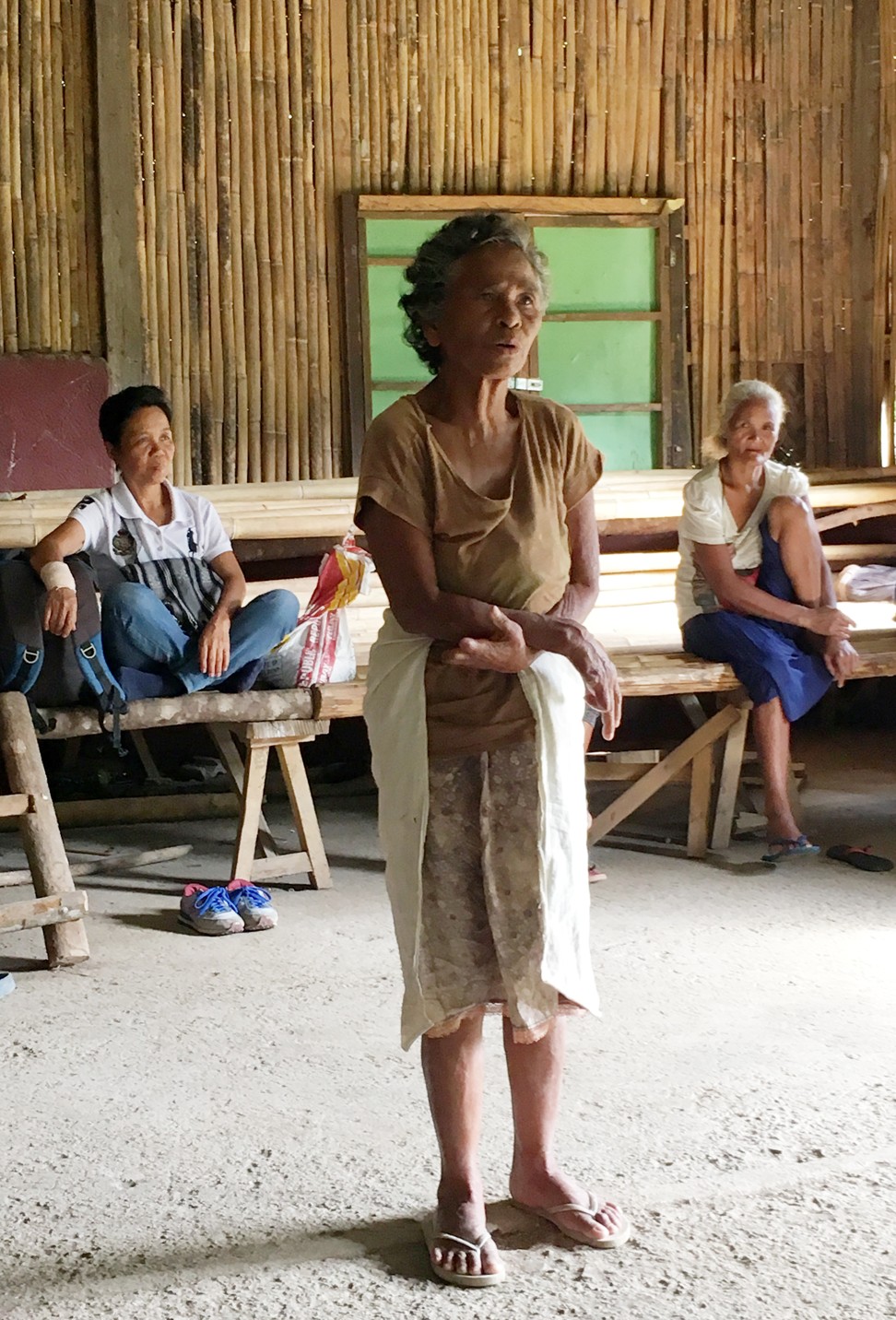
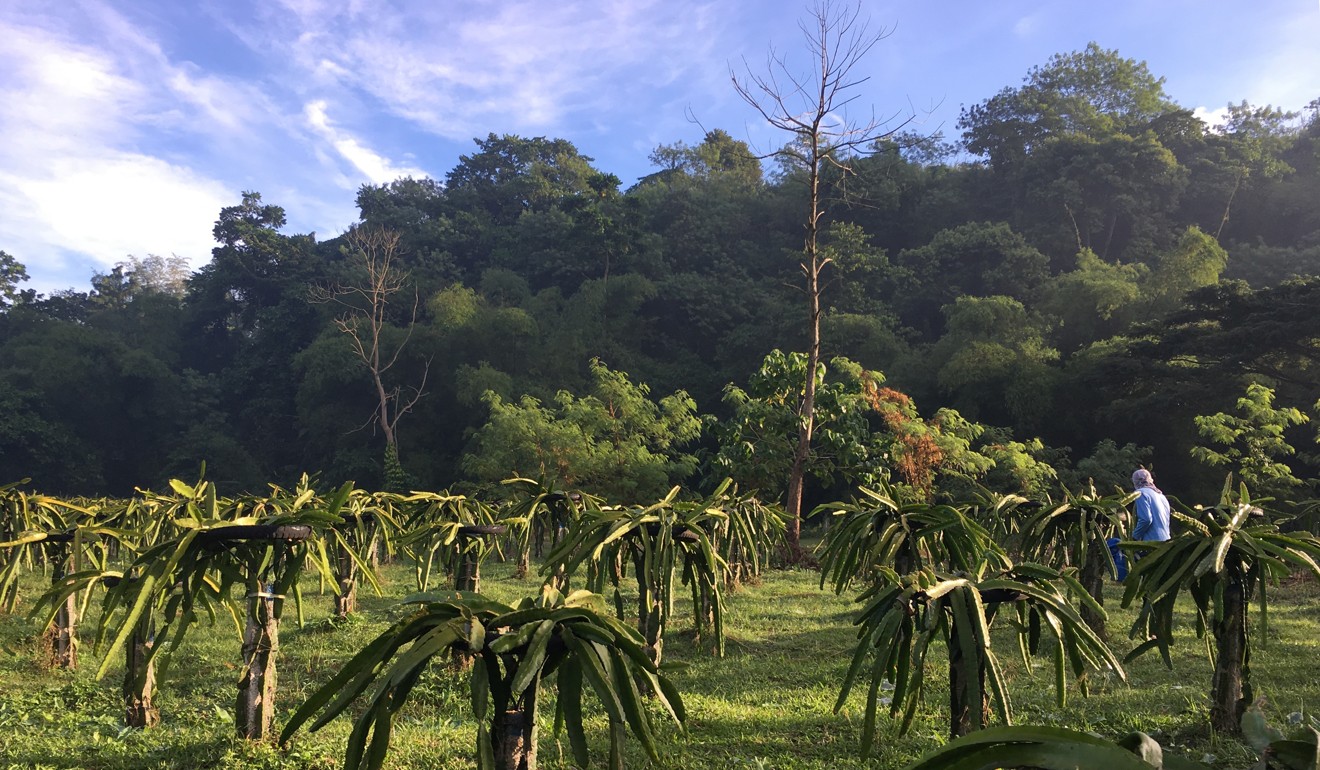
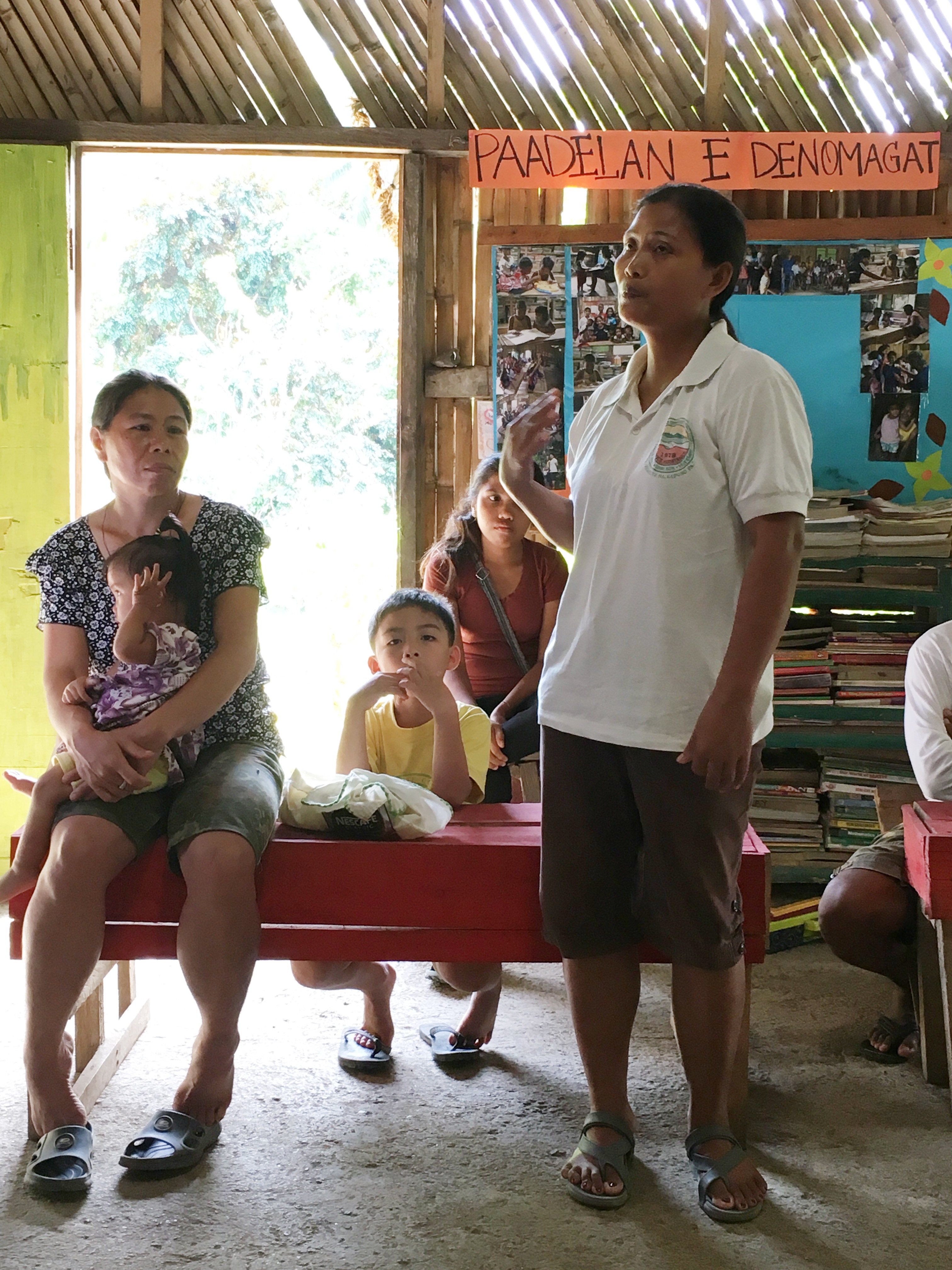
    Several river crossings away, at the Sitio Nayon community hall, dozens sat among shelves of donated books to air their grievances and fears. Just outside was their coveted river, and around the bend unpaved paths littered with slabs of rock. All around were long stretches of greenery that bled into the rugged outline of the Sierra Madre: balete fig trees, heartleaf plants, coconut trees and dragonfruit plantations.

    “I have been part of the resistance since I was young,” said a semi-nomadic villager named Miling, 66. “Because for us, this land is our life.”

    Another elder, a septuagenarian known as Loida, recalled travelling into the city to protest when she was younger. But she has since passed the baton to her grandchildren. As she spoke, she turned to her fellow villagers, her voice steady but her tone urgent.

    “I have not spoken to President Duterte personally, but he promised he would support us indigenous people,” she said. “But what is he doing now? He wants us to drown.
09/12/2018

Submersible Jiaolong’s new mothership takes to water in central China

WUHAN, Dec. 8 (Xinhua) — A new mothership for China’s manned submersible Jiaolong successfully took to water in the central city of Wuhan on Saturday.

Shenhai Yihao (DeepSea No. 1) is a comprehensive scientific expedition vessel as well as the country’s first self-developed, specially designed mothership for a manned submersible.

It is expected to greatly improve the diving capacity of Jiaolong by lending support including on-site analysis of data and specimen, according to the ship’s manufacturer Wuchang Shipbuilding Industry Group under China Shipbuilding Industry Corporation.

The vessel measures 90.2 meters long and 16.8 meters wide. With a designed displacement tonnage of 4,500 tonnes, it has a cruising capacity of over 12,000 nautical miles, according to Chen Tao, board chairman of the ship builder.

Compared with other motherships for manned submersible in the world, Shenhai Yihao boasts larger lab space, lower underwater noise levels and new environmentally friendly designs, said experts at the launch ceremony.

The ship is expected to be put into service in the first half of 2019, setting off global voyages together with Jiaolong.

Jiaolong set a world record by diving to a depth of 7,062 meters during tests in the Mariana Trench in 2012. Its current mothership, 40-year-old Xiangyanghong 09, has carried Jiaolong for hundreds of dives since 2009.

09/12/2018

China’s core AI industry to exceed 145 bln USD by 2030: report

NEW YORK, Dec. 8 (Xinhua) — The value of China’s core Artificial Intelligence (AI) industries could exceed 1 trillion yuan (145.47 billion U.S. dollars) by 2030, with that of AI-enabled industries more than 10 trillion yuan, a latest report by Bloomberg Intelligence (BI) said.

Titled “China’s great tech leap forward”, the report said that China’s push to commercialize AI technologies, supported by the rollout of the world’s biggest 5G network, could position the country as a global leader for technology and innovation.

“Based on the growth trajectory in the past decade, China may overtake the U.S. in global technology-patents share by 2025,” said the report.

AI-related industries may exceed 6 percent of China’s GDP by 2030, according to the report.

In the report, BI analysts said the country’s abundance of data may fuel the acceleration of the industry.

China’s breakneck pace of consumer-lifestyle digitization potentially gives researchers unique access to Chinese-language data generated by its 1.4 billion people as they go about their daily activities both online and offline.

Vey-Sern Ling, senior industry analyst at Bloomberg intelligence, said China may overtake global peers in the commercialization of AI technologies, as large amount of capital is likely to continue pouring into the industry.

According to Tsinghua University, private funding for Chinese AI-related companies in 2017 totaled 27.7 billion dollars, equivalent to 70 percent of global investments in the industry.

Data showed China’s cumulative venture-capital investments in AI startups had already caught up with the United States by 2016.

Ling, also the lead analyst of the report, said the top-down support is an important factor apart from the multi-faceted user data and the funding available in China to the industry’s fast development.

“I don’t think anywhere else in the world you have the government so strongly behind, identifying the technology pillar and bearing full weight,” said Ling.

He added that China’s potential dominance in AI by 2030 may be led by developments in transportation, corporate services, health care and finance.

08/12/2018

Delhi doctor used electric shock to ‘treat’ homosexuals, called it ‘genetic mental disorder’

Though Dr P K Gupta was debarred by the Delhi Medical Council (DMC), he was still indulging in this bizarre practice

A doctor, who terms homosexuality as “genetic mental disorder” and uses electric shock to treat gay and lesbian people, has been summoned by a Delhi court as an accused for violating norms.

Though Dr P K Gupta was debarred by the Delhi Medical Council (DMC), he was still indulging in this bizarre practice.

The court took note of a complaint against Gupta by the DMC, which claimed that he was using hormonal and shock therapy to provide treatment. The complaint said the DMC had debarred Gupta in 2016 from practising in Delhi and as he was still projecting himself as a doctor, he was liable for prosecution.

Metropolitan magistrate Abhilash Malhotra said treatment given by doctors as a part of “conversion therapy” was not recognised either by medical science or by legislature.

Conversion therapy is an attempt to change a person’s sexual orientation using psychological or spiritual interventions.

The court summoned the doctor as accused saying he was prima facie found to be contravening a provision of the Indian Medical Council Act which entails a maximum of one year jail term.

08/12/2018

Bulandshahr violence: Top police officer removed over UP cop killing after 6 days

Six days after an inspector and a civilian were killed in mob violence after cattle carcasses were found in Uttar Pradesh’s Bulandshahr, top police officer Krishna Bahadur Singh has been transferred to DGP Headquarters, Lucknow.

Sitapur Superintendent of Police, Prabhakar Chaudhary has replaced Singh and has been appointed as the Senior Superintendent of Police of Bulandshahr.

Two other police officials were also transferred in connection with the mob violence earlier this week.

Acting on a report submitted by the Additional Director General of Police SB Shiradkar, Circle Officer (CO) Satya Prakash Sharma and Suresh Kumar, the in-charge of Chingravathi police chowki, have been transferred “for their failure in responding in time to the situation arising on Monday in that area”.

A senior home department official said they have been taken to task for not being fast enough in reacting to the situation that arose after some Hindu right-wing activists found some animal carcasses in the field and took them on tractor trolleys to block a road.

Police inspector Subodh Kumar Singh and the civilian from Chingravathi village, Sumit Singh, were killed in the mob violence thereafter.

The action was taken after a high-level meeting was presided over by the Director General of Police (DGP) OP Singh, who had handed over the report to Chief Minister Yogi Adityanath on his arrival from New Delhi.

Meanwhile, Yogi Adityanath has termed the Bulandshahr incident an “accident”. He had earlier said the incident was result of a “big conspiracy” but at a media event in Delhi on Friday, he said that the incident was actually an accident.

The police have so far arrested nine accused but the main conspirator Yogesh Raj, the district convener of the Bajrang Dal, remains at large.

Meanwhile, a soldier allegedly involved in the Bulandshahr firing was detained by his unit in Jammu and Kashmir on Saturday, Army sources said.

Jitendra Malik alias Jeetu Fauji was detained by the 22 Rashtriya Rifles in Sopore town.

A special investigation team (SIT) of the Uttar Pradesh Police is expected to reach Srinagar later to take him into custody. Earlier, a UP police team was sent to Jammu to arrest him.

Sedition is one of the 17 charges in the FIR in which 27 people have been named besides 50-60 unidentified people. They were allegedly involved in the violence that led to the killing of Inspector Subodh Singh and Sumit Kumar.

08/12/2018

‘Surgical strikes for political capital’: Rahul Gandhi tweets jibe at Narendra Modi

Lt Gen (retd) DS Hooda’s strong comment against the “constant hype” around military operations prompted a sharp attack on the government from the Congress. Rahul Gandhi complimented the retired army officer in a tweet but packed in a stinging jab at PM Modi as well.

rahul gandhi,surgical strikes,PM modi
In his tweet, Rahul Gandhi lauded Lt Gen Hooda’s comments. “Spoken like a true soldier General. India is so proud of you,” he tweeted.(HT File Photo)
A former Army commander’s strong comment against the “constant hype” around military operations prompted a sharp attack on the government from the Congress. Party president Rahul Gandhi complimented the retired army officer for his stand in a tweet but packed in a stinging jab at Prime Minister Narendra Modi as well.

Lt Gen (retd) DS Hooda, the retired officer who disapproved the hype, was the Northern Army Commander in September 2016 when commandos crossed the line of control to destroy terror camps in Pakistan.

“Mr 36 [sic] has absolutely no shame in using our military as a personal asset. He used the surgical strikes for political capital and the Rafale deal to increase Anil Ambani’s real capital by 30,000 Cr,” Referring to Lt Gen Hooda’s comments, Rahul Gandhi on Saturday tweeted.

While moderating a discussion on “Role of cross-border operations and surgical strikes” on Day 1 of the Military Literature Festival, Lt Gen Hooda had said, “The military leadership must guard against becoming a tool in the hands of politicians. We can’t take military action to suit someone politically,” he said. The excess hype, he admitted, didn’t help. “There were selective leaks to the media, and too much political banter around it.”

In his tweet, Rahul Gandhi lauded Lt Gen Hooda’s comments. “Spoken like a true soldier General. India is so proud of you,” he tweeted.

Speaking about Lt Gen Hooda’s comments, Army chief Bipin Rawat said, “These are an individual person’s perceptions, so let’s not comment on them. He was one of the main persons involved in conduct of these operations, so I respect his words very much.”

GOC Northern Command, Lt Gen Ranbir Singh, said, “Surgical strike is one of the options available to Army. It had a positive effect on country, we’ve been able to curb terrorism to a great extent.”

The army’s surgical strikes in the early hours of September 29, 2016 was a response to an attack on an army base in Kashmir’s Uri on September 18 in which 19 soldiers were killed. India blames the attack on militants who crossed over from Pakistani territory.

08/12/2018

Ganges: The holy men fasting to death keep a river alive

AtmabodhanandImage copyrightMANSI THAPLIYAL
Image captionAtmabodhanand, 26, stopped taking food on 24 October

Over the past two decades, holy men in India have gone on dozens of fasts demanding governments honour their promise to revive the polluted Ganges, a river revered by Hindus. The recent death of one of the most prominent hunger strikers made headlines. Soutik Biswas went to find out more.

In a quiet ashram (retreat) near the pilgrim town of Haridwar, a young seer says he would die to save the Ganges.

Atmabodhanand is on the 40th day of a fast begun after the ashram’s most prominent resident starved himself to death two months ago.

The 26-year-old computer science dropout from Kerala state spends his days lying under a blanket on a bed beneath a mango tree. When night falls and the air gets chillier, he moves inside the spartan quarters and sleeps.

“I am ready to die,” he told me. “Our ashram has a history of sacrifice.”

Matri Sadan is a leafy, three-acre ashram that sits on the edge of the river. Atmabodhanand stopped taking food on 24 October and now survives on water, salt and honey – his is the 60th such fast by residents since it was founded in 1997.

Using a mix of folksy activism and hunger strikes, residents have put pressure on successive governments to scrap big dams, ban sand mining, clean up the river and pass laws to protect it. Many governments have acceded to their demands in the past.

Image captionThe Ganges is the longest river in India

Seven years ago Swami Nigamanand, 36, fell into a coma and died after refusing food for 115 days – the longest hunger strike in the ashram’s history. He had demanded the government halt all stone quarrying near the river.

A 39-year-old local seer and ashram resident, Sant Gopal Das, is currently being force fed in hospital to keep him alive.

But it was the death in October of GD Agarwal, an 86-year-old former environmental engineer, that grabbed international headlines. Agarwal, also known as Swami Gyan Swaroop Sanand, died after fasting for 111 days at the ashram.

Agarwal was an alumnus of University of California, Berkeley, and taught at the elite Indian Institute of Technology. He worked as an engineer with the federal pollution control authority and was a vocal critic of the government’s half-hearted efforts at cleaning up the river. In 2011, he renounced the material world and became a seer. Before his death he wrote three letters to Prime Minister Narendra Modi with his demands . He didn’t receive an answer.

“He was an inspiration to us all to do the best, and be our best, in all that we do,” Mary Stacey of the University of California wrote to the ashram after his death.

Two days after Agarwal began refusing water, his condition deteriorated and he died after being forcibly moved to the hospital. Within two weeks, Atmabodhanand took up the cudgels and began his hunger strike, inspired by his famous predecessor. He also believes that one man’s hunger can “bring back the river from the dead”.

Image captionEnvironmentalist GD Agarwal died in October after a 111-day-long hunger strike

The longest Indian river, Ganges flows from the Himalayas to the Bay of Bengal. Concerns over the declining water levels and waning health of the 2,500km (1,553-mile)-long river, which supports a quarter of India’s 1.3 billion people, have been mounting for years.

Hindus revere the river as a god, and believe that bathing in her waters can wash away a person’s sins.

But the Ganges has been choked by more than 1,000 irrigation dams, the water table in its basin shrunk by reckless extraction of groundwater and its own water poisoned by toxic industrial effluent and household sewage. The river in Haridwar itself caught fire in 1984 when someone put a lit match on the water. “Indians are killing the Ganges with pollution and the polluted Ganges, in turn, is killing Indians,” says Victor Mallet, author of River of Life, River of Death, a new book on the river.

Now, say the seers at the ashram, Narendra Modi’s Hindu nationalist BJP government, which rode to power in 2014 promising to clean up the Ganges, is “arrogant and isn’t interested in saving the river”.

They find it ironical that despite Agarwal being close to a Hindu nationalist organisation, he actually appeared to be listened to more by the previous Congress government. He fasted eight times while it was in power, and extracted some major concessions, including scrapping a dam and declaring a key 100km stretch of the river as sensitive.

“We will die for the river. If the government wants blood, we will give them blood,” says Swami Shivanand, the 72-year-old head of the ashram, who has also fasted in the past.

Image captionThe Ganges is one of the world’s most polluted rivers

Five years ago, Atmabodhanand quit college and travelled from Kerala in the south to Haridwar in northern Uttarakhand state by train, bus and foot. Seeking a life of renunciation, he says he was disillusioned by the way most holy men lived, and decided to end his life by disappearing into the Himalayas.

That is when he met Swami Shivanand who took him in. At the ashram he immersed himself in prayers and other activities and ran its social media accounts.

Atmabodhanand has gone on eight hunger strikes since 2014. During his longest fast, which lasted 47 days, he had hypothermia – when the body loses heat faster than it can produce it – and had to be taken to hospital. He has protested against sand mining on the river and stone crushing on its banks, and ended his strikes, he says, after authorities listened to the demands and took steps.

“This time, it is a fight to the finish. It’s going to be a long haul,” he says.

On the day I visited the ashram, rattled authorities, panicky at the prospect of another hunger death on the premises, sent doctors with an ambulance to check Atmabodhanand and take blood and urine samples to test for blood sugar, malaria and dengue. His blood pressure was normal, and he had no fever.

They updated his medical records in a government log book called Medical Examination of Hunger Strikers. All this while, residents chided the officials and accused them of trying to take away the hunger striker to “poison” him in hospital. The officials wondered aloud what they would gain by “killing a hunger striker”.

Hunger as a form of political protest is not new to India – Gandhi is arguably the most famous hunger striker in history, having resorted to more than a dozen fasts, the longest one lasting 21 days.

Image captionAtmabodhanand lies on a bed under a tree in the ashram during the day

Much later, in 2011, anti-corruption campaigner Anna Hazare undertook a high-profile 12-day hunger strike to press for anti-corruption laws. But what makes the fasts at the ashram in Haridwar stand out are their frequency and the two deaths. “Hunger strikers believe that the voice of hunger has a power disproportionate to its source,” says Prof Sharman Apt Russell, author of Hunger: An Unnatural History. “Hunger can strengthen the weak, inspire the timid, bully the powerful.”

But the lack of widespread public support for the fasting residents of Matri Sadan is sometimes glaring. “People have become selfish. They don’t care about their own good any more,” says Atmabodhanand feebly.

But the reality is possibly more complex.

Himanshu Thakkar, a water expert with the advocacy group South Asian Network on Dams, says the hunger strikes by the seers at Matri Sadan have had “some impact” all right. Sand mining on the river has been stopped from time to time, and stone crushing factories removed from near the river. “But my impression is fasting must be a part of a larger strategy in which people from different sections of society must be mobilised.”

Image captionSwami Punyanand is on a fruits only diet to prepare for a future hunger strike

The BJP’s water resources minister Nitin Gadkari says a $3bn plan involving 254 projects to clean up the river and its surroundings is in progress, and most of the cleaning work of the river will be completed by next year. “The people’s dream of a rejuvenated Ganges will soon be fulfilled,” he told a meeting in Delhi recently.

But the seers insist the government is not doing enough. So hunger remains a constant companion of the residents at the retreat.

“I am next in the queue. This time, we will not stop,” says Swami Punyanand, a 61-year-old former automobile workshop owner from Delhi who became a seer years ago. He has gone on a simple fruit diet to “prepare for fasting to death”.

In the hermitage of hunger, this is how they prepare to give up their lives for the river.

08/12/2018

China vows to continue support for Myanmar’s peace process in Rakhine

YANGON, Dec. 7 (Xinhua) — China will continue its support for Myanmar government’s process of restoring peace and stability as well as promoting development in western Rakhine state, Chinese Ambassador Hong Liang said on Friday.

Hong made the remarks at a donation ceremony to Myanmar’s Union Enterprise for Humanitarian Assistance, Resettlement and Development (UEHRD).

China encourages the Myanmar government’s efforts on the repatriation process of displaced persons, he said.

Myanmar Minister of Social Welfare, Relief and Resettlement Dr Win Myat Aye thanked the Chinese Embassy for the prompt donation, saying that it will help build houses for the returnees and will also take the lead to bring about more donation from others.

Myanmar formed the UEHRD in Oct. last year for the effective performance of a long-term project of freedom from conflict in Rakhine state.

It also established nine private sector task forces to join the mechanism of UEHRD.

08/12/2018

Chinese senior official meets former Australian prime minister

CHINA-BEIJING-YANG JIECHI-AUSTRALIA-MEETING (CN)

Yang Jiechi (R), a member of the Political Bureau of the Communist Party of China (CPC) Central Committee and also director of the Office of the Foreign Affairs Commission of the CPC Central Committee, meets with former Australian Prime Minister John Howard in Beijing, capital of China, Dec. 7, 2018. (Xinhua/Pang Xinglei)

BEIJING, Dec. 7 (Xinhua) — Yang Jiechi, a member of the Political Bureau of the Communist Party of China (CPC) Central Committee, on Friday met with former Australian Prime Minister John Howard, who was leading an Australian delegation to the fifth session of the China-Australia High-Level Dialogue in Beijing.

Yang, also director of the Office of the Foreign Affairs Commission of the CPC Central Committee, said that China-Australia ties were improving.

“As long as the two sides adhere to mutual respect, equality and mutual benefit, they can push bilateral ties to maintain a stable development,” Yang said.

China is ready to work with the Australian side to boost political mutual trust, expand pragmatic cooperation, promote people-to-people exchanges, strengthen communication and coordination on international and regional issues so as to realize mutual benefit and win-win results, Yang said.

The session has achieved positive outcomes, Howard said, adding that all social circles of Australia were willing to play an active role in promoting new progress in bilateral ties.

08/12/2018

China launches Chang’e-4 lunar probe

CHINA-SICHUAN-XICHANG-CHANG'E-LUNAR PROBE-LAUNCH (CN)China launches Chang’e-4 lunar probe in the Xichang Satellite Launch Center in southwest China’s Sichuan Province, Dec. 8, 2018.  (Xinhua/Jiang Hongjing)

XICHANG, Dec. 8 (Xinhua) — China’s Chang’e-4 lunar probe was launched in the early hours of Saturday, and it is expected to make the first-ever soft landing on the far side of the moon.

A Long March-3B rocket, carrying the probe including a lander and a rover, blasted off from the Xichang Satellite Launch Center in southwest China’s Sichuan Province at 2:23 a.m., opening a new chapter in lunar exploration.

The scientific tasks of the Chang’e-4 mission include low-frequency radio astronomical observation, surveying the terrain and landforms, detecting the mineral composition and shallow lunar surface structure, and measuring the neutron radiation and neutral atoms to study the environment on the far side of the moon, the China National Space Administration announced.

China has promoted international cooperation in its lunar exploration program, with four scientific payloads in the Chang’e-4 mission developed by scientists from the Netherlands, Germany, Sweden and Saudi Arabia.

Saturday’s launch was the 294th mission of the Long March rocket series.

Law of Unintended Consequences

continuously updated blog about China & India

ChiaHou's Book Reviews

continuously updated blog about China & India

What's wrong with the world; and its economy

continuously updated blog about China & India