Archive for ‘UPS’

22/04/2020

How Gandalf and ancient poetry can show the world a different side to China amid coronavirus unease

  • Documentary puts China’s literary hero into context: there is Dante, there’s Shakespeare, and there’s Du Fu
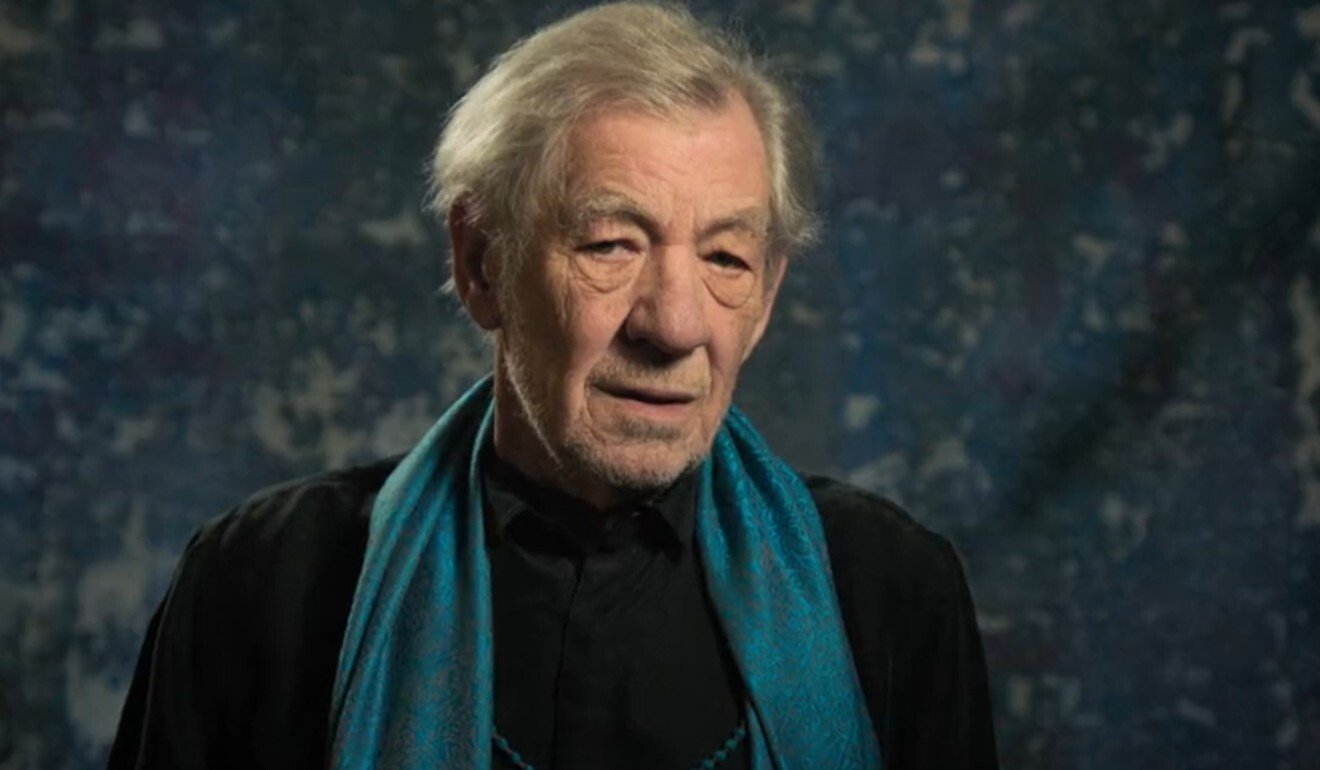
  • Theatrical legend Sir Ian McKellen brings glamour to beloved verses in British documentary
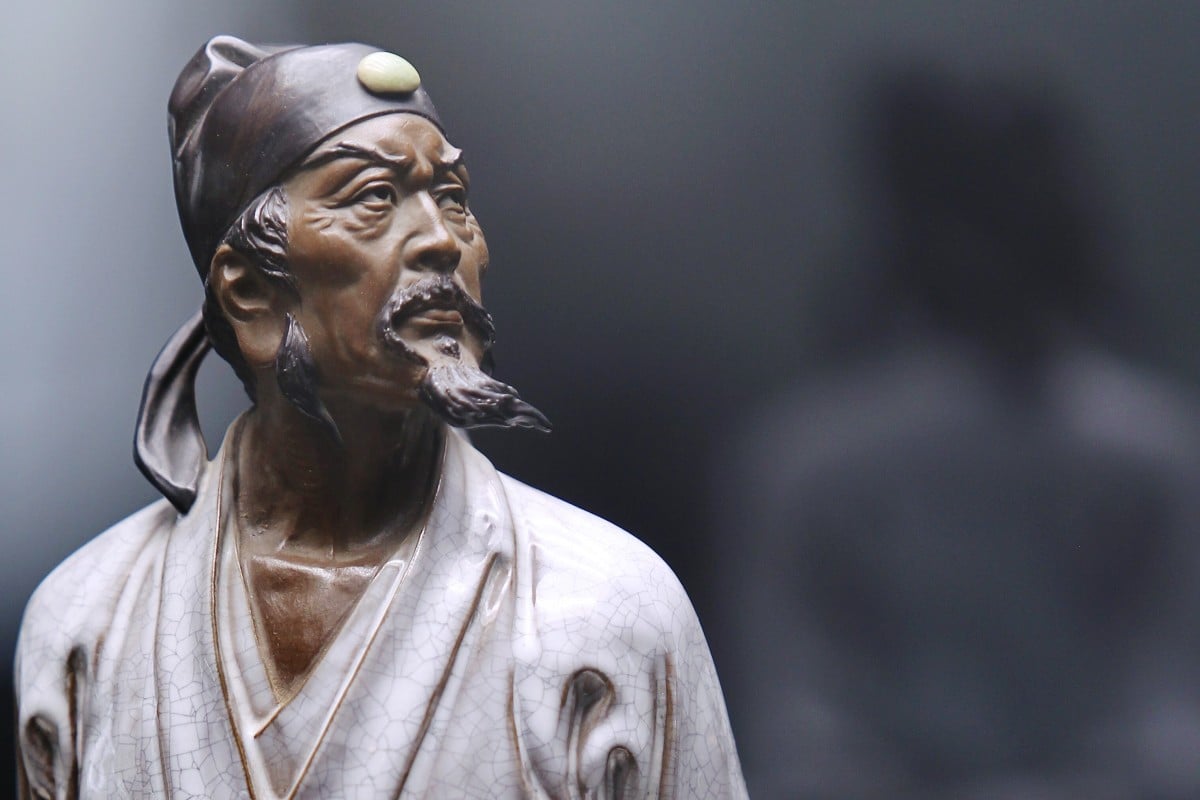
A ceramic figurine of Du Fu, a prominent Chinese poet of the Tang dynasty. Du is the subject of a new BBC documentary, thrilling devotees of his poetry. Photo: Simon Song
The resonant words of an ancient Chinese poet spoken by esteemed British actor Sir Ian McKellen have reignited in China discussion about its literary history and inspired hope that Beijing can tap into cultural riches to help mend its image in the wake of the coronavirus pandemic.
The BBC documentary Du Fu: China’s Greatest Poet has provoked passion among Chinese literature lovers about the poetic master who lived 1,300 years ago.
Sir Ian Mckellen read works of ancient Chinese poet Du Fu in Du Fu: China’s Greatest Poet. Photo: BBC Four / MayaVision International
The one-hour documentary by television historian Michael Wood was broadcast on television and aired online for British viewers this month but enthusiasm among Chinese audiences mean the trailer and programme have been widely circulated on video sharing websites inside mainland China, with some enthusiasts dubbing Chinese subtitles.
The documentary has drawn such attention in Du’s homeland that even the Communist Party’s top anti-graft agency has discussed it in its current affairs commentary column. Notably, Wood’s depiction of Du’s life from AD712 to 770 barely mentioned corruption in the Tang dynasty (618-907) government.

“I couldn’t believe it!!” Wood said in an email. “I’m very pleased of course … most of all as a foreigner making a film about such a loved figure in another culture, you hope that the Chinese viewers will think it was worth doing.”

Often referred to as ancient China’s “Sage of Poetry” and the “Poet Historian”, Du Fu witnessed the Tang dynasty’s unparalleled height of prosperity and its fall into rebellion, famine and poverty.

Writer, historian and presenter Michael Wood followed the footsteps of the ancient Chinese poet Du Fu in Yangtze River gorges. Photo: BBC Four / MayaVision International
Wood traced Du’s footsteps to various parts of the country. He interviewed Chinese experts and Western sinologists, offering historical and personal contexts to introduce some of Du’s more than 1,400 poems and verses chronicling the ups and downs of his life and China.
The programme used many Western reference points to put Du and his works into context. The time Du lived in was described as around the as the Old English poem Beowulf was composed and the former Chinese capital, Changan, where Xian is now, was described as being in the league of world cities of the time, along with Constantinople and Baghdad.

Harvard University sinologist Stephen Owen described the poet’s standing as such: “There is Dante, there’s Shakespeare, and there’s Du Fu.”

The performance of Du’s works by Sir Ian, who enjoyed prominence in China with his role as Gandalf in the Lord of the Rings movie series, attracted popular discussion from both media critics and general audiences in China, and sparked fresh discussion about the poet.

“To a Chinese audience, the biggest surprise could be ‘Gandalf’ reading out the poems! … He recited [Du’s poems] with his deep, stage performance tones in a British accent. No wonder internet users praised it as ‘reciting Du Fu in the form of performing a Shakespeare play,” wrote Su Zhicheng, an editor with National Business Daily.

A stone sculpture at Du Fu Thatched Cottage in Chengdu city, China. Photo: Handout
On China’s popular Weibo microblog, a viewer called Indifferent Onlooker commented on Sir Ian’s recital of Du’s poem My Brave Adventures: “Despite the language barrier, he conveyed the feeling [of the poet]. It’s charming.”
Some viewers, however, disagreed. At popular video-sharing website Bilibili.com, where uploads of the documentary could be found, a viewer commented: “I could not appreciate the English translation, just as I could not grasp Shakespeare through his Chinese translated works in school textbooks.”
Watching the documentary amid the coronavirus pandemic, some internet users drew comparisons of Du to Fang Fang, a modern-day award-winning poet and novelist who chronicled her life in Wuhan during the Covid-19 lockdown.
News of the forthcoming publication of English and German translations of Fang’s Wuhan Diary has attracted heated accusations that it would empower Western critics of Beijing’s handling of the outbreak.
Shanghai pictured in April. Devastation wrought by the coronavirus pandemic has brought about a new suspicion of China. Photo: Bloomberg
The pandemic has infected more than 2.5 million people and killed more than 170,000. It has put the global economy in jeopardy, fuelling calls for accountability. British Foreign Secretary Dominic Raab last week called for a “deep dive” review and the asking of “hard questions” about how the coronavirus emerged and how it was not stopped earlier.
Steve Tsang, director of the SOAS China Institute at University of London, said the British establishment and wider public had changed its perception of Beijing as questions arose about outbreak misinformation and the political leverage of personal protective gear supply.
“The aggressive propaganda of the Chinese government is getting people in the UK to look more closely at China and see that it is a Leninist party-state, rather than the modernising and rapidly changing society that they want to see in China,” Tsang said.

On Sunday, a writer on the website of the National Supervisory Commission, China’s top anti-corruption agency, claimed – without citing sources – that the Du Fu documentary had moved “anxious” British audience who were still staying home under social distancing measures.

“If anyone wants to put the fear of the coronavirus behind them by understanding the rich Chinese civilisation, please watch this documentary on Du Fu,” it wrote, adding that promoting Du’s poems overseas could help “healing and uniting our shattered world”.

English-language state media such as CGTN and the Global Times reported on the documentary last week and some Beijing-based foreign relations publications have posted comments about the film on Twitter.

Wood said he had received feedback from both Chinese and British viewers that talked about “the need, especially now, of mutual understanding between cultures”.

“It is a global pandemic … we need to understand each other better, to talk to each other, show empathy: and that will help foster cooperation. So even in a small way, any effort to explain ourselves to each other must be a help,” Wood said.

He said the idea for producing a documentary about Du Fu started in 2017, after his team had finished the Story of China series for BBC and PBS.

Du Fu: China’s Greatest Poet first aired in Britain on April 7 on BBC Four, the cultural and documentary channel of the public broadcaster. It is a co-production between the BBC and China Central Television.

Wood said a slightly shorter 50-minute version would be aired later this month on CCTV9, Chinese state television’s documentary channel.

The film was shot in China in September, he said.

“I came back from China [at the] end of September, so we weren’t affected by the Covid-19 outbreak, though of course it has affected us in the editing period. We have had to recut the CCTV version in lockdown here in London and recorded two small word changes on my iPhone!” Wood said.

Source: SCMP

21/02/2020

Airlines suspend China flights due to coronavirus outbreak

(Reuters) – Airlines have been suspending flights to China or modifying service in response to the coronavirus outbreak.

Below are details (in alphabetical order):

AIRLINES THAT HAVE CANCELLED ALL FLIGHTS TO MAINLAND CHINA

** American Airlines – Extends suspension of China and Hong Kong flights through April 24

** Air France – Said on Feb.6 it would suspend flights to and from mainland China for much of March

** Air India – Suspends flights to Shanghai, Hong Kong until June 30

** Air Seoul – The South Korean budget carrier suspended China flights from Jan. 28 until further notice.

** Air Tanzania – Tanzania’s state-owned carrier, which had planned to begin charter flights to China in February, postponed its maiden flights.

** Air Mauritius – Suspended all flights to China and Hong Kong

** Austrian Airlines – until end-February.

** British Airways – Jan. 29-March 31.

** Delta Airlines – Feb. 2-April 30

** Egyptair suspended flights on Feb, 1, but on Feb. 20 said it would resume some flights to and from China starting next week.

** El Al Israel Airlines – Said on Feb. 12 it would suspend its Hong Kong flights until March 20 and reduce its daily flights to Bangkok. It suspended flights to Beijing from Jan. 30 to March 25 following a health ministry directive.

** Iberia Airlines – The Spanish carrier extended its suspension of flights from Madrid to Shanghai, its only route, from Feb. 29 until the end of April.

** JejuAir Co Ltd – Korean airline to suspend all China routes starting March 1

** Kenya Airways – Jan. 31 until further notice.

** KLM – Will extend its ban up to March 28

** Lion Air – All of February.

** LOT – Extends flight suspension until March 28

** Oman and Saudia, Saudi Arabia’s state airline, both suspended flights on Feb. 2 until further notice.

** Qatar Airways – Feb. 1 until further notice.

** Rwandair – Jan. 31 until further notice.

** Scoot, Singapore Airlines’ low-cost carrier – Feb. 8 until further notice.

** United Airlines – Feb. 5-April 23. Service to Hong Kong suspended Feb. 8-April 23.

** Vietjet and Vietnam Airlines – Suspended flights to the mainland as well as Hong Kong and Macau Feb. 1-April 30, in line with its aviation authority’s directive.

AIRLINES THAT HAVE CANCELLED SOME CHINA FLIGHTS/ROUTES OR MODIFIED SERVICE

** Air Canada – Extended the suspension of its flights to Beijing and Shanghai until March 27. It also suspended its Toronto to Hong Kong flights from March 1 to March 27, but its Vancouver to Hong Kong route remains active. [bit.ly/39zgmI0]

** Air China – Said on Feb. 12 it will cancel flights to Athens, Greece, from Feb. 17 to March 18

** Air China – State carrier said on Feb. 9 it will “adjust” flights between China and the United States.

** Air New Zealand – Suspended Auckland-Shanghai service Feb. 9-March 29. Reduced capacity on Shanghai route throughout April and Hong Kong route throughout April and May.

** ANA Holdings – Suspended routes including Shanghai and Hong Kong from Feb. 10 until further notice.

** Cathay Pacific Airways – Plans to cut a third of its capacity over the next two months, including 90% of flights to mainland China. It has encouraged its 27,000 employees to take three weeks of unpaid leave in a bid to preserve cash.

** Emirates and Etihad – The United Arab Emirates, a major international transit hub, suspended flights to and from China, except for Beijing.

** Finnair – Cancelled all flights to mainland China and decreased the number of flights to Hong Kong until March 28.

** Hainan Airlines – Suspended flights between Budapest, Hungary, and Chongqing Feb. 7-March 27.

** Korean Air Lines Co. – The national flag carrier suspended eight routes to China and reduced services on nine Chinese routes between Feb. 7 and 22.

** Philippine Airlines – Cut the number of flights between Manila and China by over half.

** Qantas Airways – Suspended direct flights to China from Feb. 1. The Australian national carrier halted flights from Sydney to Beijing and Sydney to Shanghai between Feb. 9-March 29.

** Royal Air Maroc – The Moroccan airline suspended direct flights to China Jan. 31-Feb. 29. On Jan. 16, it had launched a direct air route with three flights weekly between its Casablanca hub and Beijing.

** Russia – All Russian airlines, with the exception of national airline Aeroflot, stopped flying to China from Jan. 31. Small airline Ikar will also continue flights between Moscow and China. All planes arriving from China will be sent to a separate terminal in the Moscow Sheremetyevo airport. Aeroflot reduced the frequency of flights to Beijing, Shanghai and Guangzhou until Feb. 29.

** Nordic airline SAS – Extended its suspension of flights to Shanghai and Beijing until March 29.

** Singapore Airlines – Suspended or cut capacity on flights to Beijing, Shanghai, Guangzhou, Shenzhen, Chengdu, Xiamen and Chongqing, some of which are flown by regional arm SilkAir.

** UPS – Cancelled 22 flights to China because of the virus and normal manufacturing closures due to the Lunar New Year holiday.

** Virgin Atlantic – Extended its suspension of daily operations to Shanghai until March 28.

** Virgin Australia – Said it will withdraw from the Sydney-Hong Kong route from March 2 because it was “no longer a viable commercial route” due to growing concerns over the virus and civil unrest in Hong Kong.

Source: Reuters

Law of Unintended Consequences

continuously updated blog about China & India

ChiaHou's Book Reviews

continuously updated blog about China & India

What's wrong with the world; and its economy

continuously updated blog about China & India