Archive for ‘US sanctions’

20/02/2019

Channel storm damaged Russian S-400 missiles bound for China

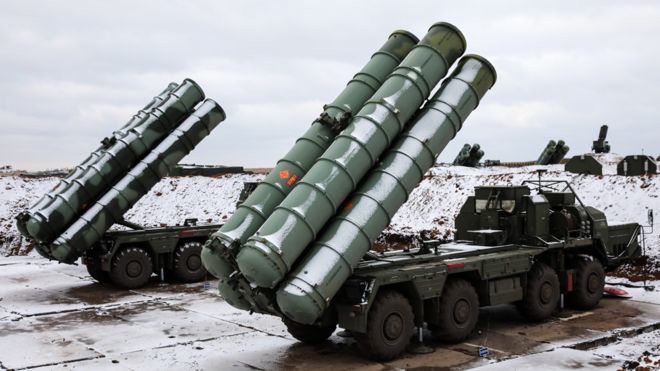
S-400s in Crimea, Nov 2018Image copyrightGETTY IMAGES
Image captionSince annexing Crimea in 2014 Russia has deployed S-400 missiles there

A storm in the English Channel damaged S-400 anti-aircraft missiles that Russia was shipping to China, but now they are being replaced, Russia says.

The ship with its damaged cargo returned to Russia last March, but two other Russian ships delivered S-400s to China successfully.

The deal was reported by the Russian government website Rossiiskaya Gazeta.

China is under US sanctions for buying S-400s and other Russian arms. India and Turkey are also buying S-400s.

A Russian arms industry chief, Dmitry Shugayev, said Russia would complete the delivery of the S-400s to China by the end of 2020.

China is getting two regimental units, which amounts to at least 128 missiles.
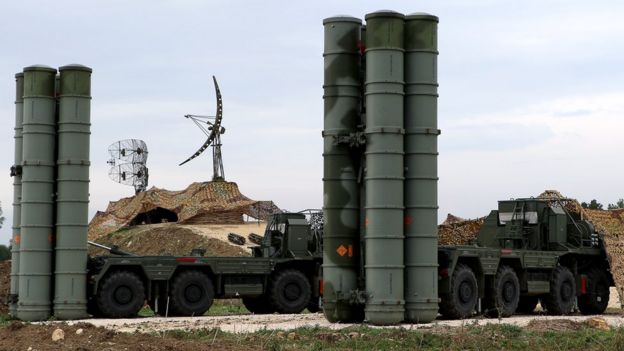
The S-400 surface-to-air missile system at Hmeimim airbase in Syrian province of Latakia (16 Dec 2015)Image copyrightAFP
Image captionThe S-400 missile system is deployed at Russia’s Hmeimim airbase in Syria

The S-400 “Triumf” is one of the most sophisticated surface-to-air missile systems in the world. It has a range of 400km (248 miles) and one S-400 integrated system can shoot down up to 80 targets simultaneously.

Russia says it can hit aerial targets ranging from low-flying drones to aircraft flying at various altitudes and long-range missiles.

The US sanctions are aimed at putting pressure on the Russian government over its annexation of Crimea and intervention in eastern Ukraine in 2014.

In October, India signed a $5bn (£3.9bn) deal to buy five S-400 regimental units. That amounts to at least 320 missiles. Each S-400 launch vehicle – a heavy lorry – carries four missiles.

Russia has deployed S-400s to protect its military airbase at Hmeimim in Syria.

Turkey, a Nato member, is buying S-400s despite US warnings. The US wants to sell Patriot missiles, made by Raytheon Co, to Turkey instead. The US argues that S-400s are incompatible with Nato systems.

“We made the S-400 deal with Russia, so it’s out of the question for us to turn back. That’s done,” Turkish President Recep Tayyip Erdogan said.

Neither Turkey nor India are yet under US sanctions over the purchases.


How the S-400 system works
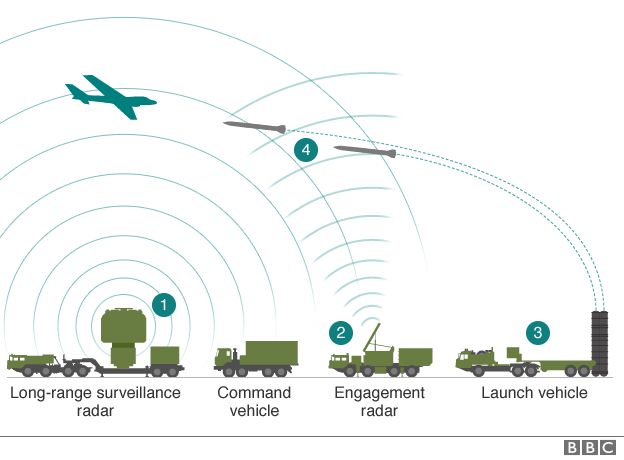
Diagram of how S-400 missile system works
  1. Long-range surveillance radar tracks objects and relays information to command vehicle, which assesses potential targets
  2. Target is identified and command vehicle orders missile launch
  3. Launch data are sent to the best placed launch vehicle and it releases surface-to-air missiles
  4. Engagement radar helps guide missiles towards target.

Source: The BBC
31/01/2019

China scales back Iran nuclear cooperation ‘due to fears of US sanctions’

  • Islamic Republic’s nuclear agency says China is dragging its feet on work to redesign reactor agreed as part of international nuclear deal that Donald Trump has since tried to end
  • Iran’s claim that China fears its companies will be hit with sanctions comes amid ongoing efforts to resolve stand-off with Washington
PUBLISHED : Thursday, 31 January, 2019, 8:04pm
UPDATED : Thursday, 31 January, 2019, 8:04pm

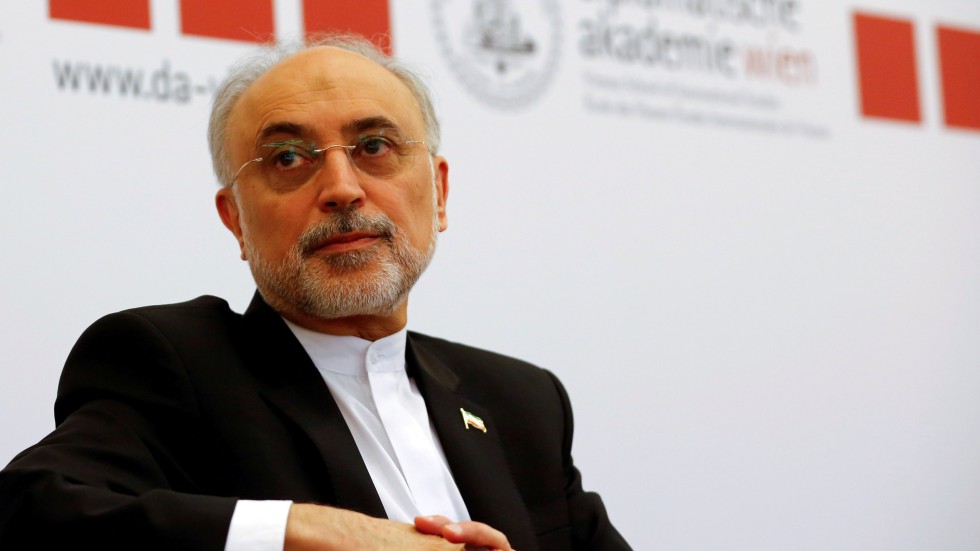
Ali Akbar Salehi, the head of Atomic Energy Organisation of Iran (AEOI), said on Wednesday that the Chinese were “reducing the speed of cooperation despite their commitment” to redesign the Arak heavy water reactor.

Salehi told the state-run Islamic Republic News Agency that China fears possible US sanctions on its nuclear-related firms if it continues its cooperation with his country.

He also urged China to re-engage with the project, but insisted that Iran had “alternative choices” if it continued to drag its feet.

The project was agreed as part of a 2015 nuclear deal between Iran and the five UN permanent Security Council members – Britain, China, France, Russia and the US – plus Germany and the EU under which the Islamic republic would scale back its nuclear activities in exchange for reduced sanctions.

But the agreement has been in jeopardy since the election of Donald Trump, who pulled out of the agreement in 2017, claiming it was a “terrible deal” that did nothing to curb the nuclear threat from Iran.

The US has since imposed new sanctions on Iran, targeting its atomic energy organisation along with its banks, national airline and shipping companies.

The reactor at Arak, however, remained exempt from sanctions.

But the increased rivalry between the US and China has also raised the pressure on Beijing regarding its engagement with Iran.

Last month the Huawei executive Sabrina Meng Wenzhou was arrested in Canada for possible extradition to the US on fraud charges relating to alleged breaches of Washington’s sanctions on Iran – a move that has further damaged relations.

Earlier this month Behrooz Kamalvandi, a spokesman for the AEOI, also accused China of delaying work on the project.

“Redesigning the Arak reactor with China is supposed to [be proceeding] faster,” Kamalvandi told the state news agency.

“Iran and China [were supposed to] cooperate in installing the equipment in the redesigning process,” Kamalvandi said, adding that his county was willing to start the next phase of work on its own if necessary.

James Floyd Downes, a lecturer in comparative politics at the Chinese University of Hong Kong, said Beijing may be “concerned about the possible sanctions on Chinese nuclear-related firms if it continues to cooperate with Iran”.

Downes continued: “At the same time, it is also likely that a closer relationship with Iran may negatively affect the continued trade war negotiations with the Trump Administration in Washington. This is likely to exacerbate tensions and the overall situation with Washington.”

Zhao Tong, a fellow at Carnegie-Tsinghua Centre for Global Policy, said it was difficult to determine why China had slowed down its work on the reactor.

“Even though Washington has withdrawn from the [nuclear deal] the US should still have a strong interest in seeing this reactor being converted as soon as possible, because the conversion could help reduce Iran’s potential capacity to pursue nuclear weapons,” Zhao said.

“I don’t see any reason why the United States would want to undercut China’s efforts in this regard. This is not a case of China-Iran cooperation to enhance Iran’s nuclear weapon capabilities. In fact, it is the opposite,” Zhao added.

Meanwhile, a two-day meeting of the five major nuclear powers ended on Thursday with the parties reaching a consensus on “a clear understanding of the direction of cooperation” and said they would “continue to work to promote the establishment of a zone free of nuclear and other weapons of mass destruction in the Middle East”.

“The current international security situation is complicated and has evolved,” the statement continued, vowing to use the platform to maintain dialogue and a coordinated response to international challenges.

Both Downes and Zhao said the talks were likely to have included discussions on expanding their common ground on nuclear issues in the Middle East, including Iran’s atomic programme.

Source: SCMP

Law of Unintended Consequences

continuously updated blog about China & India

ChiaHou's Book Reviews

continuously updated blog about China & India

What's wrong with the world; and its economy

continuously updated blog about China & India