Archive for ‘US’

18/02/2019

India asks World Court to order release of man sentenced to death in Pakistan

AMSTERDAM (Reuters) – India asked the World Court on Monday to order the release of an Indian national sentenced to death by Pakistan, saying Islamabad had failed to allow him diplomatic assistance before his conviction, as required by an international treaty.

The hearings at the U.N. court, formally known as the International Court of Justice (ICJ), revolve around the case of Kulbhushan Sudhir Jadhav, a former Indian navy commander who was arrested in Pakistan in March 2016 and convicted of spying.

Hearings in the case, which will run for four days, come at a time of intense tension between the nuclear-armed neighbours, as Indian Prime Minister Narendra Modi has warned of a “strong response” to a suicide attack on a convoy in Kashmir last week that killed 44 Indians.

“It would be in the interest of justice, of making human rights a reality, to direct his (Jadhav’s) release,” said Harish Salve, India’s senior counsel.

Pakistan is due to respond at the ICJ on Tuesday. Officials in Islamabad said ahead of the hearing that India was trying to use the court intended to resolve international disputes as a criminal appeals court. They also said the relief sought by India is disproportionate even if the treaty were violated, and at most Jadhav’s case could be reviewed.

India filed a claim against Pakistan before the ICJ in May 2017 arguing Islamabad had breached the 1963 Vienna Convention by not allowing diplomatic assistance to Jadhav during his secretive trial. India won an injunction that ordered Jadhav’s execution stayed while the court looked into the case.

No date has been set for a ruling, which will likely come months after the close of the hearings.

The ICJ is the U.N.’s highest court, and its decisions are binding — though it has no power to enforce them and they have been ignored in rare instances.

The 1963 treaty has been a frequent source of cases before the ICJ. A 2004 ruling led the United States to review the cases of dozens of Mexican citizens on U.S. death row after they were found not to have been granted consular access.
Source: Reuters
17/02/2019

China says no to Germany’s call for arms control deal with US and Russia

  • German Chancellor Angela Merkel makes appeal to Beijing at Munich Security Conference as Washington prepares to leave INF treaty
  • But China’s top diplomat Yang Jiechi says nation’s missiles are defensive, do not pose a threat
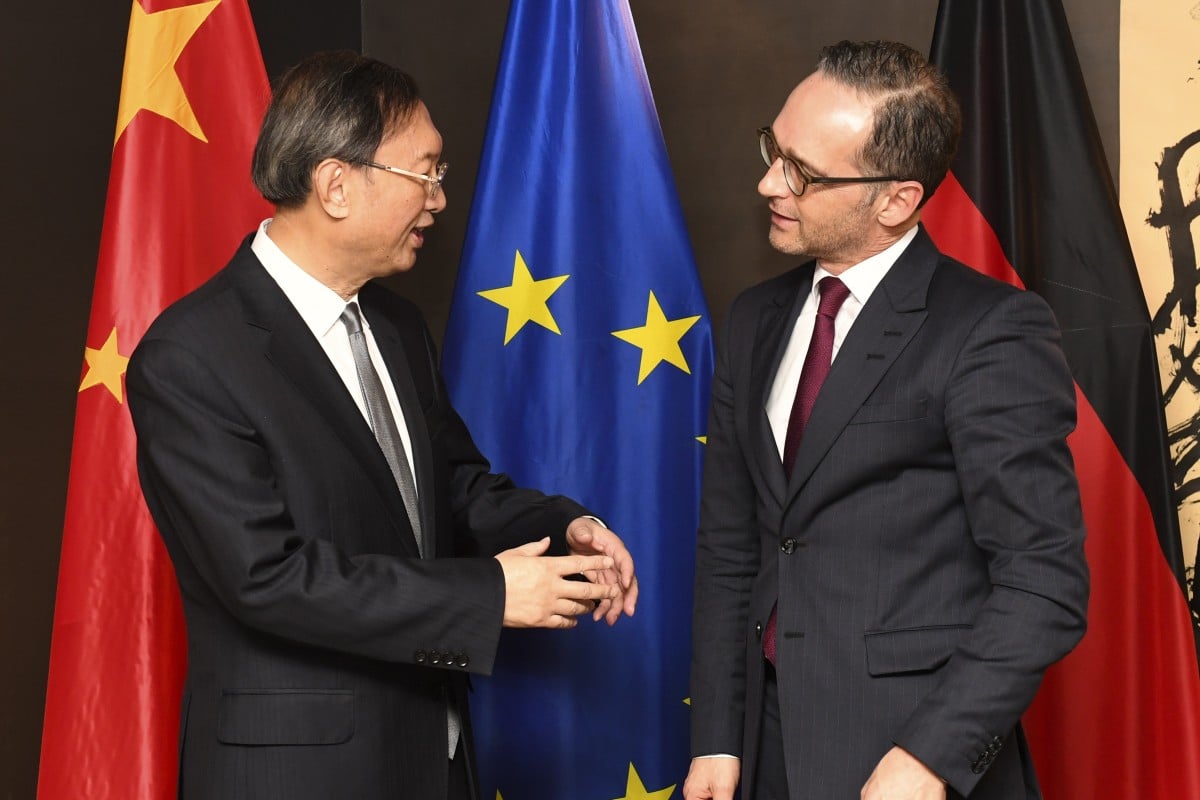
Chinea’s top envoy Yang Jiechi chats to German Foreign Minister Heiko Maas at the Munich Security Conference. Photo: AP

China on Saturday rejected German Chancellor Angela Merkel’s appeal to join a cold war-era arms control treaty that the United States accuses Russia of breaching, saying it would place unfair limits on its military.

Fearing a nuclear arms race between China, Russia and the US after the collapse of the Intermediate-Range Nuclear Forces (INF) treaty, which the US is withdrawing from, Merkel made her call for a global treaty.

“Disarmament is something that concerns us all and we would of course be glad if such talks were held not just between the United States, Europe and Russia but also with China,” she told the Munich Security Conference.

Is China about to abandon its ‘no first use’ nuclear weapons policy?

Russia and the United States are the signatories to the 1987 INF treaty that bans land-based missiles with a range between 500km (310 miles) and 5,500km, and which US President Donald Trump started the six-month withdrawal from this month, blaming Russian violations.

Moscow denies any wrongdoing, but the US and its Nato allies want Russia to destroy its 9M729 nuclear-capable cruise missile system, which Washington says could allow Russia to strike Europe with almost no warning.

Merkel’s suggestion of involving China in a negotiation is seen by European Nato diplomats as a potential way out of the impasse because a new treaty could address American concerns about a growing military threat from China and Russia.

“China develops its capabilities strictly according to its defensive needs and doesn’t pose a threat to anybody else. So we are opposed to the multilateralisation of the INF,” he said.

China’s stated ambition is to modernise its People’s Liberation Army by 2035, improve its air force and push into new technologies including very high speed cruise missiles and artificial intelligence.

Its defence budget grew nearly 6 per cent between 2017 and 2018, according to the London-based International Institute for Security Studies.

Chinese scientists make progress on nuclear submarine communication

Retired Chinese general Yao Yunzhu told delegates a new arms control agreement would only work if it included sea- and air-launched missiles, as well as land, because most of China’s military technology was ground-based and the country would not want to put itself at a disadvantage.

Cheaper to build, more mobile and easier to hide, ground-based rocket launchers are an attractive option for China as it develops its armed forces, experts said, whereas the United States operates more costly sea-based systems to comply with the INF.

“China is traditionally a land power and the Chinese military is a ground force,” Yao said.

“If China is to enter into these kinds of negotiations, I think it ought to be more comprehensive to include not only land-based but also air and sea-based strike capabilities … and that would be hugely complicated,” she said.

Source: SCMP

16/02/2019

U.S. backs India’s right to self-defence over Kashmir attack – Indian government

NEW DELHI (Reuters) – The United States supports India’s right to self-defence against cross-border attacks, India’s foreign ministry said on Saturday after a deadly car bombing in disputed Kashmir raised tensions with rival neighbour Pakistan.

Prime Minister Narendra Modi has promised a strong response after a Pakistan-based militant group claimed responsibility for the suicide attack on a military convoy on Thursday that killed 44 paramilitary policemen.

India’s government said it had evidence the group, Jaish-e-Mohammad (JeM), had the backing of Pakistan and demanded Islamabad take action. Pakistan has condemned the attack and rejected India’s allegations.U.S. National Security Adviser John Bolton spoke to his Indian counterpart Ajit Doval on Friday night, promising to help bring those behind the attack to justice, the foreign ministry said in a readout of the phone call.

“The two NSAs vowed to work together to ensure that Pakistan cease to be a safe haven for JeM and terrorist groups that target India, the U.S. and others in the region,” the foreign ministry said.

“They resolved to hold Pakistan to account for its obligations under U.N. resolutions,” it added.

India has for years accused Muslim Pakistan of backing separatist militants in divided Kashmir, which the neighbours both claim in full but rule in part.

Pakistan denies that, saying it only offers political support to the Himalayan region’s suppressed Muslim people.

Modi, who is facing an election in the next few months, has called a meeting of political parties on Saturday to build support for action against Pakistan.

Indians have poured onto social media to vent their fury over the suicide bombing in Kashmir, with many of them calling for swift retribution against Pakistan as TV news shows hosted jingoistic debates.

When he swept to power at the head of a Hindu nationalist-led alliance in 2014, Modi vowed to pursue a tough line with Pakistan. The two countries have gone to war three times since independence from Britain in 1947, twice over Kashmir.

The attack comes at a difficult time for Pakistan, which is struggling to attract foreign investment and avert a payments crisis, with its swiftly diminishing foreign currency reserves at less than $8 billion, equivalent to two months of import payments.

Source: Reuters

13/02/2019

Trade spats could dampen shipping growth in 2019: Hapag Lloyd’s CEO

FRANKFURT (Reuters) – An escalation of tariff wars between China and the United States could dampen growth in international container shipping as operators pre-emptively brought forward business in the second half of last year, Germany’s Hapag Lloyd said.

“Many customers tried to get their goods through to the U.S. ahead of time in second half 2018, creating additional growth,” Rolf Habben Jansen, chief executive of the company that is the world’s fifth biggest shipping liner, told reporters in Hamburg on Tuesday.

“That points to some business having been brought forward,” he added.

However, with European activities being relatively stable, a direct crisis was not on the horizon, and only later this year would it be clear whether there would be sustained damage to business, he said.

Shipping is only slowly recovering from an oversupply of vessels that plunged the sector into an almost decade-long slump, forcing some players out of business and others to combine forces to seek economies of scale.


On vessel supply, he said order books were low, representing 10 percent of the global fleet, with some scrapping activity being noticeable.

Preliminary results for 2018, due on Feb. 25, were likely to reflect growth in transport volumes above the market average and results should be “satisfactory”, Habben Jansen said.

The company in November said a later peak season in 2018 was likely to lift full year earnings.

It targets earnings before interest and tax (EBIT) in a corridor of 200-450 million euros ($226.4-509.4 million).

Hapag Lloyd is introducing a surcharge mechanism this year to account for cleaner fuel rules starting in 2020 under the watch of the International Maritime Organisation.

It was important to have “the right bunker clauses in all contracts”, Habben Jansen said.

Source: Reuters
11/02/2019

China upbeat on U.S. trade talks, but South China Sea tensions weigh

BEIJING (Reuters) – China struck an upbeat note on Monday as trade talks resumed with the United States, but also expressed anger at a U.S. Navy mission through the disputed South China Sea, casting a shadow over the prospect for improved Beijing-Washington ties.

The United States is expected to keep pressing China on longstanding demands that it reform how it treats American companies’ intellectual property in order to seal a trade deal that could prevent tariffs from rising on Chinese imports.

The latest talks kick off with working level discussions on Monday before high-level discussions later in the week. Negotiations in Washington last month ended without a deal and with the top U.S. negotiator declaring work was needed.

“We, of course, hope, and the people of the world want to see, a good result,” Chinese Foreign Ministry spokeswoman Hua Chunying said at a news briefing in Beijing.

The two sides are trying to hammer out a deal before the March 1 deadline when U.S. tariffs on $200 billion (£155 billion) worth of Chinese imports are scheduled to increase to 25 percent from 10 percent.

Trump said last week he did not plan to meet with Chinese President Xi Jinping before that deadline, dampening hopes that a trade pact could be reached quickly. But the White House’s Conway said a meeting was still possible soon.

Escalating tensions between the United States and China have cost both countries billions of dollars and disrupted global trade and business flows, roiling financial markets.

The same day the latest talks began, two U.S. warships sailed near islands claimed by China in the disputed South China Sea, a U.S. official told Reuters.

Asked if the ships’ passage would impact trade talks, Hua said that “a series of U.S. tricks” showed what Washington was thinking. But Hua added that China believed resolving trade frictions through dialogue was in the interests of both countries’ people, and of global economic growth.

China claims a large part of the South China Sea, and has built artificial islands and air bases there, prompting concern around the region and in Washington.

Source: Reuters

06/02/2019

Chinese state-owned broadcaster registers with US as foreign agent under anti-propaganda law

  • CGTN America chose to comply ‘in the spirit of cooperation with US authorities’
  • Russian state-backed English-language news outlet RT registered in 2017
PUBLISHED : Wednesday, 06 February, 2019, 6:33pm
UPDATED : Wednesday, 06 February, 2019, 6:33pm

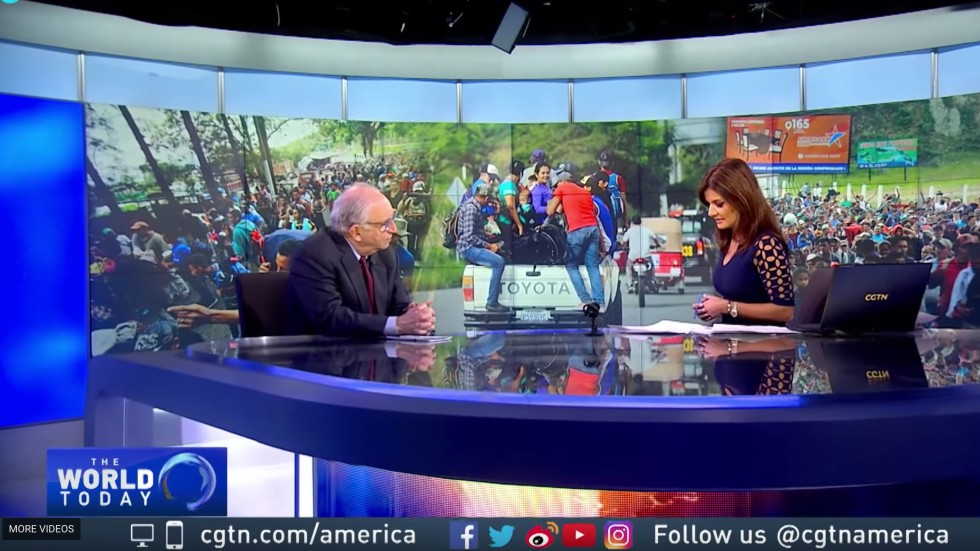
CGTN America – the US division of China Global Television Network – denied that it was engaged in any “political activities” as defined by the Foreign Agent Registration Act (FARA), a federal law from 1938 that monitors the operation of overseas lobbyists and propagandists.

China Global Television Network was, until January 2017, the name of the international operation of state-owned broadcaster China Central Television (CCTV).

CGTN America said it had “elected to file this registration statement out of an abundance of caution and in the spirit of cooperation with US authorities”.

It identified itself as the Washington news bureau of CCTV to produce material for 24-hour broadcasts that target English-speaking audiences in more than 100 countries.

CCTV disagreed with the decision by the US Department of State to characterise CGTN America’s relationship with a foreign government and a foreign political party as one of interest to Washington, it said.

CGTN America’s registration was filed as Beijing and Washington sought to end a damaging trade dispute.

On Friday, a Chinese delegation led by Vice Premier Liu He concluded two days of talks in Washington, while a US party – to be led by US Trade Representative Robert Lighthizer – is expected in Beijing this month.

Those talks may pave the way for a meeting between Chinese President Xi Jinping and US President Donald Trump before a trade war truce expires on March 1.

CGTN America’s registration took place about six months after Washington ordered it and Xinhua News Agency to acknowledge their affiliation with Beijing and disclose ownership and budgets. The Chinese Foreign Ministry said at the time this order was “politicising” media activities.

Xinhua, one of the major official mouthpieces of the Communist Party, has not registered.

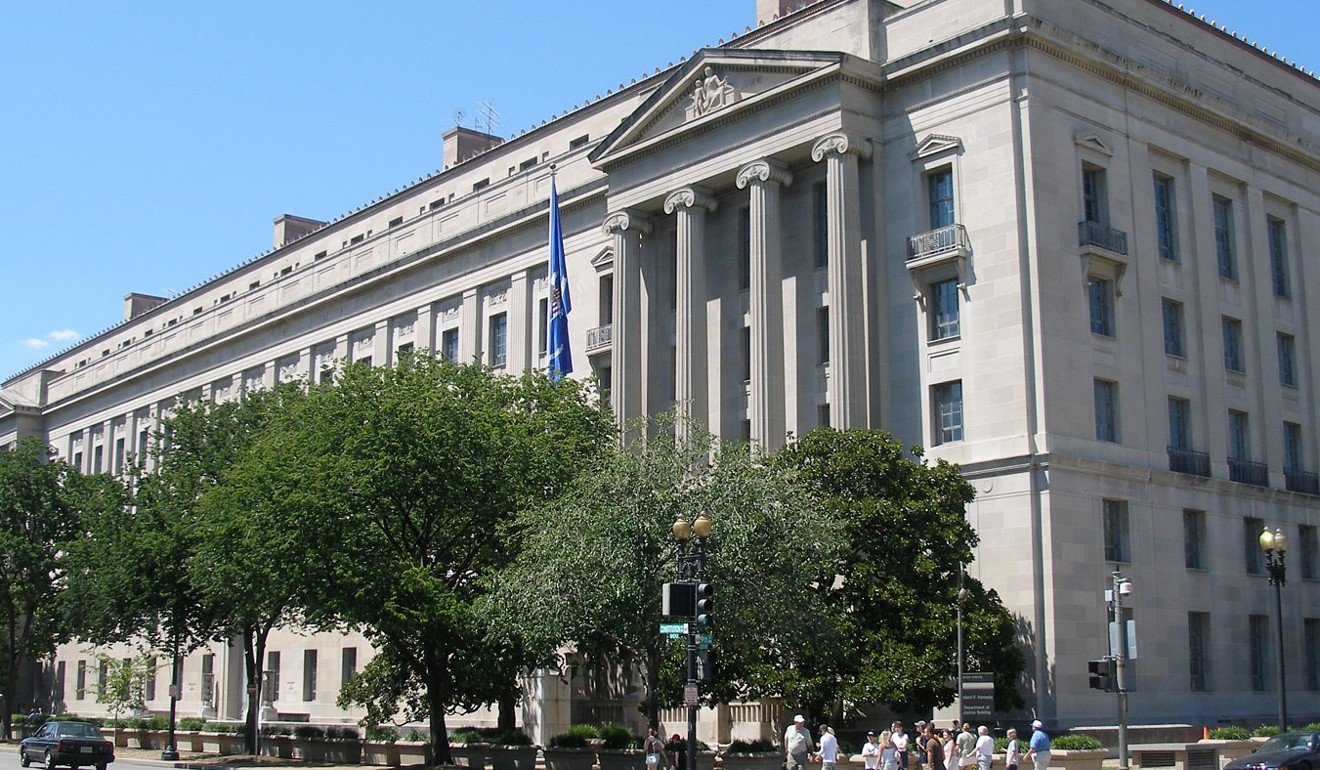
Under the registration act, which was enacted to counter Nazi Germany’s propaganda efforts in the US – CGTN America must update its registration filing with the US government every six months and submit copies of reports to the justice department for scrutiny within 48 hours of distribution.

Washington’s surveillance of foreign media has intensified since late 2017 when RT, the Russian state-backed English-language news outlet, was ordered by the justice department to register as a foreign agent amid investigations into Russia’s alleged interference in the 2016 presidential election.

While chairing a UN Security Council meeting in September, US President Donald Trump accused Beijing of planning to interfere in November’s congressional election because of his trade policies against China, although those accusations were not substantiated.

Source: SCMP

05/02/2019

US-China trade war: UN warns of ‘massive’ impact of tariff hike

02/02/2019

India issues ‘demarche’ to American Embassy on detention of Indian students in US

The External Affairs Ministry said India continues to closely monitor and take proactive measures to address the situation arising out of the detention of several Indian students in connection with their enrolment in a “fraudulent university in the US”.

INDIA Updated: Feb 02, 2019 15:23 IST

PM Modi,Indian students arrested in US
The India mission and consulates have visited several detention centres throughout the US to extend consular assistance to the detained students, the MEA said.(AP Photo)

India Saturday issued a demarche to the American Embassy here, expressing its concern over the detention of Indian students in the US, and sought immediate consular access to them.

The External Affairs Ministry said India continues to closely monitor and take proactive measures to address the situation arising out of the detention of several Indian students in connection with their enrolment in a “fraudulent university in the US”.

One-hundred-thirty foreign students arrested by US authorities for enroling at a fake university allegedly to remain in that country are largely Indians. The Immigration and Customs Enforcement agents made the arrests on Wednesday.

“Our concern over the dignity and well-being of the detained students and the need for immediate consular access for Indian officials to the detainees was reiterated,” it said.

The India mission and consulates have visited several detention centres throughout the US to extend consular assistance to the detained students, the MEA said.

“So far, about 30 Indian students have been contacted by our consular officers. Efforts to contact the remaining Indian students are continuing,” it said.

Source: Hindustan Times
02/02/2019

China hails ‘important progress’ in US trade talks

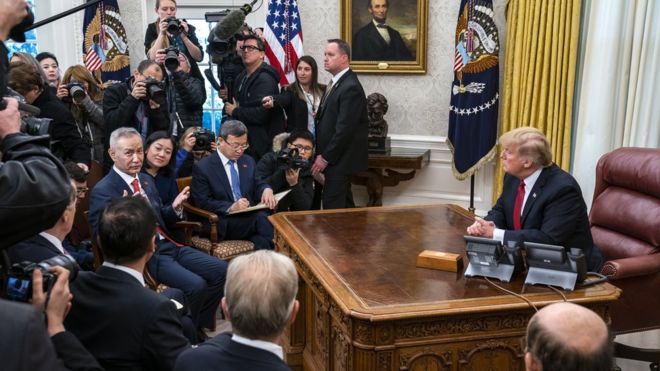
Vice Premier Liu He and President Donald TrumpImage copyrightEPA
Image captionVice Premier Liu He and President Donald Trump talk to the press about trade

China’s trade delegation says it made “important progress” in the latest round of talks with the US, China’s state media reports.

At the end of a two-day meeting in Washington, no deal was reached but China pledged to buy more US soybeans.

US President Donald Trump touted the promise as proof that the two sides were making progress.

They are pushing to reach a deal by 1 March to avert an escalation in tariffs.

At a press conference with Vice Premier Liu He on Thursday, President Trump said he hoped to meet Chinese President Xi Jinping to hash out a final agreement by the looming deadline.

“We have made tremendous progress,” President Trump said.

“That doesn’t mean you’re going to have a deal but there’s a tremendous relationship and a warm feeling.”

China also agreed to increase imports of “US agricultural products, energy products, industrial manufactured goods and service products” during the talks, Xinhua reported.

Is this progress?

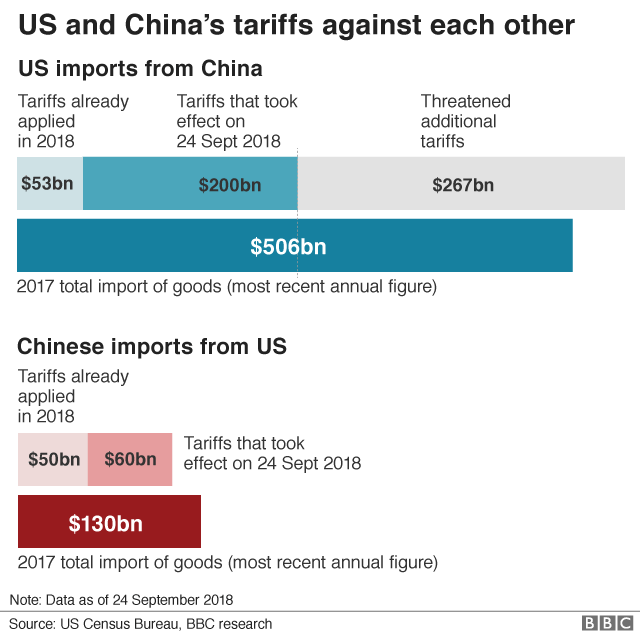
The two sides are racing to come up with a trade deal by 1 March, or the US has said it will increase tariff rates on $200bn (£152bn) worth of Chinese goods from 10% to 25%.

US trade negotiators agreed to visit China for more discussions in mid-February, Chinese state media reported.

In December, the two countries agreed to 90 days of negotiations, in an effort to defuse their escalating trade war, which had led to new tariffs on billions of dollars worth of goods.

US and China's tariffs against each other

Soybean pledge

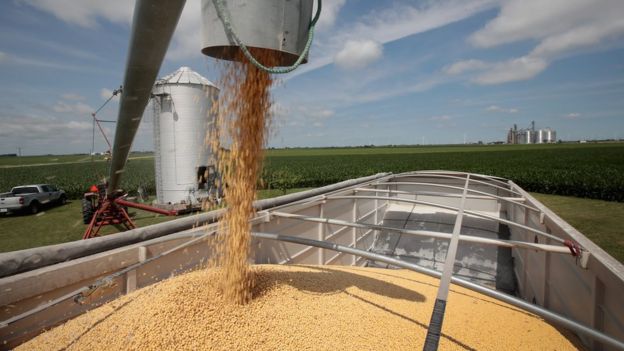
Shortly after the truce took effect, China – by far the world’s biggest importer of soybeans – bought 1.13 million tonnes of the crop from the US.

The White House said on Thursday the country had agreed to purchase an additional 5 million tonnes of soybeans.

Soybeans have been at the forefront of negotiations as US farmers have suffered from the sudden loss of their largest customer.

The country imported more than 30 million tonnes of soybeans from the US in 2017 – a figure that dropped sharply last year amid the trade war.

Machinery on a US farm spits out soy beans into the back of a truck.Image copyrightGETTY IMAGES

Chinese businesses, meanwhile, have been trying to find new sources to replace crops from the US, which was the country’s second biggest supplier after Brazil in 2017.


Analysis: What China wants

Robin Brant, BBC News, Shanghai

China’s state media has painted these talks as “progress” based on the offer of measures or reforms that China wants to see, or needs.

These are not concessions, but steps that are in line with reform and opening up already planned by President Xi.

What politicians call the retail takeaway – in this case it literally is one – of buying more soybeans from American farmers went down well with President Trump.

That’s the idea. China would probably like a deal with the President Trump. Just the President.

A deal that the lead US negotiator, Trade Representative Robert Lighthizer, will sign off on is likely to involve verifiable, structural changes to the economy.

China is far less likely to concede that.

China would rather simply buy more soybeans and other goods or services to help President Trump fulfil his campaign pledge to deal with the trade imbalance between the two countries.


What happens next?

Mr Lighthizer said he was focused on securing a enforceable deal. He warned that many issues remained unresolved.

The US pressed for changes on intellectual property laws and rules that limit the operations of foreign companies in China, both of which have been key sticking points in negotiations.

The two sides “attached great importance to the issues of intellectual property protection and technology transfer and agreed to further strengthen cooperation”, according to Xinhua.

“We’ve made progress,” Mr Lighthizer said.

“At this point, it’s impossible for me to predict success but we are in a place that, if things work, it could happen.”

Source: The BBC

01/02/2019

China hails ‘important progress’ in US trade talks

Vice Premier Liu He and President Donald TrumpImage copyrightEPA
Image captionVice Premier Liu He and President Donald Trump talk to the press about trade

China’s trade delegation says it made “important progress” in the latest round of talks with the US, China’s state media reports.

At the end of a two-day meeting in Washington, no deal was reached but China pledged to buy more US soybeans.

US President Donald Trump touted the promise as proof that the two sides were making progress.

They are pushing to reach a deal by 1 March to avert an escalation in tariffs.

At a press conference with Vice Premier Liu He on Thursday, President Trump said he hoped to meet Chinese President Xi Jinping to hash out a final agreement by the looming deadline.

“We have made tremendous progress,” President Trump said.

“That doesn’t mean you’re going to have a deal but there’s a tremendous relationship and a warm feeling.”

China also agreed to increase imports of “US agricultural products, energy products, industrial manufactured goods and service products” during the talks, Xinhua reported.

Is this progress?

The two sides are racing to come up with a trade deal by 1 March, or the US has said it will increase tariff rates on $200bn (£152bn) worth of Chinese goods from 10% to 25%.

US trade negotiators agreed to visit China for more discussions in mid-February, Chinese state media reported.

In December, the two countries agreed to 90 days of negotiations, in an effort to defuse their escalating trade war, which had led to new tariffs on billions of dollars worth of goods.

US and China's tariffs against each other

Soybean pledge

Shortly after the truce took effect, China – by far the world’s biggest importer of soybeans – bought 1.13 million tonnes of the crop from the US.

The White House said on Thursday the country had agreed to purchase an additional 5 million tonnes of soybeans.

Soybeans have been at the forefront of negotiations as US farmers have suffered from the sudden loss of their largest customer.

The country imported more than 30 million tonnes of soybeans from the US in 2017 – a figure that dropped sharply last year amid the trade war.

Machinery on a US farm spits out soy beans into the back of a truck.Image copyrightGETTY IMAGES

Chinese businesses, meanwhile, have been trying to find new sources to replace crops from the US, which was the country’s second biggest supplier after Brazil in 2017.


Analysis: What China wants

Robin Brant, BBC News, Shanghai

China’s state media has painted these talks as “progress” based on the offer of measures or reforms that China wants to see, or needs.

These are not concessions, but steps that are in line with reform and opening up already planned by President Xi.

What politicians call the retail takeaway – in this case it literally is one – of buying more soybeans from American farmers went down well with President Trump.

That’s the idea. China would probably like a deal with the President Trump. Just the President.

A deal that the lead US negotiator, Trade Representative Robert Lighthizer, will sign off on is likely to involve verifiable, structural changes to the economy.

China is far less likely to concede that.

China would rather simply buy more soybeans and other goods or services to help President Trump fulfil his campaign pledge to deal with the trade imbalance between the two countries.


What happens next?

Mr Lighthizer said he was focused on securing a enforceable deal. He warned that many issues remained unresolved.

The US pressed for changes on intellectual property laws and rules that limit the operations of foreign companies in China, both of which have been key sticking points in negotiations.

The two sides “attached great importance to the issues of intellectual property protection and technology transfer and agreed to further strengthen cooperation”, according to Xinhua.

“We’ve made progress,” Mr Lighthizer said.

“At this point, it’s impossible for me to predict success but we are in a place that, if things work, it could happen.”

Source: The BBC

Law of Unintended Consequences

continuously updated blog about China & India

ChiaHou's Book Reviews

continuously updated blog about China & India

What's wrong with the world; and its economy

continuously updated blog about China & India