Archive for ‘USA’

05/01/2019

US issues fresh travel warning after China detentions

  • 4 January 2019
Michael Spavor (L) and Michael Kovrig (composite image)Image copyrightAFP
Image captionCanadians Michael Spavor (L) and Michael Kovrig are being detained in China

The US state department has urged Americans to “exercise increased caution” when travelling to China after a spate of high-profile detentions.

Its updated advice says dual US-Chinese nationals are at particular risk from so-called exit bans that prevent them from leaving.

Canada also revealed that 13 Canadians had been detained since 1 December.

On that day, a top Chinese executive was arrested in Canada at the request of US prosecutors.

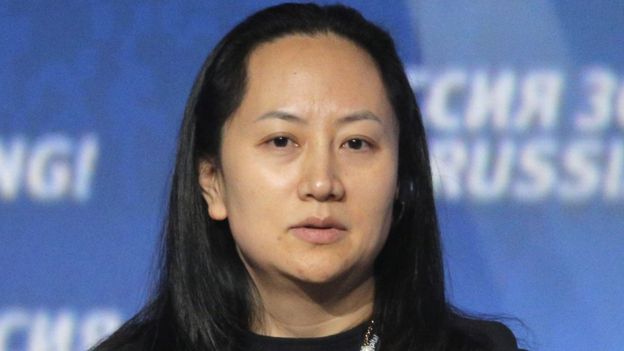
Huawei chief financial officer Meng Wanzhou was detained in Vancouver and faces extradition to the US to face fraud charges, which she denies, that are linked to allegations of avoiding US sanctions on Iran.

China has dismissed the US travel warning as unjustified.

“To be frank, the issuance of such a travel advisory by the US side does not hold water,” foreign ministry spokesman Lu Kang said.

“From January to November 2018, 2.3 million visits to China were made by Americans, which means 70 per 10,000 American people made the trip, a ratio far higher than that of the Chinese visiting the US.

“So, this figure is a testament to China’s safety.”

What is the latest US travel advice?

The new advisory warns that dual US-Chinese nationals are at particular risk from so-called exit bans, which it says can be used to prohibit US citizens from leaving China – in some cases keeping them in the country for years.

The exit bans are also being used to try to lure other individuals back to China, it warns.

It advises citizens travelling to China to use their US passport with a valid China visa. They should ask officials to notify the US embassy immediately if they are detained or arrested.

The state department says that as dual-citizenship is not recognised under Chinese law, “US-Chinese citizens and US citizens of Chinese heritage may be subject to additional scrutiny and harassment”.

The advisory says exit bans are being used to “compel US citizens to participate in Chinese government investigations” and “to aid Chinese authorities in resolving civil disputes in favour of Chinese parties”.

What do we know of the recent detentions?

Three US citizens were accused of committing “economic crimes” and barred from leaving China in November.

Victor and Cynthia Liu, who are the children of a fugitive businessman, and their mother, Sandra Han, have reportedly been detained since June.

The businessman, Liu Changming, is wanted in a $1.4bn (£1bn) fraud case in China and the family has said their detention is an attempt to lure him back to face charges.

Beijing has defended its decision to bar the three US citizens from leaving the country.

A foreign ministry spokesman told reporters that they “all have… valid identity documents as Chinese citizens” and are “suspected of having committed economic crimes”.

On Thursday, Global Affairs Canada revealed that 13 Canadians had been detained in China since 1 December, although eight have since been released.

Meng Wanzhou, chief financial officer of Huawei, 2 October 2014Image copyrightEPA
Image captionMeng Wanzhou, the chief financial officer of Huawei, was arrested in Canada at the request of the US

Among the Canadians who remain detained are former diplomat Michael Kovrig and businessman Michael Spavor.

Canadian teacher Sarah McIver who was reportedly released last week after she was held for “unlawfully working in China”. China and Canada both said the case was different to that of Mr Kovrig and Mr Spavor who stand accused of harming national security.

China insists the detention of both men is not linked to Ms Meng’s arrest, but many analysts believe it was a tit-for-tat action.

On Thursday, China’s prosecutor general said the pair had “violated our country’s laws and regulations” and were being investigated.

01/01/2019

Commentary: 40 years on, cooperation still set to define China-U.S. ties

CHINA-U.S.-DIPLOMATIC RELATIONS-40 YEARS

File photo taken on April 15, 1971 shows Chinese table tennis player Yang Ruihua (L) shaking hands with U.S. athlete Dick Miles prior to a friendship match, who had met each other since the 1959 World Table Tennis Championships, in Shanghai, east China. Exactly 40 years ago, Beijing and Washington officially established diplomatic relations, thus ending nearly three decades of isolation, hostility and even confrontation between two big countries with a combined population of over 1 billion, and resetting the course of history and international politics. Just like the “Ping-Pong Diplomacy” that marked a thaw in China-U.S. relations, the establishment of diplomatic ties was another wise and resolute decision made by then Chinese and American leaders with great political courage and far-reaching vision. In the past four decades, their successors have followed their footsteps, guiding the China-U.S. relationship through all complexities and difficulties to maintain a generally steady and smooth development. (Xinhua/Fang Guocai)

by Xinhua writers Zhou Xiaozheng, Xu Feng

BEIJING, Jan. 1 (Xinhua) — Exactly 40 years ago, Beijing and Washington officially established diplomatic relations, thus ending nearly three decades of isolation, hostility and even confrontation between two big countries with a combined population of over 1 billion, and resetting the course of history and international politics.

Just like the “Ping-Pong Diplomacy” that marked a thaw in China-U.S. relations, the establishment of diplomatic ties was another wise and resolute decision made by then Chinese and American leaders with great political courage and far-reaching vision. In the past four decades, their successors have followed their footsteps, guiding the China-U.S. relationship through all complexities and difficulties to maintain a generally steady and smooth development.

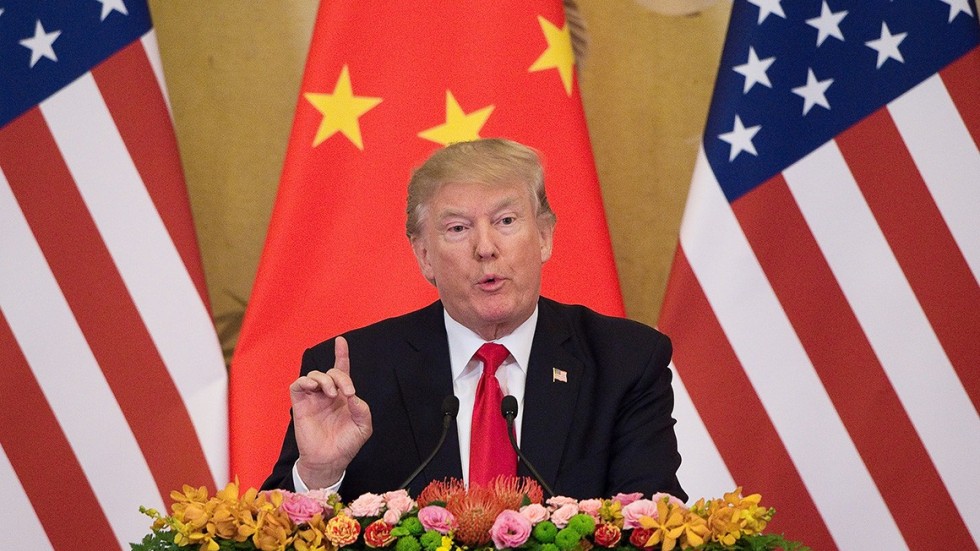
“There are a thousand reasons to make the China-U.S. relationship work, and no reason to break it,” Chinese President Xi Jinping said while meeting with his U.S. counterpart, Donald Trump, for the first time, at the Mar-a-Lago estate in the U.S. state of Florida in 2017. Indeed, the China-U.S. relationship is regarded by many as the world’s most important bilateral relationship.

The progress of China-U.S. ties in the past 40 years is nothing but staggering, far exceeding most people’s expectations. Bilateral trade grew from a negligible 2.5 billion U.S. dollars in the late 1970s to over 580 billion dollars in 2017, while the stock of two-way investment rose from practically nil to more than 230 billion dollars.

Even more amazing are the fast-paced changes in people-to-people relations. The Chinese, who once regarded having “overseas relations,” especially families or friends in the United States, as a political and social taboo, are now fervently sending their children — some 200,000 to 300,000 a year — to study in the United States. The Americans have also seen off the so-called “Red Scare” and started to embrace Chinese kung fu, giant pandas and even the learning of the Chinese language as their understanding of the once “mysterious Communist state” deepens.

The Pacific Ocean, which used to serve as a “natural moat” blocking direct transportation between the two countries, is now overflown by more than 300 two-way direct flights each week that carry a total of over 5 million visitors each year.

The 40th anniversary of China-U.S. diplomatic ties comes on the heels of the 40th anniversary of China’s reform and opening-up. The tremendous economic success and social progress China has scored over the past 40 years result primarily from the diligence, creativity and dedication of the Chinese people, but also benefit from the support and assistance from the rest of the world, including the United States.

In return, the rapidly developing China has never stopped merging with the wider world and playing its role as a responsible member of the international community. When the global financial crisis broke out in 2008, China, upholding an all-in-the-same-boat spirit, took swift action and joined the others in a concerted effort to contain the crisis and help bring the hard-hit U.S. and world economy back on track.

Forty years on, cooperation, which might just be one of the many options for China and the United States on Day One of their mended relationship, has turned out to be the best and only correct option. China-U.S. collaboration has not only created immense development opportunities and brought substantial benefits for both countries and both peoples, but also helped reshape the world order, accelerate globalization and improve global governance, thus serving as a major driving force of global peace and prosperity.

Without doubt, the past four decades have not been a smooth ride for China-U.S. relations. Even their economic and trade relations, now reputed as the “ballast stone for bilateral ties,” have experienced twists and turns, from the tough “textile and apparel quota restrictions” and tedious annual reviews of the “Most Favored Nation” status, to the prolonged talks on China’s entry into the World Trade Organization, as well as the ongoing economic and trade frictions. It also seems to be a topic for endless debate in the United States whether China should be seen as a “partner” or a “threat,” and whether the United States should adopt a strategy of “engagement” or “containment.”

As two major countries with different social systems, development paths and historical and cultural backgrounds, it is natural for China and the United States to have disagreements and encounter problems. But such disagreements and problems did not prevent the two countries from normalizing bilateral relations 40 years ago, nor should they be allowed to derail the sound development of bilateral ties today.

Both being great nations with great peoples, China and the United States need not be afraid of any fair, rational and healthy competition, but must be smart enough to avoid a zero-sum game, which harbors a high risk of dragging both nations back into a lose-lose situation of conflicts and confrontation.

At a time when the world is undergoing unprecedentedly profound changes and is fraught with risks and uncertainties, the global community expects even closer collaboration between the two largest economies, so as to help reinforce mankind’s response to numerous common challenges, such as climate change, terrorism, nuclear proliferation, and transnational crimes.

Forty years on, the China-U.S. relationship is once again at a critical point, leaving many on tenterhooks or in a state of speculation. Should the past 40 years be any guide, increasing understanding and win-win cooperation will overcome difficulties and challenges, and cooperation should and will remain at the core of bilateral ties in the long run.

It is all the more comforting and encouraging that both Xi and Trump, in their exchange of congratulatory messages upon the anniversary as well as on multiple other occasions of top-level interaction, vowed to push for more cooperation and further progress of China-U.S. ties.

History has proved that cooperation is the best choice for both sides, Xi said in the message, while Trump said it is his priority to promote cooperative and constructive U.S.-China relations.

From Mar-a-Lago to Beijing and Buenos Aires, meetings and direct communication between the two heads of state, featuring good personal chemistry and rapport at work, have played an irreplaceable role in navigating bilateral ties through uncharted waters. The world has high hopes for them to succeed.

01/01/2019

An ‘atheist’ empire? Trump aides rally evangelicals in China fight

  • Religious freedom is a growing theme of President Donald Trump’s confrontation with Beijing, and it’s resonating with Christian leaders
PUBLISHED : Tuesday, 01 January, 2019, 5:07pm
UPDATED : Tuesday, 01 January, 2019, 5:07pm

Vice-President Mike Pence infuriated Beijing when he gave a speech in October warning that China had become a dangerous rival to the United States. While he focused on familiar issues such as China’s trade policies and cyber espionage, Pence also denounced the country’s “avowedly atheist Communist Party”.

Citing a crackdown on organised religion in the country, Pence noted that Chinese authorities “are tearing down crosses, burning Bibles and imprisoning believers”.

“For China’s Christians,” Pence said, “these are desperate times.”

Pence’s remarks, which also addressed the repression of Chinese Buddhists and Muslims, illustrated how religious freedom is a growing theme of President Donald Trump’s confrontation with Beijing, which some foreign policy insiders warn could develop into a new cold war.

It is a subject that resonates in the US heartland, some Christian leaders say – parts of which, including rural areas, are disproportionately at risk of fallout from Trump’s trade fight with the Asian giant.

The issue has gained new resonance with Beijing’s arrest this month of a prominent Christian pastor and more than 100 members of his congregation.

The arrests have drawn close coverage from evangelical outlets such as Pat Robertson’s Christian Broadcasting Network (CBN), whose website published an open letter by the jailed pastor, Wang Yi, declaring his “anger and disgust at the persecution of the church by this Communist regime”.

Days after the arrests, Trump’s ambassador for international religious freedom, the former Kansas Republican governor Sam Brownback, decried the crackdown and said that in the weeks since Pence’s speech, religious freedom concerns “have only grown”.

While China’s religious persecution draws less media attention than issues like soybean tariffs and cyber espionage, it is closely tracked by conservative Christian activists and outlets like CBN, where a typical headline recently reported: “Chinese Government Destroys Christian Church, Bills Pastor for Demolition.”

In September, Providence Magazine, which covers US foreign policy from a Christian perspective, wrote that in 2018 China’s religious repression has reached “a sustained intensity not seen since the Cultural Revolution”.

The Trump administration has repeatedly criticised China on such grounds.

In a report on international religious freedom released earlier this year, the State Department noted that throughout China there were reports of “deaths in detention of religious adherents as well as reports the government physically abused, detained, arrested, tortured, sentenced to prison, or harassed adherents of both registered and unregistered religious groups for activities related to their religious beliefs and practices”.

Religious activists note that Pence, Brownback, Secretary of State Mike Pompeo and other top Trump aides are people of faith with genuine concerns about religious freedom. But even they acknowledge the subject happens to be a potent political message for religious conservatives and may help rally them behind Trump’s confrontational China policy.

Some religious leaders even hear an echo of history: cold war-era denunciations of “godless” Soviet communism by past US presidents, notably Ronald Reagan

“In the great heartland of America, where there tend to be higher levels of people who care about faith, reminding people that a regime – whether then the Soviet Union or today’s communist China – rejects God and has an official policy of atheism is helpful in getting them to understand why our government is taking certain actions in the foreign policy area,” said Gary Bauer, a longtime conservative Christian leader whom Trump appointed to the US Commission on International Religious Freedom.

“Evil empire” was the famous label then-president Reagan applied to the Soviet Union in 1983. Less remembered is the fact that Reagan was addressing the National Association of Evangelicals.

Reagan vowed at the time that the Soviets “must be made to understand: … We will never abandon our belief in God”.

Trump himself rarely addresses religious freedom or human rights, and when it comes to China he focuses mainly on Beijing’s trade practices. But his administration – backed by an evangelical base that stood for Trump in 2016 and continues to supporthim enthusiastically – has strongly emphasised international religious freedom.

Earlier this year, for instance, the State Department hosted a first-ever gathering of foreign ministers devoted to the subject. (China was not invited and was targeted in a joint statement signed by a handful of countries, including the US.)

“This administration is putting this in the matrix of all of our policy,” said Tony Perkins, another prominent Christian conservative who serves on the religious freedom commission and is close to the White House. “It’s more than just the throwaway line.”

Pompeo, a former Republican congressman from Kansas, has also assailed Beijing for religious persecution, including at a September speech at the Values Voter Summit in Washington, an event affiliated with the Perkins-led Family Research Council.

During an appearance which some critics called inappropriately political, Pompeo decried “an intense new government crackdown on Christians in China, which includes heinous actions like closing churches, burning Bibles, and ordering followers to sign papers renouncing their faith”.

Like Pence, Pompeo also dwelled on the plight of China’s Muslim population, particularly ethnic Uygurs from the Chinese province of Xinjiang. A State Department official recently testified before lawmakers that up to 2 million Muslims are now confined to special camps in China.

“Their religious beliefs are decimated,” Pompeo told Values Voter Summit attendees.

The Chinese government, which often casts Uygur Muslims as potential terrorists, says the camps are designed to teach vocational and life skills. But the State Department official, Scott Busby, said the goal appears to be “forcing detainees to renounce Islam and embrace the Chinese Communist Party”.

While evangelical groups active in Washington tend to focus primarily on the persecution of Christians in China and elsewhere, some make sure to point out that they care about religious freedom for all faith groups, including Muslims. In a past interview with POLITICO, Brownback stressed that he also wants to protect people’s right to have “no religion at all”.

The Trump administration may unveil a set of human rights-related sanctions targeting officials in a range of countries in the coming weeks. Some China observers are hopeful the list will include Chen Quanguo, a top Communist Party official said to have orchestrated the anti-Muslim crackdown and to have had a role in repressing Tibetan Buddhists.

“It’s a critical moment,” said Bob Fu, a US-based pastor and founder of ChinaAid, a group that advocates for religious freedom in China.

Brownback did not offer comment for this story, and a spokesman for Pompeo did not immediately respond to a request for comment. A White House spokesperson said of Pence that “religious freedom throughout the world is a top priority for the vice-president and the administration as a whole”.

Bauer predicted that evangelicals and other voters in the US heartland will continue to support Trump even if he expands his trade war with China. The administration, cognizant of the potential pain for its supporters, has taken some steps to cushion the blow, such as offering farming subsidies.

By retaliating against particular US industries, such as soybean farmers, China is trying to pressure the administration. “I think China will fail in this effort and support for the Trump-Pence policies will remain strong,” Bauer said.

When it comes to pleasing the religious right, the Trump administration has been willing to make some dicey moves.

This past summer, to the shock of the foreign policy establishment, Trump imposed economic sanctions on two Cabinet officials in Turkey – an important US ally and fellow Nato member – due to the questionable imprisonment of an American pastor, Andrew Brunson.

Brunson, whose cause was championed by evangelicals, was eventually freed and the sanctions lifted.

How far the administration will push Beijing on religious freedom could come down to the president himself and what China is willing to do to assuage his concerns on trade.

Trump, after all, has been willing to drop talk of human rights issues when it seems he’s making progress on other fronts – that’s what has happened in his dealings with North Korea.

The Chinese in particular are highly sensitive to their global image, and, like the Soviet Union, China cannot be ignored.

“If this tariff business gets really bad and the economy goes down, I wouldn’t be surprised if [Trump officials] ramp up the ‘evil empire’ language,” said a Senate Democratic aide. “It inoculates them from their base.”

But “if you start using the ‘evil empire’ language”, the aide added, “it’s harder to make up and kiss and be friends.”

01/01/2019

Xi, Trump exchange congratulations over 40th anniversary of China-U.S. diplomatic ties

BEIJING, Jan. 1 (Xinhua) — Chinese President Xi Jinping and U.S. President Donald Trump on Tuesday exchanged congratulations on the 40th anniversary of the establishment of China-U.S. diplomatic relations.

In his congratulatory message, Xi said China-U.S. relations have experienced ups and downs and made historic progress over the past 40 years, bringing huge benefits to the two peoples and contributing greatly to world peace, stability and prosperity.

History has proved that cooperation is the best choice for both sides, Xi said.

Currently, China-U.S. relations are in an important stage, he noted.

“I attach great importance to the development of China-U.S. relations and am willing to work with President Trump to summarize the experience of the development of China-U.S. relations and implement the consensus we have reached in a joint effort to advance China-U.S. relations featuring coordination, cooperation and stability so as to better benefit the two peoples as well as the people of the rest of the world,” Xi said.

For his part, Trump said Jan. 1, 2019 marks the 40th anniversary of the establishment of U.S.-China diplomatic relations.

Great progress has been made in the development of bilateral ties over the past years, he noted.

Trump said it is his priority to promote cooperative and constructive U.S.-China relations, adding that his solid friendship with President Xi has laid a firm foundation for the great achievements of the two countries in coming years.

30/12/2018

Trade wars cost U.S., China billions of dollars each in 2018

CHICAGO (Reuters) – The U.S.-China trade war resulted in billions of dollars of losses for both sides in 2018, hitting industries including autos, technology – and above all, agriculture.

Broad pain from trade tariffs outlined by several economists shows that, while specialized industries including U.S. soybean crushing benefited from the dispute, it had an overall detrimental impact on both of the world’s two largest economies.

The losses may give U.S. President Donald Trump and his Chinese counterpart, Xi Jinping, motivation to resolve their trade differences before a March 2 deadline, although talks between the economic superpowers could still devolve.

The U.S. and Chinese economies each lose about $2.9 billion annually due to Beijing’s tariffs on soybeans, corn, wheat and sorghum alone, said Purdue University agricultural economist Wally Tyner.

Disrupted agricultural trade hurt both sides particularly hard because China is the world’s biggest soybean importer and last year relied on the United States for $12 billion worth of the oilseed.

China has mostly been buying soy from Brazil since imposing a 25 percent tariff on American soybeans in July in retaliation for U.S. tariffs on Chinese goods. The surge in demand pushed Brazilian soy premiums to a record over U.S. soy futures in Chicago, in an example of the trade war reducing sales for U.S. exporters and raising costs for Chinese importers.

“It’s something that’s crying for a resolution,” Tyner said. “It’s a lose-lose for both the United States and China.”

Total U.S. agricultural export shipments to China for the first 10 months of 2018 fell by 42 percent from a year earlier to about $8.3 billion, according to the U.S. Department of Agriculture.

The most actively traded soybean futures contract averaged $8.75 per bushel from July to December 2018, down from an average of $9.76 during the same period a year earlier.

As of Dec. 28, futures in the last month of the year were averaging $8.95-1/2 a bushel. That was down from $9.61-3/4 for all of December last year.

To compensate suffering farmers, the U.S. government has allocated about $11 billion to direct payments and buying agricultural goods for government food programs, after consulting economists, including Tyner.

In North Dakota, which exports crops to China through ports in the Pacific Northwest, soy farmers face at least $280 million in losses because of Beijing’s tariffs, said Mark Watne, president of the North Dakota Farmers Union.

“You could almost put another $100 million on top of this because all commodity prices are down and that affects North Dakota farmers indirectly,” Watne said.

FILE PHOTO: Shipping containers are seen at a port in Shanghai, China July 10, 2018. REUTERS/Aly Song

China’s tariffs improved margins for U.S. soy crushers such as Archer Daniels Midland Co (ADM.N) by leaving plentiful supplies of cheap soybeans on the domestic market.

Chinese soybean mills, on the other hand, front-loaded soy purchases ahead of the tariffs. This led to an oversupply that reduced Chinese processing margins and led factories this summer to make the biggest cuts in years to the production of soymeal used to feed livestock.

China resumed purchases of U.S. soybeans in early December following a trade truce agreed to by leaders from the two countries during G20 summit in Argentina. But Beijing kept its 25 percent tariffs on the oilseed from America, which effectively curbed commercial Chinese buying.

“With the tariffs, the beans can’t go into the commercial system,” said a manager at a major Chinese feed producer, speaking on condition of anonymity. “The buying will have a very limited impact on the market.”

China also suffered as products such as phone batteries were hit by U.S. tariffs, and customers began looking to buy from other countries.

A study commissioned by the Consumer Technology Association showed U.S. tariffs on imported Chinese products cost the technology industry an additional $1 billion per month.

The conflict also squeezed U.S. retail, manufacturing and construction companies that had to pay more for metal and other goods.

“Input price pressures remained elevated in part due to tariffs, particularly in manufacturing and construction, and firms were struggling to pass these higher costs onto customers,” the Dallas Federal Reserve said.

The Big Three Detroit automakers – General Motors, Ford and Fiat Chrysler Automobiles – have each said higher tariff costs will result in a hit to profits of about $1 billion this year.

The pain is ongoing, economists say: Ford and Fiat expect a similar hit in 2019.

30/12/2018

Xi, Trump have telephone conversation, agree to implement consensus in Argentina meeting

BEIJING, Dec. 30 (Xinhua) — Chinese President Xi Jinping and U.S. President Donald Trump on Saturday held a telephone conversation, expressing their willingness to push for implementation of their agreements reached during the G-20 summit in Argentina.

Trump wished Xi and the Chinese people a happy new year, saying that the U.S.-China relations are very important and closely followed by the whole world.

He said he values the great relations with Xi, adding that he is pleased to see the teams of both countries are working hard to implement the important consensus reached between him and Xi during their meeting in Argentina.

Trump said relevant talks and coordination are producing positive progress. He hopes results will be reached to the benefit of both U.S. and Chinese peoples as well as people of all nations.

Xi, for his part, extended best wishes to Trump and the U.S. people upon the arrival of the new year.

Xi said both he and Trump hope to push for a stable progress of the China-U.S. relations, adding that the bilateral ties are now in a vital stage.

The Chinese president said he and Trump had a very successful meeting early this month and reached important consensus in Argentina.

The teams from both countries have since been actively working to implement such consensus, he said, expressing hopes that both teams can meet each other halfway and reach an agreement beneficial to both countries and the world as early as possible.

Xi said next year marks the 40th anniversary of the establishment of diplomatic ties between the United States and China, adding that China attaches great importance to the development of bilateral relations and appreciates the willingness of the U.S. side to develop cooperative and constructive bilateral relations.

China is willing to work with the United States to summarize the experience of 40 years of the development of China-U.S. relations, and strengthen exchanges and cooperation in fields of economy and trade, military, law enforcement, anti-drug operations, local issues and culture, Xi said.

Xi added that China is also willing to work with the United States to maintain communication and coordination on major international and regional issues, respect each other’s important interests, promote China-U.S. relations based on coordination, cooperation and stability, and let the development of bilateral relations better benefit the two peoples and people around the world.

The two heads of state also exchanged views on international and regional issues of common concern such as the situation on the Korean Peninsula. Xi reiterated that China encourages and supports further talks between the United States and the Democratic People’s Republic of Korea, and hopes for positive results.

29/12/2018

Trump says ‘big progress’ on possible China trade deal

WASHINGTON/BEIJING (Reuters) – U.S. President Donald Trump said on Twitter on Saturday that he had a “long and very good call” with Chinese President Xi Jinping and that a possible trade deal between the United States and China was progressing well.

As a partial shutdown of the U.S. government entered its eighth day, with no quick end in sight, the Republican president was in Washington, sending out tweets attacking Democrats and talking up possibly improved relations with China.

The two nations have been in a trade war for much of 2018, shaking world financial markets as the flow of hundreds of billions of dollars worth of goods between the world’s two largest economies has been disrupted by tariffs.

Trump and Xi agreed to a ceasefire in the trade war, deciding to hold off on imposing more tariffs for 90 days starting Dec. 1 while they negotiate a deal to end the dispute following months of escalating tensions.

“Just had a long and very good call with President Xi of China,” Trump wrote. “Deal is moving along very well. If made, it will be very comprehensive, covering all subjects, areas and points of dispute. Big progress being made!”

Chinese state media also said Xi and Trump spoke on Saturday, and quoted Xi as saying that teams from both countries have been working to implement a consensus reached with Trump.

“I hope that the two teams will meet each other half way, work hard, and strive to reach an agreement that is mutually beneficial and beneficial to the world as soon as possible,” Xi said, according to the state-run Xinhua news agency.

Having cancelled his plans to travel to his estate in Florida for the holidays because of the government shutdown that started on Dec. 22, Trump tweeted, “I am in the White House waiting for the Democrats to come on over and make a deal.”

The Republican-controlled Congress was closed for the weekend and few lawmakers were in the capital.

The shutdown, affecting about one-quarter of the federal government including 800,000 or so workers, began when funding for several agencies expired.

Congress must pass legislation to restore that funding, but has not done so due to a dispute over Trump’s demand that the bill include $5 billion in taxpayer money to help pay for a wall he wants to build along the U.S.-Mexico border.

The wall was a major 2016 campaign promise of Trump’s, who promised then that it would be paid for by Mexico, which has steadfastly refused to do so. Trump has since demanded that U.S. taxpayers pay for it at an estimated total cost of $23 billion.

He sees the wall as vital to stemming illegal immigration, while Democrats and some Republicans see it as an impractical and costly project. The standoff over Trump’s demand for funding will be a test for Congress when it returns next week.

Trump tweeted on Saturday that the deaths of two migrant children this month who had been taken into U.S. custody after trying to cross the southern border were “strictly the fault of the Democrats and their pathetic immigration policies.”

It was unclear exactly which policies Trump was referring to, but his aides have referred to U.S. laws and court rulings – including laws passed with bipartisan support – that govern the conditions under which children and families can be detained as “loopholes” that encourage illegal immigration.

On Friday, Secretary of Homeland Security Kirstjen Nielsen visited Border Patrol stations in Texas after her agency instituted expanded medical checks of migrant children following the two deaths. She is also due to visit Yuma, Arizona, the Department of Homeland Security said in a statement on Saturday.

In the interim, thousands of employees of federal agencies such as the Homeland Security, Justice, Commerce, Interior, Transportation, Agriculture and other departments were staying at home on furlough or soon to be working without pay.

For instance, members of the U.S. Coast Guard will receive their final paychecks of the year on Monday, the service said in a statement on its website on Friday after previously warning that payments would be delayed due to the shutdown.

“The administration, the Department of Homeland Security [DHS], and the Coast Guard have identified a way to pay our military workforce on Dec. 31, 2018,” the service website read.

That paycheck will be their last until the government reopens.

The Federal Emergency Management Agency also said on Friday that it would resume issuing new flood insurance policies during the shutdown, reversing an earlier decision.

Reporting by Yeganeh Torbati and Katanga Johnson in Washington; additional reporting by Lusha Zhang, Ben Blanchard and Ryan Woo in Beijing; Editing by Kevin Drawbaugh, Daniel Wallis and Diane Craft

29/12/2018

US withdrawal from Syria leaves China’s plans for investment up in the air, analysts say

  • Beijing anticipates opportunities during Syria’s reconstruction to advance its ‘Belt and Road Initiative’
  • US departure might suggest a shift in Washington’s focus to the Indo-Pacific region
PUBLISHED : Saturday, 29 December, 2018, 8:01pm
UPDATED : Saturday, 29 December, 2018, 8:51pm

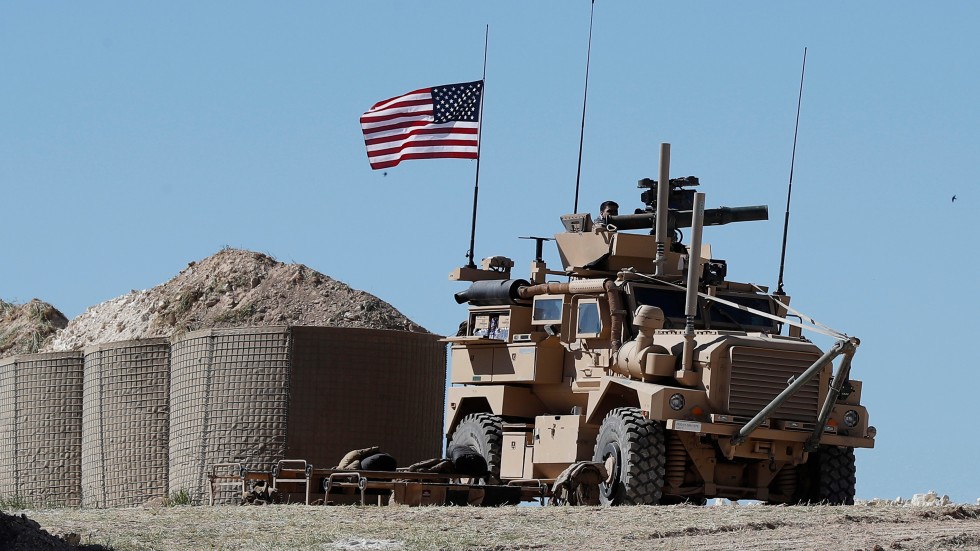
US President Donald Trump’s surprise decision to withdraw US forces from Syria will leave China’s intended investment into the country’s reconstruction in uncertainty, analysts said, adding that the move might also suggest a stronger strategic focus by Washington on the Indo-Pacific region to put pressure on Beijing.

Experts said it remains unclear when the troop withdrawals will be completed but the departure is likely to prolong instability in Syria and delay its reconstruction.

“Trump is restarting the game and all parties there will make their own moves. China is watching closely how changes in the Middle East would affect its own interests there,” said Wu Xinbo, director of the Centre for American Studies at Fudan University in Shanghai.

China has kept its distance from the Syria conflict but is interested in promoting its economic presence in the war-torn country under the “Belt and Road Initiative”, according to Wang Jian, a Middle East expert at the Chinese Academy of Social Sciences in Beijing.

“Chinese companies and investment cannot hurry now,” he said, adding that security would be a major concern with the withdrawal of US troops.

“If the security situation worsens, it will affect China’s intended economic cooperation in the region. Security risks may also spill over to other countries such as Turkey, Saudi Arabia and the UAE where China has extensive economic interests.

Although China is the world’s biggest oil importing country and heavily relies on energy imports from the Middle East, it does not have a military presence in the region.

Chinese businesses used to invest in and trade with Syria before the civil war broke out in 2011. Bilateral trade between China and Syria amounted to US$2.4 billion that year. Almost all Chinese companies have since pulled out or suspended operations there.

Exit from Syria is a lesson for Asia about trusting US

But should the situation stabilise, Chinese companies will return and Beijing is keenly interested in reconstruction. Analysts said the belt and road plan emphasises trade and infrastructure construction, and that both will be urgently needed when reconstruction begins. According to United Nations estimates, the seven-year military conflict has wiped out nearly US$400 billion worth of assets in Syria.

Analysts said also that Chinese businesses were likely to be welcome in a post-war Syria as they have been in Iraq. In a recent interview with Xinhua, Wafiqa Hosni, Syria’s state minister for investment affairs, said the Assad government considered China, which has taken a stance similar to that of Russia at the UN Security Council concerning Syrian issues, a “friendly country”.

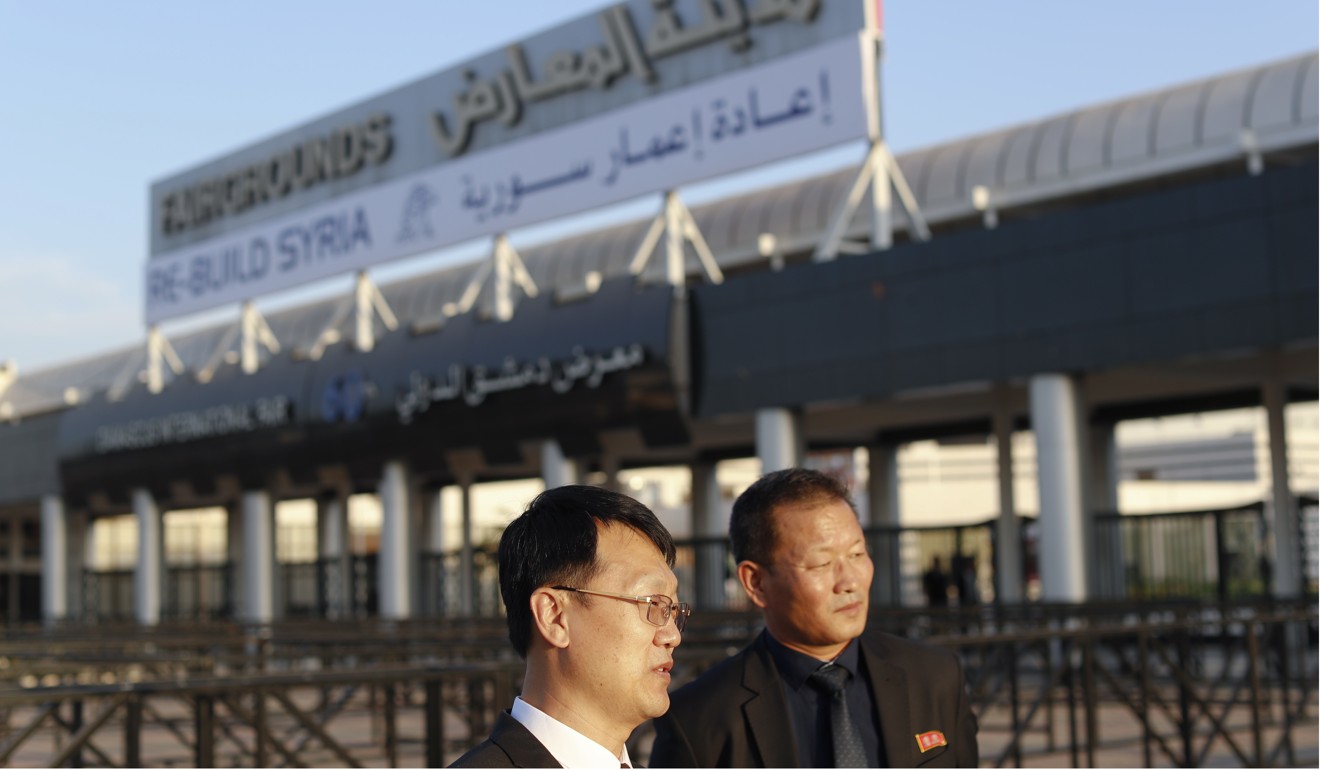
China, meanwhile, has already taken steps to establish an early foothold in the Syrian market. Last year, it convened its first “Syria Reconstruction Projects Fair” in Beijing, putting forward a US$2 billion plan to build an industrial estate in the country that could accommodate as many as 150 companies.

in September, China sent a delegation of 200 companies to the 60th Damascus International Fair, most of which are state-owned enterprises looking to tap in Syria and build a working relationship in its reconstruction process.

John Lee, a professor at the University of Sydney in Australia and a senior fellow at the Hudson Institute in Washington, said the troop withdrawal may also signal a rethinking of Washington’s Indo-Pacific policies.

“It represents a shift in strategic thinking [in the US] that the Middle East is becoming less important to America as more attention is being directed towards the Indo-Pacific,” he said.

“The US already views China as its primary and long-term challenge. This is brought out in the National Security Strategy, National Defence Strategy and in the speech by Vice-President Mike Pence.”

The US military’s Pacific Command has been renamed Indo-Pacific Command, and plans to upgrade equipment and weapons systems and enhance exercises with its regional allies. More specifically, it has increased patrols in the South China Sea to challenge China’s territorial claims.

In the past two years, the US navy has carried out eight freedom of navigation operations near the China’s controlled islands in the South China Sea.

However, Wu from Fudan University believes the use of US military forces in the Indo-Pacific will be limited. Their purpose, he said, was mainly to maintain a presence and profile of the US in the region for its allies and to pressure China.

“It’s unlikely that the US will take China’s South China Sea islands by force or force China to give up its ‘Maritime Silk Road’ plans,” he said, referring to Beijing’s strategy to boost infrastructure connectivity throughout Southeast Asia, Oceania and East African countries.

“I am not convinced the US will actually use military means in this region.”

28/12/2018

Slow cooker: China gives final approval to imports of rice from US after inspection procedures put in place

  • US producers can now sell into world’s largest rice market after phytosanitary standards and procedures set out in 2017 agreement are reached
PUBLISHED : Friday, 28 December, 2018, 7:53pm
UPDATED : Friday, 28 December, 2018, 7:53pm

China has given final clearance for US imports into the world’s largest rice market, as the trade dispute between the world’s two largest economies is on hold for talks and concessions.

American rice was cleared for import from Thursday, Chinese customs officials announced.

“According to the relevant Chinese laws and the conditions set out in the agreed phytosanitary protocol, the US is permitted to export rice to China,” the agency said.

https://multimedia.scmp.com/widgets/china/tradewar-countdown/China agreed to open its rice market to US producers after a deal was struck in 2017. It did not take effect straight away as inspection procedures had to be put in place.

The customs announcement is the latest step for Beijing towards opening its markets since Chinese President Xi Jinping and his American counterpart Donald Trump met on December 1 and agreed to a 90-day period to work towards a trade deal. Part of that agreement was that China would buy more US agricultural produce.

China has since then bought more than 1.5 million tonnes of soybeans and resumed buying liquefied gas.The US keeps a long list of complaints against China on intellectual property, forced technology transfers and industrial subsidies. Trump said China used “unfair trade practices”, which led to a trade deficit that he promised to cut.

Negotiations on opening China’s rice market to the US started more than a decade ago. China’s demands for rice surged after it joined the World Trade Organisation in 2001, but a lack of plant health protocols stalled imports, trade group USA Rice said.

China imported about 5 million tons of rice in 2016, according to data from the US Department of Agriculture.

Meanwhile, the US exports 3 million to 4 million tons of rice per year, according to the UN Food and Agriculture organisation.

US rice products will face competition in China, where Vietnam and Thailand are major rice exporters.

21/12/2018

Crude refusal: China shuns U.S. oil despite trade war truce

SINGAPORE (Reuters) – China, the world’s top oil importer, is set to start 2019 buying little or no crude from the United States despite a three-month truce in a trade scrap between the two nations, with relatively high freight costs and political uncertainty choking demand.

That muted appetite means the United States, which became the world’s top oil producer this year as its shale output hit record levels, will continue to hold only a sliver of China’s market even as a wave of new refining capacity starts up there.

It also suggests that China is unlikely to use crude purchases to help plug a widening trade gap with the United States, which remains a core source of tensions between the world’s top two economies.

The U.S. trade deficit with Beijing hit a record $43 billion in October as its firms stockpiled inventory from China to avoid higher tariffs that may kick in next year.

“Chinese companies have little incentive to buy U.S. crude due to the wide availability of crude supplies today from Iran and Russia,” said Seng Yick Tee, an analyst at Beijing-based consultancy SIA Energy.

“Even though the trade tension between China and the U.S. had been defused recently, the executives from the national oil companies hesitate to procure U.S. crude unless they are told to do so.”

China stopped U.S. oil imports in October and November after the trade war intensified. It resumed some imports in December, but purchased just 1 million barrels, a minute portion of the more than 300 million barrels of total imports, Refinitiv data showed.

Chinese refineries that used to purchase U.S. oil regularly said they had not resumed buying due to uncertainty over the outlook for trade relations between Washington and Beijing, as well as rising freight costs and poor profit-margins for refining in the region.

Costs for shipping U.S. crude to Asia on a supertanker are triple those for Middle eastern oil, data on Refinitiv Eikon showed.

(GRAPHIC: China’s appetite for U.S. crude muted by high freight costs, competitive Mid East supplies – tmsnrt.rs/2GyFnJI)

A senior official with a state oil refinery said his plant had stopped buying U.S. oil from October and had not booked any cargoes for delivery in the first quarter.

“Because of the great policy uncertainty earlier on, plants have actually readjusted back to using alternatives to U.S. oil … they just widened our supply options,” he said.

He added that his plant had shifted to replacements such as North Sea Forties crude, Australian condensate and oil from Russia.

“Maybe teapots will take some cargoes, but the volume will be very limited,” said a second Chinese oil executive, referring to independent refiners. The sources declined to be named because of company policy.

A sharp souring in Asian benchmark refining margins has also curbed overall demand for crude in recent months, sources said.

(GRAPHIC: Singapore refining margins slump 50 pct in 3 ths amid demand growth concerns – tmsnrt.rs/2RhnHXv)

Despite the impasse on U.S. crude purchases, China’s crude imports could top a record 45 million tonnes (10.6 million barrels per day) in December from all regions, said Refinitiv senior oil analyst Mark Tay.

Russia is set to remain the biggest supplier at 7 million tonnes in December, with Saudi Arabia second at 5.7-6.7 million tonnes, he said.

China’s Iranian oil imports are set to rebound in December after two state-owned refiners began using the nation’s waiver from U.S. sanctions on Tehran.

Law of Unintended Consequences

continuously updated blog about China & India

ChiaHou's Book Reviews

continuously updated blog about China & India

What's wrong with the world; and its economy

continuously updated blog about China & India