11/03/2020
BANGKOK (Reuters) – Thailand will temporarily suspend issuing visas on arrival to visitors from 19 countries and territories, including China, to contain the spread of the coronavirus, its interior minister said on Wednesday.
The suspensions were the latest measures imposed in the tourism-reliant Southeast Asian country, which has reported 59 cases of the virus and one death so far. Globally, over 113,000 people have been infected in over 100 countries.
“People from any country who want to come will need to apply for a visa with our embassies,” Minister of Interior Anupong Paochinda told reporters.
“Thai embassies everywhere will ensure that no sick people will travel to Thailand.”
Visa on Arrival (VoA) will be suspended for nationals of all 19 countries and territories previously eligible, including Bulgaria, Bhutan, China, Cyprus, Ethiopia, Fiji, Georgia, India, Kazakhstan, Malta, Mexico, Nauru, Papua New Guinea, Romania, Russia, Saudi Arabia, Taiwan, Uzbekistan, and Vanuatu, according to a list provided to reporters by the Ministry of Foreign Affairs.
However, Russian passport holders will not be affected by the suspension of the visa on arrival from Russia, as they can still travel to Thailand and stay for 30 days under a visa waiver agreement, an official at the ministry told Reuters.
Visa exemptions will be cancelled for South Korea, Italy and Hong Kong, Anupong said.
“These measures will solve the problem of foreigners arriving from risky zones,” he said.
Anupong said he would start the process immediately but it was not immediately clear when they will be effective.
Chatree Atchananant, director-general of the foreign ministry’s Consular Affairs Department, said visa applicants will need to present medical certificates and insurance as part of the screening at Thai embassies.
Last week, Thailand designated South Korea, China, Macao, Hong Kong, Italy and Iran as “dangerous communicable disease areas.”
Thai authorities urged people arriving from the six places to self-quarantine for 14 days.
Source: Reuters
Posted in 14 days, Bangkok, Bhutan, Bulgaria, China, Consular Affairs Department, coronavirus, countries, Cyprus, embassies, Ethiopia, Fiji, Georgia, Hong Kong, India, iran, Italy, Kazakhstan, limit, Macao, Malta, Mexico, Minister of Interior, Ministry of Foreign Affairs, Nauru, Papua New Guinea, restricts, Romania, Russia, Saudi Arabia, self quarantine, South Korea, spread, Taiwan, territories, Thai, Thailand, Uncategorized, Uzbekistan, Vanuatu, Virus, Visa on Arrival (VoA), visitor visas |
Leave a Comment »
02/11/2019
Chinese Premier Li Keqiang, accompanied by Uzbek Prime Minister Abdulla Aripov, inspects the guard of honor during a welcome ceremony in Tashkent, Uzbekistan on Nov. 1, 2019. Li arrived here for the 18th meeting of the Council of Heads of Government of Member States of the Shanghai Cooperation Organization (SCO) and an official visit to Uzbekistan. (Xinhua/Huang Jingwen)
TASHKENT, Nov. 1 (Xinhua) — Chinese Premier Li Keqiang said on Friday that in recent years, relations between China and Uzbekistan have entered a golden period of rapid development under the strategic guidance of the two heads of state.
Li arrived here for the 18th meeting of the Council of Heads of Government of Member States of the Shanghai Cooperation Organization (SCO) and an official visit to Uzbekistan.
Upon Li’s arrival, Uzbek Prime Minister Abdulla Aripov and other senior Uzbek officials greeted the Chinese premier at the airport. Aripov also held a grand welcome ceremony for Premier Li.
Noting that Uzbekistan is a friendly neighbor of China, Li said this is his first official visit to the country as Chinese premier.
Li said he looks forward to having an in-depth exchange of views with Uzbek leaders on deepening bilateral relations and practical cooperation in various fields so as to lift the China-Uzbekistan comprehensive strategic partnership to a higher level and better benefit the two peoples.
Li pointed out that in the current complex international situation, the SCO is playing an increasingly prominent role in maintaining regional security and stability and promoting the development and prosperity of its member states.
He said he expects to have an in-depth exchange of views with all parties on implementing the consensus reached at the Bishkek summit this June and promoting the SCO development and multilateral cooperation.
Li said he believes that all parties will take this meeting as an opportunity to continue to carry forward the Shanghai Spirit, enhance good-neighborly friendship and mutually beneficial cooperation, expand mutual openness among member states, improve trade and investment liberalization and facilitation, and make greater contributions to the well-being of the people of all countries in the region.
During his visit to Uzbekistan, Li will meet with Uzbek President Shavkat Mirziyoyev. The Chinese premier will also hold talks with Prime Minister Aripov, and they will jointly witness the signing of cooperation documents between the two sides.
While attending the SCO meeting, Li will work with other leaders of SCO member states to plan future practical cooperation of the organization and sign cooperation documents.
Source: Xinhua
Posted in Abdulla Aripov, China-Uzbekistan comprehensive strategic partnership, China-Uzbekistan relations, Chinese premier Li Keqiang, Council of Heads of Government of Member States, Council of Heads of State of the Shanghai Cooperation Organization (SCO), golden period, rapid development, Shanghai Cooperation Organization (SCO), Shanghai Spirit, Tashkent, Uncategorized, Uzbek Prime Minister, Uzbekistan |
Leave a Comment »
29/10/2019
BEIJING, Oct. 28 (Xinhua) — Premier Li Keqiang’s upcoming trip to Uzbekistan and Thailand is of great importance to cementing cooperation among both SCO members and East Asian states, as well as solidifying Chinese relations with Uzbekistan and Thailand, senior officials said at a press briefing Monday.
Premier Li is scheduled to attend the 18th meeting of the Council of Heads of Government (Prime Ministers) of the Shanghai Cooperation Organization (SCO) in the Uzbek capital Tashkent, pay an official visit to Uzbekistan, and attend the 22nd China-ASEAN (10+1) leaders’ meeting, the 22nd ASEAN-China, Japan and Republic of Korea (10+3) leaders’ meeting and the 14th East Asia Summit (EAS) in the Thai capital Bangkok before paying an official visit to Thailand, from Nov. 1 to 5.
During the SCO heads of government meeting, Li will explain Xi Jinping Thought on Socialism with Chinese Characteristics for a New Era and share the successful construction experience of the People’s Republic of China in the past 70 years, according to Assistant Foreign Minister Chen Xiaodong.
“Li will exchange in-depth views with the leaders of the participating countries on enhancing solidarity and mutual trust among member states, building the Belt and Road Initiative and cooperation in such fields as economy and trade, industrial capacity, connectivity, finance, investment and people-to-people exchanges,” Chen said.
Noting it will be Li’s first official visit to Uzbekistan, Chen said the premier will exchange views with the Uzbek side on implementing the important consensus of the two heads of state, promoting the development of bilateral relations and international and regional issues of common concern. The two sides will sign a series of cooperation agreements covering economy and trade, investment, science and technology, customs and other fields.
Regarding the East Asian leaders’ meeting on cooperation, Chen said the premier will expound on China’s policy proposals for East Asian cooperation and propose more than 20 new initiatives for deepening cooperation under various mechanisms.
The East Asian leaders’ meeting this year will strengthen consensus, deepen cooperation, improve regional economic integration, promote regional common prosperity and development, and send out a positive signal of adhering to multilateralism and free trade, building an open world economy, according to Assistant Minister of Commerce Li Chenggang.
Calling Thailand a traditional friendly neighbor and important partner for the Belt and Road cooperation, Chen said Premier Li’s official visit to Thailand is the second visit by the premier in six years.
During the visit, the premier will exchange in-depth views with the leaders of the Thai side on bilateral relations and cooperation. The two sides will issue a joint press statement between the two governments and sign cooperation documents in such fields as technology and e-commerce.
Source: Xinhua
Posted in 14th East Asia Summit (EAS), 22nd ASEAN-China, Japan and Republic of Korea (10+3) leaders' meeting, 22nd China-ASEAN (10+1) leaders' meeting, Bangkok, Belt and Road Cooperation, Belt and Road Initiative, Belt and Road Initiative (BRI), Chinese premier Li Keqiang, Council of Heads of Government (Prime Ministers), customs, E-commerce, East Asian leaders' meeting, East Asian states, economy, People's Republic of China, People's Republic of China (PRC), science and technology, SCO members, Shanghai Cooperation Organization (SCO), Socialism with Chinese Characteristics for a New Era, Tashkent, Technology, Thai capital, Thailand, Trade, Uncategorized, Uzbek capital, Uzbekistan, Xi Jinping Thought |
Leave a Comment »
25/10/2019
BEIJING, Oct. 25 (Xinhua) — Chinese Premier Li Keqiang will pay official visits to Uzbekistan and Thailand, at the invitation of Uzbek Prime Minister Abdulla Aripov and Thai Prime Minister Prayut Chan-o-cha, and attend a series of meetings in the two countries from Nov. 1 to 5, Foreign Ministry Spokesperson Hua Chunying announced Friday.
Li will attend the 18th meeting of the Council of Heads of Government (Prime Ministers) of the Shanghai Cooperation Organization (SCO) in the Uzbek capital Tashkent, and attend the 22nd China-ASEAN (10+1) leaders’ meeting, the 22nd ASEAN-China, Japan and Republic of Korea (10+3) leaders’ meeting and the 14th East Asia Summit (EAS) in the Thai capital Bangkok during the visits, the spokesperson added.
Source: Xinhua
Posted in 14th East Asia Summit (EAS), 22nd ASEAN-China, Japan and Republic of Korea (10+3) leaders' meeting, 22nd China-ASEAN (10+1) leaders' meeting, Abdulla Aripov, Bangkok, Chinese premier Li Keqiang, Council of Heads of Government, Prayut Chan-o-cha, Shanghai Cooperation Organization (SCO), Tashkent, Thai capital, Thai Prime Minister, Thailand, Uncategorized, Uzbek capital, Uzbek Prime Minister, Uzbekistan |
Leave a Comment »
29/08/2019
Chinese President Xi Jinping meets with visiting Uzbek Prime Minister Abdulla Aripov at the Great Hall of the People in Beijing, capital of China, Aug. 28, 2019. (Xinhua/Yao Dawei)
BEIJING, Aug. 28 (Xinhua) — Chinese President Xi Jinping met with visiting Uzbek Prime Minister Abdulla Aripov here on Wednesday, calling on the two countries to jointly push forward the high-quality construction of the Belt and Road.
Xi asked Aripov to convey his sincere regards to Uzbek President Shavkat Mirziyoyev.
The key to the constant leap-forward development of China-Uzbekistan relations is that both sides always adhere to the spirit of good-neighborliness, mutual benefit and mutual assistance, according to Xi.
Xi stressed that he attaches great importance to the development of the China-Uzbekistan comprehensive strategic partnership, which is in line with the fundamental interests of the two countries and their peoples.
Hailing the achievements of the fifth meeting of the China-Uzbekistan intergovernmental committee of cooperation, Xi said that the cooperation goals set by the two sides will certainly be realized as long as the bilateral relationship stays on the right track.
Xi called on both countries to further promote the high-quality construction of the Belt and Road, enhance synergy between national development strategies, strengthen connectivity through cross-border roads and railways, expand cooperation in trade, investment, high and new technology, energy and other fields, as well as foster new highlight in people-to-people and cultural exchanges.
China is willing to increase imports of Uzbek quality agricultural products, Xi said, adding that Uzbekistan is welcome to attend the second China International Import Expo as guest of honor later this year.
In addition, Xi said that the two sides should work together to combat the “three evil forces” of terrorism, separatism and extremism, fight against drug trafficking and other transnational organized crimes.
The rejuvenation of the Chinese nation is to seek happiness for the Chinese people and will also benefit world peace and human progress, Xi said, stressing that China will absolutely not follow the old path of “a strong country must seek hegemony.”
China is ready to enhance coordination with Uzbekistan on international affairs, safeguard common interests of the two countries, uphold multilateralism and promote democracy in international relations, Xi said.
He also called on the two countries to work with other members of the Shanghai Cooperation Organization (SCO) to raise the awareness of a community with a shared future and lift cooperation in various fields, so as to promote further development of the SCO and benefit peoples of various countries in the region.
Aripov conveyed President Mirziyoyev’s sincere greetings and lofty respect to President Xi and his warm congratulations on the 70th anniversary of the founding of the People’s Republic of China.
President Mirziyoyev sincerely hopes China will achieve greater prosperity and early national rejuvenation under the leadership of President Xi, according to Aripov.
Calling China “the closest and most reliable neighbor and partner” of Uzbekistan, Aripov said that Uzbekistan will work with China to firmly implement the important consensus reached by the two heads of state.
Mirziyoyev has appointed a special agency to synergize development strategies with the Chinese side, actively promote cooperation with China on the construction of the Belt and Road, and expand people-to-people and cultural exchanges, according to Aripov.
Uzbekistan firmly supports China in safeguarding its sovereignty, security and unity, and will continue to actively work with China to combat the “three evil forces” of terrorism, separatism and extremism, said Aripov.
Aripov is paying an official visit to China from Tuesday to Thursday at the invitation of Chinese Premier Li Keqiang.
Source: Xinhua
Posted in Abdulla Aripov, Belt and Road construction, China alert, China International Import Expo, China International Import Expo (CIIE), China-Uzbekistan intergovernmental committee of cooperation, China-Uzbekistan relations, Chinese premier Li Keqiang, comprehensive strategic partnership, cross-border roads, drug trafficking, energy, extremism, founding of the People's Republic of China (PRC), good-neighborliness, hegemony, high and new technology, Investment, mutual assistance, mutual benefit, President Mirziyoyev, President Xi Jinping, railways, rejuvenation, separatism, Shanghai Cooperation Organization (SCO), Shavkat Mirziyoyev, terrorism, Trade, transnational organized crimes, Uncategorized, Uzbek President, Uzbek Prime Minister, Uzbek quality agricultural products, Uzbekistan |
Leave a Comment »
28/08/2019
Chinese Premier Li Keqiang (L) holds a welcoming ceremony for visiting Uzbek Prime Minister Abdulla Aripov before their talks in Beijing, capital of China, Aug. 27, 2019. (Xinhua/Yin Bogu)
BEIJING, Aug. 27 (Xinhua) — Chinese Premier Li Keqiang held talks Tuesday with visiting Uzbek Prime Minister Abdulla Aripov, and the two sides agreed to cement cooperation.
Li said China attaches great importance to China-Uzbekistan relations and is willing to maintain close high-level exchanges with Uzbekistan, promote trade and investment liberalization and facilitation, and strengthen communication and coordination in international and regional affairs.
Li said China is ready to seek synergy between the Belt and Road Initiative and Uzbekistan’s development strategy, deepen cooperation in production capacity, interconnection and agriculture, and make efforts to ensure the stability of energy cooperation.
He expected the two sides to promote cooperation in culture, tourism and higher education, so as to consolidate the people-to-people foundation of bilateral ties.
China is willing to continue to expand the scale of bilateral trade, import Uzbek products that meet the needs of the Chinese market, and support capable Chinese companies investing in Uzbekistan in accordance with market rules, Li said, hoping Uzbekistan will create a good business environment.
Aripov said Uzbekistan is ready to continue to participate in the Belt and Road Initiative, deepen cooperation in various fields, and welcome Chinese enterprises to expand investment in Uzbekistan, so as to push bilateral relations to a higher level.
The two leaders witnessed the signing of a series of cooperation documents after the talks.
Source: Xinhua
Posted in Abdulla Aripov, Belt and Road Initiative, Belt and Road Initiative (BRI), bilateral trade, China-Uzbekistan relations, Chinese premier Li Keqiang, Culture, higher education, Import, promote cooperation, Tourism, Uncategorized, Uzbek Prime Minister, Uzbek products, Uzbekistan |
Leave a Comment »
25/08/2019
- A recent joint exercise in Tajikistan is the latest example of Beijing’s growing security and economic interests in the former Soviet republic
- Analysts say Moscow may not be happy about China’s growing reach in the lawless, mountainous area and will be keeping an eye on the situation
Chinese and Tajik troops completed a joint exercise earlier this month in the mountainous region of Gorno-Badakhshan. Photo: Xinhua
China is increasing its military and economic presence in parts of central Asia that Russia has traditionally considered its sphere of influence – a development some analysts believe could cause concern in Moscow.
While Russia’s influence remains strong in many former Soviet republics, China is steadily building up its military and economic influence in Tajikistan, particularly in the remote, mountainous areas on its western borders where central government authority is weak.
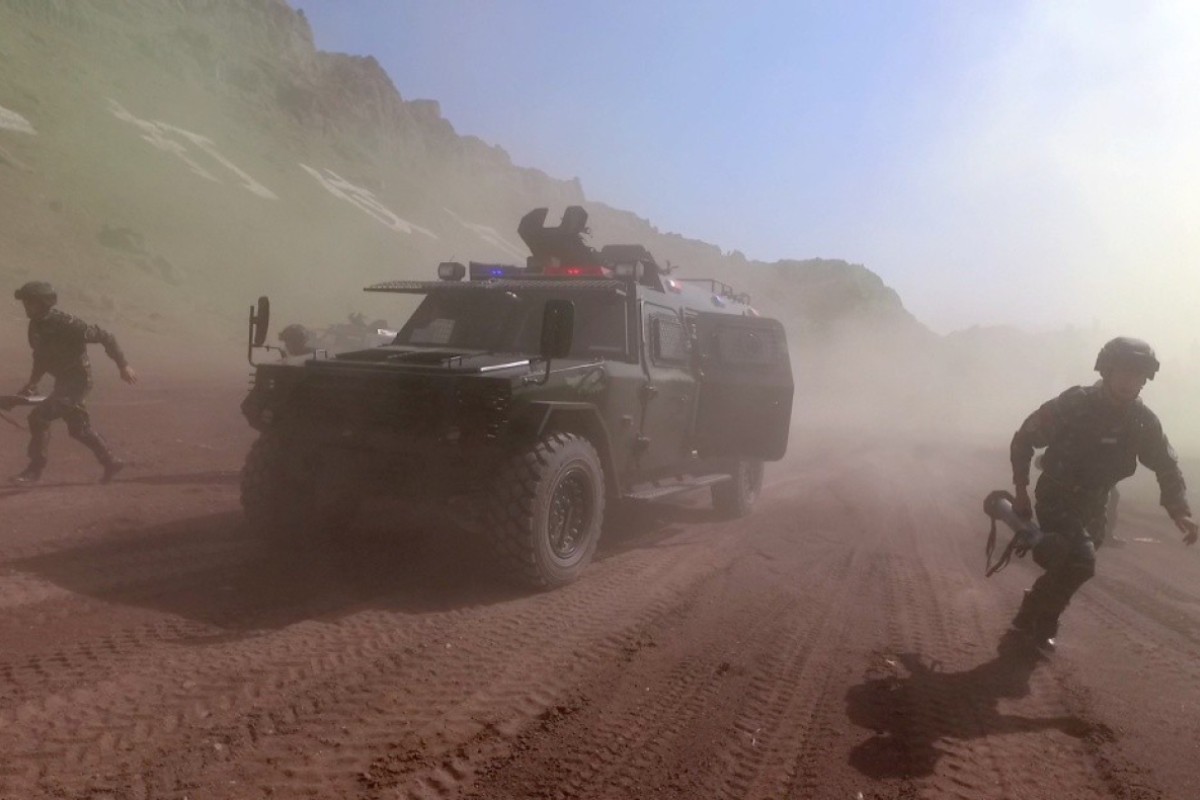
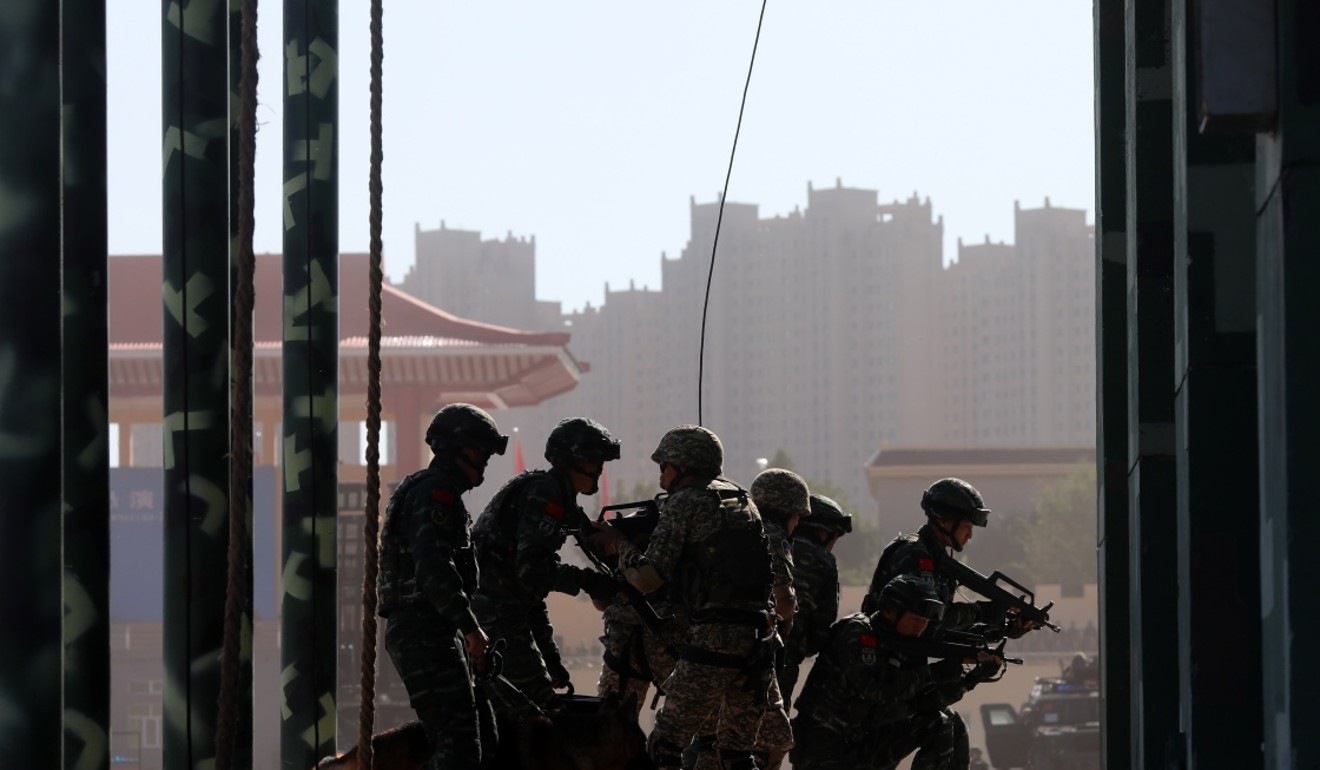
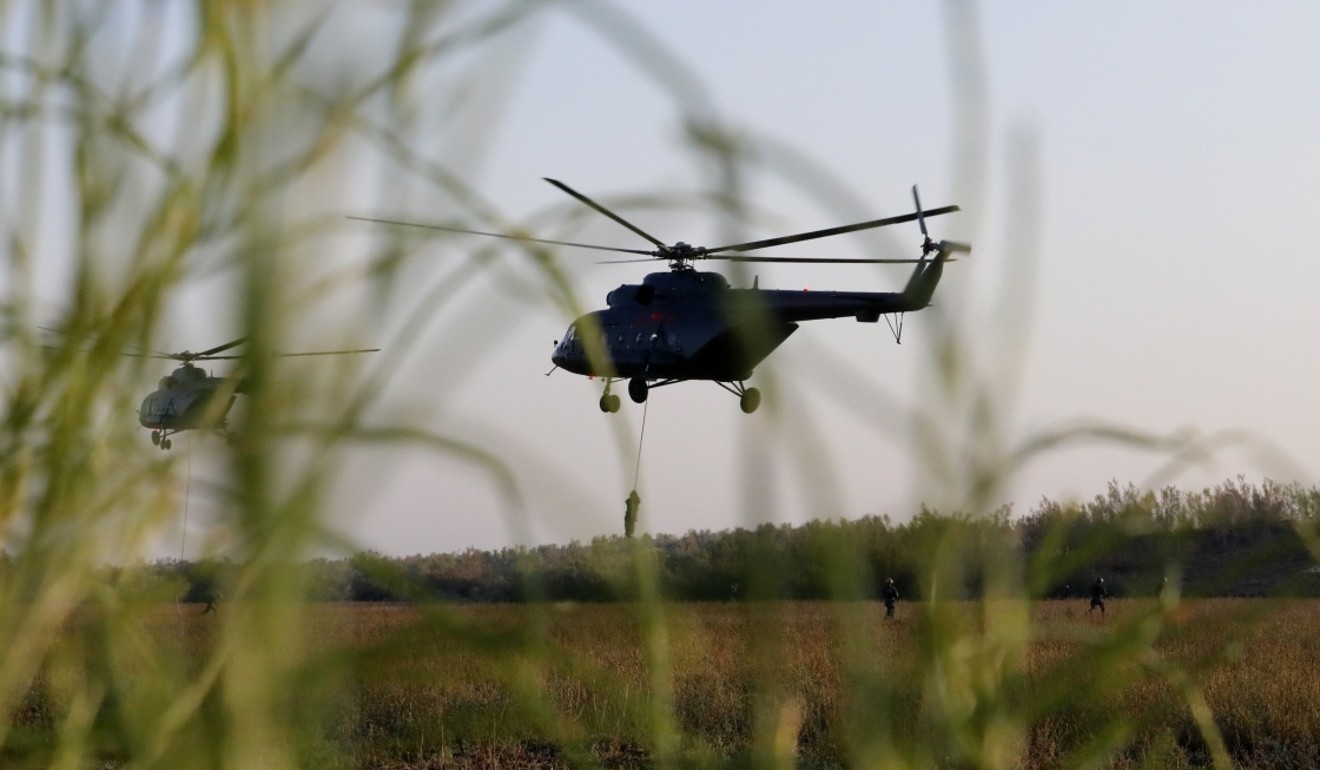
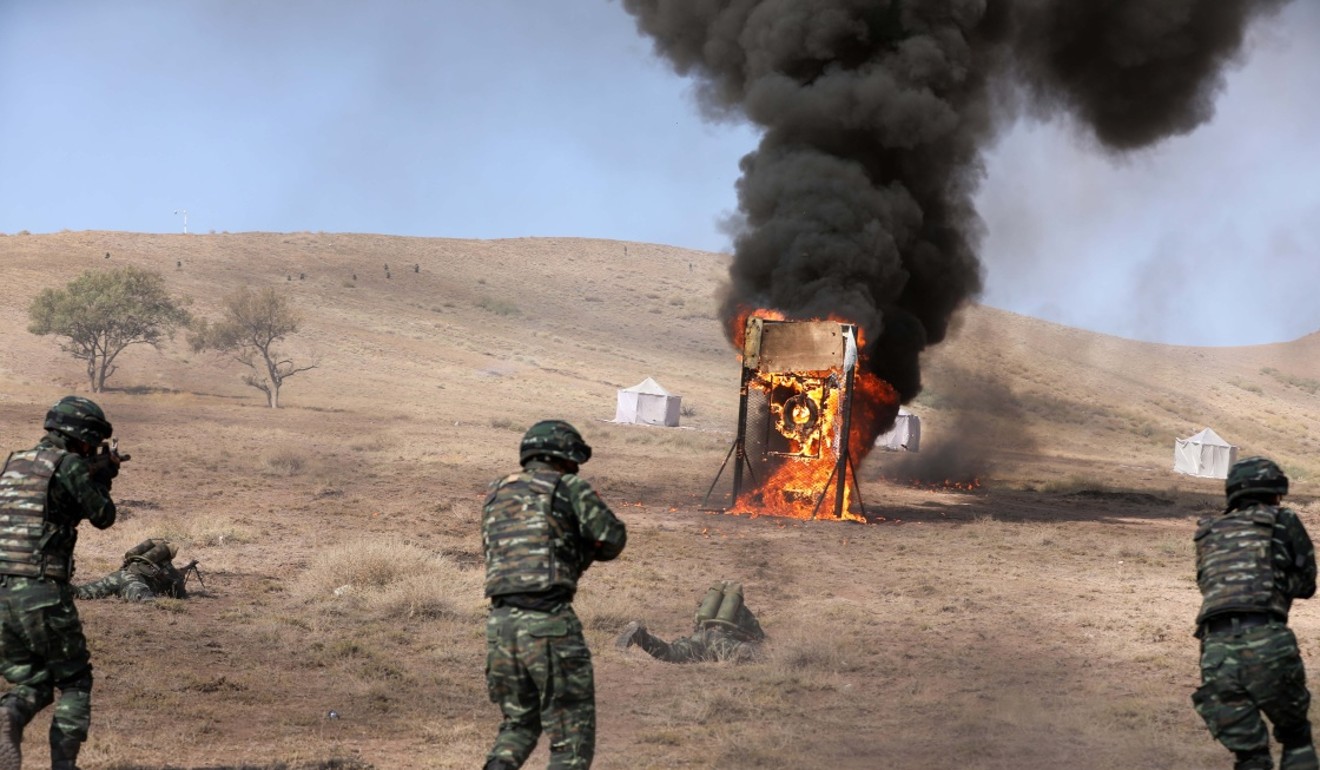
Chinese troops recently concluded a joint drill in eastern Tajikistan involving 1,200 troops from both countries.
The eight-day exercise that finished on August 13 was conducted in the autonomous Gorno-Badakhshan autonomous region, a sparsely populated territory in the high Pamir mountains, which borders China’s Xinjiang region and Afghanistan.
China has been increasing its security presence in the strategically sensitive region. Photo: Xinhua
Although this year’s exercise involved fewer troops than the 10,000 involved in a previous drill three years ago, it tested the use of advanced aerial vehicles and ground reconnaissance technology to monitor the area.
The landlocked country is strategically important for China, which is worried that the porous borders will serve as an entry point for drugs and Islamic militants into Xinjiang, where its deradicalisation strategy has led to the detention of a million Muslim minorities in reeducation camps.
It also sits along the trade routes China hopes to develop under the Belt and Road Initiative – Beijing’s flagship plan to expand its global influence through infrastructure, trade and investment – but the area has long been plagued by lawlessness and outbreaks of violence.
The recent exercise tested aerial surveillance techniques. Photo: Xinhua
Artyom Lukin, a professor of international politics at Far Eastern Federal University in Vladivostok, said Russia was not happy about the deployment of Chinese forces in Tajikistan.
“Russia has traditionally considered Central Asia, including Tajikistan, as its sphere of political-military influence,” he said.
Observers said other Central Asian republics – such as Kazakhstan, Uzbekistan and Kyrgyzstan – are likely to stay within Moscow’s orbit, but China is steadily building closer security ties with Tajikistan.
In February, China’s defence ministry denied that it was building a base and stationing troops in the country, but defended its closer military cooperation with Tajikistan.
The recent training exercise was conducted in an area Russia has long seen as part of its sphere of influence. Photo: Xinhua
China has long-standing security interests in the country and in 2016 it agreed to finance 11 border outposts and a training centre for guards along the Afghan border.
This was part of a deal Beijing made through the Quadrilateral Cooperation and Coordination Mechanism – which also involves Pakistan, Afghanistan and Tajikistan – to strengthen cooperation in combating terrorism and improving security.
China has also overtaken Russia economically, becoming the largest foreign investor in Tajikistan in 2016, accounting for 30 per cent of Tajikistan’s total direct accumulated investments, state news agency Xinhua reported.
Banned Muslim political party blamed for deadly attack on tourists in Tajikistan
China’s direct investment in Tajikistan was worth US$95 million in 2017, according to the latest available figures. China has also grown to become the country’s third largest trading partner with bilateral trade reaching around US$1.5 billion in 2018.
A recent opinion piece published by the Russian state-owned news agency Sputnik suggested China may be “getting carried away” by its investments in the region.
The article suggested that China’s growing presence in the country could lead to a “partial loss” of Tajikistan’s sovereignty and argued that Beijing may want to take control of the border with Afghanistan.
China also has economic interests to protect. Photo: Xinhua
But Lukin said even though this growing involvement may be an irritant for Russia, the strategic partnership between China and Russia will remain strong.
The two countries remain the key players in the Shanghai Cooperation Organisation, an economic and security alliance that includes the Central Asian republics and India and Pakistan.
The two are also keen to cooperate more closely due to their tense relationship with the United States. This year Russian and Chinese armed forces have stepped up their cooperation, and last week used a UN Security Council debate to criticise the US for pulling out of the Intermediate-Range Nuclear Forces Treaty. Washington defended the move as necessary response to Beijing and Moscow’s build up of arms.
Why Chinese investors are struggling to gain a foothold in Tajikistan
Lukin said: “Moscow no doubt understands that in terms of security, Tajikistan’s border, adjacent to China’s Xinjiang and Afghanistan, is truly a vital concern for Beijing.
“The presence of Chinese troops could actually benefit Russia, because it will be China bearing the costs of policing Tajikistan’s mountainous border areas.”
Stephen Blank, a former professor at the US Army War College and a specialist in Eurasian security, said that while Russia has mostly stayed silent about China’s presence in Tajikistan, it was closely watching the situation.
“What happens in the long run depends on how far China goes to extend its military presence in Central Asia. And if it keeps extending, it may well provoke some expression of concern in Russia beyond the silence that has hitherto been the case,” Blank said.
Chinese troops could play an increasing role in policing the area in future. Photo: Xinhua
“[The recent drills] look like conventional war-fighting exercises as much as anti-terrorist operations and suggest that China may have bigger contingencies than anti-terrorism in mind.”
Mathieu Duchatel, director of the Asia programme at the Institut Montaigne, a French think tank, said both Russia and China share similar concerns about terrorism and drug trafficking in Central Asia.
He said Russia had not objected to the security pact with Pakistan, Afghanistan and Tajikistan because there are more important strategic priorities in China-Russia relations.
“Overall, Russia’s acceptance of a security role for China in Central Asia shows how Russia realistically adjusts to the changing balance of power with China, and is able to avoid a zero-sum game on issues where parallel efforts by China and Russia can serve Russian security interests,” he said.
Source: SCMP
Posted in aerial surveillance techniques, aerial vehicles, Afghan border, Afghanistan, backyard, Beijing, Belt and Road Initiative, Belt and Road Initiative (BRI), Central Asia, Central Asian, Central Asian republics, China alert, China-Russia relations, Chinese armed forces, combating terrorism, drug trafficking, former, French think tank, Gorno-Badakhshan, ground reconnaissance technology, improving security, increases, India alert, Infrastructure, Institut Montaigne, Intermediate-Range Nuclear Forces Treaty, Investment, Islamic militants, Kazakhstan, Kyrgyzstan, lawlessness, Moscow, Muslim minorities, outbreaks of violence, Pakistan, Pamir Mountains, presence, Quadrilateral Cooperation and Coordination Mechanism, reeducation camps, Russia, Russian armed forces, security and economic interests, Shanghai Cooperation Organisation (SCO), Soviet republic, Tajikistan, terrorism, Trade, UN Security Council debate, Uncategorized, United States, US Army War College, Uzbekistan, Washington, Xinjiang, zero-sum game |
Leave a Comment »
08/07/2019
- Settlements along the route linking Europe and Asia thrived by providing accommodation and services for countless traders
- Formally established during the Han dynasty, it was a 19th-century German geographer who coined the term Silk Road
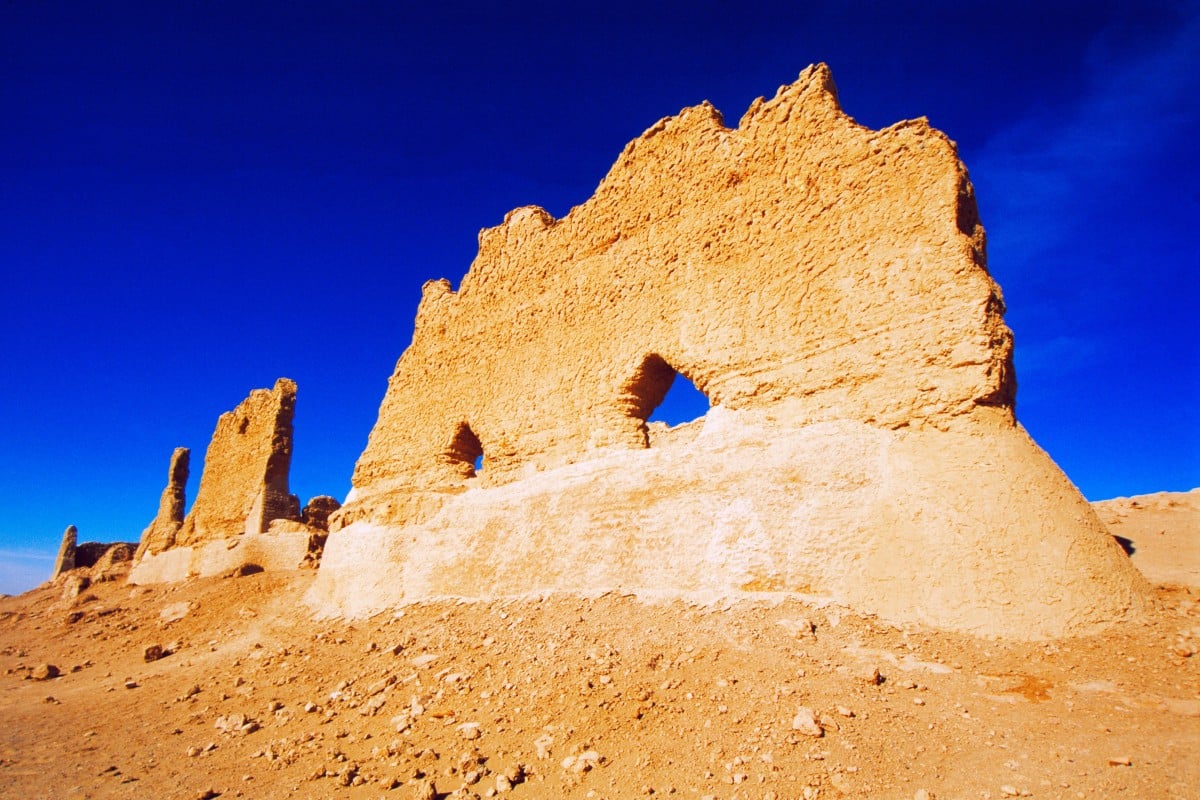
The ruins of a fortified gatehouse and customs post at Yunmenguan Pass, in China’s Gansu province. Photo: Alamy
We have a German geographer, cartographer and explorer to thank for the name of the world’s most famous network of transcontinental trade routes.
Formally established during the Han dynasty, in the first and second centuries BC, it wasn’t until 1877 that Ferdinand von Richthofen coined the term Silk Road (historians increasingly favour the collective term Silk Routes).
The movement of merchandise between China and Europe had been taking place long before the Han arrived on the scene but it was they who employed troops to keep the roads safe from marauding nomads.
Commerce flourished and goods as varied as carpets and camels, glassware and gold, spices and slaves were traded; as were horses, weapons and armour.
Merchants also moved medicines but they were no match for the bubonic plague, which worked its way west along the Silk Road before devastating huge swathes of 14th century Europe.
What follows are some of the countless kingdoms, territories, (modern-day) nations and cities that grew rich on the proceeds of trade, taxes and tolls.
China
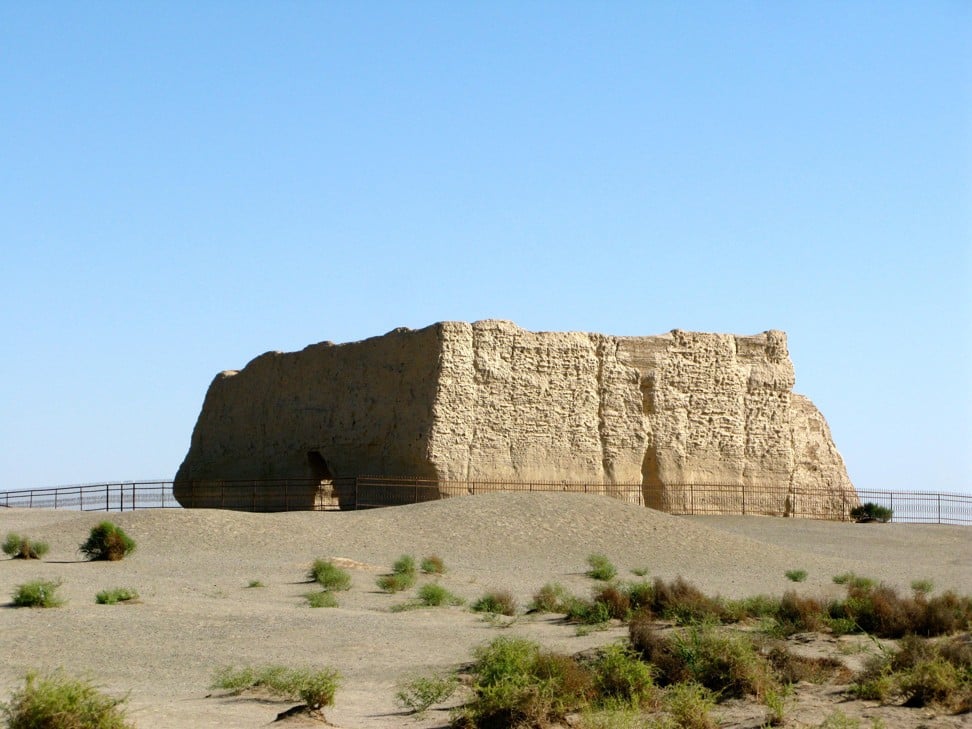
A watchtower made of rammed earth at Dunhuang, a desert outpost at the crossroads of two major Silk Road routes in China’s northwestern Gansu province. Photo: Alamy
Marco Polo worked in the Mongol capital, Khanbaliq (today’s Beijing), and was struck by the level of mercantile activity.
The Venetian gap-year pioneer wrote, “Every day more than a thousand carts loaded with silk enter the city, for a great deal of cloth of gold and silk is woven here.”
Light, easy to transport items such as paper and tea provided Silk Road traders with rich pickings, but it was China’s monopoly on the luxurious shimmering fabric that guaranteed huge profits.
So much so that sneaking silk worms out of the empire was punishable by death.
The desert outpost of Dunhuang found itself at the crossroads of two major Silk Road trade arteries, one leading west through the Pamir Mountains to Central Asia and another south to India.
Built into the Great Wall at nearby Yunmenguan are the ruins of a fortified gatehouse and customs post, which controlled the movement of Silk Road caravans.
Also near Dunhuang, the Mogao Caves contain one of the richest collections of Buddhist art treasures anywhere in the world, a legacy of the route to and from the subcontinent.
Afghanistan
Afghanistan’s mountainous terrain was an inescapable part of the Silk Road, until maritime technologies would become the area’s undoing. Photo: Shutterstock
For merchants and middlemen hauling goods through Central Asia, there was no way of bypassing the mountainous lands we know today as Afghanistan.
Evidence of trade can be traced back to long before the Silk Road – locally mined lapis lazuli stones somehow found their way to ancient Egypt, and into Tutankhamun’s funeral mask, created in 1323BC.
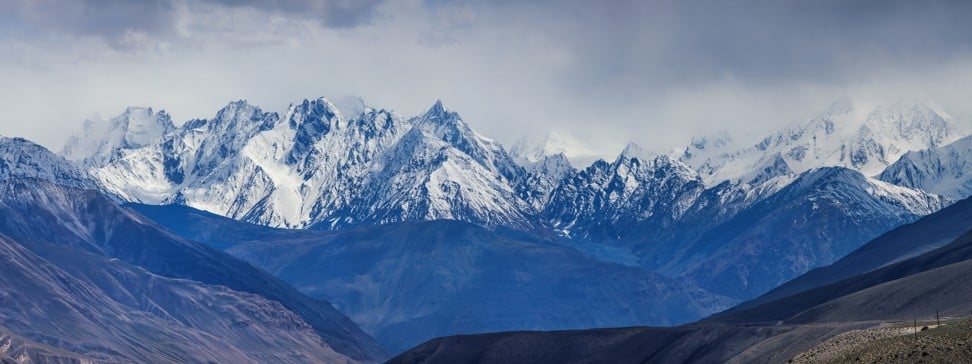
Jagged peaks, rough roads in Tajikistan, roof of the world
Besides mercantile exchange, the caravan routes were responsible for the sharing of ideas and Afghanistan was a major beneficiary. Art, philosophy, language, science, food, architecture and technology were all exchanged, along with commercial goods.
In fact, maritime technology would eventually be the area’s undoing. By the 15th century, it had become cheaper and more convenient to transport cargo by sea – a far from ideal development for a landlocked region.
Iran
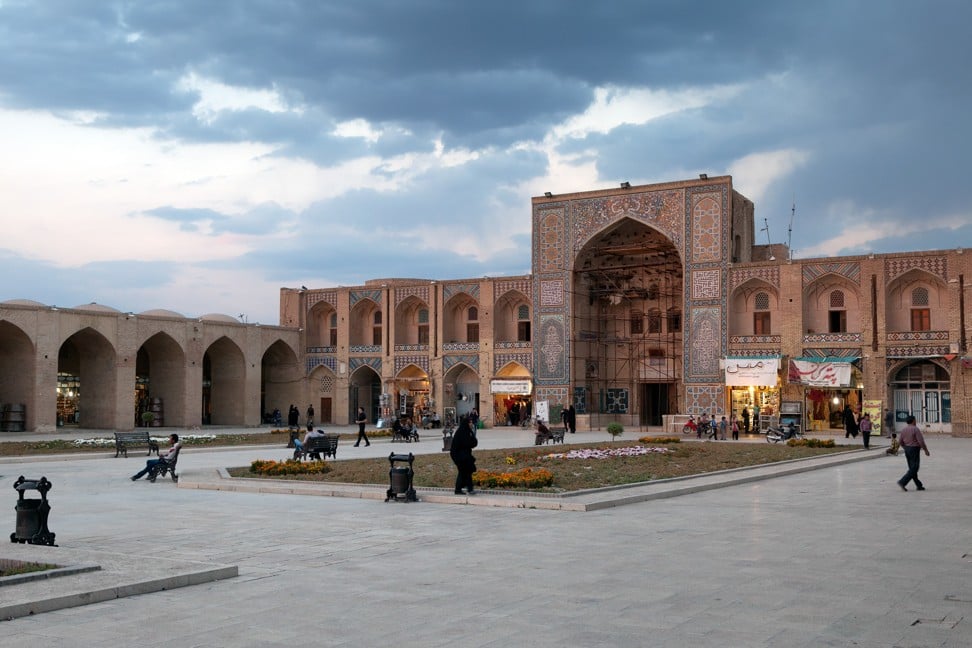
The Ganjali Khan Complex, in Iran. Photo: Shutterstock
Thanks to the Silk Road and the routes that preceded it, the northern Mesopotamian region (present-day Iran) became China’s closest trading partner. Traders rarely journeyed the entire length of the trail, however.
Merchandise was passed along by middlemen who each travelled part of the way and overnighted in caravanserai, fortified inns that provided accommodation, storerooms for goods and space for pack animals.
The good, bad and ugly sides to visiting Chernobyl and Kiev
With so many wheeler-dealers gathering in one place, the hostelries developed into ad hoc marketplaces.
Marco Polo writes of the Persian kingdom of Kerman, where craftsmen made saddles, bridles, spurs and “arms of every kind”.
Today, in the centre of Kerman, the former caravanserai building forms part of the Ganjali Khan Complex, which incorporates a bazaar, bathhouse and mosque.
Uzbekistan
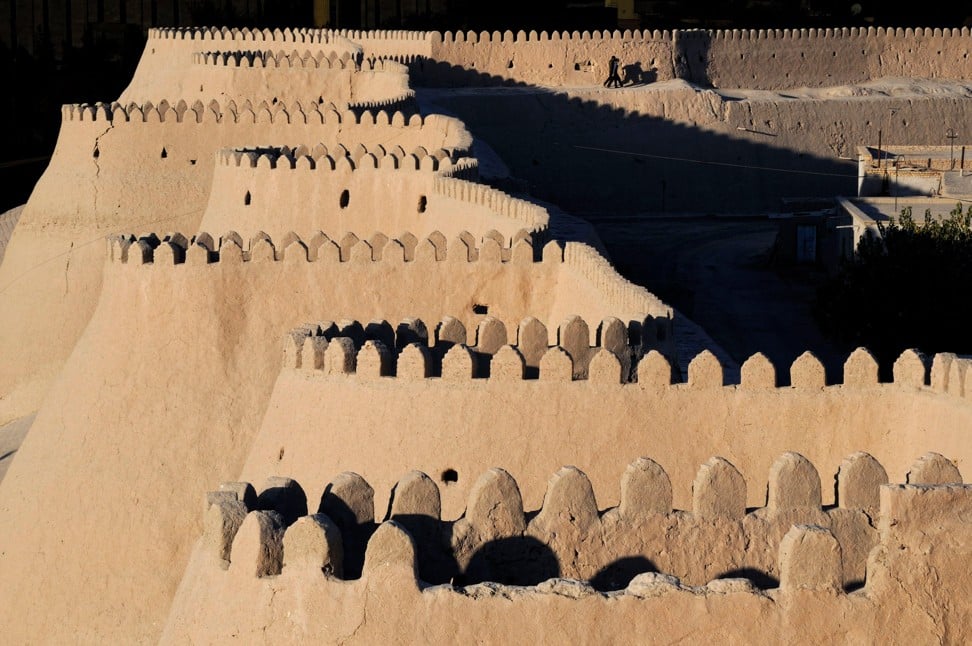
A fort in Khiva, Uzbekistan. Photo: Alamy
The double-landlocked country boasts some of the Silk Road’s most fabled destinations. Forts, such as the one still standing at Khiva, were built to protect traders from bandits; in fact, the city is so well-preserved, it is known as the Museum under the Sky.
The name Samarkand is also deeply entangled with the history of the Silk Road.
The earliest evidence of silk being used outside China can be traced to Bactria, now part of modern Uzbekistan, where four graves from around 1500BC-1200BC contained skeletons wrapped in garments made from the fabric.
Three thousand years later, silk weaving and the production and trade of textiles remain one of Samarkand’s major industries.
Georgia
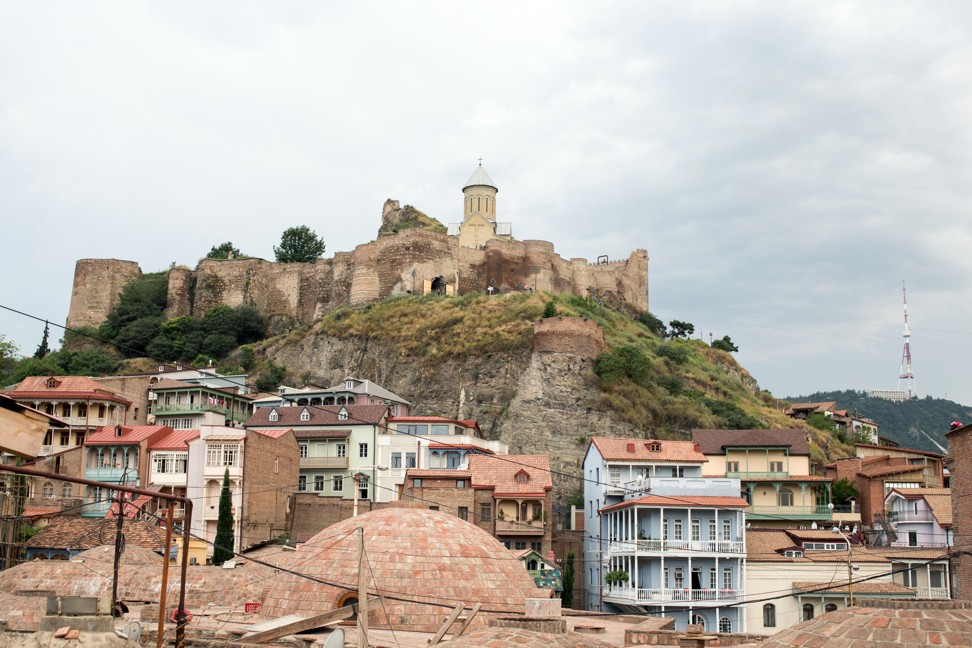
A street in old town of Tbilisi, Georgia. Photo: Alamy
Security issues in Persia led to the opening up of another branch of the legendary trade route and the first caravan loaded with silk made its way across Georgia in AD568.
Marco Polo referred to the weaving of raw silk in “a very large and fine city called Tbilisi”.
Today, the capital has shaken off the Soviet shackles and is on the cusp of going viral.
Travellers lap up the city’s monasteries, walled fortresses and 1,000-year-old churches before heading up the Georgian Military Highway to stay in villages nestling in the soaring Caucasus Mountains.
Public minibuses known as marshrutka labour into the foothills and although the vehicles can get cramped and uncomfortable, they beat travelling by camel.
Jordan
Petra, in Jordan. Photo: Alamy
The location of the Nabataean capital, Petra, wasn’t chosen by chance.
Savvy nomadic herders realised the site would make the perfect pit-stop at the confluence of several caravan trails, including a route to the north through Palmyra (in modern-day Syria), the Arabian peninsula to the south and Mediterranean ports to the west.
Huge payments in the form of taxes and protection money were collected – no wonder the most magnificent of the sandstone city’s hand-carved buildings is called the Treasury.
The Red Rose City is still a gold mine – today’s tourists pay a hefty
. The Nabataeans would no doubt approve.
Venice
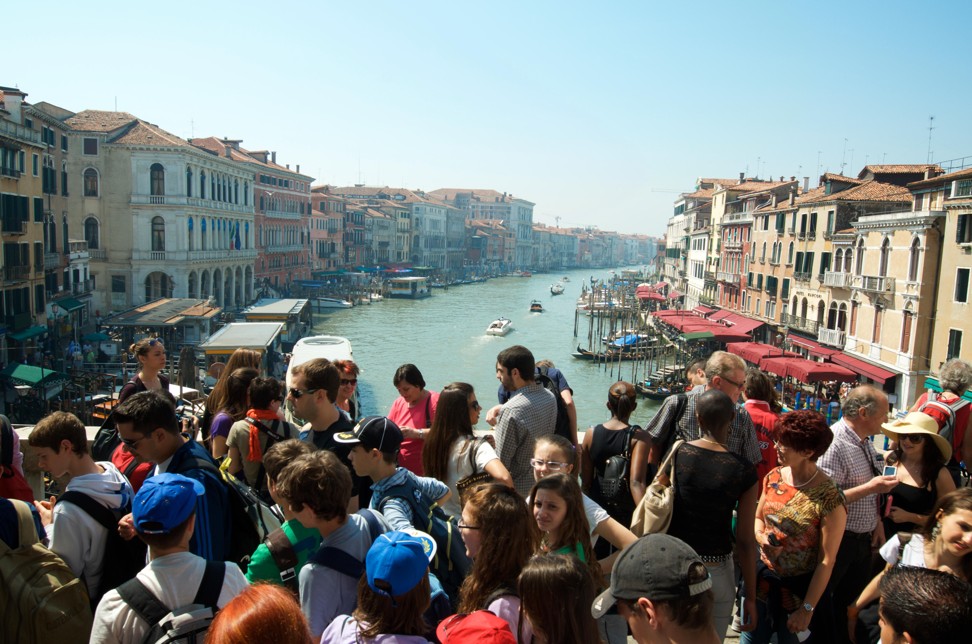
Tourists crowd onto Venice’s Rialto Bridge. Photo: Alamy
Trade enriched Venice beyond measure, helping shape the Adriatic entrepot into the floating marvel we see today.
Besides the well-documented flow of goods heading west, consignments of cotton, ivory, animal furs, grapevines and other goods passed through the strategically sited port on their way east.
Ironically, for a city built on trade and taxes, the biggest problem Venice faces today is visitors who don’t contribute enough to the local economy.
A lack of spending by millions of day-tripping tourists and cruise passengers who aren’t liable for nightly hotel taxes has prompted authorities to introduce a citywide access fee from January 2020.
Two thousand years ago, tariffs and tolls helped Venice develop and prosper. Now they’re needed to prevent its demise.
Source: SCMP
Posted in accommodation, Adriatic, Afghanistan, architecture, armour, arms, Art, Asia, Bactria, bandits, bathhouse, bazaar, Beijing, bridles, bubonic plague, Buddhist art treasures, camels, caravanserai, caravans, carpets, Caucasus Mountains, Chernobyl, cloth of gold, commercial goods, craftsmen, Death, Dunhuang, Egypt, Europe, exchanged, Ferdinand von Richthofen, floating marvel, Food, fort, from China to Italy, funeral mask, Ganjali Khan Complex, Gansu Province, garments, Georgia, Georgian Military Highway, German geographer, glassware, Gold, goods, Great Wall, grew rich, Han Dynasty, horses, hostelries, iran, Jordan, Kerman, Khanbaliq, Khiva, Kiev, languages, lapis lazuli, Marco Polo, maritime technology, marketplaces, marshrutka, medicines, Merchandise, Mesopotamian region, Mogao Caves, Mongol capital, Mosque, Museum under the Sky, Nabataean capital, pack animals, Palmyra, Pamir Mountains, paper, Persian kingdom, Petra, philosophy, punishable, Red Rose City, Rialto Bridge, saddles, Samarkand, Science, Silk Road, Silk Road destinations, silk worms, skeletons, slaves, sneaking, Space, spices, spurs, storerooms, Syria, Tajikistan, Tbilisi, Tea, Technology, towns, Trade, traders, Tutankhamun, Uncategorized, Uzbekistan, Venetian gap-year pioneer, Venice, weapons, Yunmenguan Pass |
Leave a Comment »
29/05/2019
- President Xi Jinping will meet Russian counterpart Vladimir Putin next month and address economic summit in St Petersburg
- Diplomatic flurry will also include regional security forums in Kyrgyzstan and Tajikistan
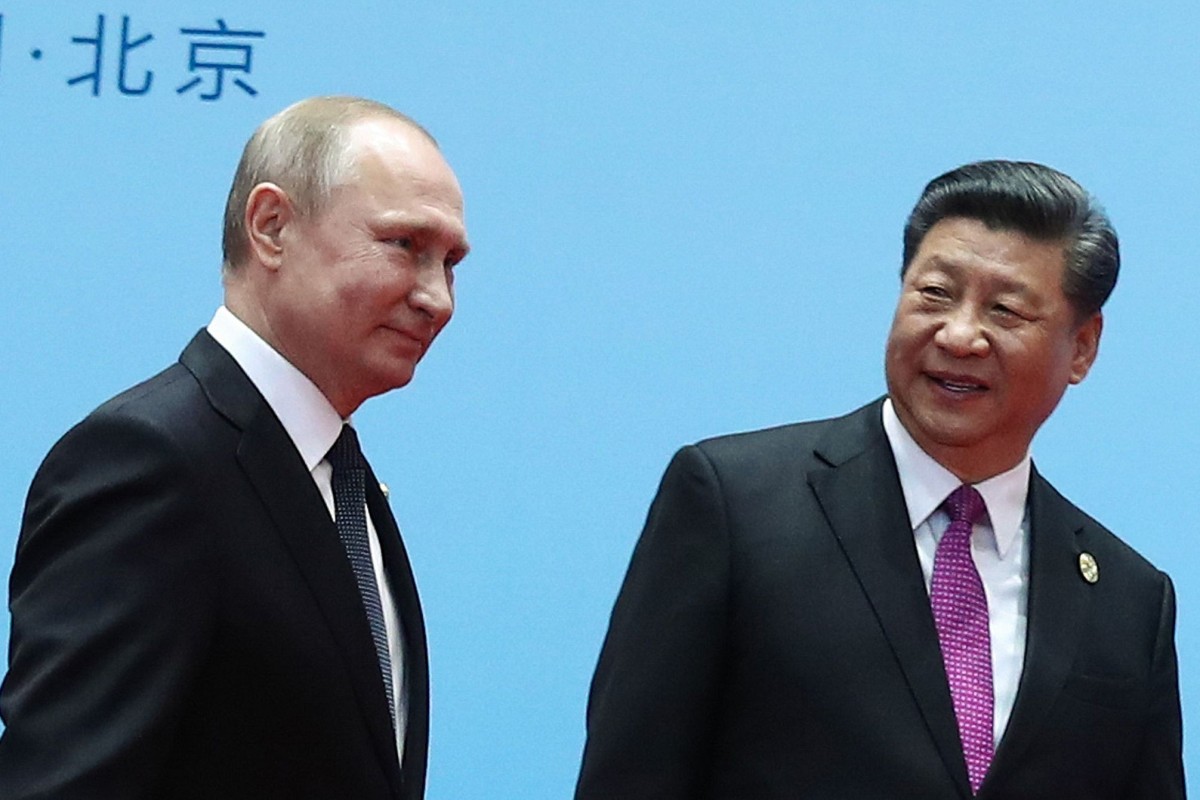
Xi Jinping has met Vladimir Putin more times than any other foreign leader since he took power in 2013. Photo: AFP
Beijing is stepping up efforts to seek support from regional and global players such as Russia and Central Asian nations as its geostrategic rivalry with Washington heats up.
President Xi Jinping is expected to meet his Russian counterpart Vladimir Putin next month, when he will also address the St Petersburg International Economic Summit,
Russian presidential aide Yuri Ushakov told state-run TASS news agency earlier.
The Chinese president will also visit the Kyrgyzstan capital Bishkek for the Shanghai Cooperation Organisation (SCO) summit in June, as well as another regional security forum in Dushanbe, Tajikistan.
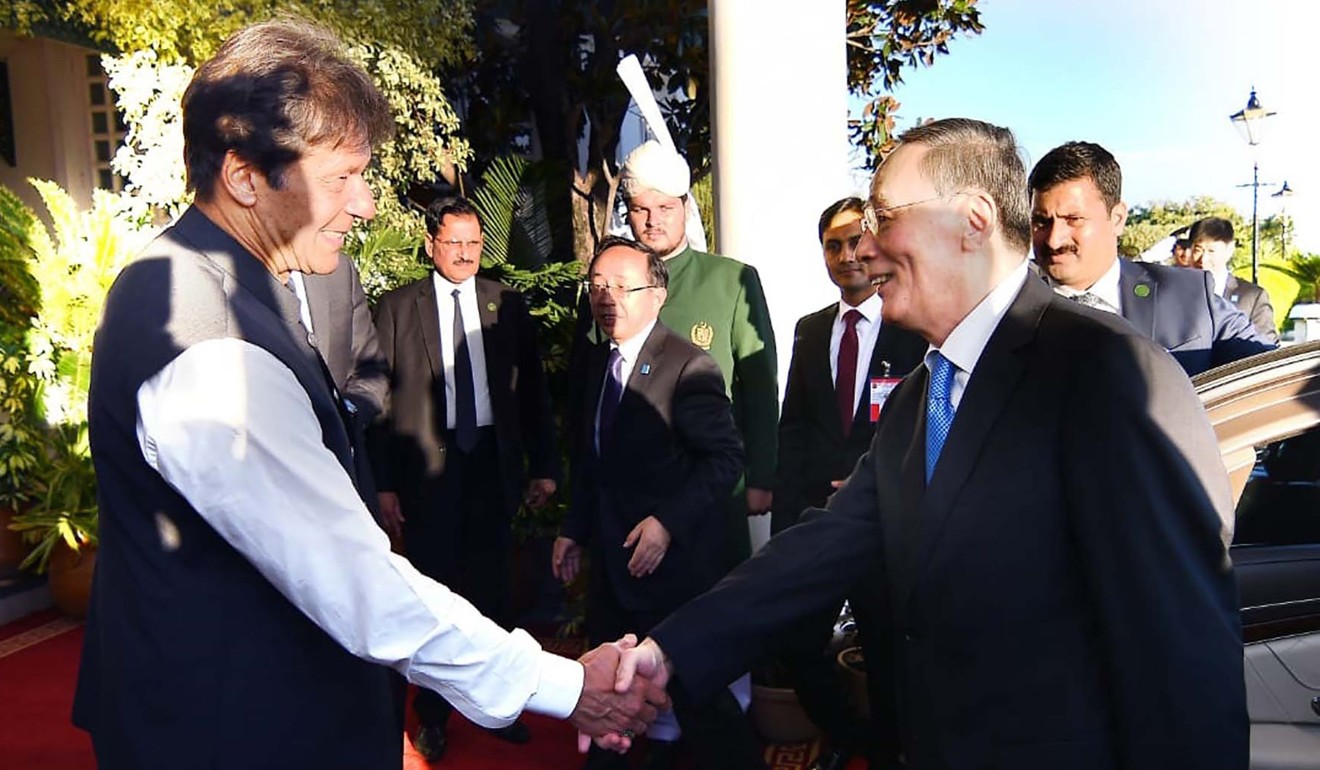
Meanwhile, Vice-President Wang Qishan is visiting Pakistan before he heads to the Netherlands and Germany, according to the Chinese foreign ministry.
Pakistani Prime Minister Imran Khan meets Chinese Vice-President Wang Qishan in Islamabad on Sunday. Photo: AFP
The latest flurry of diplomatic activity comes as competition between China and the US intensifies on several fronts including trade and technology, the South China Sea and the Arctic, where Beijing’s partnership with Moscow –
– has drawn criticism from Washington.
It will be Xi’s second time at the St Petersburg forum, and observers expect the Chinese leader will reaffirm Beijing’s commitment to multilateralism and promote the nation as a champion of openness and cooperation.
China-Russia ties unrivalled, Beijing warns before Pompeo meets Putin
It will also be his second meeting with Putin in two months, after talks on the sidelines of the Belt and Road Forum in Beijing in late April, when the Russian president
for the controversial China-led infrastructure and investment initiative.
With China and Russia edging closer, the latest meeting is likely to see efforts to coordinate their strategies on a range of issues – including Venezuela, North Korea, nuclear weapons and arms control, according to observers. Xi has met Putin more times than any other foreign leader since he took power in 2013.
“This time it is very likely that the latest anti-China moves by the US, such as new tariffs and the Huawei ban, will feature prominently in their conversations,” said Artyom Lukin, an associate professor at Far Eastern Federal University in Vladivostok.
Lukin said Russia’s stagnating economy and sanctions imposed by the West limited its role as a substitute for the foreign markets and technologies China could lose access to because of the US crusade. But he said Putin would “provide political and moral support to Xi”.
“That is also significant as Russia has been withstanding intense US-led sanctions pressure for more than five years already,” Lukin said, referring to sanctions imposed after Russia’s annexation of Crimea in 2014.
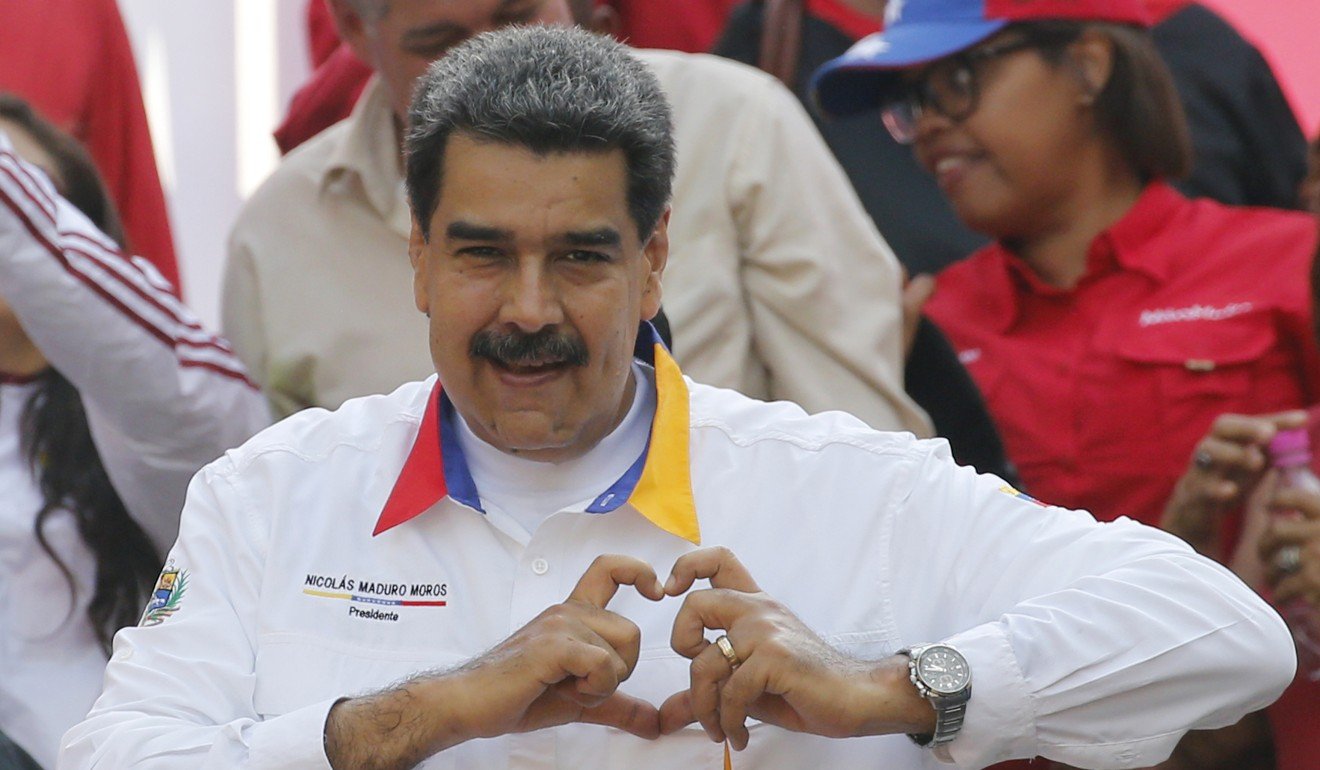
Xi and Putin are also expected to talk about Venezuela, where US-backed opposition leader Juan Guaido is attempting to oust socialist President Nicolas Maduro, who has the support of China and Russia.
Venezuelan President Nicolas Maduro has the backing of China and Russia. Photo: AP
“Moscow and Beijing are not able to seriously hurt Washington by raising tariffs or denying access to high technology. However, there are plenty of areas where coordinated Sino-Russian policies can damage US interests in the short term or in the long run,” Lukin said. “For example, Moscow and Beijing could intensify their joint support for the Venezuelan government of Nicolas Maduro, frustrating Washington’s efforts to dislodge him.”
China and Russia would also be seeking to boost economic ties. Bilateral trade, dominated by Chinese imports of gas and oil, reached US$108 billion last year – falling far short of the target set in 2011 by Xi’s predecessor, Hu Jintao, of US$200 billion by 2020.
China and Russia to forge stronger Eurasian economic ties
Li Lifan, an associate research professor at the Shanghai Academy of Social Sciences, said bilateral trade was a sticking point. “This is one of the potential hindrances in China-Russia relations and Beijing is hoping to [address this] … in the face of a possible global economic slowdown,” Li said.
Given the escalating trade war with Washington, he said China would seek to diversify its investments and markets to other parts of the world, particularly Russia and Europe.
“China will step up its investment cooperation with Europe and Russia and focus more on multilateral investment,” Li said.
But Beijing was not expected to do anything to worsen tensions with Washington.
“China is currently taking a very cautious approach towards the US, trying to avoid heating up the confrontation and further aggravation of the situation,” said Danil Bochkov, a contributing author with the Russian International Affairs Council. “For China it is important to demonstrate that it has a reliable friend – Russia – but that should not be done in an openly provocative manner.”
Stephen Blank, a senior fellow at the American Foreign Policy Council in Washington, said Beijing and Moscow would also seek to contain US influence “as far as possible” from Central Asia, where China has increased its engagement through infrastructure building under the “Belt and Road Initiative”.
Leaders from the region will gather in Bishkek next month for the SCO summit, a security bloc set up in 2001 that now comprises China, Russia, Kazakhstan, Kyrgyzstan, Tajikistan, Uzbekistan, India and Pakistan. Those members account for about 23 per cent of the world’s land mass, 45 per cent of its population, and 25 per cent of global GDP.
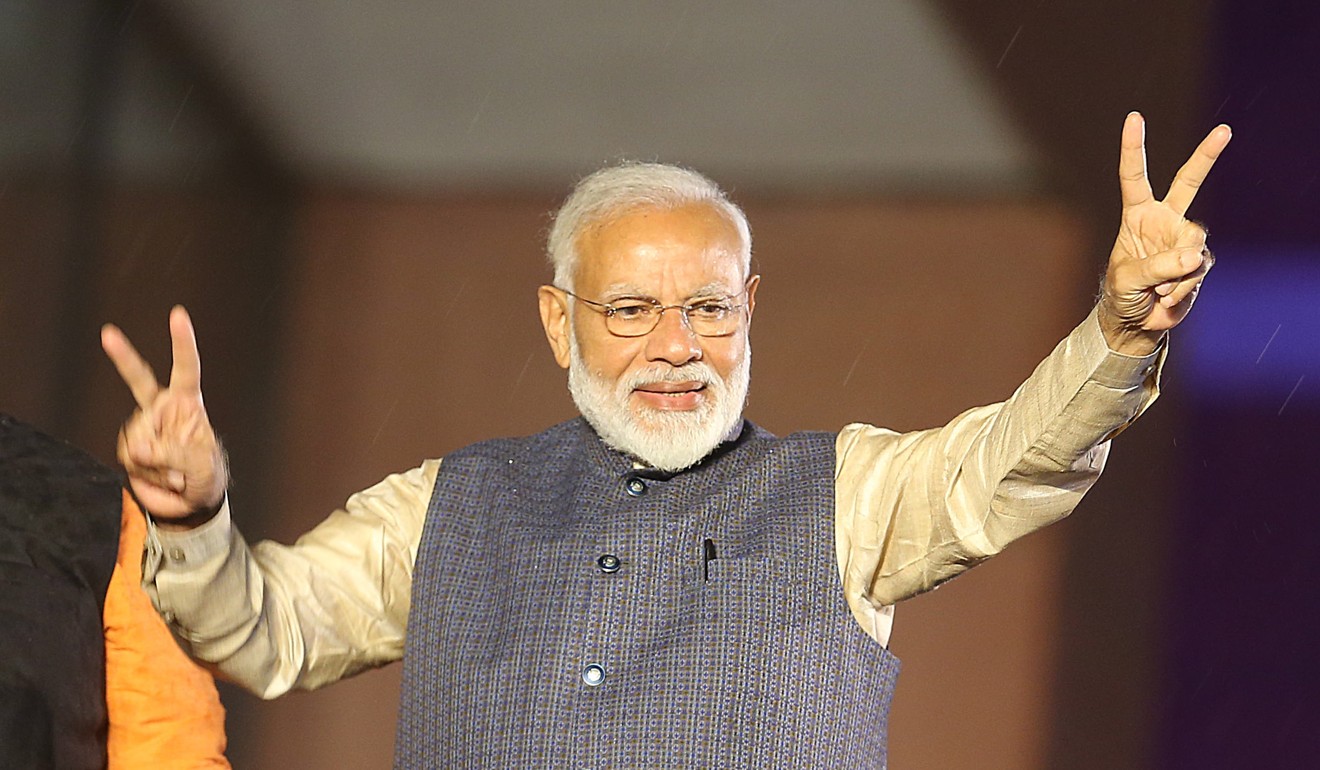
Newly re-elected Indian Prime Minister Narendra Modi could meet the Chinese president for talks in Bishkek next month. Photo: EPA-EFE
There is growing speculation that Xi will meet newly re-elected Indian Prime Minister Narendra Modi on the sidelines of that summit.
Independent analyst and author Namrata Goswami said India would be seeking a commitment to a WTO-led and rules-based multilateral trading system during the SCO talks.
“This is interesting and significant given the current US tendencies under President Donald Trump focused on ‘America first’ and the US-China trade war,” Goswami said.
Counterterrorism will again be a top priority at the SCO summit, amid concerns among member states about the rising number of Islamic State fighters returning from Syria and Iraq. Chinese scholars estimated last year that around 30,000 jihadists who had fought in Syria had gone back to their home countries, including China.
Alexander Bortnikov, chief of the main Russian intelligence agency FSB, said earlier that 5,000 fighters from a group affiliated with Isis had gathered in areas bordering former Soviet states in Central Asia, saying most of them had fought alongside Isis in Syria.
War-torn Afghanistan, which shares a border with four SCO member states – China, Pakistan, Tajikistan and Uzbekistan – is also likely to be high on the agenda at the Bishkek summit.
“With the Trump administration drafting plans to withdraw troops from Afghanistan, the SCO will assess the security situation there and decide whether to provide training for Afghan troops,” Li said.
Eva Seiwert, a doctoral candidate at the Free University of Berlin, expected the security bloc would also discuss Iran after the US withdrew from the 2015 nuclear deal and ordered new sanctions against the country.
Iran, which has observer status with the SCO, was blocked from becoming a full member in 2008 because it was subject to UN sanctions at the time. But its membership application could again be up for discussion.
Iran presses China and Russia to save nuclear deal
“The Trump administration’s unilateral withdrawal from the Iran nuclear deal in 2018 made it easy for China and Russia to present themselves as the proponents of peaceful settlement of conflicts,” Seiwert said. “Discussing the possibility of admitting Iran as a full member state would help the SCO members demonstrate their support of multilateral and peaceful cooperation.
“This would be a strong signal to the US and enhance the SCO’s standing in the international community,” she said.
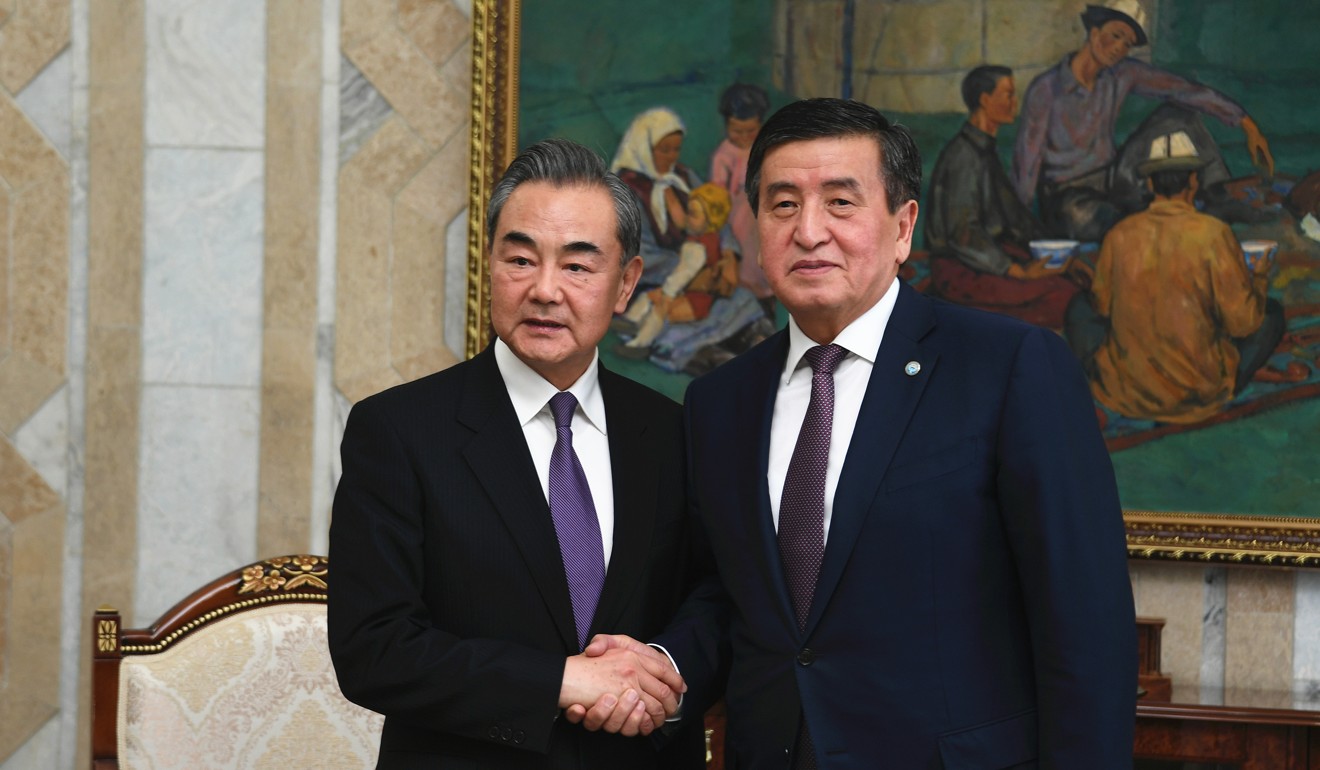
Kyrgyz President Sooronbay Jeenbekov (right) meets Chinese Foreign Minister Wang Yi in Bishkek on Tuesday last week. Photo: Xinhua
As well as security, Xi’s visit to Central Asia is also likely to focus on economic ties. Meeting Kyrgyz President Sooronbay Jeenbekov in Bishkek last week, Chinese Foreign Minister Wang Yi said Beijing would continue to “provide support and help national development and construction in Kyrgyzstan”.
Li said China may increase investment in the Central Asian region, especially in greenfield projects.
“China will continue to buy agriculture products from Central Asia, such as cherries from Uzbekistan, and build hydropower projects to meet local energy demand,” Li said. “Investment in solar and wind energy projects is also expected to increase too.”
Source: SCMP
Posted in American Foreign Policy Council, Arctic, arms control, belt and road forum, Bishkek, Central Asia, Central Asian region, China alert, Chinese foreign minister, Crimea, Eurasian, Europe, Far Eastern Federal University, Free University of Berlin, FSB, Germany, Huawei, Imran Khan, India alert, Iraq, Islamic State fighters, Juan Guaido, Kazakhstan, Kyrgyz President, Kyrgyzstan, Mike Pompeo, Namrata Goswami, Netherlands, North Korea, nuclear weapons, Pakistan, President Nicolas Maduro, President Xi Jinping, Prime Minister Narendra Modi, Russia, Russian intelligence agency, Shanghai Cooperation Organisation (SCO), Sooronbay Jeenbekov, South China Sea, St Petersburg, support, Syria, Tajikistan, tensions, UN sanctions, Uncategorized, US, Uzbekistan, Venezuela, Vice President, Vladimir Putin, Vladivostok, Wang Qishan, Wang Yi, Washington, WTO-led and rules-based multilateral trading system |
Leave a Comment »
25/05/2019
TASHKENT, May 24 (Xinhua) — Uzbek and Chinese experts discussed innovative approaches to the education of preschool children at a forum held here on Friday.
The one-day forum opens a new direction in cooperation between the two countries, said Agrippina Shin, minister of preschool education of Uzbekistan.
It has become an effective platform for comparing notes, she said in her opening speech.
The forum was held as the two sides are implementing the consensus reached by the leaders of the two countries and are advancing cooperation in people-to-people exchanges and education, said Jiang Yan, Chinese ambassador to Uzbekistan.
Source: Xinhua
Posted in Agrippina Shin, China alert, Chinese ambassador to Uzbekistan, cooperate, innovative approaches, Jiang Yan, minister of preschool education, preschool education, Uncategorized, Uzbek, Uzbekistan |
Leave a Comment »




 CHINDIA ALERT: You'll be living in their world, very soon