Archive for ‘Venezuela’

30/05/2020

China battles to control nationalist narrative on social media

  • Embassy in France removes ‘false image’ on Twitter in latest online controversy amid accusations of spreading disinformation
  • After months of aggressive anti-US posts by Chinese diplomats Beijing is cracking down on ‘smear campaigns’ at home
Beijing’s ‘Wolf Warrior’ diplomacy has coincided with a rise of nationalist content on Chinese social media. Photo: Reuters

Beijing is battling allegations that it is running a disinformation campaign on social media, as robust posts by its diplomats in Western countries promoting nationalist sentiment have escalated into a spat between China and other countries, especially the United States.

In the latest in a series of online controversies, the Chinese embassy in France claimed its official Twitter account had been hacked after it featured a cartoon depicting the US as Death, knocking on a door marked Hong Kong after leaving a trail of blood outside doors marked Iraq, Libya, Syria, Ukraine and Venezuela. The inclusion in the image of a Star of David on the scythe also prompted accusations of anti-Semitism.

Top China diplomats call for ‘Wolf Warrior’ army in foreign relations

25 May 2020

“Someone posted a false image on our official Twitter account by posting a cartoon entitled ‘Who is Next?’. The embassy would like to condemn it and always abides by the principles of truthfulness, objectivity and rationality of information,” it said on Monday.

The rise of China’s aggressive “Wolf Warrior” diplomacy has been regarded by analysts as primarily aimed at building support for the government at home but the latest incident is seen as an attempt by Beijing to take back control of the nationalist narrative it has unleashed.

Florian Schneider, director of the Leiden Asia Centre in the Netherlands, said the removal of the embassy’s tweet reflected a constant concern in Beijing about the range of people – including ordinary citizens – who were involved in spreading nationalistic material online.

“The state insists that its nationalism is ‘rational’, meaning it is meant to inspire domestic unity through patriotism but without impacting national interests or endangering social stability,” he said.

“This makes nationalism a mixed blessing for the authorities … if nationalist stories demonise the US or Japan or some other potential enemy, then any Chinese leader dealing diplomatically with those perceived enemies ends up looking weak.

“Trying to guide nationalist sentiment in ways that further the leadership’s interests is a difficult balancing act and I suspect this is partly the reason why the authorities are currently trying to clamp down on unauthorised, nationalist conspiracy theories.”

Too soon: Chinese advisers tell ‘Wolf Warrior’ diplomats to tone it down

14 May 2020
Last month the European Union toned down a report which initially accused China of running a “global disinformation campaign”
to deflect blame for the coronavirus outbreak using “overt and covert tactics”. The section was removed after intervention by Beijing.

The report came after months of social media posts – including by Chinese diplomats – defending China against accusations it had mishandled the coronavirus pandemic and attacking the US and other perceived enemies.

In March, Chinese foreign ministry spokesman Zhao Lijian promoted a conspiracy theory on Twitter suggesting the virus had originated in the US and was brought to China by the US Army. His comments were later downplayed, with China’s ambassador to the US Cui Tiankai saying questions about the origin of the virus should be answered by scientists.

Schneider said this showed that the state-backed nationalistic propaganda online was at risk of backfiring diplomatically.

“The authorities have to constantly worry that they might lose control of the nationalist narrative they unleashed, especially considering how many people produce content on the internet, how fast ideas spread, and how strongly commercial rationales drive misinformation online,” he said.

Last month, a series of widely shared social media articles about people in different countries “yearning to be part of China” resulted in a diplomatic backlash against Beijing. Kazakhstan’s foreign ministry summoned the Chinese ambassador in April to lodge a formal protest against the article.

Following the incident, the Cyberspace Administration of China, the country’s internet regulator which manages the “firewall” and censors material online, announced a two-month long “internet cleansing” to clear privately owned accounts which engage in “smear campaigns”.

A popular account named Zhidao Xuegong was shut down by the Chinese social media platform WeChat’s owner Tencent on Sunday after publishing an article which claimed Covid-19 may have killed 1 million people in the US and suggested the dead were “very likely” being processed as food.

The article had at least 100,000 readers, with 753 people donating money to support the account. According to Xigua Data, a firm that monitors traffic on Chinese social media, the account garnered more than 1.7 million page views for 17 articles in April.

According to a statement from WeChat, the account was closed for fabricating facts, stoking xenophobia and misleading the public.

A journalism professor at the University of Hong Kong said this case differed from the Chinese embassy’s tweet, despite both featuring anti-US sentiment.

Masato Kajimoto, who leads research on news literacy and the misinformation ecosystem, said the closure of the WeChat account seemed to be more about Chinese authorities feeling the need to regulate producers of media content whose motivations were often financial rather than political.

“I would think the government doesn’t like some random misinformation going wild and popular, which affects the overall storylines they would like to push, disseminate and control,” he said.

One way for China to respond to the situation was to fact-check social media and to position itself as a protector facts and defender of the integrity of public information, he said.

“In the age of social media, both fake news and fact-checking are being weaponised by people who try to influence or manipulate the narrative in one way or another,” Kajimoto said.

“Not only China but also many other authoritarian states in Asia are now fact-checking social media. Governments in Singapore, Thailand, Indonesia and other countries all do that.

“Such initiatives benefit them because they can decide what is true and what is not.”

Source: SCMP

15/03/2020

Lockdowns, self-isolation and entry bans imposed to fight global coronavirus spread

(Reuters) – France and Spain joined Italy in imposing lockdowns on tens of millions of people, Australia ordered self-isolation of arriving foreigners, and Argentina and El Salvadore extended entry bans as the world sought to contain the spreading coronavirus.

Panic buying in Australia, the United States and Britain saw leaders appeal for calm over the virus that has infected over 138,000 people globally and killed more than 5,000.

Several countries imposed bans on mass gathering, shuttered sporting, cultural and religious events, while medical experts urged people to practice “social distancing” to curb the spread.

All of Pope Francis’ Easter services next month will be held without the faithful attending, the Vatican said on Sunday, in a step believed to be unprecedented in modern times.

The services, four days of major events from Holy Thursday to Easter Sunday, usually draw tens of thousands of people to sites in Rome and in the Vatican.

Australian Prime Minister Scott Morrison said from midnight Sunday international travellers arriving in the country would need to isolate themselves for 14 days, and foreign cruise ships would be banned for 30 days, given a rise in imported cases.

“What we’ve seen in recent weeks, is more countries having issues with the virus and that means the source of some of those transmissions are coming from more and more countries,” Morrison told a news conference.

Australia’s latest restrictions mirror those announced by neighbouring New Zealand on Saturday. Australia has recorded more than 250 coronavirus cases and three deaths.

TRAVEL BANS, AIRLINE CUTBACKS

U.S. President Donald Trump declared a national emergency on Friday. The United States has recorded more than 2,000 cases and 50 deaths, but has been criticised for slow testing.

Travel bans and a plunge in global air travel saw further airline cut backs, with American Airlines Inc (AAL.O) planning to cut 75% of international flights through May 6 and ground nearly all its widebody fleet.

The dramatic announcement by the largest U.S. airline came hours after the White House said the United States would widen new travel restrictions on Europeans to include travellers in the United Kingdom and Ireland, starting Monday night.

Washington has already imposed flight restrictions on China.

China tightened checks on international travellers arriving at Beijing airport on Sunday, after the number of imported new coronavirus infections surpassed locally transmitted cases for a second day in a row.

Anyone arriving to Beijing from abroad will be transferred directly to a central quarantine facility for 14 days for observation starting March 16, a city government official said.

China, where the epidemic began in December, appears to now face a greater threat of new infections from outside its borders as it continues to slow the spread of the virus domestically.

China has reported 80,984 cases and 3,203 deaths, according to a Reuters tally, of which 66,911 have recovered in mainland China, which has imposed draconian containment policies, locking down several major cities.

LOCKDOWNS, STAY HOME

Spain put its 47 million inhabitants under partial lockdown on Saturday as part of a 15-day state of emergency to combat the epidemic in Europe’s second worst-affected country after Italy.

Spain had 193 coronavirus deaths and 6,250 cases, public broadcaster TVE said on Saturday, up from 120 deaths reported on Friday.

France will shut shops, restaurants and entertainment facilities from Sunday with its 67 million people were told to stay home after confirmed infections doubled in 72 hours.

French Prime Minister Edouard Philippe said the government had no other option after the public health authority said 91 people had died in France and almost 4,500 were now infected.

“We must absolutely limit our movements,” he said.

Britain is preparing to ban mass gatherings, while isolating people aged over 70 for up to four months is part of its action plan to tackle coronavirus which will be implemented in the coming weeks, Health Secretary Matt Hancock said on Sunday.

Argentina banned entry to non-residents who have travelled to a country highly affected by coronavirus in the last 14 days, the government officially announced late on Saturday.

The ban will last 30 days. Argentina has 45 cases of coronavirus, the health ministry said, up from 21 on March 12.

Panama said flights arriving from Europe and Asia would be temporarily suspended, with the exception of flights that transport doctors, medical equipment or other humanitarian aid.

Colombia will expel four Europeans for violating compulsory quarantine protocols, just hours after it closed its border with Venezuela, the government said on Saturday.

ANTI-TERRORISM TRACKING TO FIGHT VIRUS

Israel will use anti-terrorism tracking technology and partially shutdown its economy to minimise transmission risks, Prime Minister Benjamin Netanyahu said on Saturday.

Cyber tech monitoring would be deployed to locate people who have been in contact with those carrying the virus, subject to cabinet approval, Netanyahu told a news conference in Jerusalem.

Starting Sunday, South Korea began to subject visitors from France, Germany, Britain, Spain and the Netherlands to stricter border checks, after imposing similar rules for China, Italy and Iran which have major outbreaks.

Visitors from those countries now need to download an app which will report whether they have symptoms. South Korea has been testing hundreds of thousands of people and tracking potential carriers using cell phone and satellite technology.

Source: Reuters

13/03/2020

China Focus: China report says human rights situation deteriorating in U.S.

BEIJING, March 13 (Xinhua) — China on Friday issued a report on human rights violations in the United States.

Titled “The Record of Human Rights Violations in the United States in 2019,” the report said the facts detailed in the document show that “in recent years, especially since 2019, the human rights situation in the United States has been poor and deteriorating.”

The State Council Information Office released the report based on published data, media reports and research findings. It began by citing a quote from U.S. Secretary of State Mike Pompeo in a speech on April 15, 2019: “We lied, we cheated, we stole … It reminds you of the glory of the American experiment.”

“The remarks of U.S. politicians have completely exposed their hypocrisy of adopting double standards on human rights issues and using them to maintain hegemony,” read the report.

The United States released annual reports to “distort and belittle” human rights situation in countries and regions that did not conform to U.S. strategic interests, but turned a blind eye to the “persistent, systematic and large-scale” human rights violations in its own country, the report said.

Consisting of foreword and seven chapters, it detailed facts on human rights violations in the United States relevant to civil and political rights, social and economic rights, discrimination suffered by ethnic minorities, discrimination and violence against women, living conditions of vulnerable groups, and abuses suffered by migrants, as well as U.S. violations of human rights in other countries.

The lack of restraint in the right to hold guns has led to rampant gun violence, posing a serious threat to citizens’ life and property safety in the United States, the report said.

“The United States is a country with the worst gun violence in the world,” read the report. In total, 39,052 people died from gun-related violence in the United States in 2019, and a person is killed with a gun in the United States every 15 minutes, figures showed.

Wealth polarization in the United States hit a 50-year high in 2018, the report said. In 2018, the wealthiest 10 percent held 70 percent of total household wealth. The bottom 50 percent saw essentially zero net gains in wealth over the past 30 years, it noted.

Regarding discrimination suffered by ethnic minorities in the United States, the report said the political structure and ideology of white supremacy in the United States have caused ethnic minorities to suffer all-round discrimination in various fields such as politics, economy, culture and social life.

Since 2016, white supremacy in the United States has shown a resurgence trend, leading to racial opposition and hatred, it noted.

Women in the United States face severe discrimination and violence, according to the report. Women in the United States were 21 times more likely to die by firearm homicide than women in peer nations, it noted, adding that sexual assault cases against women kept increasing.

About the living conditions of vulnerable groups, the report said tens of millions of U.S. children, elderly people, and disabled people live without enough food or clothing, and face threats of violence, bullying, abusing and drugs.

“The U.S. government not only has insufficient political will to improve the conditions for vulnerable groups but also keeps cutting relevant funding projects,” read the report.

While levels of extreme poverty worldwide had dropped dramatically, the poverty ratio of U.S. children was about the same rate as 30 years ago, it said.

The report noted the increasingly strict and inhumane measures taken by the U.S. government against immigrants in recent years, in particular, the “zero-tolerance” policy, which caused the separations of many immigrant families.

Many unaccompanied immigrant children were held in overcrowded facilities, without access to adequate healthcare or food, and with poor sanitation conditions, the report said.

It noted grave abuses at detention facilities for immigrants, including injecting them with sedatives, keeping them in handcuffs, and depriving them of clothing and mattresses.

The United States also wantonly trampled on human rights in other countries and was responsible for many humanitarian disasters around the world, according to the report.

The economic embargo against Cuba and the unilateral sanctions against Venezuela imposed by the United States had been a massive and flagrant violation of the human rights of people in these countries, the report said.

The United States withdrew from several multilateral mechanisms, including the UN Human Rights Council and the UN Global Compact on Migration, shirking off its international obligations and making troubles to the international governance system, it noted.

Source: Xinhua

12/11/2019

Feature: Xi spearheads closer China-LatAm cooperation for common prosperity

MEXICO CITY, Nov. 12 (Xinhua) — China and Latin America sit on the opposite sides of the globe, but the formidably vast Pacific Ocean that separates them did not stop them from sharing a long history of exchanges.

Today, the major developing country in the East is forging an increasingly close partnership with the dynamic region in the Western Hemisphere, especially since Chinese President Xi Jinping took office in 2013, and set into motion what is now known as Xiplomacy.

In the past six years, Xi has visited 11 Latin American and the Caribbean (LAC) countries. On Tuesday, he is setting foot on the region for the fifth time as president, as he arrives in Brazil for the upcoming 11th BRICS summit.

Thanks in no small part to Xi’s push, the time-honored, distance-defying China-Latin America relationship is flourishing with new vitality. China has become the second largest trading partner of Latin America, while the latter is one of the fastest growing sources of exports to China. Two-way trade rose 18.9 percent year on year to 307.4 billion U.S. dollars in 2018.

GRAND VISION

Every time Xi visited Latin America, he reaffirmed China’s commitment to cementing bilateral friendship and expanding win-win cooperation.

His first trip to the region as head of state, in 2013, took him to Trinidad and Tobago, Costa Rica and Mexico. The following year saw him travel to Brazil, Argentina, Venezuela and Cuba.

It was in Brazil that Xi met with leaders from 11 LAC countries, and for the first time laid out his grand vision for building a China-Latin American community with a shared future.

“Let us seize the opportunities presented to us and work together to blaze new trails in building a community of shared destiny for common progress and usher in a bright future for the relations between China and Latin America and the Caribbean,” Xi said in a keynote speech at the first ever China-Latin American and Carribean Countries Leaders’ Meeting in 2014.

He then proposed a “1+3+6” cooperation framework to “promote faster, broader and deeper cooperation between the two sides for real results.”

The “1” refers to “one plan,” the Chinese-Latin American and Caribbean Cooperation Plan (2015-2019), formulated to promote inclusive growth and sustainable development.

The “3” alludes to “three engines” for driving practical cooperation for comprehensive development, namely trade, investment and financial cooperation.

The “6” means the six priority cooperation fields of energy and resources, infrastructure building, agriculture, manufacturing, scientific and technological innovation, and information technologies.

In 2016, Xi visited Ecuador, Peru and Chile. Two years later, he traveled to Argentina for the Group of 20 summit as well as Panama, a Central American country which established diplomatic ties with China in June 2017.

In a landmark speech at the Peruvian Congress in Lima in 2016, Xi expounded the significance of strengthening China-Latin America cooperation.

“With one fifth of the world’s total area and nearly one third of the world’s population, China and Latin America and the Caribbean are crucial forces for world peace and stability,” he said.

China, he added, “will increase sharing of governance experience and improve planning and coordination of macro policies with Latin American and Caribbean states to better synergize our development plans and strategies.”

Besides top-level engagement, Xi also reaches out to local people from all walks of life, in order to keep cementing the China-Latin America friendship and the public support for bilateral cooperation.

While in Costa Rica, Xi visited a family-run coffee plantation and tried some local brew. “I think some more coffee can well be exported to China,” Xi told his hosts with a smile.

Today, Costa Rica exports coffee to the Asian market, along with pork, dairy, pineapples and other high-quality agricultural goods, especially after the inauguration of the China International Import Expo in 2018.

NEW OPPORTUNITIES

With international cooperation within the framework of the Belt and Road Initiative (BRI) gaining steam worldwide, the Xi-proposed vision is creating new opportunities for China-Latin America cooperation.

The BRI, designed to promote common development along and beyond the ancient Silk Road trade routes, comprises the Silk Road Economic Belt and the 21st Century Maritime Silk Road, and the latter is closely connected to Latin America.

For two and a half centuries, from the mid-1500s to the early 1800s, galleons laden with Chinese silk, spices, porcelain and other goods sailed across the ocean to today’s port city of Acapulco on the Mexican Pacific coast.

Latin America is the natural extension of the 21st Century Maritime Silk Road, Xi said in a meeting with visiting Argentine President Mauricio Macri in May 2017.

In a congratulatory message to the second Ministerial Meeting of the China-Community of Latin American and Caribbean States (CELAC) Forum held in Chile on Jan. 22, 2018, Xi stressed that China and LAC countries “need to draw a new blueprint for our joint effort under the Belt and Road Initiative and open a path of cooperation across the Pacific Ocean that will better connect the richly endowed lands of China and Latin America and usher in a new era of China-LAC relations.”

During Xi’s visits, the Chinese president is always dedicated to better aligning the BRI — an open platform for cooperation — with the development plans of LAC countries.

In his meeting with Macri, Xi called for dovetailing the BRI with Argentina’s development strategy, expanding cooperation in such sectors as infrastructure, energy, agriculture, mining and manufacturing, and implementing existing major cooperation projects in hydro-power, railway and other fields.

Similarly, during the state visit to Panama in December 2018, Xi said the National Logistics Strategy of Panama 2030 and the BRI are highly compatible, calling on the two sides to synergize their respective development strategies, boost cooperation and promote connectivity.

So far, 19 LAC countries have signed BRI cooperation agreements with China. China-Latin America cooperation in various areas has effectively promoted local economic and social development, bringing visible and tangible benefits to the Latin American people.

Just as Xi said in his speech at the Peruvian Congress in 2016, “China will share its development experience and opportunities with the rest of the world and welcome other countries to board the express train of its development, so that we can all develop together.”

SOurce: Xinhua

28/07/2019

Latin America trade grows as China and US tussle for influence

  • Chinese Foreign Minister Wang Yi wraps up tour of Brazil and Chile, as Colombian president heads for Beijing
  • Ecuador president tells US Secretary of State Mike Pompeo ‘smaller countries pay when the big ones fight’
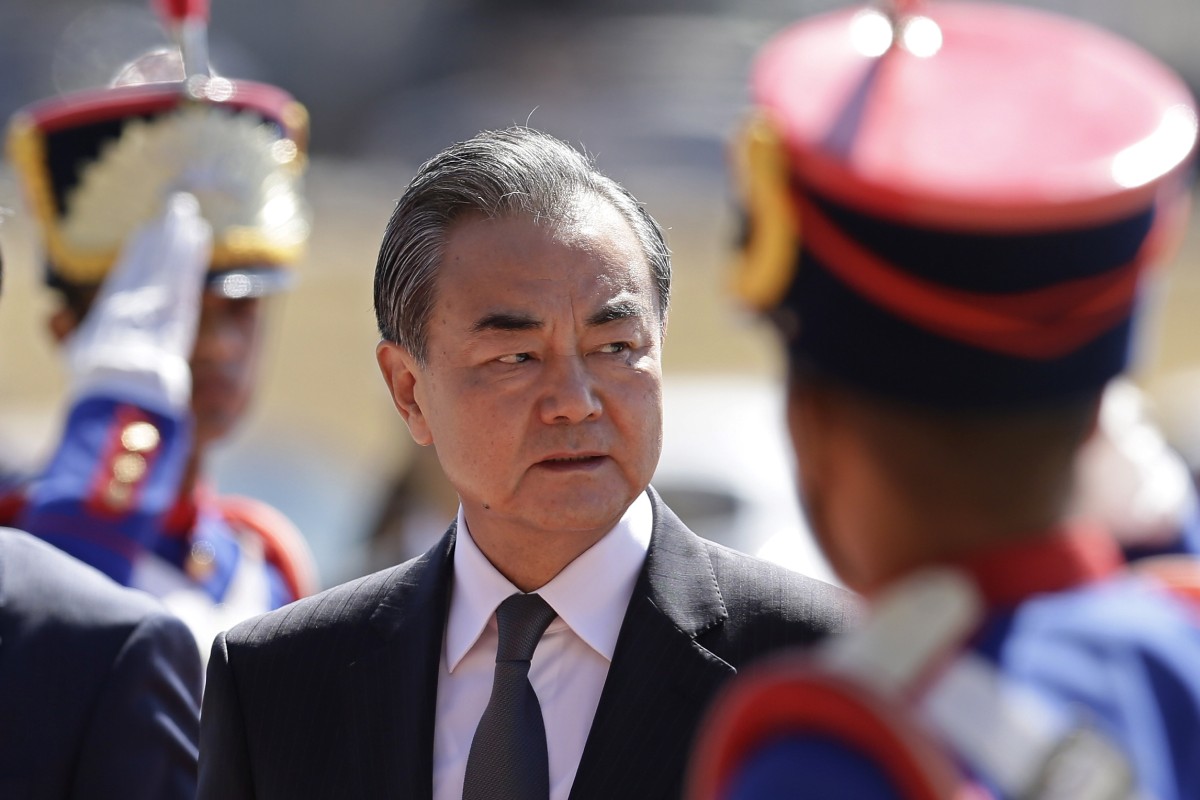
Chinese Foreign Minister Wang Yi is greeted by an honour guard as he arrives at the Itamaraty Palace for a meeting with his Brazilian counterpart Ernesto Araujo on Thursday. Photo: AP
Latin American countries are caught in the middle of a geopolitical tug of war between Beijing and Washington as China boosts its ties in the region in a bid to counterbalance the effects of its trade war with the US.
China’s Foreign Minister Wang Yi wraps up a tour of Latin America on Sunday which began last week in Brazil and ended with an official visit to Chile. He returns to Beijing on the same day Colombia’s President Ivan Duque Marquez arrives for a three-day state visit to China which will include a meeting with Chinese President Xi Jinping.
Wang was in Brazil for the latest summit of foreign ministers from the BRICS countries – an association of emerging countries made up of Brazil, Russia, India, China and South Africa – as well as the third China-Brazil foreign ministers’ comprehensive strategic dialogue with Brazilian Foreign Minister Ernesto Araujo.
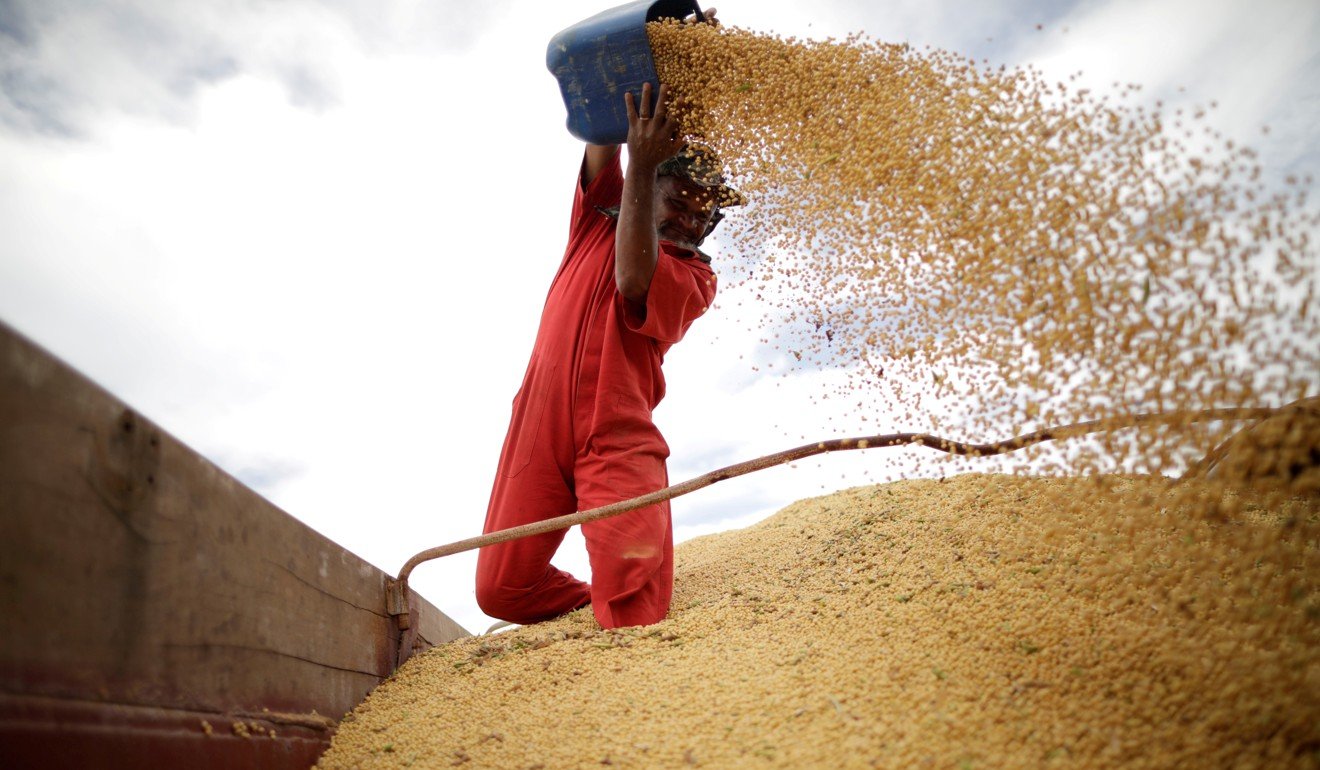
China has overtaken the US as Brazil’s largest trading partner, with Brazilian soybeans – one of the country’s biggest exports – and other agricultural products replacing American imports since the start of the US-China trade war a year ago.
Brazilian soybeans – one of the country’s biggest exports – and other farm products are being sold to China as a result of the trade war. Photo: Reuters

The growing importance of China to Brazil’s economy has created a difficult position for President Jair Bolsonaro, who accused Beijing of trying to buy Brazil during his election campaign, but changed tack on assuming office in January.

In March, Bolsonaro called China his country’s “main partner, politically as well as economically and commercially” and announced plans to travel to Beijing this year, a visit which was confirmed on Tuesday for late October.

China is now Latin America’s second largest trading partner with bilateral trade at US$307.4 billion, growing 18.9 per cent over the previous year, according to China’s ministry of commerce, in a relationship focused on commodity imports, including mining products like copper and energy, as well as soybeans and other agricultural goods.

While the US and China have tentatively agreed to resume talks in Shanghai next week, China and Latin American countries are likely to continue deepening their trade relations as production chains realign as a result of the trade war, according to Gustavo Oliveira, assistant professor of global and international studies at the University of California, Irvine.

“This means Chinese imports of Latin American agricultural and mineral commodities, and Latin American imports of Chinese manufactured products and hi-tech, might contribute to China’s ability to stand its ground against US pressure,” he said.

China in Latin America: partner or predator?
Oliveira said domestic contradictions in most Latin American countries complicated relations with China, as few leaders had the capacity to press or leverage China for much. “Unfortunately, therefore, most in this crop of Latin American leaders are basically placing themselves as junior partners or pawns in the geopolitical tug of war between the US and China.”
US Secretary of State Mike Pompeo put the pressure on Latin American countries over their relationship with China during his four-day tour of the region last weekend, when he visited Argentina, Ecuador, Mexico, and El Salvador.
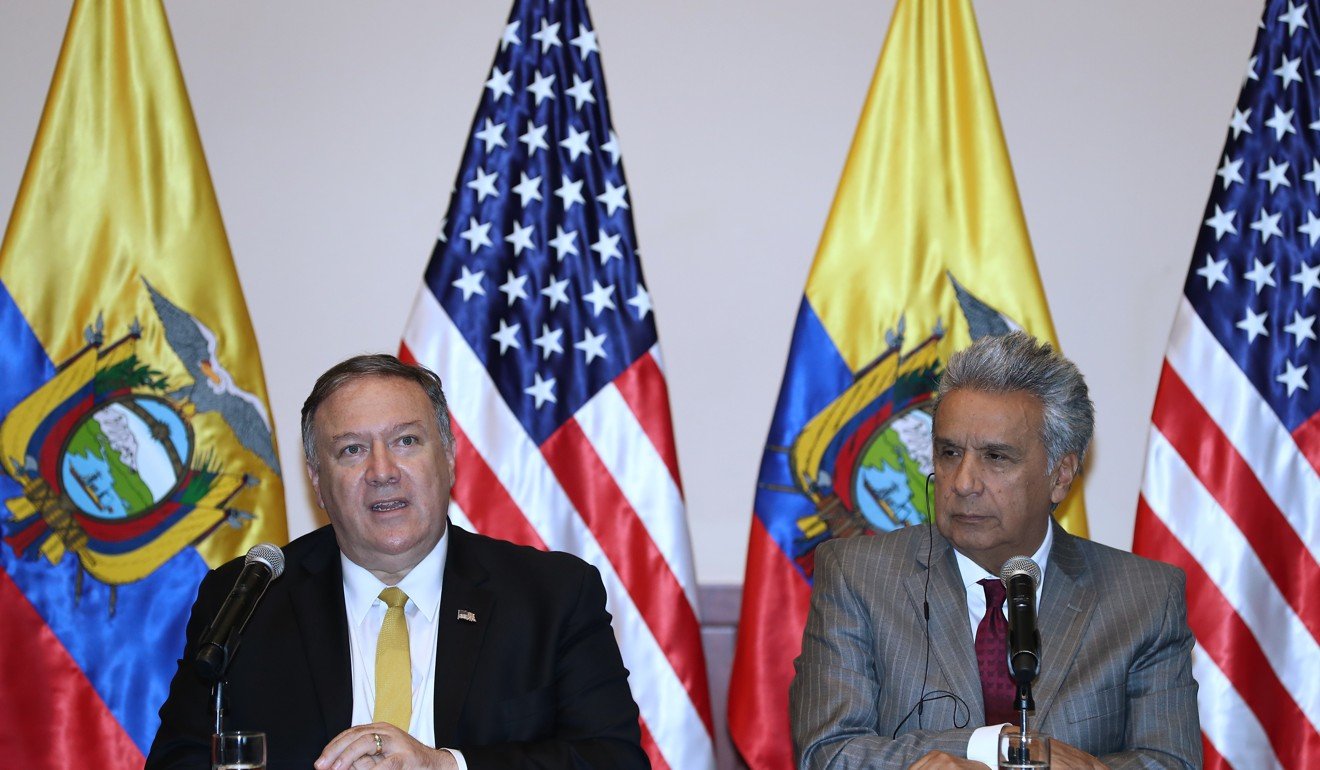
In a joint interview with Pompeo during the visit, Ecuador’s new President Lenin Moreno defended the country’s China ties, and urged Washington and Beijing to resolve their conflicts for the benefit of other nations in the region.
“We hope that the US and China, the greatest powers in the world now, will find agreement easily because, unfortunately, when the big ones are discussing or fighting and have conflicts, the ones that are paying for all of that are the smaller countries,” he said.
“Now, when two elephants fight, the ones who lose are the insects who are of course being crushed by the elephants in the attempt to evade them.”
US Secretary of State Mike Pompeo (left) and Ecuadorian President Lenin Moreno hold a joint press conference during Pompeo’s tour of Latin America on July 20. Photo: EPA-EFE

Pompeo blasted China’s role in the region during a previous tour of South America in April, when he singled out Beijing’s support for President Nicolas Maduro of Venezuela. Maduro is backed by Beijing, Russia and other allies, while the US and many European countries have supported opposition leader Juan Guaido as legitimate president since elections in January.

Speaking from Chile on that tour, Pompeo said Beijing’s calls for non-intervention in Venezuela were “hypocritical” and aimed at protecting Beijing’s investments in the country, as well as debts owed to China by Venezuela.

Pompeo also accused Beijing of “sowing discord” in the region through debt traps. “When China does business in places like Latin America, it often injects corrosive capital into the economic bloodstream, giving life to corruption and eroding good governance,” he said.

Professor Cui Shoujun of Renmin University in Beijing said Washington’s concerns about “debt trap diplomacy” in Latin America reflected concerns that China’s growing involvement in financing infrastructure and development projects would make the region more pro-China.

“China’s interests in Latin America go beyond raw materials extraction,” he said. “The biggest point of tension between the US and China in the region is perhaps that China presents an alternative model for development that is very different from the Western model.”

‘Mr Pompeo, you can stop’: China hits back over Latin America criticism

While the US was drumming up tensions about China across the world, Beijing was not openly retaliating but responding with investment and trade for global partners, said Kevin Gallagher, researcher on China-Latin America ties, and professor at Boston University.

“The US points fingers and makes angry speeches in the region as China cuts investment deals and helps address infrastructure needs,” he said.

“Latin American countries’ governments are rightly keeping their heads down on the broader geopolitical winds, and are getting down to business with their largest trading partner.”

Source: SCMP

17/07/2019

China-Latin America cooperation benefits both peoples: spokesperson

BEIJING, July 16 (Xinhua) — The cooperation between China and Venezuela and the cooperation between China and Latin America adhere to the principles of mutual respect, equality and mutual benefits, and benefit both peoples, a Foreign Ministry spokesperson said Tuesday.

Geng Shuang made the comments at a press conference in response to report that Craig Faller, head of the United States Southern Command, said China was the largest creditor country of Venezuela and made Venezuelan people carry a debt burden.

Geng said U.S. officials repeatedly attacked China’s cooperation with Venezuela and Latin America recently, but their arguments were full of loopholes and could not stand up to scrutiny.

He said that the cooperation between China and Venezuela and the cooperation between China and Latin America adhere to the principles of mutual respect, equality, mutual benefit and win-win cooperation, and focus on common development, which have brought tangible benefits to the people of both sides and promoted local economic and social development and are widely welcomed by the people of Venezuela and Latin America.

If the United States really cares about the development of Latin America, it should take practical measures to help boost local economy and improve people’s livelihoods, Geng said.

“China-Latin America relations is equal, mutually beneficial, innovative, open, benefiting the people, and not exclusive,” Geng said. “We hold a positive attitude towards cooperation with all sides including the United States in Latin America, and hope the U.S. side also has the same attitude.”

Source: Xinhua

29/05/2019

China looks to Russia, Central Asia for support amid tensions with US

  • President Xi Jinping will meet Russian counterpart Vladimir Putin next month and address economic summit in St Petersburg
  • Diplomatic flurry will also include regional security forums in Kyrgyzstan and Tajikistan
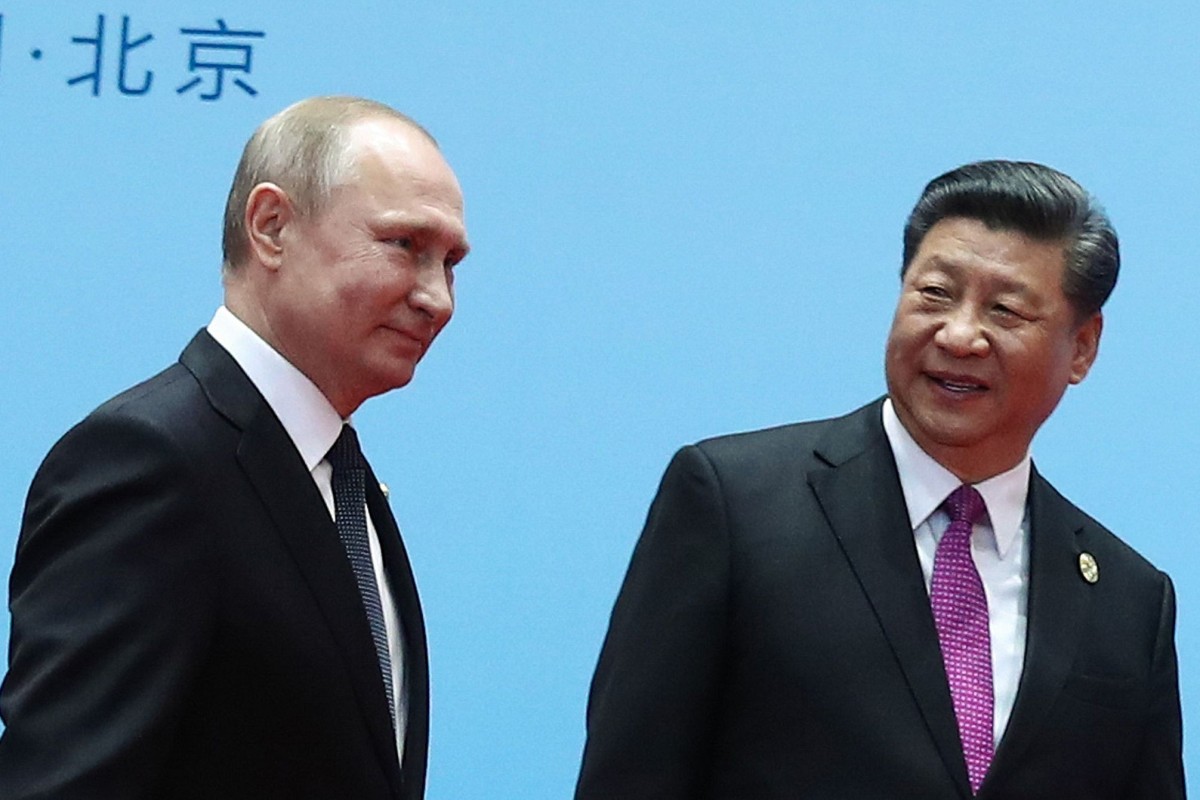
Xi Jinping has met Vladimir Putin more times than any other foreign leader since he took power in 2013. Photo: AFP
Beijing is stepping up efforts to seek support from regional and global players such as Russia and Central Asian nations as its geostrategic rivalry with Washington heats up.

President Xi Jinping is expected to meet his Russian counterpart Vladimir Putin next month, when he will also address the St Petersburg International Economic Summit,

Russian presidential aide Yuri Ushakov told state-run TASS news agency earlier.

The Chinese president will also visit the Kyrgyzstan capital Bishkek for the Shanghai Cooperation Organisation (SCO) summit in June, as well as another regional security forum in Dushanbe, Tajikistan.

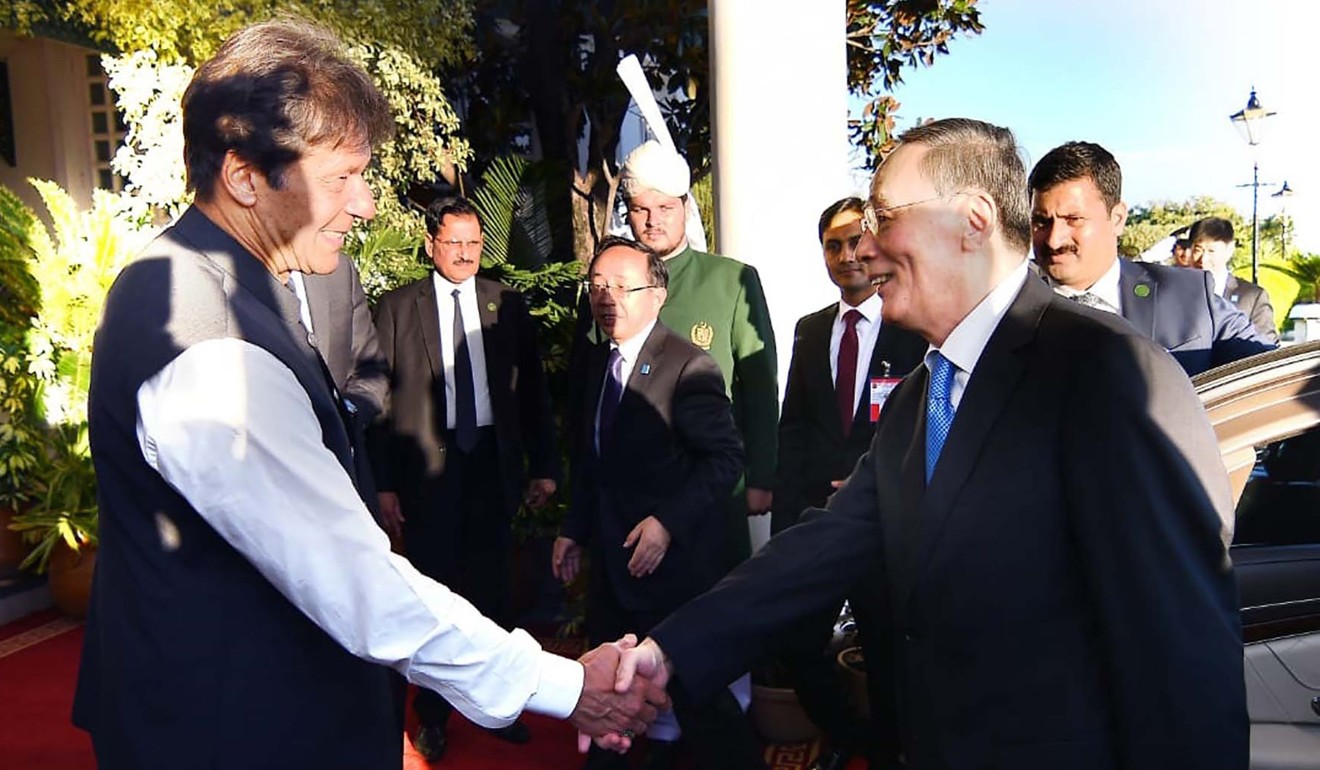
Meanwhile, Vice-President Wang Qishan is visiting Pakistan before he heads to the Netherlands and Germany, according to the Chinese foreign ministry.
Pakistani Prime Minister Imran Khan meets Chinese Vice-President Wang Qishan in Islamabad on Sunday. Photo: AFP
The latest flurry of diplomatic activity comes as competition between China and the US intensifies on several fronts including trade and technology, the South China Sea and the Arctic, where Beijing’s partnership with Moscow –

funding and building ports, berths and icebreakers off Russia’s shores

– has drawn criticism from Washington.

It will be Xi’s second time at the St Petersburg forum, and observers expect the Chinese leader will reaffirm Beijing’s commitment to multilateralism and promote the nation as a champion of openness and cooperation.
China-Russia ties unrivalled, Beijing warns before Pompeo meets Putin
It will also be his second meeting with Putin in two months, after talks on the sidelines of the Belt and Road Forum in Beijing in late April, when the Russian president

offered his support

for the controversial China-led infrastructure and investment initiative.

With China and Russia edging closer, the latest meeting is likely to see efforts to coordinate their strategies on a range of issues – including Venezuela, North Korea, nuclear weapons and arms control, according to observers. Xi has met Putin more times than any other foreign leader since he took power in 2013.

“This time it is very likely that the latest anti-China moves by the US, such as new tariffs and the Huawei ban, will feature prominently in their conversations,” said Artyom Lukin, an associate professor at Far Eastern Federal University in Vladivostok.

Lukin said Russia’s stagnating economy and sanctions imposed by the West limited its role as a substitute for the foreign markets and technologies China could lose access to because of the US crusade. But he said Putin would “provide political and moral support to Xi”.

“That is also significant as Russia has been withstanding intense US-led sanctions pressure for more than five years already,” Lukin said, referring to sanctions imposed after Russia’s annexation of Crimea in 2014.

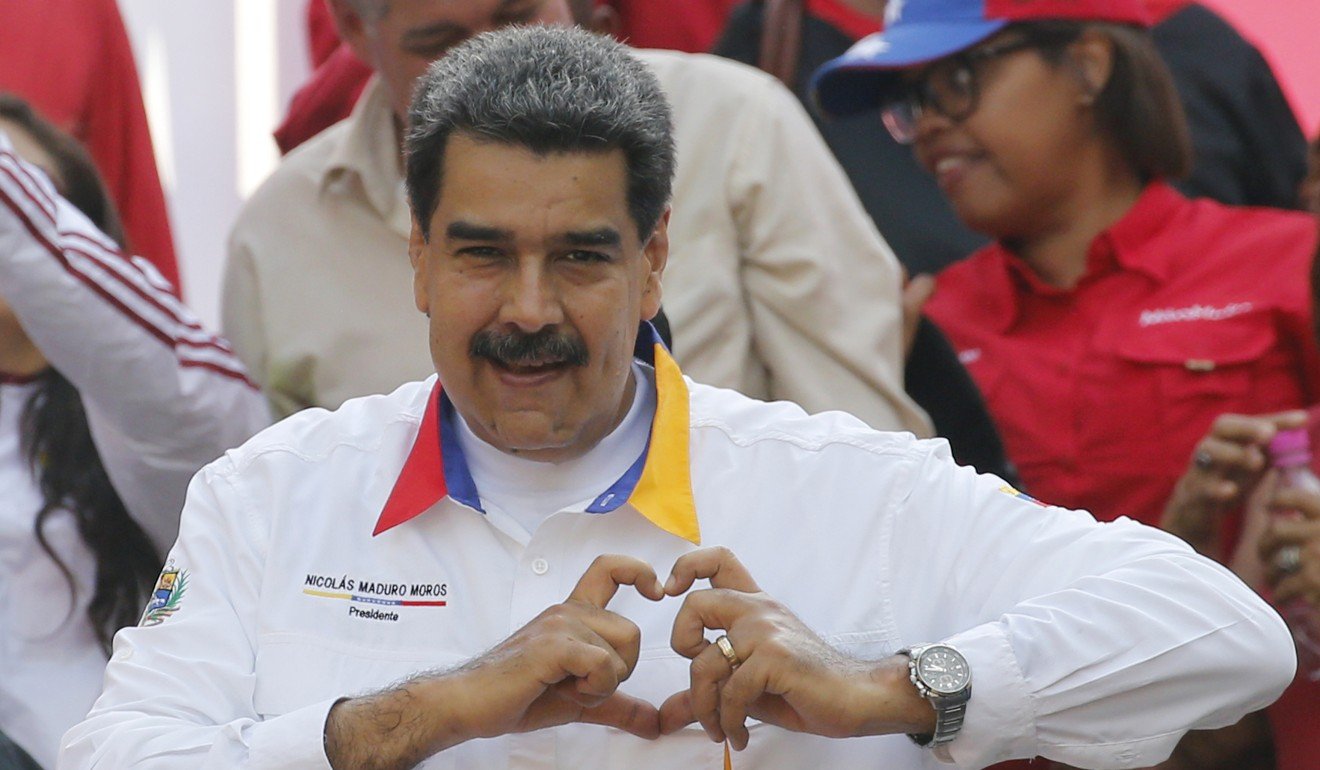
Xi and Putin are also expected to talk about Venezuela, where US-backed opposition leader Juan Guaido is attempting to oust socialist President Nicolas Maduro, who has the support of China and Russia.

Venezuelan President Nicolas Maduro has the backing of China and Russia. Photo: AP

“Moscow and Beijing are not able to seriously hurt Washington by raising tariffs or denying access to high technology. However, there are plenty of areas where coordinated Sino-Russian policies can damage US interests in the short term or in the long run,” Lukin said. “For example, Moscow and Beijing could intensify their joint support for the Venezuelan government of Nicolas Maduro, frustrating Washington’s efforts to dislodge him.”

China and Russia would also be seeking to boost economic ties. Bilateral trade, dominated by Chinese imports of gas and oil, reached US$108 billion last year – falling far short of the target set in 2011 by Xi’s predecessor, Hu Jintao, of US$200 billion by 2020.

China and Russia to forge stronger Eurasian economic ties

Li Lifan, an associate research professor at the Shanghai Academy of Social Sciences, said bilateral trade was a sticking point. “This is one of the potential hindrances in China-Russia relations and Beijing is hoping to [address this] … in the face of a possible global economic slowdown,” Li said.

Given the escalating trade war with Washington, he said China would seek to diversify its investments and markets to other parts of the world, particularly Russia and Europe.

“China will step up its investment cooperation with Europe and Russia and focus more on multilateral investment,” Li said.

But Beijing was not expected to do anything to worsen tensions with Washington.

“China is currently taking a very cautious approach towards the US, trying to avoid heating up the confrontation and further aggravation of the situation,” said Danil Bochkov, a contributing author with the Russian International Affairs Council. “For China it is important to demonstrate that it has a reliable friend – Russia – but that should not be done in an openly provocative manner.”

Stephen Blank, a senior fellow at the American Foreign Policy Council in Washington, said Beijing and Moscow would also seek to contain US influence “as far as possible” from Central Asia, where China has increased its engagement through infrastructure building under the “Belt and Road Initiative”.

Leaders from the region will gather in Bishkek next month for the SCO summit, a security bloc set up in 2001 that now comprises China, Russia, Kazakhstan, Kyrgyzstan, Tajikistan, Uzbekistan, India and Pakistan. Those members account for about 23 per cent of the world’s land mass, 45 per cent of its population, and 25 per cent of global GDP.

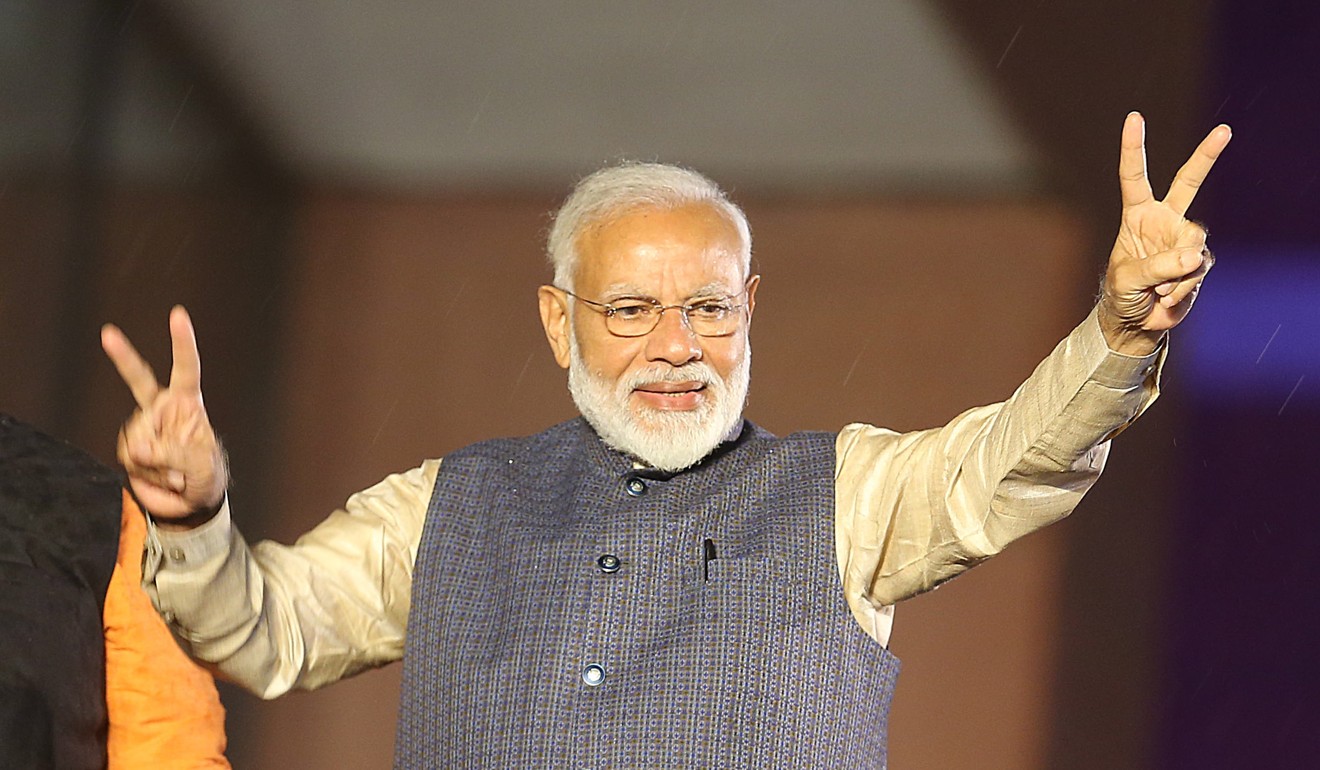
Newly re-elected Indian Prime Minister Narendra Modi could meet the Chinese president for talks in Bishkek next month. Photo: EPA-EFE

There is growing speculation that Xi will meet newly re-elected Indian Prime Minister Narendra Modi on the sidelines of that summit.

Independent analyst and author Namrata Goswami said India would be seeking a commitment to a WTO-led and rules-based multilateral trading system during the SCO talks.

“This is interesting and significant given the current US tendencies under President Donald Trump focused on ‘America first’ and the US-China trade war,” Goswami said.

Counterterrorism will again be a top priority at the SCO summit, amid concerns among member states about the rising number of Islamic State fighters returning from Syria and Iraq. Chinese scholars estimated last year that around 30,000 jihadists who had fought in Syria had gone back to their home countries, including China.

Alexander Bortnikov, chief of the main Russian intelligence agency FSB, said earlier that 5,000 fighters from a group affiliated with Isis had gathered in areas bordering former Soviet states in Central Asia, saying most of them had fought alongside Isis in Syria.

War-torn Afghanistan, which shares a border with four SCO member states – China, Pakistan, Tajikistan and Uzbekistan – is also likely to be high on the agenda at the Bishkek summit.

“With the Trump administration drafting plans to withdraw troops from Afghanistan, the SCO will assess the security situation there and decide whether to provide training for Afghan troops,” Li said.

Eva Seiwert, a doctoral candidate at the Free University of Berlin, expected the security bloc would also discuss Iran after the US withdrew from the 2015 nuclear deal and ordered new sanctions against the country.

Iran, which has observer status with the SCO, was blocked from becoming a full member in 2008 because it was subject to UN sanctions at the time. But its membership application could again be up for discussion.

Iran presses China and Russia to save nuclear deal

“The Trump administration’s unilateral withdrawal from the Iran nuclear deal in 2018 made it easy for China and Russia to present themselves as the proponents of peaceful settlement of conflicts,” Seiwert said. “Discussing the possibility of admitting Iran as a full member state would help the SCO members demonstrate their support of multilateral and peaceful cooperation.

“This would be a strong signal to the US and enhance the SCO’s standing in the international community,” she said.

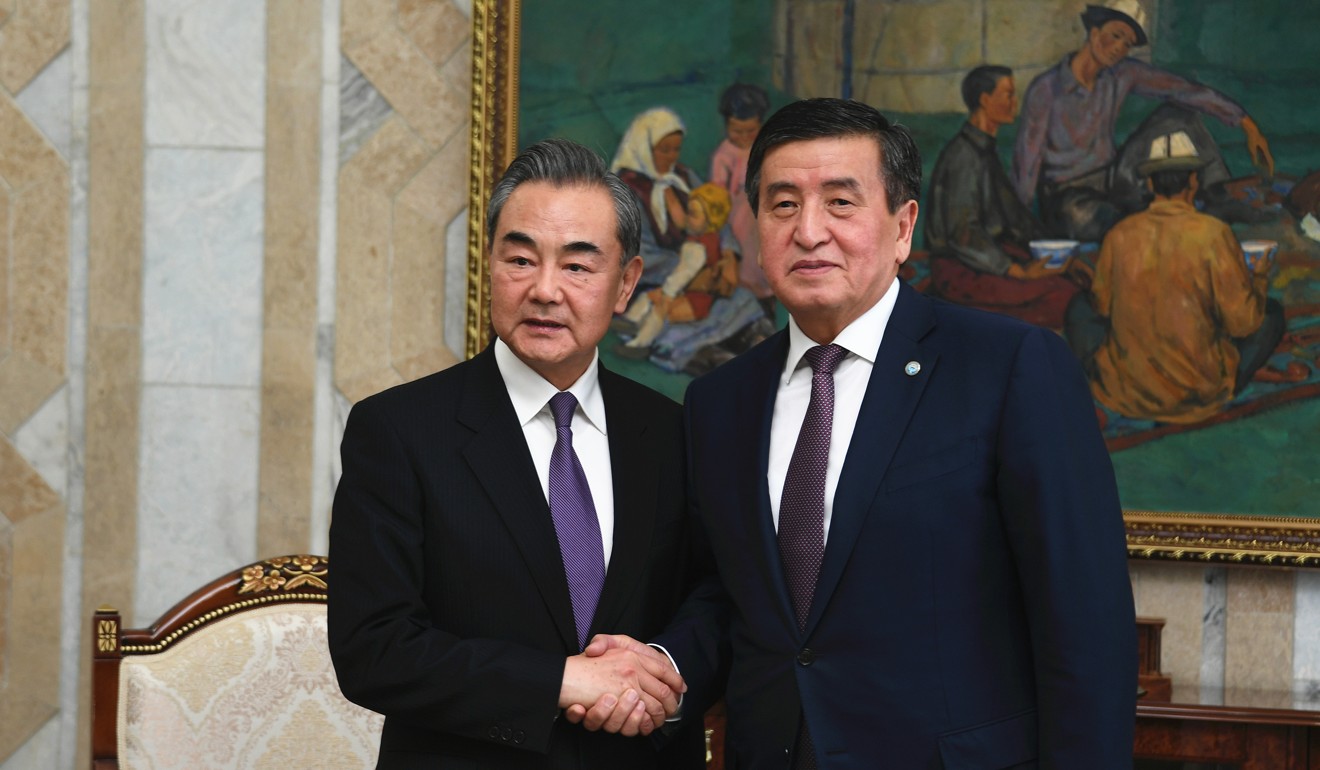
Kyrgyz President Sooronbay Jeenbekov (right) meets Chinese Foreign Minister Wang Yi in Bishkek on Tuesday last week. Photo: Xinhua

As well as security, Xi’s visit to Central Asia is also likely to focus on economic ties. Meeting Kyrgyz President Sooronbay Jeenbekov in Bishkek last week, Chinese Foreign Minister Wang Yi said Beijing would continue to “provide support and help national development and construction in Kyrgyzstan”.

Li said China may increase investment in the Central Asian region, especially in greenfield projects.

“China will continue to buy agriculture products from Central Asia, such as cherries from Uzbekistan, and build hydropower projects to meet local energy demand,” Li said. “Investment in solar and wind energy projects is also expected to increase too.”

Source: SCMP

07/05/2019

Special Report – How a Chinese venture in Venezuela made millions while locals grew hungry

TUCUPITA, Venezuela (Reuters) – The project was meant to feed millions.

In Delta Amacuro, a remote Venezuelan state on the Caribbean Sea, a Chinese construction giant struck a bold agreement with the late President Hugo Chavez. The state-run firm would build new bridges and roads, a food laboratory, and the largest rice-processing plant in Latin America.

The 2010 pact, with China CAMC Engineering Co Ltd , would develop rice paddies twice the size of Manhattan and create jobs for the area’s 110,000 residents, according to a copy of the contract seen by Reuters.

The underdeveloped state was an ideal locale to demonstrate the Socialist Venezuelan government’s commitment to empower the poor. And the deal would show how Chavez and his eventual hand-picked successor, President Nicolas Maduro, could work with China and other allies to develop areas beyond Venezuela’s bounteous oil beds.

“Rice Power! Agricultural power!” Chavez tweeted at the time.

Nine years later, locals are hungry. Few jobs have materialized and the plant is only half-built, running at less than one percent its projected output. It hasn’t yielded a single grain of locally grown rice, according to a dozen people involved in or familiar with the development.

Yet CAMC and a select few Venezuelan partners prospered.

Venezuela paid CAMC at least $100 million (76 million pounds) for the stalled development, according to project contracts and sealed court documents from an investigation by prosecutors in Europe.

The thousands of pages of court papers, reviewed by Reuters, were filed in Andorra, the European principality where prosecutors allege Venezuelans involved in the project sought to launder kickbacks paid to them for helping secure the contract. The material on the China deal, reported here for the first time, includes confidential testimony, wiretap transcripts, bank records and other documents.

Last September, an Andorran high court judge alleged in an indictment that CAMC paid over $100 million in bribes to various Venezuelan intermediaries to secure the rice project and at least four other agricultural contracts.

The indictment charged 12 Venezuelans with crimes including money laundering and conspiracy to launder money. Among those indicted was Diego Salazar, a cousin of a former oil minister who, investigators say, enabled the contracts. Also indicted was the top representative in China at the time of state-run oil company Petroleos de Venezuela SA, or PDVSA.

Sixteen people of other nationalities were also charged and at least four other Venezuelans, one of whom was formerly ambassador in Beijing and is now the country’s top diplomat in London, are under investigation, according to the documents.

The indictment, the names of those charged, and their association with Chinese companies were reported last year by El Pais, the Spanish newspaper. A Reuters review of the case files, which are still under seal in Andorra, gleans how CAMC and other Chinese companies forged ties with many of those charged and paid to win projects the companies often didn’t complete.

The result, according to prosecutors, was a far-reaching culture of kickbacks, paid through offshore accounts, in which well-connected Venezuelan intermediaries milked and ultimately crippled projects that were meant to develop neglected corners of the country.

Among other findings reported here for the first time:

• CAMC agreed to at least five agricultural projects in Venezuela, valued at about $3 billion, that it never completed.

• The company, according to contracts and project documents reviewed by Reuters, received at least half the value of the $200 million contract for the rice project and at least 40 percent of the contract value for the other four developments – a combined total of at least $1.4 billion for work it never finished.

• CAMC paid over $100 million in fees to intermediaries; prosecutors say those payments were kickbacks that helped the company win contracts in Venezuela.

Neither CAMC nor any of its executives were charged in the indictment.

In a statement, the Beijing-based company told Reuters the details and assertions in the case files include “a large number of inaccuracies,” but didn’t elaborate. The company didn’t respond to requests to speak with CAMC executives mentioned in the documents. Reuters couldn’t reach those executives independently.

“Our company operates in Venezuela in adherence to the idea of integrity and strives to complete every construction project with the best technology and management,” the statement said.

China’s Foreign Ministry, in a statement to Reuters, said “reports” about alleged bribery by Chinese companies in Venezuela “obviously distorted and exaggerated facts, with a hidden agenda.” It didn’t specify to what agenda it was referring. Cooperation between the two countries will continue, the statement read, “based on equal, mutually beneficial, and commercial principles.”

Venezuela’s Information Ministry, responsible for government communications, and oil giant PDVSA, a partner in many of the contracts cited in the court case, didn’t respond to Reuters inquiries.
It isn’t clear when any of those charged could face trial. Enric Gimenez, a lawyer in Andorra for Salazar, the Venezuelan who prosecutors say brokered many of the contracts, told Reuters his client is innocent of the charges there.
The leftist regime founded by Chavez and now led by Maduro is facing its most serious threat yet. Opposition lawmakers, with the support of most Western democracies, say Maduro’s re-election last year was illegal and that Juan Guaido, head of the National Assembly, is the country’s rightful leader.
Last week, in a failed uprising, Guaido unsuccessfully sought to rally Venezuela’s military, the lynchpin of support for the unpopular government, against Maduro.
The political crisis was prompted by an economic meltdown of hyperinflation, mass unemployment and an exodus of desperate citizens. Venezuelans suffer regular shortages of food, power and water – basics that were meant to improve through projects like the one in Delta Amacuro.
The dire scarcities and dysfunctional projects, the opposition alleges, illustrate how corruption and crony capitalism helped impoverish the once-prosperous country and many of its 30 million people.
After an ambitious 2007 agreement between China and Venezuela, Chinese companies were announced as partners in billions of dollars’ worth of infrastructure and other projects. Since then, China invested over $50 billion in Venezuela, mostly in the form of oil-for-loan agreements, government figures show.
In a 2017 speech, Maduro said 790 projects with Chinese companies had been contracted in sectors ranging from oil to housing to telecommunications. Of those, he said, 495 were complete. Some developments have stalled because of graft, people familiar with the projects said; others were derailed by incompetence and a lack of supervision.
In Delta Amacuro, even government officials say a mixture of both ruined the rice project. “The government abandoned it,” says Victor Meza, state coordinator for Venezuela’s rural development agency, which worked with CAMC. “Everything was lost. Everything was stolen.”
Prosecutors in Andorra, where secretive banking laws long made it a tax haven, launched their investigation into Venezuelan laundering amid a broader effort to clean up the local financial sector.
The indictment is part of a much larger case in which the prosecutors allege Venezuelan officials between 2009 and 2014 received more than $2 billion worth of “illegal commissions” from contractors, state companies, and other sources, often for enabling transactions with the government.
The payments, the indictment alleges, passed through accounts held at Banca Privada D’Andorra, a local bank known as BPA.
Andorra’s government, after the United States accused BPA of money laundering, took over the bank in 2015. Courts there since then have charged 25 former BPA employees with money laundering in a series of cases, including the one probing the Venezuela contracts. A spokeswoman for Andorra’s government declined to comment for this article.
In addition to the agricultural projects by CAMC, the Andorrans examined two power-plant projects by the company and four other power plants built by Sinohydro Corp, another state-owned Chinese engineering firm. None of those plants ever became fully operational, leaving towns near them subject to regular blackouts.
Sinohydro wasn’t charged in the indictment. The company didn’t respond to calls, emails and faxes seeking comment.
During a recent visit by Reuters to Delta Amacuro, the CAMC rice plant remained unfinished. Only one of its 10 silos, half full, held any grain. Some machinery was running, but processing rice imported from Brazil. The nearby paddies lay fallow, the laboratory incomplete, the roads and bridges unbuilt.

“WE DON’T PRODUCE ANYTHING”

Tucupita, a town of 86,000 residents, is Delta Amacuro’s capital. It hugs the banks of the Cano Manamo, an offshoot of the Orinoco, one of South America’s biggest rivers. Once, Tucupita was a stop for vessels shipping goods from inland factories to buyers in the Caribbean and beyond.

In 1965, the government dammed the Cano Manamo. Boat traffic stopped, fresh water receded and seawater seeped inland, degrading soils. By the time Chavez became president in 1999, little farming remained.

“When I was a kid, there was rice everywhere,” recalled Rogelio Rodriguez, a local agronomist. “Now we don’t produce anything.”

In 2009, Chavez and Xi Jinping, China’s vice president at the time, expanded a joint fund the countries had created with the 2007 development agreement. “Aren’t we grateful to China?” Chavez said at a ceremony with Xi at the presidential palace in Caracas, Venezuela’s capital.

Promising to supply Beijing with oil “for the next 500 years,” Chavez pointed toward Delta Amacuro on a map. “Look, Xi,” he said, announcing an effort to rehabilitate the region.

In attendance were CAMC Chairman Luo Yan and Rafael Ramirez, a Chavez confidante who ran PDVSA and the oil ministry for a decade.
Soon, businesses jostled to get in on the development.
Diego Salazar, a cousin of Ramirez, was well-positioned.
Salazar’s father was a communist guerrilla and author who later became a legislator and Chavez ally. His family ties and connections to lawmakers gave the younger Salazar a valuable address book he wielded at a consulting firm he operated in Caracas.
The firm, Inverdt, was owned by a Panama-based holding company he had established called Highland Assets, according to testimony Salazar gave investigators in Andorra when they first began probing his BPA account. From an office a few blocks from PDVSA headquarters, he met often with Ramirez and other top officials, according to people familiar with his activities.
Ramirez left the ministry in 2014 and was Venezuela’s ambassador to the United Nations until 2017. Since then, Maduro has publicly accused him of unspecified corruption, but Ramirez wasn’t indicted in Andorra and hasn’t formally been charged with any crime in Venezuela. He now lives abroad as an opponent of the government. Ramirez didn’t respond to Reuters emails seeking comment and couldn’t be reached otherwise.
At the time of the ceremony with Xi, Chavez was making PDVSA a hub for a growing array of developments, many of them unrelated to oil. A newly created unit known as PDVSA Agricola, for instance, was tasked with boosting food supply.
The diversification made PDVSA the conduit through which contracts, and a growing sum of money administered by Venezuela’s national development bank, were awarded.
By 2010, the filings say, the bank had received $32 billion from the China Development Bank and another $6 billion from an infrastructure fund created by Chavez.
China Development Bank didn’t respond to Reuters requests for comment.

Salazar began reaching out to Chinese executives, offering his services, as a well-connected consultant, to help broker business in Venezuela. He travelled to China monthly and began paying Venezuelan officials there to forge ties with companies including CAMC.

“My work was to convince them, through meetings, trips, and promotion, to sign contracts,” Salazar told Andorran investigators.

People familiar with the case said Salazar and his alleged associates, before the indictment, agreed to testify in Andorra because they hoped to clear their names.

In his testimony, Salazar told the Andorran investigators he chose BPA as an offshore bank because he knew other wealthy Venezuelans had done so. Nestled in a quiet valley of the Pyrenees, BPA had a reputation as a discrete money manager for clients from high-risk countries.

After Andorra submitted information requests for its case to Caracas, a Venezuelan court in 2017 ordered Salazar arrested on suspicion of corruption, money laundering and conspiracy.

Citing the Andorran probe, the Venezuelan arrest order said Salazar sought to “give legal appearance to funds originating from numerous contracts with Venezuelan state institutions.” A trial date hasn’t been set and Salazar remains jailed in Caracas. A lawyer for Salazar in Venezuela denied the charges before the court.

Gimenez, Salazar’s lawyer in Andorra, in an email to Reuters said Chinese authorities decided which companies would receive funds and that neither Salazar nor his alleged intermediaries could sway that. Inverdt, Salazar’s consulting firm, offered “professional” and “technical” services to many Chinese companies, Gimenez wrote in the email, and that “only a handful of those companies were chosen to carry out works.”

One of Salazar’s intermediaries, the indictment alleged, was Francisco Jimenez, a career engineer who was PDVSA’s envoy in Beijing and who the Andorrans indicted along with Salazar. Salazar first contacted him during a trip to China in 2010, according to testimony Jimenez gave in Andorra.

That March, Jimenez signed a “strategic alliance” with Salazar to promote Inverdt in China. Under the terms of their contract, reviewed by Reuters, Salazar agreed to pay Jimenez $7.38 million in a BPA account that Inverdt helped open. Bank records in the case files show Jimenez later received another $7 million.

Jimenez, who now lives in Panama, didn’t respond to phone calls or text messages from Reuters. Salvador Capdevila, his lawyer in Andorra, declined to comment.

Another official who prosecutors say helped Salazar was Rocio Maneiro, Venezuela’s ambassador to China and now the country’s ambassador to Britain.

Maneiro wasn’t charged in the Andorran indictment; numerous court documents, including a filing by prosecutors in relation to her testimony, refer to her as “under investigation” for payments they say she received from Salazar and for her alleged role helping him make contacts with Chinese companies.

In 2010, bank records contained in the court documents show, Salazar made a transfer of $30,000 to a Chinese account in her name, citing “services provided by Mrs. Maneiro.”

Later, Salazar made deposits totalling $13 million into a BPA account owned by a Panama-based company that Maneiro, in a disclosure document linked to the account, said belonged to her. An internal report from BPA’s anti-money laundering committee, reviewed by Reuters, also listed Maneiro as its owner.

Maneiro, through a lawyer and in a text message to Reuters, denied helping Salazar and receiving payments from him. “Those are assertions with no basis,” she wrote in the message. She told an Andorran judge that the signature on the form about the Panamanian company is forged.

The court has ordered an analysis of the signature.

“A BRIEFCASE FULL OF CONTRACTS”

By early 2010, Salazar’s outreach bore fruit.

Sinohydro, the engineering firm, that March signed a $316 million contract with PDVSA to build a power plant near the city of Maracay.

In the contract, Sinohydro agreed to pay Salazar a 10 percent fee for helping it “gain a favourable and positive position to pursue the contract.” Bank records in the case files show the company paid $49 million into Salazar’s BPA account and another $72 million after Sinohydro secured additional power plant contracts from PDVSA.

Sinohydro eventually built four plants, but none met full contract specifications, engineers say. The plant near Maracay, for example, was meant to generate as much as 382 megawatts, the contract shows. Instead, the plant is producing no more than 140 megawatts, according to Jose Aguilar, a former director at Venezuela’s state power company.

Soon, Salazar’s company was earning over $100 million a year, according to testimony by him and several aides. “He had a briefcase full of contracts,” Luis Mariano Rodriguez, a Salazar deputy also charged in the indictment, told Andorran investigators.

“We made deals with every company possible,” he added. “Some of these companies never actually carried out the projects.”

Reuters was unable to reach Rodriguez, who like Salazar has been charged with money laundering and conspiracy to launder. Gimenez, Salazar’s attorney in Andorra, also represents Rodriguez, and in the email said that Rodriguez, too, is innocent.

As money poured in, Salazar splurged, paying tens of thousands of dollars for hotel stays and spending millions on gifts. For $1 million, he bought 83 Rolex and Cartier watches at a Caracas jeweller, according to an invoice in the filings. In a Rodriguez email to BPA justifying the purchase, he said the watches were “gifted to relatives and friends.”

In April 2010, Andorran police began investigating Salazar. French investigators had asked them about a recent transaction: From his BPA account, Salazar had transferred $99,980 to a Paris hotel employee as a “tip for providing services.” It’s not clear what those services were.

By May, talks for the rice project began.

That month, Rodriguez met with Wang Hong, a CAMC vice president, in Caracas, according to a contract the men signed. In the contract, they agreed that CAMC would pay Salazar’s company 10 percent of the value of the rice contract to help it “win.”

Within months, PDVSA Agricola awarded CAMC the contract, valuing the rice development at $200 million. CAMC signed another agreement with Salazar for help securing additional projects. That June, CAMC made the first of several deposits totalling $112 million to Salazar’s BPA account, bank records show.

Workers broke ground in Delta Amacuro.

By 2012, project documents show, CAMC had received $100 million from the Venezuelan development bank for the undertaking, half that agreed upon. The company shipped excavators, steamrollers and other equipment from China.

But progress was slow.

An excavator bogged down in mud and stayed there. Chinese foremen spoke little Spanish and struggled with local crews, according to engineers who worked on the project.

That November, an Andorran court, on suspicion of money laundering, froze BPA accounts of Salazar, his aide Rodriguez and six other Venezuelans. In 2013, the prosecutors began a years-long effort to interview Salazar and others.

In 2015, the U.S. Treasury Department began pressuring Andorra over alleged money laundering. In a report at the time, the Treasury wrote that BPA facilitated laundering of money from Russia, China and Venezuela.

That March, the Andorran government took over BPA.

Oil prices, which had recently exceeded $100 per barrel, that year fell by more than half. Venezuela’s economy foundered.

CAMC pulled its team of 40 employees from the rice site, people involved in the project said. Locals looted scrap abandoned by CAMC. Jobless workers sold leftover cables and lightbulbs, former managers said.

Still, Maduro has sought to make something of the unfinished project.

In February, Agriculture Minister Wilmar Castro inaugurated the “Hugo Chavez” plant, snipping a ribbon in front of rice sacks emblazoned with Venezuelan and Chinese flags. No one from CAMC attended, according to a person present at the ceremony.

Instead of machinery able to process 18 tonnes each hour, workers are packing imported rice by hand. “There’s not a gram of rice growing anywhere here,” said Mariano Montilla, a 47-year-old local who lives off the few crops he can coax from nearby scrubland.

“It seemed like a revolutionary idea,” he said of Chavez’s initial promise. “Now we’re starving.”

Source: Reuters

11/04/2019

Chinese envoy calls for political solution in Venezuela, asks to lift sanctions

UNITED NATIONS, April 10 (Xinhua) — A Chinese envoy on Wednesday called for a political solution to the Venezuela crisis and asked for the lifting of unilateral sanctions against the country.

“China calls on the Venezuelan government and opposition to seek a political solution through dialogue and consultations within the constitutional and legal framework,” Ma Zhaoxu, China’s permanent representative to the United Nations, told the Security Council.

China supports the Venezuelan government’s efforts to safeguard the sovereignty, independence and stability of the country and holds that Venezuelan affairs should be handled independently by the Venezuelan people themselves, said Ma.

China’s position on the Security Council’s involvement in the Venezuela issue has been consistent and clear, he said. “Our point of departure has always been to uphold the spirit of the UN Charter and the basic norms governing international relations, promote a peaceful settlement of the Venezuela issue and maintain long-term peace and development in Latin America.”

“China opposes the interference in Venezuela’s internal affairs by external forces, opposes military intervention in Venezuela and opposes the use of the so-called humanitarian issue to achieve political aims,” said Ma.

He called on relevant countries to lift unilateral sanctions against Venezuela.

History has proven repeatedly that unilateral sanctions will only further complicate situations and affect people’s everyday life. It will not help resolve problems, nor will it bring peace to a country, he said.

“On the one hand, we hear a lot of talk about care for the well-being of Venezuelans. On the other hand, we are seeing increasingly tighter sanctions on the country. They are contradictory and the motive is dubious,” said Ma.

“(We) hope that relevant countries will promptly lift unilateral sanctions against Venezuela, create normal conditions for its economic and social development, and lend help and support to the country in accordance with the basic principles of UN humanitarian assistance.”

He asked the international community to contribute positively to Venezuela’s peace, stability and development.

The peace and stability of Venezuela are in the fundamental interests of the country and its people, and serve the common interests of all parties, Ma said. “We hope the international community will do things that are truly conducive to the stability, economic development, and improved livelihood in Venezuela.”

Under the condition of respect for the sovereignty of Venezuela, the international community should provide constructive assistance to the country and promote a smooth settlement of relevant issues as soon as possible, he said.

The Chinese ambassador said China will continue its cooperation with Venezuela on the basis of mutual respect, equality, mutual benefit, and common development.

To help Venezuelan people overcome temporary difficulties, China has decided to provide emergency supplies for livelihood to Venezuela, said Ma.

Relevant supplies are on their way to Venezuela in batches. On March 29, the first batch of medicines and medical supplies were delivered to the Venezuelan government, he said.

China’s assistance to Venezuela is in keeping with its long-held principles for foreign aid. It is intended to help Venezuelan people overcome negative impacts caused by external interferences and sanctions with no political conditions attached, said the Chinese ambassador.

Source: Xinhua

13/02/2019

No talks between China and Venezuela opposition Beijing says, instead it’s ‘fake news’

  • Wall Street Journal report dismissed as false
  • Chinese spokeswoman repeats call for dialogue to resolve the Venezuelan crisis
PUBLISHED : Wednesday, 13 February, 2019, 5:57pm
UPDATED : Wednesday, 13 February, 2019, 5:57pm

China has dismissed a newspaper report that its diplomats held talks with the political opposition in Venezuela to protect its investments in the Latin American country as “fake news”.

The Wall Street Journal said the diplomats, concerned about oil projects in Venezuela and almost US$20 billion that Caracas owes Beijing, had held talks in Washington with representatives of Juan Guaido, the opposition leader heading US-backed efforts to oust President Nicolas Maduro.


“In fact the report is false. It’s fake news,” Hua Chunying, spokeswoman for the Chinese Foreign Ministry, told reporters on Wednesday when asked about the article.

Venezuela’s “affairs” should be resolved via dialogue, Hua said, reiterating China’s previous stance.

Guaido invoked a constitutional provision to assume the presidency three weeks ago, arguing that Maduro’s re-election last year was a sham.

Most Western countries, including the United States, have recognised Guaido as Venezuela’s legitimate head of state, but Maduro retains the backing of Russia and China as well as control of state institutions including the military.

China has lent more than $50 billion to Venezuela through oil-for-loan agreements over the past decade, securing energy supplies for its fast-growing economy.


A change in government in Venezuela would favour the country’s two main foreign creditors, Russia and China, Guaido said in an interview last month.

Source: SCMP

Law of Unintended Consequences

continuously updated blog about China & India

ChiaHou's Book Reviews

continuously updated blog about China & India

What's wrong with the world; and its economy

continuously updated blog about China & India