Archive for ‘Venice’

11/03/2020

Cathay Pacific expects ‘substantial loss’ this year

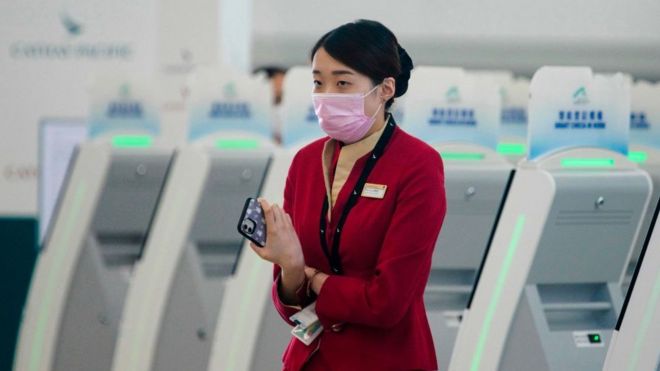
A Cathay Pacific staff member wearing a facemask next to a row of self-check in terminals in Hong Kong.Image copyright GETTY IMAGES

Cathay Pacific has said it expects a “substantial” loss in the first half of this year as the impact of the coronavirus outbreak takes it toll.

The Hong Kong carrier also saw a 28% drop in 2019 profits as it struggled during the city’s political protests.

The airline is now battling with the fallout of the virus as passenger numbers plummet.

Chairman Patrick Healy said the first half of 2020 was expected to be “extremely challenging financially”.

The development comes with thousands of flights already cancelled worldwide, as airlines struggle to cope with a slump in demand caused by the coronavirus outbreak.

British Airways, Ryanair and EasyJet have all cancelled flights to and from Italy until April, while Norwegian Air and American Airlines have also announced significant cuts to services.

Calling 2019 a “turbulent year”, Mr Healy said he expected “our passenger business to be under severe pressure this year and that our cargo business will continue to face headwinds”.

While Cathay Pacific has reduced flights to help save costs, “we expect to incur a substantial loss for the first half of 2020,” he added.

The airline reported a net profit of HK$1.69bn (£170m) for last year, down from a HK$2.35bn profit in 2018.

In other developments:

  • Dutch airline KLM is cancelling all its flights to and from Milan, Venice and Naples until 3 April
  • Austrian rail operator OBB has announced it is suspending all trains in and out of Italy – which has more than 10,000 confirmed cases of the virus – until further notice
  • Seat, the Spanish unit of car-maker Volkswagen, is considering temporary lay-offs at its Barcelona plant
  • Ride-hailing app Uber says it plans to offer an as-yet unspecified amount of financial assistance to its drivers who have to self-isolate for up to 14 days

Embattled sector

The airline industry faces a loss of revenue of up to $113bn this year, according to aviation trade body IATA, as thousands of planes are grounded amid travel restrictions across the globe.

After UK-based airline Flybe went into administration last week, analysts are warning of more failures to come for the embattled airline industry.

Earlier this week, Korean Air warned the coronavirus outbreak could threaten its survival, in a memo sent to employees.

The global spread of the coronavirus has hit both holidaymakers and business travellers. The Global Business Travel Association said on Wednesday that 43% of its member companies have cancelled business trips booked for this month.

Source: The BBC

24/02/2020

New coronavirus cases rise in Italy, Korea and Iran but fall in China

BEIJING/SEOUL (Reuters) – Italy, South Korea and Iran reported sharp rises in coronavirus infections on Monday, triggering concern from the World Health Organization (WHO), but China relaxed some curbs on movement, including in Beijing, as the rate of new infections there eased.

The virus has put Chinese cities into lockdown, disrupted air traffic to the workshop of the world and blocked global supply chains for everything from cars and car parts to smartphones.

The surge of cases outside mainland China triggered steep falls in global share markets and Wall Street stock futures as investors fled to safe havens. Gold soared to a seven-year high, oil tumbled nearly 4% and the Korean won KRW= fell to its lowest level since August.[MKTS/GLOB]

But U.S. Treasury Secretary Steven Mnuchin cautioned against jumping to conclusions about the impact on the global economy or supply chains, saying it was simply too soon to know.

The World Health Organization (WHO) said it no longer had a process for declaring a pandemic, but that the coronavirus outbreak remained an international emergency.

“We are specially concerned about the rapid increase in cases in … Iran, Italy and the Republic of Korea,” WHO head Tedros Adhanom Ghebreyesus told a news conference in Sweden via video link from Geneva.

South Korea reported 231 new cases, taking its total to 833. Many are in its fourth-largest city, Daegu, which became more isolated with Asiana Airlines (020560.KS) and Korean Air (003490.KS) suspending flights there until next month.

Iran, which announced its first two cases last Wednesday, said it had confirmed 43 cases and eight deaths. Most of the infections were in the Shi’ite Muslim holy city of Qom.

Elsewhere in the Middle East, Bahrain and Iraq reported their first cases and Kuwait reported three cases involving people who had been in Iran.

Saudi Arabia, Kuwait, Iraq, Turkey, Pakistan and Afghanistan imposed restrictions on travel and immigration from Iran. Afghanistan also reported its first case, officials said.

The WHO has been saying for weeks that it dreads the disease reaching countries with weak health systems.

Europe’s biggest outbreak is in Italy, with some 150 infections – compared with just three before Friday – and a fifth death.

‘SEVERE AND COMPLEX’

Scientists around the world are scrambling to analyze the virus, but a vaccine is probably more than a year away.

“Worryingly, it seems that the virus can pass from person to person without symptoms, making it extremely difficult to track, regardless of what health authorities do,” said Simon Clarke, an expert in cellular microbiology at the University of Reading in Britain.

China postponed the annual meeting of its parliament in Beijing.

But there was a measure of relief for the world’s second-largest economy as more than 20 province-level jurisdictions, including Beijing and Shanghai, reported zero new infections, the best showing since the outbreak began.

President Xi Jinping urged businesses to get back to work, though he said the epidemic was still “severe and complex, and prevention and control work is in the most difficult and critical stage”.

Excluding the central Hubei province, center of the outbreak, mainland China reported 11 new cases, the lowest since the national health authority started publishing nationwide daily figures on Jan. 20.

The coronavirus has infected nearly 77,000 people and killed more than 2,500 in China, most in Hubei.

Overall, China reported 409 new cases on the mainland, down from 648 a day earlier, taking the total number of infections to 77,150 cases as of Feb. 23. The death toll rose by 150 to 2,592.

Outside mainland China, the outbreak has spread to about 29 countries and territories, with a death toll of about two dozen, according to a Reuters tally.

Xi said on Sunday the outbreak would have a relatively big, but short-term, impact on the economy and the government would step up policy adjustments to help cushion the blow.

Mnuchin, speaking to Reuters in the Saudi city of Riyadh, said he did not expect the coronavirus to have a material impact on the Phase 1 U.S.-China trade deal.

“Obviously that could change as the situation develops,” he added.

In northern Italy, authorities sealed off the worst-affected towns and banned public gatherings across a wide area, halting the carnival in Venice, where there were two cases.

Austria briefly suspended train services over the Alps from Italy after two travelers coming from Italy showed symptoms of fever.

Both tested negative for the new coronavirus but Austrian Interior Minister Karl Nehammer said a task force would meet on Monday to discuss whether to introduce border controls.

Japan had 773 cases as of late Sunday, mostly on a cruise ship quarantined near Tokyo. A third passenger, a Japanese man in his 80s, died on Sunday.

In South Korea, authorities reported a seventh death and dozens more cases on Monday. Of the new cases, 115 were linked to a church in the city of Daegu.

Drone footage showed what appeared to be hundreds of people queuing in a neat line outside a Daegu supermarket under the winter sunshine to buy face masks. ( tmsnrt.rs/37WP6lA )

Source: Reuters

08/07/2019

Seven Silk Road destinations, from China to Italy: towns that grew rich on trade

  • Settlements along the route linking Europe and Asia thrived by providing accommodation and services for countless traders
  • Formally established during the Han dynasty, it was a 19th-century German geographer who coined the term Silk Road
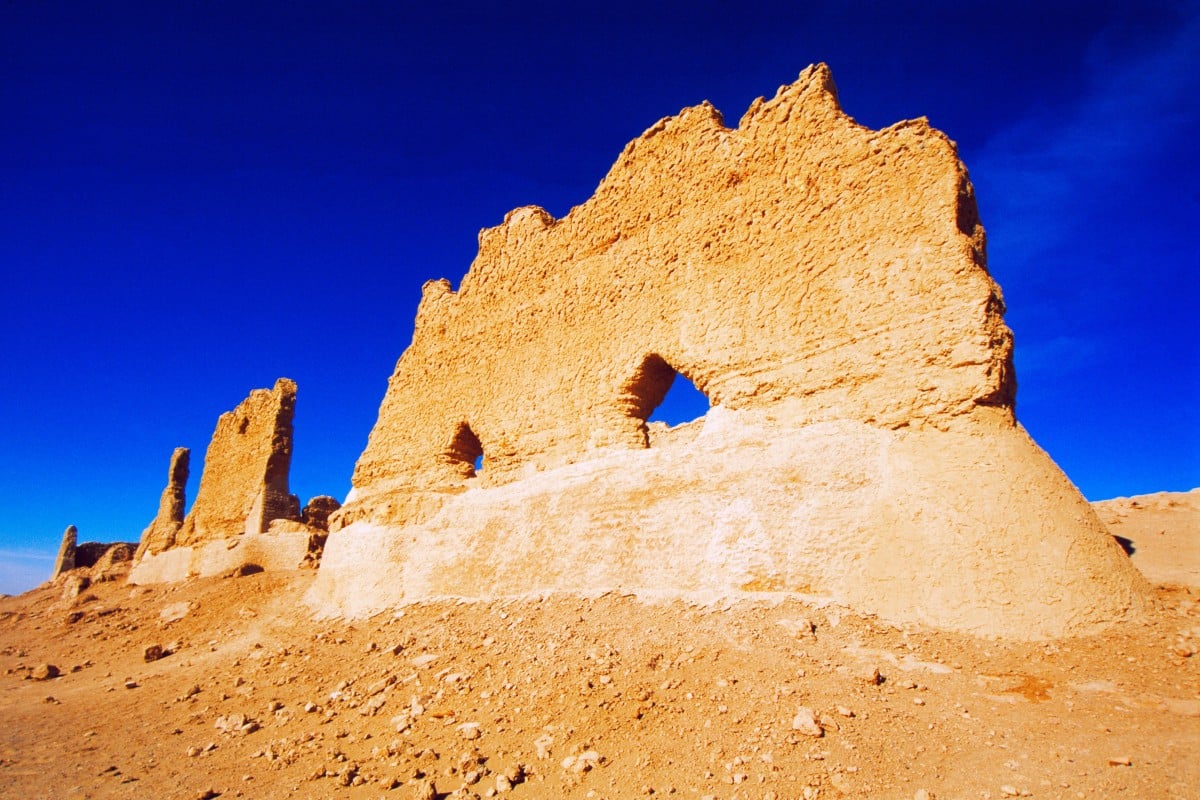
The ruins of a fortified gatehouse and cus­toms post at Yunmenguan Pass, in China’s Gansu province. Photo: Alamy
We have a German geographer, cartographer and explorer to thank for the name of the world’s most famous network of transconti­nental trade routes.
Formally established during the Han dynasty, in the first and second centuries BC, it wasn’t until 1877 that Ferdinand von Richthofen coined the term Silk Road (historians increasingly favour the collective term Silk Routes).
The movement of merchandise between China and Europe had been taking place long before the Han arrived on the scene but it was they who employed troops to keep the roads safe from marauding nomads.
Commerce flourished and goods as varied as carpets and camels, glassware and gold, spices and slaves were traded; as were horses, weapons and armour.
Merchants also moved medicines but they were no match for the bubonic plague, which worked its way west along the Silk Road before devastating huge swathes of 14th century Europe.
What follows are some of the countless kingdoms, territories, (modern-day) nations and cities that grew rich on the proceeds of trade, taxes and tolls.

China

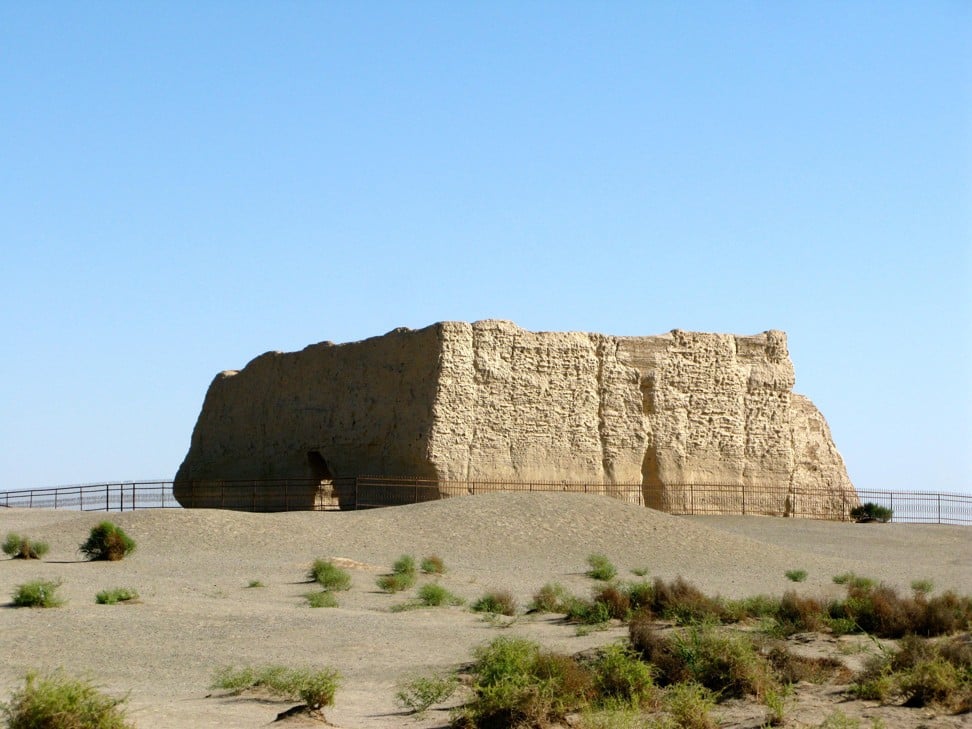
A watchtower made of rammed earth at Dunhuang, a desert outpost at the crossroads of two major Silk Road routes in China’s northwestern Gansu province. Photo: Alamy

Marco Polo worked in the Mongol capital, Khanbaliq (today’s Beijing), and was struck by the level of mercantile activity.

The Venetian gap-year pioneer wrote, “Every day more than a thousand carts loaded with silk enter the city, for a great deal of cloth of gold and silk is woven here.”

Light, easy to transport items such as paper and tea provided Silk Road traders with rich pickings, but it was China’s monopoly on the luxurious shimmering fabric that guaranteed huge profits.

So much so that sneaking silk worms out of the empire was punishable by death.

The desert outpost of Dunhuang found itself at the crossroads of two major Silk Road trade arteries, one leading west through the Pamir Mountains to Central Asia and another south to India.

Built into the Great Wall at nearby Yunmenguan are the ruins of a fortified gatehouse and cus­toms post, which controlled the movement of Silk Road caravans.

Also near Dunhuang, the Mogao Caves contain one of the richest collections of Buddhist art treasures any­where in the world, a legacy of the route to and from the subcontinent.

Afghanistan

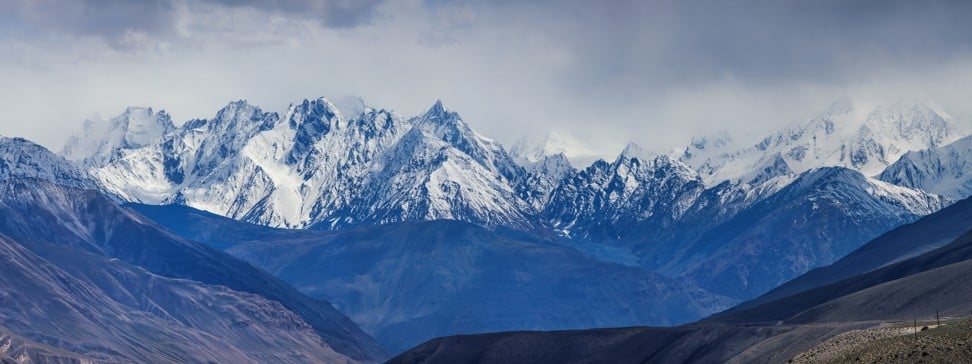
Afghanistan's mountainous terrain was an inescapable part of the Silk Road, until maritime technologies would become the area's undoing. Photo: Shutterstock
Afghanistan’s mountainous terrain was an inescapable part of the Silk Road, until maritime technologies would become the area’s undoing. Photo: Shutterstock

For merchants and middlemen hauling goods through Central Asia, there was no way of bypassing the mountainous lands we know today as Afghanistan.

Evidence of trade can be traced back to long before the Silk Road – locally mined lapis lazuli stones somehow found their way to ancient Egypt, and into Tutankhamun’s funeral mask, created in 1323BC.

Jagged peaks, rough roads in Tajikistan, roof of the world

Besides mercan­tile exchange, the caravan routes were responsible for the sharing of ideas and Afghanistan was a major beneficiary. Art, philosophy, language, science, food, architecture and technology were all exchanged, along with commercial goods.

In fact, maritime technology would eventually be the area’s undoing. By the 15th century, it had become cheaper and more convenient to transport cargo by sea – a far from ideal development for a landlocked region.

Iran

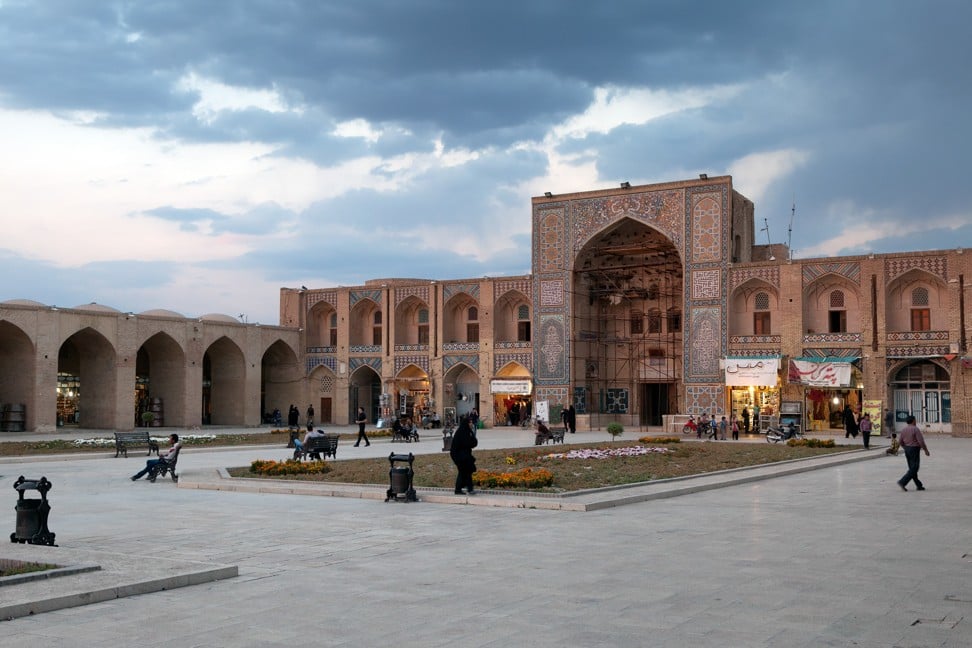
The Ganjali Khan Complex, in Iran. Photo: Shutterstock

Thanks to the Silk Road and the routes that preceded it, the northern Mesopotamian region (present-day Iran) became China’s closest trading partner. Traders rarely journeyed the entire length of the trail, however.

Merchandise was passed along by middlemen who each travelled part of the way and overnighted in caravan­serai, forti­fied inns that provided accom­mo­dation, storerooms for goods and space for pack animals.

The good, bad and ugly sides to visiting Chernobyl and Kiev

With so many wheeler-dealers gathering in one place, the hostelries developed into ad hoc marketplaces.

Marco Polo writes of the Persian kingdom of Kerman, where craftsmen made saddles, bridles, spurs and “arms of every kind”.

Today, in the centre of Kerman, the former caravanserai building forms part of the Ganjali Khan Complex, which incorporates a bazaar, bathhouse and mosque.

Uzbekistan

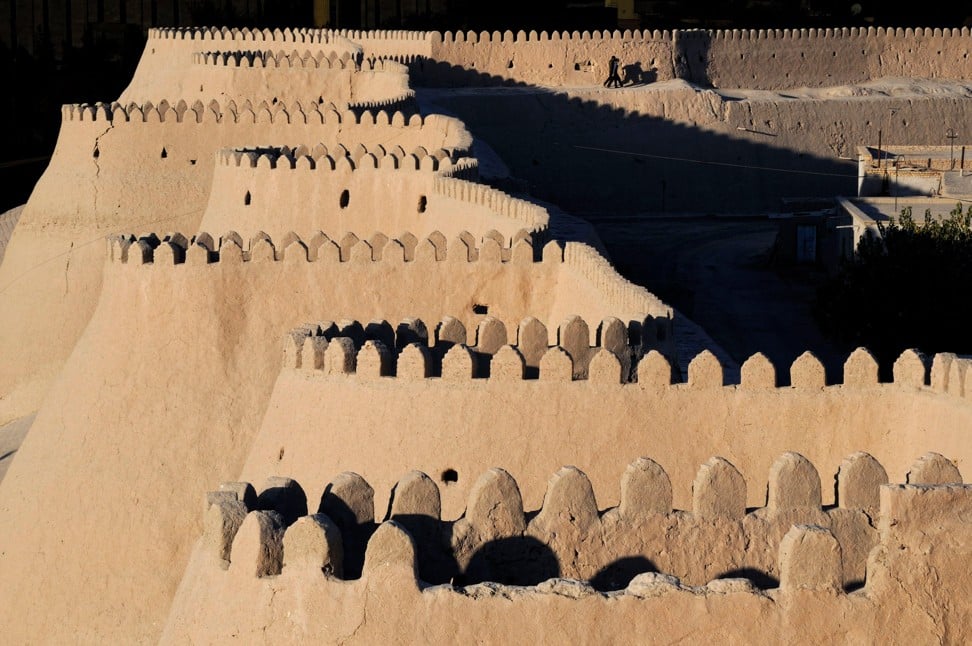
A fort in Khiva, Uzbekistan. Photo: Alamy

The double-landlocked country boasts some of the Silk Road’s most fabled destinations. Forts, such as the one still standing at Khiva, were built to protect traders from bandits; in fact, the city is so well-preserved, it is known as the Museum under the Sky.

The name Samarkand is also deeply entangled with the history of the Silk Road.

The earliest evidence of silk being used outside China can be traced to Bactria, now part of modern Uzbekistan, where four graves from around 1500BC-1200BC contained skeletons wrapped in garments made from the fabric.

Three thousand years later, silk weaving and the production and trade of textiles remain one of Samarkand’s major industries.

Georgia

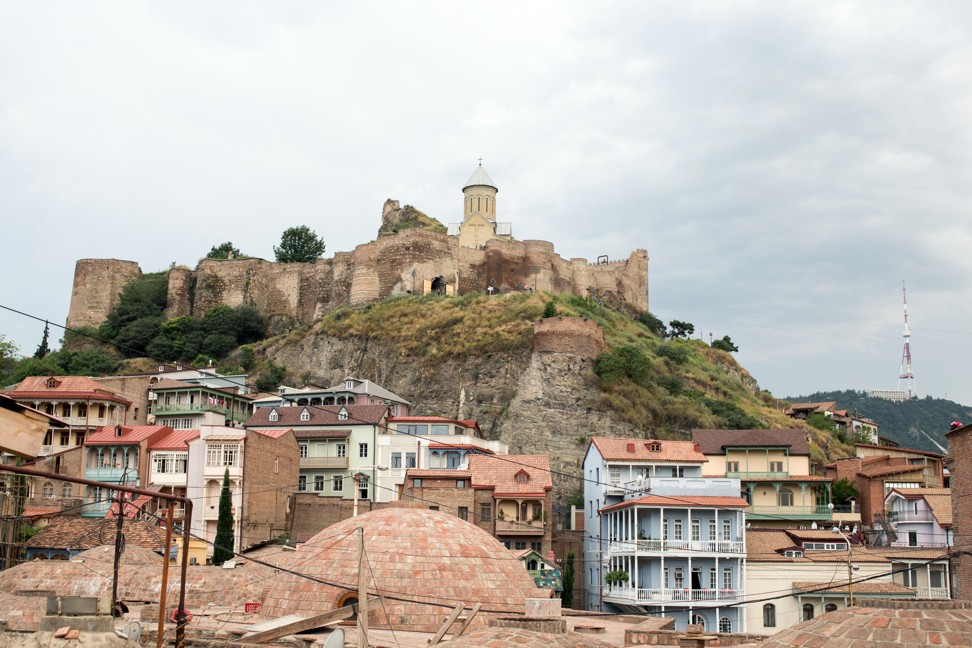
A street in old town of Tbilisi, Georgia. Photo: Alamy

Security issues in Persia led to the opening up of another branch of the legendary trade route and the first caravan loaded with silk made its way across Georgia in AD568.

Marco Polo referred to the weaving of raw silk in “a very large and fine city called Tbilisi”.

Today, the capital has shaken off the Soviet shackles and is on the cusp of going viral.

Travellers lap up the city’s monaster­ies, walled fortresses and 1,000-year-old churches before heading up the Georgian Military Highway to stay in villages nestling in the soaring Caucasus Mountains.

Public minibuses known as marshrutka labour into the foothills and although the vehicles can get cramped and uncomfortable, they beat travelling by camel.

Jordan

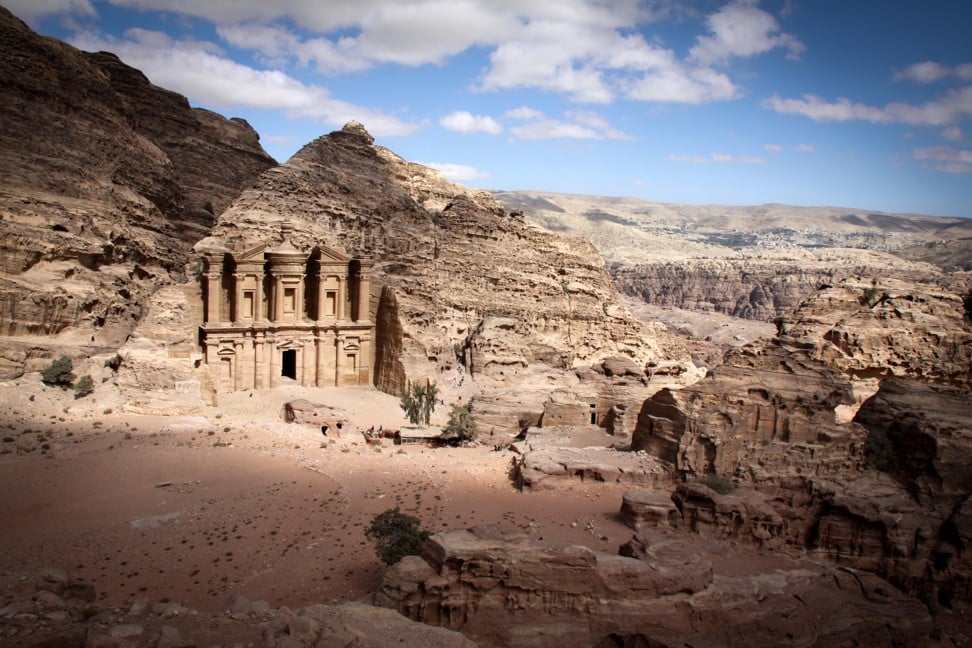
Petra, in Jordan. Photo: Alamy

The location of the Nabataean capital, Petra, wasn’t chosen by chance.

Savvy nomadic herders realised the site would make the perfect pit-stop at the confluence of several caravan trails, including a route to the north through Palmyra (in modern-day Syria), the Arabian peninsula to the south and Mediterranean ports to the west.

Huge payments in the form of taxes and protection money were collected – no wonder the most magnificent of the sand­stone city’s hand-carved buildings is called the Treasury.

The Red Rose City is still a gold mine – today’s tourists pay a hefty

US$70 fee to enter Petra

. The Nabataeans would no doubt approve.

Venice

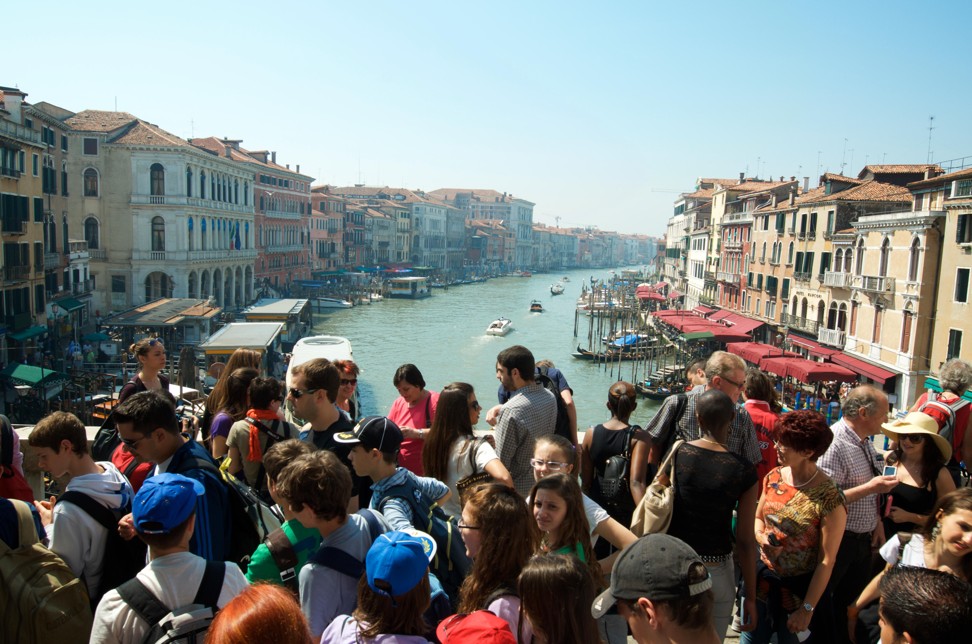
Tourists crowd onto Venice’s Rialto Bridge. Photo: Alamy

Trade enriched Venice beyond measure, helping shape the Adriatic entrepot into the floating marvel we see today.

Besides the well-documented flow of goods heading west, consignments of cotton, ivory, animal furs, grapevines and other goods passed through the strategically sited port on their way east.

Ironically, for a city built on trade and taxes, the biggest problem Venice faces today is visitors who don’t contribute enough to the local economy.

A lack of spending by millions of day-tripping tourists and cruise passengers who aren’t liable for nightly hotel taxes has prompted authorities to introduce a citywide access fee from January 2020.

Two thousand years ago, tariffs and tolls helped Venice develop and prosper. Now they’re needed to prevent its demise.

Source: SCMP

Law of Unintended Consequences

continuously updated blog about China & India

ChiaHou's Book Reviews

continuously updated blog about China & India

What's wrong with the world; and its economy

continuously updated blog about China & India