Archive for ‘Wang Yi’

22/02/2019

Saudi Arabia strikes $10 billion China deal, talks de-radicalisation with Xi

BEIJING (Reuters) – Saudi Crown Prince Mohammed bin Salman cemented a $10 billion (7.7 billion pounds) deal for a refining and petrochemical complex in China on Friday, meeting Chinese President Xi Jinping who urged joint efforts to counter extremism and terror.

The Saudi delegation, including top executives from state-owned oil company Saudi Aramco, arrived on Thursday on an Asia tour that has already seen the kingdom pledge investment of $20 billion in Pakistan and seek to make additional investments in India’s refining industry.

Saudi Arabia signed 35 economic cooperation agreements with China worth a total of $28 billion at a joint investment forum during the visit, Saudi state news agency SPA said.

“China is a good friend and partner to Saudi Arabia,” President Xi Jinping told the crown prince in front of reporters.

“The special nature of our bilateral relationship reflects the efforts you have made,” added Xi, who has made stepping up China’s presence in the Middle East a key foreign policy objective, despite its traditional low-key role there.

The crown prince said Saudi Arabia’s relations with China dated back “a very long time in the past”.

“In the hundreds, even thousands, of years, the interactions between the sides have been friendly. Over such a long period of exchanges with China, we have never experienced any problems with China,” he said.

Crown Prince Mohammed, who has come under fire in the West following the murder of Saudi journalist Jamal Khashoggi at the kingdom’s Istanbul consulate in October, said Saudi Arabia saw great opportunities with China.

“The Silk Road initiative and China’s strategic orientation are very much in line with the kingdom’s Vision 2030,” he said according to SPA, referring to Saudi Arabia’s sweeping economic reform programme.


Trade between the countries increased by 32 percent last year, he said.

China has had to step carefully in relations with Riyadh, since Beijing also has close ties with Saudi Arabia’s regional foe, Iran.

China is also wary of criticism from Muslim countries about its camps in the heavily Muslim far western region of Xinjiang, which the government says are for de-radicalisation purposes and rights groups call internment camps.

Xi told the crown prince the two countries must strengthen international cooperation on de-radicalisation to “prevent the infiltration and spread of extremist thinking”, Chinese state television said.

Saudi Arabia respected and supported China’s right to protect its own security and take counter-terror and de-radicalisation steps, the crown prince told Xi, according to the same report, and was willing to increase cooperation.

Meeting the crown prince earlier on Friday, Chinese Vice Premier Han Zheng said the two countries should enhance exchanges on their experiences in de-radicalisation, China’s official Xinhua news agency said in a separate report.

Chinese state media made no direct mention of Xinjiang in their stories on the crown prince’s meetings.

DEALS SIGNED

Aramco agreed to form a joint venture with Chinese defence conglomerate Norinco to develop a refining and petrochemical complex in the northeastern Chinese city of Panjin, saying the project was worth more than $10 billion.

The partners would form a company called Huajin Aramco Petrochemical Co as part of a project that would include a 300,000-barrels per day (bpd) refinery with a 1.5-million-metric tonnes per year ethylene cracker, Aramco said.

Aramco will supply up to 70 percent of the crude feedstock for the complex, which is expected to start operations in 2024.

The investments could help Saudi Arabia regain its place as the top oil exporter to China, a position Russia has held for the last three years. Saudi Aramco is set to boost market share by signing supply deals with non-state Chinese refiners.

Aramco also signed an agreement to buy a 9 percent stake in Zhejiang Petrochemical, Saudi state news agency SPA said. This formalised a previously announced plan to gain a stake in a 400,000-bpd refinery and petrochemicals complex in Zhoushan, south of Shanghai.

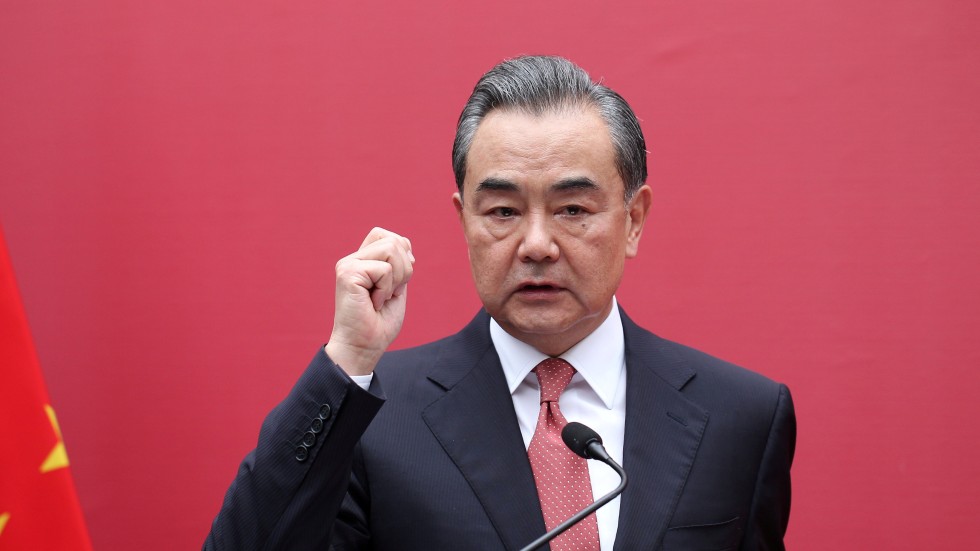
China sees “enormous potential” in Saudi Arabia’s economy and wants more high-tech cooperation, State Councillor Wang Yi, the Chinese government’s top diplomat, said on Thursday.

But China was not seeking to play politics in the Middle East, the widely read state-run tabloid, the Global Times, said in an editorial.

“China won’t be a geopolitical player in the Middle East. It has no enemies and can cooperate with all countries in the region,” said the paper, published by the ruling Communist Party’s official People’s Daily.

“China’s increasing influence in the Middle East comes from pure friendly cooperation. Such a partnership will be welcomed by more countries in the Middle East.”

Source: Reuters
15/02/2019

Chinese Foreign Minister Wang Yi holds talks in Thailand ahead of general election

  • Official will meet his opposite number Don Pramudwinai in Chiang Mai
  • Wang likely to discuss investment projects under Beijing’s ‘belt and road’ plan
PUBLISHED : Friday, 15 February, 2019, 7:17pm
UPDATED : Friday, 15 February, 2019, 7:17pm

9 Feb 2019

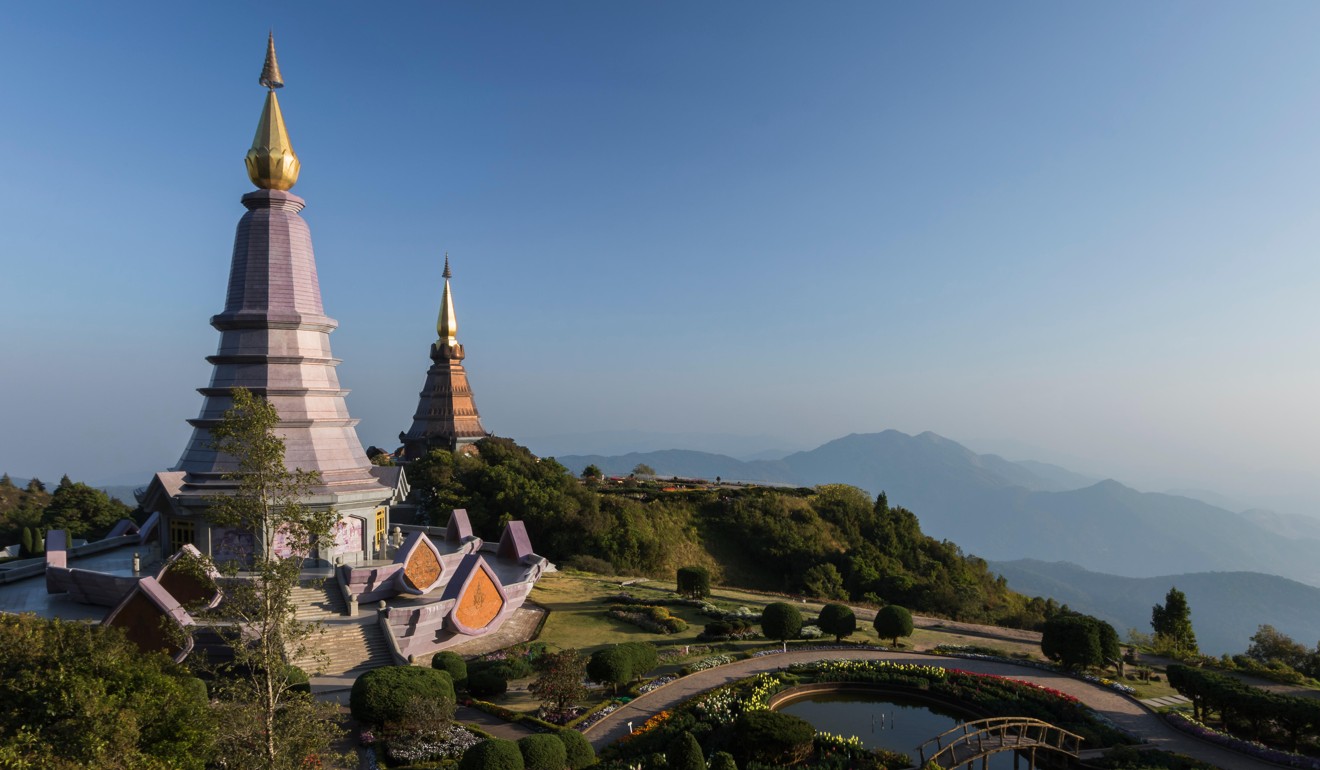
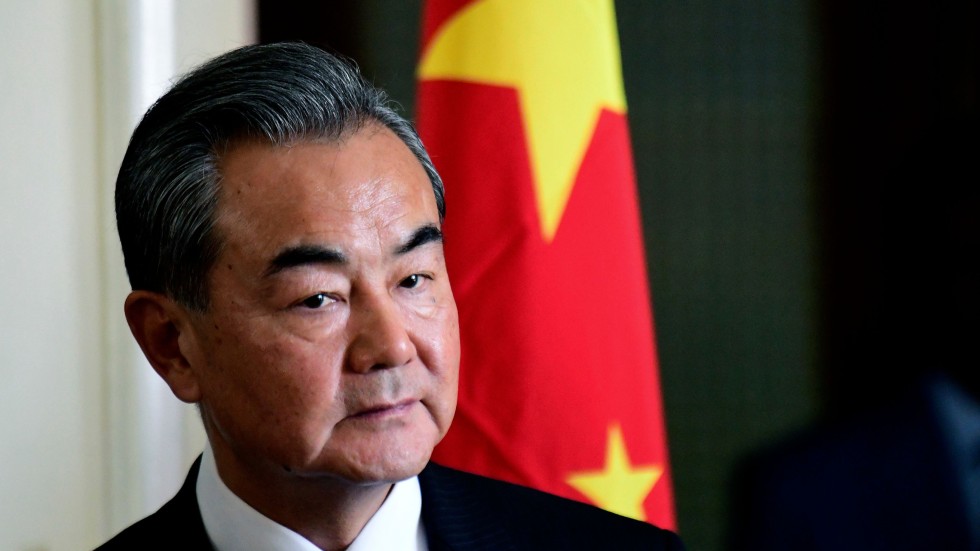
Chinese Foreign Minister Wang Yi arrived in Thailand on Friday for high-level talks likely aimed at reassuring Beijing about its investments in the Southeast Asian country ahead of a long-delayed general election, analysts said.

During his two-day trip to the northern city of Chiang Mai, Wang will meet his counterpart Don Pramudwinai, Thailand’s ministry of foreign affairs said on its website.

Zhang Mingliang, a Southeast Asian affairs specialist at Jinan University, said China was concerned the upcoming poll might have an impact on its interests.

“The recent events regarding the sudden changes to Thailand’s prime ministerial candidate could affect the country’s political stability and affect its relationship with China,” he said.

He was referring to the fact that on Wednesday, Thailand’s Election Commission asked the constitutional court to dissolve the Thai Raksa Chart, a political party allied with the powerful Shinawatra clan, for putting forward Princess Ubolratan as candidate for prime minister.

The move came just days after Thai King Maha Vajiralongkorn, Ubolratan’s younger brother, issued a royal decree denying her bid to become prime minister hours after her name was submitted.
Zhang said that only by ensuring the political stability of Thailand could China’s interests in the country and Southeast Asia as a whole be protected.

“In the past, political instability meant Thailand’s leaders were unable to attend foreign events such as meetings with Asean and China,” he said.

“If there is political stability in Thailand … that can aid its contribution to Asean and its ties with China.

“China’s relationship with Thailand is the best among the Asean nations, with the least conflict of interests,” he said.

Concerns over China’s overseas investments are growing and there have been accusations that Beijing is using them to gain political leverage.

China and Thailand reached an agreement in 2017 for the construction of Thailand’s first high-speed rail line. Once completed it will run from Bangkok to Nong Khai on the Thai border with Laos.

The line is seen as a key project under the “Belt and Road Initiative”, Beijing’s plan to connect China with countries across Asia, the Middle East and Africa.

Elections in Southeast Asia have proved troublesome for the initiative, however. Soon after being re-elected as prime minister of Malaysia last year, Mahathir Mohamad’s government cancelled the China-funded US$20 billion East Coast Rail Link. Officials later backtracked on the decision, leaving its future in the air.

Xu Liping, a specialist in Southeast Asian studies at the Chinese Academy of Social Sciences, said that Thailand, as this year’s chair of Association of Southeast Asian Nations, has a crucial role to play in promoting China’s relationship with other members of the group.

“Ensuring the continuity of China-Thailand ties after the elections in March will also be on the agenda in Wang’s meeting,” he said.

Meanwhile, China’s top diplomat Yang Jiechi, a member of the Communist Party Politburo, travelled to Germany on Friday to attend the Munich Security Conference, which runs until Sunday.

Source: SCMP

15/02/2019

Chinese FM to visit Thailand for strategic consultation

BEIJING, Feb. 14 (Xinhua) — Chinese State Councilor and Foreign Minister Wang Yi will travel to Thailand for strategic consultation from Feb. 15 to 16, Foreign Ministry spokesperson Hua Chunying said Thursday.

Wang will make the trip at the invitation of Thai Foreign Minister Don Pramudwinai, Hua said at a daily press briefing.

Source: Xinhua

29/01/2019

Chinese State Councilor meets Sudanese presidential envoy

CHINA-BEIJING-WANG YI-SUDAN-MEETING (CN)

Chinese State Councilor and Foreign Minister Wang Yi (R) meets with Sudanese presidential envoy Faysal Hassan Ibrahim Ali in Beijing, capital of China, Jan. 28, 2019. (Xinhua/Yin Bogu)

BEIJING, Jan. 28 (Xinhua) — Chinese State Councilor and Foreign Minister Wang Yi met with Sudanese presidential envoy Faysal Hassan Ibrahim Ali in Beijing Monday.

Faysal updated the situation in Sudan, saying that the situation is fully under control and people’s livelihoods had returned to normal.

The Sudanese side appreciated China for its assistance to Sudan in maintaining national peace and stability, as well as promoting economic development, Faysal said.

“As strategic partners, China and Sudan always understand and support each other,” Wang said, adding that China will firmly continue to support Sudan to follow the development path suited to its national conditions, maintain social stability and resolutely oppose external forces interfering in Sudan’s internal affairs.

“China is willing to continue to provide support and assistance with in its capacity to Sudan,” Wang said.

Source: Xinhua

27/01/2019

China ready to work with France, Italy to inject positive energy into world: FM

ROME, Jan. 26 (Xinhua) — China is willing to work with France and Italy and meet each other halfway, enhance strategic communication, and consolidate strategic mutual trust and cooperation, so as to inject new impetus to bilateral ties and positive energy into the international community, Chinese State Councilor and Foreign Minister Wang Yi has said.

Wang made the remarks during a press briefing on Friday night, right before concluding his visits to France and Italy.

The top Chinese diplomat termed as “very successful” the 18th consultation of the coordinators for the China-France Strategic Dialogue and the 9th joint meeting of the China-Italy Government Committee.

Against the backdrop of ongoing profound adjustment of relations and increased frictions among major powers, Wang said France and Italy, both major members of the European Union and countries with global influence, expressed their stance that they cherish the comprehensive strategic partnerships with China.

Wang believed that the China-France and China-Italy comprehensive strategic partnerships had been further enhanced.

Wang also told reporters that both France and Italy have clearly welcomed Chinese investment to their countries, promising not to adopt any restrictions on specific enterprises and discriminations against any enterprises.

He praised these statements as “not only timely but also necessary”, adding that Chinese companies will increasingly turn their eyes to countries that are worth their trust.

Wang said he also had deep exchange of views with French and Italian officials on how to deal with various global challenges.

The tripartite partners, Wang said, have confirmed that they would firmly uphold the rule-based multilateralism and maintain the contemporary international system with the UN as the core.

He said all three countries completely disagreed with unilateralism and egoism, which actually represents the general perspective of the international community. It will be proved that any unilateralism and egoism are unpopular and doomed to be unsustainable, Wang added.

Source: Xinhua

26/01/2019

Huawei’s treatment by foreign countries ‘unfair and immoral’, China’s foreign minister say

  • Boycott of Chinese telecom giant’s products has ‘obvious political intentions’, Wang Yi says
  • Comments come as Britain’s Vodafone becomes latest Western firm to suspend purchases
PUBLISHED : Saturday, 26 January, 2019, 4:20pm
UPDATED : Saturday, 26 January, 2019, 4:20pm

The use of state power to smear or discredit a legitimate business is “not only unfair but also immoral”, China’s Foreign Minister Wang Yi said in Rome on Friday when asked to comment on the recent problems faced by Huawei Technologies.

“Considering the obvious political intentions and manipulation behind it, it is even more unacceptable,” he said, without naming the Chinese telecom equipment giant.

“I believe that all countries should be vigilant and resist this unreasonable practice, and such bullying,” he told reporters from China’s state media at the end of a three-day trip to France and Italy, according to an article on the ministry’s website.

“Of course, every country is entitled to protect their right to maintain information security, but they cannot use security as an excuse to damage or even strangle legitimate business operations,” he said.

“Companies are just companies, and the survival and development of companies must ultimately be determined by market competition. What governments have to do is to provide them with a fair, just and transparent business environment.”

Wang’s comments came after Vodafone Group became the latest Western company to boycott Huawei products. The British telecom conglomerate said on Friday it had suspended its purchases of the Chinese firm’s equipment for the core of its wireless networks.

Huawei is the world’s largest telecom equipment supplier and has been the subject of intense international scrutiny since its chief financial officer Sabrina Meng Wanzhou was arrested in Canada on December 1, pending extradition to the United States.

The US has sought to persuade its allies, including Japan, Australia and New Zealand, not to use Huawei products in their fifth-generation wireless networks, on the grounds Beijing could use them for spying. The telecom giant has denied any such links to the Chinese government.

During his low-key European tour, Wang met French President Emmanuel Macron on Wednesday before attending a ceremony with his opposite number Jean-Yves Le Drian to mark the 55th anniversary of the two countries establishing diplomatic ties on Thursday.

Wang ended his trip on Friday with a meeting in Rome with Italian Prime Minister Giuseppe Conte.

Source: SCMP

26/01/2019

Chinese FM calls for further cooperation with Italy

ITALY-ROME-CONTE-WANG YI-MEETING

Italian Prime Minister Giuseppe Conte (R) meets with Chinese State Councilor and Foreign Minister Wang Yi at Palazzo Chigi, the Italian prime minister’s office, in Rome, Italy, Jan. 25, 2019. (Xinhua/Cheng Tingting)

ROME, Jan. 25 (Xinhua) — Chinese State Councilor and Foreign Minister Wang Yi and Italian Prime Minister Giuseppe Conte agreed on Friday to push bilateral ties to a new high.

During their meeting at Palazzo Chigi, the Italian prime minister’s office, Conte asked Wang to convey his sincere greetings to Chinese President Xi Jinping and Prime Minister Li Keqiang.

Italy attaches great importance to Italy-China relations and hopes to maintain high-level exchanges with China and deepen mutual cooperation in such areas as economy, trade, investment and energy, said Conte.

Italy also attaches great importance to the cooperation under the frame of the Belt and Road Initiative and is willing to make joint efforts with China to continuously cultivate new growth points for bilateral cooperation,Conte said added.

Wang conveyed Chinese leaders’ cordial greetings to Conte.

As the respective birthplace of Eastern and Western civilizations, China and Italy have enjoyed friendly exchanges since ancient times, Wang said.

This year marks the 15th anniversary of the China-Italy comprehensive strategic partnership, and the next year will mark the 50th anniversary of the establishment of the diplomatic relations, Wang noted, expressing the hope that both sides seize the opportunity to lift bilateral relations to a new high.

China and Italy should understand and support each other and establish a long-lasting comprehensive strategic partnership regardless of how the international situation changes, Wang said.

Wang also said Italy is a natural partner to cooperate with under the Belt and Road Initiative and that China welcomes Italy to actively participate in the construction of the Belt and Road to benefit the two peoples and promote Eurasian interconnection and development.

China has been expanding its opening-up and its market potential has been steadily released, which will bring significant opportunities to various countries including Italy, Wang said.

As the Chinese and Italian economies are highly complementary, Wang said, enhancing cooperation in such fields as manufacturing, agriculture and innovation will surely bring tangible benefits to the two peoples.

Wang also noted that China is willing to encourage qualified Chinese companies to invest in Italy and believes Italy will provide them with a fair commercial environment.

Wang arrived in Italy on Friday to attend the ninth joint meeting of the China-Italy Government Committee at the invitation of Italian Foreign Minister Enzo Moavero Milanesi, with whom he also held talks.

Source: Xinhua

Law of Unintended Consequences

continuously updated blog about China & India

ChiaHou's Book Reviews

continuously updated blog about China & India

What's wrong with the world; and its economy

continuously updated blog about China & India