Archive for ‘warns’

17/04/2020

Coronavirus: China oil titan warns of gathering ‘black swan’ risks for Beijing after pandemic

  • Fu Chengyu, the former chairman of China National Offshore Oil Corporation (CNOOC), says hostility towards Beijing will increase after the coronavirus
  • US will try to ‘thwart China’s rise’ and economic fallout from Covid-19 will be worse than the global financial crisis, says Fu
Former Sinopec chairman Fu Chengyu says China will face a more hostile world post coronavirus. Photo: EPA

The world is set to become more hostile for China after the coronavirus as the risk of “black swan” events gathers for Beijing, a heavyweight in China’s state oil industry has warned, reflecting growing wariness about the geopolitical environment among political and business elites.

Fu Chengyu, the former chairman of both China National Offshore Oil Corporation (CNOOC) and Sinopec Group, painted an ominous picture of increasing antagonism from the United States and damaging unforeseen events, known as black swans, like Covid-19

 at an online symposium organised by business magazine Caijing.
The US would “mercilessly” suppress China in the fields of economics, trade, finance and technology, and Washington was set on taking advantage of the coronavirus pandemic to “forge a less favourable international environment for” the nation, Fu said this week.

“We’ve smelled the odours and new plots against China are in formation,” he said.

After the epidemic, the external environment for our survival will be more severe – Fu Chengyu
“After the epidemic, the external environment for our survival will be more severe … we must prepare for the worst and do our best to achieve the best possible results.”
While Fu has retired from his posts at state companies, he is an influential voice in

China’s oil industry

with decades of experience and contacts in the US petroleum sector.

Fu was a counterpart of Rex Tillerson, who was chairman of ExxonMobil from 2006 to 2017, and served as US State Secretary under President Donald Trump until March 2018.

While at the helm of CNOOC in the early 2000s, he felt political heat from Washington over a US$18.5 billion takeover bid for the American oil company Unocal in 2005, which the company was subsequently forced to withdraw.

China says no evidence to suggest coronavirus virus came from Wuhan’s lab
Speaking at the event in Beijing, Fu said that the coronavirus, which has heightened tensions between Beijing and Washington, will have impacts on global value chains and the world trade landscape for years to come.

“The crisis stemming from the coronavirus pandemic won’t be over in just one or two years … the impact will last longer than the 2008 global financial crisis,” he said.

He added that China would face numerous “black swan” risks in the future.

President Xi Jinping warned in 2019 that China must be on guard for black swan risks as well as “grey rhino” events, referring to an obvious threat that is often neglected.

Geopolitics is getting worse and worse, and we need to be very careful. The US will try various ways to thwart China’s rise, and energy is an important area

To respond to the economic fallout from the coronavirus, China must do more to create a self-sustaining domestic economy, Fu said, and in particular reduce input prices for gas and electricity and boost public services such as health care and education.

“Geopolitics is getting worse and worse, and we need to be very careful,” Fu said. “The US will try various ways to thwart China’s rise, and energy is an important area.”

The US could potentially form a new oil export alliance with Saudi Arabia and Russia to make it possible to cut oil supplies to China, he said.

“China must be prepared for such a scenario, and even when supplies are cut off, we can have some basic self-protection.”

Source: SCMP
26/02/2020

Coronavirus pandemic a question of ‘when’ not ‘if’, warns U.S.

SHANGHAI/SEOUL (Reuters) – Asia reported hundreds of new coronavirus cases on Wednesday, including a U.S. soldier stationed in South Korea, as the United States warned of an inevitable pandemic and outbreaks in Italy and Iran spread to other countries.

World stocks tumbled for the fifth day on fears of prolonged disruption to global supply chains, while safe-haven gold rose back toward seven-year highs and U.S. bond yields held near record lows.

Stock markets globally have wiped out $3.3 trillion of value in the past four trading sessions, as measured by the MSCI all-country index.

The disease is believed to have originated in a market selling wildlife in the central Chinese city of Wuhan late last year and has infected about 80,000 people and killed more than 2,700, the vast majority in China.

The U.S. Centers for Disease Control and Prevention urged Americans to prepare, saying that while the immediate risk there was low the global situation suggested a pandemic was likely.

“It’s not a question of if. It’s a question of when and how many people will be infected,” the CDC’s principal deputy director, Anne Schuchat, said on Tuesday.

World Health Organization (WHO) chief Tedros Adhanom Ghebreyesus, however, advised against referring to a pandemic.

“We should not be too eager to declare a pandemic without a careful and clear-minded analysis of the facts,” Tedros said in remarks to Geneva-based diplomats.

“Using the word pandemic carelessly has no tangible benefit, but it does have significant risk in terms of amplifying unnecessary and unjustified fear and stigma, and paralyzing systems. It may also signal that we can no longer contain the virus, which is not true.”

‘DON’T WAIT’

The United States has reported 57 cases of the virus. U.S. President Donald Trump, back in Washington after a visit to India, said on Twitter that he would meet U.S. officials for a briefing on the coronavirus on Wednesday.

Dr Bruce Aylward, head of a joint WHO-Chinese mission on the outbreak, told reporters on his return to Geneva that countries’ preparations should not wait.

“Think the virus is going to show up tomorrow. If you don’t think that way, you’re not going to be ready,” he said. “This a rapidly escalating epidemic in different places that we have got to tackle super-fast to prevent a pandemic.”

Aylward said China’s “extraordinary mobilization” showed how an aggressive public health policy could curb its spread.

The WHO says the outbreak peaked in China around Feb. 2, after authorities isolated Hubei province and imposed other containment measures.

China’s National Health Commission reported another 406 new infections on Wednesday, down from 508 a day earlier and bringing the total number of confirmed cases in mainland China to 78,064. Its death toll rose by 52 to 2,715.

The WHO said only 10 new cases were reported in China on Tuesday outside Hubei.

South Korea, which with 1,261 cases has the most outside China, reported 284 new ones including a U.S. soldier, as authorities readied an ambitious plan to test more than 200,000 members of a church at the center of the outbreak.

Of the new cases, 134 were from Daegu city, where the virus is believed to have been passed among members of the Shincheonji Church of Jesus, the Korea Centers for Disease Control and Prevention said.

The U.S. military said a 23-year-old soldier based in Camp Carroll, about 20 km (12 miles) from Daegu, had been infected and was in self-quarantine at home.

OLYMPIC WORRIES

In Japan, Prime Minister Shinzo Abe called for sports and cultural events to be scrapped or curtailed for two weeks to stem the virus as concern mounted for the 2020 Tokyo Olympics.

Japan’s professional baseball teams would play matches without spectators until March 15 due to virus concerns, Kyodo news agency reported.

Japan has nearly 170 virus cases, besides the 691 linked to a cruise ship that was quarantined of its coast this month. Six people have died in Japan, including four from the ship.

There have been nearly 50 deaths outside China, including 11 in Italy and 19 in Iran, the most outside China, according to a Reuters tally.

Iran’s deputy health minister – seen mopping his brow at a televised news conference – was among its 139 coronavirus infections. Cases linked to Iran have been reported across the region.

Kuwait said six new coronavirus cases, all linked to travel to Iran, took its tally to 18, while Bahrain said its infections had risen to 26 after three new ones on a flight from Iran.

The United Arab Emirates, which has reported 13 coronavirus cases, is prepared for “worst case scenarios” as it spreads in the Middle East, a government official said.

In Europe, Italy has become a front line in the global outbreak with 322 cases. Italians or people who had recently visited the country, have tested positive in Algeria, Austria, Croatia, Romania, Spain and Switzerland.

Two hotels, one in Austria and one in Spain’s Canary Islands, were also locked down after cases emerged linked to Italy. Spain also reported its first three cases on the mainland.

France, with 17 cases, reported its second death.

Source: Reuters

19/08/2019

Beijing warns US of ‘consequences’ after Donald Trump approves US$8 billion sale of fighter jets to Taiwan

  • President says sale of Lockheed Martin F-16Vs will go ahead if ratified by Senate
  • Military experts have said the jets would bolster Taiwan’s ability to counter the threat of air strikes from mainland China
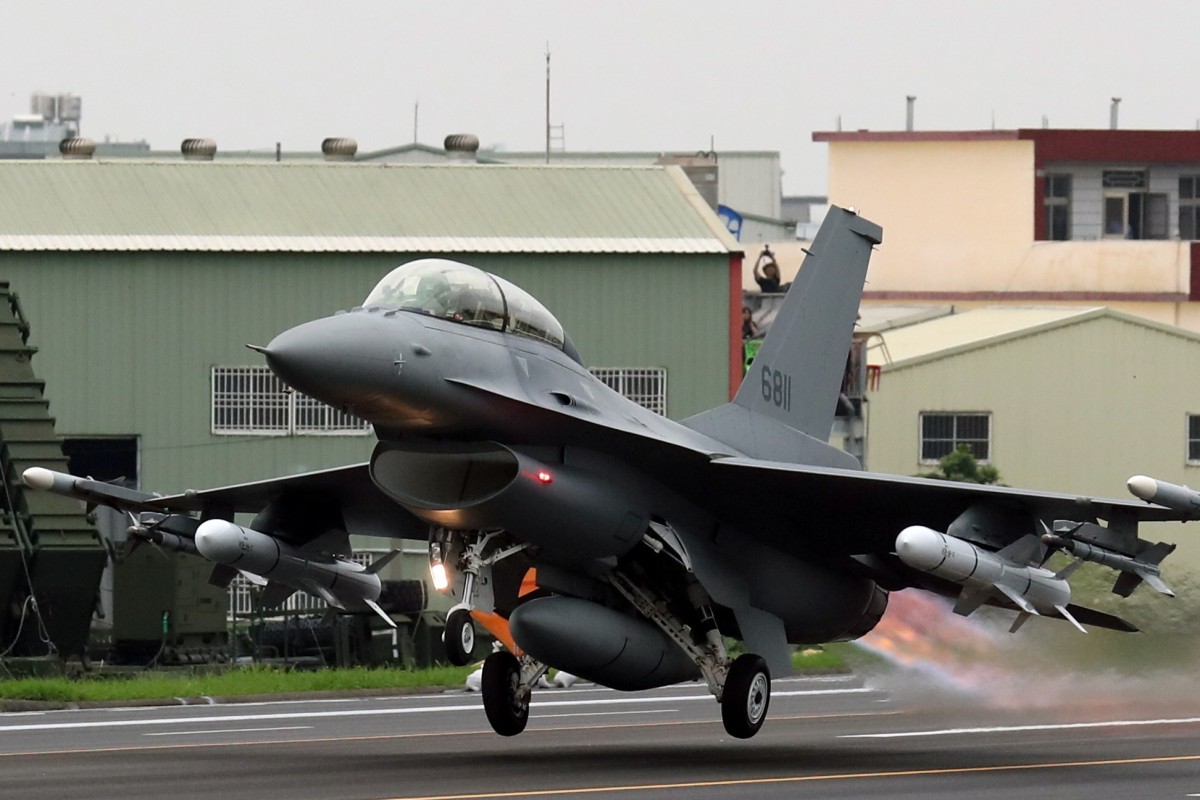
A Taiwan Air Force F-16V takes off during a drill in May. Photo: EPA-EFE
Beijing warned it would take countermeasures against Washington for selling 66 fighter jets to Taiwan after US President Donald Trump said he had approved the US$8 billion deal.
Chinese foreign ministry spokesman Geng Shuang on Monday said the sale of Lockheed Martin F-16V jets was a serious violation of the one-China principle.
“China has made numerous solemn representations to the US on the sale of F-16V jets to Taiwan,” Geng said in a press conference, adding that the United States should halt the sale.
“The US has to bear all the consequences triggered by the sale,” Geng said. “China will take necessary measures to defend its self-interest based on the development of the situation.”

Geng gave no details of the action China would take. In July, Beijing said it would impose sanctions on US firms involved in a deal to sell US$2.2 billion worth of tanks, missiles and related equipment to Taiwan, describing it as harmful to China’s sovereignty and national security.

Liang Yunxiang, an international relations expert from Peking University, said one countermeasure Beijing might use was to suspend military-to-military exchanges with the United States.

“And Beijing might also try to increase pressure on the island, including by conducting more military drills near or in the Taiwan Strait,” Liang saiOn Sunday, Trump said he had approved the proposed deal for the jets – a move set to significantly boost the self-ruled island’s defences against mainland China.

‘Fighter jets trump battle tanks’ in Taiwan’s US arms priorities

Speaking to reporters in New Jersey on Sunday, Trump said that the sale would need to be ratified by the US Senate but that he had approved it.

“It’s US$8 billion. It’s a lot of money. That’s a lot of jobs. And we know they’re going to use these F-16s responsibly,” he said.

If the deal is approved by Congress, it will be the first time since 1992 that the United States has sold F-16s to Taiwan. Previous requests were rejected by the Barack Obama administration, which instead offered to upgrade Taiwan’s existing fleet of about 140 F-16A/B Block 20 aircraft.

During months of slow progress since  the sale  was outlined earlier this year, some lawmakers and defence experts had suggested that Trump was using the proposed deal as leverage to secure a better agreement for the US in talks to resolve its year-long

trade war with China.
Taiwan’s presidential office and foreign ministry lauded Trump’s announcement, calling it a strong sign of the US’ commitment to its security and saying the deal would help to maintain regional stability.
“The new warplanes will greatly strengthen our anti-air defence capability and we will continue to be devoted to safeguarding peace and stability across the Taiwan Strait and in the region, thereby maintaining freedom and democracy in Taiwan,” presidential office spokesman Alex Huang said.
‘Fighter jets trump battle tanks’ in Taiwan’s US arms priorities
In a statement, Taiwan’s foreign ministry said persistent war games by the mainland around the island and in the East and South China Sea had not only sabotaged peace and stability in the region but also triggered grave concern from China’s neighbours.
It described Trump’s approval of the deal as a “strong indicator of the close and growing security partnership between the US and Taiwan”.
Opinion: Care needed over Taiwan arms deal
Military experts have said the new variant of the F-16, the Viper – which can carry a wide range of short and medium-range air-to-air missiles – is more able to counter the threat of an air strike from mainland China’s fourth-generation aircraft, such as the Su-35 and J-10.
Last week, Republican Senator Marco Rubio said the US administration had  made progress in advancing the deal, which he called “an important step in support of Taiwan’s self-defence efforts”.
In July, the US  also approved arms sales to Taiwan worth US$2.2 billion, including 108 M1A2T Abrams tanks and 250 Stinger portable surface-to-air missiles.
Beijing strongly opposes arms deals with Taiwan, which it considers a renegade province, but the US is obliged to help defend the self-governing island under the terms of its Taiwan Relations Act, effective since 1979.
Source: SCMP
Law of Unintended Consequences

continuously updated blog about China & India

ChiaHou's Book Reviews

continuously updated blog about China & India

What's wrong with the world; and its economy

continuously updated blog about China & India