Archive for ‘Weihai’

29/02/2020

Could the coronavirus help to improve China’s ties with South Korea, Japan?

  • Cooperation on ‘soft’ issues like public health can provide an ‘opportunity for improvement’ in the nations’ broader relationship, international affairs expert says
  • Foreign ministers agree to do all they can to ensure Chinese President Xi Jinping’s planned visits to east Asian neighbours go ahead later this year
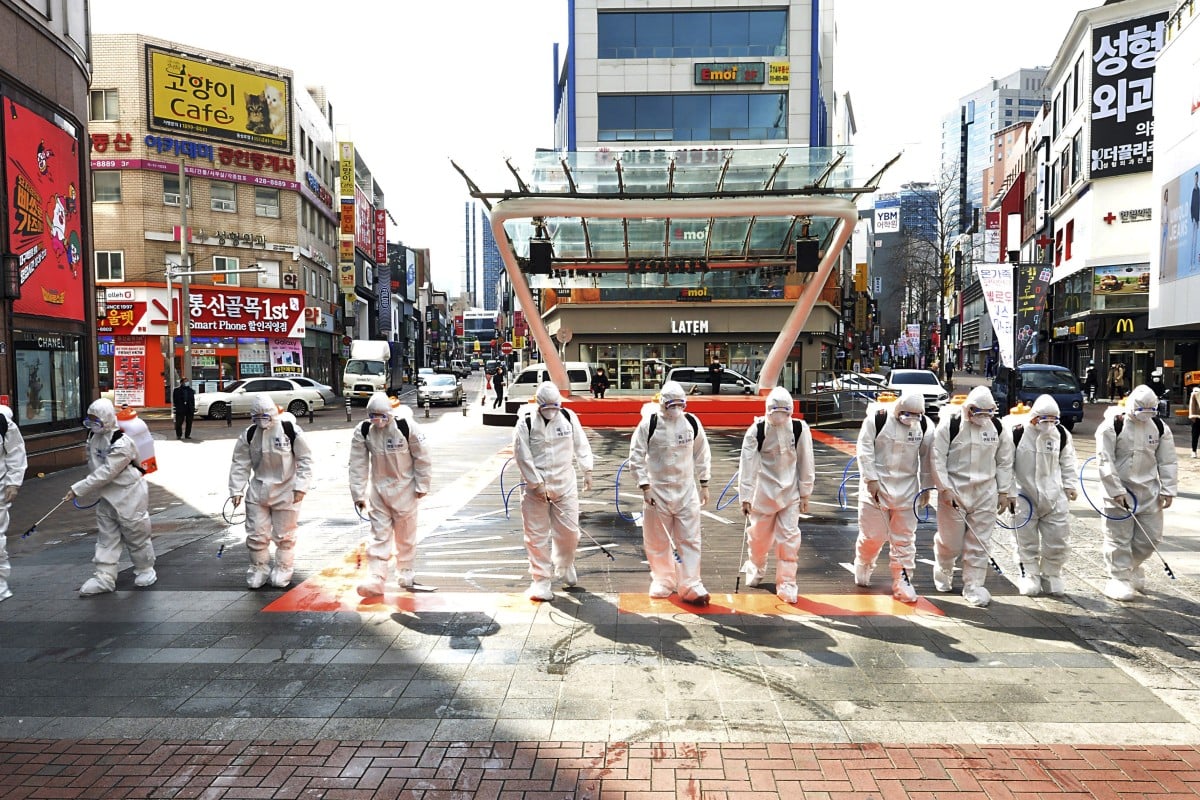
South Korea on Thursday reported 505 new coronavirus cases, its largest increase yet. Photo: AP
The rapid spread of the coronavirus outside China, especially in South Korea and

Japan, 

has created a fresh challenge to Beijing’s delicate relationship with its northeast Asian neighbours, but experts say the unprecedented public health crisis could draw them closer, at least for now.

China’s Foreign Minister Wang Yi held separate conversations with his South Korean and Japanese counterparts on Wednesday as Beijing scrambles to deal with the growing risk of imported infections from the two countries.
In a sign of the “strong momentum at the leadership level on both sides”, Wang and Japanese Minister for Foreign Affairs Toshimitsu Motegi agreed to ensure Chinese President Xi Jinping’s state visit to Japan later this year goes ahead as planned, despite mounting fears the virus outbreak will become a pandemic.
China’s foreign ministry said on Thursday that Yang Jiechi, Wang’s predecessor and Xi’s top aide on foreign affairs, would visit Japan on Friday. His trip is expected to pave the way for Xi’s high stakes visit in the spring, observers said.

But Benoit Hardy-Chartrand, an international affairs expert at Temple University in Tokyo, said that if the outbreak did not subside in the next few weeks, Japanese Prime Minister Shinzo Abe’s government would come under intense pressure to delay the visit.

“Despite reassuring official pronouncements, no one would be surprised if the visit was postponed to a later date,” he said. “With an already declining approval rate, the Abe administration would be hard-pressed to go ahead with the summit.”

During her phone call with Wang, South Korean Foreign Minister Kang Kyung-wha urged China to refrain from carrying out what she described as “excessive” restrictions and forcible quarantine measures against visitors from her country, the Yonhap news agency reported.

White House announces coronavirus ‘coordinator’ to lead response under Pence
28 Feb 2020
South Korea

on Thursday reported 505 new coronavirus cases – its largest increase yet and the first time any country has confirmed more daily cases than China. The outbreak has now spread to more than 30 countries and killed more than 2,800 people.

US-CHINA TRADE WAR
In the cities of Qingdao and Weihai in east China’s Shandong province – both of which are home to large South Korean and Japanese communities – local authorities have begun to quarantine arrivals from the two countries, while similar measures targeting South Koreans in particular have been introduced in Shenyang and Nanjing.

This is the first time China, where the coronavirus originated and which earlier criticised other nations for overreacting to the outbreak, has introduced country-specific measures in the name of disease control.

The move sparked fierce criticism in South Korea, with more than 750,000 people signing an online petition calling for a ban on Chinese visitors.

The foreign ministry in Seoul said that about 40 nations and regions had imposed some sort of restrictions on South Korean visitors.

Both South Korea and Japan – which were among the first to offer support and aid to China when the epidemic took hold – have imposed only partial restrictions on Chinese travellers, mostly those from Hubei, the province at the centre of the contagion.

Wang again thanked South Korea for its support and defended China’s control measures, saying they were necessary to reduce the cross-border movement of people and restrict the spread of the disease, China’s foreign ministry said.
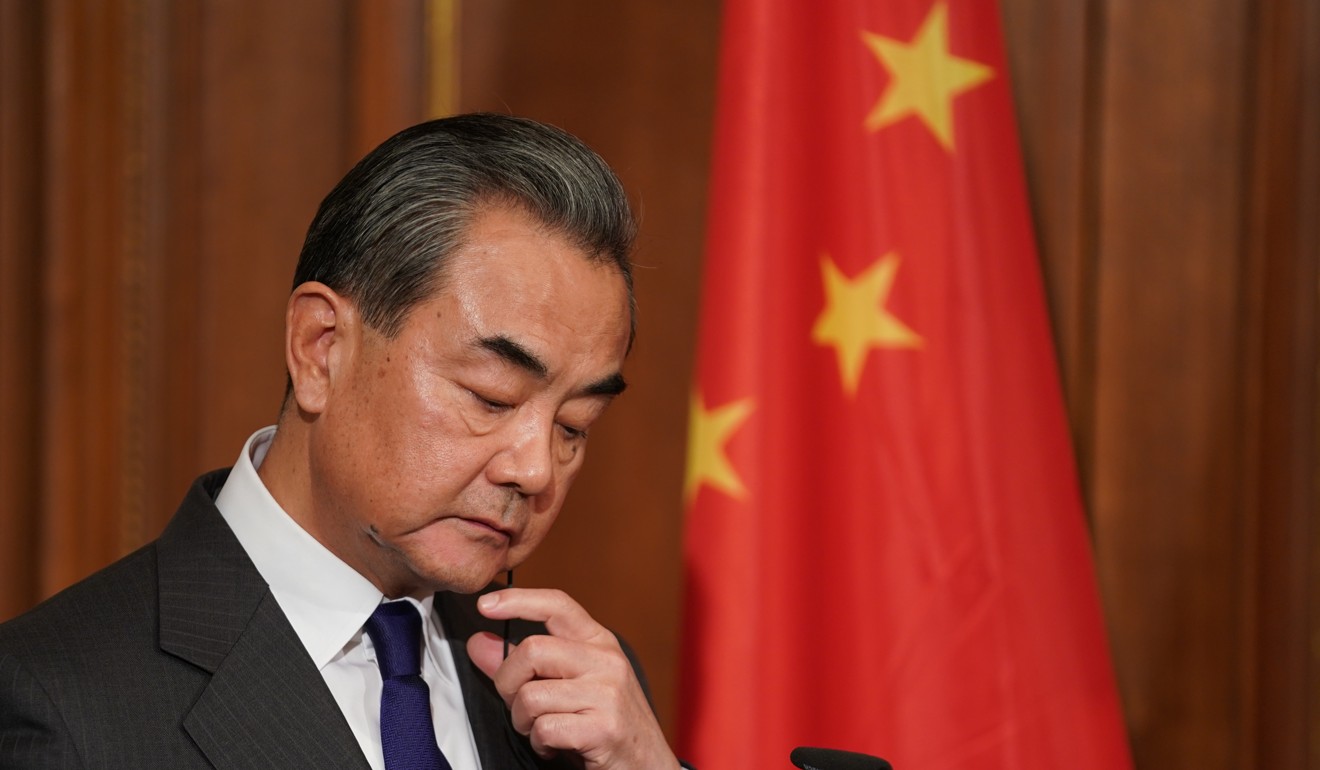
China’s Foreign Minister Wang Yi. Photo: EPA-EFE
Yonhap said both Wang and Kang also agreed that Xi’s proposed trip to South Korea in the first half of the year would proceed as planned.
Chinese experts said the coronavirus had deepened distrust and antagonism towards China in both countries, with many South Koreans and Japanese blaming China for the spread of the disease.
Li Wen, an expert from the China Institute of International Studies, said the coronavirus crisis had seen the rise of the “China threat” in South Korea, with its government under enormous pressure to get tough on its giant neighbour.

According to Yonhap, Kang urged South Korean diplomats in China earlier this month to help minimise any negative impact the epidemic might have had on relations between the two countries.

Hardy-Chartrand said relations between China and South Korea remained tense because of Seoul’s deployment of the American-made THAAD missile defence system, which in turn led to Beijing introducing unofficial sanctions that caused resentment among South Koreans.

Hongkongers stuck in Japan with airlines reluctant to fly them home

28 Feb 2020

But the latest spat over the control measures was unlikely to be a major obstacle to regional relations, he said.

“Overall, cooperation on so-called soft issues like public health, as we are witnessing at the moment, can provide an opportunity for further improvement in the broader relationship, at least in the short term,” he said.

China-Japan relations might also benefit from closer cooperation on disease control given uncertainty in the region over the US-China trade war, the North Korean denuclearisation impasse, the United States’ commitment to its allies, and the coronavirus outbreak, he said.

“I am less sanguine about the mid- to long-term prospects for Sino-Japanese relations, given that the sources of the tensions that we saw from 2010 to 2017, namely the East China Sea territorial dispute and other historical issues, remain wholly unresolved,” he said.

According to a Pew study in December, 85 per cent of Japanese have an unfavourable view of China, the highest among 34 countries surveyed, while 63 per cent of South Koreans see China negatively.

Source: SCMP

12/06/2019

China’s new high-frequency radar system could spot stealth aircraft from a long distance, creator says

  • Radar expert Liu Yongtan says surface wave system could track ships and planes from hundreds of kilometres away and is protected from anti-radiation missiles
Stealth aircraft like the US F-35 are less well protected against high-frequency surface wave radars. Photo: AP
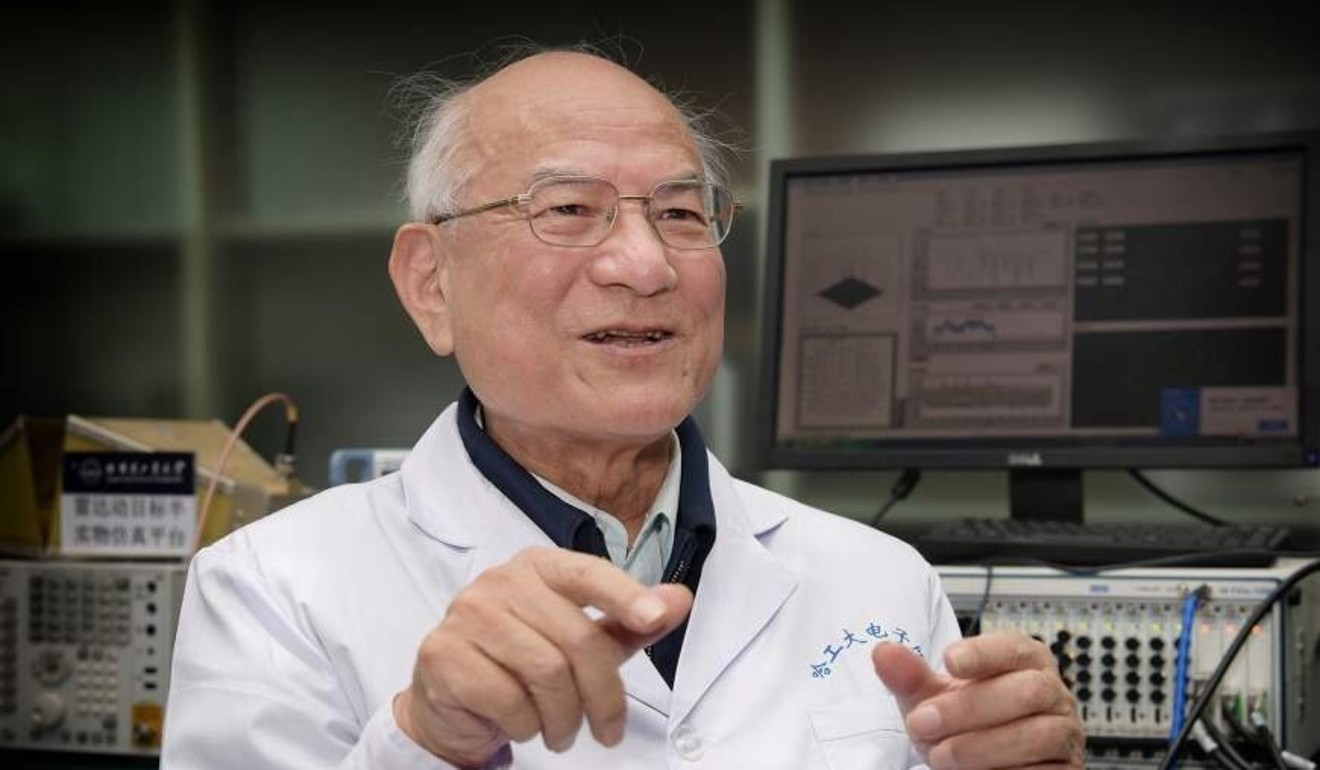
China has developed a radar system that could detect stealth fighters from a long distance, its creator has told state media.
Liu Yongtan, a member of the Chinese Academy of Sciences, told Naval and Merchant Ships that the new high-frequency surface wave radar (HFSWR) was also masked from anti-radiation missiles which can detect and destroy radio waves from other early warning systems.
The interview with the monthly magazine, which is published by the China Shipbuilding Engineering Academy, was reprinted by state-owned tabloid Global Times on Monday.

Liu, an 83-year-old who has dedicated his life to studying radar systems, said the new radar features “high-frequency electromagnetic waves that have long wavelengths and wide beams”.

Unlike microwave or skywave signals, surface waves travel along the spherical surface of the earth.

“A land-based version of the system can detect naval and aerial hostile objects from hundreds of kilometres away, which helps expand the range of China’s maritime early warning and defence systems,” Liu said.

He also said the long wavelength could help detect stealth aircraft, which use special protective materials and designs to make them “invisible” to microwave radars, but have no such protection against high-frequency surface waves.

Chinese navy’s new ‘compact’ radar will allow it to keep watch over an area the size of India
Another advantage of the maritime radar system is what Global Times described as “immunity” to attack from anti-radiation missiles, which track and destroy the origin of the electromagnetic waves.

Liu said that anti-radiation missiles would need huge antennas to track high-frequency surface waves because their beams are too wide for the antennas currently in use to track.

Plenty of practical challenges – such as signal loss and noise interference – need to be overcome to use high-frequency surface waves in radar.

Liu Yongtan was given China’s top scientific honour for his work on the radar. Photo: Weibo

However, Shi Lao, a Shanghai-based military commentator, said Liu’s team must have overcome those challenges.

Shi said he believed that as Liu’s technology developed it could be used as a low-cost coastal monitoring system that could protect the coastline within a range of 400km (250 miles).

Japan boosts island radar surveillance to catch Chinese, North Korean ships

The technology can also be used in conjunction with skywave radar systems, which usually have a longer monitoring range of 1,000km (621 miles).

“HFSWR could work 24 hours in all weathers, which would be much cheaper than operating early warning aircraft,” Shi said.

“They can be deployed relatively quickly with high mobility if they are mounted on vehicles, and may be loaded onto warships in the future.”

State broadcaster CCTV has previously reported that China has built a high-frequency surface wave radar test centre in Weihai, on China’s east coast in Shandong province.

In January 

Liu was awarded the State Pre-eminent Science and Technology Award

, China’s highest award for scientists which includes prize money of 8 million yuan (US$1.2 million), for his work on the radar system.

Source: SCMP
Law of Unintended Consequences

continuously updated blog about China & India

ChiaHou's Book Reviews

continuously updated blog about China & India

What's wrong with the world; and its economy

continuously updated blog about China & India