Archive for ‘welcomes’

07/03/2020

China welcomes Russia-Turkey agreement on ceasefire in Idlib: envoy

UNITED NATIONS, March 6 (Xinhua) — China’s UN envoy on Friday said China welcomes the Russia-Turkey agreement on a ceasefire for Syria’s northwestern province of Idlib.

In a press encounter after a close-door Security Council meeting on Syria, China’s Permanent Representative to the UN Zhang Jun said “for China, we welcome the agreement signed by the Russian Federation and the Republic of Turkey, and we welcome the diplomatic efforts along this direction.”

He said the signing of the agreement is conducive to finding “what we have always longed … a comprehensive solution to the issue in Syria.”

It’s a step forward in promoting a Syrian-led and Syrian-owned political process, facilitated by the UN, he said, expressing the hope that the agreement will be fully implemented.

Zhang stressed that in the process of implementation, Syria’s sovereignty, territorial integrity and political independence should be fully respected.

He said China hopes the international community will continue to commit to the fight against terrorism in the process. “We do hope that we will see more encouraging progress.”

The Chinese envoy voiced support for the humanitarian effort made by the UN, pledging that China will do whatever it can to provide humanitarian aid. “We also hope that the comprehensive humanitarian situation in Syria will be taken care of by the international community.”

He also urged parties concerned to avoid any attack on the civilians in Idlib and in Syria as a whole.

Russia and Turkey agreed Thursday on a ceasefire in the de-escalation zone in Idlib, a development that could ease escalating conflicts and facilitate a peace process in the war-torn country.

The ceasefire became effective from 00:01 a.m. on Friday local time. Russia and Turkey also agreed to create a safety corridor 6 km to the north and 6 km to the south from the strategic M4 highway, which connects Aleppo in northern Syria with Latakia in the northwest.

Also in the press encounter, Russia’s Permanent Representative to the UN Vassily Nebenzia said the ceasefire does not “exempt” operations targeting terrorists in the area, and that he hopes the sporadic fighting after the ceasefire took effect will be put out.

Britain and Germany’s UN ambassadors also expressed hope that the fresh ceasefire will last.

In 2018, the two countries agreed on a deal in the southern Russian city of Sochi, which created a “de-escalation” zone in Idlib and allowed for the deployment of 12 Turkish observation posts. However, the “de-escalation” zone has been repeatedly violated.

More than 30 Turkish soldiers were killed last month around the area during an operation of the Syrian government, which Russia backs. The operation was attempting to regain control of the final rebel stronghold in the country after nearly nine years of war.

In response, Turkey targeted Syrian positions with aircraft, drones and artillery, raising fears of a direct military confrontation between Russia and Turkey.

Since March 2011, Syria has been in the throes of a conflict that has forced more than half of all Syrians to leave their homes.

According to The UN Office for the Coordination of Humanitarian Affairs, an estimated 5 million Syrians have fled the country, 6 million others are internally displaced, over 13 million people need assistance and an untold number of men, women and children are suffering greatly.

Source: Xinhua
24/02/2020

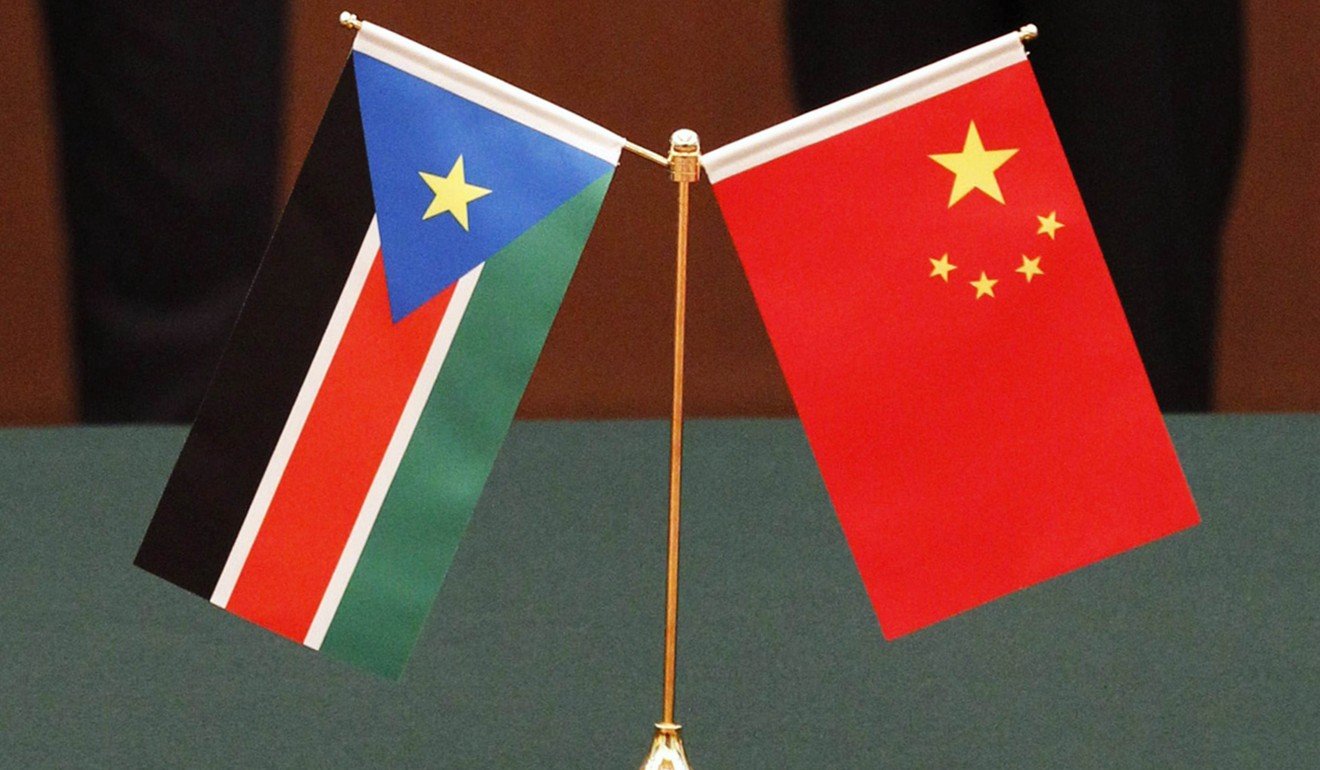
China welcomes ‘encouraging developments’ in South Sudan as rivals form unity government

  • Power-sharing agreement between rebel leader Riek Machar and President Salva Kiir gives hope to ending the conflict
  • Beijing has invested tens of millions of dollars in the country’s oilfields and sent more than 1,000 peacekeeping troops there
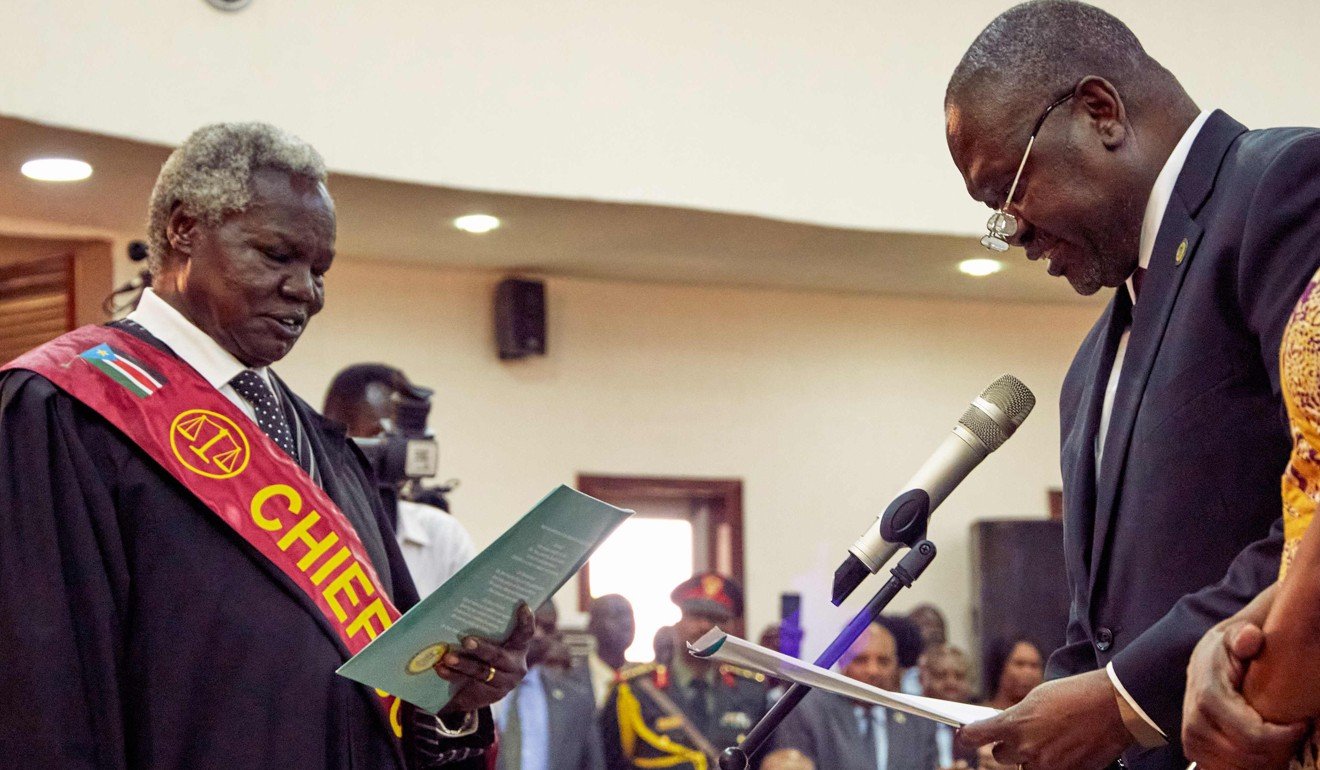
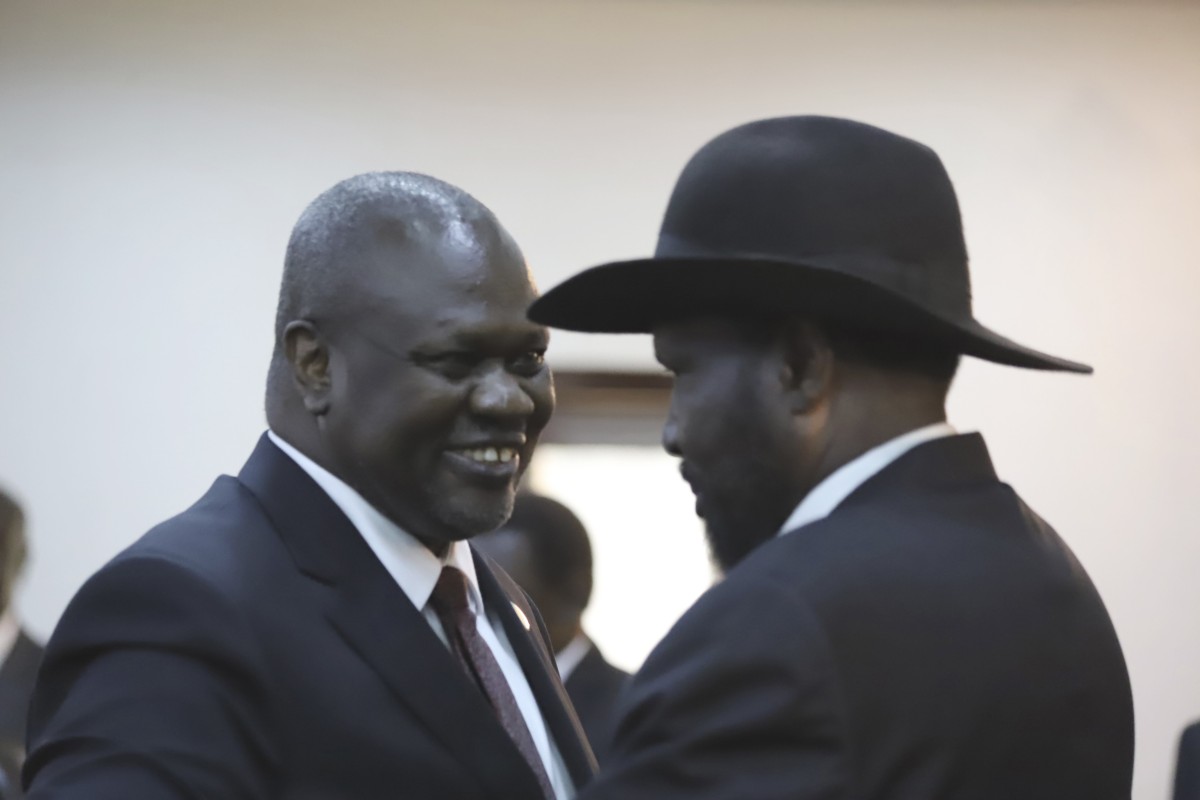
Rebel leader Riek Machar (left) and President Salva Kiir greet each other after the swearing-in ceremony at the State House in Juba on Saturday. Photo: AP

Beijing has welcomed “encouraging developments” in the South Sudan peace process after rebel leader Riek Machar and President Salva Kiir agreed to form a transitional coalition government.

Machar, the Sudan People’s Liberation Movement-In Opposition (SPLM-IO) leader, was among four vice-presidents sworn in on Saturday in the capital, Juba, in a power-sharing deal that gives hope to ending the more than six years of conflict which has killed some 400,000 people and displaced millions more.

“The Chinese side commends and welcomes these encouraging developments, especially the crucial consensus reached between President Kiir and Machar,” the Chinese embassy in Juba said in a statement.

Stability in South Sudan is important for China, which has invested tens of millions of dollars in the country’s oilfields as it seeks to meet energy needs at home. China National Petroleum Corporation (CNPC) owns a 41 per cent stake in South Sudan’s largest oil consortium, Dar Petroleum Operating Company, while Sinopec, another Chinese state-owned firm, holds a 6 per cent stake.

Stability in South Sudan is important for China, which has major investments in the country’s oilfields. Photo: Reuters
China has also sent more than 1,000 troops to the United Nations’ peacekeeping mission in South Sudan, and has not followed the United States and other Western nations in imposing sanctions on leading political and military figures.

“We trust that the relevant parties of South Sudan will resolve the remaining issues in the spirit of mutual trust and understanding, and start a new chapter in the history of South Sudan,” the embassy statement added.

China has offered to help rebuild the country, promising to supply a unified security force that is supposed to be formed from the rival factions as part of the peace process. It has also helped to set up military camps to accommodate both government troops and members of the armed opposition.

Since the peace deal was signed between Kiir and rebel factions in September 2018, China said it had provided diplomatic and other support to military camps and training centres including 1,500 tonnes of rice, 2,500 tents, 50,000 blankets and 1,440 boxes of medicine.

Riek Machar (right) is sworn in as the first vice-president of South Sudan. Photo: AFP
Machar was sworn in as the first vice-president alongside three others – James Wani Igga, Taban Deng Gai and Rebecca Nyandeng. Gai, a former ally of Machar who switched to the government side, was recently sanctioned by the US over serious human rights abuses. Nyandeng is the widow of John Garang, who led a long struggle for independence from Sudan before he died in a helicopter crash in 2005.

“I have forgiven my brother Riek Machar. I also ask for his forgiveness and I also forgive all those who still are holding out on this peace agreement,” Kiir said at a ceremony at the State House attended by regional leaders and diplomats.

After the swearing-in, Machar vowed to work together to end the suffering of South Sudanese.

“I reiterate my commitment to work closely with President Kiir to implement the agreement in letter and spirit,” Machar said.

From Angola to Zambia, China’s African partners brace for coronavirus blow to trade

14 Feb 2020

The South Sudanese have seen more war than peace since the East African nation – whose oilfields contribute about 98 per cent of the government’s revenue – seceded from the Republic of Sudan in 2011. Kiir and Machar formed the independent government but disagreements followed, leading to Machar’s sacking, sparking a bloody war along ethnic lines.

They again agreed to work together in 2015, but the deal fell apart a year later following renewed fighting. After international pressure and peace talks, a new deal was signed in September 2018, but Kiir and Machar have had to push back two deadlines to form the coalition government as they could not agree on issues such as having a unified army and the number of states – highly contentious since it affects the control of oil-rich regions. Machar also wanted his security assured.

On Thursday, Kiir said he had agreed to abolish the 32 states he created in 2015 and revert to the original 10 states.

According to a report released last week on China’s approach to UN peacekeeping in the region, Beijing had used its “economic leverage” in South Sudan.

“China has used its leverage to encourage the government and the opposition parties to negotiate, to come to an agreement, and to implement the ceasefire agreements,” said the report by the Norwegian Institute of International Affairs. “It has reportedly used its economic leverage by signalling that it would be unable to renew and expand its support to the South Sudanese government and the economy as long as the fighting was ongoing.”

Africa is a test lab for how China approaches international security and peacekeeping

8 Aug 2019

South Sudan had also provided an opportunity for Chinese soldiers to put their skills to the test on overseas missions and during armed conflict.

“South Sudan became a real-world laboratory [for China] to test the boundaries of its non-interference principle,” the report said.

Obert Hodzi, an international relations lecturer at the University of Liverpool in England, also said earlier that it was a way for China’s military to get the combat experience it needed.

“South Sudan provides ample opportunities for different segments of the Chinese army to practise, test their equipment and ability to conduct successful missions abroad,” Hodzi said.

Source: SCMP

20/12/2019

China welcomes Sri Lankan president’s remarks over Hambantota Port

COLOMBO, Dec. 20 (Xinhua) — China highly appreciates the remarks made by Sri Lankan President Gotabaya Rajapaksa over the Hambantota Port agreement, said a statement released by the Chinese Embassy in Colombo on Friday.

China is willing to guide related enterprises to work with the Sri Lankan side to expedite implementing the established agreement and further promote the prosperity and development of Hambantota Port, according to the statement.

China highly respects the sovereignty and territorial integrity of Sri Lanka and the security and control of Hambantota Port was entirely in the hands of the Sri Lankan government and navy, which is no difference from any other port in Sri Lanka, said the statement.

President Rajapaksa, in a meeting with Colombo based foreign correspondents on Thursday said he would not renegotiate the Hambantota Port agreement with China and would look to ensure that the security of the port lied with the Sri Lankan side.

Rajapaksa said he would not renegotiate the commercial agreement of the project as that had already been signed, and he was studying to see if the entire security of the port was under Sri Lanka’s control.

Rajapaksa said if additional clauses are needed to be inserted to reassure the security deal, then the government would go ahead with it.

The president further said that he would not renegotiate the 99-year lease agreement of the port, as this was purely commercial and he did not want to convey a message to investors that commercial agreements would change every time a new government was elected to power.

Source: Xinhua

01/10/2019

Xi welcomes Chinese women’s volleyball team after World Cup win

CHINA-BEIJING-XI JINPING-WOMEN'S VOLLEYBALL TEAM-MEETING (CN)

Chinese President Xi Jinping, also general secretary of the Communist Party of China (CPC) Central Committee and chairman of the Central Military Commission, greets the Chinese women’s volleyball team, after they returned home from a resounding triumph at the World Cup in Japan, at the Great Hall of the People in Beijing, capital of China, Sept. 30, 2019. (Xinhua/Wang Ye)

BEIJING, Sept. 30 (Xinhua) — Chinese President Xi Jinping greeted the Chinese women’s volleyball team at the Great Hall of the People on Monday afternoon after they returned home from a resounding triumph at the World Cup in Japan.

The Chinese women’s volleyball team successfully defended its World Cup crown with a perfect record of 11 wins. It is China’s 10th title in world major volleyball events including the World Cup, the World Championships and the Olympic Games.

Xi first extended warm congratulations to the volleyball players and coaches, saying that they have won a great honor for the country and the Chinese people.

The triumph of the Chinese team at the World Cup has ignited the patriotic enthusiasm of the Chinese people and enhanced national confidence and pride, he said.

Xi stressed that the women’s volleyballers didn’t fear any opponents and fought hard with both style and skills.

“With the championship already secured with one match remaining, you didn’t slack off in the last game and went all out for every ball, which is a good interpretation of the Olympic spirit and Chinese sportsmanship,” he said.

Xi, who is an avid sports fan, recalled that 38 years ago, when the Chinese women’s volleyball team won the World Cup for the first time, the whole nation was overwhelmed with emotion and hundreds of millions of people cried tears of joy.

“The people love the Chinese women’s volleyball team, not only because you have won the championship, but also because you have displayed the spirit of putting the motherland first, through unity, cooperation, tenacity and never giving up,” he said.

“The ever-evolving spirit of the Chinese women’s team represents a new era, and embodies the strongest will of the Chinese nation to rejuvenate itself,” Xi continued.

Xi called on all sportspeople to carry forward the spirit of striving to achieve the goal of China becoming a world sports power.

“I hope the Chinese women’s volleyball team will continue to work hard and I look forward to your excellent results at the Tokyo Olympic Games,” he said.

The Chinese volleyballers won their first major title at the 3rd World Cup in 1981 and have since gone on to claim more top honors at the Olympic Games, the World Championships and the World Cup.

Source: Xinhua

06/09/2019

Russia welcomes Chinese investment, says Putin

RUSSIA-VLADIVOSTOK-PUTIN-CHINA-HU CHUNHUA-MEETING

Russian President Vladimir Putin (2nd R) meets with Chinese Vice Premier Hu Chunhua (2nd L) on the sidelines of the fifth Eastern Economic Forum in Vladivostok, Russia, Sept. 5, 2019. (Xinhua/Bai Xueqi)

VLADIVOSTOK, Russia, Sept. 5 (Xinhua) — Russian President Vladimir Putin said on Thursday that his country welcomes Chinese investment and expects more positive outcomes from bilateral cooperation.

Putin made the remarks here at a meeting with visiting Chinese Vice Premier Hu Chunhua on the sidelines of the fifth Eastern Economic Forum (EEF).

Putin thanked the Chinese high-level delegation for participating in the forum and asked Hu to convey his sincere greetings to Chinese President Xi Jinping.

This year marks the 70th anniversary of diplomatic ties between the two countries, said Putin, adding that strengthening Russia-China cooperation in different areas is of special significance and there is huge potential for such cooperation to expand.

By coordinating with each other, Moscow and Beijing play important roles in international issues, the Russian leader said, adding that with concerted efforts of the two sides, economic and trade ties between the two countries are also growing steadily.

Hu conveyed the Chinese president’s cordial greetings and best wishes to Putin, saying that Xi attended the fourth EEF last year and sent him to attend the fifth EEF this year, which shows that China attaches great significance to its relations with Russia.

Recalling that Xi and Putin elevated bilateral relations in Moscow in June to a comprehensive strategic partnership of coordination for a new era, Hu said that China is ready to work with Russia to implement the important consensuses reached by the two presidents and continuously push bilateral ties forward.

China-Russia economic and trade ties have improved over the recent years, and relevant departments of both countries are working to achieve the target of 200 billion U.S. dollars in bilateral trade volume by 2024 set by Xi and Putin, Hu said.

In addition to trade in traditional areas, China supports the two sides in fostering new areas of growth, implementing major projects of strategic significance, further facilitating trade and investment, expanding trade in agricultural products, and boosting cross-border e-commerce and trade in services, he said.

Also on Thursday, Hu met with Russian Deputy Prime Minister Yury Trutnev to discuss intergovernmental cooperation between China’s northeastern region and Russia’s Far Eastern and Baikal regions.

Source: Xinhua

02/09/2019

Double happiness for Berlin as resident panda gives birth to twins

  • Germany welcomes first panda cubs born in the country
  • Zoo reports mother and babies doing well and in good health
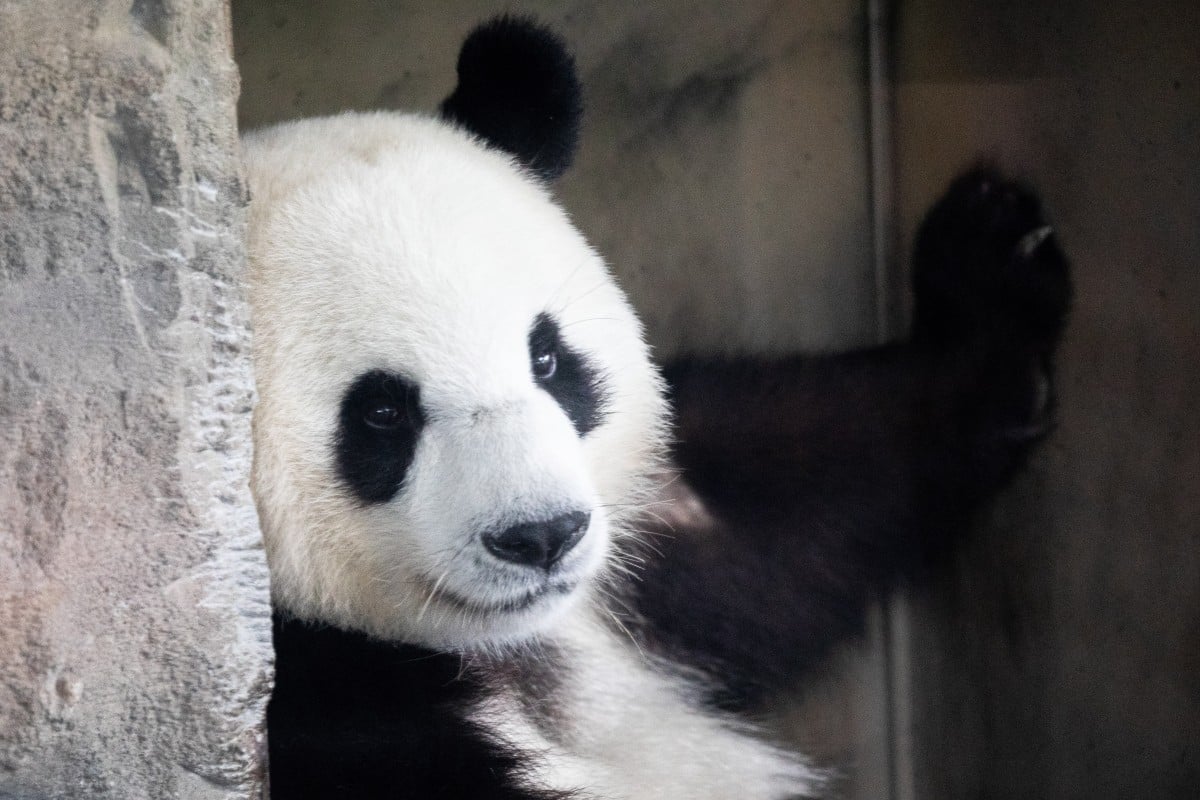
Chinese giant panda Meng Meng has given birth to twins at Berlin zoo, the first pandas to be born in Germany. Photo: EPA-EFE

Berlin zoo is celebrating the safe arrival of panda twins, in the first time that the rare animals have been born in Germany.

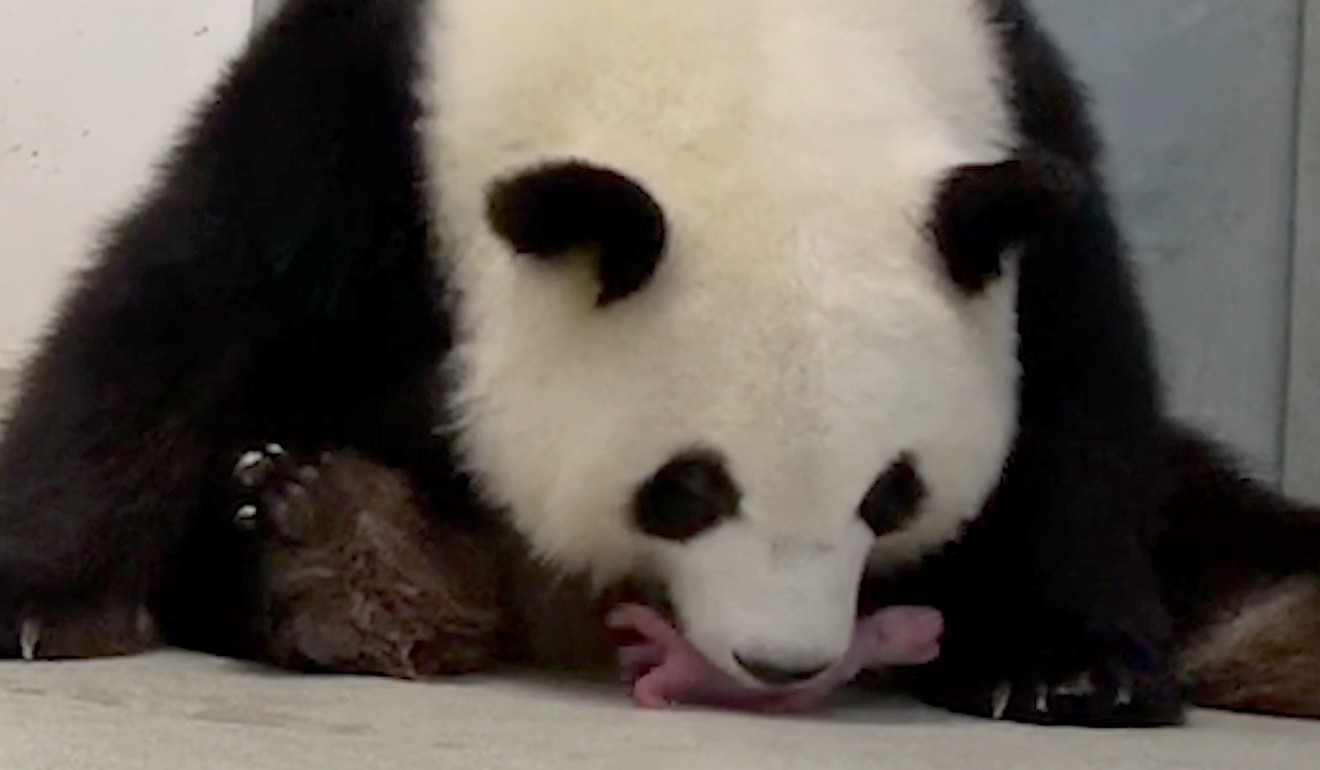
Resident panda Meng Meng delivered her first cub on Saturday evening, with the second baby arriving about an hour later.

The zoo posted a video on Twitter of the new mother guiding one of her pink babies to feed, with the announcement: “Meng Meng became a mom – twice! We are so happy, we are speechless.”

The cubs weighed in at 136 and 186 grams but their genders had not been determined, the zoo said.

Meng Meng guides one of her newborn panda twins to feed. Photo: EPA-EFE

“Meng Meng and her two cubs coped well with the birth and are all in good health,” zoo director Andreas Knieriem said.

At birth, the pink cubs, with their fine white down and disproportionately long tails, bear little resemblance to the adult black and white bears.

The births are particularly rare as it is notoriously hard to breed pandas.

Famed for its “panda diplomacy”, China has sent its national treasure to only about a dozen countries as a symbol of close relations.

The zoo pays US$15 million for a 15-year contract to host them, with most of the money going toward a conservation and breeding research programme in China.

While the cubs are born in Berlin, they remain Chinese and must be returned to China within four years after they have been weaned.

China has previously given three pandas to Germany but the last one, 34-year-old Bao Bao, died in Berlin in 2012, having become the oldest male panda in the world.

About 1,864 pandas remain in the wild in China, up from around 1,000 in the late 1970s, according to the environmental group WWF.

Just over 400 pandas live in zoos around the world, in conservation projects set up with Beijing.

Source: SCMP

Law of Unintended Consequences

continuously updated blog about China & India

ChiaHou's Book Reviews

continuously updated blog about China & India

What's wrong with the world; and its economy

continuously updated blog about China & India