Archive for ‘Why’

09/04/2020

Coronavirus: Why India cannot afford to lift its lockdown

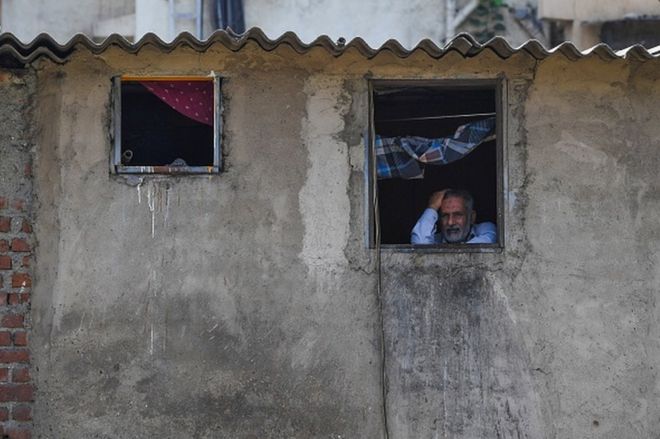
India man during lockdownImage copyright GETTY IMAGES
Image caption More than a billion people have been staying at home during the lockdown

Will India extend its rigorous 21-day lockdown to slow the spread of coronavirus beyond its end date next week? By all accounts, yes.

On 24 March, India shut its $2.9 trillion economy, closing its businesses and issuing strict stay-at-home orders to more than a billion people. Air, road and rail transport systems were suspended.

Now, more than two months after the first case of Covid-19 was detected in the country, more than 5,000 people have tested positive and some 150 people have died. As testing has ramped up, the true picture is emerging. The virus is beginning to spread through dense communities and new clusters of infection are being reported every day. Lifting the lockdown could easily risk triggering a fresh wave of infections.

A harsh lockdown is certain to slow down the disease. Virologists I spoke to believe India is still at an early stage of the infection. The country still doesn’t have enough data on the transmissibility of the virus or even how many people could have been infected and recovered to develop adequate herd immunity. (It is slowly beginning finger prick blood tests to look at the presence of protective antibodies.)

More than 250 of India’s 700-odd districts have reported the infection. Reports say at least seven states have a third of all infections, and want the lockdown extended. Six states have reported clusters of rapidly growing infections – from the capital Delhi in the north to Maharashtra in the west and Tamil Nadu in the south.

Economic fallout

Not surprisingly, the lockdown is already hurting the economy. Many of the early hotspots are economic growth engines and contribute heavily in revenues to the exchequer. Mumbai, India’s financial capital and Maharashtra’s main city, accounts for more than a third of overall tax collection. The densely populated city has reported more than 500 cases and 45 deaths, and numbers are steadily rising. Authorities say the infection is now spreading through the community. Mumbai has made wearing face masks mandatory.
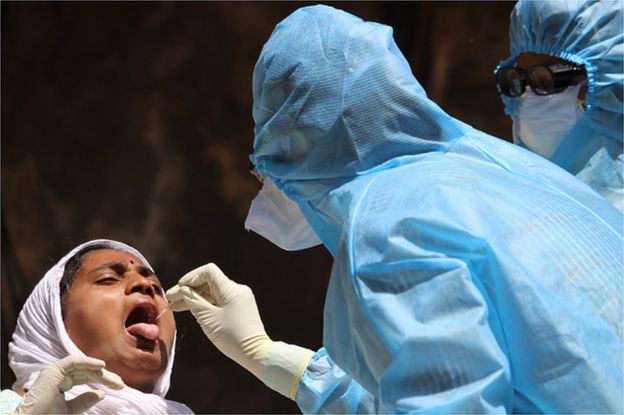
Testing in IndiaImage copyright GETTY IMAGES
Image caption India has ramped up testing during the lockdown

Many of these hotspot clusters are also thriving manufacturing bases. The spread of infection means that they will be under lockdown for a longer period of time.

The services industry, which generates almost half of India’s GDP, is also likely to remain shut for some more time. Construction, which employs a bulk of migrant workers, will remain similarly suspended. The unemployment rate may have already climbed to more than 20% after the lockdown, according to a report by the Center for Monitoring Indian Economy.

For the moment, economists say, the government will have to prioritise farming over everything else to ensure the livelihoods of millions and secure the country’s future food supplies.

Half of India’s labour force work on farms. The lockdown happened at a time when a bumper winter crop had to be harvested and sold, and the rain-fed summer crop had to be sowed. The immediate challenge is to harvest and market the first crop, and secure the second.

Moving trucks to pick up produce and take them to markets, with adequate social distancing and hand washing will be something the government will have to move on quickly.

“The immediate challenge is to ensure that rural India is not hit,” says Rathin Ray, an economist. “Realistically, a complete lockdown cannot be continuously maintained beyond early May. We don’t have a choice but to reopen gradually after that.”
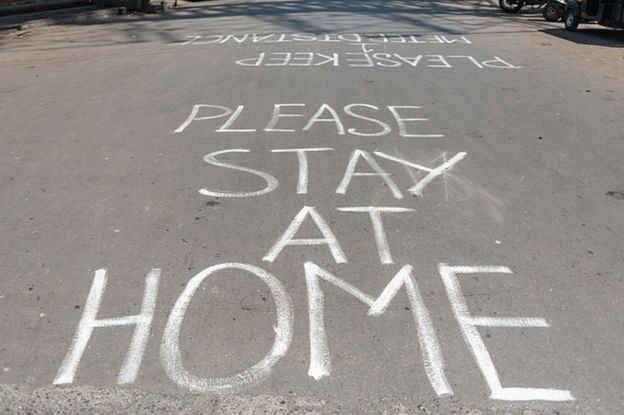
Mumbai street signImage copyright GETTY IMAGES
Image caption India has been under a lockdown from 24 March

There is little doubt about that. For his part, SK Sarin, who heads a government advisory panel on combating the disease, says the lockdown can be only eased in a “graded manner in areas that are not hotspots” and that the hotspots remained cordoned off.

Like other affected countries, India will have to prepare itself for what Gabriel Leung, an infectious disease epidemiologist and dean of medicine at the University of Hong Kong, describes as several rounds of “suppress and lift” cycles.

During these periods “restrictions are applied and relaxed, applied again and relaxed again, in ways that can keep the pandemic under control but at an acceptable economic and social cost.”

Also, Dr Leung observes, “how best to do that will vary by country, depending on its means, tolerance for disruption and its people’s collective will. In all cases, however, the challenge essentially is a three-way tug of war between combating the disease, protecting the economy and keeping society at an even keel”.

It is now clear that shutdowns need to continue until transmission has slowed down markedly, and testing and health infrastructure has been scaled up to manage the outbreak.

Experts from the southern state of Kerala, a striking outlier that is containing the infection thanks to a transparent government and a robust public health system, say it isn’t time to lift the lockdown yet and have recommended a three-phase relaxation.

For most countries, easing the lockdown is a tricky policy choice. It sparks fears of triggering a fresh wave of infection and presents the inevitable trade-off between lives and livelihoods. French Prime Minister Edouard Phillipe, says relaxing the lockdown in his country is going to be “fearsomely complex”. In a crisis like this, according to his Dutch counterpart Mark Rutte, leaders have to “make 100% of the decisions with 50% of the knowledge, and bear the consequences.”
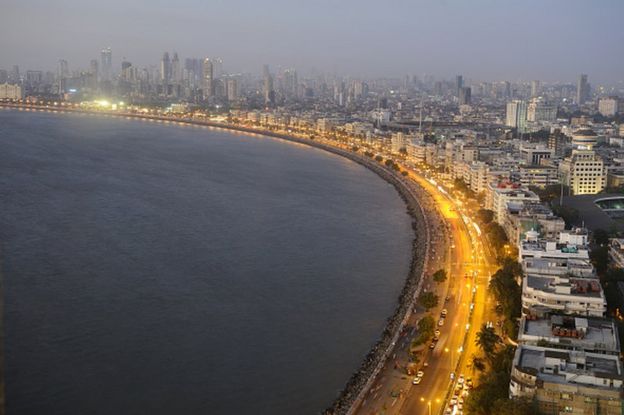
MumbaiImage copyright GETTY IMAGES
Image caption India’s financial capital, Mumbai, is emerging as a hotspot

It is going to be tougher for India with its vast size, densely packed population and enfeebled public health system. Also, no country in the world possibly has so much inter-state migration of casual workers, who are the backbone of the services and construction industries.

How will India manage to return these workers to their work places – factories, farms, building sites, shops – without a substantial easing of public transport at a time when crowded trains and buses can be a vector of transmission and easily neutralise the gains of the lockdown? Even allowing restricted mobility – allowing social distancing, temperature checks and passenger hygiene – would put considerable pressure on the public transport system.

The policy choices are fiendishly tough, and the answers are far from easy. India bungled the lockdown by not anticipating the exodus of millions of migrant workers from cities. The weeks ahead will tell whether the fleeing men, women and children carried the infection to their villages. The country simply cannot afford to make similar mistakes again while trying to relax the lockdown. Nitin Pai of The Takshashila Institution, a think tank, believes states should be left to decide on easing restrictions, and decisions “should be based on threat [of infection], which should be determined by extensive testing”.

This week Prime Minister Narendra Modi said that the “situation in the country is akin to a social emergency”. His government now needs make sure that the looming threat to the nation’s health and economic progress is tackled skilfully.

Source: The BBC
22/03/2020

Coronavirus: Why India’s busiest rail network is being shut down

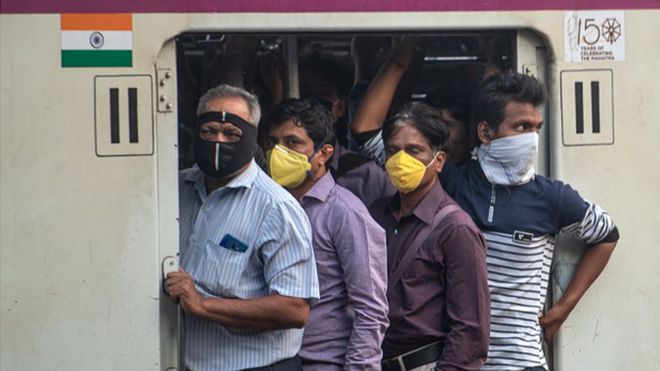
Passengers on a train in MumbaiImage copyright GETTY IMAGES
Image caption Many passengers have been wearing masks while travelling on the network

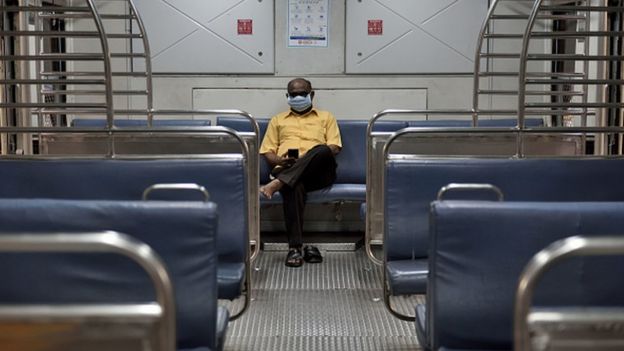
One of the world’s busiest urban rail systems will be shut down for ordinary commuters from Monday morning to prevent the spread of coronavirus infection in Mumbai, one of India’s most populous cities. Only government workers in “essential services” will be allowed to travel on a truncated service.

This was waiting to happen.

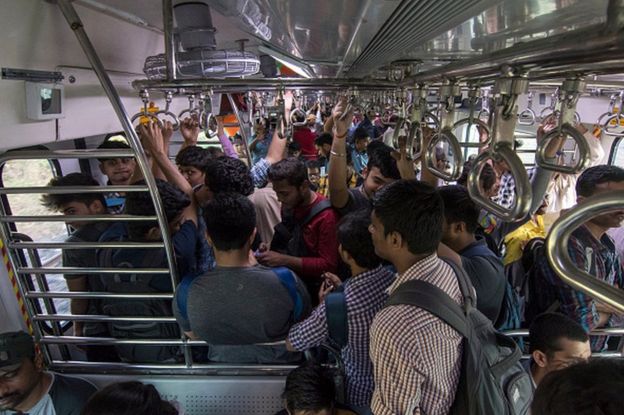
Consider this. Eight million people take Mumbai’s crowded suburban train network every day. Packed to nearly three times its capacity, this is one of the busiest railway systems in the world.

The 459km (285-mile) network is the lifeline of India’s financial and entertainment capital, accounting for nearly 80% of all commuting trips in the populous western city. The suburban trains “cover almost the distance up to [the] moon in one week,” the network’s website says.

The 66-year-old network carries 60,000 passengers per km per day, the highest among all the leading commuter rail systems in the world, say officials. The coaches are sturdy enough to carry a “super dense crush load”, a phrase coined by the railways to describe the intense crowding on Mumbai’s trains. This means that a nine-car train designed for 1,800 standing passengers will often carry up to 7,000 passengers, according to Monisha Rajesh, author of Around India in 80 Trains. “Mumbai’s local trains were certainly not for the fainthearted,” she wrote.

People travel in Central Railway's first air-conditioned EMU local train, on January 30, 2020 in Mumbai, India.Image copyright GETTY IMAGES
Image caption Mumbai’s suburban train network carries eight million passengers every day

Now consider this. The western state of Maharashtra, of which Mumbai is the capital, has confirmed more than 60 coronavirus infections, the highest in India so far. Scores of long distance trains out of the city have been cancelled, but the suburban network has continued to rumble on, raising fears of the mass spread of the virus on these packed trains. The crowded service was an easy target of a terror attack in 2006 when serial blasts ripped though a number of trains. At least 180 people were killed and more than 800 injured – the high casualty figure was attributed to overcrowding.

It is intuitively obvious that there’s a link between commuting with a lot of people and catching respiratory diseases. During the 1918 Spanish flu pandemic, which killed some 18 million Indians, the railways “played a prominent part [in aiding the spread of the disease] as was inevitable,” according to an official report.

“From ports and landing places the local transport networks, particularly the railways, carried the virus from large cities to the smallest, remotest settlements,” said a report on the spread of the flu in Britain in 1918-1919.

So should one of the world’s busiest rail networks be shut down to stop a possible spread of the virus in a city that many fear could turn into a coronavirus hotspot?

A passenger is seen wearing a protective mask as a precaution from coronavirus in the local train at CST railway station, on March 14, 2020 in Mumbai, India.Image copyright GETTY IMAGES
Image caption Officials say ridership on the trains has dropped by 17% after the coronavirus scare

Economists like Shruti Rajagopalan believe so.

“India is conducting the fewest tests per million at the moment. If the virus is truly within the community, then given these two issues, the Mumbai outbreak cannot be contained and people will die without healthcare.

“Mumbai trains are the fastest and surest way to spread the virus (if it is within the community) to the densest parts of the city,” she told me.

There is enough precedent: China stopped trains, ferries, planes and buses from leaving the city of Wuhan; and on Thursday, London officials announced that up to 40 stations on the London Underground network are to be shut as the city attempts to contain the outbreak.

Others are not so sure about linking the spread of a pandemic to public transport systems. One study does not support the effectiveness of suspending mass urban transport systems to reduce or slow down a pandemic because, “whatever the relevance of public transport is to individual-level risk, household exposure most likely poses a greater threat”.

“I have not seen any data on the relative risk of public transportation compared with [dense places like] workplaces or schools,” Timothy Brewer, a professor of epidemiology at the University of California Los Angeles told Vox.com.

He said data from China suggested that “household contact was an important means of transmission outside of Wuhan, suggesting that prolonged contact [with a sick person] increases the risk of transmission”.

“If correct, then the time spent commuting and the density of people commuting could be important factors in assessing if public transportation is a risk factor for the disease’s transmission.”

Trains being cleaned in MumbaiImage copyright GETTY IMAGES
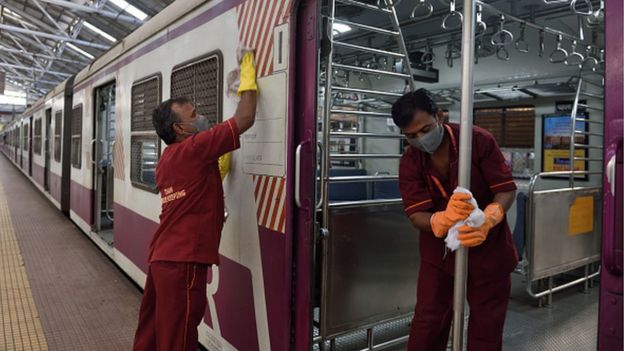
Image caption Trains on the network are being scrubbed clean to avoid the spread of infection

Shivaji Sutar, a senior communications officer of the railways, told me that the network was running an aggressive campaign to ease the rush: awareness announcements, posters and videos containing virus information.

They were also monitoring crowds, scrubbing the trains, taking the temperature of willing passengers and embarking on a drive against public spitting, he said.

A combination of awareness and panic has already led to a 27% drop in traffic on the network. But millions of people continue to take the train to work and home every day.

“This is more because of fear than anything else. Most of us have to take the network because we have to come to work. There is still no government directive to all companies to work from home. And apart from passengers wearing masks, I haven’t seen any other precautions being taken,” Rekha Hodge, who has been using the network for three decades, told me. That is bad news.

Source: The BBC

20/03/2020

Why China’s ‘zero new coronavirus infections’ could be cause for optimism – or caution

  • The country’s only new infections confirmed in the past two days have been imported from overseas, suggesting containment measures worked
  • But there are still likely to be infected people with mild or no symptoms, and questions over how the data was compiled, experts say
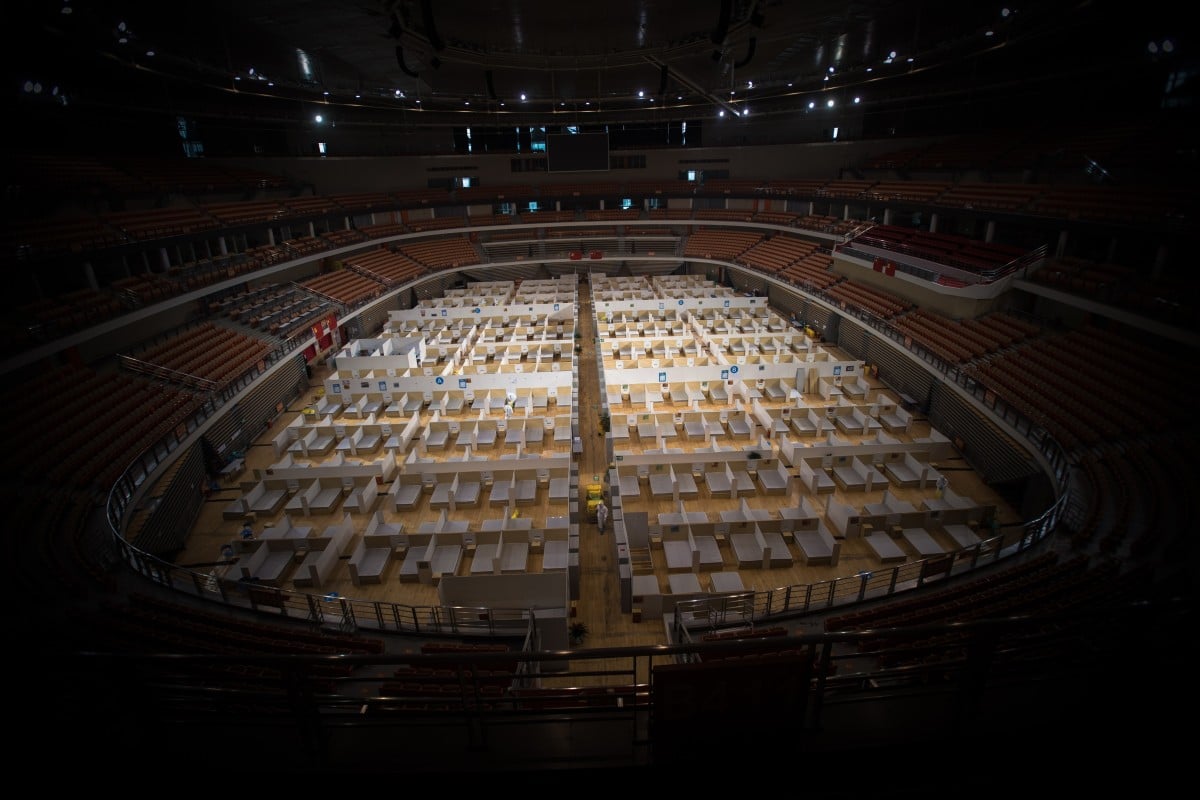
A makeshift hospital in Wuhan, converted from a sports arena, closed on Sunday after its last patients were discharged. Photo: Xinhua
China reached an apparent milestone this week in the fight against the Covid-19 pandemic, announcing zero new non-imported infections on Thursday and Friday, but experts said the figures needed to be treated with caution.
After reporting thousands of daily new infections for much of February, China had a sharp decline this month while the wider world experienced the opposite trend as the coronavirus spread.
As China closes makeshift coronavirus hospitals in the outbreak’s initial epicentre of Wuhan because of a lack of patients, and eases some quarantine restrictions in the city and the broader Hubei province, there is consensus that its unprecedented measures changed the direction of the epidemic, offering hope for other countries.
But there are concerns over whether China’s rock-bottom case numbers reflect the full picture in the country. The high incidence of mild cases of Covid-19 is one reason, health experts said, warning that there could be infected people who were not counted but still able to spread the disease.
Coronavirus: More people have now died from Covid-19 in Italy than in China
“It is important that China is doing a good job testing and screening throughout the country to ensure that there are no pockets of infection remaining,” virologist Jeremy Rossman, of Britain’s University of Kent, said, adding that the news was “exciting” but needed to be “treated with caution”.

“With many of these cases having mild to no symptoms, ensuring that the whole country remains prepared and is actively looking for new cases is essential,” he said. “While it is possible there are no new cases, it is also very possible that somewhere in the country there are mildly infected people.”

Missing mild cases, and those infected but showing no symptoms, are a “legitimate concern”, according to Xi Chen, an assistant professor at the Yale School of Public Health.

Unconfirmed cases ‘may be behind rapid spread of coronavirus in China’
19 Mar 2020

“Eighty per cent of cases have mild symptoms, so zero cases is a milestone, but not the end of the epidemic in China,” he said. Patients with mild symptoms or who are asymptomatic can still spread the disease to others, he added, and this needed to be monitored carefully in the coming weeks.

Are medicines to prevent and cure the coronavirus disease within reach?
China has come under scrutiny for how it treats asymptomatic cases. The National Health Commission excludes patients who test positive yet show no symptoms from its number of confirmed cases, although it monitors those cases when it knows of them.

The extent to which asymptomatic carriers contribute to spreading the disease is yet to be understood by scientists.

In addition, Hubei province in mid-February changed how it classified its confirmed cases, which caused a surge in infection numbers. This decision, which allowed doctors to diagnose a person by a clinical examination, not only by a positive laboratory test, was later reversed, leaving confusion about the true extent of the disease.

China must focus on keeping out imported cases, expert says

20 Mar 2020

Other commentators said it could not be ignored that political considerations may play a part as China looks to highlight its communist governance model and portray itself as a global leader in combating the disease.

“We are in the midst of the most intensive propaganda operation of the [Communist] Party state in living memory, in trying to project its success in dealing with the virus,” Steve Tsang, director of the University of London’s SOAS China Institute, said. “That narrative requires statistical backup.

Coronavirus: China starts getting back on track after being hit hard by the Covid-19 pandemic
“I’m not saying [the zero number] is necessarily wrong; I’m simply saying we don’t know. What we do know is that there is now a political imperative for the statistics to be [low], and now we have statistics that serve the political imperative.”

Data can be trusted when it comes with transparency about how it was collected, so that it can be independently evaluated, Tsang said.

Nis Gruenberg, an analyst with Berlin-based independent think tank the Mercator Institute for China Studies, said that the numbers could be viewed as an “indicator” of a reduction of cases in China.

China’s economy slowly emerging from lockdown with power, transport gains

20 Mar 2020

“Some [Western critics] have been saying China and its system are ill-equipped to handle this outbreak, and now the Chinese government is trying to invert that argument and say, ‘Look at you, you are not doing it well enough,’” Gruenberg said.

The message from the Chinese government that it has succeeded in containing the virus may “politicise” the figures and is a potential driver for under-reporting around the country, according to Gruenberg.

“If history is any guide in China then there is a massive history of under-reporting for various reasons, both within the system and internationally,” he said. “I’m sceptical that this is the true number, or that anyone really knows the true number.”

Source: SCMP

20/03/2020

Coronavirus: Why is India testing so little?

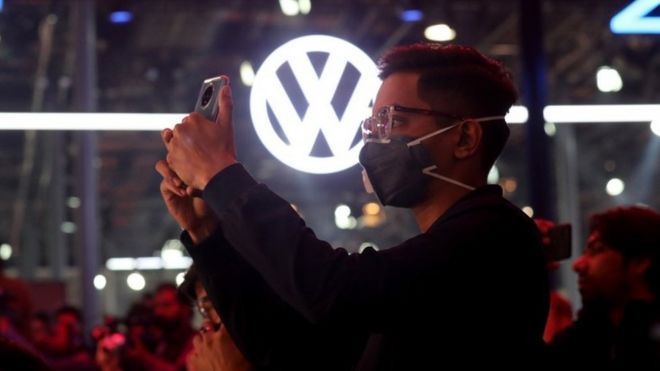
A visitor wears a mask as a precautionary measure against Corona virus at the Volkswagen showcasing hall during the India Auto Expo 2020 in Greater Noida, India, 05 February 2020.Image copyright EPA
Image caption The world’s second-most populous country has reported about 182 infections

“We have a simple message to all countries – test, test, test,” World Health Organisation (WHO) head Tedros Adhanom Ghebreyesus told reporters in Geneva earlier this week.

He was alluding to the coronavirus outbreak, which has killed more than 10,000 people and infected nearly 250,000 in at least 159 countries.

“All countries should be able to test all suspected cases, they cannot fight this pandemic blindfolded,” he said.

With 182 reported infections and four deaths so far, is India taking this advice seriously? Is the world’s second-most populous country testing enough?

The jury is out on this one. India had tested some 14,175 people in 72 state-run labs as of Thursday evening – one of the lowest testing rates in the world. The reason: the country has limited testing. So, only people who have been in touch with an infected person or those who have travelled to high-risk countries, or health workers managing patients with severe respiratory disease and developing Covid-19 symptoms are eligible for testing.

Why is a densely populated country with more than a billion people testing so little? The official assumption is the disease has still not spread in the community. As early “evidence” health authorities say 826 samples collected from patients suffering from acute respiratory disease from 50 government hospitals across India between 1 and 15 March tested negative for coronavirus. Also, hospitals have not yet reported a spike in admissions of respiratory distress cases.

“It is reassuring that at the moment there is no evidence of community outbreak,” says Balram Bhargava, director of the Indian Council of Medical Research (ICMR). He believes Mr Ghebreyesus’s advice is “premature” for India, and it would only “create more fear, more paranoia and more hype”.

Media caption Dr Ramanan Laxminarayan: “India’s going to be the next hot spot for this epidemic”

But experts are not so sure.

Many of them believe India is also testing below scale because it fears that its under-resourced and uneven public health system could be swamped by patients. India could be buying time to stock up on testing kits and add isolation and hospital beds. “I know mass testing is not a solution, but our testing appears to be too limited. We need to quickly expand to restrict community transmission,” K Sujatha Rao, former federal health secretary and author of But Do We Care: India’s Health System, told me.

On the other hand, say virologists, random, on-demand testing will create panic and completely strain the feeble public health infrastructure. Increased and targeted “sentinel screening” of patients suffering from influenza and diagnoses in hospitals across the country can provide a better idea of whether there is community transmission, they say. “We need focused testing. We cannot do a China or Korea because we simply don’t have the capacity,” a senior virologist told me.

In many ways, it is all about India trying to battle a pandemic with limited resources. Experts talk about the country’s success in defeating polio, combating small pox, successfully controlling the spread of HIV/Aids, and more recently H1N1 with rigorous surveillance, sharp identification of vulnerable people, targeted intervention, and an early engagement with the private sector to prevent disease spread.

Yet, coronavirus is one of the deadliest transmissible viruses in recent history. Every day lost in effective response means the looming danger of a surge in infections. India spends a paltry 1.28% of its GDP on health care, and that may begin to bite if there’s a full-blown outbreak. Partial lockdowns in many cities – shutting schools, colleges, businesses and suspending some rail transport – proves that the government fears that community transmission of the virus might have begun.

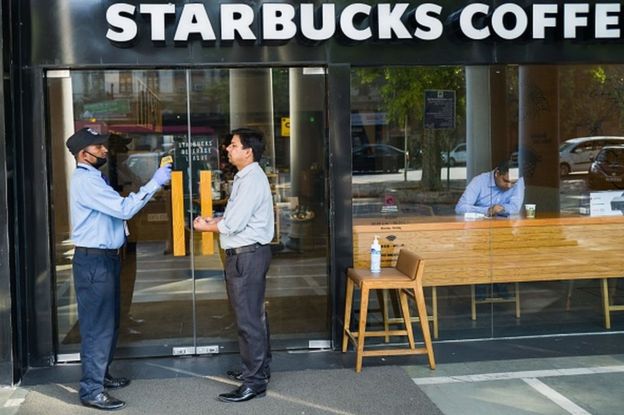
A security guard (L) takes the temperature of a patron as a preventive measure against the COVID-19 novel coronavirus before he enters a Starbucks coffee shop in New Delhi on March 17, 2020Image copyright GETTY IMAGES
Image caption The official assumption is the disease has still not spread in the community

Bracing for the inevitable, India is scaling up testing. Officials say existing labs are able to provide results in six hours and each lab has the capacity to test 90 samples a day which can be doubled. Fifty more state labs are expected to begin testing samples by the end of the week, bringing the total number of testing facilities to 122. Authorities claim that together, the labs will be able to test 8,000 samples a day – a significant scaling up. In addition, the government is planning to allow around 50 private labs to start testing, but they will take up to 10 days to procure kits. (Testing at state-run labs is free, and it is unclear whether the private labs will charge.)

Two rapid testing labs, capable of doing 400 tests a day, are expected to be operational by the end of the week. India has also placed orders for a million test kits, and will be possibly asking the WHO for a million more.

“On testing, the government response has been proportionate, taking into account scope, need and capacity,” Henk Bekedam, WHO Representative to India told me. “We recognise that laboratory networks are expanding the scope and testing and they now include patients with severe acute respiratory infection and influenza-like illness detected through the surveillance system. It would also be important to look at ‘atypical pneumonia’ cases. If they are without any distinctive cause, then they need to be considered for testing.”

A doctor seen wearing protective suit to protect himself form coronavirus epidemic in the country, at RML Hospital on March 16, 2020 in New Delhi, IndiaImage copyright GETTY IMAGES
Image caption India could be buying time to stock up on testing kits and add isolation and hospital beds

The weeks and months ahead will show whether these steps have been enough. “We cannot say India has escaped community transmission,” Mr Bhargava says candidly. And if and when there is an explosion of infections and more sick people require hospitalisation, India will face formidable challenges.

India has eight doctors per 10,000 people compared to 41 in Italy and 71 in Korea. It has one state-run hospital for more than 55,000 people. (Private hospitals are out of reach for most people). The country has a poor culture of testing, and most people with flu symptoms do not go to doctors and instead try home remedies or go to pharmacies. There’s a scarcity of isolation beds, trained nursing staff and medics, and ventilators and intensive care beds.

India’s influenza cases peak during the monsoon season, and there is no reason why the coronavirus will not make a second coming, virologists say. “Given the way it is progressing in India, it seems it is about two weeks behind Spain and three weeks behind Italy. But that’s the number of known cases. And without sufficient testing and shutting down large gatherings, the numbers could be a lot worse,” Shruti Rajagopalan, economist and a Senior Research Fellow at the Mercatus Center at George Mason University, told me.

India’s traditional neglect of public healthcare will begin to bite if the disease spreads to its teeming small towns and villages. “This is a very unique and real public health challenge,” says Ms Rao. And it’s early days yet.

Source: The BBC

13/02/2020

Why do many India MPs have criminal records?

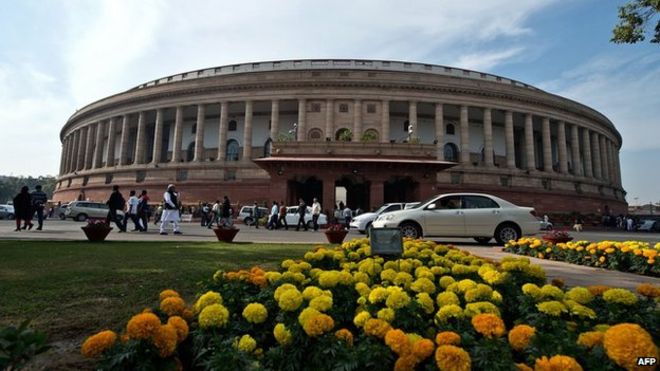
Indian parliamentImage copyright AFP
Image caption A third of the current members of parliament have criminal cases pending against them

“We need to build a consensus on how to prevent individuals with a criminal record from contesting elections.”

A necessary, even obvious fundamental you would think of building the world’s largest democracy.

And when Sonia Gandhi, India’s most powerful politician, uttered those words three years ago, even her main opponent, the leader of the BJP agreed.

Yet since then, things have gone in the opposite direction – with more alleged lawbreakers among India’s lawmakers than ever, a third of the current parliament according to a watchdog called the Association for Democratic Reforms.

By some calculations, politicians with a criminal record are more likely to be elected than those with a clean slate – because, says the ADR, they have more illicit funds with which to buy votes.

And on Tuesday night, India’s cabinet sought to ensure there was even less chance of criminal politicians facing their own laws.

It issued an order overturning a Supreme Court ruling demanding the disqualification of any politician convicted for crimes punishable with more than two years in jail.

This was “to ensure that governance is not adversely impacted“, the government had argued, with no apparent irony intended.

Unusual speed

Arguably, of course, the government is right. Losing tainted local or national politicians – among them many accused murderers, rapists and fraudsters – could upset delicate political alliances and make it even harder to get laws passed.

So often derided for doing nothing, this time round the cabinet acted with unusual speed.

The urgency it appears is the impending conclusion of two cases involving key politicians, due before Prime Minister Manmohan Singh gets back to India from a trip to the US.

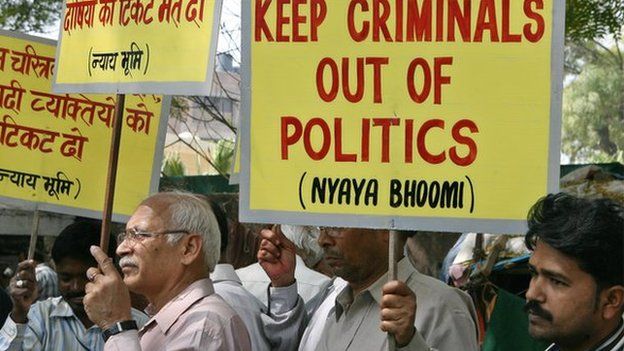
Protest against criminals contesting the parliamentary elections in Delhi on March 14, 2009Image copyright AFP
Image caption There’s been some criticism of criminal politicians

One concerns Lalu Prasad Yadav, a former railways minister and Congress party ally, charged with pocketing millions of dollars in subsidies for non-existent livestock.

Another concerns Congress MP Rashid Masood, already convicted of corruption and due to be sentenced next week. When the BBC asked his office for a comment, his assistant told us “he is unwell”.

“Don’t know whether to laugh or cry” tweeted MP Baijayant Panda in response to the government’s protective move.

He is a rare voice though inside the chamber campaigning against criminals sitting alongside him.

There’s been some other criticism outside, but not much. Indians have become very used to these kinds of shenanigans.

Almost forgotten already are calls in the Verma commission report into the December 16 Delhi gang rape case for all politicians accused of sexual crimes to be barred from office. Instead, six politicians charged with rape remain in office.

The opposition BJP has said it will oppose the cabinet order. But its record is just as murky, with even more accused criminals among its elected members in parliament and state assemblies than the Congress.

And with elections round the corner, none of the parties want to risk real reform right now, whatever they have signed up to in the past.

The world’s largest democracy is not alone in allowing so many questionable people to run it. Fellow Brics member Brazil has similar numbers of alleged criminals running the country.

The difference though is that in Brazil, brazen political abuses have provoked major protest.

But, says Indian MP Baijayant Panda: “This is a phase all democracies have gone through – look at the US.”

Voters will start to demand change, he predicts: “This is the last era of brazenness.”

Source: The BBC

Law of Unintended Consequences

continuously updated blog about China & India

ChiaHou's Book Reviews

continuously updated blog about China & India

What's wrong with the world; and its economy

continuously updated blog about China & India