Chindia Alert: You’ll be Living in their World Very Soon
aims to alert you to the threats and opportunities that China and India present. China and India require serious attention; case of ‘hidden dragon and crouching tiger’.
Without this attention, governments, businesses and, indeed, individuals may find themselves at a great disadvantage sooner rather than later.
The POSTs (front webpages) are mainly 'cuttings' from reliable sources, updated continuously.
The PAGEs (see Tabs, above) attempt to make the information more meaningful by putting some structure to the information we have researched and assembled since 2006.
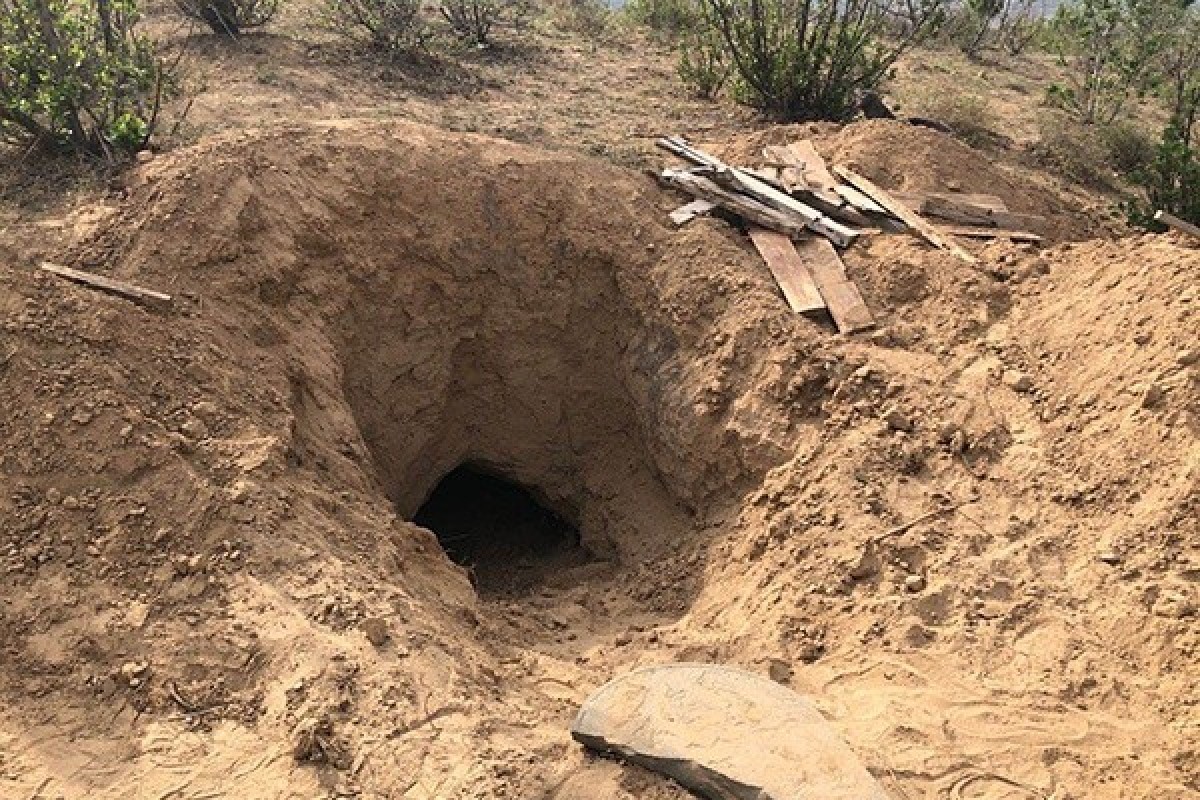
Police in Shaanxi province dug up 79-year-old from grave in woods after suspect’s wife tipped them off
Woman is now in a stable condition in hospital while her son is facing an attempted murder charge
The woman was rescued from the grave in Shaanxi province after three days. Photo: Handout
A man in northwest China has been detained after his 79-year-old mother was buried alive.
The woman, who was partially paralysed, was rescued after three days and is in a stable condition in a hospital in Shaanxi province, police said.
Prosecutors in Jingbian county said the woman’s son, a 58-year-old identified only by his surname Ma, had been charged with attempted murder.
On Tuesday his wife told local police that Ma had taken the bedridden woman named Wang away on a cart and she had not returned home.
Police said the man had confessed to burying her in the woods and she was rescued later that day.
The elderly woman is now recovering in hospital. Photo: Handout
“Ma was there when police were digging up the two metre deep grave. He didn’t say anything or respond when he saw his mother was still alive,” an unidentified Jingbian police official told news portal Thepaper.cn.
The website reported that Ma had been sent to live with his uncle after his father died, while his mother remarried and moved to Gansu province with her younger son when Ma was 12 years old.
The mother returned to Jingbian a few years ago to live with the younger son after her second husband died and only moved in to Ma’s house last year when her health started to deteriorate.
Breakthrough in 28-year-old Chinese murder case as DNA test leads police to suspect
25 Feb 2020
Police said Ma began to resent her presence after she became bedridden after a fall last November and he complained that her incontinence was making the house smell bad.
A statement from the national health commission and national office of elderly care called for severe punishment for the man and said he had “crossed the bottom line in law, morality and human relations”.
The two organisations have sent staff to Jingbian county to help with the woman’s medical treatment and rehabilitation, and to arrange her future care.
Zeng Zhenguo (L), a member of the medical assistance team supporting the virus-hit Wuhan in Hubei Province, hugs his wife after 14-day quarantine at the Xianghu area of the First Affiliated Hospital of Nanchang University in Nanchang, east China’s Jiangxi Province, April 15, 2020. The 141 members of the medical assistance team reunited with their families on Wednesday after 14-day quarantine. (Xinhua/Wan Xiang)
LUCKNOW, India (Reuters) – Police shot dead a man holding around 20 women and children hostage at his house in northern India after a 10-hour standoff, state officials said on Friday.
The hostages who were held at gunpoint were safe, principal secretary home Awanish Kumar Awasthi said after the raid at the house in a village in Farrukhabad in Uttar Pradesh state.
The hostage taker was serving a life sentence for murder and was out on parole, he added.
Two policemen and a villager were injured in the rescue operation.
After the siege, a group of incensed villagers stormed the house where the children had been kept and attacked the hostage-taker’s wife, Awasthi said. The woman died from her injuries early on Friday, he said.
The abduction took place after the man had invited some children and women from the village to his house, saying he was throwing a birthday party for his daughter.
Police said his motive for holding the children was not clear.
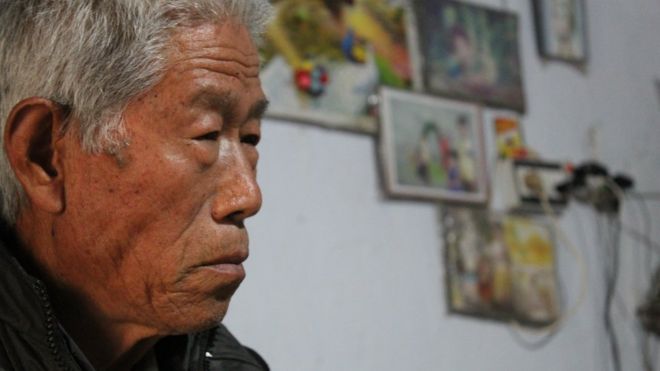
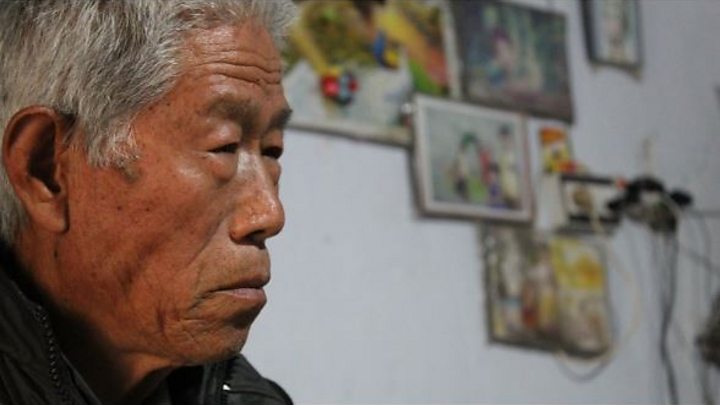
Image caption Wang Qi has been waiting for months to see his family in India
In 1963, a former Chinese army surveyor crossed into India and was captured weeks after a war between the two countries. Wang Qi was then left in a central Indian town for more than five decades before he was allowed to travel back home to China in 2017.
The BBC reported his story at the time and videos of the emotional family reunion in China were watched by millions.
But now, more than 30 months later, his story has taken an unexpected turn – Mr Wang is stuck in China and unable to return to India.
He has been waiting for more than four months for officials to renew his Indian visa so that he can travel back to India where his children and grandchildren live.
“Why are they doing this? I’ve been fighting for such a long time. How much longer can I fight?” Mr Wang told me over the phone from his home city of Xianyang.
The BBC has emailed the Indian embassy in Beijing and is yet to receive a response.
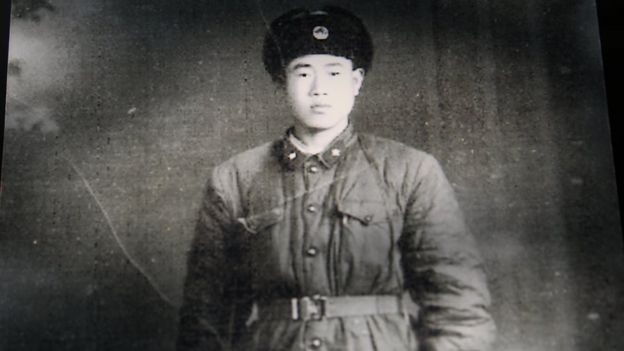
Born to a farmer family in Shaanxi with four brothers and two sisters, he studied surveying and joined China’s People’s Liberation Army in 1960.
Mr Wang says he was “tasked with building roads for the Chinese army” and was captured when he “strayed erroneously” into Indian territory in January 1963.
Image caption He joined China’s People’s Liberation Army in 1960
“I had gone out of my camp for a stroll but lost my way. I was tired and hungry. I saw a Red Cross vehicle and asked them to help me. They handed me over to the Indian army,” he said.
After he was captured, he spent the next seven years in multiple prisons before he was released by a court order in 1969.
Police took him to Tirodi, a far-flung village in the central state of Madhya Pradesh, where he ended up living for most of his life.
Instead he worked at a flour mill, eventually marrying a local woman and raising a family with her. Neighbours said they lived in “utter poverty”.
It was never clear whether Mr Wang was actually a prisoner of war. But he was denied official Indian documents or citizenship, and he was also denied permission to return to China. Officials told the BBC in 2017 that there were “deficiencies” and a “lack of interest” in the case over the years.
A Chinese passport holder, Mr Wang was reunited with his family in China in 2017. After the BBC reported his story, he received a one-year multiple entry Indian visa.
Media caption Wang Qi did not see his family in China for decades
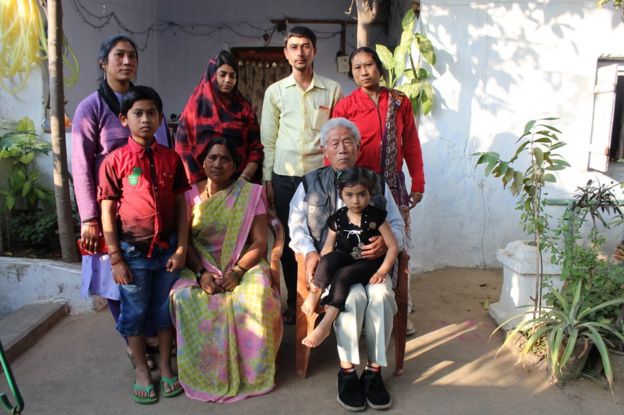
He kept coming back to India to meet his wife, children and grandchildren who continued to live here.
When Mr Wang first arrived in China, he received a rapturous welcome. Crowds met him with banners reading, “Welcome home, soldier, it’s been a rough journey”.
But according to Mr Wang’s son, Vishnu, his father’s request to local officials to clear his salary for the period of his stay in India, remains unanswered.
Vishnu also adds that it’s unclear if his father still has any claim to ancestral property in China after being away for so many years.
“He was ecstatic to have met his family after decades. He didn’t want anything else.”
In 2017, Mr Wang rushed back to India to take care of his wife, who was hospitalised due to “liver complications”.
“Getting funds for the expensive treatment was very difficult. We tried everywhere, begged for money but didn’t receive any response,” Vishnu says.
She died within a fortnight.
Image caption Mr Wang married an Indian woman and raised a family with her
“My father’s visa was renewed in 2018. He applied again in April 2019 but he is still waiting,” Vishnu adds.
Xianyang and Beijing, where the Indian embassy is located, are more than 1,000 kilometres (621 miles) apart – and travelling between the two cities isn’t easy for Mr Wang, who is nearly 80 years old, Vishnu says.
“My father is fed up. He doesn’t understand why this is taking so long.”
Peng Liyuan, wife of Chinese President Xi Jinping, meets with a group of international graduate students from China Women’s University (CWU) at the Great Hall of the People in Beijing, capital of China, May 30, 2019. The students are from CWU’s International Master’s Program of Social Work in “Women’s Leadership and Social Development,” established to implement initiatives announced by President Xi at the 2015 Global Leaders’ Meeting on Gender Equality and Women’s Empowerment. So far, 72 female students from 27 countries have studied under the program. (Xinhua/Pang Xinglei)
BEIJING, May 30 (Xinhua) — Peng Liyuan, wife of Chinese President Xi Jinping, on Thursday met with a group of international graduate students from China Women’s University (CWU).
Peng and the students watched a short film on their study and life in China. She also watched poetry recital, chorus and dancing performed by the students.
As the students are about to finish the study and return to their home countries, Peng said she believes that studying in China had helped them deepen their understanding of the country.
She expressed her hope that the students will play a role as a bridge between China and their home countries, and contribute to the promotion of global women’s development and the building of a community with a shared future for humanity.
Peng briefed the students on her work as a special envoy for the Spring Bud Project to promote girls’ education in China, and as a UNESCO Special Envoy for the Advancement of Girls’ and Women’s Education.
She said China attaches great importance to the cause of women, and stands ready to work with the international community to create favorable conditions for women’s development, provide equal and high-quality education opportunities for women, and help women acquire knowledge and skills for greater achievements.
The students said they will make full use of the knowledge and skills learned in China to promote the development of women’s cause in their own countries and the cooperation between their countries and China.
The students are from CWU’s International Master’s Program of Social Work in “Women’s Leadership and Social Development,” established to implement initiatives announced by President Xi at the 2015 Global Leaders’ Meeting on Gender Equality and Women’s Empowerment. So far, 72 female students from 27 countries have studied under the program.
The wife of Meng Hongwei, the Interpol president held in China since September, has sought asylum in France for herself and her twin children.
Grace Meng and the seven-year-olds live in Lyon, the international police agency’s headquarters. Meng Hongwei disappeared during a visit to China.
In October the Chinese authorities said Mr Meng was being investigated over suspected bribe-taking.
His wife and children are under police protection, having received threats.
Quoted by France Inter radio on Friday, she said, “I fear they will kidnap me.”
“I’ve received strange phone calls. Even my car was damaged. Two Chinese – a man and woman – followed me to the hotel,” she said.
In media interviews she has refused to show her face, fearing for her safety.
On the day her husband went missing, she said he had sent her a social media message telling her to “wait for my call”, before sending a knife emoji, signifying danger.
Image copyrightAFPImage captionGrace Meng does not reveal her face on camera
What is known about Meng Hongwei?
Since his disappearance on 25 September no details have emerged about his prison conditions or the charges against him.
The 65-year-old’s job as Interpol president was largely ceremonial and did not require him to return to China often.
Meng Hongwei was elected Interpol president in November 2016, the first Chinese person to take up the post, and was scheduled to serve until 2020.
China’s new National Supervision Commission – an anti-corruption agency – said Mr Meng was being investigated for “violation of laws”.
But unlike in other high-profile detentions, it did not mention a charge of “violating party rules”.
China has not presented any evidence to justify the allegation against Mr Meng.
How did Interpol react?
China said Mr Meng had written a resignation letter and Interpol Secretary-General Jürgen Stock acknowledged that he had received it on 7 October. “There was no reason for me to (suspect) that anything was forced or wrong,” he said.
In November Interpol elected South Korean Kim Jong-yang as its new president, rejecting a Russian candidate who had been tipped to succeed Mr Meng.
What is Interpol?
The International Criminal Police Organisation was founded in 1923 in Vienna, and its original members included Germany, France and China.
The UK and US did not join until later.
In 1956, it became officially known as Interpol and has since grown into a network of 194 member countries.
Its primary aim is to promote co-operation and share intelligence between police forces.
The general secretariat oversees its day-to-day work. It focuses on crimes such as terrorism, drug-trafficking, people-smuggling, child pornography and money-laundering.






 CHINDIA ALERT: You'll be living in their world, very soon