Archive for ‘woes’

09/10/2019

Kashmir conflict: Woes deepen as lockdown stifles economy

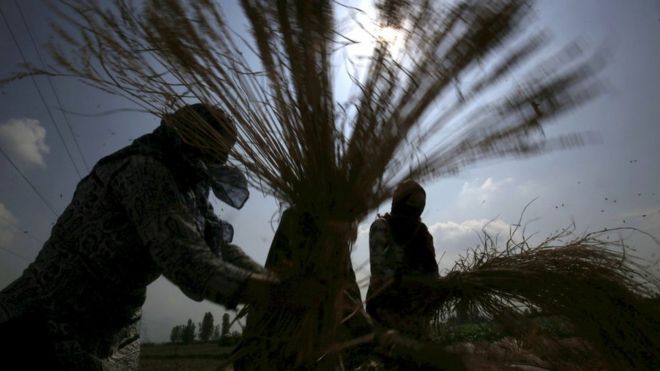
Farmers thresh paddy, separating grain from chaff, during the harvest season on October 2, 2019 on the outskirts of Srinagar, India.Image copyright GETTY IMAGES

The lockdown in Indian-administered Kashmir has cost the region’s economy more than $1bn in two months, according to industry experts. BBC Hindi’s Vineet Khare reports.

Mushtaq Chai recalls the afternoon of 2 August when he received a “security advisory” from the administration. A prominent local businessman, he owns several hotels across the Muslim-majority valley in Indian-administered Kashmir.

The note warned of “terror threats” and advised that tourists and Hindu pilgrims should “curtail their visit… and return as soon as possible”.

Mr Chai, like many others, took the advisory seriously. Two years before, seven Hindu pilgrims were killed in a militant attack while returning from the Amarnath cave, a major Hindu shrine in Kashmir’s Anantnag district.

“This was the first time in Kashmir’s history that tourists and pilgrims were asked to leave,” Mr Chai says.
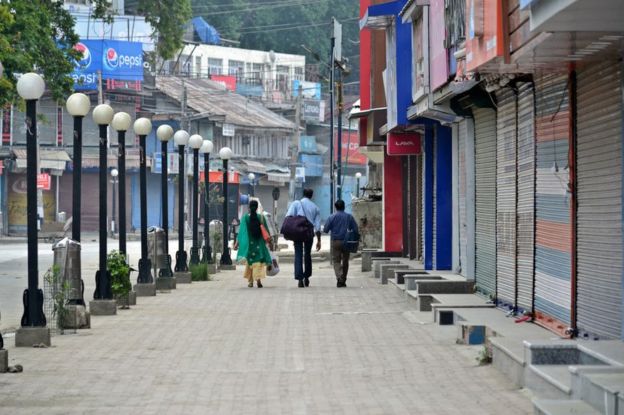
Indian tourists seen leaving the City during the curfew in Srinagar on 16 August 2019.Image copyright GETTY IMAGES
Image caption Tourists left Kashmir amid a curfew in August

Soon officials arrived to enforce the order, and Mr Chai and his staff made arrangements for all of the guests to leave immediately.

Days later, on 5 August, the federal government stripped the region of its special status and placed it under a communications lockdown.

Two months on, the situation is far from normal. Internet and mobile phone connections remain suspended, public transport is not easily available, and most businesses are shut – some in protest against the government, and others for fear of reprisals from militants opposed to Indian rule.

There is also a shortage of skilled labour, as some 400,000 migrants have left since the lockdown began.

What’s more, the streets are deserted and devoid of the tourist business which had supported up to 700,000 people.

Presentational grey line

Read more about Kashmir

Presentational grey line

The lockdown has not come cheap.

A government official, who did not wish to be named, says they are “awaiting a financial package” from the federal government. But the Kashmir Chamber of Commerce and Industry estimates the shutdown has already cost the region more than $1.4bn (£1.13bn), and thousands of jobs have been lost.

“There are around 3,000 hotels in the valley and they are all empty. They have loans to pay off and daily expenses to bear,” says Mr Chai, sitting in his mostly empty hotel in the capital, Srinagar.

Only a handful of his 125 staff are at work. Many haven’t returned because of lack of transport – or fear. Tensions have been high in the region, and there have been a number of protests in the city.

But the situation may improve in the coming days as the government has announced that tourists will allowed in the state from Thursday.
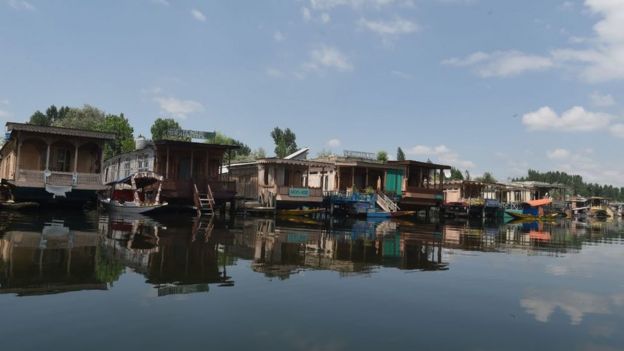
Empty houseboats on Srinagar's Dal lake.Image copyright GETTY IMAGES
Image caption Hundreds of houseboats have been lying vacant

But it isn’t just the hotels which have suffered.

“No internet has meant more than 5,000 travel agents have lost work,” says Javed Ahmed, a travel agent himself. “The government says give jobs to the youth. We are young but jobless. We have nothing to do with politics. We want jobs.”

Srinagar’s almost 1,000 iconic houseboats have also been running empty.

“Every houseboat needs up to $7,000 a year for maintenance,” says Hamid Wangnoo from the Kashmir Houseboats Owners Association. “For many, this is the only source of livelihood.”

And it isn’t just tourism.

“More than 50,000 jobs have been lost in the carpet industry alone,” according to Shiekh Ashiq, president of the chamber of industry.

He says July to September is when carpet makers usually receive orders for export – especially overseas, so they can deliver by Christmas.

But they are unable to contact importers, or even their own employees, because of the communications lockdown.
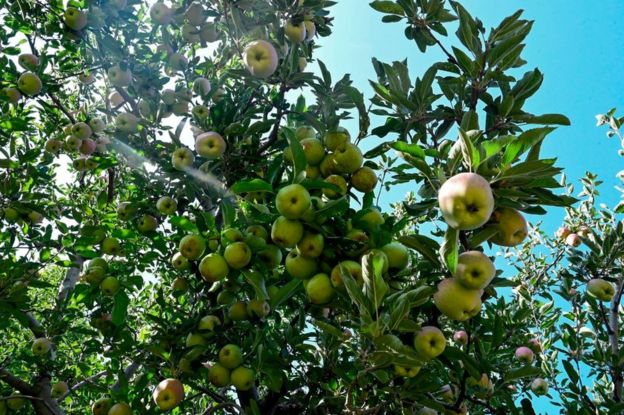
Apples are ready to be harvested in an orchard in Shopian district of southern Kashmir valley.Image copyright GETTY IMAGES
Image caption Kashmir’s famous apple orchards have also been hit hard

In southern Kashmir, the region’s famous apples are still waiting to be plucked from the trees. But shops and cold storage units are shut, and the main apple market is empty. Last year, it did business worth $197m, local farmers say.

“I feel so much pain seeing my apples hanging from the trees that I don’t go to the orchard anymore,” says a worried apple grower, who did not wish to be named.

“Apples account for 12–15% of Kashmir’s economy, but more than half of this year’s produce has not been plucked,” says economic journalist Masood Hussain. “If this continues through October, it will have devastating consequences.”

In Srinagar, some shop owners wait outside their stores and open them for a customer before closing them hurriedly – until the next customer arrives.

One such owner says he is unhappy with the government’s decision, but he is also scared of angry locals who want him to keep his business closed.

“But how do I survive without my daily earnings?” he asked.
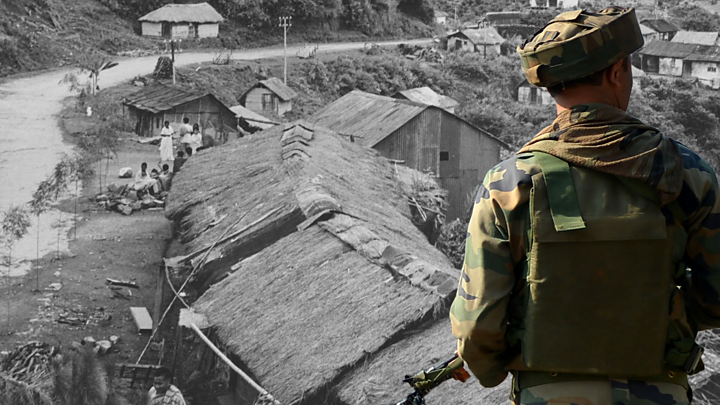
Media caption Two wars, a 60-year dispute – a history of the Kashmir conflict

Source: The BBC

06/02/2019

Stray cows add to Modi’s farmer woes as Indian election looms

KAKRIPUR/MAHABAN, India (Reuters) – As night fell on the bucolic northern Indian hamlet of Mahaban, Gopi Chand Yadav gathered blankets and a flashlight to spend the night sitting on a wooden platform in his field. His task: to use bamboo sticks to ward off stray cattle from intruding and eating a maturing mustard crop.

Like Yadav, many thousands of farmers stay awake to guard their farms over a cold winter or face losing their crops to the cattle – a double whammy for growers already reeling from a plunge in Indian crop prices.

While stray cows ambling around towns and villages have always been a feature of life in rural India, farmers say their number has increased sharply in recent years to the extent that they have become a menace, and blame the policies of Prime Minister Narendra Modi’s Hindu nationalist government.

Protecting cows – considered sacred to Hindus – was one of the measures meant to shore up support in the heavily populated, Hindi-speaking belt across northern India that has been a heartland of the ruling Bharatiya Janata Party’s (BJP). Instead, it is creating a backlash, even among Hindu farmers.

“We already had enough problems and now the government has created one more,” said octogenarian farmer Baburao Saini from Kakripur village, about 85 kilometres (50 miles) from New Delhi. “For the first time, we’ve been forced to stay in the fields to protect our crops.”

More than 50 farmers Reuters spoke to in Mahaban and nine other villages in Uttar Pradesh state said they would think twice before voting for Modi’s BJP in the next general election, due by May. The cattle issue and low farm prices are major reasons behind their disillusionment with a party that most say they voted for in the last election in 2014.

Modi swept Uttar Pradesh at that poll, winning 73 of 80 seats in India’s most populous state, with rural voters swayed by a promise of higher crop prices, and as Hindu farmers supported the BJP amid tensions with the minority Muslim community.

COW PROTECTION

Modi is trying hard to claw back support among India’s 263 million farmers and their many millions of dependents after the BJP lost power in December to the opposition Congress in three big northern states where agriculture is a mainstay.

Indian farmers keep cows to produce milk, cheese and butter, but to harm or kill a cow, especially for food, is considered taboo by most Hindus.

Most states in India have long outlawed cow slaughter, but after coming to power in 2014 the BJP ratcheted up its distaste for trade in cattle, launching a crackdown on unlicensed abattoirs in Uttar Pradesh and on cattle smuggling nationwide.

At the same time, a wave of attacks on trucks carrying cattle by Hindu vigilante groups has scared away traders, most of whom are Muslims, bringing to a halt the trade even in bullocks, which are not considered sacred. Rising sales of tractors and increasing mechanisation mean that more animals are redundant for use in farming.

The farmers Reuters spoke to said they revered cows as most devout Hindus would, but a sudden halt in the trade of cattle had hit the rural economy. In their view, the government should come up with more cow shelters and let cattle traders deal in other animals without fear of attack.

“The government has only enforced the laws by closing down unlicensed abattoirs and cracking down on cattle smuggling,” said BJP spokesman Gopal Krishna Agarwal, who added that he runs a cow shelter of 1,300 cattle. “We’re not trying to hurt either any community or the rural economy.”

CROP TRAMPLED

Fodder prices have gone up by more than a third in the past year and most farmers cannot afford to keep cows after they stop producing milk, said farmer Rajesh Pahalwan as he smoked a hookah pipe in the village of Manoharpur. Six farmers sitting with him mainly nodded in agreement.

In India, the world’s biggest milk producer, about 3 million cattle become unproductive every year. In the past, Hindu farmers would sell unproductive cows to Muslim traders and about 2 million of these would end up smuggled to Bangladesh for meat and leather. But that trade has now been throttled by the government crackdown, trade and industry officials say.

That has led to many unproductive cattle being abandoned, farmers said, but governments – both state and federal – have failed to construct new shelters, leaving rising numbers of stray cattle that are feeding on crops, or even garbage.

“The government clearly did not think of alternatives before putting these curbs in place,” said farmer Deepak Chaudhary, who grows wheat on the outskirts of Mathura, considered to be the birthplace of the Hindu God Krishna. “As Hindus, we treat cows as sacred but these unwarranted measures have upended the economics of farming.”

The government did provide some relief in its interim budget last week as it announced a cow welfare programme costing 7.50 billion rupees (80.79 million pounds) in the year beginning April.

But there are hardly any “adequate measures to rehabilitate” cattle, said Fauzan Alvi, vice-president of the All India Meat and Livestock Exporters Association.

“Forget about cows, we cannot sell even a single animal to even our relatives thanks to cow vigilante groups which are aided and abetted by the BJP,” said the wheat farmer Chaudhary.

Modi has in the past condemned violence by cow vigilantes, but critics and opposition politicians say some of the right-wing Hindu groups involved have links to his party, a charge the BJP denies.

Nearly 85 percent of India’s farmers own less than 2 hectares (5 acres) of land, so even a relatively small area damaged has a big impact on their livelihood.

Only two weeks ago, some cattle ravaged an acre of wheat grown by farmer Chandra Pal in the Mathura district of Uttar Pradesh.

“My investment went down the drain after some stray cattle trampled and ate up the crop,” he said.

Many farmers in Uttar Pradesh are now using barbed wire to stop animals from entering their farms, but that is expensive.

“We have been at the receiving end of anti-farmer policies of the government and the problem of stray cattle is just another blow to us,” said farmer Amar Chand, from Maholi village who voted for Modi in 2014. “Unlike the previous general election, farmers are not solidly behind Modi, who’s on shaky ground this time round.”

Source: Reuters

03/12/2018

Nehru wore rose on his suit, but was ignorant of farmers’ woes: PM Modi

“He (Nehru) used to wear rose and had the knowledge of gardens but did not know about farmers or farming, due to which the community faced hardship,” PM Modi was quoted as saying without naming the first Prime Minister.

Nehru wore rose on his suit, had knowledge of gardening but was ignorant of farmers' woes: PM Modi
PM Modi also stated that Nehru had objections about President Rajendra Prasad’s visit for the consecration of Somnath temple which was destroyed by foreign invaders and ‘renovated’ by Sardar Vallabhbhai Patel. (PTI File photo)

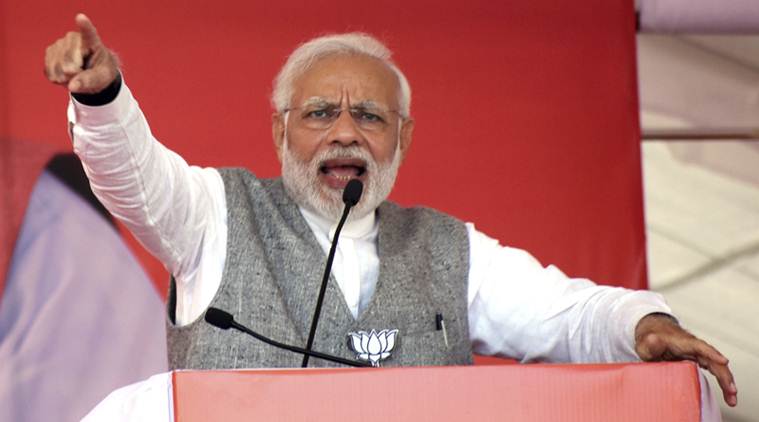
Campaigning for the upcoming assembly elections in Rajasthan, Prime Minister Narendra Modi on Monday resorted to ‘kaamdaar-naamdar’ (worker-dynast) jibe in his attack on Congress party which had earlier questioned his knowledge on Hinduism. The prime minister also invoked the first prime minister Jawahar Lal Nehru while talking about the agrarian distress in the country.

Without naming Nehru, Modi said a leader wore a rose and had knowledge of gardening but didn’t know about farming, which he held as the reason behind farmers’ distress. “He (Nehru) used to wear rose and had the knowledge of gardens but did not know about farmers or farming, due to which the community faced hardship,” PM Modi was quoted as saying by PTI.

He also claimed that Nehru had objections about President Rajendra Prasad’s visit for the consecration of Somnath temple which was destroyed by foreign invaders and ‘renovated’ by Sardar Vallabhbhai Patel.

Modi also stated that he is a petty “kaamdaar” who never made the claim of having complete knowledge of Hinduism, nevertheless, the “naamdaar” has the right to speak. He also asked the Congress party about the source of its expertise on religion. PM Modi has often labelled the Congress president to be a dynast or “naamdaar” on multiple occasions previously.

Law of Unintended Consequences

continuously updated blog about China & India

ChiaHou's Book Reviews

continuously updated blog about China & India

What's wrong with the world; and its economy

continuously updated blog about China & India