Archive for ‘World’

19/09/2019

Int’l fellowship program shares China’s development with world

LANZHOU, Sept. 18 (Xinhua) — A total of 26 participants from 21 countries including Brazil, New Zealand and the United States attended the closing ceremony of the Gansu International Fellowship Program held Tuesday in the capital city of Lanzhou, northwest China’s Gansu Province.

Held by the provincial government, the 30-day program, starting from Aug. 20, focused on China’s overall development in areas such as the economy, society and culture, as well as its anti-poverty campaign.

Economic experts, scientists and sociologists from local universities and research institutes as well as government departments were invited to share their experience and give lectures.

During the program, all participants visited the Mogao Grottoes, a UNESCO World Heritage site. Based on the culture courses, they exchanged ideas with local officials and experts.

“I was very impressed with the comprehensive structure planning being undertaken to turn Lanzhou and Gansu as a whole into a major hub of China,” said Robert Love, a strategy and policy planner with Selwyn District Council, New Zealand, after his visit to the Lanzhou Urban Planning Exhibition Hall.

Philippe Dall’Agnol, a state attorney from Brazil, told Xinhua that China’s poverty alleviation efforts and means of increasing production were particularly worth studying, adding that when he returns to Brazil, he will continue to be a messenger of peace and a bridge of friendship, to actively promote exchanges and cooperation between the two countries.

Since it was initiated in 2006, a total of 309 participants from 62 countries have graduated from the program, making it an important platform for international exchanges and cooperation.

Source: Xinhua

08/07/2019

World cannot shut China out, vice president says, in jab at U.S.

BEIJING (Reuters) – China and the rest of the world must co-exist, Vice President Wang Qishan said on Monday, in an indirect jab at the United States, with which Beijing is trying to resolve a bitter trade war.

Top representatives of the world’s two biggest economies are trying to resume talks this week to try and resolve their year-long trade dispute, which has seen the two countries place increasingly harsh tariffs on each other’s imports.

The Trump administration has accused China of engaging in unfair trade practices that discriminate against U.S. firms, forced technology transfers and intellectual property rights theft. Beijing has denied all the charges.

“China’s development can’t shut out the rest of the world. The world’s development can’t shut out China,” Wang told the World Peace Forum at Beijing’s elite Tsinghua University.

He also warned against “protectionism in the name of national security”, but without mentioning the United States, and urged major powers to make greater contributions to world peace.

China has also been angered by U.S. sanctions against tech giant Huawei Technologies Co Ltd over national security concerns, and U.S. visa curbs on its students and academics.

In his speech, Wang, who is extremely close to Chinese President Xi Jinping and rarely speaks in public, reiterated China’s commitment to opening up.

“Large countries must assume their responsibilities and set an example, make more contributions to global peace and stability, and broaden the path of joint development,” he added.

“Development is the key to resolving all issues,” Wang, who became vice president last year, after having led Xi’s fight to root out corruption, told an audience that included Western diplomats based in Beijing and former European Council President Herman Van Rompuy.

“NOT A RATIONAL ACTION”

The United States should not blame China for the problems it is facing, Vice Foreign Minister Le Yucheng told the forum later.

“Viewing China as the enemy is not a rational action,” the foreign ministry quoted him as saying, adding that China would not put up “high walls” or “decouple itself from any country”.

China has been nervous that the United States is seeking to sever, or at least severely curb, economic links, in what has been called a “decoupling”.

Tariff, trade, finance and science and technology wars are “turning back the clock on history,” Le said. “The consequences will be extremely dangerous.”

The two sides have communicated by telephone since last month’s summit of leaders of Group of 20 major nations in Japan, at which U.S. President Donald Trump and Xi agreed to relaunch stalled talks.

Talks broke down in May, after U.S. officials accused China of pulling back from commitments previously made in the text of an agreement negotiators said was nearly finished.

The countries have also been at loggerheads over issues ranging from human rights to the disputed South China Sea and U.S. support of self-ruled Taiwan, which China claims as its own.

No matter how the international situation or China developed, Vice President Wang said, the country would follow the path of peace, and not seek spheres of influence or expansion.

“If there is no peaceful, stable international environment, there will be no development to talk of.”

Source: Reuters

11/06/2019

Huawei: ‘We stand naked in front of the world’

Huawei logoImage copyrightAFP

Huawei has denied that it has any links to the Chinese government.

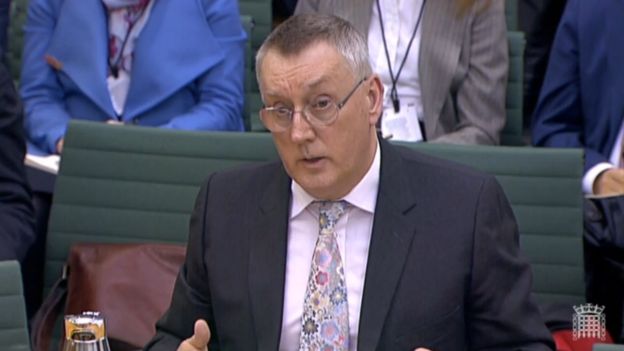
Huawei’s cyber-security chief John Suffolk told MPs on Monday that the tech giant had never been asked by China or any other government to “do anything untoward”.

Mr Suffolk said Huawei welcomed outsiders to analyse its products and detect engineering or coding flaws.

“We stand naked in front of the world, but we would prefer to do that, because it enables us to improve our products.”

He added: “We want people to find things, whether they find one or one thousand, we don’t care. We are not embarrassed by what people find.”

Huawei was invited to the Technology and Science Select Committee to answer questions from MPs on the security of its equipment, and its links to the Chinese government.

The US has encouraged allies to block Huawei – the world’s largest maker of telecoms equipment – from their 5G networks, saying the Chinese government could use its products for surveillance.

Huawei cyber-security chief John SuffolkImage copyright PARLIAMENT TV
Image caption Huawei’s cyber-security chief John Suffolk said the tech giant has no access to mobile networks

“We’ve never had a request from the Chinese government to do anything untoward at all,” said Mr Suffolk.

“We have never been asked by the Chinese government or any other government, I might add, to do anything that would weaken the security of a product.”

MPs raised concerns about Chinese human rights abuses, such as reports that up to a million Muslims are in detention centres in Xinjiang province.

They asked whether Huawei was required to provide equipment to Xinjiang province, especially in light of the 2017 Chinese intelligence law, which requires individuals and associations to comply with Chinese intelligent agencies.

Mr Suffolk said: “We have had to go through a period of clarification with the Chinese government, that has come out and made it quite clear that that is not the requirement of any company.

“We’ve had that validated via our lawyers and revalidated by Clifford Chance…according to our legal advice, that does not require Huawei to undertake anything that weakens Huawei’s position in terms of security.”

Remote access

MPs asked whether Huawei would be able to remotely access the UK’s 5G mobile networks via its equipment.

A woman using 5G to access the internet on her smartphoneImage copyright GETTY IMAGES
Image caption Huawei said it would have no access to any data on a 5G mobile network

In reply, Mr Suffolk stressed that Huawei is a provider of telecommunications equipment to mobile network operators.

“We don’t run networks, and because we don’t run the network, we have no access to any of the data that is running across that network,” he said.

He also explained that Huawei is only one of about 200 vendors who would be providing various different bits of equipment that would eventually make up a 5G network in the UK.

However, if an operator were to have a problem with Huawei equipment, a support centre based in Romania would be able to remotely access the equipment to fix the problem.

MPs wanted to know whether it would be possible for a 5G network to be used to track an individual user.

In response, Mr Suffolk explained that mobile phone technology requires the mobile operator to constantly track a user’s phone, in order to be able to connect them to the mobile network.

By that logic, the operator is constantly tracking all of its customers, all the time.

He also told MPs that only about 30% of the the components in Huawei products are actually made by the company – the rest of the components are obtained from a global supply chain that Huawei closely monitors in order to prevent security breaches.

Source: The BBC

28/01/2019

China Focus: A healthier Shanghai economy a bliss to the world

SHANGHAI, Jan. 27 (Xinhua) — China’s eastern metropolis of Shanghai pledges to further open up its door to let the world share the benefits of its high-quality growth.

While delivering the government work report at the annual session of the municipal legislature, Shanghai mayor Ying Yong promised that the city will strengthen its efforts in reform and opening up, while pursuing high-quality growth in the year 2019.

Shanghai recorded an overall economic growth of 6.6 percent last year, with its GDP per capita exceeding 20,000 U.S. dollars. The city expects to attain a growth rate of 6 percent to 6.5 percent this year.

HEALTHIER ECONOMY

Experts said the GDP per capita is an important indicator of a region’s economic wellbeing. The fact that it has exceeded 20,000 U.S. dollars means that Shanghai’s growth has reached a higher level.

Quan Heng, deputy head of the Shanghai Academy of Social Sciences, said as China aims to build itself into a moderately prosperous society by 2020, the growth of GDP per capita is a key measurement.

Quan added that besides per capita GDP, other factors such as economic structure, efficiency and technological innovation are also important indicators of development.

According to the government work report, Shanghai has seen the structure, quality and efficiency of its economy continuing to improve last year. The added value of the tertiary sector accounted for 69.9 percent of the GDP. Total research and development expenditures accounted for 4 percent of the city’s GDP.

The city has been boosting its real economy, with the industrial investment increasing by 17.7 percent in 2018, the greatest growth rate the city has seen during the past decade. It recorded around a 10 percent growth rate in the output of emerging industries including new energy cars, high-end medical equipment, integrated circuits and biomedicine.

The city vows to further promote high-quality growth this year. It will deepen supply-side structural reform and advance the construction of a modern industrial system featuring modern services, strategic emerging industries and advanced manufacturing.

The city will further boost its science and innovation sector and fortify its function as an international financial, trade and shipping center.

Meanwhile, Shanghai will further upgrade the real economy and come up with supporting policies for industries including integrated circuits, artificial intelligence and biomedicine.

The city will push ahead with industrial innovation projects such as intelligent connected vehicles, and it expects to see the mass production of 14 nanometer-integrated circuits this year.

OPENING-UP MEASURES

Development of the Shanghai free trade zone (FTZ) is expecting new momentum, as a new section will be built this year. Policies and systems will also be adopted in alignment with international norms to upgrade the FTZ, said Mayor Ying.

A science and technology innovation board will be set up with a pilot registration system for listed companies in the Shanghai Stock Exchange, said the report.

The city will further improve the private investment environment. In an effort to ease enterprises’ access to market and financing, the city vows to put into good use the bailout fund worth 10 billion yuan (1.48 billion U.S. dollars) for listed companies.

It will channel 10 billion yuan of credit and secured loans to high-quality small and medium private companies.

It will also gradually increase the size of policy-based financing guarantee funds for medium, small and micro enterprises to 10 billion yuan.

At the same time, Shanghai is actively participating in the integrated development of the Yangtze River Delta region.

This year, the city will cooperate with its partners in constructing programs in infrastructure, scientific innovation, industrial collaboration, environment and market systems, the mayor said.

Cooperation mechanisms will be further improved in public services such as pension service, medical and health services, human resources and social welfare.

THE SECOND IMPORT EXPO

Shanghai is determined to successfully host the second China International Import Expo (CIIE) this year, according to the mayor.

The city will normalize the expo’s pilot mode of bonded display and trade, having it occur on a regular basis.

As the world’s first import-themed national-level expo, the first CIIE was held in Shanghai from Nov. 5-10 in 2018 and concluded with deals worth about 57.83 billion U.S. dollars. The expo attracted 3,617 foreign exhibitors and more than 400,000 buyers from home and abroad.

Ying said the city plans to open wider for foreign investment and foreign firms, amplifying the expo’s spillover effects.

According to the CIIE bureau, more than 500 companies from more than 40 countries and regions have confirmed participation in the 2019 CIIE. Among them, there are over 70 Fortune Global 500 firms and leading enterprises in various industries.

Source: Xinhua

27/01/2019

China ready to work with France, Italy to inject positive energy into world: FM

ROME, Jan. 26 (Xinhua) — China is willing to work with France and Italy and meet each other halfway, enhance strategic communication, and consolidate strategic mutual trust and cooperation, so as to inject new impetus to bilateral ties and positive energy into the international community, Chinese State Councilor and Foreign Minister Wang Yi has said.

Wang made the remarks during a press briefing on Friday night, right before concluding his visits to France and Italy.

The top Chinese diplomat termed as “very successful” the 18th consultation of the coordinators for the China-France Strategic Dialogue and the 9th joint meeting of the China-Italy Government Committee.

Against the backdrop of ongoing profound adjustment of relations and increased frictions among major powers, Wang said France and Italy, both major members of the European Union and countries with global influence, expressed their stance that they cherish the comprehensive strategic partnerships with China.

Wang believed that the China-France and China-Italy comprehensive strategic partnerships had been further enhanced.

Wang also told reporters that both France and Italy have clearly welcomed Chinese investment to their countries, promising not to adopt any restrictions on specific enterprises and discriminations against any enterprises.

He praised these statements as “not only timely but also necessary”, adding that Chinese companies will increasingly turn their eyes to countries that are worth their trust.

Wang said he also had deep exchange of views with French and Italian officials on how to deal with various global challenges.

The tripartite partners, Wang said, have confirmed that they would firmly uphold the rule-based multilateralism and maintain the contemporary international system with the UN as the core.

He said all three countries completely disagreed with unilateralism and egoism, which actually represents the general perspective of the international community. It will be proved that any unilateralism and egoism are unpopular and doomed to be unsustainable, Wang added.

Source: Xinhua

Law of Unintended Consequences

continuously updated blog about China & India

ChiaHou's Book Reviews

continuously updated blog about China & India

What's wrong with the world; and its economy

continuously updated blog about China & India