Chindia Alert: You’ll be Living in their World Very Soon
aims to alert you to the threats and opportunities that China and India present. China and India require serious attention; case of ‘hidden dragon and crouching tiger’.
Without this attention, governments, businesses and, indeed, individuals may find themselves at a great disadvantage sooner rather than later.
The POSTs (front webpages) are mainly 'cuttings' from reliable sources, updated continuously.
The PAGEs (see Tabs, above) attempt to make the information more meaningful by putting some structure to the information we have researched and assembled since 2006.
BEIJING (Reuters) – A plane carrying 83 British and 27 foreign nationals flew out on Friday from China’s central city of Wuhan, the centre of a virus epidemic that has killed more than 200 people and infected more than 9,000, the British government said.
The civilian aircraft chartered by the Foreign Office left Wuhan at 9.45 a.m. (0145 GMT), the government said in a notice on its website.
It is due to arrive at 1 p.m. (1300 GMT) in Britain later on Friday, before continuing on to Spain, where the home countries of European Union citizens will take responsibility for the remaining passengers.
“We know how distressing the situation has been for those waiting to leave,” Britain’s Foreign Secretary Dominic Raab said, according to the notice. “We have been working round the clock to clear the way for a safe departure.”
The flight had been expected to depart Wuhan on Thursday morning with around 150 British citizens and 50 non-British nationals, but its departure was blocked by Chinese officials.
The reasons for the delay by Chinese officials and the lower-than-expected number of passengers were not immediately clear.
The UK embassy in Beijing and the UK Foreign Office did not immediately respond to requests for comment.
Some British citizens have spoken of being told they could not take family members with Chinese passports out of the city.
Those returning to Britain will be quarantined for 14 days at a National Health Service facility.
A British government spokesman said any citizens who were eligible for the flight would be given a seat but nationals already infected would not be allowed to leave Wuhan.
The U.S. government warned Americans not to travel to China as the death toll from the new coronavirus reached 213 on Friday and the World Health Organisation declared a global health emergency.
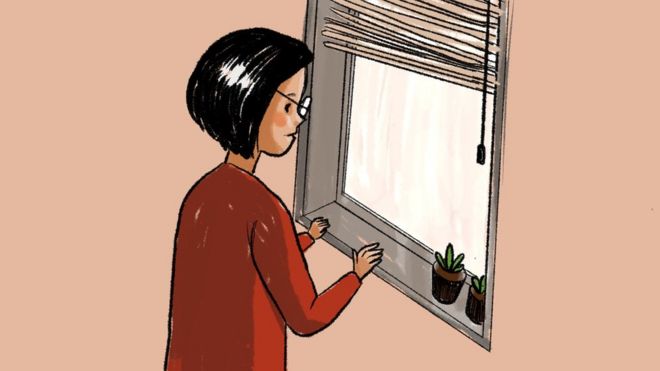
Guo Jing lives in Wuhan, the Chinese city at the heart of the outbreak of a new virus which has got the world worried.
Wuhan has been under lockdown since 23 January, to try to contain the infection. Transport is shut down, most shops and businesses closed, and people are being advised to stay at home.
Jing is a 29-year-old social worker and rights activist who lives on her own. For the past week, she has kept a diary, which she shares here with the BBC.
There are a lot of infuriating comments [on social media]: that many patients cannot be hospitalised after diagnosis [because of a lack of places], that patients with fever are not properly treated.
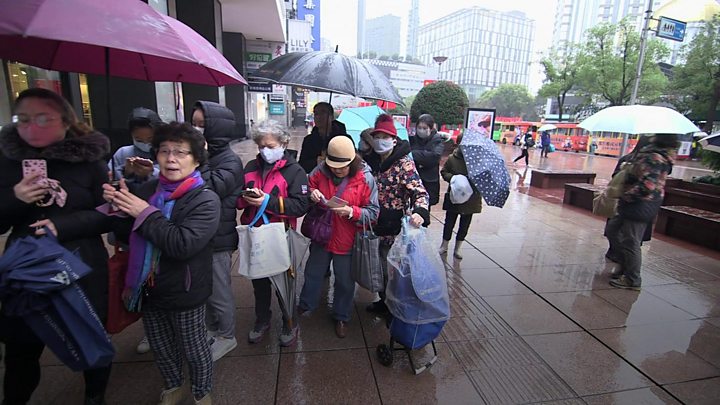
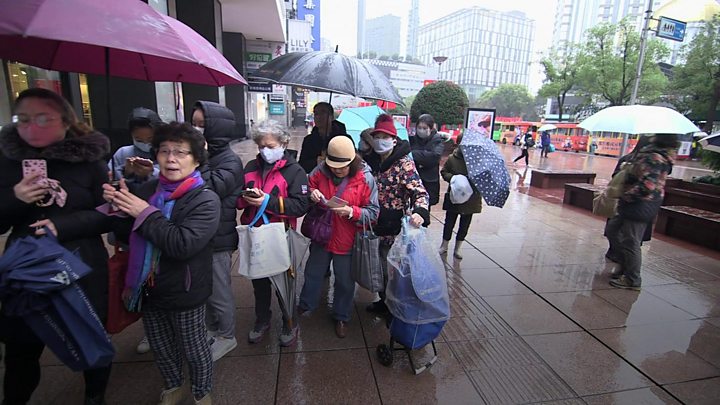
Many more people are wearing masks. Friends have told me to stock up on supplies. Rice and noodles have almost sold out.
Media caption Fears over coronavirus in China trigger face mask shortage
A man was buying lots of salt, and someone asked him why he was buying so much. He replied: “What if the lockdown lasted for a whole year?”
I went to a pharmacy and it was already limiting the number of shoppers. It had already sold out of masks and alcohol disinfectant.
After stocking up on food, I am still in shock. Cars and pedestrians are dwindling, and the city has come to a stop all out of a sudden.
When will the city live again?
Friday 24 January – a silent New Year’s Eve
The world is quiet, and the silence is horrifying. I live alone, so I can only tell there are other human beings around from the occasional noises in the corridor.
I have a lot of time to think about how to survive. I don’t have any resources or connections.
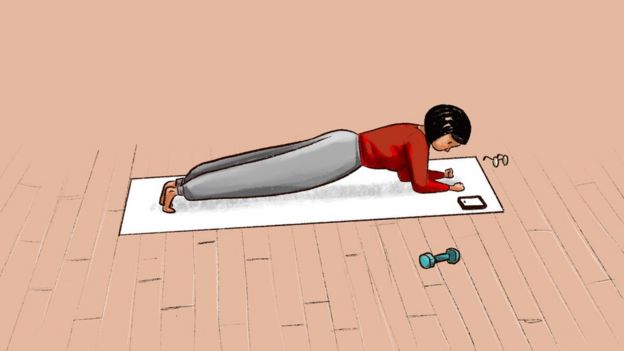
One of my goals is not to fall sick, so I have to make myself exercise. Food is crucial to survival too, so I have to know whether there is enough supply.
The government hasn’t said how long the lockdown will last, nor how we can carry on functioning. People are saying it might last until May.
The pharmacy and the convenience store downstairs were closed today, but it was comforting to see that couriers are still out delivering food.
Noodles are all sold out in the supermarkets, but there is some rice. I also went to the market today. I bought celery, garlic shoots and eggs.
After going home, I washed all my clothes and took a shower. Personal hygiene is important – I think I am washing my hands 20 to 30 times a day.
Going out makes me feel that I am still connected to the world. It’s very difficult to imagine how elderly citizens living alone and people with disabilities will get through this.
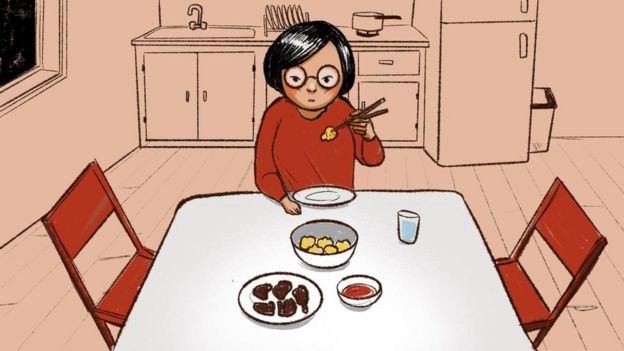
I didn’t want to cook less than usual, because it was the last night of the year of the pig – it was supposed to be a meal of celebration.
Over dinner, I was on a video call with my friends. There was no escaping talk of the virus. Some people are in towns near Wuhan, some chose not to go home because of the disease, some still insist on gathering despite the outbreak.
A friend coughed during the call. Someone jokingly told her to hang up!
We chatted for three hours and I thought I could then fall asleep with happy thoughts. But when I closed my eyes, memories of the past few days came in flashbacks.
Tears fell. I felt helpless, angry and sad. I thought about death, too.
I don’t have many regrets, because my job is meaningful. But I don’t want my life to end.
Saturday 25 January – Chinese New Year alone
Today is Chinese New Year. I never have much interest in celebrating festivals, but now new year feels even more irrelevant.
In the morning, I saw some blood after I sneezed, and I was scared. My brain was filled with worries about sickness. I was wondering if I should go out or not. But I had no fever and a good appetite, so I went out.
I wore two masks even though people say it’s pointless and unnecessary. I am worried about [poor quality] fakes, so a double mask makes me feel safer.
A flower shop was open, and the owner had placed some chrysanthemums [often used as funeral flowers] at the door. But I didn’t know if that meant anything.
In the supermarket, the vegetable shelves were empty and almost all dumplings and noodles were sold out. There were only a few people queuing.
I keep having this urge to buy lots during each visit to the shop. I bought another 2.5 kg of rice, even though I have 7kg of rice at home. I also couldn’t help buying some sweet potatoes, dumplings, sausages, red beans, green beans, millet and salted eggs.
I don’t even like salted eggs! I will give them to friends, after the lockdown is lifted.
I have enough food for a month, and this compulsive buying seems crazy. But under such circumstances, how could I blame myself?
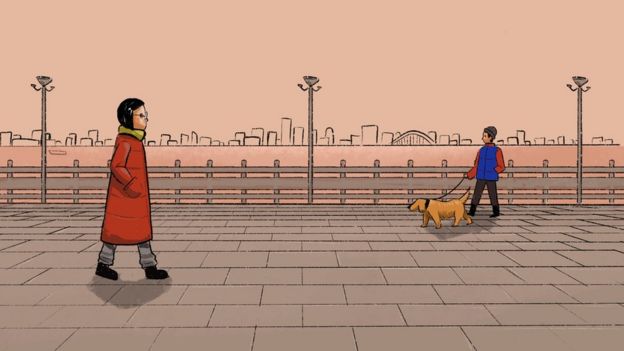
I went for a walk by the river. Two snack shops were open and some people were out walking their dogs. I saw some others were taking a stroll as well – I guess they also didn’t want to be trapped.
I’d never walked along that road before. It felt like my world had expanded just a little bit.
Sunday 26 January – making your voice heard
It not just the city that’s trapped. It’s also the voices of the people.
On the first day of the lockdown, I couldn’t write [anything about it] on social media [because of censorship]. I couldn’t even write on WeChat. Internet censorship has existed for a long time in China, but now it feels even more cruel.
When your life is turned upside down, it’s a challenge to build up your daily life again. I keep exercising in the mornings, using an app, but I can’t focus because my brain is occupied.
Media caption“Wuhan, add oil!”: Watch residents shouting to boost morale in quarantined city
I left home again today and tried to count how many people I met – I met eight during my walk to a noodle shop some 500m away from my home.
I didn’t want to go home. I wanted to explore more. It’s only two months since I moved to Wuhan. I don’t have many friends here, and I don’t know the city very well.
I guess I saw about 100 people today. I have to keep making myself heard and break the shackles. I hope everyone stays hopeful. Friends, I hope that we will meet and talk in the future.
Around 8pm I heard the shouts of “Go, Wuhan!” from people’s windows. The collective chanting is a form of self-empowerment.
Tuesday 28 January – finally sunlight
Panic has driven a wedge between people.
In many cities, people are required to wear a face mask in public. On the face of it, the measure is to control the pneumonia outbreak. But actually it could lead to abuse of power.
Some citizens without a mask have been thrown off public transport. We don’t know why they didn’t wear a mask. Perhaps they couldn’t buy any, or they didn’t know about the notice. No matter what, their rights to go out should not be taken away.
In some videos circulating online, some people had sealed up the doors of people who’d self-quarantined themselves. People from Hubei province [where Wuhan is] were driven out of their homes and had nowhere to go.
But at the same time, some people are offering accommodation to Hubei people.
There are a lot of ways the government could encourage people to stay home. It has to ensure that every citizen has enough face masks, or even give cash rewards to citizens who stay home.
Today, there’s finally sunlight – just like my mood. I saw more people in my complex and there were a few community workers. They appeared to perform temperature checks on non-residents.
It is not easy to build trust and bonds under a lockdown. The city is worn down by heaviness.
In the midst of all this, I can’t help but becoming more on-guard.
My anxiety about survival has been slowly dissipating. Walking further in the city will be meaningless if I don’t make any connections with people here.
Social participation is an important need. Everyone has to find a role in society and makes one’s life meaningful.
MOSCOW (Reuters) – Russian tour operators have stopped selling package holidays to China due to the coronavirus outbreak there and are only bringing Russian tourists home, Dmitry Gorin, vice president of the Association of Russian Tour Operators, said on Monday.
The move was taken at the recommendation of Rosturizm, Russia’s state tourism agency, he said, as the death toll from the new virus in China rose to 81 with more than 2,740 people infected.
Russia, which does not have any confirmed cases of the new virus, has direct daily flights to several Chinese cities and has ramped up sanitary and quarantine control at all entry points.
“Tours are not being sold because there is a safety threat,” Gorin told Reuters. “Sales stopped on Friday.”
Moscow has been in talks with China about evacuating Russian nationals from the Chinese city of Wuhan and Hubei province that are at the centre of the outbreak, Russia’s embassy in China said on Saturday.
Wuhan, a city of 11 million people and capital of Hubei province, is in virtual lockdown and severe limits on movement are in place in several other Chinese cities. Much of Hubei, home to nearly 60 million people, is subject to some kind of travel restrictions.
Direct flights to Moscow from Wuhan were suspended last week. At least 140 Russians, 75 of them students, are known to be in Wuhan and Hubei, the Russian embassy in China said on Monday, the TASS news agency reported.
Around 7,000 Russian tourists who bought package holidays are currently still in China, Gorin said. Around 6,000 of those are on Hainan island with the rest on the mainland, he said.
Russians will be reimbursed for cancelled tours, while those being repatriated from China early will be partially reimbursed, Gorin said.
Russia is working to develop a vaccine against the coronavirus strain, the consumer safety regulator said on Wednesday.
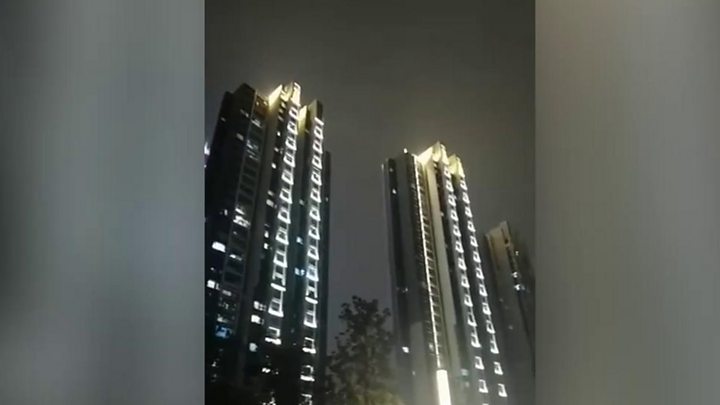
The Lunar New Year’s Eve in Wuhan, ground zero of the novel coronavirus outbreak in central China, is nothing but special. Behind the seemingly quiet streets, people in all walks of life are racing against time to fight against the invisible enemy.
WUHAN, Jan. 25 (Xinhua) — There were far fewer cars on the streets and bustling crowds were not seen in the shopping malls in the central Chinese city of Wuhan on Jan. 24 — the Eve of the Chinese Lunar New Year.
The scene was quite different from the occasion in the previous years because of the novel coronavirus that has claimed over 40 lives and infected over a thousand nationwide. With a population of over 10 million, Wuhan, the capital city of Hubei Province, is the center of the epidemic.
Photo taken on Jan. 24, 2020 shows a medical aid team of Army Medical University leaving for Wuhan in southwest China’s Chongqing. On the Chinese Lunar New Year’s Eve, a group of 150 medical workers from the Army Medical University left for Wuhan, the center of the novel coronavirus (2019-nCoV) outbreak, to provide medical aid. (Xinhua)
Yang Yingchen, a volunteer of the Red Cross Society of China’s Wuhan branch, had a busy day answering calls.
“People from across the nation called to check on accounts and addresses to make donations,” said Yang. “Many would say ‘Come on, Wuhan’ to us, which makes me feel especially warm and deeply moved.”
Chen Li, a doctor in a Wuhan hospital, spent the Chinese Lunar New Year’s Eve at home to quarantine herself. She is a little bit worried about having had contact with infected patients, but luckily she has no signs of symptoms for the time being.
“Before joining the fight against the epidemic, I had sent my four-year-old son to my parents. I has disinfected all the articles in my house,” she said.
Chen’s husband is at the forefront of the fight against the epidemic. “We haven’t seen each other for over a week,” said Chen. On Saturday morning, she put on protective clothing again and returned to work.
“Actually, I can’t be isolated for too long. There’s still a lot of work to be done,” she said. “I just don’t know when I can see my boy again.”
Aerial photo taken on Jan. 24, 2020 shows mechanical equipment working at the construction site of a special hospital in the Caidian District of western suburb of Wuhan, central China’s Hubei Province. The central China metropolitan of Wuhan will follow Beijing’s SARS treatment model to build a special hospital for admitting patients infected in the outbreak of pneumonia caused by the novel coronavirus. (Xinhua/Xiao Yijiu)
The virus had resulted in 41 deaths in China by the end of Friday, mostly in Wuhan, according to the National Health Commission. Nationwide, a total of 1,287 cases were confirmed, including 237 in critical condition.
Confirmed cases were also reported in China’s Hong Kong, Macao and Taiwan, as well as Thailand, Japan, the Republic of Korea, the United States, Vietnam, Singapore, Nepal and France.
Wuhan is following Beijing’s SARS treatment model in 2003 to build a makeshift hospital with a capability of 1,000 beds for admitting infected patients. Construction on the facility began Thursday night. It will be completed and put into use prior to Feb. 3, less than 10 days away.
“It’s going to be another all-nighter. We need to speed up work and complete the hospital as soon as possible,” said Lyu Jun, a young truck driver at the construction site. This is his first Spring Festival away from home.
For ordinary people, this year’s Lunar New Year’s Eve lacks some gatherings but is still a time to extend greetings and wishes.
Yin Yeqiong, from Hunan Province, refunded her tickets back home after much debate. “I had it in my mind to still go home, but finally decided to stay in Wuhan,” she said. “Our stay will help reduce panic in other places.”
Liu Jie, a dough sculptor, put on a New Year costume and watched the Spring Festival Gala with his family. “We’re now at a critical period, so I texted New Year wishes to friends and relatives this year. I believe this is the best way,” he said.
Liu Jiapeng, a children’s book editor, stayed in Wuhan during the Spring Festival for the past four decades. “I always stayed with my family, and we would have every meal together,” said Liu. “But this year, I haven’t had one meal with them.”
On the day of the Lunar New Year’s Eve, he and his wife bought some goods for their parents, brought them to their house and briefly chatted. As they were waiting for the elevator, Liu looked back and saw his father standing at the windowsill, watching them leave.
Medical workers of Army Medical University assemble before leaving for Wuhan in southwest China’s Chongqing, Jan. 24, 2020. On the Chinese Lunar New Year’s Eve, a group of 150 medical workers from the Army Medical University left for Wuhan, the center of the novel coronavirus (2019-nCoV) outbreak, to provide medical aid. (Xinhua)
China is mobilizing medical resources nationwide to aid Wuhan and control the epidemic. Doctors, nurses and experts from across the nation have been selected to join the battle, and manufacturers have restarted their plants to produce medical consumables that have been running short in many places.
A national research team of 14 experts, headed by renowned respiratory scientist Zhong Nanshan, has been set up to help prevent and control the outbreak on Friday.
“This is going to be an unforgettable Spring Festival,” said Chen Ying, a writer. “Because I feel that at this moment, there are so many families that I do not know, in every corner of this city, praying for our home.”
“My New Year wish is simple,” said Liu Jie. “I hope the virus will soon be conquered and everyone in Wuhan and the whole nation would be safe and healthy.”
Image copyright WEIBOImage caption She posted pictures of her meal on social media platform WeChat
The Chinese embassy in Paris has tracked down a woman from Wuhan who said she took tablets to pass airport health checks.
The woman boasted on social media that she had been suffering from a fever, but managed to reduce her symptoms with medicine.
She later posted pictures showing herself dining at what she claimed was a Michelin-starred restaurant in Lyon.
The embassy has now confirmed that her symptoms are under control.
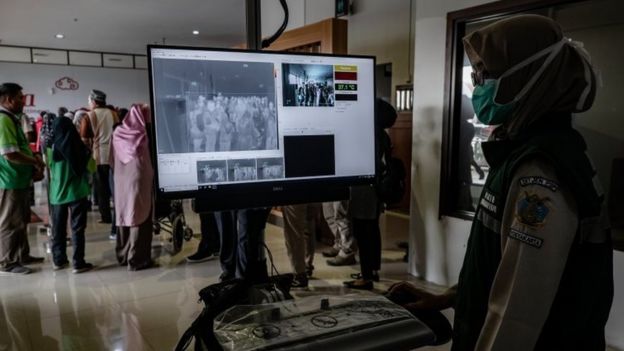
The woman left Wuhan – where the new coronavirus emerged late last year – before flights were suspended, but when thermal scanning was in place.
Since yesterday, public transport has been shut down, with residents told not to leave the city.
At least 25 people with the virus have died. It was first reported to the World Health Organization 31 December.
The virus has spread to countries as far as South Korea, Japan and the US.
Image copyright GETTY IMAGESImage caption People have been thermally scanned when leaving Wuhan, and arriving at their destination. This picture was taken in Indonesia on Thursday
The woman detailed her journey to Lyon on social media site WeChat.
“Finally I can have a good meal, I feel like I’ve been starving for two days. When you are in a gourmet city of course you have to eat Michelin [food],” she wrote.
“Just before I left, I had a low fever and cough. I was scared to death and rushed to eat [fever-reducing] medicine. I kept on checking my temperature. Luckily I managed to get it down and my exit was smooth.”
She also posted pictures of the meal she enjoyed. It is not clear exactly when she arrived.
Her post quickly went viral and she was widely criticised by other social media users.
The Chinese embassy in Paris said it had received calls and emails about the woman. It said she had taken antipyretics, and that it attached “great importance” to the case.
The embassy said it contacted her on Wednesday evening and asked her to refer herself to medical services.
On Thursday, in a new statement, the embassy said the woman’s temperature was under control, and that she had no more fever or cough symptoms.
It added that she did not require “further examinations” at this point.
Media caption Fears over coronavirus in China trigger face mask shortage
China has effectively quarantined nearly 20 million people in Hubei province. Other major cities in China like Beijing and Shanghai are also affected.
Authorities have cancelled all large-scale celebrations in Beijing. Temple fairs are banned, film releases postponed and the Forbidden City will be closed to the public.
All this comes as millions of Chinese people are travelling across the country for Lunar New Year.
Currently known as 2019-nCoV, the virus is understood to be a new strain of coronavirus not previously identified in humans.
Teams from Shanghai, Guangdong – including experts who helped tackle Sars – arrive in Wuhan to lend their support
Tencent, JD.com, Lenovo among raft of private firms offering financial aid to those battling deadly outbreak
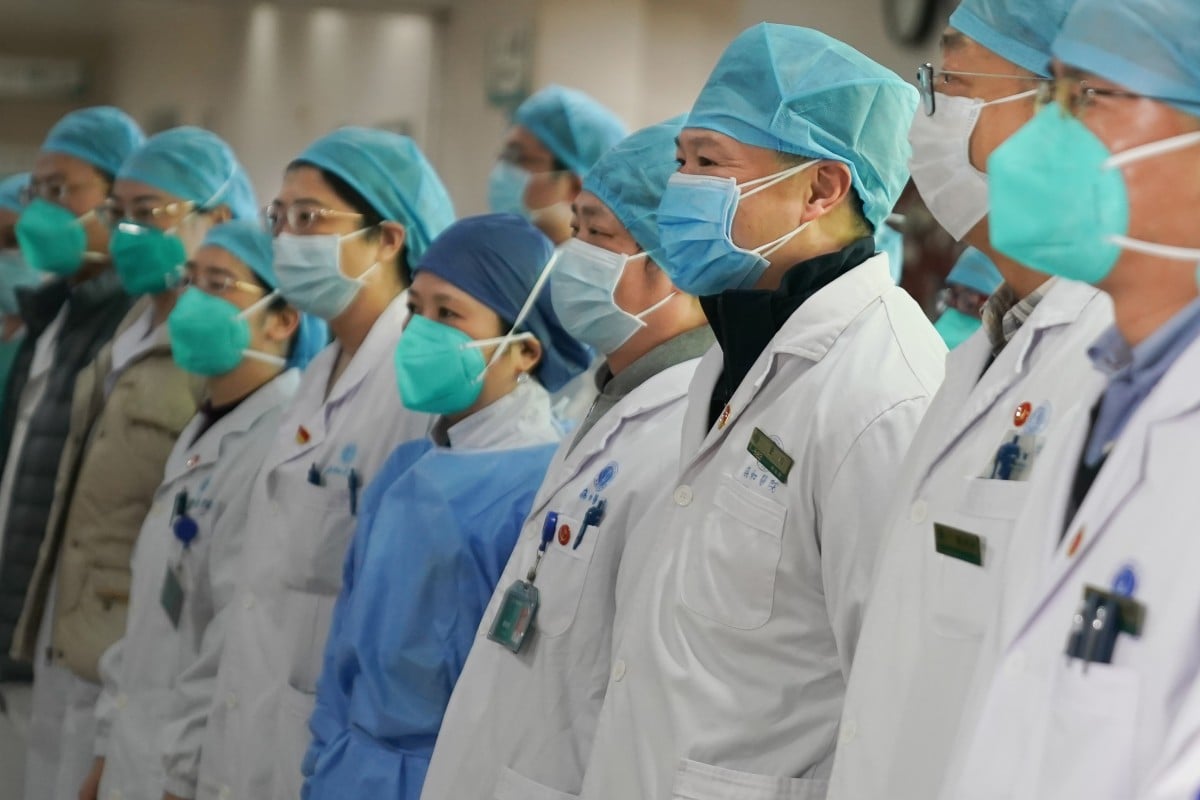
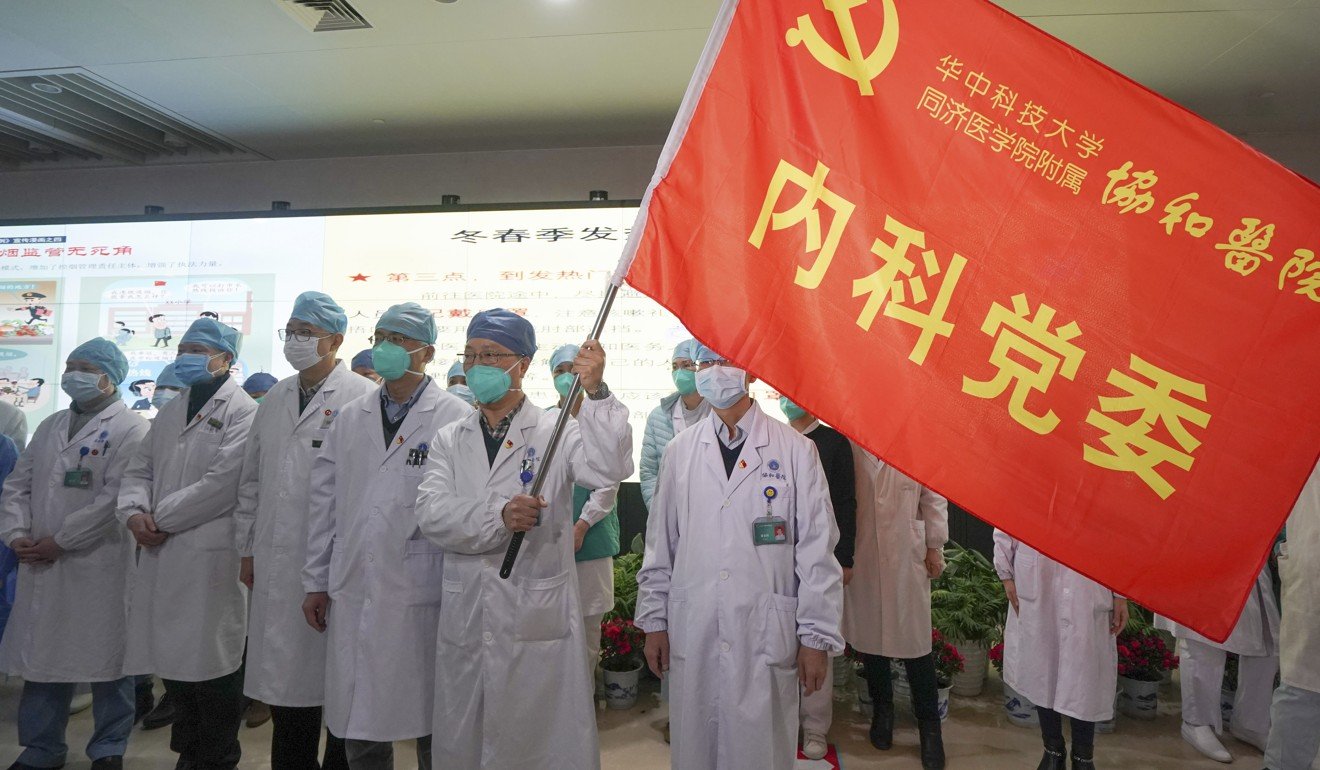
Doctors and nurses from across China are being dispatched to help tackle the coronavirus epidemic in Hubei province. Photo: Xinhua
Chinese authorities and private enterprises are stepping up their support for embattled medical teams in Hubei province as they continue to fight the coronavirus epidemic, while neighbouring governments ramp up their efforts to prevent its further spread.
Hospitals across Wuhan – the city at the centre of the outbreak – have been overwhelmed by the flood of patients and doctors are becoming increasingly frustrated at the lack of support, both in terms of supplies and personnel, they have received.
But national bodies say they are responding to the crisis.
On Saturday, China’s National Health Commission (NHC) said that six medical teams comprising 1,230 staff had been set up and dispatched to help fight the deadly virus in Hubei.
Three medical units from Shanghai, Guangdong and the armed forces had already arrived in the province, it said, though did not make clear if they were in addition to or part of the six teams.
Chen Dechang, a doctor from Ruijin Hospital in Shanghai who is among those sent to Hubei, said it was important there were more medical staff on the scene.
“We can help save more patients in the intensive care unit if we are on the front line,” he said.
Authorities in Shanghai have also sent 81 ECMO (extracorporeal membrane oxygenation) life-support machines to Jinyintan Hospital, which is one of the designated facilities treating patients in Wuhan.
The ECMO technique – which involves removing blood from a person’s body, removing the carbon dioxide and oxygenating red blood cells before pumping them back into the patient – has already been used on one critically ill patient at Wuhan University’s Zhongnan Hospital, according to Shanghai-based news outlet Thepaper.cn.
Though the report did not say how effective the treatment had been.
Medical teams in Wuhan have been under huge pressure since the outbreak began. Photo: Xinhua
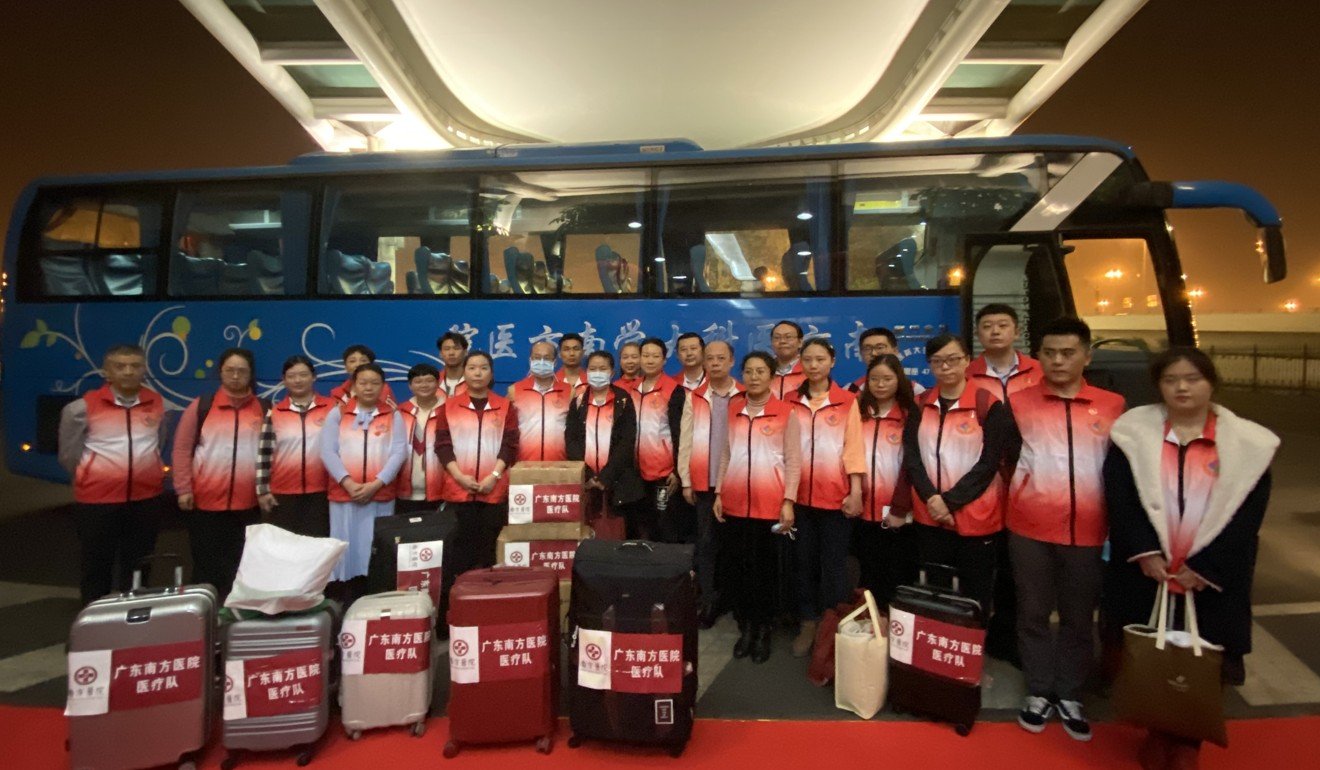
The team from Guangdong comprised 42 doctors and 93 nurses, the NHC said. The deployment came after a group of current and former medical staff from Southern Medical University in Guangzhou – who had helped tackle the Sars (severe acute respiratory syndrome) outbreak in 2002-03 – signed a petition saying they were willing to help in Wuhan.
“We are a team of experienced practitioners who fought Sars,” they said in the petition, a copy of which was posted on the social media accounts of Communist Party mouthpiece People’s Daily.
“We cannot back away from our responsibility to help 17 years later as people are facing the outbreak of a new coronavirus. We are willing to be deployed to the front line to make our contributions.”
A team of 135 doctors from Chongqing arrived in Wuhan on Friday evening, the NHC said, without elaborating.
A medical team from Guangdong province prepares to travel to Wuhan. Photo: Xinhua
As well as the wave of medical support, several private companies said they had provided financial support to help fight the epidemic.
According to Chinese media reports, Shanghai Ocean Forest Assets has donated 10 million yuan (US$1.4 million) to the cause, while Shanghai-based asset management firm, Jinglin Assets is coordinating efforts to buy urgently needed medical supplies from South Korea and Japan.
Shenzhen’s Fantasia Holdings said it would donate 6 million yuan and send medical supplies, including surgical masks, to Wuhan, while tech giant Tencent said it would donate 300 million yuan from its charity. E-commerce platform JD.com said it had donated 1 million surgical masks and 60,000 other medical items.
Chinese smartphone manufacturer Xiaomi said on Friday it had sent a first batch of medical equipment – masks and thermometers worth more than 300,000 yuan – to Wuhan, while tech firm Lenovo said on Saturday it would donate all of the IT equipment required by the new specialist treatment centre being built in the city.
Authorities set a target to have the 1,000-bed facility up and running within six days of starting construction.
Aside from the support from the private sector, state lender China Development Bank on Friday issued a 2 billion yuan emergency loan to Wuhan, while a day earlier, China’s finance ministry said it had allocated 1 billion yuan to authorities in Hubei to help tackle the epidemic.
Across the country, authorities have introduced a number of measures to help prevent the further spread of the coronavirus, including the closure of all cinemas in Shanghai.
Wuhan residents stockpile food, medical supplies
25 Jan 2020
Also on Saturday it was reported that Liang Wudong, a doctor at Xinhua Hospital in Wuhan, had become the first medical professional to die after treating people infected with the virus.
Liang, 62, was suspected of having contracted the virus last week and had been transferred to Jinyintan Hospital for treatment. He died at 7am on Saturday, Thepaper.cn reported.
According to official figures, 41 people have been killed by the coronavirus and there have been more than 1,280 confirmed cases. The vast majority are in the Chinese mainland, but there have also been confirmed cases in Hong Kong, Macau, Taiwan and eight other countries, including the United States and Europe.
Tens of millions of people in cities across Hubei are effectively on lockdown after the introduction of travel bans to help control the spread of the virus.
Evacuation plan outlined in email as diplomats look for ways to protect foreign nationals
Paris earlier reports three cases on its soil – the first to be identified in Europe
The French consulate in Wuhan is planning to evacuate French nationals from the city to escape the deadly coronavirus. Photo: AFP
Foreign diplomats in Wuhan are scrambling to assess the situation in the coronavirus
-plagued city, with French officials planning to evacuate French nationals trapped by the Chinese government’s lockdown.
The plan would allow French people who want to leave Wuhan, the capital of Hubei province, to travel by bus to Changsha in neighbouring Hunan province, according to an email seen by the South China Morning Post.
“The consulate general, in collaboration with local authorities, plans to set up a bus service to allow French nationals … and their Chinese and foreign spouses and children to travel from Wuhan to Changsha,” it said.
The email, sent by the French consulate, also asked anyone who received it to pass the notice on to other French nationals. It was not clear which bodies received the email and the date of the planned evacuation was not specified.
The consulate could not be reached for comment on Saturday.
France, the United States, Britain and South Korea all have consulates in Wuhan, according to China’s foreign ministry.
The South Korean consulate said in a post on its website that it would suspend all visa applications “indefinitely until further notice”.
A diplomatic source said several foreign embassies in China were considering plans to evacuate their nationals from Wuhan.
First coronavirus case ‘had no links to seafood market’
25 Jan 2020
It is not known how many foreigners remain in the city, which has a population of about 11 million and has been under a government-imposed lockdown since Thursday morning.
French Foreign Minister Jean-Yves Le Drian said in a statement on Friday that Paris was monitoring the crisis and “can increase the power [to respond] if necessary”.
There have so far been three confirmed cases of the new coronavirus in France, in Paris and Bordeaux.
French Foreign Minister Jean-Yves Le Drian said on Friday that Paris was monitoring the crisis in China. Photo: AFP
The US said earlier that most of its consulate staff and their families had been pulled out of Wuhan.
An emailed inquiry to the British consulate in the city received only an automated reply, saying: “Wuhan is now in crisis mode. We may not be able to answer your emails for some time.”
The consulate would be closed for the Lunar New Year holiday until January 31, it said.
Meanwhile, British citizen Kharn Lambert told the BBC on Thursday how he had been “trapped” in Wuhan.
The PE teacher said he was afraid to leave his house for fear of catching the deadly virus.
“If you saw the street behind me at night time where I normally live … if I show you out there now, it’s dead,” he said.
More than 1,280 confirmed cases have been reported across China, of which more than 700 were in Hubei, according to local government figures released on Saturday.
The death toll in Hubei stands at 39, with two other fatalities reported in the provinces of Hebei and Heilongjiang.
Tens of millions of people in Hubei are effectively on lockdown since a travel ban was imposed on most of the province.
Flights, trains, buses and ferries connecting Wuhan to other cities in Hubei have been suspended. Rail authorities in Wuhan, which is a hub for several major high-speed lines, said operations at 61 stations and more than 400 train services had been suspended until further notice.
As public health concerns rise over a new virus, the impact is being felt by China’s travel and tourism sector.
More than 400m Chinese were expected to travel over the Lunar New Year which starts today, normally one of the busiest periods for airlines, hotels and tourist attractions.
Instead, flights and hotels are being cancelled as people face travel restrictions or choose to stay home.
The virus has already taken 25 lives, with more than 800 cases globally.
Many airlines have agreed to refund fares or let passengers rebook free of charge if affected, while major hotel chains are now following suit as more travel restrictions are announced.
After the Civil Aviation Administration of China announced that airlines should give refunds for cancelled flights, the country’s three major airlines, China Southern Airlines, China Eastern Airlines and China Air all saw their share prices take a dive. China Eastern Airlines has seen its value fall about 13% this week.
Hong Kong’s national carrier Cathay Pacific was among the first airlines to allow passengers scheduled to fly to or from Wuhan to reschedule for free while, at the same time, allowing cabin crew to wear surgical masks on flights.
Wuhan is where the first cases in the outbreak were reported. The flu-like virus has since spread to several our parts of China and internationally with cases being confirmed in Singapore, Thailand and the US among others countries.
China’s biggest online travel agency, Trip.com, is also waiving cancellation fees on all hotels, car rentals and tickets for tourist attractions to Wuhan and is ”actively monitoring the situation to ensure the safety of all travellers”.
Hotels and casinos hit
Hotel groups are also paying out refunds to tourists who want to cancel trips to Wuhan and other parts of China.
Both InterContinental Hotels Group (IHG) and Hyatt will allow guests to change or cancel stays at the majority of their Chinese hotels over the Lunar New Year holiday. IHG has 443 hotels in China, Hong Kong, Macau and Taiwan under different brands, with four in Wuhan.
Casino operators have also seen shares fall, particularly those with businesses in Macau. The city is home to casinos owned by Las Vegas Sands and Wynn Resorts.
The release of seven movies over the Lunar New Year has also been postponed.
Blow to economy
Tourism has become an increasingly important part of the Chinese economy and is estimated to contribute about 11% of China’s economic growth and employ about 28 million people.
In 2018, 62.9 million tourists visited China, ranking it the fourth most popular tourist destination behind France, Spain and the US, according to the UN’s World Tourism Rankings.
Outside of China, luxury goods brands are also likely to take a battering as Chinese tourists stay at home rather than travel overseas for shopping sprees. LVMH, which owns the Burberry, Louis Vuitton and Hermes brands, saw its value slide this week.
BEIJING (Reuters) – The death toll from China’s coronavirus outbreak jumped on Saturday to 41 as the Lunar New Year got off to a gloomy start, with Hong Kong declaring a virus emergency, scrapping celebrations, and restricting links to mainland China.
Australia on Saturday confirmed its first four cases, Malaysia confirmed three and France reported Europe’s first cases on Friday, as health authorities around the world scrambled to prevent a pandemic.
Hong Kong leader Carrie Lam on Saturday declared a virus emergency in the Asian financial hub, with five confirmed cases, immediately halting official visits to mainland China and scrapping official Lunar New Year celebrations.
Inbound and outbound flights and high speed rail trips between Hong Kong and Wuhan, the epicentre of the outbreak, would be halted, and schools, now on Lunar New Year holidays, would remain shut until Feb. 17. The territory was also treating 122 people suspected of having the disease.
RELATED COVERAGE
U.S. to evacuate its citizens from Wuhan, China – WSJ
China’s President Xi holds politburo meeting on curbing virus outbreak – state TV
The death toll in China rose to 41 on Saturday from 26 a day earlier and more than 1,300 people have been infected globally with a virus traced to a seafood market in the central city of Wuhan that was illegally selling wildlife.
Hu Yinghai, deputy director-general of the Civil Affairs Department in Hubei province, where Wuhan is located, made an appeal on Saturday for masks and protective suits. Hospitals in the city have made similar pleas.
“We are steadily pushing forward the disease control and prevention … But right now we are facing an extremely severe public health crisis,” he told a news briefing.
Vehicles carrying emergency supplies and medical staff for Wuhan would be exempted from tolls and given traffic priority, China’s transportation ministry said on Saturday.
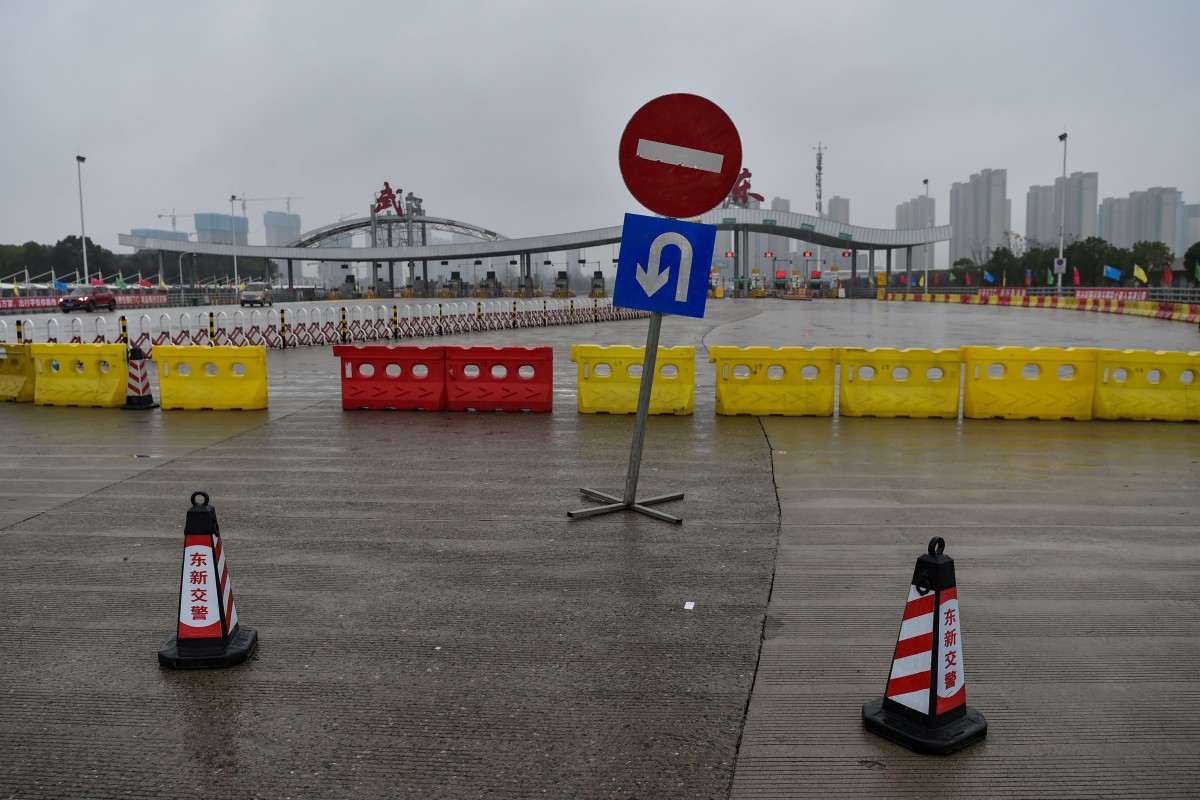
Wuhan said it would ban non-essential vehicles from its downtown starting Sunday to control the spread of the virus, further paralysing a city of 11 million that has been on virtual lockdown since Thursday, with nearly all flights cancelled and checkpoints blocking the main roads leading out of town.
Authorities have since imposed transport restrictions on nearly all of Hubei province, which has a population of 59 million.
In Australia, three men, aged 53, 43 and 35 in New South Wales were in stable condition after they were confirmed to have the virus after returning from Wuhan earlier this month.
A Chinese national in his 50s, who had been in Wuhan, was also in stable condition in a Melbourne hospital after arriving from China on Jan. 19, Victoria Health officials said.
State-run China Global Television Network reported in a tweet on Saturday that a doctor who had been treating patients in Wuhan, 62-year-old Liang Wudong, had died from the virus.
Police officers stand guard in front of the closed gate of Lama Temple where a notice saying that the temple is closed for the safety concern following the outbreak of a new coronavirus is seen, in Beijing, China January 25, 2020. REUTERS/Carlos Garcia Rawlins
It was not immediately clear if his death was already counted in the official toll of 41, of which 39 were in the central province of Hubei, where Wuhan is located.
U.S. coffee chain Starbucks said on Saturday that it was closing all its outlets in Hubei province for the week-long Lunar New Year holiday, following a similar move by McDonald’s in five Hubei cities.
PROTECTIVE SUITS
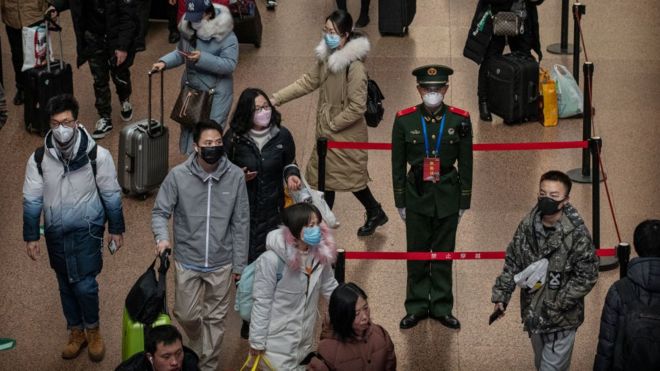
In Beijing on Saturday, workers in white protective suits checked temperatures of passengers entering the subway at the central railway station, while some train services in eastern China’s Yangtze River Delta region were suspended, the local railway operator said.
The number of confirmed cases in China stands at 1,287. The virus has also been detected in Thailand, Vietnam, Singapore, Japan, South Korea, Taiwan, Nepal, and the United States.
The U.S. Centers for Disease Control and Prevention said on Friday it had 63 patients under investigation, with two confirmed cases. While China has called for transparency in managing the crisis, after cover-up of the 2002/2003 Severe Acute Respiratory Syndrome spread, officials in Wuhan have come in for criticism over their handling of the current outbreak.
In rare public dissent, a senior journalist at a Hubei provincial newspaper run by the ruling Communist Party on Friday called for a “immediate” change of leadership in Wuhan on the Twitter-like Weibo. The post was later removed.
REINFORCEMENTS TO WUHAN
The World Health Organization (WHO) declared the new coronavirus an “emergency in China” this week but stopped short of declaring it of international concern.
Human-to-human transmission has been observed in the virus.
China’s National Health Commission said it had formed six medical teams totalling 1,230 medical staff to help Wuhan.
Hubei province, where authorities are rushing to build a 1,000 bed hospital in six days to treat patients, announced on Saturday that there were 658 patients affected by the virus in treatment, 57 of whom were critically ill.
The newly-identified coronavirus has created alarm because there are still many unknowns surrounding it, such as how dangerous it is and how easily it spreads between people. It can cause pneumonia, which has been deadly in some cases.
Symptoms include fever, difficulty breathing and coughing. Most of the fatalities have been in elderly patients, many with pre-existing conditions, the WHO said.
NEW YEAR DISRUPTIONS
Airports around the world have stepped up screening of passengers from China, though some health officials and experts have questioned the effectiveness of such screenings.
There are fears the transmission could accelerate as hundreds of millions of Chinese travel during the week-long Lunar New Year holiday, which began on Saturday, although many have cancelled their plans, with airlines and railways in China providing free refunds.
The virus outbreak and efforts to contain it have put a dampener on what is ordinarily a festive time of year.
Sanya, a popular resort destination on the southern Chinese island of Hainan, announced that it was shutting all tourist sites, while the island’s capital city, Haikou, said visitors from Wuhan would be placed under 14-day quarantine in a hotel.
Shanghai Disneyland was closed from Saturday. The theme park has a 100,000 daily capacity and sold out during last year’s Lunar New Year holiday.
Beijing’s Lama Temple, where people traditionally make offerings for the new year, has also closed, as have some other temples.
BEIJING, China (Reuters) – China ramped up measures to contain a virus that has killed 26 people and infected more than 800, suspending public transport in 10 cities, shutting temples over the Lunar New Year and even closing the Forbidden City and part of the Great Wall.
The week-long holiday to welcome the Year of the Rat began on Friday, raising fears the infection rate could accelerate as hundreds of millions of people travel to their homes and abroad in what is usually a festive time of year.
The World Health Organisation (WHO) has declared the new coronavirus an emergency for China but stopped short of declaring the epidemic of international concern.
While most of the cases and all of the deaths have been in China, the virus has been detected in Thailand, Vietnam, Singapore, Japan, South Korea, Taiwan and the United States. It was likely Britain also had cases, a health official said.
RELATED COVERAGE
‘What choice do I have?’ Lock-down strands millions in China’s Wuhan
WHO expects coronavirus cases to rise in China
The newly identified coronavirus has created alarm because it is too early to know just how dangerous it is and how easily it spreads between people.
Symptoms include fever, difficulty breathing and coughing.
Most of the fatalities have been elderly, many with pre-existing conditions, the WHO said.
Cases are likely to continue to rise in China but it is too soon to evaluate the severity of the virus, a WHO spokesman said on Friday.
As of Thursday, there were 830 confirmed cases and 26 people had died there, China’s National Health Commission said.
In Wuhan, where the outbreak began last month, pharmacies were running out of supplies and hospitals were flooded with nervous resident seeking medical checks.
“There’s so much news, so much data, every 10 minutes there’s an update, it’s frightening, especially for people like us in a severely hit area,” Lily Jin, 30, a resident of the city, told Reuters by phone.
While restrictions have already been put in place in cities across the country to curb the outbreak, China will take stricter and more targeted measures, state television reported citing a state council, or cabinet, meeting on Friday, but gave no further details.
“The spread of the virus has not been cut off … Local authorities should take more responsibility and have a stronger sense of urgency,” state broadcaster CCTV said.
Most cases have been in Wuhan, where the virus is believed to have originated in a market that traded illegally in wildlife. Preliminary research suggested it crossed to humans from snakes.
The city of 11 million people, and neighboring Huanggang, a city of about 7 million, were in virtual lockdown.
Nearly all flights at Wuhan’s airport had been canceled, and airports worldwide have stepped up the screening of passengers from China.
Checkpoints blocked the main roads leading out of town, and police checked incoming vehicles for wild animals.
Wuhan was rushing to build a 1,000-bed hospital for the infected by Monday, the official Changjiang Daily reported.
About 10 people got off a high-speed train that pulled into Wuhan on Friday afternoon but nobody got on before it resumed its journey. Although it stopped there, Wuhan had been removed from the train’s schedule.
“What choice do I have? It’s Chinese New Year. We have to see our family,” said a man getting off the train who gave his family name Hu.
CHINA EMERGENCY
The WHO said on Thursday it was a “bit too early” to designate the outbreak a public health emergency of international concern, which would require countries to step up their response.
Some experts believe the virus is not as dangerous as the one that caused the 2002-03 outbreak of Severe Acute Respiratory Syndrome, which also began in China and killed nearly 800 people, or the one that caused Middle East Respiratory Syndrome, which has killed more than 700 people since 2012.
There is no known vaccine or particular treatment.
“There is some work being done and there are some trials now for MERS (vaccines). And we may look at some point whether those treatments and vaccines would have some effect on this novel coronavirus,” WHO spokesman Tarik Jasarevic said on Friday.
Gilead Sciences Inc said it was assessing whether its experimental Ebola treatment could be used. Meanwhile, three research teams were starting work on vaccines, the Coalition for Epidemic Preparedness Innovations said.
In the meantime, Chinese authorities have imposed restrictions on movement and gatherings to try to stem the spread. It has advised people to avoid crowds and 10 cities in the central province of Hubei, where Wuhan is located, have suspended some transport, the Hubei Daily reported.
Some sections of the Great Wall near Beijing will be closed from Saturday, state media said.
Some temples have also closed, including Beijing’s Lama Temple where people make offerings for the new year, have also been closed as has the Forbidden City, the capital’s most famous tourist attraction.
Shanghai Disneyland will close from Saturday. The theme park has a 100,000 daily capacity and sold out during last year’s Lunar New Year holiday.
The virus is expected to dent China’s growth after months of economic worries over trade tensions with the United States, unnerving foreign companies doing business there.
Shares in luxury goods firms have suffered from the anticipated drop in demand from China, and on Friday French spirits group Remy Cointreau said it was “clearly concerned” about the potential impact.








 CHINDIA ALERT: You'll be living in their world, very soon