Archive for ‘Xiamen’

12/03/2020

Coronavirus: China’s mask-making juggernaut cranks into gear, sparking fears of over reliance on world’s workshop

  • China is now making more than 100 million masks a day, up from 20 million before the coronavirus outbreak, and may start to export more to other countries
  • Mask shortages elsewhere once more raise the debate about an over-reliance on China, with critics pointing to a lack of US industrial policy
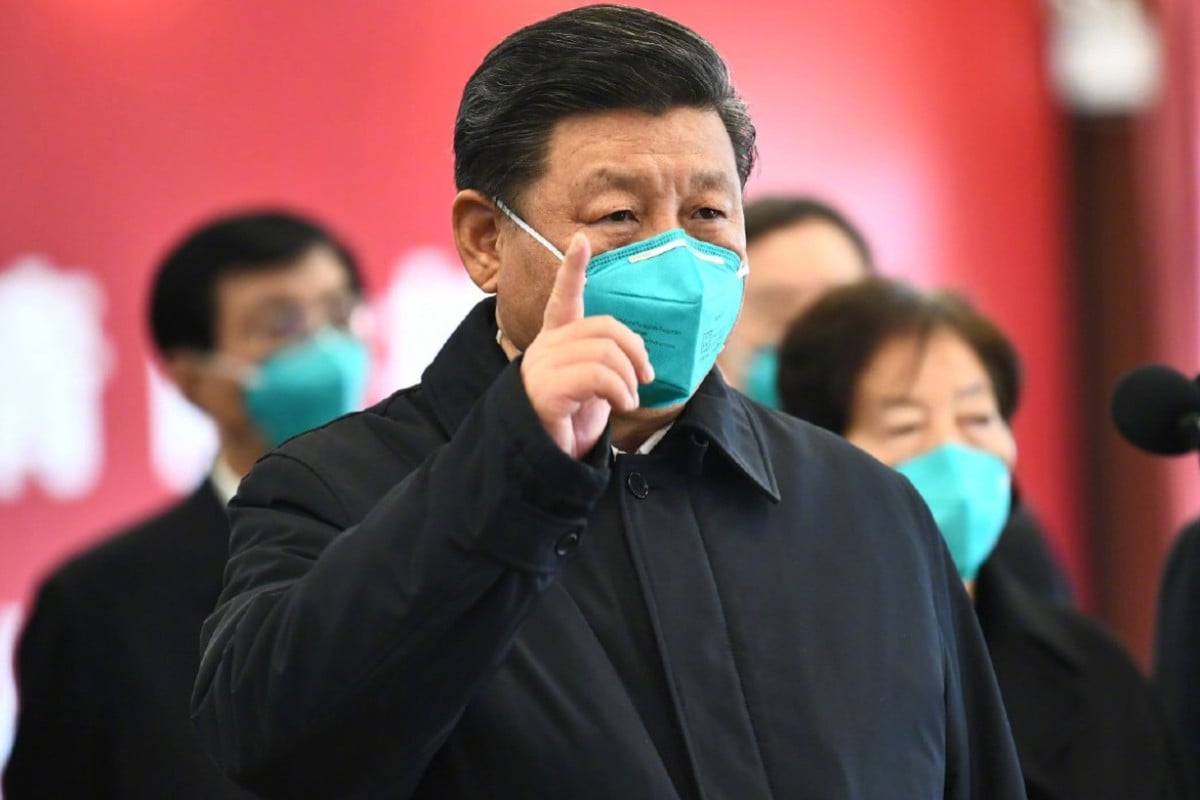
China was producing 116 million masks per day of February 29, including a mix of disposable and high-end masks like the American-designed N95 model worn by President Xi Jinping on his trip on Tuesday to Wuhan. Photo: Xinhua

The Liu family factory has been making diapers and baby products in the Chinese city of Quanzhou for over 10 years, but in February, for the first time, it started making face masks, as demand soared spectacularly due to the coronavirus outbreak.

The business – which employs 100 people in the Southeastern Fujian province – has added two production lines to make up to 200,000 masks a day.
And while the decision was primarily commercial, “encouragement” from the Chinese government – in the form of subsidies, lower taxes, interest-free loans, fast-track approvals for expansion and help alleviating labour shortages – made the decision an obvious one, said Mr Liu who preferred only to give his family name.
“The government is advocating an expansion in production,” Liu said. “With faster approvals, producers need to prioritise the government’s needs over exports.”
WHO declares coronavirus crisis a pandemic
The factory is one of thousands of refitted pop-ups around China making masks and other protective equipment for the first time, part of a massive industrial drive to respond to the spread of the coronavirus.
Before the outbreak, China already made about half the world’s supply of masks, at a rate of 20 million units a day. That rose to 116 million as of February 29, according to China’s state planning agency, a mix of disposable and high-end masks like the American-designed N95 model worn by President Xi Jinping on his trip on Tuesday to Wuhan, the epicentre of the outbreak.

This exponential jump is the result of a wartime-like shift in industrial policy, with Beijing directing its powerful state-owned enterprises to lead the nationwide mask-making effort, and the country’s sprawling manufacturing engine following their lead.

For me, this is the big advantage of China, the speed Thomas Schmitz

“For me, this is the big advantage of China, the speed,” said Thomas Schmitz, president of the China branch of Austrian engineering giant Andritz, which has seen a big uptick in demand for its wet wipe-making machines in recent weeks, also due to the virus. “When you need to run, people know how to run, and this is something which has been lost in other countries since their industrial heydays.”

Chinese oil and gas major Sinopec upped production of mask raw materials such as polypropylene and polyvinyl chloride in January. This week, it set up two production lines in Beijing to produce melt-blown non-woven fabric, intended to make four tonnes of the fabric each day, which can then be used to produce 1.2 million N95 respirators or six million surgical masks a day.

The maker of China’s new J-20 stealth fighter jet, Chengdu Aircraft Industry Group, repurposed part of its factory to design a mask production line, according to local media reports. The Sichuan Daily said 258 of the company’s engineers spent three days fast-tracking development of an assembly line with more than 1,200 components.

Coronavirus: From mysterious origins to a global threat
More than 2,500 companies in China have reportedly started making masks, among them 700 technology companies including iPhone assembler Foxconn and smartphone makers Xiaomi and Oppo, in an extraordinary mobilisation of resources.

The result resembles “the war effort” in the middle of the last century in the United States and western Europe, but arguably no other nation could undergo such a transformation so quickly today.

It is a reminder of what can happen in a centrally-planned economy with a strong manufacturing base, but also brings into sharp focus some of the geopolitical issues which have characterised China’s at-times difficult relationship with the rest of the world, particularly the European Union and US, over the past couple of years.

China’s dominance in manufacturing has become all the more evident as the rest of the world scrambles to shore up their own dwindling medical supplies, leading many to wonder why the world is so dependent on it for vital supplies.

The lesson for Washington is not that we need to emulate the Chinese economic model, but rather that we need to better steward the industrial base in key sectors Rush Doshi

The Italian government, which is dealing with the highest number of coronavirus cases and deaths after China, is to take shipment of 1,000 ventilators, 2 million masks, 100,000 respirators, 200,000 protective suits and 50,000 testing kits from China.
Italian foreign minister Luigi Di Maio said after a phone call with Chinese counterpart Wang Yi, they had agreed the export deal in the same week that European neighbours France and Germany banned masks from being exported because of low domestic supplies.
The Italy export deal showed that “China is emerging as a global public goods provider as the US proves unable and unwilling to lead,” said Rush Doshi, the director of the China Strategy Initiative at the Washington-based Brookings Institute think tank.
“China’s ability to produce what is needed to fight coronavirus is not simply a product of its economic model – it’s also a product of its industrial capacity,” Doshi said. “The US once had this capacity too, but it has lost important parts of it. The lesson for Washington is not that we need to emulate the Chinese economic model, but rather that we need to better steward the industrial base in key sectors.”

The frustration is felt acutely by Michael Einhorn, president of medical equipment distributor Dealmed-Park Surgical in New York, who has been trying to source stock from China for weeks, “but cannot get straight answers” from vendors.

Unaware that Wuhan was still under heavy economic lockdown,
 Einhorn said he placed an order with a private seller in China’s virus-stricken city last week, but that the goods had not been shipped.
“Everyone is running out here, people are panicking in hospitals and we want to be able to help our most important customers,” Einhorn said. “We are dealing with hospitals that do not have products, how in the United States of America in 2020 did this happen?”
With the number of confirmed coronavirus cases in China falling daily, it is not inconceivable that the sort of export deal struck with Italian leaders becomes commonplace, although for now, it deal can be chalked up as a significant public relations coup for Beijing.

The World Medical Association is unable to specify how many masks are required to supply frontline medical staff in virus-hit areas, but said that “this crisis should be a wake up call for politicians and societies to make the necessary investment in emergency preparedness and to look into the vulnerability of our supply chains”.

Australian-listed manufacturer Eagle Health announced on Friday that it had installed production lines at its Xiamen factory in southern China to make 300 million masks a year and said it had already received orders from China and would be securing further larger orders internationally.

The group, which normally makes products including amino acids, protein supplements and lozenges in China, said it would prioritise meeting the large domestic demand, but was aware of an impending global shortage.

Eagle Health has already commenced production of its first order of 3.2 million medical masks for the Yiling Hospital Management Group in China, a process which will take 10 days. It has other smaller orders from Chinese government agencies and expects to receive more orders outside China.

The decision to make more masks came from increased demand. These are opportunities. The global demand for high quality masks will be significant Xu Gang

“The decision to make more masks came from increased demand. These are opportunities,” said chief executive Xu Gang. “The global demand for high quality masks will be significant. Imagine when the schools open. The situation will take some time to peak.”
Last week, the Australian Dental Association said supplies of masks at many practices were expected to run out within four weeks. The Australian government has since arranged a supply of 54 million masks for both the dental and medical industries.
At the same time, the US only has 1 per cent of the 3.5 billion masks it would need to counter a serious outbreak, Bloomberg reported.
While China has no quota on the volume of masks that had to be hived off for local consumption, the government has said domestic demand needs to be prioritised.

Businesses are free to export but overseas demand has yet to explode like it has in China, said Fujian factory owner Liu.

Wendy Min, sales director of Pluscare, a manufacturer based near the virus’ epicentre in Hubei province, said her company is making 200,000 masks per day, much of which are sold to the government, with exports still restricted by partial lockdown of workers and cargo transport.

“We previously exported to Europe, South America and other parts of Asia,” Min said. “But at the moment we can’t export. We are trying to discuss this with the government, but we cannot wait any more – we have to export soon.”

Min said that while she was receiving countless cold calls up until last week from people in China looking for masks, these have stopped, perhaps unsurprising given the abundance in supplies becoming available.

An influx of Chinese-made masks, though, is likely to be welcomed in other virus-stricken parts of the world.

Self-quarantine of all international travellers to Beijing as China fights import of coronavirus
Miguel Luiz Gricheno, CEO of Brazilian mask manufacturer Destra, said that his company is making 30,000 masks a day, but cannot meet local demand due to a lack of supplies, including the non-woven fabric from which masks are made.
“In disposable masks, most Brazilian companies are paralysed due to the lack of raw materials,” Gricheno said. “With the arrival of the coronavirus in Brazil, the demand has increased a lot but the main raw material comes from abroad.”
However, a short-term supply fix will not answer underlying questions about how so many countries found themselves in such dire straits, meaning the geopolitical fallout of the coronavirus will be extensive.
Decades of weak industrial policy helped elect US President Donald Trump, who said he would bring manufacturing jobs back to America at China’s expense. While he has waged a bruising two-year trade war with China in response, the current situation shows just how difficult it will be to change the global manufacturing processes, which are so heavily controlled by China.

One of the great flaws of globalisation is that everyone wanted things cheaper, but did you compromise your health care infrastructure in the process? Stephen Roach

“In the guise of trying to improve efficiency and create value for price-sensitive consumers, we’ve created a global production network that is very difficult to unwind,” said Stephen Roach, a professor of economics at Yale University and a veteran China watcher. “One of the great flaws of globalisation is that everyone wanted things cheaper, but did you compromise your health care infrastructure in the process.
Reuters reported that Trump is considering invoking the emergency provisions of the Defence Production Act, which would allow the government to instruct companies to alter production to help address the domestic shortage of medical supplies like masks. If a company is producing 20 per cent N95 masks and 80 per cent standard masks, the White House could order them to rejig the ratio, an unnamed official said.
The New York Times reported on Wednesday that the White House is preparing an executive order that would allow the government to buy medical supplies from overseas in the hope that it will incentivise companies to make them within the US.

But these changes still do not give Trump the sort of sweeping powers enjoyed by Chinese counterpart Xi.

“When you have a pluralistic, democratic situation that Trump is overseeing, it becomes more unwieldy” to take the steps necessary to address a crisis situation, said Harry Broadman, chair of the emerging markets practise at the Berkeley Research Group and a senior US government official in the 1980s and 1990s.

“That is why I think Trump looks at Xi with envy, because he doesn’t have to deal with a disparity of views or democratic interests,” Broadman said. “I think Trump is at heart a bilateral guy, as you saw with the phase one [US-China] trade deal and the state-to-state purchases. That is why he likes dealing with [Russian President Vladimir] Putin and Xi, because each of them can move mountains. I think Trump is very envious of that ability.”

Source: SCMP
21/02/2020

Airlines suspend China flights due to coronavirus outbreak

(Reuters) – Airlines have been suspending flights to China or modifying service in response to the coronavirus outbreak.

Below are details (in alphabetical order):

AIRLINES THAT HAVE CANCELLED ALL FLIGHTS TO MAINLAND CHINA

** American Airlines – Extends suspension of China and Hong Kong flights through April 24

** Air France – Said on Feb.6 it would suspend flights to and from mainland China for much of March

** Air India – Suspends flights to Shanghai, Hong Kong until June 30

** Air Seoul – The South Korean budget carrier suspended China flights from Jan. 28 until further notice.

** Air Tanzania – Tanzania’s state-owned carrier, which had planned to begin charter flights to China in February, postponed its maiden flights.

** Air Mauritius – Suspended all flights to China and Hong Kong

** Austrian Airlines – until end-February.

** British Airways – Jan. 29-March 31.

** Delta Airlines – Feb. 2-April 30

** Egyptair suspended flights on Feb, 1, but on Feb. 20 said it would resume some flights to and from China starting next week.

** El Al Israel Airlines – Said on Feb. 12 it would suspend its Hong Kong flights until March 20 and reduce its daily flights to Bangkok. It suspended flights to Beijing from Jan. 30 to March 25 following a health ministry directive.

** Iberia Airlines – The Spanish carrier extended its suspension of flights from Madrid to Shanghai, its only route, from Feb. 29 until the end of April.

** JejuAir Co Ltd – Korean airline to suspend all China routes starting March 1

** Kenya Airways – Jan. 31 until further notice.

** KLM – Will extend its ban up to March 28

** Lion Air – All of February.

** LOT – Extends flight suspension until March 28

** Oman and Saudia, Saudi Arabia’s state airline, both suspended flights on Feb. 2 until further notice.

** Qatar Airways – Feb. 1 until further notice.

** Rwandair – Jan. 31 until further notice.

** Scoot, Singapore Airlines’ low-cost carrier – Feb. 8 until further notice.

** United Airlines – Feb. 5-April 23. Service to Hong Kong suspended Feb. 8-April 23.

** Vietjet and Vietnam Airlines – Suspended flights to the mainland as well as Hong Kong and Macau Feb. 1-April 30, in line with its aviation authority’s directive.

AIRLINES THAT HAVE CANCELLED SOME CHINA FLIGHTS/ROUTES OR MODIFIED SERVICE

** Air Canada – Extended the suspension of its flights to Beijing and Shanghai until March 27. It also suspended its Toronto to Hong Kong flights from March 1 to March 27, but its Vancouver to Hong Kong route remains active. [bit.ly/39zgmI0]

** Air China – Said on Feb. 12 it will cancel flights to Athens, Greece, from Feb. 17 to March 18

** Air China – State carrier said on Feb. 9 it will “adjust” flights between China and the United States.

** Air New Zealand – Suspended Auckland-Shanghai service Feb. 9-March 29. Reduced capacity on Shanghai route throughout April and Hong Kong route throughout April and May.

** ANA Holdings – Suspended routes including Shanghai and Hong Kong from Feb. 10 until further notice.

** Cathay Pacific Airways – Plans to cut a third of its capacity over the next two months, including 90% of flights to mainland China. It has encouraged its 27,000 employees to take three weeks of unpaid leave in a bid to preserve cash.

** Emirates and Etihad – The United Arab Emirates, a major international transit hub, suspended flights to and from China, except for Beijing.

** Finnair – Cancelled all flights to mainland China and decreased the number of flights to Hong Kong until March 28.

** Hainan Airlines – Suspended flights between Budapest, Hungary, and Chongqing Feb. 7-March 27.

** Korean Air Lines Co. – The national flag carrier suspended eight routes to China and reduced services on nine Chinese routes between Feb. 7 and 22.

** Philippine Airlines – Cut the number of flights between Manila and China by over half.

** Qantas Airways – Suspended direct flights to China from Feb. 1. The Australian national carrier halted flights from Sydney to Beijing and Sydney to Shanghai between Feb. 9-March 29.

** Royal Air Maroc – The Moroccan airline suspended direct flights to China Jan. 31-Feb. 29. On Jan. 16, it had launched a direct air route with three flights weekly between its Casablanca hub and Beijing.

** Russia – All Russian airlines, with the exception of national airline Aeroflot, stopped flying to China from Jan. 31. Small airline Ikar will also continue flights between Moscow and China. All planes arriving from China will be sent to a separate terminal in the Moscow Sheremetyevo airport. Aeroflot reduced the frequency of flights to Beijing, Shanghai and Guangzhou until Feb. 29.

** Nordic airline SAS – Extended its suspension of flights to Shanghai and Beijing until March 29.

** Singapore Airlines – Suspended or cut capacity on flights to Beijing, Shanghai, Guangzhou, Shenzhen, Chengdu, Xiamen and Chongqing, some of which are flown by regional arm SilkAir.

** UPS – Cancelled 22 flights to China because of the virus and normal manufacturing closures due to the Lunar New Year holiday.

** Virgin Atlantic – Extended its suspension of daily operations to Shanghai until March 28.

** Virgin Australia – Said it will withdraw from the Sydney-Hong Kong route from March 2 because it was “no longer a viable commercial route” due to growing concerns over the virus and civil unrest in Hong Kong.

Source: Reuters

07/02/2020

Hundreds more Hong Kong flights to be cancelled as coronavirus hammers air travel

  • Cathay Pacific is latest to wield axe, while Taiwan’s new restrictions on visitors from Hong Kong is another blow
  • More cancellations expected in the coming days as spread of deadly virus continues
The air industry in Hong Kong and beyond has been thrown into disarray by the coronavirus outbreak. Photo: Reuters

Hundreds more Hong Kong flights are set to be dropped as the floodgates open on airlines cancelling services during the city’s fight against the coronavirus.

Carriers based in Asia, Australia, South Africa and Middle East revealed on Friday morning and the previous night they would cut all or some of their flights to the city.

Cathay Pacific is the latest to wield the axe, announcing on Friday afternoon new suspensions of major Hong Kong routes to London, New York and across mainland China because of the virus.

Flights running on the busy route between Hong Kong and Taiwan’s capital Taipei are subject to major cuts. Photo: Shutterstock
The contagion, which started in the central Chinese city of Wuhan, has infected more than 31,400 people, mostly in mainland China, killing more than 635. In Hong Kong, 24 people have been infected, one of those fatally, as of Friday afternoon.

Passengers abandoning travel plans en masse have been compounded by the introduction of entry restrictions across the world against recent visitors to mainland China, some targeting those who had been to Hong Kong.

Destinations suspended by Cathay Pacific until March 28 include London Gatwick, Rome, Washington DC, Newark, Male, Davao, Clark, Jeju and Taichung.

All mainland cities with the exception of Beijing, Shanghai, Chengdu and Xiamen would also be dropped over that period. The company said the decision was made “in view of the novel coronavirus outbreak and the subsequent drop in market demand”.

Hong Kong airport to segregate all flights to and from mainland China

7 Feb 2020

It followed Cathay Pacific Group revealing earlier this week there would be a 30 per cent reduction of flights across its worldwide schedule, as well as a 90% cut of mainland flights.

Budget carrier HK Express, controlled by Cathay, said on Thursday it would scrap 82 flights between February 12 and March 26, mostly to destinations such as Seoul and Osaka.

Hong Kong Airlines (HKA) at the same time revealed it would gradually impose even deeper cuts to flights it operated in mainland China and the rest of Asia until March 28.

The ailing carrier will suspend 10 routes and reduce flights on a further 15, amounting to an estimated 128 flights a week being axed. HKA has already cut 214 mainland Chinese flights between January 30 until February 11.

As Taiwan’s new restrictions took effect on Friday – ordering the home or hotel quarantine of anyone entering the self-ruled island who had visited Hong Kong or Macau within the previous 14 days – carriers based there slashed their schedules.

China Airlines would go from running 18 daily Hong Kong flights to just two from next week until March 28, according to Airline Route data published on Thursday.

Eva Air would switch from more than 11 daily flights to fewer than four a day for the rest of the month.

As health professionals treat coronavirus patients, global search for cures and vaccines accelerates
Eighty flights operate between Hong Kong and Taipei every week, a journey that regularly tops tables ranking the world’s busiest. But under the cuts to come more than half have already been scrapped.
Outside Asia, two airlines on Thursday cut ties with Hong Kong. The struggling Virgin Australia blamed the coronavirus and the anti-government protests that have gripped Hong Kong since June.
It concluded that “current circumstances demonstrate that Hong Kong is no longer a commercially viable route”.
The near-bankrupt South African Airways (SAA) has cancelled its route from Johannesburg amid a wholesale restructuring of the state-owned business. SAA had suspended flying to Hong Kong after November 21 last year amid the city’s civil unrest.
Hong Kong Airlines to axe 400 jobs as coronavirus adds to carrier’s cash woes
7 Feb 2020

Meanwhile, American Airlines said on Thursday it would restart flights between Dallas Fort Worth and Hong Kong on February 21, while Hong Kong’s Airport Authority extended the cancellation of its Los Angeles flight to the city until March 27.

The US carrier warned its schedules were subject to an ongoing “review”. Currently there is no US carrier flying to Hong Kong International Airport after United Airlines also withdrew all services until February 20.

Among the Middle East carriers, Emirates was halving its four daily Airbus A380 flights to Hong Kong from next week until March 28. Etihad is also making minor adjustments, Airline Route data showed on Thursday.

Source: SCMP

13/12/2019

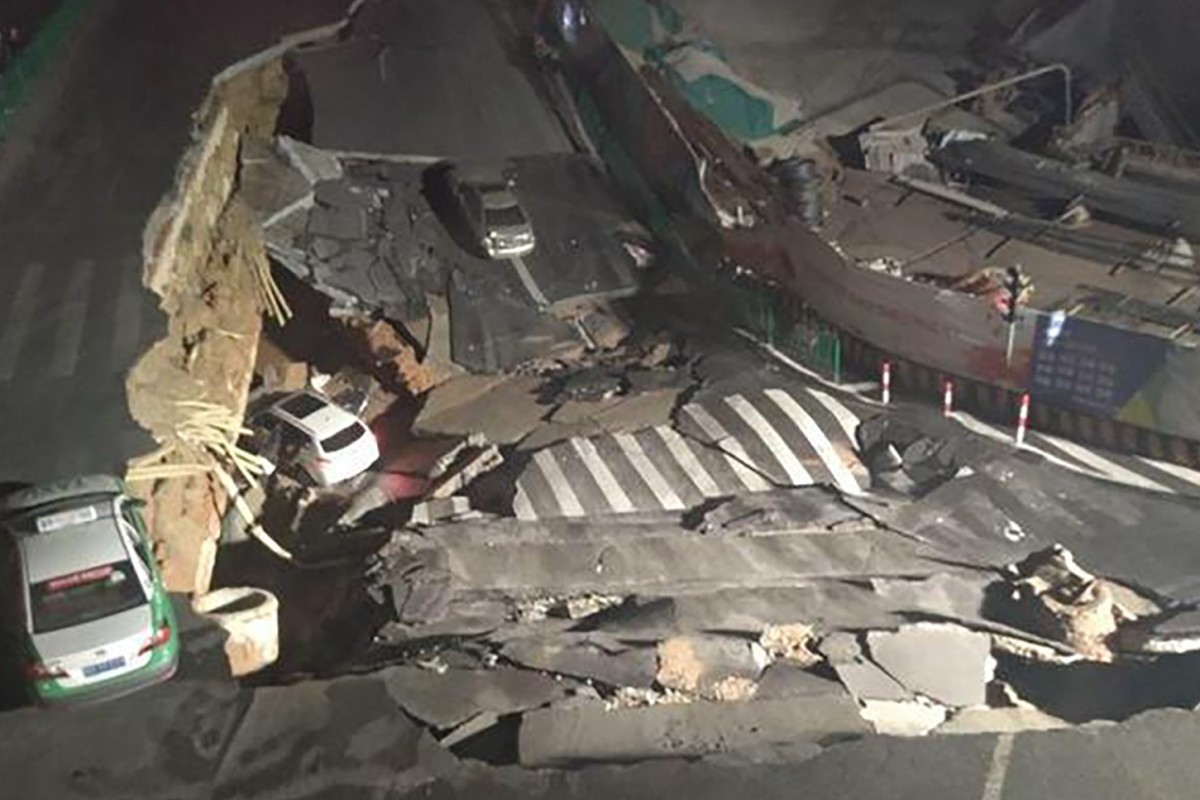
Drivers and passengers have lucky escape after hole swallows cars in southeast China

  • Sinkhole suddenly opened up near subway station in city of Xiamen but no one is killed or injured
  • Taxi driver whose vehicle was swallowed up says he and his passenger were able to pull themselves free unaided
The hole opened up at a site in Xiamen. Photo: Weibo

Two cars have been swallowed by a hole that opened up in the ground near a subway station in southeast China.

It is the latest of a string of ground collapses involving subway projects in mainland cities this year.

The 500 square metre hole opened up just before 10pm on Thursday near Lucuo station in Xiamen, a city in Fujian province.

The city’s subway operator said no one had died or been injured in the accident and the people in the two cars had been able to get out on their own.

The accident also caused water pipes to burst, flooding the station.
No injuries were reported after the incident. Photo: Weibo
The road and station were temporarily closed after the accident, but normal services resumed on Friday morning.

One of the cars swallowed was a taxi, and the driver told Beijing News he had been driving along the road when he suddenly found the vehicle falling into the hole.

The man, surnamed Chang, dragged his passenger free and they were able to climb out of the pit unaided. He said the car had not been seriously damaged.

Three people are still missing after a similar accident in the southern city of Guangzhou earlier this month that swallowed a truck and electric bike.

Five workers were also killed in the eastern port city of Qingdao in May in an accident at a subway construction site.

Source: SCMP

27/02/2019

Beijing says it can ease power and water shortages on Taiwans’s Quemoy, Matsu islands

  • Different social systems should not be ‘a barrier to unification or an excuse for separation’, according to mainland’s cross-strait affairs office
  • After Quemoy began importing water from Fujian in August, preliminary research has been done to supply water to Matsu chain and electricity to both

News

Beijing says it can ease power and water shortages on Taiwan’s islands

27 Feb 2019

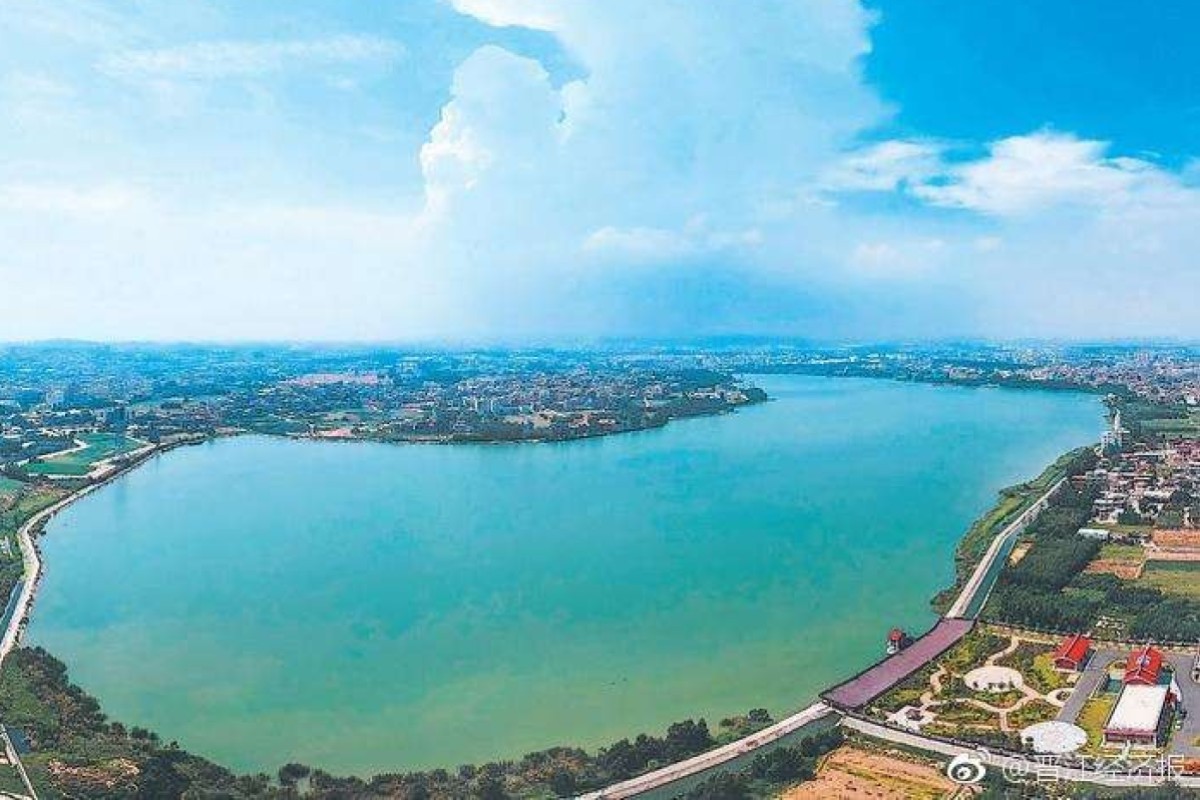
Taiwan-controlled Quemoy Island – which is just 2km from Xiamen – began importing water from the mainland in August. Photo: Weibo

Beijing says it is prepared to supply electricity and water to islands controlled by Taipei in the Taiwan Strait despite escalating tensions between the two sides.

An Fengshan, spokesman for the Taiwan Affairs Office in Beijing, also said their different social systems should not be “an excuse” to separate the country, and any deal between the mainland and Taipei should be struck in the interests of a “peaceful unification” agenda.

Speaking at a monthly press briefing on Wednesday, An said the mainland could supply power and water to meet the needs of residents on Quemoy, also known as Kinmen, and the Matsu island group. Controlled by Taipei, the islands are located off the mainland’s southeastern Fujian coast – Quemoy is just 2km from Xiamen – and have been on the front line of cross-strait tensions since 1949.

Taiwan’s cold war island begins to thaw

“The people of the Quemoy and Matsu islands have long hoped that the mainland could help to resolve the difficulties they face with power and water shortages, and they have made numerous appeals for gas and bridge connections [with the mainland],” An said.

“Our attitude is very clear – that in regards to these demands, the mainland will make every effort to provide opportunities and conditions to help them achieve bigger and better development.”

An said Fujian province authorities had completed preliminary research and planning to supply electricity to the Quemoy and Matsu islands, as well as water to the Matsu chain. Plans to supply gas and build bridges were expected in the future, he said, without elaborating.

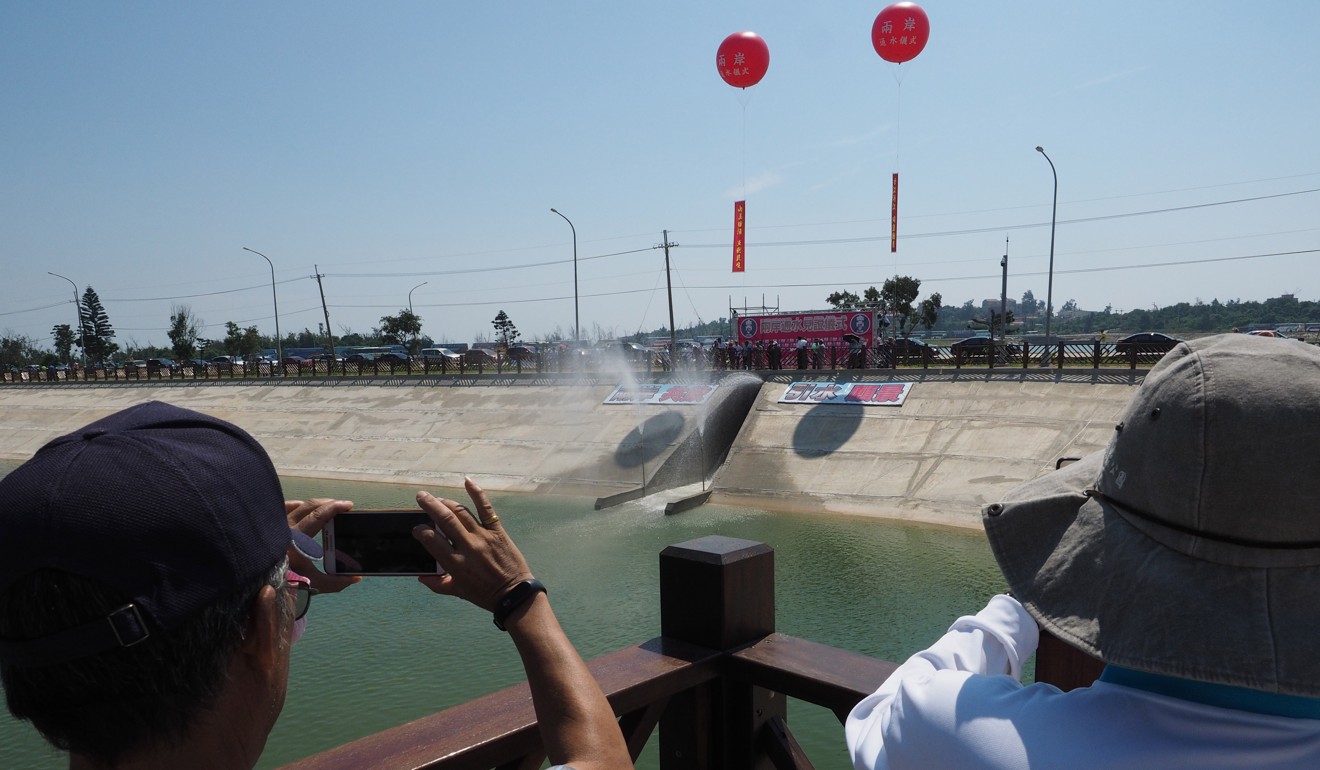
Water is released into the Tianbu Reservoir on Quemoy island in August when the mainland supply began. Photo: EPA-EFE

Quemoy began importing water from Fujian to ease its water shortage in August, three years after it signed a 30-year agreement with the mainland province to supply water via an undersea pipeline.

But Taiwan’s Mainland Affairs Council, which handles cross-strait ties, asked the Quemoy county government to downplay a ceremony marking the start of the supply
because of moves by Beijing to suppress Taipei.

Beijing sees Taiwan as a breakaway province subject to eventual reunification, by force if necessary. Relations across the strait soured after Tsai Ing-wen, of the independence-leaning Democratic Progressive Party, became president in 2016 and refused to accept the one-China principles.

Since then, mainland China has stepped up pressure on Taiwan, suspending official communications with the Tsai government, poaching its diplomatic allies and staging war games near the self-ruled island, which is edging closer to Washington.

In an interview with CNN last week, Tsai said she would seek re-election next year and there would be no peace deal with the mainland unless Beijing ruled out using force against Taiwan.

On Wednesday, An said the different social systems across the strait should not be a barrier to unification, which President Xi Jinping sees as part of his Chinese dream of national rejuvenation but has been rejected by Tsai.

“Peaceful unification and ‘one country, two systems’ are the basic policies for us to resolve the Taiwan issues, and the best way to realise the motherland’s unification,” An said.

He was referring to a speech by Xi in January calling for Beijing and Taipei to start talks on “one country, two systems” in Taiwan – first proposed by late paramount leader Deng Xiaoping in the 1980s – as the path to bring the island back into the China fold.

“The differences in the systems should not be a barrier to unification or an excuse for separation,” An said.

China protests against US ‘provocation’ after two American warships pass through Taiwan Straits.
Asked about Beijing-friendly Kuomintang chairman Wu Den-yih’s recent remarks that Taipei would sign a peace deal with the mainland if his party won the election in 2020, An said the two sides could explore a deal “as long as it benefits and safeguards the peace of the Taiwan Strait, increases the peaceful development of relations and pushes the peaceful unification process of the motherland”.

Source: SCMP

Law of Unintended Consequences

continuously updated blog about China & India

ChiaHou's Book Reviews

continuously updated blog about China & India

What's wrong with the world; and its economy

continuously updated blog about China & India