Archive for ‘Yantian District’

20/09/2019

Chinese city offers 400 teachers US$39,500 a year in bid to attract best graduates

  • As well as earning three times the industry average, successful candidates are promised 165 days’ leave
  • Social media posts linked to story attract more than 60 million views

Authorities in Shenzhen are offering three times the national average salary to attract more teachers. Photo: Weibo

A recruitment advertisement offering schoolteachers in southern China the chance to earn up to 280,000 yuan (US$39,500) a year – more than three times the industry average – has sparked a massive response on social media.

Published by the Longhua district education bureau in Shenzhen, Guangdong province, the advert said it was looking for 400 high, middle and primary schoolteachers. As well as an annual salary of between 260,000 yuan and 280,000 yuan, depending on qualifications, the very best candidates would receive a bonus of between 30,000 and 80,000 yuan, it said.

New recruits would also be entitled to 165 days’ leave per year, though the advert – published on Tuesday on WeChat, China’s most popular messaging platform – did not make clear if that included weekends.
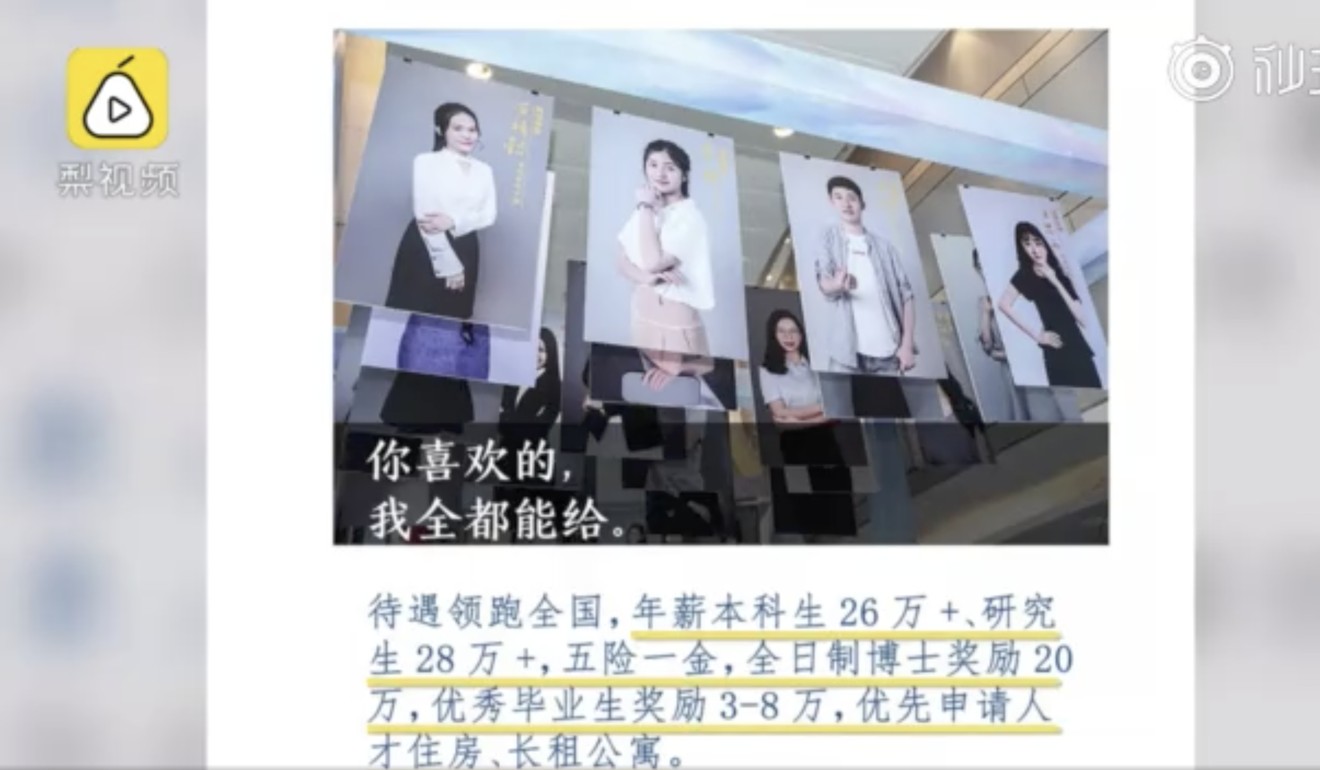
The Longhua district education bureau says it is looking for 400 new teachers. Photo: Weibo
The hashtag “Shenzhen middle schoolteachers are being recruited for almost 300,000 yuan a year” racked up almost 60 million views on Weibo, China’s Twitter-like platform.
While some people praised the authority for trying to attract the best possible candidates – it said itself that hundreds of teachers currently working in the district were graduates of China’s top universities, including Peking and Beijing Normal – others said that even with a sky-high salary most young professionals would find it hard to get by in Shenzhen.

“Do you know how expensive houses are in Shenzhen?” one person wrote on Weibo. “You need to wait several years after graduation before buying a house, unless you already have money.”

“Even if your starting salary is 200,000 yuan or 300,000 yuan, you’ll still need to wait 10 years before you’ve saved up enough to buy a house,” said another.
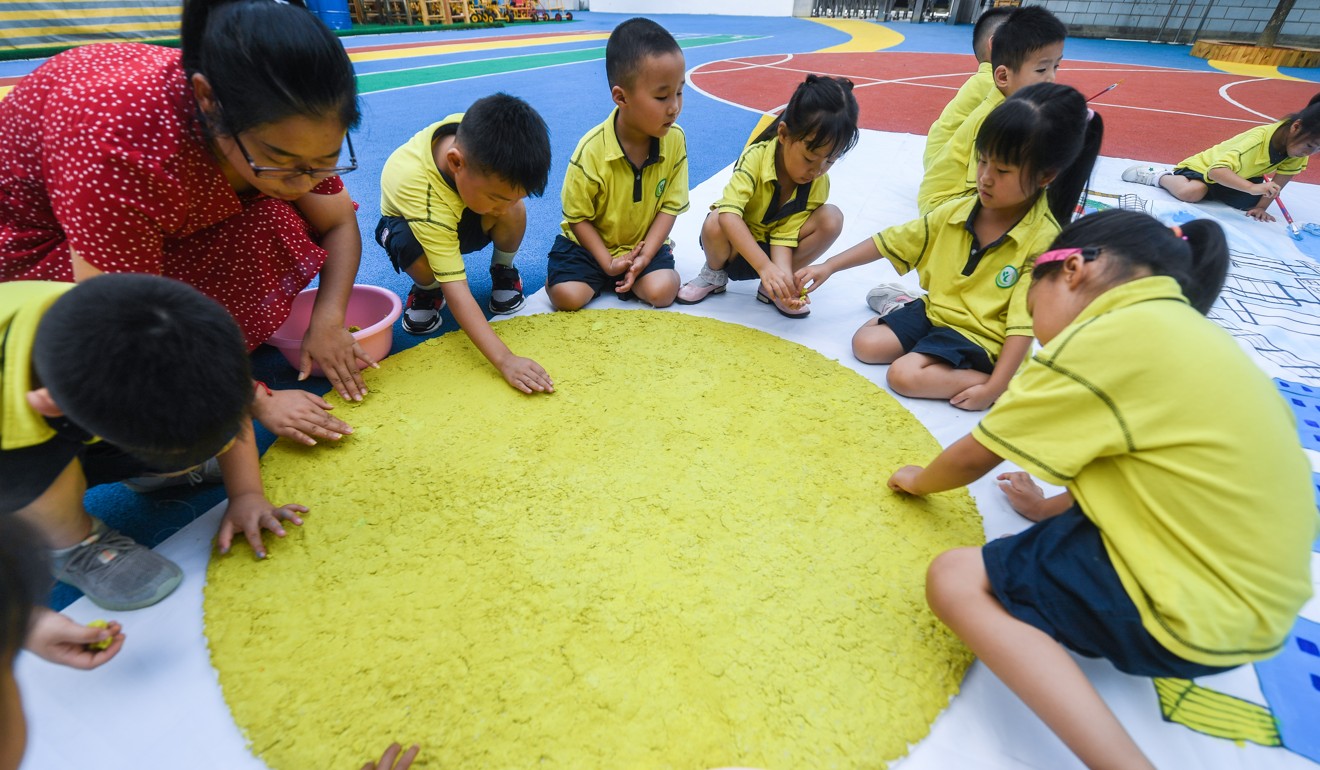
The advert said the new teachers will be get 165 days’ leave per year. Photo: Xinhua

The education bureau has not released any additional information about the recruitment campaign and calls to its offices on Friday went unanswered.

However, it said in a recent Q&A on its website that teachers’ salaries were in line with those of civil servants in the district, and had been steadily rising under a reform of the pay system.

Longhua is not the first district in Shenzhen to offer attractive salary packages, however. In May, 21st Century Business Herald reported that authorities in Yantian district had recruited 20 teachers from Beijing with the offer of between 290,000 yuan and 330,000 yuan a year.

According to central government figures released in May, teachers in China’s public schools earned an average of 92,383 yuan last year.

While Shenzhen has grown from a once sleepy fishing village to a vast metropolis, and is now slated to become a model city for China, its education facilities have failed to keep pace with other areas of development. It also faces competition from more established centres, like Beijing and Shanghai.
Despite having a population of about 15 million, the city has just 344 primary schools. By comparison, the provincial capital Guangzhou, which has a similar population, has 961 primary schools and about 17,000 more primary schoolteachers.
According to official figures, of the nearly 80,000 students who applied for places at public secondary schools in Shenzhen last year, just 35,000 were accepted. That left the parents of the remainder having no option but to pay for places at private schools in the city or, in some cases, send their children overseas to study.
The problem is set to get worse as Shenzhen’s preschool system is already straining under the pressure of the city’s high birth rate.
Source: SCMP
25/05/2019

Across China: “Sino-British Street” seeks rejuvenation

SHENZHEN, May 25 (Xinhua) — A southern Chinese trade hub boasting special links with Hong Kong is hoping the enhanced efforts to build the g will revitalize its tourism industry and local economy.

Chung Ying Street, or “Sino-British Street,” straddles the Hong Kong Special Administrative Region and the mainland city of Shenzhen and has been a special zone where local residents from both sides are allowed to cross the border freely.

It was once a boomtown popular among mainland visitors, who entered with a special permit to snatch duty-free goods from Hong Kong, but fell into decline after travel to Hong Kong was made easier for mainlanders.

The street derived from a small village, which was divided by the “Sino-British” borderline after Hong Kong became a British colony in the 19th century.

Sha Jintao, a 73-year-old resident, remembers how the street became a boomtown as China opened up and tightened links between the mainland and Hong Kong.

“When I was a child, there were only a few farmers and fishermen living on the mainland side of the street, while the Hong Kong side bustled with shops and businesses,” Sha said.

But as Shenzhen rose as a forefront of China’s reform and opening up starting in the late 1970s, the street became the center of changes. New shops and factories propped up with the inflow of Hong Kong investments, and the fancy commodities from its Hong Kong stores wooed in large numbers of mainland tourists.

Historical records show the number of tourists flocking into the 250-meter-long street peaked at 100,000 a day in the 1980s. As many as 89 jewelry stores opened in its heyday and sold 5 tonnes of gold jewelry in half a year.

SURVIVAL CRISIS

The heyday was however short-lived. After Hong Kong returned to the motherland in 1997, the street began to lose its appeal, as shopping in Hong Kong was made much easier for mainland tourists. Its daily visitors dropped below 10,000 after 2003, when mainlanders were allowed to independently travel to Hong Kong.

Many stores closed due to a loss of customers, and some survived by selling fake jewelry, winning the street much notoriety, recalled Sha, who then headed the local neighborhood committee.

Sha said the ephemeral boom was limited to the era when most Chinese had limited access to the outside world, so as the country opened its door wider, the street’s function as a “window” faced an inevitable doom.

“Now with a smartphone, a consumer could easily buy goods from across the globe,” he said, referring to China’s cross-border e-commerce boom. “So if is just for the purpose of shopping, why take the trouble of traveling to the Chung Ying Street?”

The street is now more of a cultural site, dotted with relics and museums displaying its history, but locals are hopeful that the ongoing construction of the Guangdong-Hong Kong-Macao Greater Bay Area will usher in another golden era for their neighborhood.

China has planned to turn the greater bay area, which encompasses Hong Kong, Macao and nine cities in Guangdong Province, into the world’s largest bay area in terms of GDP by 2030.

Earlier this month, the city government of Shenzhen said it will upgrade its ports with Hong Kong to boost the greater bay area development. The Shatoujiao Subdistrict, where the Chung Ying Street is located, was reserved for a new cooperation zone featuring tourism and consumption.

Optimism is running high in the community. New industries like artificial intelligence (AI), health and high-end shipping service have taken root in Yantian District, which administers Shatoujiao, and Sha is buzzing around to connect business people from Hong Kong and Shenzhen.

“Shatoujiao and its Chung Ying Street have boasted the one-of-the-kind advantage in Shenzhen-Hong Kong cooperation. We’ll work hard to turn the blueprint of the greater bay area into a reality here,” said Chen Qing, party secretary of Yantian.

Source: Xinhua

Law of Unintended Consequences

continuously updated blog about China & India

ChiaHou's Book Reviews

continuously updated blog about China & India

What's wrong with the world; and its economy

continuously updated blog about China & India