Archive for ‘Zhang Baohui’

01/05/2019

Chinese President Xi Jinping’s overtures to Japan’s new emperor set tone as G20 summit in Osaka nears

  • Xi’s message talks of promoting ‘peaceful development’ as Reiwa era begins in Japan
  • Analysts see diplomacy as latest steps towards bringing an end to bitter rivalry
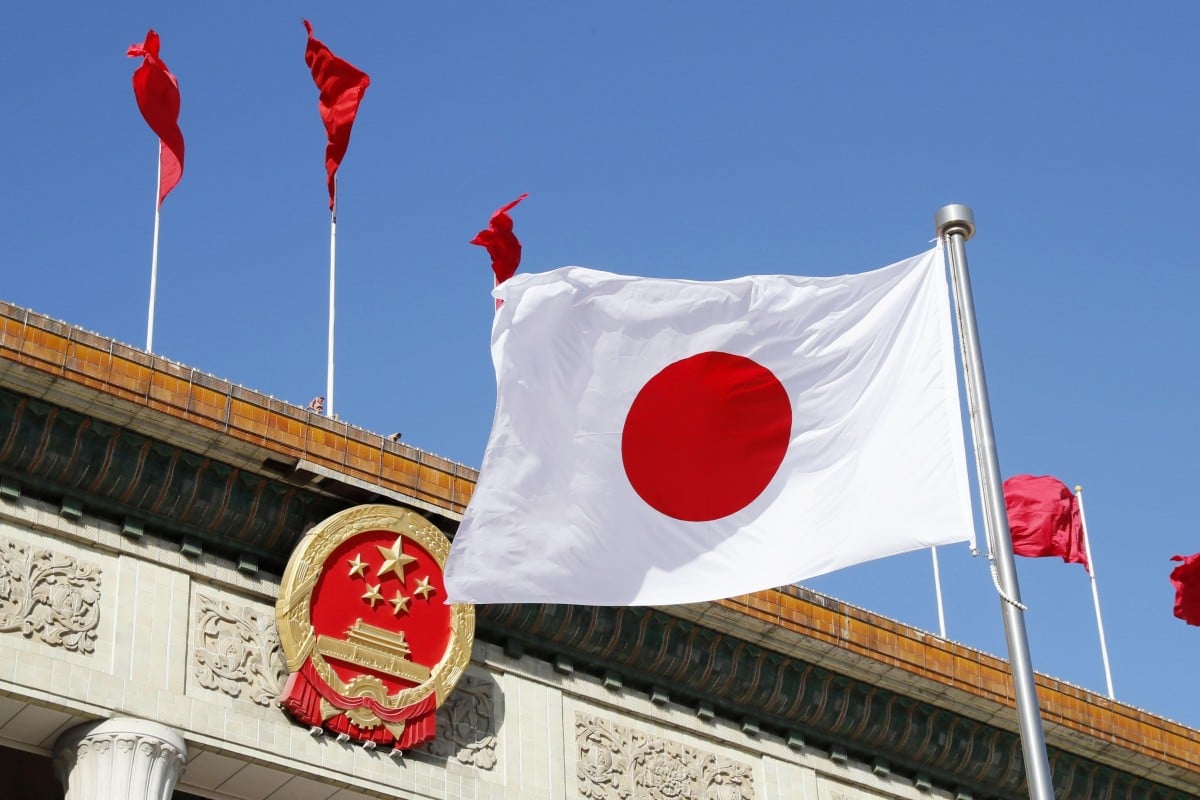
The Japanese flag flies at the Great Hall of the People in Beijing on October to mark the visit of Japanese Prime Minister Shinzo Abe to China. Photo: Kyodo
Chinese President Xi Jinping congratulated Emperor Naruhito on his ascent to the throne of Japan in an effort to strengthen China’s ties with its neighbour and competitor as Beijing’s trade dispute with the United States went on.
Xi sent greetings on Wednesday in which the president stressed the importance of relations between Beijing and Tokyo, China’s state-run Xinhua news agency reported.
The two countries should “work together to promote peaceful development and create a bright future for bilateral relations”, Xi said.
The president also sent a message to Akihito, now Japan’s emperor emeritus, and “expressed his greetings and wishes”, Xinhua said.
Akihito, 85, relinquished the throne to his son at midnight on Tuesday, bringing the Heisei era that spanned his 30-year reign to an end.

Naruhito took the Chrysanthemum Throne to begin the Reiwa era with a pledge to become a “symbol of unity”.

Xi’s message came as China and Japan tried to repair relations damaged by disputes over the East China Sea and the bitter legacy of the second world war.

Washington was locked in a trade tariff war with Beijing, and President Donald Trump’s America First policy had prompted fears about the US’ commitment to Asia at the highest levels of Japanese government. These have pushed Beijing and Tokyo closer and, in October, Japanese Prime Minister Shinzo Abe visited Beijing.

China set to appoint new ambassador to Japan, as Xi Jinping prepares for June visit

Xi was expected to attend a Group of 20 summit to be held in Osaka in June. A source said officials were considering whether Xi would dovetail a state visit to Japan with the summit.

Felix Wiebrecht, a China researcher at the Chinese University of Hong Kong, said in the international environment China was more willing to put a deep-seated rivalry aside and take Japan as a partner.

“Facing increasing tensions with the US, China is naturally turning towards other potential opportunities for cooperation,” Wiebrecht said.

“Xi is indeed very likely to visit Japan this year since it seems that both he and Abe are interested in strengthening their cooperation. A visit this year could be seen as a culmination in normalising their relationship and comes at the right time for China as its conflict with the US intensifies”.

Ryo Hinata-Yamaguchi, a visiting professor at Pusan National University in South Korea and an adjunct fellow at the Pacific Forum foreign policy research institute, said Xi’s message could be seen as Beijing’s expectation on Tokyo to keep relations positive.

“[But] this would raise questions in Japan, particularly regarding regional and bilateral security issues, as well as the trade issues between the US and China,” he said.

As Japan prepares to mark end of an era, a look back at how China started the system

“The big question is whether China – as well as the US – expects Japan to work as some kind of mediator between Beijing and Washington, causing dilemmas for the Japanese government”.

Some observers remarked on the possibility of sideline meeting between the two leaders at Osaka.

“Xi could meet with Abe [at G20] in a bilateral context too,” Zhang Baohui director of the Centre for Asian Pacific Studies at Lingnan University in Hong Kong, said.

He also felt that Xi may make a separate state visit to Japan, after the G20 meeting closed.

“Japan is reportedly interested in having a second and separate visit by Xi later in the year … The Japanese efforts are part of a broader attempt by the Abe administration to improve relations with China,” Zhang said.

“A separate state visit would cement the full recovery of Sino-Japanese relations since the 2012 Diaoyu Islands dispute,” Zhang said.
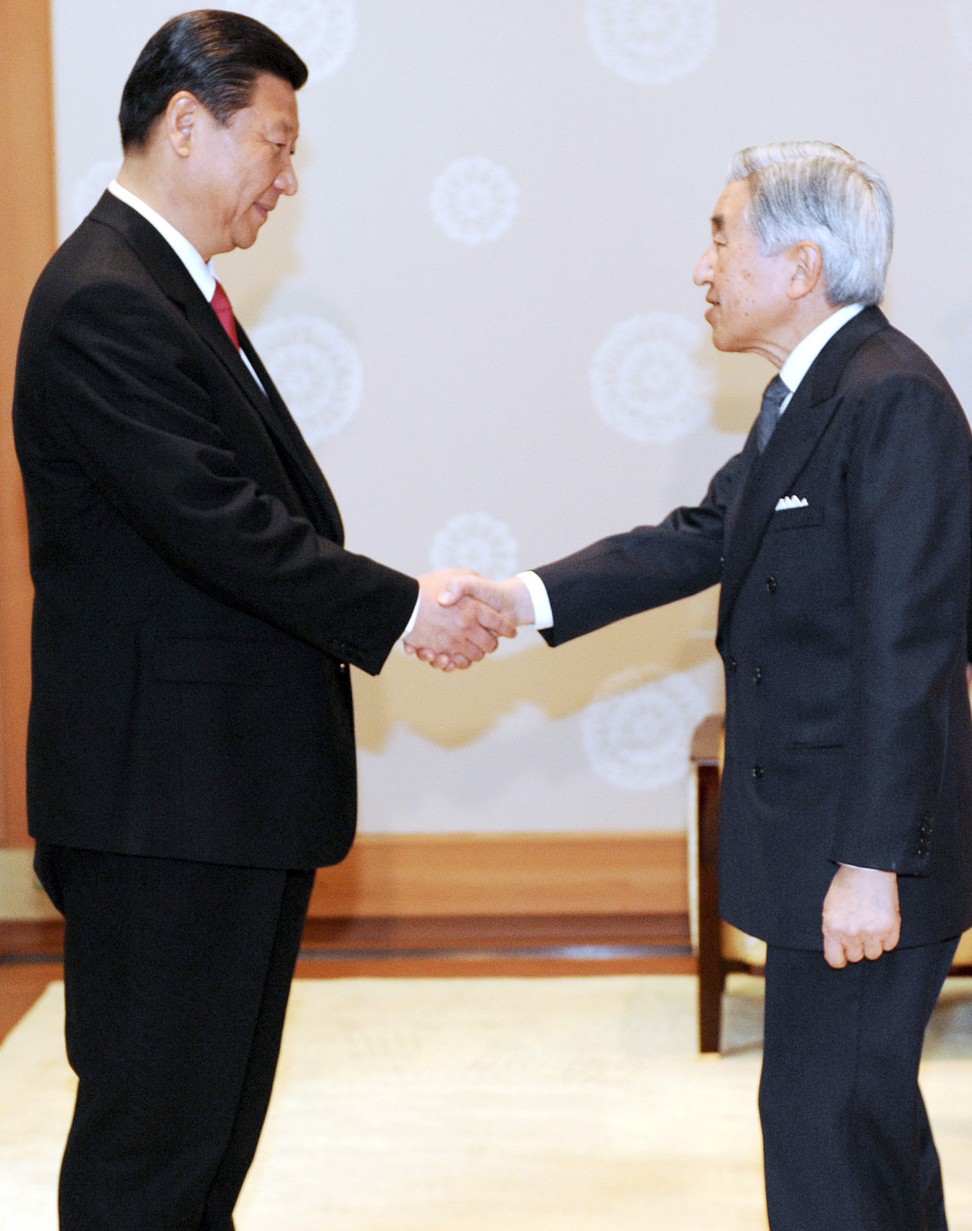
Xi Jinping, then Chinese Vice-President, meets Emperor Akihito in Tokyo in December 2009. Photo: Xinhua

Japan and China both claim the territorial rights over the Senkaku Islands – also known as the Diaoyu Islands – in the East China Sea.

In 2012, Japanese government purchased three of the disputed islands from private owners, which prompted large-scale protests in China. In the following year, Beijing set up the East China Sea Air Defense Identification Zone which included the islands, requiring all aircraft entering the zone to file a flight plan, further intensifying the conflict between the two countries.

Efforts this summer to intensify diplomacy “should bring greater stability to the East China Sea and may even lead to greater Sino-Japanese cooperation on regional issues like economic integration”, Zhang said.

“But Japan’s concern for a rising China and China’s expanding maritime activities in the East China Sea will continue,” Zhang added, noting that Japan has also expanded its military capabilities in disputed areas such as the South China Sea.
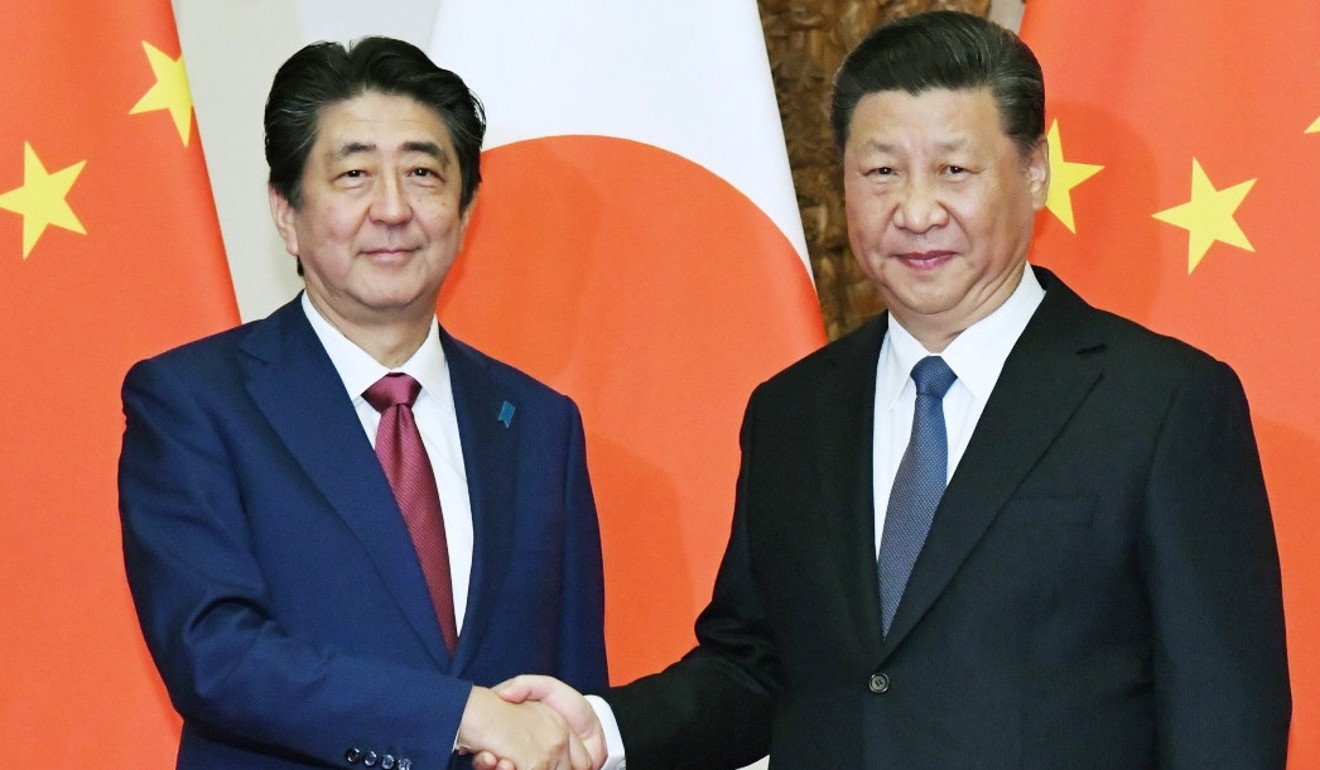
Chinese President Xi Jinping and Japanese Prime Minister Shinzo Abe are likely to continue their diplomacy during and after June’s G20 summit in Osaka. Photo: EPA
17/04/2019

Foxconn’s Gou throws hat in ring for Taiwan presidency, with blessing of sea goddess

TAIPEI (Reuters) – Terry Gou, chairman of Apple supplier Foxconn, said on Wednesday he will contest Taiwan’s 2020 presidential election, shaking up the political landscape at a time of heightened tension between the self-ruled island and Beijing.

Gou, Taiwan’s richest person with a net worth of $7.6 billion according to Forbes, said he would join the already competitive race, and take part in the opposition, China-friendly Kuomintang (KMT) primaries.
His decision capped a flurry of news this week that began when Gou told Reuters on Monday he planned to step down from the world’s largest contract manufacturer to pave the way for younger talent to move up the company’s ranks.
He later announced he was considering a presidential bid and hinted he was close to a decision, and then told more than 100 people packed into a temple he would follow the instruction of a sea goddess who had told him to run for president.

The sea goddess Mazu is a popular deity in Taiwan and is believed to hold sway over one’s safety and fortune.

“Peace, stability, economy, future, are my core values,” Gou said later at the KMT’s headquarters in Taipei.

He urged the party to rediscover its spirit, the honor of its members and the lost support of the youth, and to establish a fair and transparent system for the primary race.

The KMT’s primary was already highly competitive, with contenders including a former KMT chairman, Eric Chu, and a former head of the island’s parliament, Wang Jin-pyng.

Gou’s bid, which requires KMT approval, comes at a delicate time for cross-strait relations and delivers a blow to the ruling pro-independence Democratic Progressive Party, which is struggling in opinion polls.

China-Taiwan relations have deteriorated since the island’s president, Tsai Ing-wen, of the independence-leaning DPP, swept to power in 2016.

China suspects Tsai is pushing for the island’s formal independence. That is a red line for China, which has never renounced the use of force to bring Taiwan under its control.

Tsai says she wants to maintain the status quo with China but will defend Taiwan’s security and democracy.

‘VERY PRO-CHINA’

A senior adviser to Tsai told Reuters he thought Gou’s bid could create problems, given his extensive business ties with China.

“This is problematic to Taiwan’s national security,” the adviser, Yao Chia-wen, said.

“He’s very pro-China and he represents the class of the wealthy people. Will that gain support from Taiwanese?” Yao said, adding he believed Gou would face a tough battle in the KMT primary.

Tension between Taipei and Beijing escalated again on Monday, as Chinese bombers and warships conducted drills around the island, prompting Taiwan to scramble jets and ships to monitor the Chinese forces.

A senior U.S. official denounced Beijing’s military maneuvers as “coercion” and a threat to stability in the region.
Gou has questioned Taiwan’s ties with the United States and said this week the island should stop buying U.S. weapons. He said peace was the best the defense.
William Stanton, professor at National Taiwan University and former head of the de facto U.S. embassy in Taipei, said he would have concerns if Gou were to become president.
“I’d be concerned about how he would behave. He did not have a positive attitude toward the U.S.,” Stanton said.
The KMT, which once ruled China before fleeing to Taiwan at the end of a civil war with the Communists in 1949, said in February it could sign a peace treaty with Beijing if it won the presidential election.
Zhang Baohui, a regional security analyst at Hong Kong’s Lingnan University, said Gou’s run could mark the start of the most unusual election in Taiwan history.
This is something entirely fresh for Taiwan politics – here is a candidate who sees everything through the pragmatic angle of a businessman rather than raw politics or ideology,” Zhang told Reuters.
“He has no baggage and that will be a fascinating scenario.”
Gou’s news comes as Tsai is grappling with a series of unpopular domestic reform initiatives, from a pension scheme to labor law, which have come under intense voter scrutiny.
The KMT said this week Gou had been a party member for more than 50 years and had given it an interest-free loan of T$45 million ($1.5 million) in 2016 under the name of his mother, which had signaled his loyalty to the party.
Foxconn said on Tuesday Gou would remain chairman, though he planned to withdraw from daily operations.
It was not immediately clear when he planned to pull back or if his presidential bid would require him to step down from Foxconn. There were no regulations related to a company executive running for the presidency, the island’s stock exchange said.
Foxconn’s shares closed up 2.1 percent at T$91.80 ahead of Gou’s formal declaration, the highest in six months. His Hong Kong-listed FIH Mobile closed up 28 percent, tracking the strength in parent Foxconn.
Source: Reuters
Law of Unintended Consequences

continuously updated blog about China & India

ChiaHou's Book Reviews

continuously updated blog about China & India

What's wrong with the world; and its economy

continuously updated blog about China & India