Archive for ‘Zhuhai’

13/02/2020

Coronavirus: dim sum off the menu as Guangzhou bans eating in restaurants

  • Elderly resident says he can’t recall this happening in his city before, not even during the Cultural Revolution
  • Outbreak is expected to deal a heavy blow to businesses, especially smaller eateries, with some already forced to close
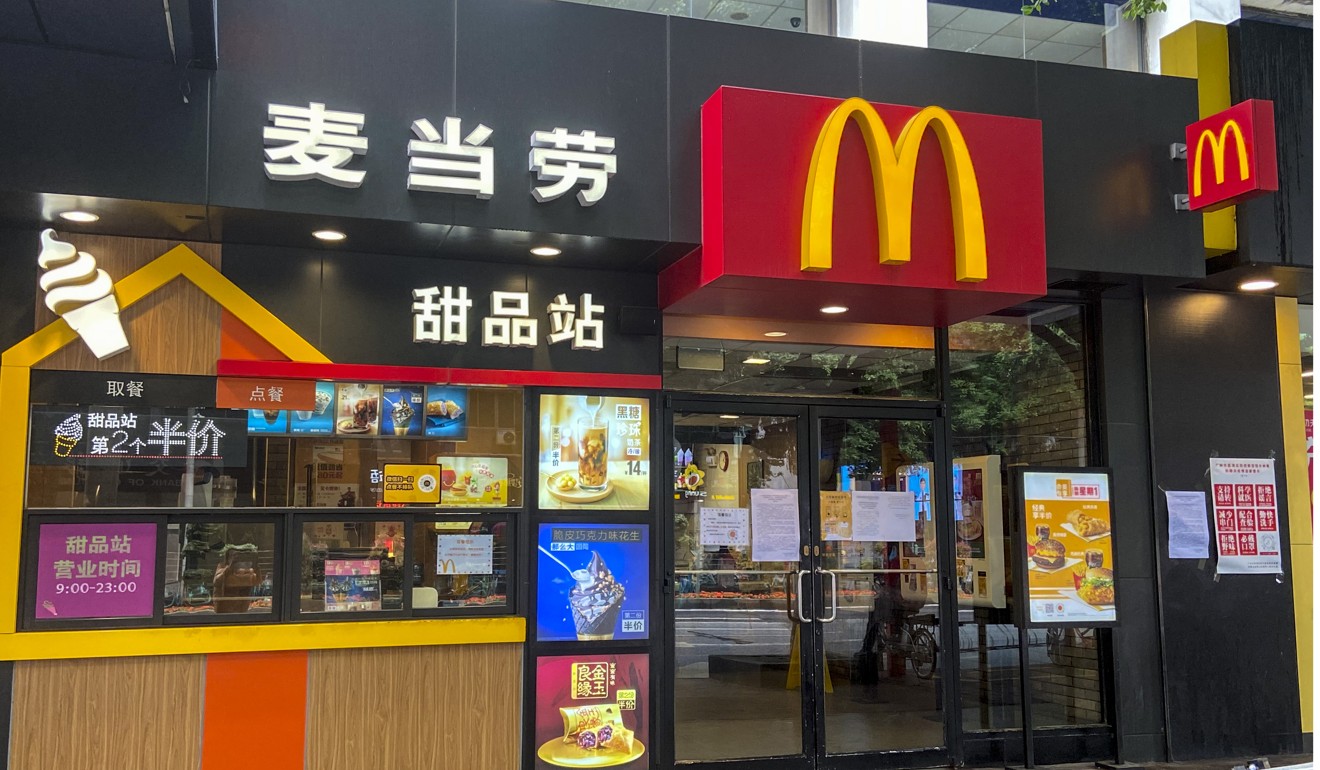
Residents can still get takeaway meals in Guangzhou, but they have been encouraged to order online and have them delivered. Photo: He Huifeng
Guangzhou is home to more than 15 million people and a busy trading port, and has been known as China’s most open city since the 1600s. For locals, going to restaurants for yum cha, or “drinking tea”, and dining on dim sum is an important part of the city’s history and culture – a tradition that has been carried through many generations.

“Even in the ‘three years of natural disasters’ [from 1959 to 1961, when China was in the grip of a famine] I remember there were still restaurants open,” He said. “I was really shocked [by the ban]. I guess the epidemic situation must be severe, otherwise Guangzhou definitely wouldn’t introduce this measure.”

China’s Hubei province reports huge spike in coronavirus cases, rising 10-fold from previous day
Many people in Guangzhou and across the country went back to work on Monday after an extended Lunar New Year break – another measure to try to stop the virus from spreading – with the government keen for businesses to return to normal operations.

The ban on dining in applies to restaurants, but employees can continue to have meals at their company canteens. And while residents can still get takeaways from restaurants, they have been encouraged to do this online, and have their meals delivered, rather than collecting their orders.

Group gatherings have also been banned in the city, and according to Nanfang Daily, some 126 banquets that would have involved more than 90,000 people have been cancelled by authorities already. The authorities did not say how long the measures would be in place.

Guangzhou is not the only city in Guangdong province to bring in a ban on dining in restaurants – Futian district in Shenzhen, Xiangzhou in Zhuhai, Foshan and Zhongshan have all taken the same step.

Beijingers gradually return to work as China’s fight against deadly coronavirus continues
In Guangzhou, while residents try to adapt, businesses are expecting to take a hit. One of the city’s top hotels said the virus outbreak could have a severe impact on the industry.

“Now we will focus on promoting takeaways for local customers. They can order our meals through apps providing online takeaway ordering services,” said Fion Liang, director of sales and marketing at The Garden Hotel. “As for guests staying in the hotel we will deliver meals to their rooms.”

To work or not to work: the difficult coronavirus question facing China

13 Feb 2020

She said the outbreak did not have a big impact on the hotel’s business in January, because the situation only became severe at the end of the month.

“The impact was definitely much bigger in February. If the epidemic continues to be severe throughout February, the occupancy rate of our rooms will be in the single digits this month,” Liang said. “[Most] hotels in Guangzhou are in the same situation.”

The outbreak is expected to deal a heavy blow to restaurants in the city, especially smaller eateries, and some have already been forced to close. June Zhao, the owner of dumpling restaurant Xi Xi, decided to shut down on Wednesday – the day the eat-in ban was announced.

Prospects had been good for the restaurant – it also sold books and alcohol in the evenings, and its trendy decor drew a young crowd.

“We had just started making money last winter and we were looking forward to earning more over the Lunar New Year holiday. But then the coronavirus came, our turnover fell to several hundred yuan a day, and we lost hope,” she said. “The new ban makes this situation worse – takeaway is not a good choice for dumplings, especially in winter. The losses will continue if we stay open.”

Coronavirus: major cities given power to seize private property
13 Feb 2020

The ban has also interrupted daily routines. Freelance cameraman Cony Yu, 28, usually spends some of his working day at cafes, but that is no longer possible. “[Now] I don’t have a comfortable place to sit aside from my home – even the parks have all been closed,” Yu said.

China disinfects entire cities to fight coronavirus outbreak, some twice a day
In the southern tech hub of Shenzhen, dining in has also been banned in central Futian district. Zhu Hao, a financial analyst based in the district, has been working from home for a week and ordering takeaway food every day. But he has to collect it from the gate at his residential compound, where security staff check the temperature of anyone entering or leaving.
He is losing patience with the restrictions. “I want to eat out. I want beef hotpot, coconut chicken, Korean barbecue and seafood,” he said.
In other Shenzhen districts, many restaurants and shopping centres have been temporarily closed or can only provide takeaway meals – including fast food chains such as McDonald’s and Starbucks.
Other places have strict rules for customers. At a bread shop, customers must register their ID and phone numbers and have their temperatures checked before they can enter. And for now, all hotpot restaurants have been closed.
Source: SCMP
20/09/2019

Across China: Guangzhou incubator gives HK and Macao entrepreneurs a leg-up

GUANGZHOU, Sept. 19 (Xinhua) — After exploring registering a company in Shenzhen and Zhuhai in 2013 and 2015, ChiMan Chan, a Hong Kong entrepreneur, finally made the plunge and launched a business on the Chinese mainland in 2017 when he came across the Tianhe District Service Center for Hong Kong and Macao Youth Entrepreneurship.

The service center, a non-profit organization which acts as an incubator for emerging enterprises, is located in the heart of Guangzhou’s bustling CBD, Zhujiang New Town.

Since it was established in 2017, the center has embraced more than 2,200 young entrepreneurs from the two Special Administrative Regions, and 45 Hong Kong and Macao enterprises have settled down at the center.

Thanks to the assistance from the center, Chan is now the founder and chief executive officer of Deming ProDevelop, an engineering consultant agency with four offices scattered across the Guangdong-Hong Kong-Macao Greater Bay Area.

In Chan’s view, the service center played an instrumental role in his company’s current success. “Without the help of the service center, there is no way we could have thrived to such an extent on the Chinese mainland,” Chan said.

Establishing a business is tough in itself, but for newcomers to the mainland, the application and registration process can especially present a massive initial hurdle, according to Chan. Luckily, the service center reduced some of that pressure for him.

Chen Jingzhan, director of the center’s entrepreneurship and innovation department, said many Hong Kong and Macao entrepreneurs that have set their eyes on development on the mainland often face similar headaches.

“It’s not just a matter of investing enough time to complete the registration process. Without professional guidance, many Hong Kong and Macao newcomers to the mainland simply do not know where to start,” said Chen, adding that is where the service center comes in.

Not only does the center help entrepreneurs get started, but it also offers support as they continue to develop through free registration, entrepreneurship, policy, intellectual property rights, law, and market resource consulting services.

To enterprises that meet specific requirements, the center even provides office space for two to three people free of charge, with aims of “reducing the operational costs associated with startups, and offering more development opportunities to Hong Kong and Macao enterprises,” said Chen.

Since the Outline Development Plan for the Guangdong-Hong Kong-Macao Greater Bay Area was released in February, more and more youths from Hong Kong and Macao have set their sights on Guangdong.

Ye Zhengqiao, a young entrepreneur from Hong Kong, is one of them. Drawn to the Greater Bay Area after graduating from university in the U.S., Ye now is the founder of Geometry Technology Co., Ltd., a company that has launched an online intelligent pet platform. Ye’s platform lists pet-related service providers and product sellers in a one-stop online solution for pet owners in China.

Ye said the construction of the Guangdong-Hong Kong-Macao Greater Bay Area has given young people like him “more confidence and opportunity.” He said he believes “the rate of success in Guangdong is higher than in Hong Kong,” and that the Greater Bay Area gives young people “more room to try new things with lower capital requirements.”

The concept behind the Greater Bay Area also provided the inspiration for ChiMan Chan’s business. While working on a project related to the construction of the Hong Kong-Zhuhai-Macao Bridge, the Greater Bay Area’s most iconic feat of engineering, Chan saw the potential for deepened cooperation and wanted to build a bridge of his own: a platform to connect Chinese mainland engineers and their Hong Kong, Macao and overseas counterparts.

Chen hopes more services like those on offer at the Tianhe District Service Center for Hong Kong and Macao youth entrepreneurship will be offered to young Hong Kong entrepreneurs, both in the mainland and in Hong Kong itself.

Ye Zhengqiao agrees that the mainland offers new pathways to Hong Kong and Macao youths, adding that he hopes more young people from the two SARs can latch on to the new possibilities provided by the Greater Bay Area, and “come to the mainland more often to appreciate the opportunities available.”

Source: Xinhua

30/04/2019

Boxed in: $1 billion of Iranian crude sits at China’s Dalian port

SINGAPORE (Reuters) – Some 20 million barrels of Iranian oil sitting on China’s shores in the northeast port of Dalian for the past six months now appears stranded as the United States hardens its stance on importing crude from Tehran.

Iran sent the oil to China, its biggest customer, ahead of the reintroduction of U.S. sanctions last November, as it looked for alternative storage for a backlog of crude at home.

The oil is being held in so-called bonded storage tanks at the port, which means it has yet to clear Chinese customs. Despite a six-month waiver to the start of May that allowed China to continue some Iranian imports, shipping data shows little of this oil has been moved.

Traders and refinery sources pointed to uncertainty over the terms of the waiver and said independent refiners had been unable to secure payment or insurance channels, while state refiners struggled to find vessels.

The future of the crude, worth well over $1 billion at current prices, has become even more unclear after Washington last week increased its pressure on Iran, saying it would end all sanction exemptions at the start of May.

“No responsible Chinese company with any international exposure will have anything to do with Iran oil unless they are specifically told by the Chinese government to do so,” said Tilak Doshi of oil and gas consultancy Muse, Stancil & Co in Singapore.

Iran previously stored oil in 2014 at Dalian during the last round of sanctions that was later sold to buyers in South Korea and India. reut.rs/2yo9Se6

China last week formally complained to the United States over the unilateral Iran sanctions, but U.S. officials have said Washington is not considering a further short-term waiver or a wind-down period.

The 20 million barrels is equal to about a month’s worth of China’s imports from Iran over the past six months, or about two days of the country’s total imports.

Iran says it will continue to export oil in defiance of U.S. sanctions.

A senior official with the National Iranian Tanker Company (NITC), who spoke on condition of anonymity, told Reuters: “We will continue to sell our oil.”

“Iran is now desperate and will deal with anyone with steep discounts as long as they get paid somehow,” said Doshi.

SOME OIL TAKEN

Some Iranian oil sent to Dalian has moved, according to a ship tracking analyst at Refinitiv.

Dan, a supertanker owned by NITC moved 2 million barrels of oil from Dalian more than 1,000 km (620 miles) to the south to the Ningbo Shi Hua crude oil terminal in March, according to Refinitiv data.

Ningbo is home to Sinopec’s Zhenhai refinery, one of the country’s largest oil plants with a capacity of 500,000 barrels a day and a top processor of Iranian oil.

Sinopec declined to comment.

The Iranian tanker was chartered by state-run Chinese trader Zhuhai Zhenrong Corp, according to Refinitiv analyst Emma Li. The NITC official confirmed the oil was taken by Zhuhai Zhenrong.

Zhenrong was started in the 1990s and brokered the first oil supply deals between Iran and China. At that time, Iran was supplying oil to China to pay for arms supplied by Beijing during the 1980-88 Iran-Iraq war. Zhuhai Zhenrong still specializes mainly in buying Iranian oil.(reut.rs/2IHlvEx)

An official at the general manager’s office with Zhuhai Zhenrong’s office in Beijing said he could not immediately comment. The company did not reply to a fax seeking comment.

For now, more Iranian oil is heading to China, with the supertankers Stream and Dream II due to arrive in eastern China from Iran on May 5 and May 7, respectively, Refinitiv data showed.

Some of this crude may be from Chinese investments into Iranian oilfields, a sanctions grey area.

Whether China will keep buying oil from Iran remains unclear, but analysts at Fitch Solutions said in a note “there may be scope for imports via barter or non-compliance from … China.”

Muse, Stancil & Co’s Doshi said the only way to get the Iranian oil out of Dalian now was by cheating.

“Only rogue parties might try to cheat the system and try to pass the Iranian oil at Dalian as something else via fraudulent docs. But I doubt this is easy or can amount to much in terms of volume.”

(MAP: Iranian supertanker frees some oil from China storage in March, tmsnrt.rs/2W1FJvK)

Source: Reuters

Law of Unintended Consequences

continuously updated blog about China & India

ChiaHou's Book Reviews

continuously updated blog about China & India

What's wrong with the world; and its economy

continuously updated blog about China & India