08/09/2019
Chinese State Councilor and Foreign Minister Wang Yi (L), Pakistani Foreign Minister Shah Mahmood Qureshi (C) and Afghan Foreign Minister Salahuddin Rabbani attend the 3rd China-Afghanistan-Pakistan Foreign Ministers’ Dialogue in Islamabad, capital of Pakistan, Sept. 7, 2019. (Xinhua/Liu Tian)
ISLAMABAD, Sept. 8 (Xinhua) — The 3rd China-Afghanistan-Pakistan Foreign Ministers’ Dialogue was held here in Islamabad on Saturday, and the three sides stressed the need to jointly safeguard regional peace and stability amid the changing and complicated circumstances.
The situation in south Asia is going through profound and complicated changes, Chinese State Councilor and Foreign Minister Wang Yi said at the meeting.
Progress has been achieved in the peace talks between the United States and the Afghan Taliban, and there is an important opportunity for Afghanistan’s peace and reconciliation, he noted.
Meanwhile, some historical disputes have again escalated, undermining peace and stability in the region, Wang said.
In the international arena, unilateralism, protectionism and hegemony have threatened and challenged the interests of developing countries, he added.
China, Afghanistan and Pakistan are close neighbors with a shared future, Wang said. The three countries share the aspirations to safeguard regional peace and achieve lasting stability, the need to push forward Belt and Road development and regional connectivity, as well as the expectation to achieve sustainable development and improve people’s livelihood.
The three sides should work together and make new efforts to push forward the Afghan-led and Afghan-owned reconciliation process in Afghanistan, improve the relations between Afghanistan and Pakistan, promote trilateral practical cooperation as well as jointly combat terrorism, among others, he said.
For their part, Afghan Foreign Minister Salahuddin Rabbani and Pakistani Foreign Minister Shah Mehmood Qureshi made positive assessment on the progress achieved in cooperation and exchange on the three major themes within the framework of the China-Afghanistan-Pakistan Foreign Ministers’ Dialogue, namely political mutual trust and reconciliation, development cooperation and connectivity, and security cooperation and fighting terrorism. They also spoke highly of China’s contribution in pushing forward the cooperation among the three countries.
The two foreign ministers said China, always a good neighbor and a trustworthy friend of Afghanistan and pakistan, has long played an important and positive role in promoting Afghanistan’s peace and reconciliation process, pushing forward the improvement of the relations between Afghanistan and Pakistan and maintaining peace and stability in the region.
With the complicated regional situation which is undergoing fast change, Afghanistan and Pakistan are willing to boost communication and coordination with China so as to deepen cooperation in such fields of economy and trade, people to people exchange, communication and connectivity, jointly build the Belt and Road, join hands in combating terrorism including the East Turkestan Islamic Movement, maintaining regional peace and stability as well as promoting regional development and prosperity, they said.
The foreign ministers from China, Afghanistan and Pakistan reached agreement on pressing forward the realization of lasting peace and stability in Afghanistan through the Afghan-led and Afghan-owned reconciliation process and implementing common connectivity programs with international financial institutions including the World Bank, among others.
The three foreign ministers also agreed to hold the 4th China-Afghanistan-Pakistan Foreign Ministers’ Dialogue in 2020 in China.
Source: Xinhua
Posted in 3rd China-Afghanistan-Pakistan Foreign Ministers' Dialogue, Afghan Foreign Minister, Afghan Taliban, Afghan-led and Afghan-owned reconciliation, Afghanistan, belt and road development programme, China alert, Chinese State Councilor and Foreign Minister Wang Yi, East Turkestan Islamic Movement, efforts, Islamabad, Pakistan, Pakistani Foreign Minister, pledge, regional peace, regional stability, safeguard, Salahuddin Rabbani, Shah Mehmood Qureshi, Uncategorized, United States |
Leave a Comment »
08/09/2019
BEIJING, Sept. 8 (Xinhua) — A 5.4-magnitude earthquake jolted Weiyuan County of Neijiang City in southwest China’s Sichuan Province at 6:42 a.m. Sunday, according to the China Earthquake Networks Center (CENC).
The epicenter, with a depth of 10 km, was monitored at 29.55 degrees north latitude and 104.79 degrees east longitude, the center said in a statement.
Source: Xinhua
Posted in 5.4-magnitude, China Earthquake Networks Center (CENC), epicenter, Neijiang City, quake, sichuan province, SW China, Uncategorized, Weiyuan County |
Leave a Comment »
08/09/2019
German Chancellor Angela Merkel visits Wuhan Yangtze River Bridge in Wuhan, capital city of central China’s Hubei Province, Sept. 7, 2019. German Chancellor Angela Merkel visited Wuhan on Saturday. (Xinhua/Xiao Yijiu)
WUHAN, Sept. 7 (Xinhua) — Angela Merkel Saturday visited central China’s Wuhan during her 12th trip to the country as German Chancellor since 2005.
Before Wuhan, capital city of Hubei province, Merkel had visited a number of cities besides Beijing during her China trips in the past.
When talking with students of Huazhong University of Science and Technology, Merkel highlighted the importance of international cooperation in the era of globalization, and called on the students to be participants.
Saying that a nation’s prosperity is part of the prosperity of the whole world, she voiced her hope that students should shoulder common responsibilities to combat global challenges.
In the speech, Merkel reviewed her past trips to China. In Shenyang, she witnessed economic upgrading. In Chengdu she learned about development of western China. In Shenzhen she saw remarkable progress brought by the reform and opening-up.
She said quite a few noted German companies including Siemens, and small and medium-sized innovation enterprises are operating business in Wuhan. Wuhan and Duisburg became the first pair of sister cities between China and Germany in 1982.
Merkel exchanged views with students on internet, artificial intelligence, intelligent manufacturing, and environmental protection.
Before wrapping up her trip, Merkel also visited a local hospital and a factory of the German company Webasto.
Source: Xinhua
Posted in Angela Merkel, Artificial intelligence, artificial intelligence (AI), Beijing, Chengdu, Duisburg, Environmental protection, Factory, German Chancellor, German companies, German company, globalization, Hospital, Huazhong University of Science and Technology, hubei province, intelligent manufacturing, Internet, Shenyang, Siemens, Uncategorized, Webasto, Wuhan |
Leave a Comment »
08/09/2019
Serbian President Aleksandar Vucic(4th R) meets with Zhang Youxia(3rd L), a member of the Political Bureau of the Communist Party of China (CPC) Central Committee and vice chairman of the Central Military Commission in Belgrade, Serbia on Sept. 6, 2019. (Photo by Li Xiaowei/Xinhua)
BELGRADE, Sept. 7 (Xinhua) — Serbia hopes to enhance mutually beneficial cooperation with China in various fields, including military, to advance bilateral relations to new levels, Serbian President Aleksandar Vucic has said.
Vucic made the remarks on Friday when meeting with visiting vice chairman of China’s Central Military Commission, Zhang Youxia.
Vucic said that history has proved that China is Serbia’s most reliable friend. The Serbian government, people and military support the “one-China” policy as well as China’s stance and proposition in many other issues concerning China’s core interests.
Vucic added that the Belt and Road Initiative has brought many opportunities to the development of Serbia. He said he hopes that the two sides will continue to deepen mutually beneficial cooperation in various fields, including military, to advance bilateral relations to new levels.
Zhang, who is also a member of the Political Bureau of the Communist Party of China Central Committee, said that the traditional friendship between China and Serbia is profound.
He said that China is ready to work with Serbia to consolidate the all-weather friendship between the two countries, promote the quality of their bilateral relations and accelerate the growth of their ties.
Zhang also called for the militaries of the two countries to implement consensus reached between the heads of state of China and Serbia, deepen strategic mutual trust and enhance exchanges and cooperation in bids to promote their links to new height.
During his visit, Zhang also met with Serbian Defense Minister Aleksandar Vulin, and witnessed the signing of a memorandum of understanding on the establishment of a Chinese medicine center in the Serbian Military Medical Academy.
Source: Xinhua
Posted in advance, Aleksandar Vucic, Aleksandar Vulin, Belt and Road Initiative, Belt and Road Initiative (BRI), Central Military Commission, Central Military Commission (CMC), China alert, Chinese medicine center, establishment, levels, member of the Political Bureau of the Communist Party of China Central Committee, Memorandum of understanding, Memorandum of Understanding (MOU), Military, pledges, Serbian Defense Minister, Serbian Military Medical Academy, Serbian president, ties, Uncategorized |
Leave a Comment »
08/09/2019
- International watchdog to vote on whether to extend restrictions to southern African countries that are the biggest exporters
- If passed, China may find it hard to buy elephants from Africa
An elephant is hoisted into Chongqing zoo in southwestern China, on loan from another Chinese zoo. Photo: Reuters
China, one of the leading buyers of African elephants, could face difficulty in acquiring the mammals if a widening of a ban on their sale to zoos is ratified next week by the global regulator of wildlife trade.
A motion further restricting the sale of live elephants was on Sunday supported by 46 countries at the committee stage of the Convention on International Trade in Endangered Species of Wild Fauna and Flora (Cites) in Geneva. It will go to a final vote on August 28.
The sale of elephants from West, Central and East Africa is already banned – but there is a lower level of protection for them in southern African countries such as South Africa, Namibia and Zimbabwe, which are the top three exporters of wild elephants to overseas zoos, according to Cites.
Keeping elephants caught from the wild in zoos is considered cruel by conservation and animal rights groups.
Conservationists criticised Zimbabwe’s capture of 35 baby elephants that were exported to a Chinese zoo in February. There was also uproar from activists in 2015 when a video filmed in a Chinese zoo showed two dozen elephants bought from Zimbabwe exhibiting signs of distress.
Zimbabwe was among 18 countries that opposed the potential ban at the committee stage, along with the United States – another leading buyer of elephants from Africa. China was one of 19 countries that abstained, while the European Union’s 28 countries did not vote.
If the motion is passed, China and the US – both known to be buying elephants from Africa and keeping them in so-called captive facilities or zoos – may find it hard to source the animals from the continent. Zimbabwe has come under
global scrutiny
for its capture and sale of elephants to captive facilities including zoos and safari parks in China and the US.
Peter Knights, founder and chief executive of WildAid, an environmental organisation in San Francisco, explained that Cites still allowed the movement of live elephants for on-site conservation efforts such as moving the animals back into the wild or to a national park where they had been depleted.
“This is not primarily a conservation issue but more about animal welfare,” he said. “As highly social, intelligent animals, African elephants do not usually do well in captivity, requiring very large areas, and often developing behavioural problems in captivity and not usually reproducing successfully – indicating far from ideal housing.”
According to Humane Society International, which promotes animal welfare, Zimbabwe has sold more than 100 baby elephants to zoos in China since 2012, with a further 35 reportedly awaiting export.
On Monday, 55 elephant specialists protested to the US wildlife management agency about plans for the country’s zoos to import juvenile elephants caught in the wild from Zimbabwe. They asked the agency to prohibit imports of wild-caught elephants for captivity in US facilities.
“We are vehemently opposed to the proposed imports,” the experts wrote in a letter to the agency. “Young elephants are dependent on their mothers and other family members to acquire necessary social and behavioural skills. Male calves only leave their natal families at 12 to 15 years old and females remain for life. Disruption of this bond is physically and psychologically traumatic for both the calves and remaining herds and the negative effects can be severe and lifelong.”
The letter said that eSwatini, formerly Swaziland, had sold a total of 11 wild elephants to two American zoos in 2003, and a further 18 to three US zoos in 2016.
‘Hundreds’ of elephants are being poached each year in Botswana
Concerns about keeping elephants in zoos come at a time when the animals remain under threat in Africa from poachers who kill them for ivory.
Southern African countries such as Botswana, Namibia, Zimbabwe and Zambia are pushing to reopen the trade in ivory. Zambia is seeking to have the classification of its elephants downgraded to allow commercial trade in registered raw ivory with approved trading partners.
Other countries, including Kenya, Nigeria and Gabon, are seeking the highest possible levels of protection for all of Africa’s elephants.
Two previous attempts at regulating the ivory trade failed to curb poaching, which has caused elephant numbers to dwindle over the past two decades. A 2016 study estimated that 30,000 to 40,000 elephants were being killed every year, with about 400,000 remaining in total.
Knights, of WildAid, said that between 1975 and 1989 – the first period in which the ivory trade was regulated – half of Africa’s elephants were lost. During the second attempt at regulation between 2008 and 2017, participating countries claimed to have addressed the problem but poaching increased.
“It is clear that we cannot control ivory trade and that legal trade stimulates poaching and demand for ivory, rather than substituting for it as some countries suggest. The price fell by two-thirds when China banned domestic sales,” Knights said, adding that demand for ivory came primarily from Asia.
“Most seized shipments are en route to China. It has banned all sales and is making a great effort to crack down on illegal trade.”
Source: SCMP
Posted in affect, africa, African countries, African elephants, ban, Botswana, buy, China alert, Chongqing zoo, Convention on International Trade in Endangered Species of Wild Fauna and Flora (Cites), elephants, eSwatini, European Union, Gabon, Geneva, hoisted, Humane Society International, International watchdog, ivory, Ivory trade, Kenya, mammals, Namibia, Nigeria, poaching, safari parks, sale, San Francisco, South Africa, southern, Swaziland, Uncategorized, US, US-China relationship, vote, West, Central and East Africa, wild, WildAid, Zimbabwe, zoos |
Leave a Comment »
08/09/2019
- Two people from the circus have been detained after the animal managed to get out of its cage and run towards nearby cornfields on Friday evening
- It was found the next morning and police used a tranquilliser to subdue the tiger but it died on the way to the zoo, which believes it had been hit by a car
Video footage shows circus handlers using sticks to try to coax the tiger back inside the cage after it escaped on Friday night. Photo: Thepaper.cn
A circus tiger that escaped from its cage during a show in central China was captured by police after an overnight search, but died while it was being transported to a nearby zoo, according to media reports.
Two people from the circus where the tiger was raised in the county of Yuanyang, Henan province, have been detained, Beijing Youth Daily reported, without elaborating. It said the tiger escaped during the circus’ first public show, which had not been registered with the local authorities.
The tiger was part of a performance for a local school on Friday evening when it managed to get out of its cage and run towards nearby cornfields.
A video posted by news site Thepaper.cn shows the moment it escaped from the cage, with its handlers using sticks to try to coax the animal back inside. The scene is chaotic, as people scream and run from the venue.
A tranquilliser dart was used to subdue the tiger on Saturday morning and it was transported to a zoo in Xinxiang. Photo: Thepaper.cn
The police were called in, and officers used drones, police dogs and thermal imaging equipment to hunt for the tiger, according to the local government.
The authorities also put out an emergency advisory telling residents to stay indoors and contact police if they had any information on the tiger’s whereabouts.
It was spotted the following morning, and a tranquilliser dart was used to subdue the animal at about 10.30am on Saturday. The tiger was then transported to a zoo in the city of Xinxiang.
According to one of its zookeepers, the animal had already died by the time it was delivered to the zoo, China Youth Daily reported on Sunday.
The \jsq, surnamed Feng, said the tiger was hit by a car after it escaped and may have sustained internal injuries. The zoo is conducting an autopsy.
Chinese circus tiger attacks two children after breaking out of cage in middle of performance
Thousands of social media users expressed their sympathy for the tiger’s plight, saying it must have suffered greatly, with many people calling for animal circuses to be banned in China.
“Tigers don’t belong in cages, they belong in the wilderness,” one person wrote on microblog site Weibo.
Chinese circus defends using rare animals in its acts despite poor crowds at shows and criticism of its methods.
Source: SCMP
Posted in Beijing Youth Daily, cage, captured, car, Central China, chaotic, China alert, circus, Circus tiger, cornfields, died, dies, drones, escapes, handlers, Henan province, local authorities, local school, performance, Police, police dogs, registered, scream and run, sent to zoo, show, Thepaper.cn, thermal imaging equipment, tiger, tranquilliser, tranquilliser dart, Uncategorized, venue, Weibo, Xinxiang, Yuanyang, Zoo |
Leave a Comment »
07/09/2019
NEW YORK, Sept. 7 (Xinhua) — Overseas Chinese in New York City presented a brilliant concert late Friday night in Lincoln Center to mark the 40th anniversary of the establishment of the diplomatic relations between China and the United States and to celebrate the forthcoming Mid-Autumn Festival.
The 2019 Golden Night Concert, staged by The Asian Cultural Symphony of the USA, featured a mix of well-known classical western and Chinese symphonies, operas and songs, attracting hundreds of overseas Chinese and American audience.
Young Chinese songwriter and singer Huo Zun performed three songs at the concert, including his signature song Rolled-Up Pearl Curtain, the unique pop-song One Night in Beijing, and a Peking opera excerpt Butterfly Love from The Great Concubine of Tang in cooperation with renowned Peking opera singer Li Jun, winning prolonged warm applause.
Li Jun’s Peking opera excerpt Morning Sun in Heart from Climbing Tiger Mountain and Wang Hongli’s Henan opera excerpt from Mulan enchanted the audience with the quintessence of traditional Chinese culture.
Famed female vocalist Zheng Xulan staged her classic pieces Shepherdess Song and The Sea, The Homeland, renewing old memories of overseas Chinese.
Also presented included The Toreador Song from Carmen by baritone Nigel Smith, Tambourin Chinois and Zigeunerweisen by violinist Lin Zhaoliang, and Hulunbuir Grassland by the Krliu family singers.
The concert served as a platform for overseas Chinese to convey their goodwill. Over the past 40 years, Chinese American made significant contribution in bridging China-U.S. exchange in a variety of aspects. As the center of classical music in New York City and a coveted platform by artists, Lincoln Center witnessed another wonderful cultural exchange between the East and the West.
Source: Xinhua
Posted in 40th anniversary, Asian Cultural Symphony of the USA, brilliant concert, Butterfly Love from The Great Concubine of Tang, Carmen, celebrate, China alert, China-U.S. exchange, cultural exchange, diplomatic relations, Golden Night Concert, Henan opera, Hulunbuir Grassland, Lincoln Center, Mid-Autumn Festival, Morning Sun in Heart from Climbing Tiger Mountain, Mulan, New York City, One Night in Beijing, operas, Overseas Chinese, Peking opera, Rolled-Up Pearl Curtain, Shepherdess Song and The Sea, singer, songs, symphonies, Tambourin Chinois and Zigeunerweisen, the East and the West, The Homeland, The Toreador Song, Uncategorized, United States |
Leave a Comment »
07/09/2019
BEIJING, Sept. 7 (Xinhua) — China’s National Museum of Classic Books unveiled an exhibition in Beijing Saturday to showcase the preservation and inheritance of ancient Chinese books over the past 70 years since the founding of the People’s Republic of China (PRC).
More than 330 precious collections from over 70 public institutions and private collectors around the country, ranging from ancient government archives, maps, manuscripts to paintings, have been put on display.
The exhibition, sponsored by the Ministry of Culture and Tourism and the National Cultural Heritage Administration, is the largest of its kind since the founding of the PRC in 1949.
With digital virtual sand table demonstration, holographic and immersive digital scenes, the curator tries to use diversified means and modern technologies to facilitate audience experience.
Source: Xinhua
Posted in ancient Chinese books, ancient government archives, audience experience, Beijing, China's National Museum of Classic Books, Country, curator, digital virtual sand table demonstration, display, exhibition, founding, founding of the People's Republic of China (PRC), holographic and immersive digital scenes, manuscripts, maps, Ministry of Culture and Tourism, modern technologies, National Cultural Heritage Administration, paintings, People's Republic of China (PRC), precious collections, preservation and inheritance, private collectors, public institutions, Uncategorized |
Leave a Comment »
07/09/2019
Photo taken on Sept. 7, 2019 shows the view in Qianjiadu scenic spot in Jiangning District, Nanjing, east China’s Jiangsu Province. Qianjiadu scenic spot became a tourist attraction after elaborately designed renovation projects jointly carried out in Qianjiadu Village and Sunjiaqiao Village. (Xinhua/Ji Chunpeng)
Source: Xinhua
Posted in Jiangning District, jiangsu province, Nanjing, Qianjiadu, Qianjiadu Village, scenic spot, Sunjiaqiao Village, Uncategorized |
Leave a Comment »
07/09/2019
- He is expected to join a trilateral dialogue with his counterparts from Pakistan and Afghanistan, and observers say he may try to mediate in Kashmir dispute
- Trip also includes a stop in Nepal that could pave way for a visit by Xi Jinping
Chinese Foreign Minister Wang Yi may try to act as a negotiator in the Kashmir dispute. Photo: EPA-EFE
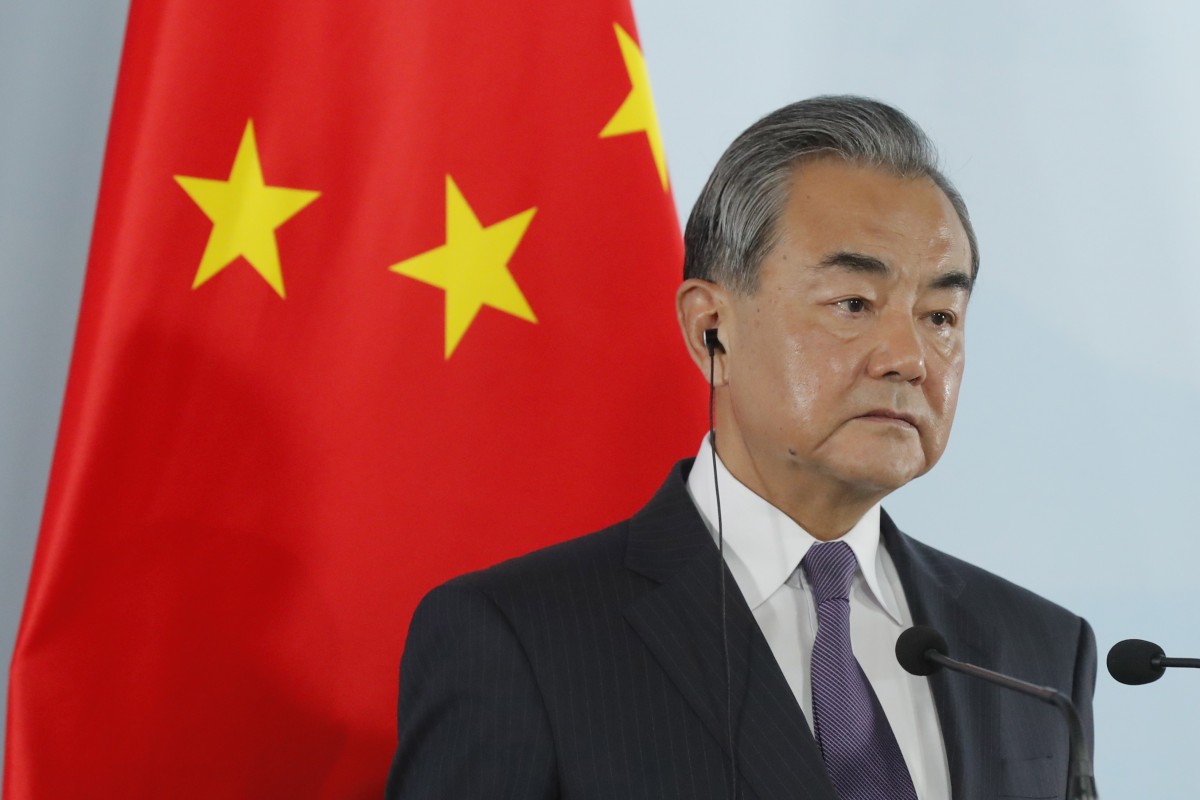
Chinese Foreign Minister Wang Yi began a four-day trip to Pakistan and Nepal on Saturday, amid escalating tensions between Islamabad and New Delhi over
.
Wang was expected to join a trilateral dialogue with the foreign ministers of Pakistan and Afghanistan in Islamabad, foreign ministry spokesman Geng Shuang said on Friday. He will also travel to Nepal.
Beijing has criticised India’s decision last month to strip the Jammu and Kashmir autonomous state of its special status and break it into two federally controlled territories, calling it “unacceptable”.
China also formally backed Pakistan’s request for the United Nations Security Council to hold “closed consultations” on the revocation of the state’s autonomy.
Meanwhile, observers say the Chinese foreign minister could attempt to act as a negotiator in the complex border dispute.
“Wang might try to play a role to mediate between the two sides to resolve the crisis,” said Wang Dehua, head of the Institute for South and Central Asia Studies at the Shanghai Municipal Centre for International Studies. “This has been China’s long-held position on the issue.”
Pang Zhongying, an international relations researcher at Ocean University of China in Qingdao, agreed.
“[Indian Prime Minister] Narendra Modi has visited China a couple of times and it is likely [Chinese President] Xi Jinping will visit India soon,” he said. “If Xi is to visit India later this year, China may try to contain its differing views with India on Kashmir.”
Modi has proposed an informal summit with Xi later this year that may be held in the religious hub of Varanasi, Modi’s parliamentary constituency. New Delhi said in May that Indian officials were working with the Chinese side to finalise the details, but Beijing has yet to confirm Xi’s visit.
India dismisses Beijing’s concerns over Kashmir because ‘it won’t have any impact on China’
Wang Yi was also due to visit India later this month for border talks, but the trip had to be postponed at the request of New Delhi because of scheduling problems, Hindustan Times reported, citing China’s foreign ministry.
The row over Kashmir has escalated in the past month. Pakistani Prime Minister Imran Khan said on Friday that Islamabad would make the fullest possible response to New Delhi’s actions in disputed Kashmir and that the global community would be responsible for any “catastrophic” aftermath.
Since Modi withdrew special rights for Indian-administered Kashmir on August 5, India has flooded the Kashmir valley with troops, restricted the movements of residents and cut off communication.
Both India and Pakistan claim the whole of Kashmir, which was partitioned between the two following the end of British rule in 1948, and they have subsequently fought wars over the territory.
China has its own territorial dispute with India over the part of Kashmir it controls. In early August, Chinese foreign ministry spokeswoman Hua Chunying
and said it was not binding. Beijing later appeared to soften its rhetoric, with Hua calling for a solution through dialogue and negotiation, without criticising either side.
The Chinese foreign minister will also visit Nepal, where he is expected to meet his counterpart, the president and prime minister. The trip could pave the way for an expected visit by Xi to Nepal.
Source: SCMP
Posted in 1948, Afghanistan, autonomy, British rule, China alert, Chinese foreign minister Wang Yi, complex border dispute, Hindustan Times, Imran Khan, India alert, Indian Prime Minister Narendra Modi, Institute for South and Central Asia Studies, Islamabad, Jammu and Kashmir, Kashmir, negotiator, Nepal, New Delhi, observers, Ocean University of China, Pakistan, Pakistani Prime Minister, Qingdao, Shanghai Municipal Centre for International Studies, tensions, troops, Uncategorized, United Nations Security Council, United Nations Security Council (UNSC), visits, Xi JinPing |
Leave a Comment »





 CHINDIA ALERT: You'll be living in their world, very soon