Chindia Alert: You’ll be Living in their World Very Soon
aims to alert you to the threats and opportunities that China and India present. China and India require serious attention; case of ‘hidden dragon and crouching tiger’.
Without this attention, governments, businesses and, indeed, individuals may find themselves at a great disadvantage sooner rather than later.
The POSTs (front webpages) are mainly 'cuttings' from reliable sources, updated continuously.
The PAGEs (see Tabs, above) attempt to make the information more meaningful by putting some structure to the information we have researched and assembled since 2006.
Chinese President Xi Jinping, also general secretary of the Communist Party of China Central Committee and chairman of the Central Military Commission, visits a Yellow River management point to learn about the management, protection and flood control project construction of the Yellow River in Lanzhou, northwest China’s Gansu Province, Aug. 21, 2019. (Xinhua/Wang Ye)
State media says presence is part of preparations for major drill, but analyst calls it a ‘psychological warfare tactic’
Fears that the armed presence was a show of power to Hong Kong
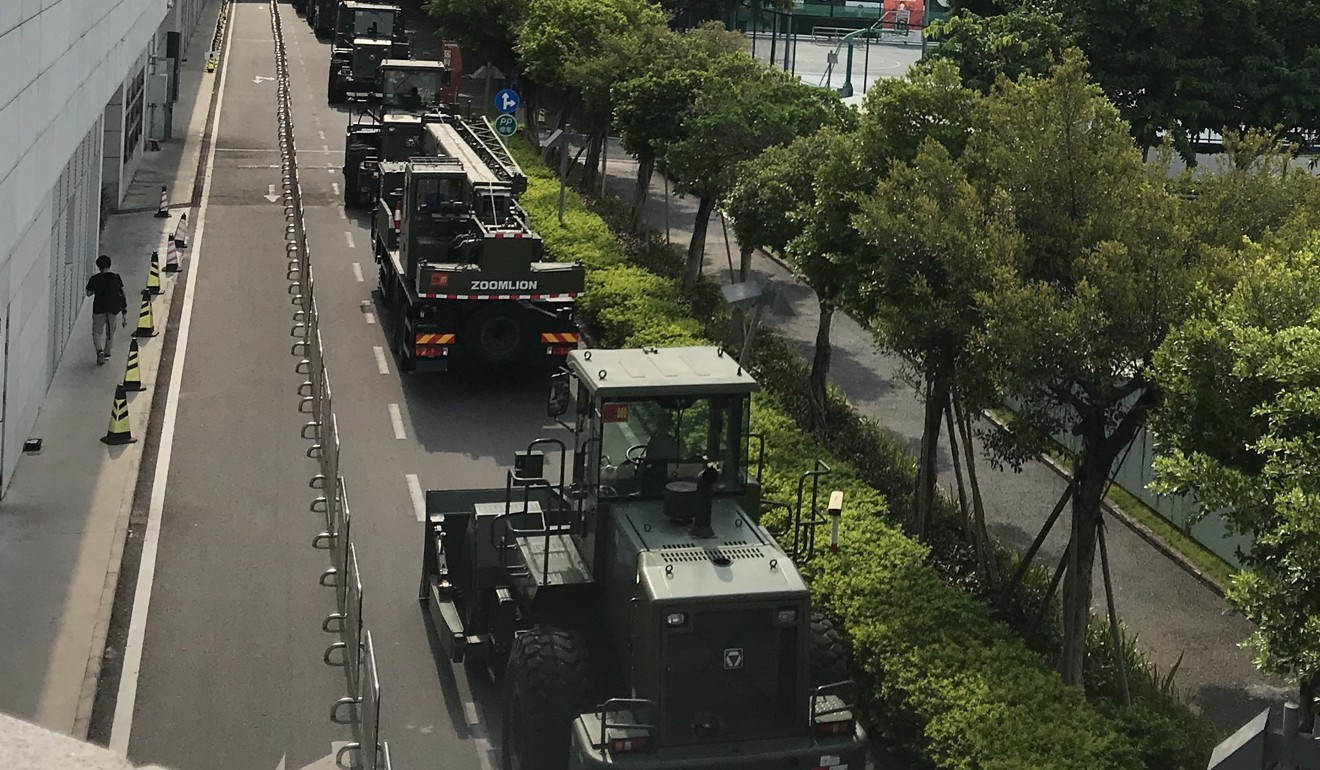
Dozens of trucks line a street next to the entrance of the Shenzhen Bay Sports Centre in Shenzhen on Monday. Photo: SCMP
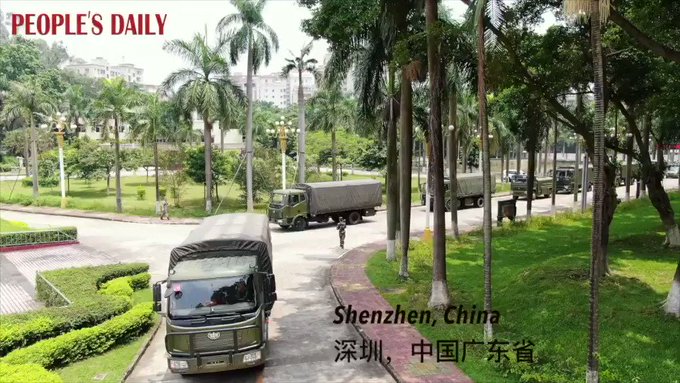
A convoy of armed police trucks has been stationed at a sports centre in a mainland Chinese city bordering Hong Kong, adding to speculation online that Beijing could be preparing to intervene directly in the protests roiling the special administrative region.
But a Beijing-based military expert said the movements were part of regular exercises and not cause for concern.
Footage of the trucks rolling into Shenzhen in the southern province of Guangdong began circulating online on Saturday.
On Monday, Communist Party mouthpiece People’s Daily and Global Times posted videos of the convoy in the city, saying the police were there to prepare for large-scale drills.
People’s Daily, China
✔@PDChina
In video: Chinese armed police armored vehicle fleet is prepared for a drill in Shenzhen, S China’s Guangdong province.
Dozens of the trucks as well as excavators lined a pavement next to the entrance of the Shenzhen Bay Sports Centre in Nanshan district on Monday, across the harbour from Hong Kong.
Personnel in camouflage uniforms stood at the entrances of the sports centre, but did not block access to civilians.
Asked whether they were in Shenzhen for a drill and what time they had arrived, the personnel shook their heads and said nothing.
Also on Monday, the Hong Kong and Macau Affairs Office released a stern statement, calling attacks on police “signs of terrorism”.
Online, internet users speculated that the armed presence was a show of power to Hong Kong.
Excavators are among the heavy equipment stationed near the entrance of the Shenzhen Bay Sports Centre on Monday. Photo: SCMP
“They are just waiting for an order before they’ll drive to Hong Kong to calm the riots. We hope the armed forces can enter Hong Kong and beat the hell out of these idiotic youth,” one commenter said on Weibo, China’s Twitter-like social media platform.
Beijing-based military specialist Zhou Chenming said that the armed police were taking part in regular drills and that people should not feel nervous.
“The central government has repeatedly stated it will only interfere if there are large-scale riots and the Hong Kong government has applied voluntarily for support,” Zhou said.
Hong Kong policeman filmed aiming gun at protesters hailed as a hero by Chinese state media
“If the situation does not reach that point, then this is only a deterrence measure, to deter these [small group of people] from stepping over the line.”
Dixon Sing Ming, a political-science professor at the Hong Kong University of Science and Technology, said the move was a “psychological warfare tactic”.
“The drill is part and parcel of a well-coordinated attempt by Beijing to pressure the protesters and the general public to give up their five demands, including the one for universal suffrage immediately,” Sing said.
Hong Kong has been engulfed in protests since early June, at first to oppose the now-shelved extradition bill that would have allowed Hong Kong to send suspects to other jurisdictions, including mainland China.
Chinese police mass 12,000 anti-riot officers in Shenzhen for drill
But protesters now have five demands, including a complete withdrawal of the extradition bill and an independent investigation into the police’s use of force in handling the protests.
As the confrontations have escalated, public opinion in the mainland has grown steadily tougher, with many calling for more stern measures to restore order.
On August 6, 12,000 police officers gathered in Shenzhen for a drill, which included anti-riot measures similar to those seen on the streets of Hong Kong.
Although the police said the drill was part of security preparations for the 70th anniversary of the People’s Republic on October 1, internet users saw it as a show of power and warning to Hong Kong.
World’s third largest helicopter assault ship could be launched in a few months, military expert says
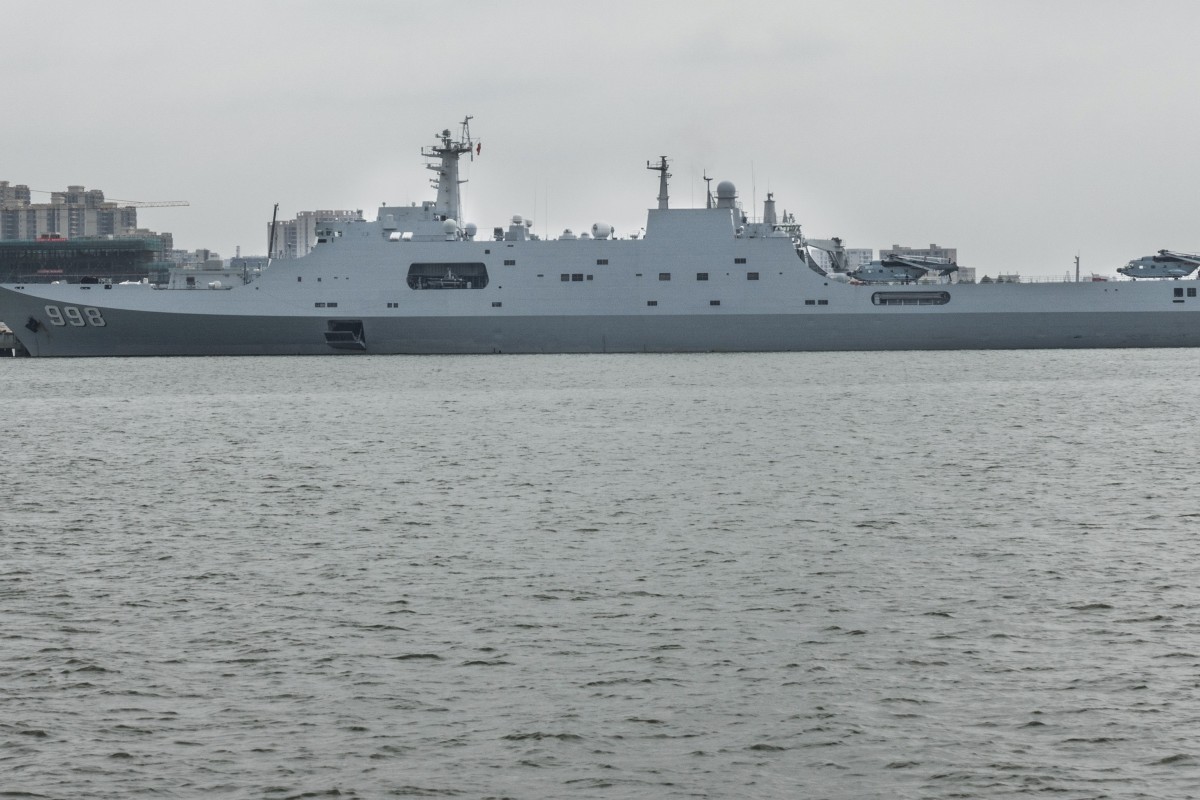
One of China’s previous generation amphibious vessels, the Type 071 Kunlun Shan, launched in 2016. Photo: Chow Chung-yan
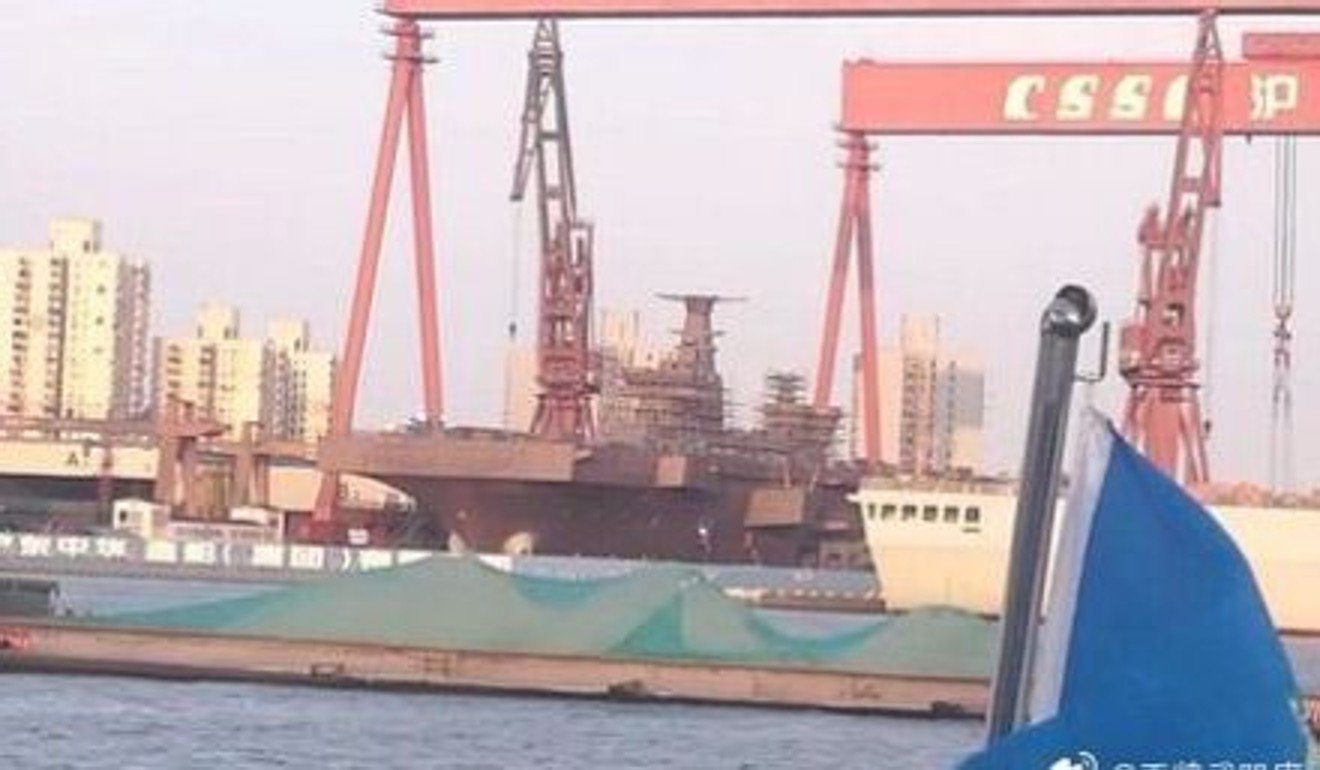
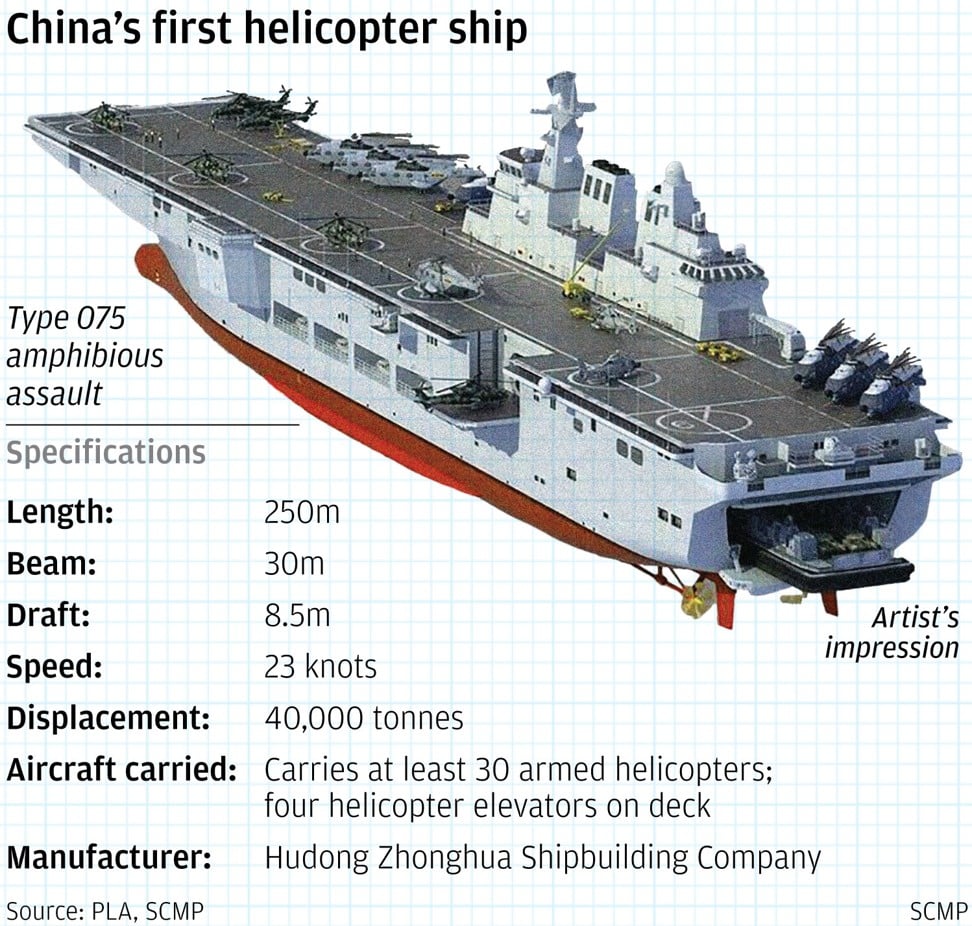
Pictures taken by military enthusiasts earlier this week appear to show that construction of China’s first Type 075 amphibious helicopter assault ship is moving quickly.
The images, taken outside the dry dock at Shanghai’s Hudong-Zhonghua shipyard, were circulated on Chinese social media and showed scaffolding around two separate superstructures above the flight deck, suggesting the estimated 40,000 tonne ship may have two islands.
In June, commercial satellite images showed the vessel had a 32-metre wide beam, with bow and stern sections yet to be added. In the most recent pictures the bow of the vessel is clearly visible.
The status of the construction suggested the ship would probably be launched in the next few months, according to Song Zhongping, a Hong Kong-based military affairs commentator.
An image of China’s first Type 075 amphibious helicopter assault ship suggests the vessel may be completed in the next few months. Photo: Weibo
Share:
Song said large landing helicopter docks (LHDs) like the Type 075 could play an even more important role than aircraft carriers in the future, following last month’s defence white paper released in Beijing which named protecting China’s overseas interests as one of the key missions of its military forces.
“LHDs are a central part of a blue water navy, because an LHD has a full range of weapons with a lot more marine troops for potential ground operations, whereas an aircraft carrier is just a mobile airbase,” he said. “Each time the Americans deploy their forces overseas, LHDs always serve as the vanguard.”
The PLA Navy has ordered several LHDs in recent years, at the same time as Beijing’s claim to the disputed South China Sea has been challenged and the relationship with Taiwan strained
China claims almost all islands and reefs in the South China Sea, many of which are occupied by rival claimants, and reserves the right to use force to reunify Taiwan, which it sees as a breakaway province.
Five Type 071 25,000 tonne amphibious landing dock ships have been launched since 2016, of which three have been commissioned and two are on sea trials.
It is believed China’s first batch of Type 075 craft will consist of three ships. The Type 075 will be the world’s third largest amphibious assault ship, behind only the US Wasp-class (41,000 tonnes) and America-class (45,000 tonnes). It is significantly bigger than Japan’s Izumo-class (26,000 tonnes), and France’s Mistral-class (21,000 tonnes).
The Type 075 will be able to carry up to 30 helicopters, as well as a number of amphibious tanks, armoured vehicles, jet boats, and hundreds of marine troops.
Its massive flat deck could also accommodate vertical take-off and landing fighters such as the F-35B. This capability would enable the ship to operate as a light aircraft carrier, in a similar function to the way the US military uses LHDs. However, China currently does not yet have any vertical take-off jets.
Editions
Global Edition
China Edition
Africa Edition
Europe Edition
Asia & Pacific
عربي
Chinese(GB)
Chinese(Big5)
Français
日本語
русский
Español
한국어
Deutsch
Português
North America
Beijing-Caofeidian bullet trains starts operation
新华网| 2019-08-21 16:25:40|Editor: Xiang Bo
Aerial photo taken on Aug. 21, 2019 shows the D6622 train leaves Caofeidian East Railway Station for Beijing South Railway Station in Tangshan City, north China’s Hebei Province. Bullet trains running between Beijing and Caofeidian, with a stopover in Tangshan, officially started operation on Wednesday. (Xinhua/Yang Shiyao)
Chinese State Councilor and Foreign Minister Wang Yi meets with Japanese Foreign Minister Taro Kono, who is here to attend the upcoming ninth meeting of foreign ministers of China, Japan and the Republic of Korea (ROK), in Beijing, capital of China, Aug. 20, 2019. (Xinhua/Zhang Ling)
BEIJING, Aug. 20 (Xinhua) — Chinese State Councilor and Foreign Minister Wang Yi met here Tuesday with Japanese Foreign Minister Taro Kono, who was here to attend the upcoming ninth meeting of foreign ministers of China, Japan and the Republic of Korea (ROK).
Wang said recently China and Japan saw the improvement of ties and the achievement should be cherished as it did not come easily. He called closer communication between the two sides to create necessary conditions and a good atmosphere for high-level political exchanges in the next stage.
Wang said the two sides should strengthen cooperation in the multilateral arena and jointly oppose all forms of protectionism and unilateralism.
He clarified China’s principles and positions on sensitive issues between China and Japan, stressing that both sides should strengthen risk prevention and control, and handle differences in a constructive manner.
Kono said that Japan is willing to work closely with China to ensure positive results of high-level political exchanges in the next stage.
Wang also clarified China’s opposition to the U.S. attempt to deploy land-based intermediate-range missiles in the region. Kono reiterated that Japan will continue to adhere to the “purely defensive defense” strategy.
The meeting of the three countries’ foreign ministers is scheduled for Wednesday.
Chinese President Xi Jinping, also general secretary of the Communist Party of China Central Committee and chairman of the Central Military Commission, visits the Jiayu Pass, a famed part of the Great Wall in Jiayuguan City, during his inspection tour of northwest China’s Gansu Province, Aug. 20, 2019. Xi also listened to an introduction to the historical and cultural background of the Great Wall and the passes in the Hexi Corridor, part of the ancient Silk Road in northwest China. (Xinhua/Ju Peng)
BEIJING (Reuters) – Limiting marriage to a relationship between a man and a woman will remain China’s legal position, a parliament spokesman said on Wednesday, ruling out following neighbouring Taiwan in allowing same-sex marriage, despite pressure from activists.
Taiwan’s parliament passed a bill in May that endorsed same-sex marriage, after years of heated debate over marriage equality that has divided the self-ruled and democratic island.
China, which claims Taiwan as its territory, has a thriving gay scene in major cities, but there has been little sign the ruling Communist Party will legalise same-sex marriage.
Asked at a news briefing whether China would legalise same-sex marriage, Zang Tiewei, spokesman for parliament’s legal affairs commission, said Chinese law only allowed for marriage between one man and one woman.
“This rule suits our country’s national condition and historical and cultural traditions,” he said. “As far as I know, the vast majority of countries in the world do not recognise the legalisation of same-sex marriage.”
Individual Chinese legislators have occasionally in the past few years proposed measures during the annual meeting of the largely rubber-stamp parliament every March to legalise same-sex marriage, without success.
There are no laws against same-sex relations in China and despite growing awareness of LGBT issues, the community has been the target of censors in recent months, fuelling fears of a growing intolerance.
Activists have asked people in China to propose amendments to a draft civil code en masse, though they have admitted they see little chance of success. The parts of the code relating to marriage are expected to pass into law next year.
The code makes changes on issues such as sexual harassment, divorce and family planning, but does not further the rights of the LGBT community, drafts published by parliament show.
Zang said the marriage section of the draft civil code maintains the bond as being between a man and a woman.
Prominent gay rights activist Sun Wenlin told Reuters he was disappointed in the comments, but not surprised.
“I feel that my partner and I are sacrificing our happiness for the country’s legal system,” said Sun, who three years ago had his application to legally marry his partner rejected by a Chinese court.
“They are undermining our life plan of choosing to marry the person we love
He added, “I feel I am being excluded, and am absolutely not a consideration for policymakers.”
Another activist, who asked not to be named, told Reuters there were cases in China of same-sex partners who had lost their homes after one of them died, as they lacked the legal protection of marriage.
“We hope these tragedies don’t keen happening,” the activist said.
HONG KONG, Aug. 20 (Xinhua) — The Hong Kong Special Administrative Region (HKSAR) government will start work immediately on building a platform for dialogue among all walks of life, the HKSAR Chief Executive Carrie Lam said Tuesday.
While meeting the press, Lam said she hopes all sides can show understanding and respect toward each other, and conduct dialogues in an open and direct manner with people of all classes with different political stances and backgrounds in a bid to find a way out for Hong Kong.
Lam said she and the heads of the government bureaus are willing to go directly to communities and talk with people.
On the economic situation in Hong Kong, Lam said the economic figures for the first half of the year did not fully reflect the severity of the downside risks.
A raft of measures with total government spending of 19.1 billion Hong Kong dollars (2.43 billion U.S. dollars) have been rolled out to support growth and relieve the burden on businesses and individuals.
If necessary, the HKSAR government will adopt more such measures to support the economy before the release of the policy address or the government budget, Lam said.
Lam pledged that the HKSAR government will keep monitoring the economic situation, make necessary preparations and propose effective measures.
The HKSAR government will act more boldly to deal with deep-seated problems and both high-level and grassroots officials will give priority to the need of residents when proposing specific measures, Lam said.
During the past two years, the HKSAR government has taken effective measures in its policy address in areas such as housing, land and education to advance the economy and improve people’s livelihood, Lam said.
Lam also responded positively to the new policy support for Shenzhen by the central government.
China will build the southern city into a pilot demonstration area of socialism with Chinese characteristics, according to a document issued recently by the Communist Party of China Central Committee and the State Council.
The city’s development toward a pilot demonstration area will also be a boon to the complementary cooperation between Shenzhen and Hong Kong, Lam said.
Of all cities in the Guangdong-Hong Kong-Macao Greater Bay Area, the relationship between Hong Kong and Shenzhen is the closest, she said.
“The two are very good partners,” Lam said, adding that the two have built a high-level cooperative mechanism and are jointly developing a technological and innovation park.
Lam also said the Independent Police Complaints Council is working on an independent investigation into the causes and facts of the recent confrontations and violence, adding that a report will be submitted to her in six months and will also be available to the public.
“I hope that this is a very responsible response to the aspirations (of public) for better understanding of what has been taking place in Hong Kong,” she added.
Chinese President Xi Jinping, also general secretary of the Communist Party of China (CPC) Central Committee and chairman of the Central Military Commission, visits the Mogao Grottoes in Dunhuang, a key cultural heritage site under state-level protection, during his inspection tour of northwest China’s Gansu Province, Aug. 19, 2019. Xi inspected the work of cultural relics protection and study, as well as efforts to promote China’s great history and fine culture. (Xinhua/Xie Huanchi)
LANZHOU, Aug. 19 (Xinhua) — Xi Jinping, general secretary of the Communist Party of China Central Committee, on Monday visited the Mogao Grottoes in Dunhuang, a key cultural heritage site under state-level protection, during his inspection tour of northwest China’s Gansu Province.
Xi inspected the work of cultural relics protection and study, as well as efforts to promote China’s great history and fine culture.
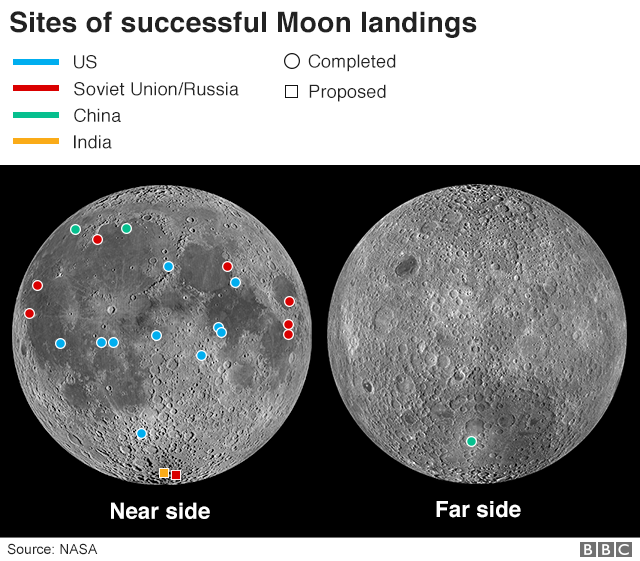
India hopes the $145m (£116m) mission will be the first to land on the Moon’s south pole.
Last month’s launch was the beginning of a 384,000km (239,000-mile) journey. Scientists hope the lander will touch down on the Moon on 6 or 7 September as planned.
India’s first lunar mission, Chandrayaan-1, was launched in 2008 but it did not land on the lunar surface. However it carried out the first and most detailed search for water on the Moon using radars.
Chandrayaan-2 (Moon vehicle 2) will try to land near the little-explored south pole of the Moon.
The mission will focus on the lunar surface, searching for water and minerals and measuring moonquakes, among other things.
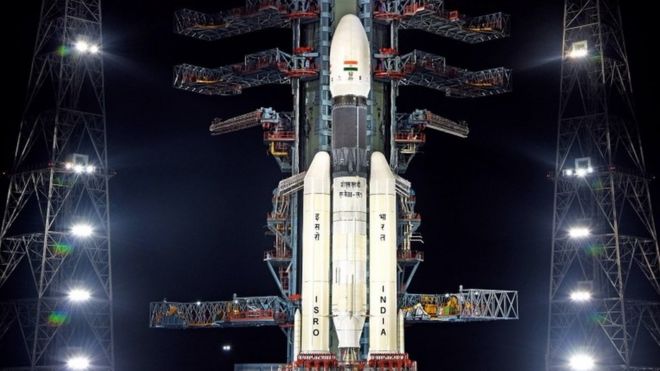
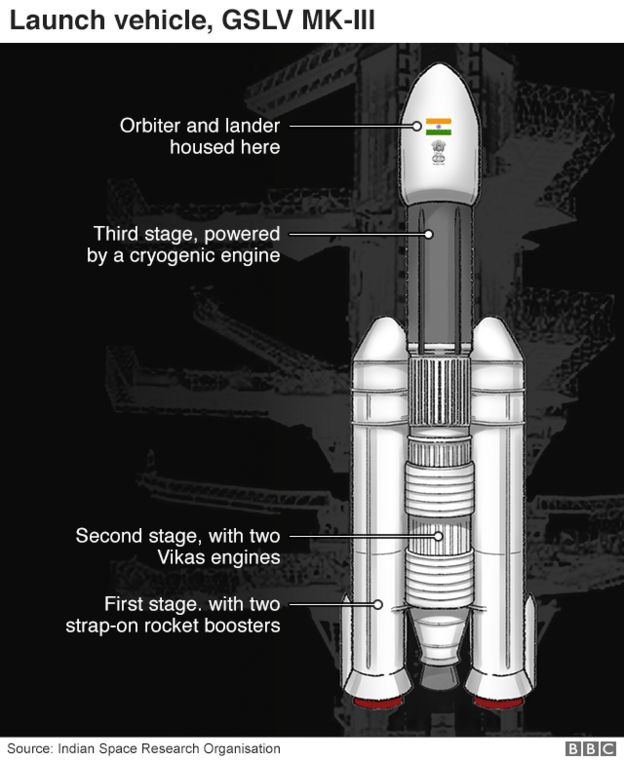
India used its most powerful rocket, the Geosynchronous Satellite Launch Vehicle Mark III (GSLV Mk-III), in this mission. It weighed 640 tonnes (almost 1.5 times the weight of a fully-loaded 747 jumbo jet) and, at 44 metres (144ft), was as high as a 14-storey building.
The spacecraft used in the mission has three distinct parts: an orbiter, a lander and a rover.
The orbiter, which weighs 2,379kg (5,244lb) and has a mission life of a year, will take images of the lunar surface.
The lander (named Vikram, after the founder of Isro) weighs about half as much, and carries within its belly a 27kg Moon rover with instruments to analyse the lunar soil. In its 14-day life, the rover (called Pragyan – wisdom in Sanskrit) can travel up to a half a kilometre from the lander and will send data and images back to Earth for analysis.
Media caption Is India a space superpower?
How long is the journey to the Moon?
The journey of more than six weeks is a lot longer than the four days the Apollo 11 mission 50 years ago took to land humans on the lunar surface for the first time.
In order to save fuel, India’s space agency has chose a circuitous route to take advantage of the Earth’s gravity, which will help slingshot the satellite towards the Moon. India does not have a rocket powerful enough to hurl Chandrayaan-2 on a direct path. In comparison, the Saturn V rocket used by the Apollo programme remains the largest and most powerful rocket ever built.
“There will be 15 terrifying minutes for scientists once the lander is released and is hurled towards the south pole of the Moon,” Isro chief K Sivan said prior to the first launch attempt.
He explained that those who had been controlling the spacecraft until then would have no role to play in those crucial moments. So, the actual landing would happen only if all the systems performed as they should. Otherwise, the lander could crash into the lunar surface.







 CHINDIA ALERT: You'll be living in their world, very soon