Chindia Alert: You’ll be Living in their World Very Soon
aims to alert you to the threats and opportunities that China and India present. China and India require serious attention; case of ‘hidden dragon and crouching tiger’.
Without this attention, governments, businesses and, indeed, individuals may find themselves at a great disadvantage sooner rather than later.
The POSTs (front webpages) are mainly 'cuttings' from reliable sources, updated continuously.
The PAGEs (see Tabs, above) attempt to make the information more meaningful by putting some structure to the information we have researched and assembled since 2006.
CAIRO, July 28 (Xinhua) — The Chinese Embassy in Cairo hosted a ceremony on Sunday evening to celebrate the 92nd anniversary of the founding of the Chinese People’s Liberation Army (PLA), which falls on Aug. 1.
“The Chinese People’s Liberation Army (PLA) is always an army that serves the people wholeheartedly,” said Chinese Ambassador to Egypt Liao Liqiang in the opening speech, noting the PLA has made great historic contributions to China’s national liberation and prosperity for the past 92 years under the leadership of the Communist Party of China.
As challenges are on the rise around the world, the PLA is always determined to preserve global peace. So far, China has participated in 24 UN peacekeeping missions and has sent more than 40,000 peacekeepers, Liao added.
In terms of the cooperation between Chinese and Egyptian militaries, Liao stressed that the two armies have made great achievements by strengthening high-level exchanges and cooperation in personnel training, equipment technology and other areas.
During the ceremony, guests lauded China’s contributions to regional and global peace and development, looking forward to strengthening military cooperation between China and Egypt.
’s affordable labour market and strong economic growth provide a healthy breeding ground for young tech outfits.
Can Bollywood be the bridge that binds India and China?
Led by heavyweights such as Shunwei Capital, Fosun International, Tencent Holdings, Xiaomi and Alibaba Group Holding – which owns the South China Morning Post –
, the knowledge and technology of Chinese investors act as the backbone of their business, along with the operational expertise of Indians in the domestic market,” said Ntasha B, co-founder of Venture Gurukool, a mentoring platform for start-ups which works closely with Indian diplomatic missions in China.
Chinese President Xi Jinping and Indian Prime Minister Narendra Modi are set to meet again in October. Photo: Xinhua
She added that Chinese investors usually had a hands-on approach and were a bit inflexible, unlike their American counterparts, who gave some elbow room in hiring local teams.
A senior executive with an Indian start-up, who did not wish to be identified, said it was sometimes straightforward to convince Chinese investors as they could relate to Indian business models and requirements that were dissimilar to those from the Western world.
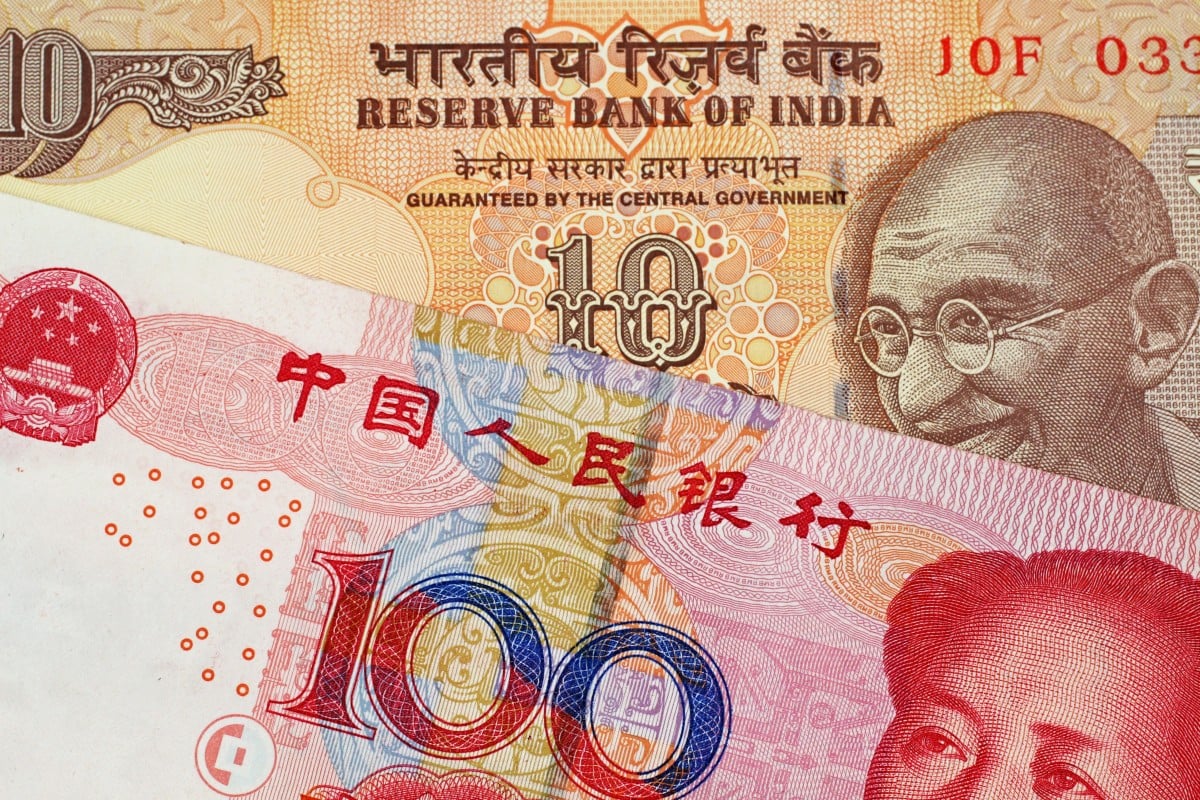
The world’s second-largest economy invested nearly US$2.5 billion in Indian start-ups last year, a figure that has touched almost US$1 billion so far this year, according to finance research firm Venture Intelligence. The number of such deals jumped from just one in 2013 to 27 last year.
What does Amazon’s China departure mean for its Indian e-commerce battle?
Indian start-ups are estimated to have raised US$3.9 billion from around the globe in the first six months of this year, and the inflow from Chinese behemoths played a key role in pushing them to turn east to source funding.
“What’s more interesting about [Chinese investors’] strategy is that they’re paying more attention to rural India. If you look at the companies they’ve invested in, a fair amount of their businesses target the rural segment,” said Sandeep Murthy, managing partner at venture capital firm Lightbox Ventures, which keeps a close watch on Chinese investments. He said the brisk economic activities in India’s tier two and tier three towns are more attractive to Chinese investors than India’s urban centres.
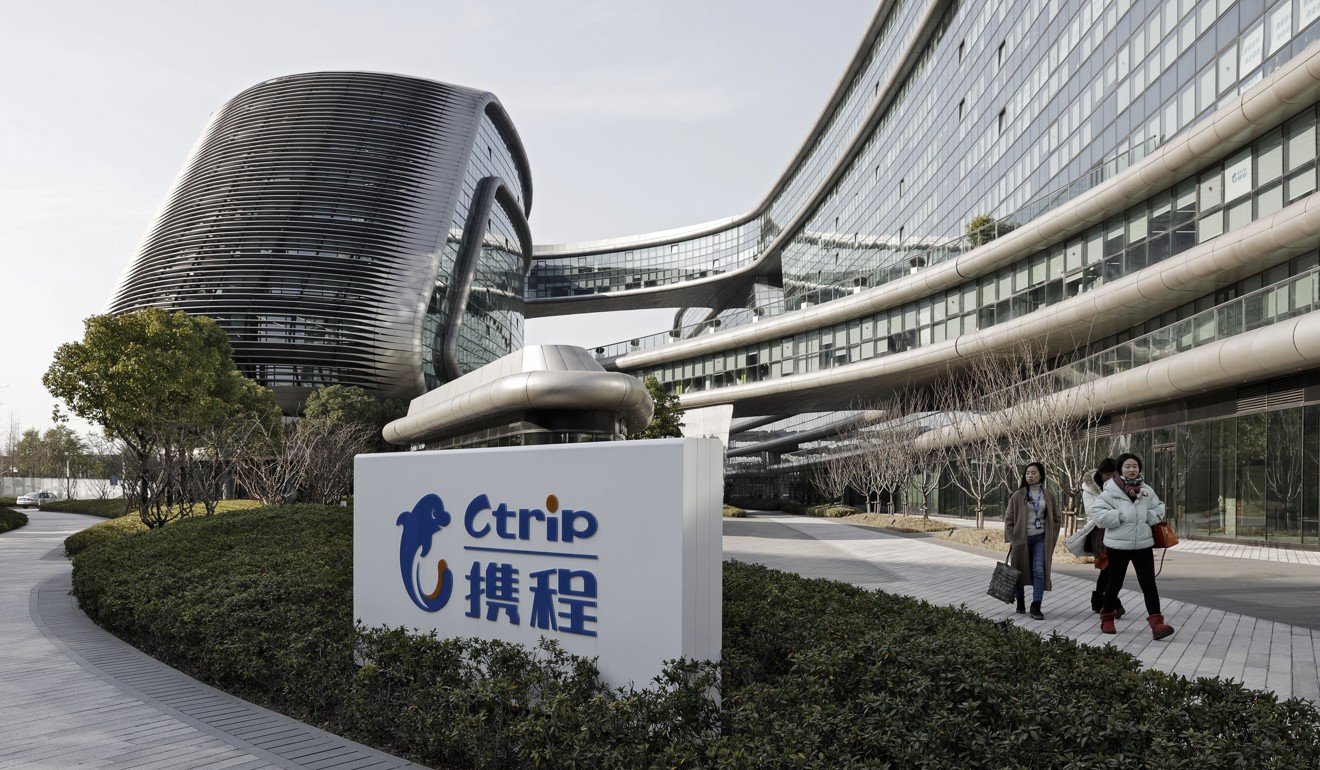
Ctrip, China’s largest online travel agency, is drawn to the size and rapid advancement of the Indian market. Photo: Bloomberg
WHY INDIA?
For Ctrip – China’s largest online travel agency, which in April took a 49 per cent stake in MakeMyTrip – the appeal of India was its whirlwind technological advancement and the disposable income of its massive young population.
“[MakeMyTrip has] achieved fast growth in the online travel market and is becoming well recognised in the Indian market. Their comprehensive products and services, management team and the opportunities in India result in our confidence that they will continue to succeed,” said Wei Yuan Min, a member of Ctrip’s global team. Behind the US and China, India houses the world’s third-largest start-up ecosystem in terms of the number of companies. As for the number of unicorns – start-ups valued at over US$1 billion – India ranks third, offering a vibrant habitat for entrepreneurial ventures. The country is home to 32 such firms, with the addition of nearly half a dozen so far this year and 15 last year.
In India, one man took on Chinese firm ByteDance to shut down TikTok – and he wants to do it again
New Delhi expects there to be 12,000 tech start-ups in the country by next year, up from 7,200 last year. There were 1,200 new tech firms in the sector last year, according to industry body Nasscom.
One of those capitalising on this opportunity is the Beijing-headquartered technology company Xiaomi, which last year promised to pump US$1 billion into 100 Indian start-ups over the next five years. Most of these Indian firms are involved in businesses that are ancillary to Xiaomi’s key operations.
Chinese firm Xiaomi is banking on Indian start-ups to strengthen its own products. Photo: Reuters
“These start-ups help us in building a stronger product offering,” a Xiaomi spokesperson said. “The idea is to invest in start-ups which can further boost the mobile ecosystem in India. They could be into mobile gaming, service providers, value-added services or servicing the mobile industry.”
Xiaomi has been rapidly expanding its businesses in India, selling smartphones, television sets, security cameras, speakers, power banks, and more. India was the first market outside China where Xiaomi introduced its television sets.
Asked which sector would be Xiaomi’s focus for investment in the coming years, the spokesperson said the company was looking to focus on hardware-related start-ups in the ecosystem which could offer “robust solutions” to its Indian requirements.
Amazon, Uber and Google struggled in China, but Indian hotel chain Oyo is succeeding.
Here’s why
While hopes for India’s start-up sector are high, there have been some disappointments. There were reports this month that Alibaba, a major shareholder in Paytm, was unhappy with the Indian firm’s performance, pressuring it to realign its strategies and looking unlikely to provide fresh capital.
Paytm, a digital-payment-system unicorn, launched its own e-commerce Paytm Mall in 2016 when Walmart-backed Flipkart and Amazon were dominating the market.
However, the venture has yet to take off and is burning through cash.
Paytm refused to comment on the matter.
Paytm has attracted investment from Alibaba, but its Paytm Mall venture is struggling. Photo: Bloomberg
NEW REVENUE STREAMS
Chinese firms’ coordinated effort to enter the Indian start-up scene has made it easy for Indian ventures to access new sources of revenue. For instance, the state-run Industrial and Commercial Bank of China (ICBC), the country’s largest lender, launched an India-specific investment fund for Chinese investors in May last year.
Several Chinese venture capitalists are also providing platforms for entrepreneurs through fellowship schemes. Four Indian ventures – Zefo, Healthy Buddha, NowFloats and Grozip – took part in one such fellowship initiative run by Alibaba last year.
Gold, jewels, ‘Islamic’ finance: how India’s I Monetary Advisory built a US$365 million Ponzi scheme
India has warmly welcomed these initiatives. Amitabh Kant, chief executive of state-backed policy think tank Niti Aayog and a close aide of Modi, has publicly said China should become the topmost investor in its neighbour.
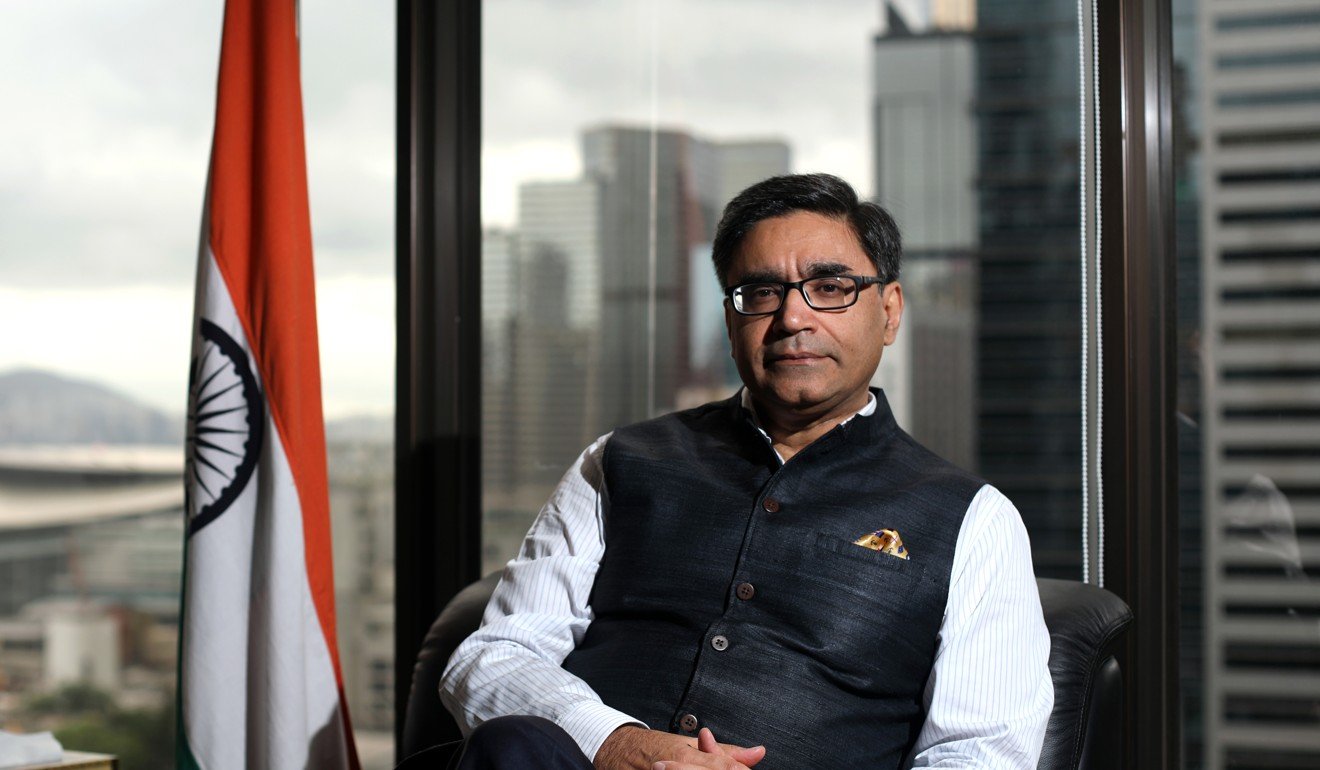
Vikram Misri, India’s ambassador to China, has also been pushing for increased economic cooperation and Chinese investment since he took charge in January, despite expressing concerns over New Delhi’s widening trade deficit with Beijing.
Vikram Misri, India’s ambassador to China, is looking for more economic cooperation between the two countries. Photo: Xiaomei Chen
The increased Chinese investment in Indian ventures has coincided with the Modi administration’s 2015 launch of the Startup India initiative, an umbrella scheme aimed at easing related activities through measures such as tax exemptions and simplified paperwork.
Industry pundits say active cooperation between Chinese investors and Indian entrepreneurs holds a multitude of benefits for both sides.
“The cooperation gives Chinese investors global scale and opportunity to diversify their investments,” said Neil Shah, partner and research director at the technology market research firm Counterpoint.
The cooperation gives Chinese investors global scale and opportunity to diversify their investmentsNeil Shah, Counterpoint
“For Indian start-ups, this gives cross-border learning, guidance from their global investors on dos and don’ts, tactical and long-term strategy, how to create value, run operations efficiently as well as expand beyond India.”
Nilaya Varma, partner and leader of markets enablement at KPMG India, said there was a cultural shift happening in the country where young Indians brimming with ideas wanted to pursue their dreams rather than work for someone else. This brought out the entrepreneurial spirit of this generation, he said.
“The knowledge, concepts, ideas and innovations of the small start-ups in India will have a global appeal. So it makes a lot of sense for Chinese big players to invest here,” he said.
Chinese scientists say they have developed controls to help steer spent boosters crashing back to Earth
Lattice-like grid fins are used to guide spent boosters as they fall to Earth. Photo: Science and Technology Daily
China says it has successfully tested new fins on its Long March rockets to help guide spent boosters away from populated areas, possibly paving the way for development of reusable technology like SpaceX’s Falcon 9.
China successfully launched a Long March 2C rocket on Friday using grid-fin technology to guide its spent booster to a landing spot in Guizhou province in the country’s southwest, state-run Science and Technology Daily reported on Sunday, citing China Aerospace Science and Technology Corporation (CASC), a key contractor for the Chinese space programme.
The report said China was the second country to master the technology, after the United States.
Grid fins are aerodynamic control surfaces that are folded during the launch but deployed in flight. In the more sophisticated applications such as the Falcon 9, the fins manipulate the direction of the rocket during re-entry.
A Long March-2C carrier rocket carrying remote sensing satellites blasts off from the Xichang Satellite Launch Centre in Xichang, Sichuan province, on Friday. Photo: Xinhua
Shanghai-based online news outlet The Paper reported that the 2C’s grid fins were developed by a team of about a dozen engineers, all under the age of 35.
The team also designed a new companion electrical control system to control the fins, taking about six months to complete the task.
China has conducted frequent satellite launches in recent years, including 38 last year, the highest total for any country in 2018. But landing safety has become an issue as traditional zones grow more populated.
Chinese start-up rocket maker counts down to launching “shoebox” satellites
Chinese media reported in January 2018 that a booster from a Long March 3B rocket created a massive fireball after it fell from the sky and exploded in a residential area, though no casualties were reported.
And Shaanxi Television reported in May this year that debris was found on a motorway in northwestern China’s Shaanxi province, with residents saying they heard a loud noise and saw an object fall to the ground.
Under existing arrangements, authorities in projected landing zones have to evacuate the areas each time, not only inconveniencing residents but adding to the economic cost and difficulty of the work, according to the The Paper. The grid fins are expected to help ease some of those problems.
“The successful test of the [grid-fin] technology is of great significance to solving the landing issue,” the report quoted CASC assistant director He Wei as saying.
“It also lays a solid foundation for recoverable and reusable technologies.”
China plans more satellites to build up navigation system to rival GPS
Long Lehao, chief commander and designer of Long March 3A rocket series, said the development of reusable technologies could support large-scale development and use of space in the future, as well as make the space programmes more commercially competitive, The Beijing News reported.
Beijing sees space as an important driver for growth and an opportunity to promote hi-tech industries.
Image copyright AFPImage caption India is now estimated to be home to 70% of the world’s tigers
India is now home to nearly 3,000 tigers, a third more than it had four years ago, according to the latest tiger census.
Prime Minister Narendra Modi, who presented the findings on Monday, said the tiger population had risen from 2,226 in 2014 to 2,967 in 2018.
He added that India is “now one of the biggest and most secure habitats of the tiger”.
India is now estimated to be home to around 70% of the world’s tigers.
India counts its tigers once every four years – it’s a long, arduous task that involves forest officials and scientists trekking across half a million square kilometres (193,000 sq miles) looking for evidence of the tiger population.
The results of the just declared tiger census would make every Indian, every nature lover happy.
Nine long years ago, it was decided in St. Petersburg that the target of doubling the tiger population would be 2022. We in India completed this target four years early: PM
This is a major conservation success, correspondents say. By one estimate, between 1875 and 1925 alone, some 80,000 tigers were killed in India. Bounty and sports hunting were rampant – kings and officials killed tigers in their thousands, using guns, spears, nets, traps and poison. By the 1960s the number of tigers had dwindled precipitously.
But a number of government initiatives to streamline tiger conservation – including a ban on hunting and awareness drives in villages -are said to be behind the increase of the population.
A strict wildlife protection law implemented in 1972 made it virtually illegal to kill or capture wild animals even when “problem animals” were involved in severe conflict situations. Under pressure from global conservationists, India also upped investments to hire more forest guards and improve protection of reserves.
Image copyright GETTY IMAGESImage caption India has seen an uptick in tiger numbers since 2006
The results began to show in 2006, and since then there has been a healthy uptick in tiger numbers.
But there has also been an increase in human-tiger conflict recently and one reason is that India has too many tigers and too few forests that can sustain them unless more protected reserves are added.
According to one estimate, big cats breed and live in only about 10% of India’s total potential tiger habitat of 300,000 sq km (115,830 sq miles). Animal density in many of these forest areas is high, and surplus tigers sometimes venture outside for food, bringing them into conflict with people who live nearby.
Conservationists say conflict with humans is largely restricted to the edges of protected areas, forests and plantations – and that unless India expands tiger reserves, such conflicts will increase.
Media caption Tigers ‘on brink of extinction’ brought to wildlife park
Source: The BBC
BHUBANESWAR (Reuters) – Members of Indian Prime Minister Narendra Modi’s Bharatiya Janata Party (BJP) have mounted protests that have paralysed production at one of India’s biggest coalfields following a deadly accident last week.
The BJP workers have been staging sit-down protests and waving flags at state-run Coal India Ltd’s mines in the eastern state of Odisha, demanding a safety audit of all mines in the region.
Rescue officials said they have recovered the bodies of three workers who were trapped inside the mine in Odisha’s Angul district after a landslide on Tuesday, and are trying to recover another body from inside the mine.
Kalandi Samal, a local BJP leader who is leading the protests, said the demonstrations will continue until authorities ensure safety measures to prevent such tragedies and ensure adequate compensation to the victims.
“We demand specific guidelines on safety audits of mines,” Samal said.
Production at Odisha state’s Talcher coalfields, which account for at least an eighth of Coal India’s annual production, has not resumed after the accident, said Dikken Mehra, a spokesman for Mahanadi Coalfields Ltd, a unit of Coal India.
State-run Coal India has a near monopoly on the coal industry in India, producing more than four-fifths of the country’s coal output.
“The forced stoppage of all the mines at Talcher has resulted in a cumulative loss of 842,000 tonnes of coal production,” Mehra told Reuters, adding that the company has suffered a loss of about 856.8 million rupees (£10 million).
Srinivas Khuntia, a senior leader at BJP-affiliated trade union Bharatiya Mazdoor Sangh, called the protests “unjustified, especially when its own government is in power”.
“There is no justification why you would stop all the mining operations,” Khuntia told Reuters.
Though deaths at coal mines in India have come down over time, it remains one of the most dangerous countries to be a coal miner, with one worker dying every seven days on average in state-run mines in 2018.
In addition, thousands of workers, including children, have been killed in illegal rat-hole mines that are notorious for their poor safety record, with many accidents going unreported.
“We are in talks with all the stakeholders to resolve the issues as soon as possible,” Mehra said, without divulging details on the timeframe for resumption of production.
Coal India is trying to divert supplies from elsewhere to ensure coal availability at utilities and companies that normally rely on the Odisha coalfields.
Those entities include state-owned NTPC Ltd, India’s biggest electricity generator, as well as the state-owned National Aluminium Company Ltd (NALCO).
“Production will be affected if the mines remain shut for more days,” said Tapan Kumar Chand, chairman of NALCO.
YINCHUAN, July 27 (Xinhua) — Hu Chunhua, a member of the Political Bureau of the Communist Party of China Central Committee, has urged more efforts to address weak links in the country’s poverty alleviation campaign, including drinking water safety in the impoverished areas.
Hu, also chief of the State Council’s leading group of poverty alleviation and development, made the remarks during an inspection tour from Friday to Saturday in the city of Guyuan in northwest China’s Ningxia Hui Autonomous Region.
After visits to some impoverished villages, Hu said efforts should be made to ensure compulsory education, basic medical care, and housing for the rural poor, while drinking water safety should be guaranteed.
The country’s central authorities should speed up the implementation of poverty relief policies, while local governments should increase fund use efficiency, he said.
Chinese State Councilor and Foreign Minister Wang Yi (2nd L) poses for a group photo with Brazilian Foreign Minister Ernesto Araujo (3rd L), Russian Foreign Minister Sergey Lavrov (1st L), South African Foreign Minister Naledi Pandor (2nd R) and India’s Minister of State for External Affairs Vijay Kumar Singh in Rio de Janeiro, Brazil, July 26, 2019. Wang Yi attended the Formal Meeting of the BRICS Ministers of Foreign Affairs in Rio de Janeiro. (Xinhua/Xin Yuewei)
RIO DE JANEIRO, July 27 (Xinhua) — The rise of emerging markets and developing countries, represented by the BRICS countries, has bolstered a more multi-polar world, Chinese State Councilor and Foreign Minister Wang Yi said here on Friday.
At the Formal Meeting of the BRICS Ministers of Foreign Affairs, Wang also said BRICS cooperation is not a band-aid solution for the five countries but a strategic choice that focuses on common and long-term development and harbors bright prospects.
The five countries are Brazil, Russia, India, China and South Africa.
Wang said no matter how the international landscape changes, the direction of the BRICS cooperation must not change. Faced with new challenges, the five countries should let their voices be heard, offer more solutions to pressing global issues and play a greater role in world affairs.
Wang pointed out that unilateralism undermines international rules and challenges the international rule of law, which exacerbates the instability and uncertainty of the world.
The BRICS countries must take the lead in maintaining multilateralism and safeguarding the global governance system with the UN as its core and under international law.
Furthermore, the bloc should safeguard the multilateral trading system represented by the WTO and protect the common interests and development space of emerging market and developing countries, he said.
The five countries together must continue to integrate the interests of other emerging market countries and developing countries through flexible and diverse platforms such as “BRICS Plus.”
At the meeting, the five foreign ministers all agreed to safeguard the purposes and principles of the UN Charter, defend multilateralism and free trade, oppose unilateralism and protectionism, strengthen global governance, and build a community with a shared future for humankind.
They agreed that regional hotspot issues should be resolved through dialogue and consultation and that BRICS cooperation should work to benefit the peoples of the five countries.
The foreign ministers also agreed to maintain vigilance on cybersecurity issues and expressed opposition to the use of cybersecurity to suppress the development of science and technology in other countries. They agreed to strive toward an open and non-discriminatory environment for the application of information technology.
The foreign ministers were tasked with preparing for the BRICS summit to be held in Brasilia in November.
Photo taken on July 27, 2019 shows the venue of the 7th Kubuqi International Desert Forum in Ordos, north China’s Inner Mongolia Autonomous Region. The 7th Kubuqi International Desert Forum with the theme of “Greening the Belt and Road, Building the Ecological Civilization” opened here on Saturday. (Xinhua/Li Zhipeng)
Hanoi says it has sent several messages to Beijing that a Chinese survey ship vacate the waters located in its exclusive economic zone
‘Vietnam resolutely and persistently protects our sovereign rights … by peaceful means on the basis of international laws,’ a foreign ministry spokesperson said
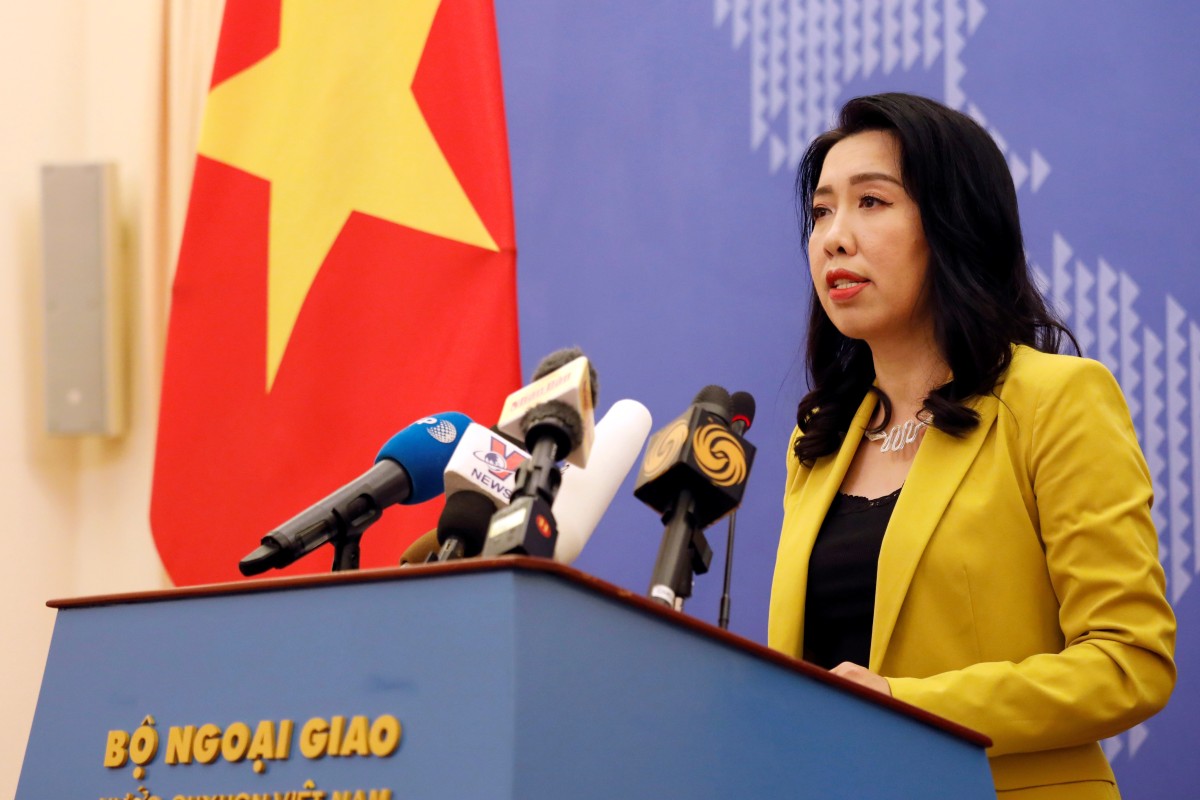
Vietnamese foreign ministry spokeswoman Le Thi Thu Hang. Photo: Reuters
Vietnam on Thursday called for the “immediate withdrawal” of a Chinese ship in the
, as the stand-off over the disputed waters intensified.
Beijing last week issued a new call for Hanoi to respect its claims to the resource-rich region – which has historically been contested by Vietnam, as well as Taiwan, the Philippines, Malaysia and Brunei.
Hanoi responded by saying it had sent several messages to Beijing insisting that a Chinese survey ship vacate its waters, and doubled down on Thursday with new demands for the vessel’s removal.
“Vietnam has had several appropriate diplomatic exchanges … requesting immediate withdrawal from Vietnam’s exclusive economic zone,” a foreign ministry spokesperson told reporters, while refusing to disclose the ship’s precise location.
“Vietnam resolutely and persistently protects our sovereign rights … by peaceful means on the basis of international laws,” Le Thi Thu Hang added.
The ship, owned by the government-run China Geological Survey, begun research around the contested Spratly Islands on July 3, according to the US-based Center for Strategic and International Studies (CSIS).
Before it was spotted, a Chinese coastguard vessel also patrolled near Vietnamese supply ships in a “threatening manner”, CSIS said.
China has not confirmed the presence of its ships in the area.
China’s neighbours boost coastguards as tensions rise in South China Sea
Beijing invokes its so-called nine-dash line to justify its claim to historic rights to the waterway, and has previously built up artificial islands as well as installed airstrips and military equipment in the region.
The line runs as far as 2,000km (1,240 miles) from the Chinese mainland to within a few hundred kilometres of the Philippines, Malaysia and Vietnam.
In 2014 Beijing moved an oil rig into waters claimed by Hanoi, sparking deadly anti-China protests across Vietnam.
The latest stand-off in the sea prompted a swift rebuke from the United States over the weekend, calling for an end to China’s “bullying behaviour”.
US accuses China of acting like a bully in the South China Sea
“China’s repeated provocative actions aimed at the offshore oil and gas development of other claimant states threaten regional energy security,” the US State Department said Saturday.
Chinese Foreign Minister Wang Yi wraps up tour of Brazil and Chile, as Colombian president heads for Beijing
Ecuador president tells US Secretary of State Mike Pompeo ‘smaller countries pay when the big ones fight’
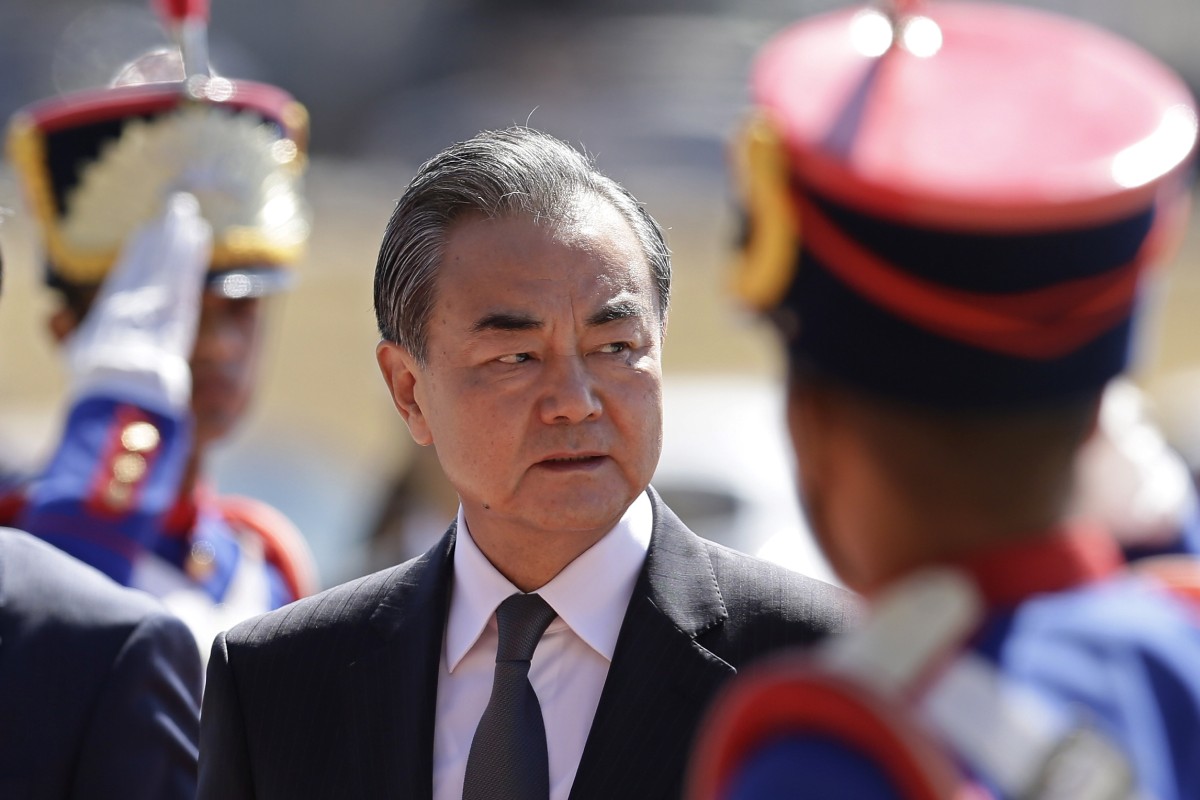
Chinese Foreign Minister Wang Yi is greeted by an honour guard as he arrives at the Itamaraty Palace for a meeting with his Brazilian counterpart Ernesto Araujo on Thursday. Photo: AP
Latin American countries are caught in the middle of a geopolitical tug of war between Beijing and Washington as China boosts its ties in the region in a bid to counterbalance the effects of its trade war with the US.
China’s Foreign Minister Wang Yi wraps up a tour of Latin America on Sunday which began last week in Brazil and ended with an official visit to Chile. He returns to Beijing on the same day Colombia’s President Ivan Duque Marquez arrives for a three-day state visit to China which will include a meeting with Chinese President Xi Jinping.
Wang was in Brazil for the latest summit of foreign ministers from the BRICS countries – an association of emerging countries made up of Brazil, Russia, India, China and South Africa – as well as the third China-Brazil foreign ministers’ comprehensive strategic dialogue with Brazilian Foreign Minister Ernesto Araujo.
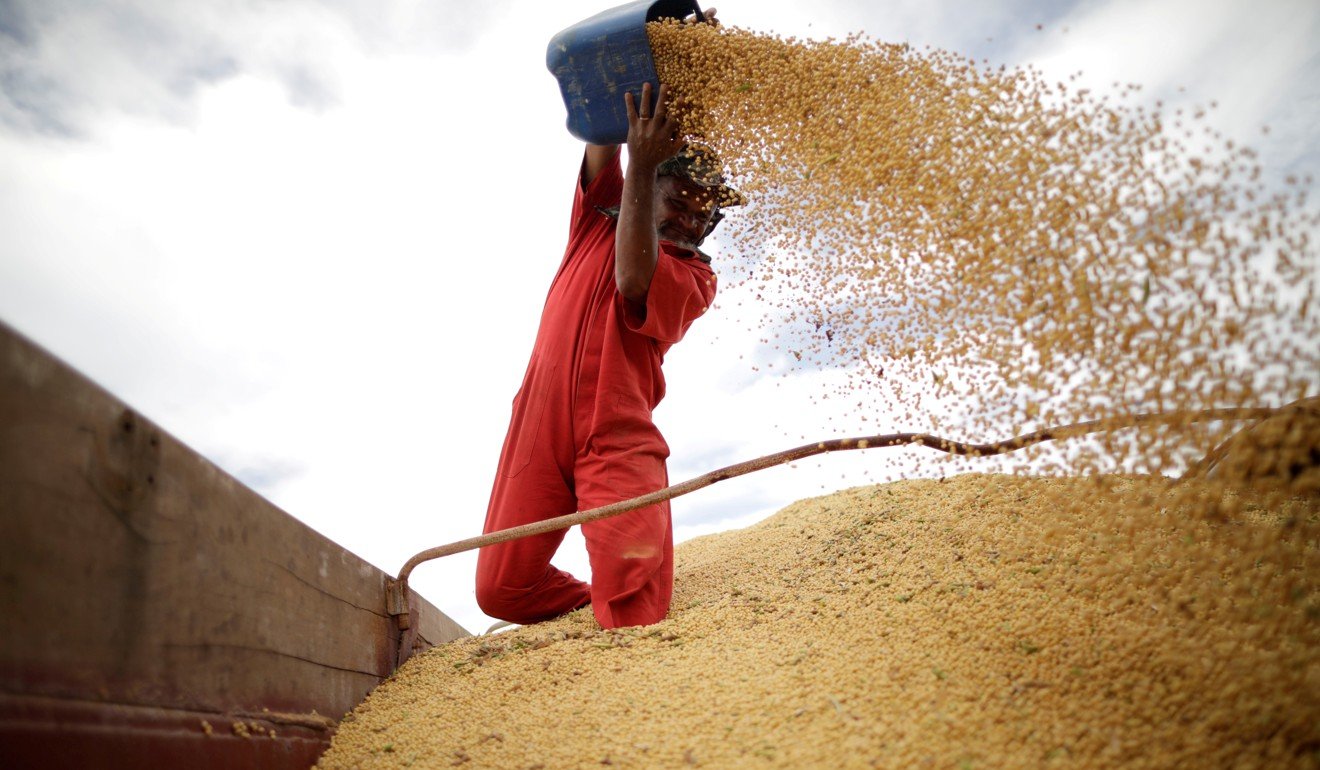
China has overtaken the US as Brazil’s largest trading partner, with Brazilian soybeans – one of the country’s biggest exports – and other agricultural products replacing American imports since the start of the US-China trade war a year ago.
Brazilian soybeans – one of the country’s biggest exports – and other farm products are being sold to China as a result of the trade war. Photo: Reuters
The growing importance of China to Brazil’s economy has created a difficult position for President Jair Bolsonaro, who accused Beijing of trying to buy Brazil during his election campaign, but changed tack on assuming office in January.
In March, Bolsonaro called China his country’s “main partner, politically as well as economically and commercially” and announced plans to travel to Beijing this year, a visit which was confirmed on Tuesday for late October.
China is now Latin America’s second largest trading partner with bilateral trade at US$307.4 billion, growing 18.9 per cent over the previous year, according to China’s ministry of commerce, in a relationship focused on commodity imports, including mining products like copper and energy, as well as soybeans and other agricultural goods.
While the US and China have tentatively agreed to resume talks in Shanghai next week, China and Latin American countries are likely to continue deepening their trade relations as production chains realign as a result of the trade war, according to Gustavo Oliveira, assistant professor of global and international studies at the University of California, Irvine.
“This means Chinese imports of Latin American agricultural and mineral commodities, and Latin American imports of Chinese manufactured products and hi-tech, might contribute to China’s ability to stand its ground against US pressure,” he said.
China in Latin America: partner or predator?
Oliveira said domestic contradictions in most Latin American countries complicated relations with China, as few leaders had the capacity to press or leverage China for much. “Unfortunately, therefore, most in this crop of Latin American leaders are basically placing themselves as junior partners or pawns in the geopolitical tug of war between the US and China.”
US Secretary of State Mike Pompeo put the pressure on Latin American countries over their relationship with China during his four-day tour of the region last weekend, when he visited Argentina, Ecuador, Mexico, and El Salvador.
In a joint interview with Pompeo during the visit, Ecuador’s new President Lenin Moreno defended the country’s China ties, and urged Washington and Beijing to resolve their conflicts for the benefit of other nations in the region.
“We hope that the US and China, the greatest powers in the world now, will find agreement easily because, unfortunately, when the big ones are discussing or fighting and have conflicts, the ones that are paying for all of that are the smaller countries,” he said.
“Now, when two elephants fight, the ones who lose are the insects who are of course being crushed by the elephants in the attempt to evade them.”
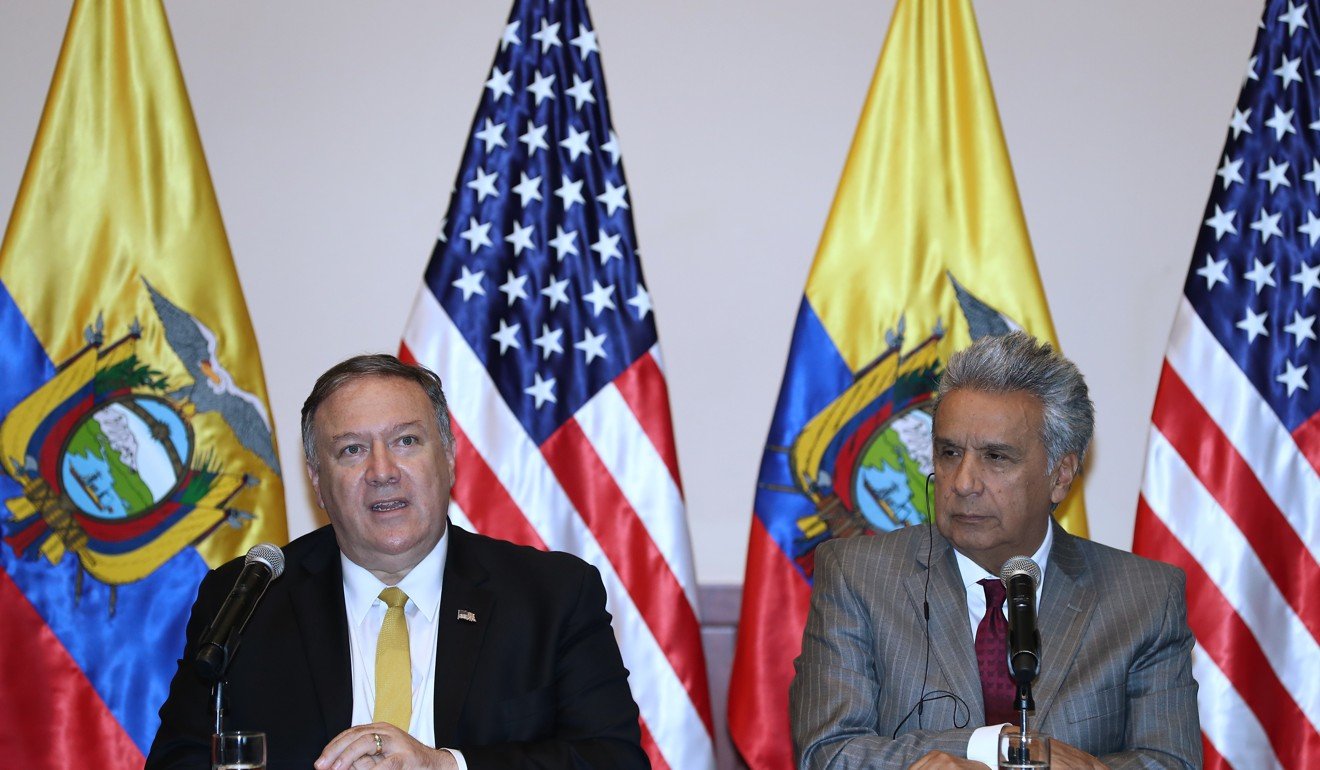
US Secretary of State Mike Pompeo (left) and Ecuadorian President Lenin Moreno hold a joint press conference during Pompeo’s tour of Latin America on July 20. Photo: EPA-EFE
Pompeo blasted China’s role in the region during a previous tour of South America in April, when he singled out Beijing’s support for President Nicolas Maduro of Venezuela. Maduro is backed by Beijing, Russia and other allies, while the US and many European countries have supported opposition leader Juan Guaido as legitimate president since elections in January.
Speaking from Chile on that tour, Pompeo said Beijing’s calls for non-intervention in Venezuela were “hypocritical” and aimed at protecting Beijing’s investments in the country, as well as debts owed to China by Venezuela.
Pompeo also accused Beijing of “sowing discord” in the region through debt traps. “When China does business in places like Latin America, it often injects corrosive capital into the economic bloodstream, giving life to corruption and eroding good governance,” he said.
Professor Cui Shoujun of Renmin University in Beijing said Washington’s concerns about “debt trap diplomacy” in Latin America reflected concerns that China’s growing involvement in financing infrastructure and development projects would make the region more pro-China.
“China’s interests in Latin America go beyond raw materials extraction,” he said. “The biggest point of tension between the US and China in the region is perhaps that China presents an alternative model for development that is very different from the Western model.”
‘Mr Pompeo, you can stop’: China hits back over Latin America criticism
While the US was drumming up tensions about China across the world, Beijing was not openly retaliating but responding with investment and trade for global partners, said Kevin Gallagher, researcher on China-Latin America ties, and professor at Boston University.
“The US points fingers and makes angry speeches in the region as China cuts investment deals and helps address infrastructure needs,” he said.
“Latin American countries’ governments are rightly keeping their heads down on the broader geopolitical winds, and are getting down to business with their largest trading partner.”









 the procedure of counting tigers in India






 CHINDIA ALERT: You'll be living in their world, very soon