27/01/2019

Spy novels, ‘daigou’ and democracy: the many lives of Australian writer held in China

EIJING/SYDNEY (Reuters) – A Chinese-born Australian writer detained by authorities in Beijing for suspected espionage has long been a divisive figure among overseas Chinese dissidents and activists.

To his supporters, Yang Hengjun is a dedicated democracy activist who believed that China’s autocratic system would, with time, necessarily liberalize. His detractors say he had long since abandoned criticising the ruling Chinese Communist Party in favour of protecting his personal and business interests.

Yang, 53, whose legal name is Yang Jun, was detained in southern China’s Guangzhou while waiting for a transfer to Shanghai earlier this month, after flying in from New York.

He was taken to Beijing, where China has said the city’s State Security Bureau is holding him under “coercive measures”, a euphemism for detention, as he is investigated on suspicion of “endangering state security”.

Yang’s lawyer, Mo Shaoping, told Reuters his client was suspected of “espionage”, and was being held under “residential surveillance at a designated location”, a special detention measure that allows authorities to interrogate suspects without necessarily granting access to legal representation.

Although his recent writing has mostly avoid Chinese politics, Yang first became prominent in the early 2000s when he earned the nickname of “democracy peddler”.

Before censorship of China’s microblogs intensified, Yang’s essays on topics ranging from Chinese nationalism to the fate of ethnic minorities in Tibet, made him a popular commentator. He also wrote a trilogy of spy novels set in China.

More recently, Yang had largely steered clear of issues deemed sensitive by the Communist Party, only occasionally writing about U.S. politics, and instead had thrown his energy into a “daigou” business, procuring overseas products for Chinese buyers.

His store on China’s popular mobile platform WeChat sold U.S.-made luxury bags, vitamins, baby formula and watches.

An employee of the store, who declined to be named, said that Yang started the store at the request of his readers, who wanted to buy real and fairly priced goods. Asked what would happen to the store now, he said he was waiting for instructions.

“KEEPS TO HIMSELF”

For the last two years, Yang, who friends describe as an affable, jocular but academic figure, had been living in New York as a visiting scholar at Columbia University.

“He was quite aloof from politics and tended to keep his personal news to himself,” Yang’s former landlord, New York-based businessman Yi Gai, told Reuters.

“About 75 percent of his energy and time was spent on his daigou work,” added Yi, who is also a friend of Yang’s.

Another friend, who hadn’t spoken to Yang in several months, said the Australian writer believed his views were not a challenge to China’s rulers.

“He played within the system. He had never called for the bottom to rise up. He wants reform only,” said the friend, who declined to be named for fear for his safety.

Feng Chongyi, an academic at the University of Technology in Sydney, who was himself detained during a 2017 visit to China, said he believed Yang’s detention was related to his international connections.

Tensions have risen in recent weeks between China and some Western countries after two Canadians, a diplomat on unpaid leave and a consultant, were arrested in China on suspicion of endangering state security.

Those arrests were widely seen in the West as retaliation by China for Canada’s arrest of Meng Wanzhou, a senior Huawei Technologies executive, on Dec. 1 at the request of the United States for allegedly violating U.S. sanctions on Iran.

Australian officials have called on China to handle the matter “transparently and fairly”, but have downplayed the connection between Yang’s case and those of the Canadians.

“He is well-connected in China and internationally. He knows high-profile people in the Communist Party and he believed that meant he could travel to China with relative impunity,” Feng said.

POOR BACKGROUND

Yang came from a poor background in China, but studied political economy at Shanghai’s prestigious Fudan University, according to his own accounts of his time there.

Yang had often told friends that, before his writing career, he worked for China’s Foreign Ministry. But ministry spokeswoman Hua Chunying told Reuters that Yang had never been employed there.

He would also tell friends that he knew Wang Huning, the Chinese Communist Party’s chief of ideology, while at Fudan, according to two sources.

Friends say he became an Australian citizen in the early 2000s.

Xia Yeliang, a former professor at Peking University who now lives in Virginia, said Yang was a controversial figure among China’s overseas dissident community.

Yang was believed in recent years to have married a well-known nationalist blogger, Yuan Ruijuan, souring his reputation among overseas democracy activists, Xia told Reuters by phone.

At times Yang had said his spy novels, which were serialised on his website, were based on his abundant personal experience within the Chinese system, Xia added.

The novels pit China’s spy agency against the CIA and FBI and include double-agents, clones, and a main character who, like Yang, wrote fictional spy novels and attended Fudan University.

Yi, the landlord and friend, said Yang “was not willing to keep in close contact with radical dissidents, and definitely wouldn’t cooperate with them, so it’s natural that radical dissidents would be suspicious and speculate about him”.

Before Yang left for China this month, Yi and some friends met him and the topic of his security came up, but everyone thought he would be fine.

“It looks like we misjudged,” he said.
Source: Reuters
27/01/2019

Trudeau fires Canada’s ambassador to China amid Huawei controversy

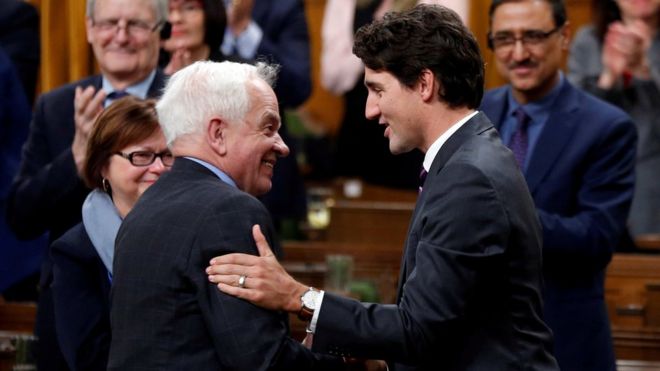
Canada's Prime Minister Justin Trudeau (R) shakes hands with former Immigration Minister John McCallumImage copyrightREUTERS
Image captionJustin Trudeau (R) appointed John McCallum ambassador to China in 2017

Prime Minister Justin Trudeau has fired Canada’s ambassador to China, John McCallum.

It follows controversial comments Mr McCallum made about an extradition case involving a senior executive from the Chinese telecoms giant Huawei.

Mr Trudeau said in a statement he had asked John McCallum to step down, but did not offer a reason.

The detention of Meng Wanzhou, at the request of the US, angered China and soured Canada’s relations with Beijing.

Ms Meng, Huawei’s chief financial officer, is accused by the US of evading sanctions on Iran. Both she and Huawei deny those allegations.

What did Justin Trudeau say?

In a statement, the Canadian prime minister said: “Last night I asked for and accepted John McCallum’s resignation as Canada’s ambassador to China.”

The veteran diplomat, Mr Trudeau added, had served Canadians honourably and with distinction with many positions in cabinet.

He also thanked the diplomat and his family for their service.

What about the ambassador’s remarks?

Mr McCallum caused controversy on Tuesday when he publicly argued that the US extradition request for Ms Meng was seriously flawed.

The next day he issued a statement saying that he “misspoke” and regretted that his comments had created “confusion”.

But on Friday he was quoted as saying it would be “great for Canada” if the US dropped the request.

Mr McCallum was appointed Canada’s ambassador to China in 2017, stepping down as the immigration minister.

Canadian media say he was eager to take over the posting because of his strong personal connection to China.

Mr McCallum’s wife is ethnically Chinese, and he had a large Chinese-Canadian population in his former constituency in Ontario.

Mr McCallum also served as Canada’s defence minister in 2002-03.

What’s the latest on Meng Wanzhou’s case?

She was arrested on 1 December in Canada’s western city of Vancouver at the request of the US.

She was later granted a C$10m (£5.7m; $7.6m) bail by a local court. But she is under surveillance 24 hours a day and must wear an electronic ankle tag.

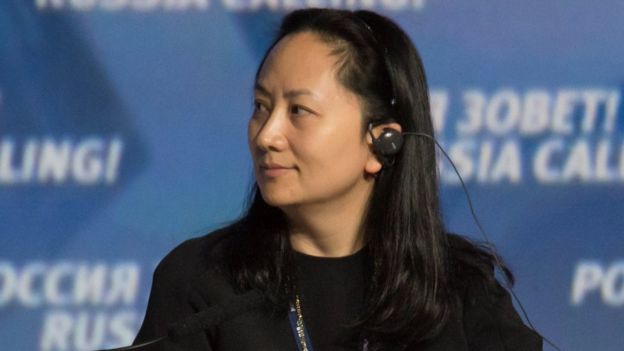
Huawei's Meng WanzhouImage copyrightREUTERS
Image captionMeng Wanzhou denies all the allegations against her

Earlier this month, US officials confirmed they planned to pursue the extradition of Ms Wanzhou.

Washington has 60 days to file a formal demand for extradition, a deadline that will be reached 30 January.

China’s foreign ministry has urged US officials to withdraw the arrest order and refrain from moving ahead with the extradition request.

Ms Meng’s case has led to rising diplomatic tensions between Canada and China.

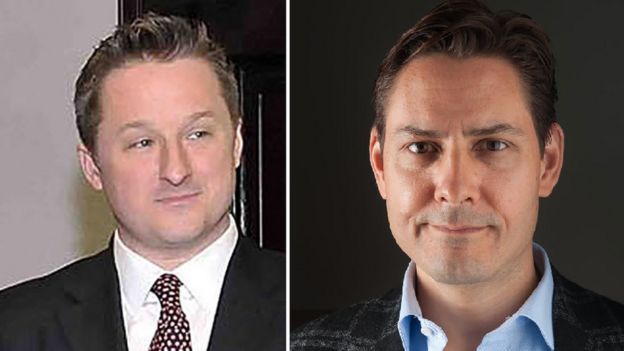
Michael Spavor (L) and Michael Kovrig (composite image)Image copyrightAFP
Image captionCanadian nationals Michael Spavor (left) and Michael Kovrig have been put under “compulsory measures”

Earlier this month, a Canadian man was sentenced to death in China after a court said a jail term of 15 years was too lenient.

Two other Canadians – businessman Michael Spavor and former diplomat Michael Kovrg – were arrested following the detention of Ms Meng.

Some China analysts believe that the arrests were a tit-for-tat response to her detention, a claim Chinese officials have denied.

Source: The BBC

27/01/2019

Chinese man throws pregnant woman from third-floor shopping centre balcony then jumps after her

  • Victim’s condition said to be not critical; attacker breaks several bones
  • Suspect, 36, tells police he wanted to take his own life
PUBLISHED : Sunday, 27 January, 2019, 7:06pm
UPDATED : Sunday, 27 January, 2019, 7:12pm

A pregnant woman is being treated in hospital after being tossed over a third-floor balcony at a shopping centre in southern China by a man who then leapt after her.

The incident happened about noon on Saturday in the city of Foshan, Guangdong province, local police said in a statement.

As the woman, who was not named, came out of a toilet on the third floor she was grabbed by her assailant, who was identified as a 36-year-old surnamed Li.

“During an initial investigation, the suspect said that heavy financial pressures had led him to consider committing suicide,” the statement said.

“At about 11am [on Saturday] he went to the shopping mall and began pacing up and down on the third floor. About 12 noon, he saw a woman emerge from the toilets, grabbed her and threw her from the third floor to the ground floor before jumping down himself.”

The woman sustained injuries to her head and buttocks in the fall, but her condition was not critical, the statement said, adding that Li sustained multiple bone fractures.

The incident was caught by surveillance cameras in the shopping centre and uploaded to Chinese news website Thepaper.cn on Sunday.

The footage showed the moment the mother-to-be was thrown over the barrier, then her attacker jumping after her.

The report said that Li was unknown to the victim.

People gathered around the man and woman as they lay on the floor before police and other emergency services came to the aid.

Li was detained on suspicion of intentional homicide, the police statement said, adding that an investigation was under way.

A social media user questioned Li’s motive for the attack.

“If you are under lots of pressure, it is up to you to solve that,” the person wrote on Weibo, China’s Twitter-like platform. “Either see a psychiatrist or go somewhere alone to do the deed. Why did he have to hurt innocent people?”

Source: SCMP

27/01/2019

Central Chinese cities pose strong growth potential: report

BEIJING, Jan. 26 (Xinhua) — Central Chinese cities hold the most promising prospects for growth and business thanks to quickening urbanization and industrial development, reported a British think tank.

Central provinces of Anhui, Henan, Hubei, Hunan and Jiangxi dominated the top performers of the latest ranking of Chinese emerging cities by British think tank Economist Intelligence Unit (EIU).

Suzhou City in eastern China’s Anhui Province came first thanks to strong gains in urbanization and metropolitan population, followed by Yueyang City in central China’s Hunan Province.

The two cities have made steady progress in developing industrial economies as the Chinese government’s plan to promote city clusters has provided policy tailwinds, the report said.

“Beyond the traditional megacities along the coast, third- and fourth-tier cities in central China are rising in economic importance and should be on the radar of China-focused businesses,” said Wang Dan, a China analyst at the EIU.

The EIU’s China Emerging City Rankings are based on a variety of indicators to measure growth, including real GDP, metropolitan population, urban consumption expenditure, foreign direct investment, fixed-asset investment, the urban built area and policy support.

Source: Xinhua

27/01/2019

Overseas Chinese in San Francisco Bay area hailed for building strong China-U.S. relations

U.S.-SAN FRANCISCO-CHINESE NEW YEAR-RECEPTION

Zhang Jianxin, Deputy Consul General of the Chinese Consulate General in San Francisco, addresses a reception celebrating the upcoming Chinese Lunar New Year in San Francisco, the United States, Jan. 25, 2019. The Chinese Consulate General in San Francisco on Friday held a reception to celebrate upcoming Chinese Lunar New Year and honor the contribution of overseas Chinese in forging a close and strong relationship between China and the United States. (Xinhua/Dong Xudong)

SAN FRANCISCO, Jan. 25 (Xinhua) — The Chinese Consulate General in San Francisco on Friday held a reception to celebrate upcoming Chinese Lunar New Year and honor the contribution of overseas Chinese to forging a close and strong relationship between China and the United States.

In an address read by Deputy Consul General Zhang Jianxin to hundreds of participants at the event, Chinese Consul General Wang Donghua said the vast majority of overseas Chinese have participated in one way or another in the process of building a wealthier and stronger China over the past 40 years since China introduced the policy of reform and opening-up in 1978.

Wang said he hopes overseas Chinese will seize historical opportunities to render firm support for China’s further reform and opening-up and work harder to boost the China-U.S. friendship.

Speaking at the event marking Chinese Lunar New Year, which falls on Feb. 5, Peter Chi, a veteran leader of the Chinese community in San Francisco and the San Francisco Committee to Promote Reunification of China, said overseas Chinese are keen on cementing a more stable China-U.S. relationship.

“The year 2019 will witness several wonderful events for China, including the 40th anniversary of the establishment of diplomatic relations between China and the United States, the 70th anniversary of the founding of New China … and 40th anniversary of the Message to Compatriots in Taiwan issued by the Standing Committee of the Fifth National People’s Congress of China on Jan. 1, 1979,” he said.

Many overseas Chinese, particularly those living in the United States, are proud of the tremendous achievements that China has made in the past 40 years, Chi said.

“As a member of the San Francisco Committee to Promote Reunification of China, I earnestly hope Taiwan will eventually be reunited with the motherland,” he added.

On the other hand, overseas Chinese also would like to see the U.S.-China relations further develop and grow in a stable, healthy and smooth way, and they all will have a role to play during this process, Chi said.

Florence Fong, a prominent leader of the Chinese community in northern California, said 2019 is the Year of Pig, and in the 12-year-cycle Chinese zodiac, the sign of Pig represents wealth, fortune and happiness.

“Over the past years, the Chinese people have emigrated to various places in the world and they have brought the brilliant Chinese culture and heritage to every corner of the globe,” Fong said.

“Today, Chinese Lunar New Year has been observed in 133 countries, making it the most celebrated festival in the world,” she said.

Fong said she hopes China, as the country of her origin, will continue to grow into a more prosperous country in the future.

California State Assemblyman Scott Weiner presented a certificate of recognition to Deputy Consul General Zhang to honor the “strong relationship” between San Francisco and China.

Source: Xinhua

27/01/2019

China ready to work with France, Italy to inject positive energy into world: FM

ROME, Jan. 26 (Xinhua) — China is willing to work with France and Italy and meet each other halfway, enhance strategic communication, and consolidate strategic mutual trust and cooperation, so as to inject new impetus to bilateral ties and positive energy into the international community, Chinese State Councilor and Foreign Minister Wang Yi has said.

Wang made the remarks during a press briefing on Friday night, right before concluding his visits to France and Italy.

The top Chinese diplomat termed as “very successful” the 18th consultation of the coordinators for the China-France Strategic Dialogue and the 9th joint meeting of the China-Italy Government Committee.

Against the backdrop of ongoing profound adjustment of relations and increased frictions among major powers, Wang said France and Italy, both major members of the European Union and countries with global influence, expressed their stance that they cherish the comprehensive strategic partnerships with China.

Wang believed that the China-France and China-Italy comprehensive strategic partnerships had been further enhanced.

Wang also told reporters that both France and Italy have clearly welcomed Chinese investment to their countries, promising not to adopt any restrictions on specific enterprises and discriminations against any enterprises.

He praised these statements as “not only timely but also necessary”, adding that Chinese companies will increasingly turn their eyes to countries that are worth their trust.

Wang said he also had deep exchange of views with French and Italian officials on how to deal with various global challenges.

The tripartite partners, Wang said, have confirmed that they would firmly uphold the rule-based multilateralism and maintain the contemporary international system with the UN as the core.

He said all three countries completely disagreed with unilateralism and egoism, which actually represents the general perspective of the international community. It will be proved that any unilateralism and egoism are unpopular and doomed to be unsustainable, Wang added.

Source: Xinhua

27/01/2019

China tests new generation of faster, bigger maglev

CHANGSHA, Jan. 26 (Xinhua) — China’s major train maker on Saturday tested a new generation of maglev train with a designed speed of 160 km per hour, about 60 percent faster than the current model, in Changsha, capital of central China’s Hunan Province.

The new model has a 30-percent increase in traction efficiency and can carry six more tonnes in weight compared with the previous generation, according to Tong Laisheng, head of the maglev research institute of the CRRC Zhuzhou Locomotive Co., Ltd., the developer.

It can carry up to 500 passengers with three carriages, Tong said.

China’s first medium-low-speed maglev rail line was put into commercial operation in May 2016 in Changsha.

The new model is expected to lay a technical foundation for introducing medium-speed maglev train systems in the future, Tong said. CRRC Zhuzhou Locomotive is also developing a more advanced maglev model with a top speed of 200 km per hour.

Source: Xinhua

26/01/2019

India relocates crocodiles at world’s tallest statue in Gujarat

Indian officials have begun relocating some 300 crocodiles from a reservoir next to the world’s tallest statue to allow a seaplane service for visitors.

The animals, some around 3m (9ft) long, are being lured into metal cages and sent elsewhere in the western state of Gujarat.

But conservationists have criticised the plan.

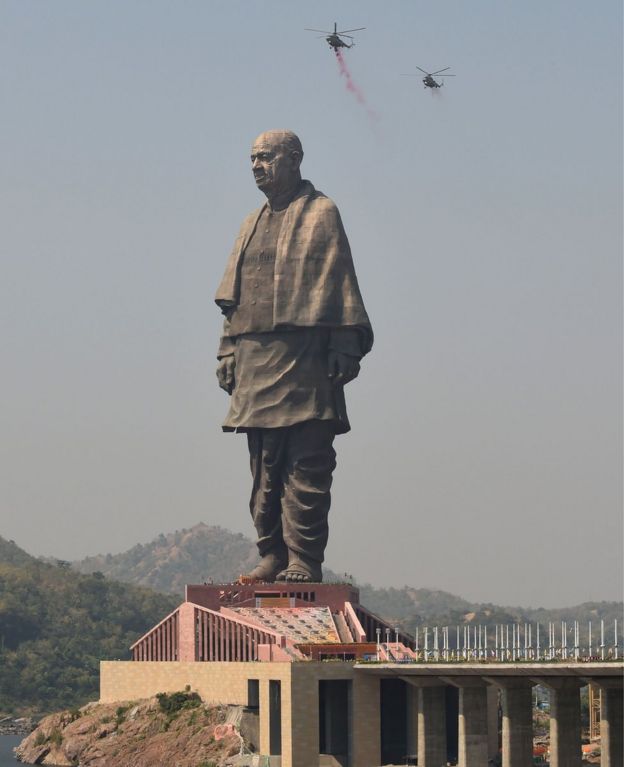
The 182m statue of independence hero Sardar Vallabhbhai Patel was inaugurated last October.

The bronze-clad statue sculpture, located some 200km (125 miles) from the state’s main city of Ahmedabad, has become a popular attraction.

But there are no train services and most tourists reach the site, known as “Statue of Unity”, by bus.

The world's tallest statue, "the Statue Of Unity"Image copyrightAFP
Image captionThe statue is nearly twice as tall as the Statue of Liberty in New York
Local forestry official Anuradha Sahu said the instruction had come from the state government “for safety reasons as the tourist influx has increased”, AFP news agency reports.

So far about a dozen crocodiles have been removed and transported on the back of pick-up trucks.

Community Science Centre Director Jitendra Gavali said the decision to remove the crocodiles was a violation of the country’s wildlife protection legislation.

“The government is disturbing their habitat and putting their lives at risk,” Dr Gavali was quoted by the Times of India as saying.

“Also, the government hasn’t thought out where it will release the captured crocodiles safely.”

Bittu Sahgal, editor of the wildlife magazine Sanctuary Asia, was another critic of the plan.

Prime Minister Narendra Modi – who, like Patel, was born in Gujarat – commissioned the statue when he was the state’s chief minister in 2010.

In recent years, Mr Modi’s ruling Hindu nationalist Bharatiya Janata Party (BJP) has embraced Patel in an attempt to claim his legacy.

The statue cost 29.9bn rupees (£330m; $430m).

Source: The BBC

26/01/2019

Rescuers find second body from mine tragedy in northeast India

NEW DELHI (Reuters) – Rescuers have located a second body from the site of a “rat-hole” mining accident in India’s northeastern state of Meghalaya, a spokesperson for the country’s navy said on Saturday, two days after recovering the first body.

Fifteen miners were trapped on Dec. 13 when their illegal mine was flooded. A court stipulated ban on unregulated mining in the state in 2014 has not stopped such activities.

Thousands of workers in Meghalaya, including children, have been killed in so-called rat-hole mines, in which miners crawl into narrow shafts on bamboo ladders to dig for low-quality coal.

“Indian navy diving team finds second body 280 feet inside the rat-hole mine,” a navy spokesperson said in a tweet.

There was no immediate indication on when the body will be brought to the surface, said a rescue official, who did not want to be named.

Families and relatives of the trapped miners have given up hope that any of them will be found alive.

Source: Reuters

26/01/2019

Saina Nehwal beats He Bingjiao, reaches Indonesia Masters final

Saina Nehwal will play the winner of the other semi-final between Chen Yufei and Carolina Marin for the title on Sunday

OTHER SPORTS Updated: Jan 26, 2019 16:30 IST

HT Correspondent
HT Correspondent
Hindustan Times, New Delhi
Saina Nehwal,He Bingjiao,Indonesia Masters
Saina Nehwal will play Chen Yufei or Carolina Marin in the final. (AFP)

Saina Nehwal defeated China’s He Bingjiao 18-21, 21-12, 21-18 in their Indonesia Masters semi-final to reach the final.

It was an intense three-set battle before Nehwal held her nerves in the deciding game to win the match. The Indian shuttler started the match strongly but blew a substantial lead to surrender the first game 18-21.

She made a strong comeback in the second game to take it 21-12. The deciding game turned out to be a tense affair as both the shuttlers refused to give an inch to the other. However, Nehwal held her nerves to prevail over her Chinese opponent 21-18 to win the thriller.

Nehwal will play the winner of the other semi-final between Chen Yufei and Carolina Marin for the title on Sunday.

Source: Hindustan Times

Law of Unintended Consequences

continuously updated blog about China & India

ChiaHou's Book Reviews

continuously updated blog about China & India

What's wrong with the world; and its economy

continuously updated blog about China & India